
At which place did Raja Ranjit Singh set up the Adalat-i-Ala ?
- (a)Amritsar
- (b)Lahore
- (c)Firozpur
- (d)Multan
Correct — B, Lahore. Lahore was Maharaja Ranjit Singh's capital (he captured it in 1799 and was formally crowned there in 1801), and it was here that he set up the Adalat-i-Ala, the highest regular court of appeal in the Sikh Empire's judicial system. The Adalat-i-Ala stood at the top of the ordinary court hierarchy, hearing appeals against the decisions of the provincial (Nazim) and district/pargana (Kardar) courts. Above even this court, the Maharaja himself remained the final court of appeal. Since the question asks where the Adalat-i-Ala was established, the answer is his capital, Lahore.
- (a)Amritsar — Amritsar was the religious and commercial heart of the Sikh Empire (site of the Harmandir Sahib and an important mint), but it was not the seat of the Adalat-i-Ala — the highest court was located at the political capital, Lahore.
- (c)Firozpur — Firozpur was a frontier town near the Sutlej, close to the boundary with British-controlled territory; it was never the location of the empire's supreme court.
- (d)Multan — Multan was a subah (province) annexed by Ranjit Singh in 1818 and administered by a Nazim; appeals from its provincial court travelled UP to the Adalat-i-Ala at Lahore — Multan itself was not the seat of that court.
Maharaja Ranjit Singh (1780–1839) unified the Sikh misls into a single Sikh Empire with its capital at Lahore. His administration ran a graded judicial system: village panchayats settled local disputes at the base; Kardars dispensed justice at the pargana/district level; Nazims (provincial governors) held courts at the subah level; and the Adalat-i-Ala at Lahore was the highest appellate court in this structure. The Maharaja was the ultimate court of appeal. Justice drew on customary law and on Sikh, Hindu and Muslim personal law as relevant to the parties.
The trap is Amritsar. Because Amritsar houses the Golden Temple and is the spiritual capital of the Sikhs, students instinctively pick it for anything 'central' to Ranjit Singh's rule. But administrative and judicial headquarters sat at the POLITICAL capital, Lahore — where the Maharaja was crowned and held his Darbar. Separate the religious capital (Amritsar) from the seat of government and justice (Lahore) and option (b) follows.
- Ranjit Singh's capital was Lahore; he was crowned there as Maharaja in 1801.
- The Adalat-i-Ala at Lahore was the highest regular court of appeal in the Sikh Empire.
- It heard appeals from the courts of the Kardars (district/pargana) and Nazims (provincial governors).
- The Maharaja himself remained the final court of appeal above the Adalat-i-Ala.
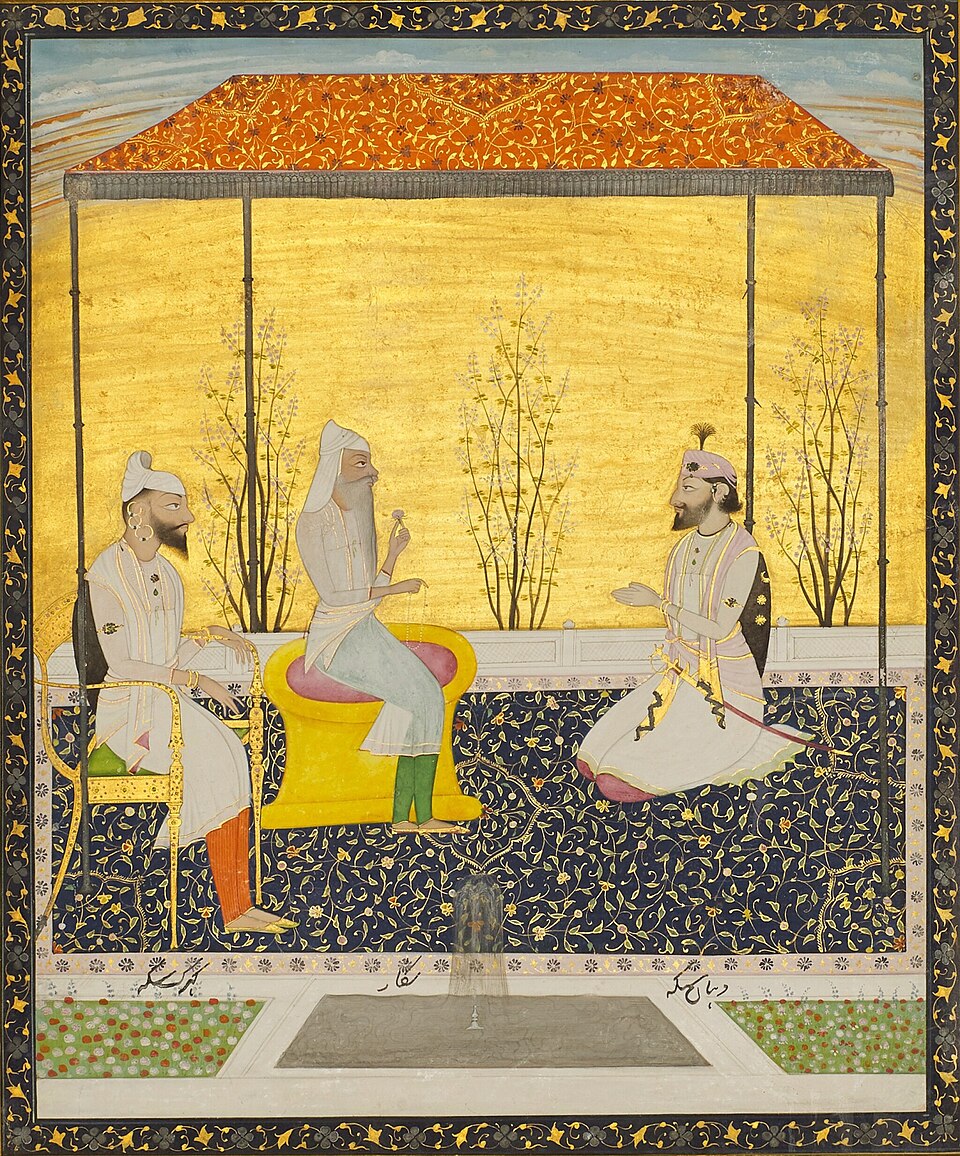
- Choosing Amritsar (the religious capital) instead of Lahore (the political/judicial capital)
- Forgetting that the Adalat-i-Ala was the highest REGULAR court, while the Maharaja was the final appellate authority
UPPSC and UPSC test Ranjit Singh through 'set up at which place / capital' items and ruler–institution matches — anchor his capital and seat of justice to Lahore.
- practice — not a real PYQ
The capital of Maharaja Ranjit Singh's Sikh Empire was
- (a)Amritsar
- (b)Lahore
- (c)Peshawar
- (d)Multan
Answer(b) Lahore — Ranjit Singh captured Lahore in 1799 and was crowned there as Maharaja in 1801. - practice — not a real PYQ
By the Treaty of Amritsar (1809), Maharaja Ranjit Singh accepted which river as the boundary between his territory and that of the British?
- (a)Beas
- (b)Ravi
- (c)Sutlej
- (d)Chenab
Answer(c) Sutlej — the 1809 treaty with the British recognised the Sutlej as the limit of Ranjit Singh's expansion eastward.