
Which of the following is indicator of air pollution ?
- (a)Puffballs
- (b)Algae
- (c)Lichen
- (d)Moss
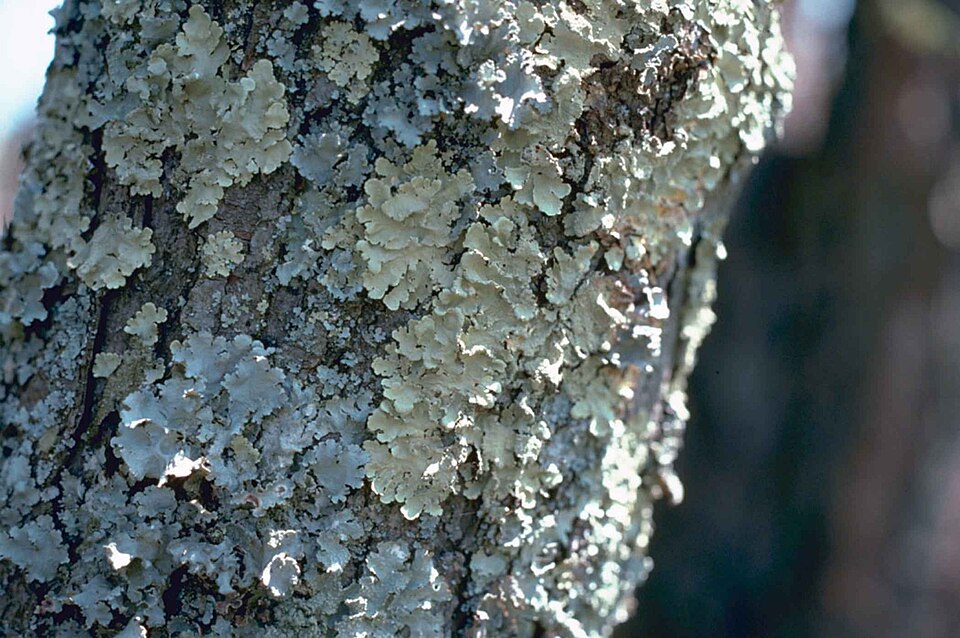
Correct — C, Lichen. Lichens are extremely sensitive to air pollutants, especially sulphur dioxide (SO2). Having no roots or protective outer cuticle, they absorb water and nutrients — and any pollutants — directly from the air, so they die back wherever the air is polluted. Their abundance therefore signals clean air and their absence signals pollution, which makes lichens the classic biological indicators (bioindicators) of air pollution.
- (a)Puffballs — Wrong — puffballs are a type of fungus; they are not used as indicators of air pollution.
- (b)Algae — Wrong — algae (and algal blooms) are indicators of water quality and eutrophication, not of air pollution.
- (d)Moss — Tempting but wrong — mosses are used mainly as indicators of moisture and of heavy-metal deposition; the standard textbook bioindicator of air (SO2) pollution is the lichen.
A bioindicator is an organism whose presence, absence or health reflects environmental conditions. Lichens — a symbiotic association of a fungus with an alga or cyanobacterium — lack roots and a protective cuticle, so they absorb water and nutrients straight from the air and accumulate pollutants. They are especially sensitive to sulphur dioxide, so lush lichen growth indicates clean air while a 'lichen desert' indicates polluted air.
Several options are living organisms, but only the lichen is the textbook air-pollution indicator. Algae point to water quality, mosses reflect moisture and metals, and puffballs (fungi) are not indicators. Recall the pairing 'lichens = SO2-sensitive air-quality indicators' to lock in option (c).
- Lichen = symbiosis of a fungus and an alga/cyanobacterium; no roots or cuticle, absorbs directly from air.
- Highly sensitive to sulphur dioxide (SO2) → classic bioindicator of air pollution.
- Abundant lichens indicate clean air; their absence ('lichen desert') indicates polluted air.
- Lichens are also pioneer species in ecological succession on bare rock.
- Confusing lichen (air-pollution indicator) with algae (water-quality indicator)
- Forgetting that a lichen is a fungus-plus-alga symbiosis, not a single simple plant
UPPSC/UPSC ask 'which organism indicates air pollution / is sensitive to SO2' and 'lichen = symbiosis of…'; lichens also appear in ecological-succession questions as the pioneer on bare rock.
- practice — not a real PYQ
Lichens are considered good indicators of air pollution mainly because they are highly sensitive to which gas?
- (a)Carbon dioxide
- (b)Sulphur dioxide
- (c)Oxygen
- (d)Nitrogen
Answer(b) Sulphur dioxide — lichens die back where SO2 levels are high, so their absence indicates polluted air. - practice — not a real PYQ
A lichen is a symbiotic association of:
- (a)Fungi and mosses
- (b)Algae and fungi
- (c)Bacteria and algae
- (d)Fungi and ferns
Answer(b) Algae and fungi — the alga photosynthesises while the fungus provides structure and absorbs water.