
Which one of the following pairs is NOT correctly matched ?
- (a)Vitamin-A – Orange
- (b)Vitamin-C – Lemon
- (c)Vitamin-D – Cod liver oil
- (d)Vitamin-B6 – Rice bran
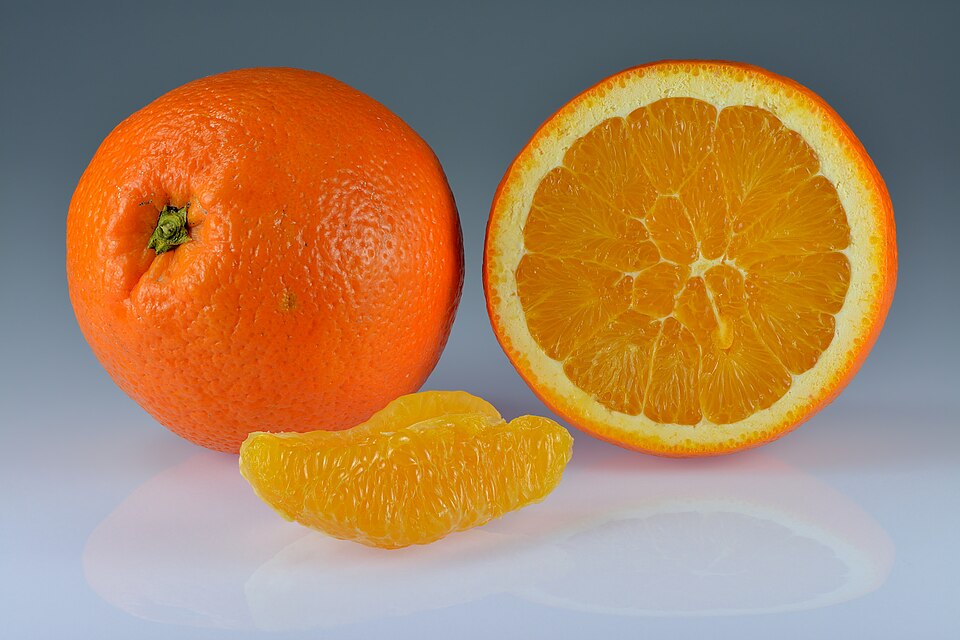
Correct — A, Vitamin-A – Orange is the pair that is NOT correctly matched. Oranges are a rich source of Vitamin C (ascorbic acid), not Vitamin A. Vitamin A comes chiefly from foods such as carrots, liver, dairy and green/yellow vegetables (as beta-carotene). Since the question asks for the wrongly matched pair, the incorrect pairing 'Vitamin-A – Orange' is the answer. The other three pairs are all correctly matched.
- (b)Vitamin-C – Lemon — Correctly matched (so not the answer) — lemon and other citrus fruits are classic sources of Vitamin C.
- (c)Vitamin-D – Cod liver oil — Correctly matched (so not the answer) — cod liver oil is a well-known dietary source of Vitamin D (and Vitamin A).
- (d)Vitamin-B6 – Rice bran — Correctly matched (so not the answer) — rice bran/polishings are rich in B-complex vitamins including Vitamin B6 (pyridoxine).
Vitamins are micronutrients grouped as fat-soluble (A, D, E, K) or water-soluble (B-complex and C). Each is linked to characteristic food sources: Vitamin A — carrots, liver, dairy, green/yellow vegetables; Vitamin C — citrus fruits (orange, lemon, amla); Vitamin D — cod liver oil, fatty fish, sunlight-driven synthesis; Vitamin B6 — rice bran, whole grains, legumes. A 'NOT correctly matched' question tests whether you can spot the one vitamin-source pair that is false.
The trap: oranges are so strongly linked to 'Vitamin' in everyday talk that the pairing 'Vitamin-A – Orange' looks plausible. But orange = Vitamin C, so pairing it with Vitamin A is the error. Read the stem carefully — it asks for the INCORRECT pair, so the false match (a) is the answer, not the true ones.
- Oranges (and lemons, amla) are rich in Vitamin C, not Vitamin A.
- Vitamin A sources: carrots, liver, dairy, green and yellow vegetables (beta-carotene).
- Cod liver oil is a classic source of Vitamin D.
- Rice bran/polishings supply B-complex vitamins including Vitamin B6 (pyridoxine).
- In 'NOT correctly matched' questions, picking a correctly matched pair instead of the wrong one
- Assuming oranges give Vitamin A — they are a Vitamin C source
UPSC/UPPSC frequently test vitamin-to-source or vitamin-to-deficiency matching pairs — memorise the standard sources and the classic deficiency diseases.
Consider the following pairs : Vitamin Deficiency disease 1. Vitamin C : Scurvy 2. Vitamin D : Rickets 3. Vitamin E : Night blindness Which of the pairs given above is/are correctly matched?
- (a) 1 and 2 only
- (b) 3 only
- (c) 1, 2 and 3
- (d) None
Answer(a) 1 and 2 only
Same concept — matching vitamins with their attributes; here vitamins are paired with deficiency diseases (night blindness is Vitamin A, not E), the mirror skill to the UPPSC vitamin-source pairs.
Match List I with List II and select the correct answer using the codes given below the lists: List I: I. Vitamin II. Enzyme III. Hormone IV. Protein List II: A. Pepsin B. Carotene C. Keratin D. Progesterone
- (a) I – A, II – B, III – C, IV – D
- (b) I – B, II – A, III – D, IV – C
- (c) I – B, II – A, III – C, IV – D
- (d) I – A, II – B, III – D, IV – C
Answer(b) I – B, II – A, III – D, IV – C
Same idea — classifying/identifying vitamins (carotene = pro-vitamin A) among biomolecules; tests the vitamin knowledge behind the UPPSC vitamin-source matching.
- practice — not a real PYQ
Which of the following is the richest dietary source of Vitamin A?
- (a)Orange
- (b)Carrot
- (c)Lemon
- (d)Apple
Answer(b) Carrot — carrots are rich in beta-carotene, a precursor of Vitamin A; oranges and lemons supply Vitamin C. - practice — not a real PYQ
Deficiency of which vitamin causes the disease scurvy?
- (a)Vitamin A
- (b)Vitamin B12
- (c)Vitamin C
- (d)Vitamin D
Answer(c) Vitamin C — scurvy results from Vitamin C (ascorbic acid) deficiency; citrus fruits prevent it.