
With reference to the Satavahana Rulers which of the following statement/s is/are true? 1. The Satavahana Kings were the nurtures of Prakrit language. 2. Public aspect of the arts got more encouragement during the Satavahana period. Select the correct answer using the codes given below.
- (a)Only 1
- (b)Both 1 and 2
- (c)Only 2
- (d)Neither 1 nor 2
Correct — B, Both 1 and 2. Statement 1 is true: the Satavahanas (c. 1st century BCE – 3rd century CE, Deccan) were patrons of Prakrit, not Sanskrit — their official language and their cave inscriptions (Nashik, Naneghat) are in Prakrit, and King Hala's celebrated anthology Gaha Sattasai (Gathasaptashati) is composed in Maharashtri Prakrit. Statement 2 is also true: art and architecture under the Satavahanas (the great stupas and rock-cut chaityas at Amaravati, Karle, Nasik, Kanheri and the later Sanchi gateways) flourished largely through collective, public donations — by merchants, artisan guilds, monks, nuns and ordinary lay devotees — giving the art a strongly public/popular character rather than a purely royal one. Since both statements are correct, the answer is 'Both 1 and 2'.
- (a)Only 1 — Wrong — it drops the true statement 2; the public/collective character of Satavahana art (funded by merchants, guilds and lay devotees) was indeed strongly encouraged.
- (c)Only 2 — Wrong — it drops the true statement 1; the Satavahanas were clear patrons of Prakrit (official language and inscriptions in Prakrit; Hala's Gaha Sattasai).
- (d)Neither 1 nor 2 — Wrong — both statements are historically correct, so 'neither' cannot be the answer.
The Satavahanas ruled the Deccan (roughly the northern Deccan and parts of the west and Andhra) from about the 1st century BCE to the 3rd century CE, with rulers such as Gautamiputra Satakarni and the poet-king Hala. They championed Prakrit as the court and administrative language and were great patrons of Buddhist art, under whom the Amaravati school and many rock-cut monasteries developed, funded heavily by trade and popular donation.
Both statements are standard Satavahana characteristics, so the temptation to reject one is the trap. Remember 'Satavahana = Prakrit' (Hala's Gaha Sattasai, Naneghat/Nashik Prakrit inscriptions) and 'Satavahana art = public/collective patronage' (donative inscriptions of merchants and guilds at Amaravati, Karle, Nasik). With both true, only 'Both 1 and 2' fits.
- Satavahanas (c. 1st century BCE – 3rd century CE) ruled the Deccan; notable rulers Gautamiputra Satakarni and Hala.
- They patronised Prakrit — official language and cave inscriptions (Nashik, Naneghat) are in Prakrit.
- King Hala's Gaha Sattasai (Gathasaptashati) is a Prakrit poetry anthology.
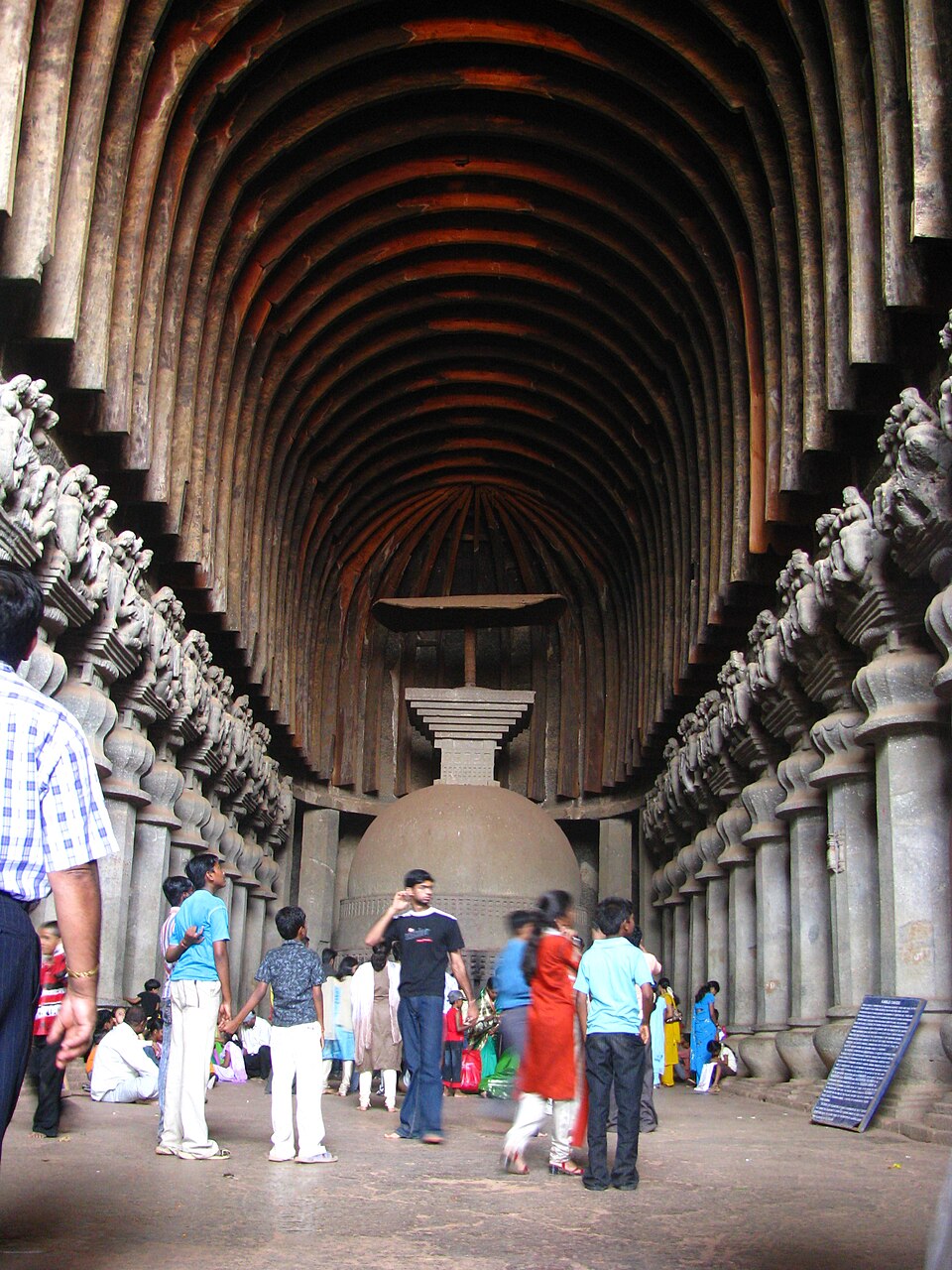
- Buddhist art (Amaravati stupa, Karle & Nasik chaityas) grew through public/collective donations by merchants, guilds, monks and lay devotees.
- Assuming the Satavahanas patronised Sanskrit — their language of choice was Prakrit
- Treating ancient art as purely royal — Satavahana Buddhist art was largely funded by public/collective donations
UPPSC & UPSC test the Satavahanas via language (Prakrit/Hala) and art patronage (Amaravati, cave donations) — usually as 'which statement is correct' pairs.
- practice — not a real PYQ
The Prakrit text 'Gaha Sattasai' (Gathasaptashati) is attributed to which Satavahana ruler?
- (a)Gautamiputra Satakarni
- (b)Hala
- (c)Vasishthiputra Pulumavi
- (d)Simuka
Answer(b) Hala — the Satavahana king credited with the Prakrit poetry anthology Gaha Sattasai. - practice — not a real PYQ
The Amaravati school of art developed mainly under the patronage of which dynasty?
- (a)Kushanas
- (b)Guptas
- (c)Satavahanas
- (d)Mauryas
Answer(c) Satavahanas — the Amaravati stupa and its marble sculpture flourished in the Satavahana Deccan.