
A non-renewable source of energy is
- (a)Solar energy
- (b)Petroleum
- (c)Wind energy
- (d)Biogas
Correct — B, Petroleum. Petroleum (crude oil) is a fossil fuel formed over millions of years from the buried remains of ancient marine organisms subjected to heat and pressure. Because it regenerates over geological timescales — vastly slower than we consume it — its stock is effectively fixed and will be exhausted with use; that is exactly what 'non-renewable' means. The other three options replenish continuously on a human timescale, so among the given choices only petroleum is a non-renewable source of energy.
- (a)Solar energy — Wrong — solar energy comes directly from the Sun and is inexhaustible on any human timescale; it is the archetypal renewable source, not non-renewable.
- (c)Wind energy — Wrong — wind is driven by continuous solar heating of the atmosphere and the Earth's rotation, so it is constantly replenished; it is a renewable source.
- (d)Biogas — Wrong — biogas is produced by the anaerobic decomposition of biomass (dung, crop and organic waste), a feedstock that regrows continuously; it is a renewable (bio-) energy source.
Energy sources are classed as renewable (replenished naturally on a human timescale — solar, wind, hydro, tidal, geothermal, biomass/biogas) or non-renewable (a finite stock that took geological ages to form and is used up faster than it re-forms — the fossil fuels coal, petroleum and natural gas, plus nuclear fuels like uranium). Fossil fuels are also called 'conventional' or 'exhaustible' sources.
The test is simply: does the source refill on its own within a lifetime? Sunlight, wind and biomass do; crude oil laid down over millions of years does not. Three of the four options (solar, wind, biogas) are textbook renewables, so the odd one out — petroleum, a fossil fuel — must be the non-renewable source.
- Non-renewable (exhaustible) sources: coal, petroleum, natural gas (fossil fuels) and nuclear fuels such as uranium.
- Renewable sources: solar, wind, hydro, tidal, geothermal and biomass/biogas.
- Petroleum is a fossil fuel formed over millions of years from buried organic (marine) matter.
- Biogas (mainly methane) is generated by anaerobic decomposition of biomass, so its feedstock is continuously renewable.
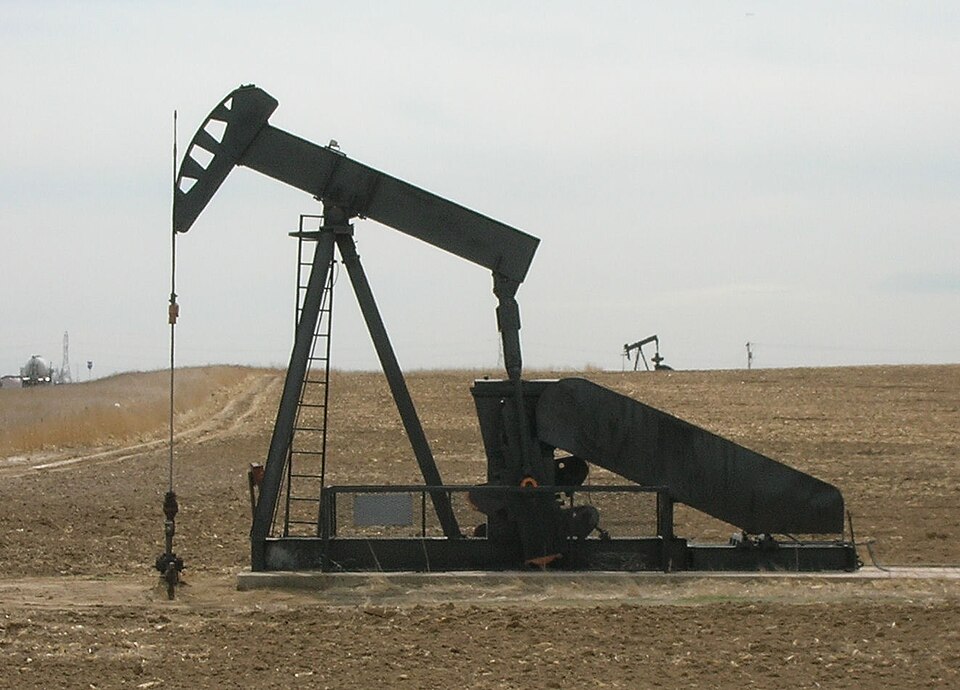
- Assuming biogas or biomass is non-renewable because it 'burns like fuel' — its feedstock regrows, so it is renewable
- Confusing 'non-conventional' with 'non-renewable' — solar/wind are non-conventional but renewable
UPPSC & UPSC ask you to sort a list into renewable vs non-renewable (or conventional vs non-conventional) — remember only the fossil and nuclear fuels are non-renewable.
- practice — not a real PYQ
Which one of the following is a non-renewable source of energy?
- (a)Tidal energy
- (b)Geothermal energy
- (c)Natural gas
- (d)Hydro energy
Answer(c) Natural gas — a fossil fuel and hence non-renewable; tidal, geothermal and hydro are all renewable. - practice — not a real PYQ
Which of the following are considered conventional (non-renewable) sources of energy? 1. Coal 2. Petroleum 3. Solar 4. Natural gas
- (a)1, 2 and 3
- (b)1, 2 and 4
- (c)2, 3 and 4
- (d)1, 3 and 4
Answer(b) 1, 2 and 4 — coal, petroleum and natural gas are fossil (non-renewable) fuels; solar is renewable.