
Flyash pollution is caused by
- (a)Oil refining
- (b)Fertilizer industry
- (c)Thermal power plant
- (d)Mining
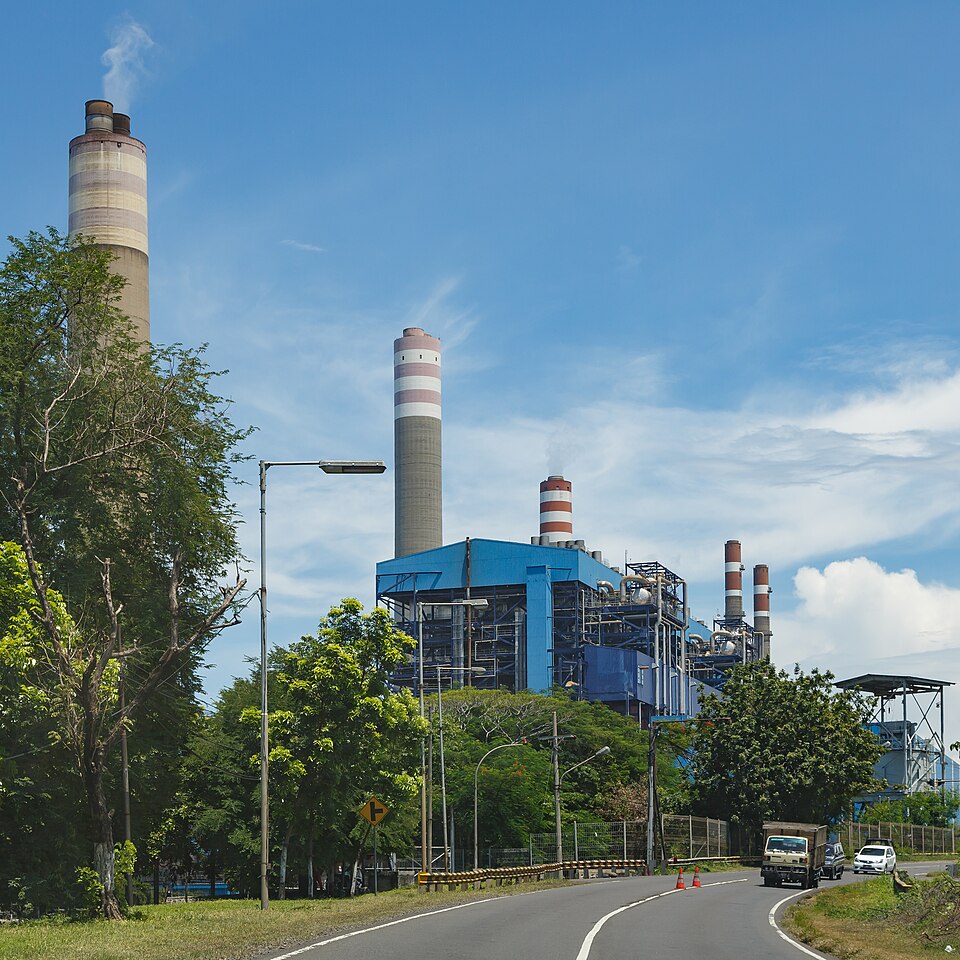
Correct — C, Thermal power plant. Fly ash is the fine, glassy residue produced when pulverised coal is burnt in coal-fired thermal power stations; it is carried upward with the flue gases and captured by electrostatic precipitators (ESPs) before the gas leaves the chimney. Because coal-based thermal plants burn enormous quantities of coal, they are the dominant source of fly-ash pollution in India — the ash carries silica, alumina and toxic trace elements (arsenic, mercury, cadmium) and, if unmanaged, contaminates air, land and water.
- (a)Oil refining — Refineries process crude oil, not coal; their characteristic wastes are petroleum coke, oily sludge, spent catalysts and gaseous emissions (SO2, VOCs) — not fly ash, which comes from coal combustion.
- (b)Fertilizer industry — Fertilizer plants generate effluents, phosphogypsum and gaseous emissions (ammonia, fluorides); they do not burn pulverised coal to produce fly ash.
- (d)Mining — Mining generates overburden, tailings, dust and acid mine drainage. Coal mining moves and extracts coal but does not combust it — and fly ash is a product of burning coal, not of mining it.
Coal combustion in a thermal power plant leaves two ash fractions — the light 'fly' ash that rises with the flue gas (trapped by electrostatic precipitators) and the heavier 'bottom ash' that settles in the furnace. Fly ash is a major solid-waste and air-pollution challenge, but it is also a resource: it is used to make fly-ash bricks and to partially replace Portland cement in concrete, and its handling is governed by MoEFCC fly-ash utilisation notifications.
The trap is to associate 'ash / heavy pollution' with any big industry. The one keyword that fixes the answer is coal combustion — only a process that burns coal produces fly ash, and among the four options only the thermal power plant does. Oil refining, fertilizer plants and mining pollute, but in other ways.
- Fly ash = fine residue from burning pulverised coal in thermal power plants; captured by electrostatic precipitators.
- Composition: mainly silica, alumina and iron oxide, plus toxic trace elements (arsenic, mercury, cadmium).
- Reused productively in fly-ash bricks and as partial replacement for cement in concrete.
- Coal-based thermal power is India's single largest source of fly ash.
- Confusing fly ash with bottom ash
- Assuming mining (which only moves coal) makes fly ash, rather than combustion
UPPSC and UPSC ask either 'what causes fly-ash pollution' (source = coal thermal plants) or the uses / composition of fly ash (bricks, cement, toxic elements).
With reference to 'fly ash' produced by the power plants using coal as fuel, which of the following statements is/are correct? 1. Fly ash can be used in the production of bricks for building construction. 2. Fly ash can be used as a replacement for some of the Portland cement contents of concrete. 3. Fly ash is made up of silicon dioxide and calcium oxide only, and does not contain any toxic elements.
- (a) 1 and 2
- (b) 2 only
- (c) 1 and 3
- (d) 3 only
Answer(a) 1 and 2
Same concept — fly ash is a by-product of coal-based thermal power plants. UPSC 2015 tests its uses (bricks, cement replacement) and confirms it does contain toxic trace elements, which is exactly the source UPPSC 2021 asks students to identify.
- practice — not a real PYQ
Fly ash carried up with the flue gases of a thermal power plant is captured mainly by:
- (a)Cyclone separators alone
- (b)Electrostatic precipitators
- (c)Wet scrubbers for CO2
- (d)Catalytic converters
Answer(b) Electrostatic precipitators — they electrically charge and collect the fine ash before the gas exits the chimney. - practice — not a real PYQ
Which of the following is a recognised productive use of fly ash?
- (a)Making fly-ash bricks and partially replacing cement in concrete
- (b)As a nitrogen fertilizer
- (c)As a drinking-water coagulant
- (d)As a vehicle fuel
Answer(a) Making fly-ash bricks and partially replacing Portland cement in concrete.