
'SENSEX' is the popular Index of Bombay Stock Exchange (BSE). It is measured on the basis of how many blue chip companies listed in BSE?
- (a)20
- (b)30
- (c)25
- (d)10
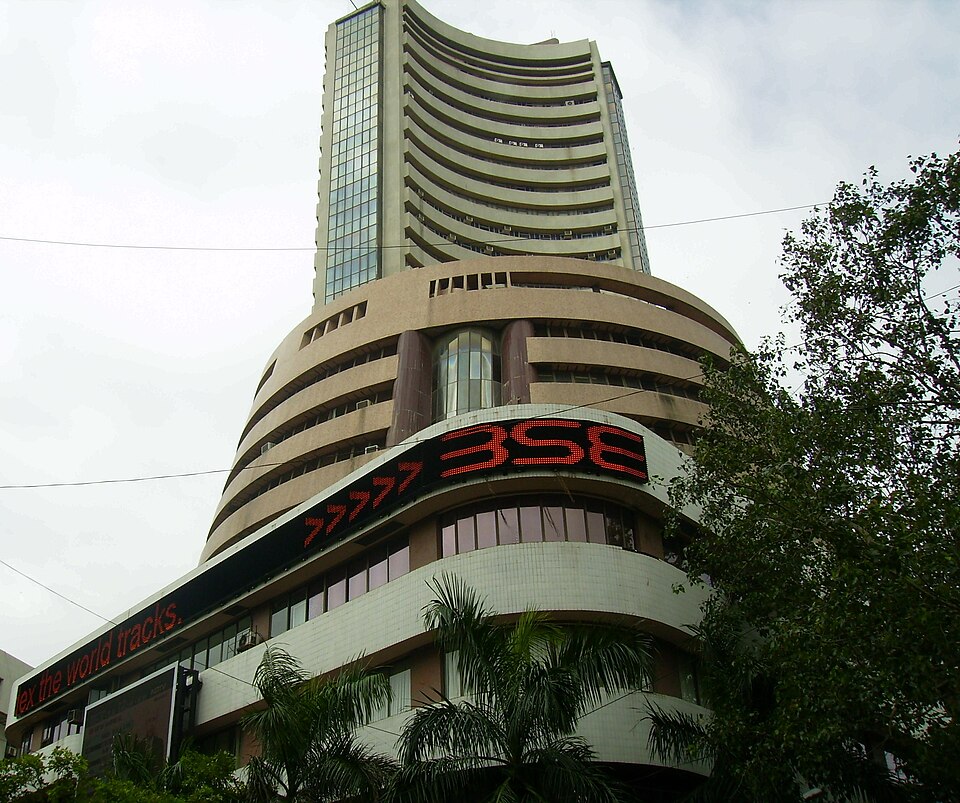
Correct — B, 30. The S&P BSE SENSEX ('Sensitive Index') of the Bombay Stock Exchange is computed from 30 large, financially sound, well-established ('blue-chip') companies listed on the BSE. It is a free-float market-capitalisation-weighted index, with a base year of 1978-79 and a base value of 100, and is the most widely tracked barometer of the Indian equity market. So the SENSEX is based on 30 companies. Hence 30 is the answer.
- (a)20 — Wrong — the SENSEX basket is 30 companies, not 20.
- (c)25 — Wrong — 25 is not the SENSEX figure; the index comprises 30 constituent stocks.
- (d)10 — Wrong — far too few; the SENSEX is built on 30 blue-chip companies, not 10.
A stock-market index summarises the price movement of a representative basket of shares. The BSE SENSEX tracks 30 blue-chip companies and is free-float market-capitalisation-weighted (base year 1978-79 = 100), while the NSE's benchmark NIFTY 50 tracks 50 companies. A rise in the index signals an overall rise in the prices of its constituent shares.
The distractors 20, 25 and 10 are plausible-sounding numbers, so the reliable anchor is the pair 'SENSEX = 30 (BSE), NIFTY = 50 (NSE)'. Do not confuse the two benchmarks or assume the index covers all BSE-listed companies.
- The BSE SENSEX comprises 30 blue-chip companies and is free-float market-capitalisation-weighted.
- Its base year is 1978-79, with a base index value of 100.
- The Bombay Stock Exchange (established 1875) is Asia's oldest stock exchange.
- The NSE's NIFTY 50 is the comparable benchmark, based on 50 companies.
- Confusing SENSEX (30, BSE) with NIFTY 50 (50, NSE)
- Thinking the index covers all BSE-listed companies rather than only 30 representative stocks
UPPSC & UPSC ask the number of SENSEX constituents or what a SENSEX rise means — remember SENSEX = 30 blue-chip BSE stocks, base year 1978-79 = 100.
Consider the following statements: 1. Sensex is based on 50 of the most important stocks available on the Bombay Stock Exchange (BSE). 2. For calculating the Sensex, all the Sensex stocks are assigned proportional weightage. 3. New York Stock Exchange is the oldest stock exchange in the world. Which of the statements given above is/are correct?
- (a) 2 only
- (b) 1 and 3
- (c) 2 and 3
- (d) None
Answer(a) 2 only
Same concept — UPSC tested the SENSEX composition, with Statement 1 wrong precisely because the index is based on 30 (not 50) stocks.
A rise in 'SENSEX' means
- (a) a rise in prices of shares of all companies registered with Bombay Stock Exchange
- (b) a rise in prices of shares of all companies registered with National Stock Exchange
- (c) an overall rise in prices of shares of group of companies registered with Bombay Stock Exchange
- (d) a rise in prices of shares of all companies belonging to a group of companies registered with Bombay Stock Exchange
Answer(c) an overall rise in prices of shares of a group of companies registered with the Bombay Stock Exchange
Same concept — the SENSEX as an index of a representative group of BSE companies (the 30 blue-chip constituents), not of all listed firms.
- practice — not a real PYQ
NIFTY 50, the benchmark index of the National Stock Exchange (NSE), is based on how many companies?
- (a)30
- (b)50
- (c)100
- (d)25
Answer(b) 50 — NIFTY 50 tracks 50 large, liquid companies on the NSE. - practice — not a real PYQ
The base year of the BSE SENSEX is:
- (a)1978-79
- (b)1980-81
- (c)1991-92
- (d)2000-01
Answer(a) 1978-79 — the SENSEX has a base year of 1978-79 and a base value of 100.