
Which one of the following is the youngest mountain range of India?
- (a)Himadri Range
- (b)Aravalli Range
- (c)Western Ghat
- (d)Vindhya Range
Correct — (a) Himadri Range. The Himadri (the Greater or Inner Himalaya) is part of the Himalayas — the youngest fold mountains in India and the world — thrown up only about 50 million years ago (Cenozoic era) by the collision of the Indian and Eurasian plates. The process is still going on, which is why the Himalayas keep rising and are seismically active.
- (b)Aravalli Range — The Aravallis are among the oldest fold mountains in the world (Precambrian) — the very opposite of 'youngest'; they are now heavily eroded and low.
- (c)Western Ghat — The Western Ghats are old block/escarpment mountains along the faulted western edge of the Deccan plateau, far older than the Himalayan uplift.
- (d)Vindhya Range — The Vindhyas are ancient relict/block mountains of Peninsular India built on very old rocks — not a young fold range.
Mountains are classified by mode and age of formation. The Himalayas are young fold mountains (Tertiary/Cenozoic, ~50 mya) formed by plate collision. Peninsular ranges — Aravalli, Vindhya, Satpura — are old relict/block mountains on some of Earth's oldest crust, while the Western Ghats are the uplifted, faulted western margin of the Deccan.
'Youngest' means most recently formed, i.e. the Himalayas. Among the options only the Himadri belongs to the Himalayas; the other three are all Peninsular/old. So the answer is the Himalayan option, Himadri.
- The Himalayas are the youngest and highest fold mountains on Earth, formed about 50 million years ago and still rising.
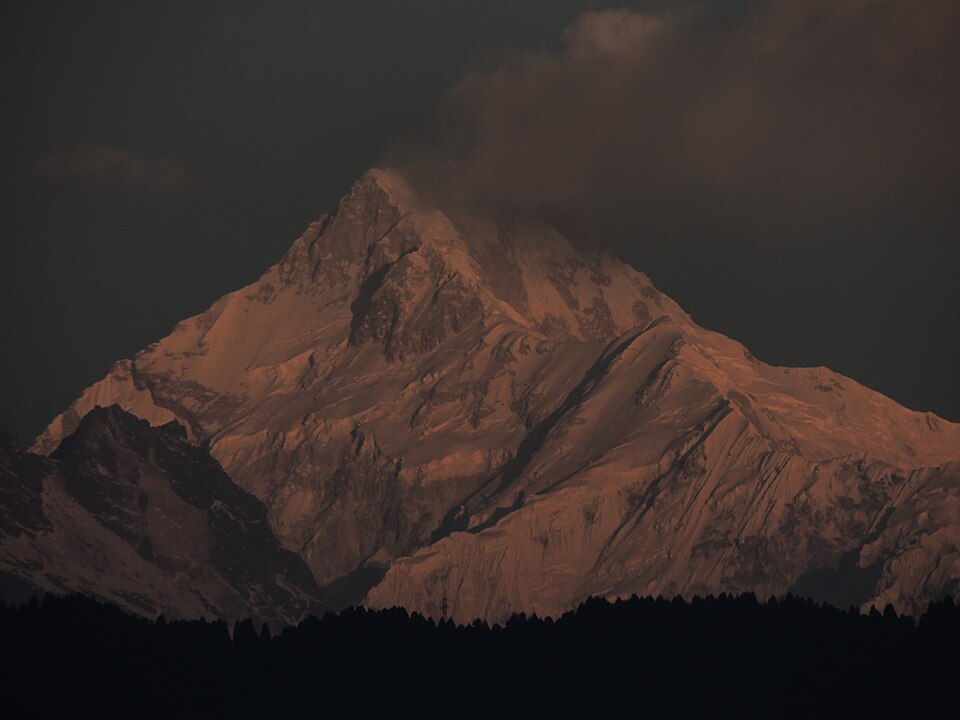
- Himadri (Greater Himalaya) is the loftiest, perpetually snow-capped inner range (peaks like Everest, Kanchenjunga, Nanda Devi).
- The Aravalli Range is one of the world's oldest fold mountains (Precambrian).
- The Vindhyas and Western Ghats are old Peninsular block/relict highlands, not young folds.
- Assuming 'youngest' means shortest or lowest — it refers to time of formation.
- Within the Himalayas the Shiwaliks are actually the youngest sub-range, but among these four options only Himadri is Himalayan, so Himadri is the intended answer.
UPSC/UPPSC test the relative age of Indian mountains (oldest = Aravalli, youngest = Himalayas) and the north-to-south Himalayan range sequence.
The approximate age of the Aravalli's range is
- (a) 370 million years
- (b) 470 million years
- (c) 570 million years
- (d) 670 million years
Answer(a) 370 million years
Same concept — relative age of Indian ranges; the Aravallis are the old end of the spectrum against which the Himadri (Himalaya) is the youngest.
Match List I with List II: I. Deccan Traps II. Western Ghats III. Aravalli IV. Narmada-Tapi | List II: A) Late Cenozoic B) Pre-Cambrian C) Cretaceous-Eocene D) Cambrian Alluvial deposits E) Pleistocene
- (a) I-C, II-E, III-A, IV-D
- (b) I-C, II-A, III-B, IV-E
- (c) I-B, II-A, III-C, IV-D
- (d) I-A, II-D, III-B, IV-E
Answer(b) I-C, II-A, III-B, IV-E
Directly on the geological ages of Indian landforms — Aravalli = Precambrian (oldest), reinforcing that the Himalaya/Himadri is the youngest.
- practice — not a real PYQ
The Himalayas are classified as which type of mountains?
- (a)Block mountains
- (b)Young fold mountains
- (c)Volcanic mountains
- (d)Relict mountains
Answer(b) Young fold mountains — formed by the collision of the Indian and Eurasian plates. - practice — not a real PYQ
Which of the following is the oldest fold mountain range in India?
- (a)Himadri
- (b)Shiwalik
- (c)Aravalli
- (d)Karakoram
Answer(c) Aravalli — among the world's oldest fold mountains (Precambrian).