
Who among the following leaders did NOT participated in the Second Round Table Conference ?
- (a)M.K. Gandhi
- (b)Sarojini Naidu
- (c)Pt. Madan Mohan Malviya
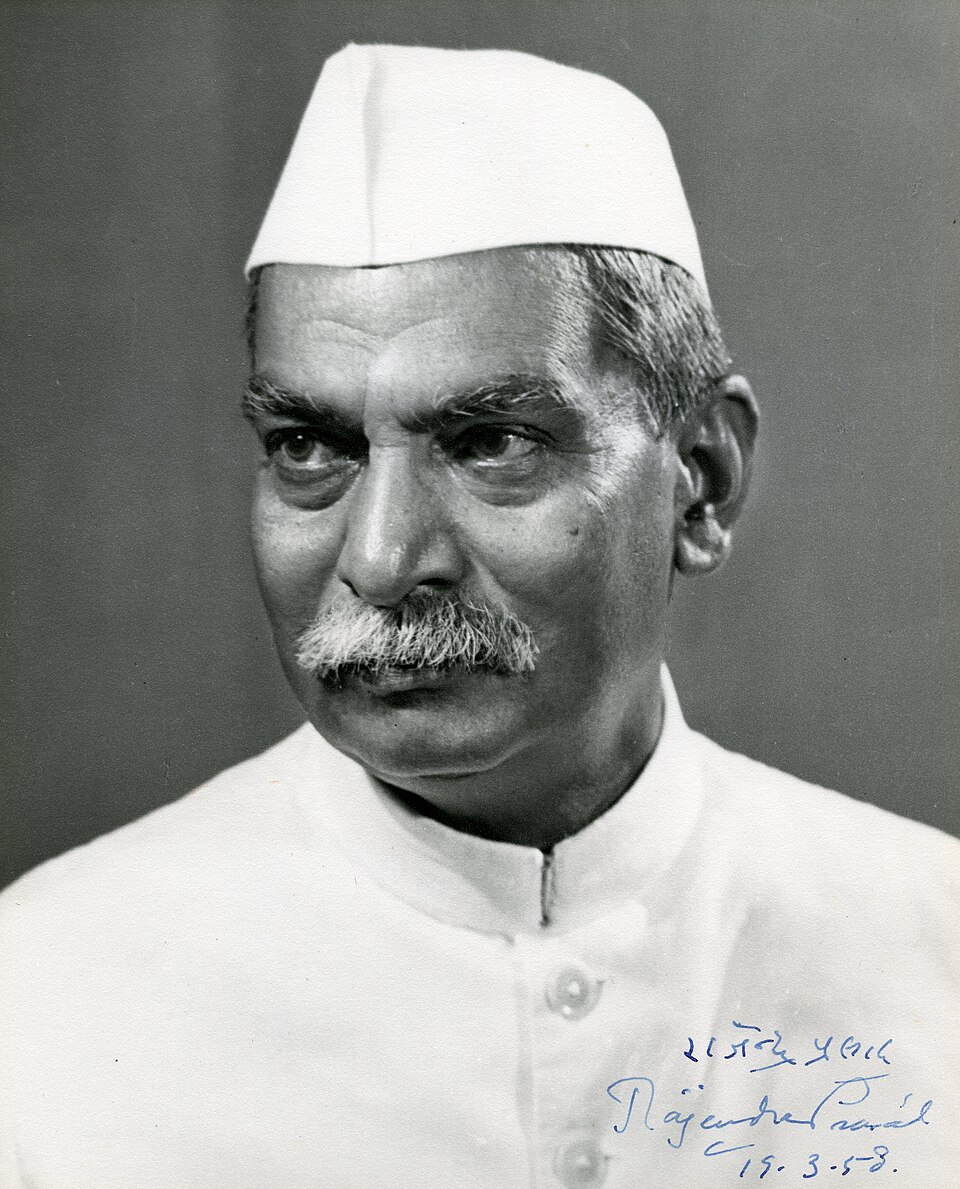
- (d)Dr. Rajendra Prasad
Correct — D, Dr. Rajendra Prasad. The Second Round Table Conference (London, 7 September – 1 December 1931) was the only one the Indian National Congress attended, and it sent Mahatma Gandhi as its sole official representative after the Gandhi-Irwin Pact (March 1931). Gandhi was accompanied by Congress colleagues including Sarojini Naidu and Madan Mohan Malviya. Dr. Rajendra Prasad was NOT part of the delegation to the Second RTC — so he is the leader who did not participate.
- (a)M.K. Gandhi — Gandhi DID attend — he was the Congress's sole official representative at the Second RTC, going after the Gandhi-Irwin Pact. He is the one figure most identified with this conference.
- (b)Sarojini Naidu — Sarojini Naidu DID attend the Second RTC; she travelled to London as part of the group accompanying Gandhi.
- (c)Pt. Madan Mohan Malviya — Madan Mohan Malviya DID participate in the Second RTC — he was among the Indian leaders present at the 1931 session.
Three Round Table Conferences (1930-32) were held in London to discuss constitutional reform. The Congress boycotted the First (1930-31) and Third (1932), attending only the SECOND (1931), where Gandhi represented it alone under the Gandhi-Irwin Pact. The Second RTC deadlocked over the communal question (minority electorates), leading to the Communal Award (1932) and the Poona Pact.
All four names are famous nationalist leaders, so the question tests who was actually in the 1931 delegation. Anchor on the certainties: Gandhi (sole Congress representative) definitely attended, and so did Sarojini Naidu and Malviya. By elimination, Dr. Rajendra Prasad — later India's first President — is the one who did not go to the Second RTC.
- Second Round Table Conference: London, 7 Sept – 1 Dec 1931; the only RTC the Congress joined.
- Gandhi attended as the Congress's sole official representative, following the Gandhi-Irwin Pact (March 1931).
- Sarojini Naidu and Madan Mohan Malviya were among the Indian leaders present at the Second RTC.
- The conference broke down over the communal (minority-representation) question, leading to the 1932 Communal Award and the Poona Pact.
- Assuming every prominent Congress leader attended the Second RTC — Gandhi went essentially alone as the official Congress representative.
- Confusing which RTC the Congress attended: only the Second (not the First or Third).
UPPSC/UPSC test the RTCs by asking who attended which session, the Congress's stance at each, and the chain First RTC → Gandhi-Irwin Pact → Second RTC → Communal Award/Poona Pact → GoI Act 1935.
The meeting of Indian and British political leaders during 1930-32 in London has often been referred to as the First, Second and Third Round Table Conferences. It would be incorrect to refer to them as such because
- (a) the Indian National Congress did not take part in two of them
- (b) Indian parties other than the Indian National Congress participating in the Conference represented sectional interests and not the whole of India
- (c) the British Labour Party had withdrawn from the Conference, thereby making the proceedings of the Conference partisan
- (d) it was an instance of Conference held in three sessions and not that of three separate conferences
Answer(d) it was one conference held in three sessions rather than three separate conferences (UPSC's key answer).
Same topic — the 1930-32 Round Table Conferences in London — testing the nature and Congress participation of the sessions this question probes.
Consider the following statements: 1. In the First Round Table Conference Dr. Ambedkar demanded electorates for the depressed classes. 2. In the Poona Pact, special provisions for representation of the depressed people in the local bodies and civil services were made. 3. The Indian National Congress did not take part in the Third Round Table Conference. Which of the statements given above is/are correct?
- (a) 1 and 2
- (b) 2 and 3
- (c) 1 and 3
- (d) 1, 2 and 3
Answer(c) 1 and 3 — Ambedkar's demand at the First RTC and the Congress's absence from the Third RTC are correct; statement 2 misstates the Poona Pact.
Directly tests Round Table Conference participation — including that the Congress stayed away from the Third RTC — the same 'who joined which RTC' theme as this question.
- practice — not a real PYQ
The Indian National Congress participated in which of the three Round Table Conferences?
- (a)Only the First
- (b)Only the Second
- (c)First and Second
- (d)All three
Answer(b) Only the Second — the Congress boycotted the First and Third RTCs and joined only the Second (1931), sending Gandhi as its sole representative. - practice — not a real PYQ
Mahatma Gandhi attended the Second Round Table Conference as the Congress representative as a consequence of which agreement?
- (a)The Poona Pact
- (b)The Lucknow Pact
- (c)The Gandhi-Irwin Pact
- (d)The Communal Award
Answer(c) The Gandhi-Irwin Pact (March 1931) — under it the Congress suspended Civil Disobedience and agreed to take part in the Second RTC.