
Given below are two statements, one is labelled as Assertion (A) and other as Reason (R) : Assertion (A) : Invert sugar is more sweeter than sucrose. Reason (R) : Invert sugar is obtained by the hydrolysis of sucrose. Select the correct answer from the codes given below. Codes :
- (a)Both (A) and (R) are true and (R) is the correct explanation of (A)
- (b)Both (A) and (R) are true but (R) is not the correct explanation of (A)
- (c)(A) is true but (R) is false
- (d)(A) is false but (R) is true
Correct — B, both (A) and (R) are true, but (R) is not the correct explanation of (A). Assertion: invert sugar really is sweeter than sucrose — it is an equimolar mixture of glucose and fructose, and fructose is the sweetest common sugar (about 1.7 times as sweet as sucrose), so the mixture out-sweetens sucrose. Reason: invert sugar is genuinely obtained by hydrolysing sucrose (sucrose + water → glucose + fructose, catalysed by the enzyme invertase or by acid) — also true. But the reason invert sugar tastes sweeter is the free fructose it contains, not the mere fact that it was made by hydrolysis; R states the method of preparation, not the cause of the extra sweetness. Hence both are true, yet R does not explain A.
- (a)Both (A) and (R) are true and (R) is the correct explanation of (A) — R (how invert sugar is made) is true but does not explain WHY it is sweeter — the extra sweetness is due to fructose, not to the hydrolysis process — so R is not the correct explanation.
- (c)(A) is true but (R) is false — R is true — invert sugar really is produced by the hydrolysis of sucrose into glucose and fructose.
- (d)(A) is false but (R) is true — A is true — invert sugar is sweeter than sucrose because of its fructose content.
Sucrose is a disaccharide of glucose and fructose. Its acid or enzymatic (invertase) hydrolysis yields an equimolar glucose–fructose mixture called invert sugar. The name comes from the inversion of optical rotation — sucrose is dextrorotatory, but the product mixture is net levorotatory because fructose is strongly levorotatory. Because free fructose is much sweeter than sucrose, invert sugar is sweeter and also resists crystallisation.
In an Assertion–Reason item, verify both parts, then test causality. Here both facts are correct, but the causal link fails: the sweetness owes to fructose's high sweetness, not to the act of hydrolysis — so the answer is 'both true, R does not explain A'.
- Invert sugar = a 1:1 mixture of glucose and fructose from hydrolysis of sucrose (by invertase enzyme or dilute acid)
- Named 'invert' because hydrolysis inverts the optical rotation — sucrose is dextrorotatory, the product mixture net levorotatory (due to fructose)
- Fructose is the sweetest natural sugar (~1.7x sucrose); it is why invert sugar is sweeter than sucrose
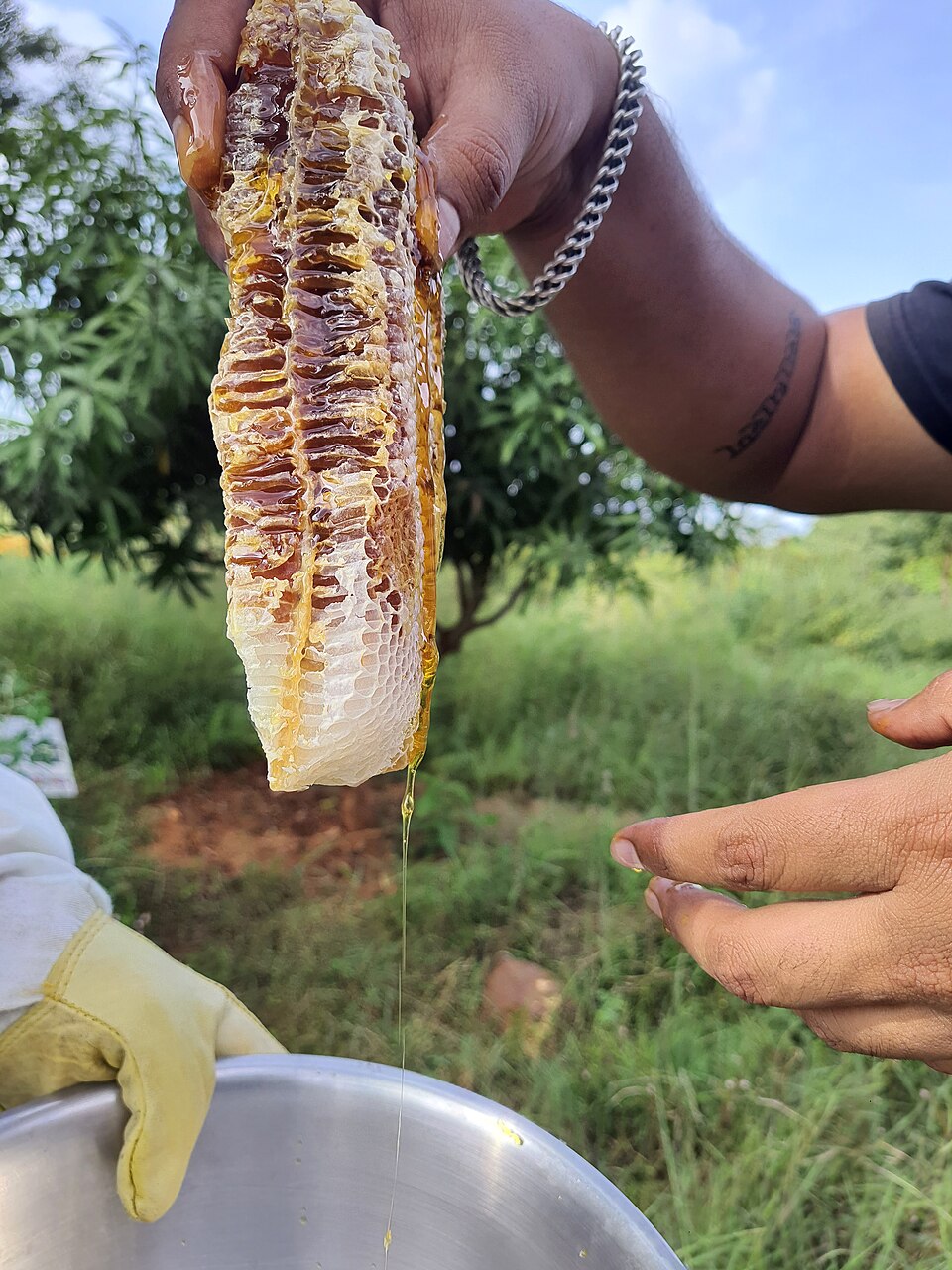
- Honey is a natural invert sugar — bees' invertase splits nectar sucrose into glucose and fructose
- Assuming a method of preparation (R) automatically explains a property (A)
- Thinking sucrose is a monosaccharide (it is a disaccharide)
- Forgetting that fructose is sweeter than sucrose
As Assertion–Reason or 'invert sugar / why is it sweeter' — remember invert sugar = glucose + fructose from sucrose hydrolysis, sweeter because of fructose, and honey is a natural invert sugar.
The major component of honey is
- (a) glucose
- (b) sucrose
- (c) maltose
- (d) fructose
Answer(d) fructose
Same sugar-chemistry concept — honey is natural invert sugar and its major single component is fructose, the very sugar that makes invert sugar sweeter than sucrose in this UPPSC item.
- practice — not a real PYQ
Invert sugar is a mixture of
- (a)glucose and galactose
- (b)glucose and fructose
- (c)fructose and maltose
- (d)two glucose units
Answer(b) glucose and fructose — the two products of sucrose hydrolysis. - practice — not a real PYQ
Honey largely consists of which type of sugar?
- (a)sucrose
- (b)invert sugar (glucose + fructose)
- (c)lactose
- (d)starch
Answer(b) invert sugar (glucose + fructose) — nectar sucrose hydrolysed by bees' invertase.