
Given below are two statements, one is labelled as Assertion (A) and the other as Reason (R). Assertion (A) : Maximum number of the species of butterflies are found in tropical countries. Reason (R) : Butterflies can not tolerate low temperatures. Select the correct answer using the codes given below : Codes :
- (a)Both (A) and (R) are true and (R) is the correct explanation of (A)
- (b)Both (A) and (R) are true but (R) is not the correct explanation of (A)
- (c)(A) is true but (R) is false
- (d)(A) is false but (R) is true
Correct — A, both (A) and (R) are true and (R) is the correct explanation of (A). The Assertion states the standard pattern of biogeography: butterfly species richness rises steeply from the poles towards the equator, and the wet tropics — the Amazon basin, the Indo-Malayan region, tropical Africa — hold by far the greatest number of species. India, tropical and subtropical, counts its butterflies in four figures while a temperate country such as Britain counts its resident species in dozens. The Reason gives the biological cause the examiner wants: butterflies are ectothermic (cold-blooded) insects whose body temperature follows the surroundings. They cannot generate enough internal heat to stay active in the cold — a butterfly must first bask, spreading its wings to the sun, until its flight muscles reach roughly the low thirties in degrees Celsius before it can fly at all — and egg, larval and pupal development is likewise driven by warmth. Where it is warm and productive all year, more species can complete more generations and coexist; where winter shuts flight and growth down for months, far fewer can persist. Because the temperature dependence of butterflies is what produces the tropical concentration, (R) genuinely explains (A), and the answer is (a). One honest caveat for a careful student: 'cannot tolerate low temperatures' is best read as 'cannot remain active in the cold'. Some butterflies do live in cold places — the Apollo butterflies (Parnassius) fly at great heights in the Himalaya, and temperate species survive winter in diapause as eggs, larvae or pupae, or migrate away from it. Warmth is also not the only driver of tropical richness; the year-round abundance of host plants, greater habitat complexity and a long, climatically stable history all contribute. The exam's reasoning is sound as the main cause, not as the only one.
- (b)Both (A) and (R) are true but (R) is not the correct explanation of (A) — The two statements are not merely both true — they are causally linked. Being ectothermic is exactly why butterflies are concentrated in warm regions, so the Reason does explain the Assertion.
- (c)(A) is true but (R) is false — The Reason is not false. Butterflies are cold-blooded insects that cannot fly until their flight muscles are warmed, and their development slows or stops in the cold — the reason is a correct statement of insect physiology.
- (d)(A) is false but (R) is true — The Assertion is well established. Species richness of butterflies, like that of most groups, peaks in the tropics — this is the latitudinal diversity gradient, one of the oldest documented patterns in ecology.
Two ideas meet in this question. The first is ectothermy: insects, and butterflies among them, do not maintain a constant internal temperature, so ambient warmth sets the pace of flight, feeding, mating and development. The second is the latitudinal diversity gradient — for almost every major group of organisms, the number of species increases from the poles towards the equator. For a temperature-dependent group like butterflies, the two ideas fit together neatly: a warm, frost-free, continuously productive environment lets many species breed through the year and coexist in a fine-grained mosaic of niches, while a temperate or polar environment permits only the few that can survive a long dead season.
In an assertion-reason item, decide three things in order: is A true, is R true, and does R cause A? Here A is a textbook pattern and R is textbook physiology, so the whole question turns on the third test. Ask whether the reason, if removed, would leave the pattern unexplained — take away the cold-sensitivity of butterflies and there is no obvious reason for them to cluster in the tropics. That is the mark of a genuine explanation, so option (a) rather than (b). Resist the temptation to reject R because you can think of a Himalayan or Arctic butterfly; exam reasons are stated broadly, and the presence of exceptions does not overturn a general physiological truth.
- Butterflies are ectothermic — their body temperature tracks the surroundings, and they bask with wings spread to warm the flight muscles before they can fly.
- Species richness of butterflies increases from the poles to the equator; the wet tropics of the Amazon, the Indo-Malayan region and Africa are the richest.
- India, largely tropical and subtropical, has well over a thousand recorded butterfly species; temperate countries typically have only a few dozen resident species.
- Cold-climate butterflies survive winter by diapause as egg, larva or pupa, or by migrating — so the accurate reading of the Reason is that butterflies cannot stay active in the cold.
- Temperature is the main but not the sole driver of tropical richness; host-plant diversity, year-round productivity and habitat complexity also matter.
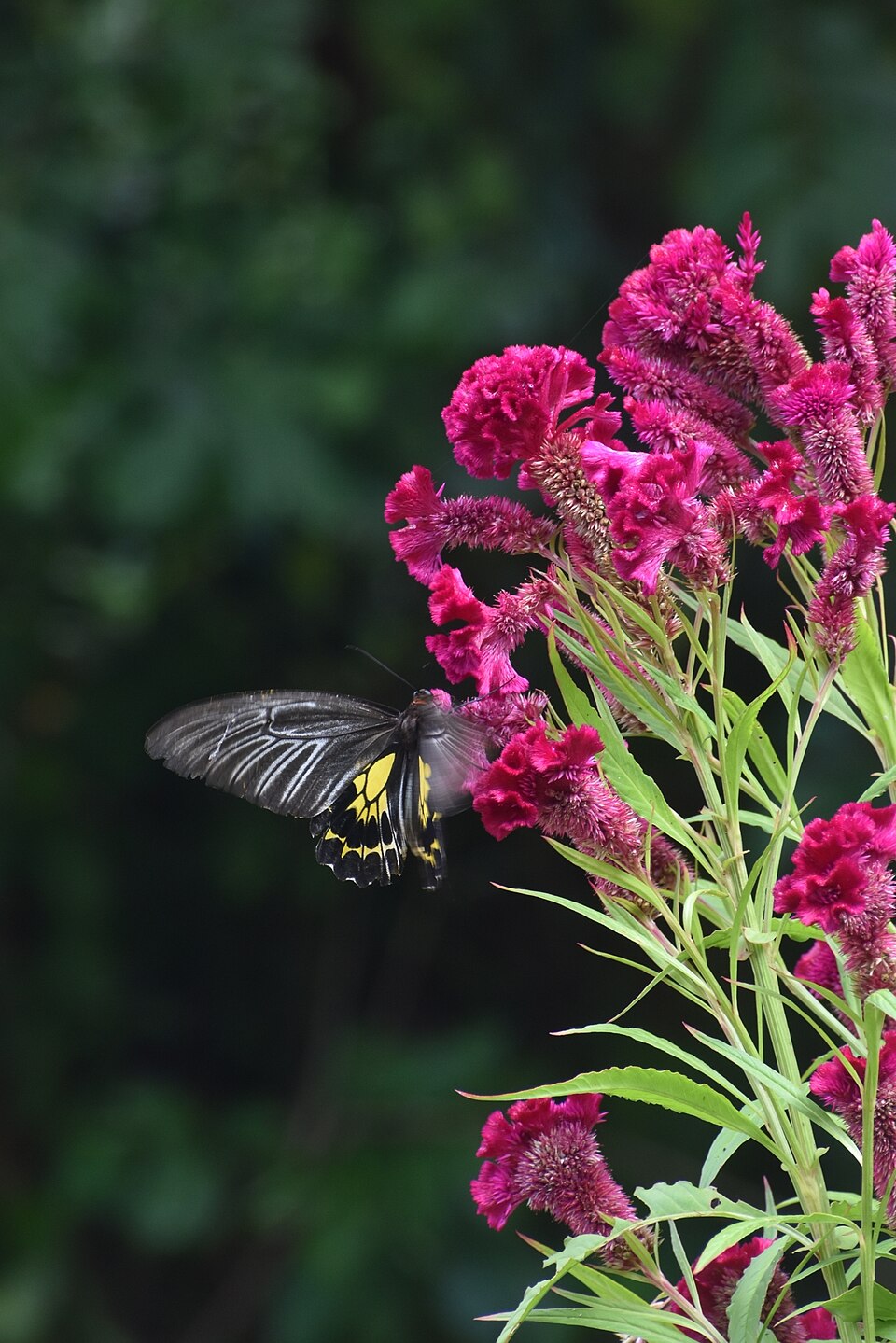
- Reading 'cannot tolerate low temperatures' as an absolute and marking (R) false because some butterflies live in the Himalaya or the Arctic.
- Choosing option (b) reflexively whenever both statements sound true — always test whether the reason actually causes the assertion.
- Assuming temperature alone explains tropical richness; host plants, productivity and habitat variety matter too.
UPPSC likes the assertion-reason format for ecology and animal biology, while UPSC approaches the same subject through consequences and services — what happens if butterfly numbers crash, or why a particular region is species-rich.
Due to some reasons, if there is a huge fall in the population of species of butterflies, what could be its likely consequence/consequences? 1. Pollination of some plants could be adversely affected. 2. There could be a drastic increase in the fungal infections of some cultivated plants. 3. It could lead to a fall in the population of some species of wasps, spiders and birds. Select the correct answer using the code given below:
- (a) 1 only
- (b) 2 and 3 only
- (c) 1 and 3 only
- (d) 1, 2 and 3
Answer(c) 1 and 3 only
The same subject — butterflies as an ecological group — asked from the ecosystem side: where UPPSC tests why they are concentrated in the tropics, UPSC tests what their loss would do to plants and predators.
The Himalayan Range is very rich in species diversity. Which one among the following is the most appropriate reason for this phenomenon?
- (a) It has a high rainfall that supports luxuriant vegetative growth
- (b) It is a confluence of different bio-geographical zones
- (c) Exotic and invasive species have not been introduced in this region
- (d) It has less human interference
Answer(b) It is a confluence of different bio-geographical zones
Both questions ask you to identify the correct cause of a pattern of species richness rather than simply recall where diversity is high.
- practice — not a real PYQ
Butterflies are frequently seen basking with their wings spread open in the early morning sunshine. This behaviour is chiefly because
- (a)they are drying dew from the wings before feeding
- (b)they are ectothermic and must warm their flight muscles before they can fly
- (c)sunlight is needed to activate the pigments that give the wings their colour
- (d)it is a display used only to attract mates
Answer(b) They are ectothermic and must warm their flight muscles before they can fly — basking raises the thoracic temperature to the level flight requires.
- practice — not a real PYQ
The tendency for the number of species of most groups of organisms to increase from the poles towards the equator is known as the
- (a)latitudinal diversity gradient
- (b)species-area relationship
- (c)law of the minimum
- (d)competitive exclusion principle
Answer(a) Latitudinal diversity gradient — one of the oldest and most general patterns in ecology, and the reason butterfly richness peaks in tropical countries.