
Arrange the following monuments in a chronological order and select the correct answer from the codes given below : I. Rabia Daurani's Tomb, Aurangabad II. Shershah Suri's Tomb, Sasaram III. Humayun's Tomb, Delhi IV. Atala Mosque, Jaunpur Codes :
- (a)I, II, IV, III
- (b)IV, II, III, I
- (c)II, I, III, IV
- (d)III, IV, II, I
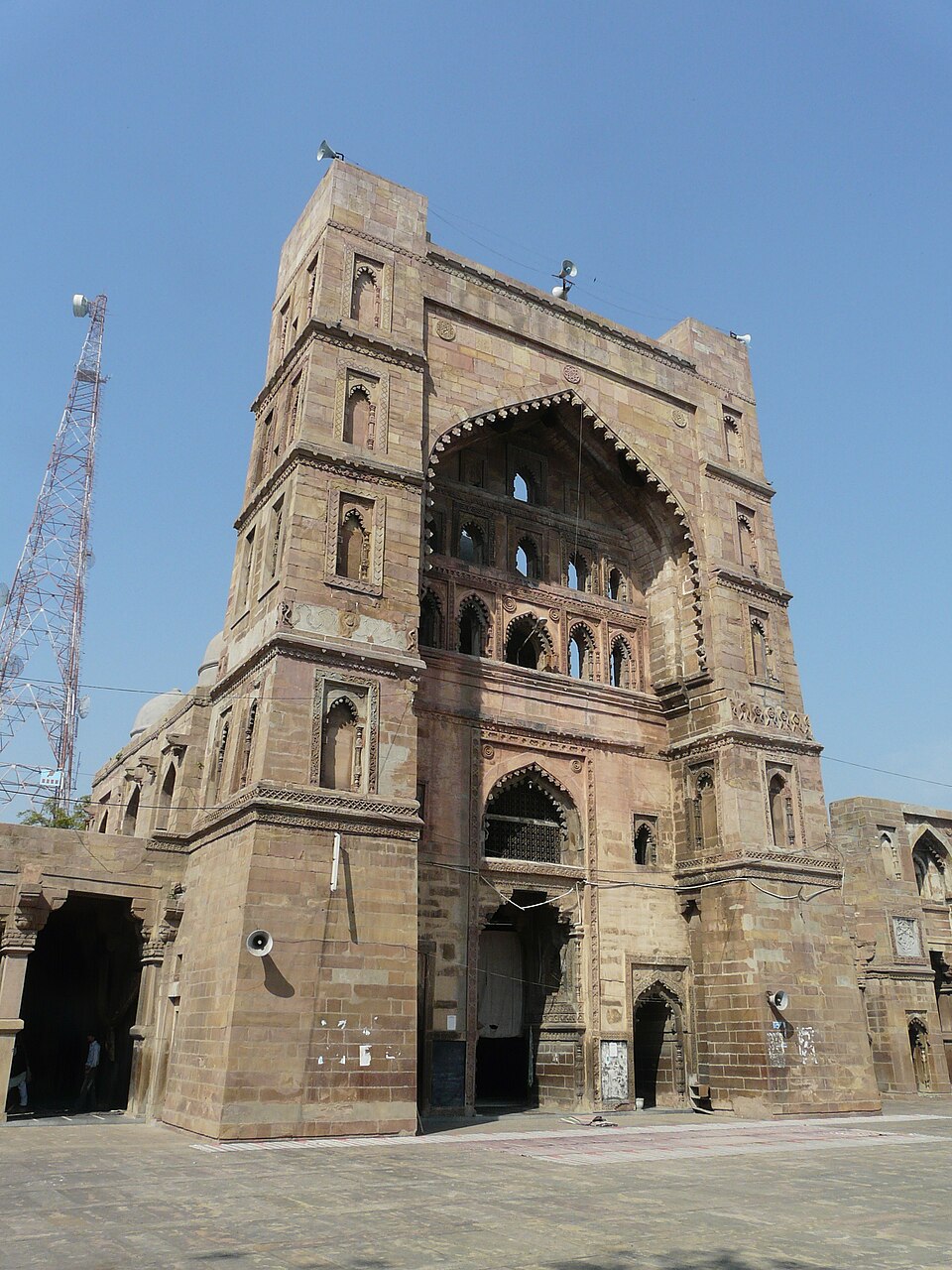
Correct — B, IV, II, III, I. Put the four buildings on a time-line and the sequence is fixed. IV. The Atala Mosque at Jaunpur is the oldest: construction began around 1376 on the site of the Atala Devi temple and it was completed in 1408 under the Sharqi Sultanate of Jaunpur (conventionally attributed to Ibrahim Shah Sharqi). II. Sher Shah Suri's Tomb at Sasaram in Bihar was raised during his short reign (1540-1545) and finished about the time of his death in 1545. III. Humayun's Tomb in Delhi was commissioned by his widow Bega Begum (Haji Begum), begun in 1565 and completed by 1572. I. Rabia Daurani's Tomb — the Bibi Ka Maqbara at Aurangabad — is the youngest: Prince Azam Shah commissioned it in 1660 for his mother Dilras Banu Begum, Aurangzeb's chief consort, who was buried under the posthumous title Rabia-ud-Daurani, and the building is dated to about 1668-69. So the order is 1408 → 1545 → 1572 → 1660s, i.e. IV, II, III, I.
- (a)I, II, IV, III — This puts Rabia Daurani's Tomb (1660s) first when it is in fact the last of the four, and pushes the Atala Mosque (1408) — the oldest — into third place. Both ends of the sequence are inverted.
- (c)II, I, III, IV — It begins with Sher Shah's tomb (1545), which is early but not earliest — the Atala Mosque of 1408 predates it by well over a century — and it ends with the Atala Mosque, the very oldest building on the list. It also places Rabia Daurani's Tomb (1660s) before Humayun's Tomb (1572).
- (d)III, IV, II, I — It starts with Humayun's Tomb (completed 1572) and then places the Atala Mosque (1408) and Sher Shah's tomb (1545) after it. Only the last position — Rabia Daurani's Tomb — is right; the first three are out of order.
The four monuments are milestones in the growth of Indo-Islamic architecture in northern India. The Atala Mosque belongs to the provincial Sharqi style of Jaunpur, whose signature is a colossal sloping propylon (a tapering gateway screen) that masks the central dome and replaces the minaret. Sher Shah Suri's Tomb is the high point of the Indo-Afghan octagonal tomb tradition — an octagonal chamber on a stepped plinth set in the middle of an artificial lake. Humayun's Tomb marks the arrival of the Persianate Mughal idiom: the first great garden-tomb (charbagh) in India, red sandstone with white marble inlay, a double dome, designed by Mirak Mirza Ghiyas. Bibi Ka Maqbara, built a century later, is a scaled-down echo of the Taj Mahal, which is why it is nicknamed the 'Dakkhani Taj'.
Chronology questions are best solved by anchoring the two extremes rather than trying to date all four. Here the Atala Mosque is pre-Mughal — a Sultanate-era building of the fifteenth century — and Rabia Daurani's Tomb is late Mughal, from Aurangzeb's reign. Once you know that the oldest is IV and the youngest is I, only option (b) survives; you never have to decide between Sher Shah's tomb and Humayun's tomb. The trap is the unfamiliar name 'Rabia Daurani', which hides the fact that this is the well-known Bibi Ka Maqbara at Aurangabad.
- Atala Mosque, Jaunpur — begun c. 1376, completed 1408 under the Sharqi Sultanate; Sharqi style, with a huge tapering gateway screen and no minarets.
- Sher Shah Suri's Tomb, Sasaram (Bihar) — built during his reign of 1540-1545; octagonal tomb standing on a plinth in the middle of an artificial lake.
- Humayun's Tomb, Delhi — commissioned by Bega Begum, built 1565-1572; India's first great charbagh garden-tomb and a UNESCO World Heritage Site since 1993.
- Rabia Daurani's Tomb (Bibi Ka Maqbara), Aurangabad — commissioned in 1660 by Prince Azam Shah for his mother Dilras Banu Begum, Aurangzeb's chief consort; dated to about 1668-69.
- Chronological order: Atala Mosque (1408) → Sher Shah's Tomb (1545) → Humayun's Tomb (1572) → Bibi Ka Maqbara (1660s).
- Not recognising 'Rabia Daurani's Tomb' as the Bibi Ka Maqbara at Aurangabad, and therefore guessing its date.
- Assuming the Delhi monument must be the oldest — Jaunpur's Atala Mosque predates Humayun's Tomb by more than 160 years.
- Confusing Sher Shah's octagonal tomb at Sasaram with his other works, or dating it to the Mughal period rather than the brief Sur interregnum of 1540-1555.
UPPSC likes straight chronological ordering of buildings and gives Uttar Pradesh monuments a place in the list; UPSC more often asks which dynasty or ruler built a monument, or matches a monument to its architectural feature.
Consider the following: I. Tughluqabad Fort. II. Lodi Garden. III. Qutub Minar. IV. Fatehpur Sikri. The correct chronological order in which they were built is:
- (a) III, I, IV, II
- (b) III, I, II, IV
- (c) I, III, II, IV
- (d) I, III, IV, II
Answer(b) III, I, II, IV
Exactly the same task — order four Indo-Islamic monuments by date of construction; UPSC used Qutub Minar, Tughluqabad, the Lodi tombs and Fatehpur Sikri where UPPSC used Jaunpur, Sasaram, Delhi and Aurangabad.
Consider the following events: I. Reign of Krishna Deva Raya of Vijayanagara. II. Construction of Qutab Minar. III. Arrival of Portuguese in India. IV. Death of Firoz Tughlaq. Which one of the following is the correct chronological sequence of the above events?
- (a) II, IV, III, I
- (b) II, IV, I, III
- (c) IV, II, I, III
- (d) IV, II, III, I
Answer(a) II, IV, III, I
The same sequencing skill applied to medieval India, with a monument (the Qutb Minar) used as one of the anchors in the chronology.
- practice — not a real PYQ
The Atala Mosque at Jaunpur was completed under which of the following dynasties?
- (a)Tughlaq dynasty
- (b)Sharqi dynasty
- (c)Lodi dynasty
- (d)Sur dynasty
Answer(b) Sharqi dynasty — construction began around 1376 in Tughlaq times but the mosque was completed in 1408 under the Sharqi Sultanate of Jaunpur, and its huge tapering gateway screen became the hallmark of the Sharqi style.
- practice — not a real PYQ
Bibi Ka Maqbara at Aurangabad was built in memory of which of the following?
- (a)Mumtaz Mahal, wife of Shah Jahan
- (b)Nur Jahan, wife of Jahangir
- (c)Dilras Banu Begum, chief consort of Aurangzeb
- (d)Hamida Banu Begum, mother of Akbar
Answer(c) Dilras Banu Begum, chief consort of Aurangzeb — she was buried under the posthumous title Rabia-ud-Daurani, and the tomb was commissioned in 1660 by her son Prince Azam Shah; its resemblance to the Taj Mahal earned it the name 'Dakkhani Taj'.