
The 2019 Nobel Prize for Economics was given to a woman for the second time, name the first woman who was earlier awarded this prize.
- (a)Esther Duflo
- (b)Gerty Theresa Cori
- (c)Maria Goeppert
- (d)Elinar Ostrom
Correct — D, Elinor Ostrom (the paper prints the name as 'Elinar'). She won the Sveriges Riksbank Prize in Economic Sciences in Memory of Alfred Nobel in 2009, shared with Oliver E. Williamson, and was cited 'for her analysis of economic governance, especially the commons'. She was the first woman to win the economics prize. The 'second time' in the question refers to Esther Duflo, who shared the 2019 prize with Abhijit Banerjee and Michael Kremer for their experimental approach to alleviating global poverty; at 46 she was also the youngest economics laureate.
- (a)Esther Duflo — Duflo is the 2019 laureate the question is talking about — the second woman, not the first. Placing her at option (a) is the deliberate trap for anyone who reads only the headline of the news item.
- (b)Gerty Theresa Cori — Gerty Cori won a Nobel in 1947, but in Physiology or Medicine — she was the first woman to win in that discipline, not in Economics.
- (c)Maria Goeppert — Maria Goeppert Mayer shared the 1963 Nobel Prize in Physics for the nuclear shell model. Again a woman laureate, but in a different discipline.
The economics prize is not one of Alfred Nobel's original five awards. It is the Sveriges Riksbank Prize in Economic Sciences in Memory of Alfred Nobel, instituted by Sweden's central bank in 1968 and first awarded in 1969, though it is presented alongside the others. Elinor Ostrom, trained as a political scientist, won it in 2009 for showing that Garrett Hardin's 'tragedy of the commons' is not inevitable: communities of users — of forests, fisheries, pastures and irrigation systems — repeatedly build their own rules, monitoring and sanctions that keep a shared resource sustainable without either privatisation or state control.
The question is a distractor exercise built on one confusion — 'famous woman Nobel laureate' versus 'first woman in this specific prize'. Cori and Goeppert Mayer are genuine laureates in other subjects, and Duflo is the very person whose 2019 win prompted the question. Reading the stem carefully ('the first woman who was earlier awarded this prize') is the whole task.
- Elinor Ostrom (USA) won the economics Nobel in 2009, shared with Oliver E. Williamson — the first woman to do so
- Citation: 'for her analysis of economic governance, especially the commons'; her book Governing the Commons (1990) is the standard reference
- Esther Duflo (2019, with Abhijit Banerjee and Michael Kremer) was the second woman and the youngest economics laureate
- The economics prize was instituted by Sveriges Riksbank in 1968 and first awarded in 1969 — it is not one of Nobel's original five
- Gerty Cori (Physiology or Medicine, 1947) and Maria Goeppert Mayer (Physics, 1963) are women laureates in other disciplines
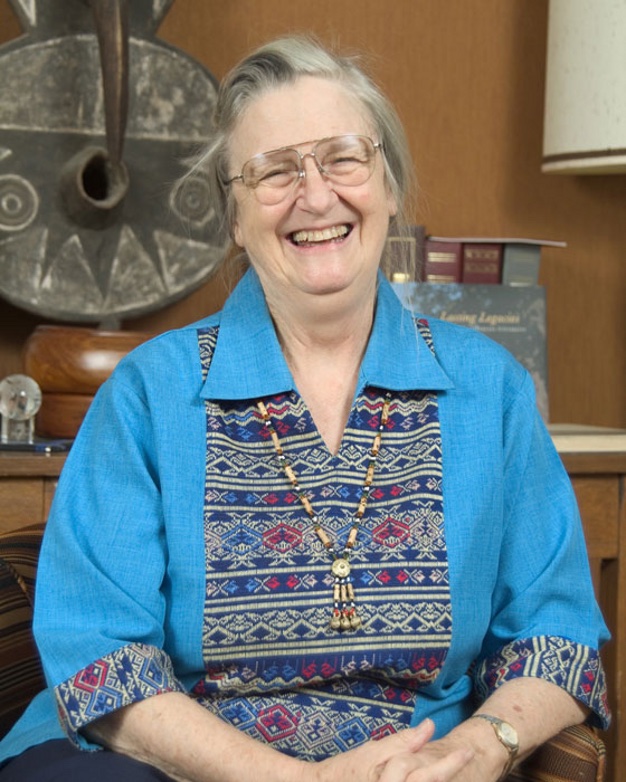
- Marking Esther Duflo — she is the second woman, and the question is asking for the first
- Assuming any woman Nobel laureate qualifies: Cori won in Medicine, Goeppert Mayer in Physics
- Treating the economics prize as one of Alfred Nobel's original five awards
'Who was the first/second person to win award X' and laureate-to-field matching are staples for UPPSC; UPSC more often asks the underlying idea — the commons, or the RCT method — than the name.
Consider the following statements: 1. The Nobel Prize Awarding Ceremony takes place on December 10 every year. 2. The Nobel Prize for Literature was added later on to the other five areas - Physics, Chemistry, Physiology or Medicine, Peace and Economics. Which of the statements given above is/are correct?
- (a) 1 only
- (b) 2 only
- (c) Both 1 and 2
- (d) Neither 1 nor 2
Answer(a) 1 only
Same concept — the structure of the Nobel Prizes, and specifically that Economics is the later addition (not Literature), which is the background to any 'first winner of the economics prize' question.
Nobel Prize in Economics for the year 1997 was awarded for contribution in the area of
- (a) International Economics
- (b) Financial Economics
- (c) Public Economics
- (d) Development Economics
Answer(b) Financial Economics
The same concept in UPSC's preferred form — identifying an economics Nobel by the field of work rewarded, rather than by the laureate's name.
Which one of the following books written by Noble Laureate Amartya Sen and published in July, 2021?
- (a) Development and Freedom
- (b) The Argumentative Indian
- (c) Home in the World
- (d) The Idea of Justice
Answer(c) Home in the World
Same concept — knowing the economics Nobel laureates and what they are known for; UPPSC returns to this prize almost every cycle.
The Nobel Peace Prize, 2020 was awarded to which of the following organisations ?
- (a) World Food Programme
- (b) United Nations Development Programme
- (c) World Health Organisation
- (d) World Bank
Answer(a) World Food Programme
The same recurring theme — identifying the recipient of a Nobel Prize of a given year, here the Peace Prize rather than the economics prize.
- practice — not a real PYQ
The 2019 Nobel Memorial Prize in Economic Sciences was shared by Esther Duflo, Michael Kremer and:
- (a)Amartya Sen
- (b)Abhijit Banerjee
- (c)Raghuram Rajan
- (d)Kaushik Basu
Answer(b) Abhijit Banerjee — for the experimental approach to alleviating global poverty.
- practice — not a real PYQ
Elinor Ostrom's Nobel-winning work dealt mainly with:
- (a)the governance of common-pool resources
- (b)the pricing of financial derivatives
- (c)auction theory and market design
- (d)national income accounting
Answer(a) the governance of common-pool resources — showing that user communities can manage shared resources sustainably.