
Given below are two statements, one labelled as Assertion (A) and the other as Reason (R). Assertion (A) : Akbar, like Shershah, tried to regulate the currency of the state. Reason (R) : As in Shershah's currency, the chief copper coin of Akbar's time was the Dam. Select the correct answer from the codes given below : Codes :
- (a)Both (A) and (R) are true and (R) is the correct explanation of (A)
- (b)Both (A) and (R) are true, but (R) is not the correct explanation of (A)
- (c)(A) is true, but (R) is false
- (d)(A) is false, but (R) is true
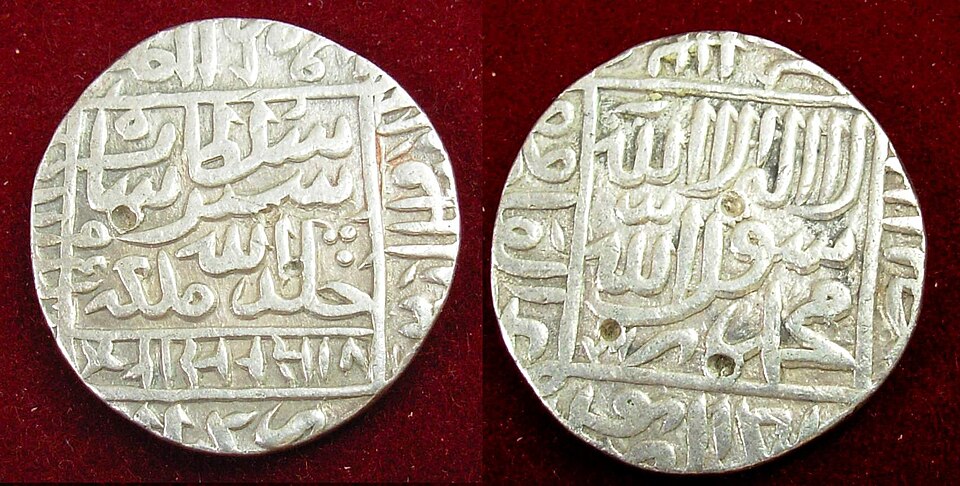
Correct — B, both (A) and (R) are true, but (R) is not the correct explanation of (A). The Assertion is true: Akbar, exactly as Sher Shah had done before him, treated coinage as a department of state to be regulated. Sher Shah had struck a fine silver coin of about 178 grains, the rupiya, along with gold and copper pieces, insisted on purity of metal and standard weight, and fixed the ratios between the denominations; Akbar inherited that system, kept it and tightened it, putting the mints under a superintendent, running mints at Agra, Delhi, Lahore and other centres, and issuing gold mohurs, silver rupees and copper dams of controlled fineness. The Ain-i-Akbari carries a detailed account of how the imperial mint worked, which is itself proof that currency was a regulated state function. The Reason is also true: the principal copper coin of Akbar's currency, as of Sher Shah's, was called the dam — in Akbar's reign it was reckoned at forty to the rupee, which is why the revenue figures of the Ain-i-Akbari are stated in dams. But (R) does not explain (A). Sharing the name of one denomination is a point of continuity in the coinage, not a reason why Akbar undertook to regulate it. The real explanation for (A) lies elsewhere — an expanding empire whose land revenue was assessed and collected in cash needed coin of uniform weight and dependable purity across every province, and only close state control of the mints could deliver that. Two true statements, no causal link between them: that is the definition of option (b).
- (a)Both (A) and (R) are true and (R) is the correct explanation of (A) — This is the trap. (R) records that Akbar's chief copper coin bore the same name as Sher Shah's — a similarity of denomination. It does not say why Akbar regulated the currency. The existence of a coin called the dam is a result of the currency system, not a cause of the effort to control it.
- (c)(A) is true, but (R) is false — (R) is not false. The dam was indeed the chief copper coin of both Sher Shah's and Akbar's currency; under Akbar it served as the small change of the empire and as the unit in which the Ain-i-Akbari's revenue statistics are expressed.
- (d)(A) is false, but (R) is true — (A) is not false. Akbar's regulation of the coinage is one of the best-documented parts of his administration — a mint department under its own officers, controlled fineness and weight, a network of imperial mints, and later the square 'Jalali' rupee and coins dated in the Ilahi era.
Sher Shah Suri's short reign (1540–45) left the Mughals two lasting administrative legacies: a standardised land-revenue assessment and a standardised trimetallic currency. His silver rupiya of roughly 178 grains, of high and consistent purity, is the direct ancestor of the modern rupee; alongside it ran gold pieces and the copper dam. Akbar did not replace this system, he institutionalised it — the mint became a proper department with its own officials and audit, coins were struck at many centres to a fixed standard, and the copper dam was fixed at forty to the rupee so that the whole revenue machinery could be reckoned in a single small unit. Sher Shah's reforms, in other words, supplied the template; Akbar supplied the empire-wide administration behind it.
Assertion–Reason questions turn on one test only: does the Reason, if true, actually cause or account for the Assertion? Here both halves are historically correct, so options (c) and (d) fall away at once and the whole question reduces to the causal test. Ask yourself what would explain 'Akbar tried to regulate the currency' — the answer would be something about the needs of a cash-based revenue system, debased or varied coinage inherited from earlier regimes, or trade requiring reliable money. 'His copper coin was called the dam' is none of those; it is a descriptive detail of the very currency in question. Hence (b).
- Sher Shah Suri issued a high-purity silver coin of about 178 grains called the rupiya — the ancestor of the modern rupee — along with gold coins and the copper dam.
- Akbar retained the trimetallic system: gold mohur, silver rupee and copper dam, struck at imperial mints under state supervision.
- In Akbar's reign the dam was reckoned at forty to the rupee, and the revenue figures of the Ain-i-Akbari are accordingly stated in dams.
- The Ain-i-Akbari, Abul Fazl's account of Akbar's administration, describes the working of the imperial mint in detail.
- Akbar later issued the square 'Jalali' rupee, and from the mid-1580s his coins carried dates in the Ilahi era.
- Marking (a) because both halves are true. In Assertion–Reason items the causal link is a separate test — two true sentences about the same subject are frequently unconnected.
- Confusing the dam with the rupiya. The dam was the copper coin, the small change; the rupiya was the high-purity silver coin.
- Crediting Akbar with inventing the rupee. He inherited it from Sher Shah's reform and standardised its administration.
UPPSC repeatedly frames Sur and Mughal administration as Assertion–Reason or 'which statement is correct' items; UPSC prefers to test the same ground through revenue systems, administrative terminology and source texts like the Ain-i-Akbari.
Which of the following statement/s is/are correct ? 1. Akbar tried to fix the age of marriage for boys and girls. 2. Akbar gave freedom to girls to marry at their own will and not under parental pressure. Select the correct answer using the codes given below.
- (a) Only 1
- (b) Only 2
- (c) Both 1 and 2
- (d) Neither 1 nor 2
Answer(c) Both 1 and 2
The same theme UPPSC returns to — Akbar as a regulator who tried to lay down uniform state rules, here in the social sphere as this question does in the monetary one.
- practice — not a real PYQ
The silver coin of about 178 grains introduced by Sher Shah Suri, and continued under the Mughals, was called the
- (a)Dam
- (b)Rupiya
- (c)Mohur
- (d)Tanka
Answer(b) Rupiya — Sher Shah's high-purity silver coin, retained by Akbar and the direct ancestor of the modern Indian rupee; the dam was the copper coin and the mohur the gold one.
- practice — not a real PYQ
The revenue statistics recorded in Abul Fazl's Ain-i-Akbari are expressed in which unit of currency?
- (a)Gold mohurs
- (b)Silver rupees
- (c)Copper dams
- (d)Silver tankas
Answer(c) Copper dams — the dam was reckoned at forty to the rupee, and its small value made it the convenient unit in which the Ain-i-Akbari records revenue figures.