
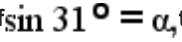
If then the value of is:
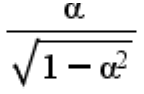
- (a)
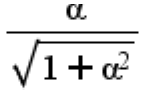
- (b)
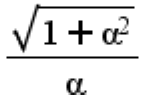
- (c)
- (d)
Answer
Why
Correct — A. 59° and 31° add to 90°, so convert the cotangent before doing anything else.
cot 59° = cot(90° − 31°) = tan 31°
sin 31° = α, and 31° is acute, so
cos 31° = √(1 − α²)
tan 31° = sin 31° ⁄ cos 31°
= α ⁄ √(1 − α²) → option (a).
Why the others are wrong
- (b)α ⁄ √(1 + α²) carries a plus sign under the root. That form appears when α is a tangent; here α is a sine, so the cosine is √(1 − α²).
- (c)√(1 + α²) ⁄ α is option (b) turned upside down. It keeps the wrong sign under the root and inverts the ratio.
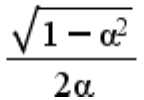
- (d)√(1 − α²) ⁄ (2α) flips the ratio, which gives cot 31° (that is, tan 59°) rather than tan 31°. The 2 in the denominator answers to nothing in the question.
Concept
This is a co-function item. The complementary-angle rules are sin θ = cos(90° − θ), tan θ = cot(90° − θ) and sec θ = cosec(90° − θ).
Because 59° + 31° = 90°, cot 59° is exactly tan 31°, and the question collapses to writing tan 31° in terms of sin 31°.
The second tool is the Pythagorean identity. From sin²θ + cos²θ = 1, cos 31° = √(1 − α²), taken positive because 31° lies in the first quadrant.
The stem is assembled from images dropped into the sentence. It reads: If sin 31° = α, then the value of cot 59° is. The four options are images as well.
Key facts
- cot(90° − θ) = tan θ, so cot 59° = tan 31°.
- If sin θ = α and θ is acute, then cos θ = √(1 − α²) and tan θ = α ⁄ √(1 − α²).
- Two angles are complementary when they sum to 90°, and 59° + 31° = 90°.
Study next
Common traps
- Turning cot 59° into tan 59° by dropping the co- prefix without the 90° − θ step
- Writing cos 31° as √(1 + α²) instead of √(1 − α²)
Co-function conversion is asked head-on at 11 Sep 2024, 16:00, Quant Q.7, which wants sin 74° + tan 74° expressed in ratios of angles between 0° and 45°.
It is wrapped in an equation at 26 Sep 2024, 09:00, Quant Q.10: given that 48° + k is acute and sin(48° + k) = cos 13°, find k.
Related PYQs
No directly related past PYQ was found.