
Which is the longest lake in India?
- (a)Chilika
- (b)Kolleru
- (c)Vembanad
- (d)Pookode
Correct — C, Vembanad. Vembanad Kayal in Kerala stretches about 96 km from the Alappuzha side up to Kochi, running parallel to the coast behind a sand barrier, which makes it the longest lake in India as well as the largest of the Kerala backwaters. It is a brackish lagoon fed by rivers such as the Periyar, Pamba and Achankovil, a Ramsar site since 2002, and the largest lake in Kerala by area.
- (a)Chilika — Chilika in Odisha is India's largest brackish-water coastal lagoon by area, but it is shorter than Vembanad — it is broad rather than long. This is the classic 'largest versus longest' swap.
- (b)Kolleru — Kolleru is a large shallow freshwater lake in Andhra Pradesh, lying between the Krishna and Godavari deltas. It is a Ramsar site, but nowhere near Vembanad in length.
- (d)Pookode — Pookode is a small freshwater lake in Wayanad district, Kerala — a tourist spot of a few hectares, included here only as an obvious filler.
Indian lake questions turn on superlatives that are easy to confuse because each measures something different: length, area, salinity and origin. Vembanad wins on length because of its shape — a narrow ribbon of backwater running along the coast for about 96 km — while Chilika wins on area among coastal lagoons. Vembanad belongs to the kayal system, the chain of brackish backwaters formed where Kerala's rivers are dammed behind coastal sand bars.
Most students have memorised 'Chilika is the biggest lake', and that memory is what the question attacks: the word here is longest, not largest. Fix the shape of each lake in your mind — Vembanad long and thin, Chilika wide — and the swap stops working.
- Vembanad Kayal, Kerala — India's longest lake at roughly 96 km, and Kerala's largest lake
- It is a Ramsar site (designated 2002) and the biggest of the Kerala backwaters
- The Thanneermukkom barrage divides it into a saline northern part and a freshwater southern part to protect Kuttanad's below-sea-level paddy fields
- Chilika (Odisha) is India's largest brackish-water coastal lagoon by area and a Ramsar site known for Irrawaddy dolphins
- Kolleru (Andhra Pradesh) is a freshwater lake between the Krishna and Godavari deltas; Pookode (Wayanad, Kerala) is a small freshwater lake
- The Nehru Trophy Boat Race is rowed on Punnamada Lake, a part of the Vembanad system
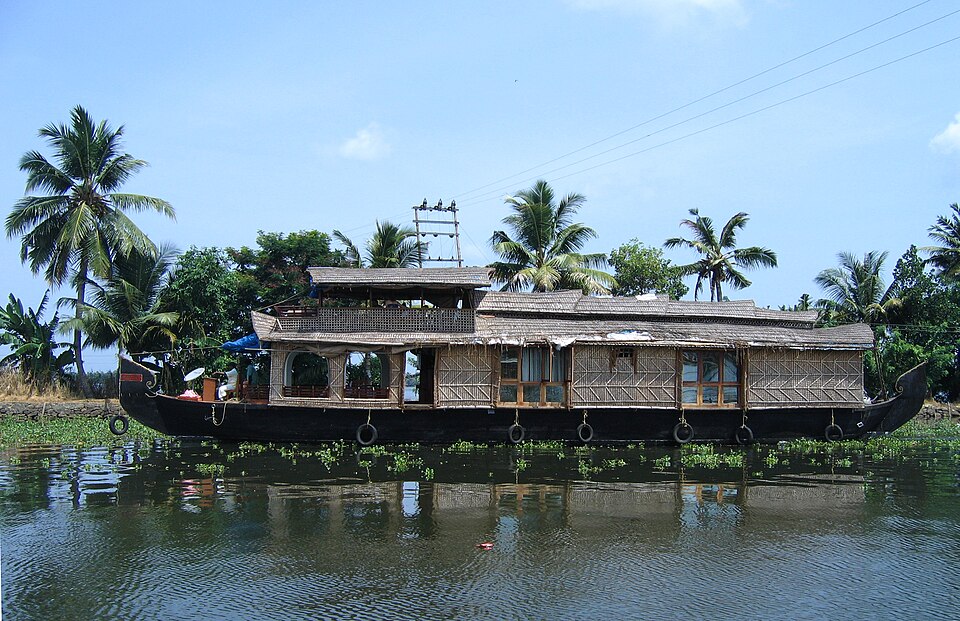
- Reading 'longest' as 'largest' — Chilika leads on area, Vembanad on length
- Calling Vembanad a freshwater lake; it is a brackish backwater lagoon, only partly freshened by the Thanneermukkom barrage
- Mixing up Kolleru (freshwater, Andhra Pradesh) with Pulicat (a lagoon on the Andhra–Tamil Nadu coast)
Asked as a superlative one-liner (longest, largest, highest, largest saline) or as a lake-to-State match. Learn the pairs as a block: Vembanad–longest, Chilika–largest lagoon, Wular–Jammu & Kashmir, Loktak–Manipur, Sambhar–Rajasthan, Pulicat–Andhra/Tamil Nadu.
Which one of the following is an artificial lake?
- (a) Kodaikanal (Tamil Nadu)
- (b) Kolleru (Andhra Pradesh)
- (c) Nainital (Uttarakhand)
- (d) Renuka (Himachal Pradesh)
Answer(a) Kodaikanal (Tamil Nadu) — the others are natural lakes.
Same underlying skill — identifying India's named lakes by their nature and origin; Kolleru, a distractor in this MPPSC question, is one of the natural lakes UPSC tests here.
- practice — not a real PYQ
Which of the following is the largest brackish-water coastal lagoon in India?
- (a)Vembanad
- (b)Chilika
- (c)Pulicat
- (d)Kolleru
Answer(b) Chilika, in Odisha — largest by area, while Vembanad is the longest lake. - practice — not a real PYQ
The Thanneermukkom barrage, built to keep saline water out of the Kuttanad paddy fields, is located on which lake?
- (a)Ashtamudi
- (b)Sasthamkotta
- (c)Vembanad
- (d)Vellayani
Answer(c) Vembanad — the barrage splits the lake into saline and freshwater halves.