
The Government of India passed the Environment (Protection) Act to protect and improve the quality of environment in:
- (a)1981
- (b)1986
- (c)1988
- (d)1998
Correct — B, 1986. The Environment (Protection) Act is Act No. 29 of 1986; it was passed by Parliament in 1986 and brought into force on 19 November 1986. Parliament used Article 253 (power to legislate to implement international agreements) so that a single central law could give effect to the decisions of the 1972 United Nations Conference on the Human Environment at Stockholm. It is an umbrella law: it lets the Centre lay down standards for emissions and discharges, restrict industries and processes in any area, order closure or stoppage of a polluting unit, and make rules — which is why so much later environmental regulation is issued under it rather than as fresh Acts.
- (a)1981 — 1981 is the Air (Prevention and Control of Pollution) Act — a single-medium law for air pollution. It came five years before the umbrella Environment (Protection) Act and is the most commonly confused year here.
- (c)1988 — No Environment (Protection) Act was passed in 1988. What 1988 does carry is the Water (Prevention and Control of Pollution) Amendment Act and the Motor Vehicles Act — neither is the parent environmental legislation.
- (d)1998 — 1998 belongs to rules made under the 1986 Act, not to the Act itself — for example the Bio-Medical Waste (Management and Handling) Rules, 1998. Subordinate rules issued under a parent Act do not change the parent Act's year.
India's environmental statutes came in a definite order, each with a narrower or wider job. Water (Prevention and Control of Pollution) Act, 1974 → Forest (Conservation) Act, 1980 → Air (Prevention and Control of Pollution) Act, 1981 → Environment (Protection) Act, 1986. The 1986 Act is the widest of them: it defines 'environment', 'environmental pollutant' and 'hazardous substance' broadly and gives the Central Government general powers to take 'all such measures as it deems necessary' to protect and improve environmental quality.
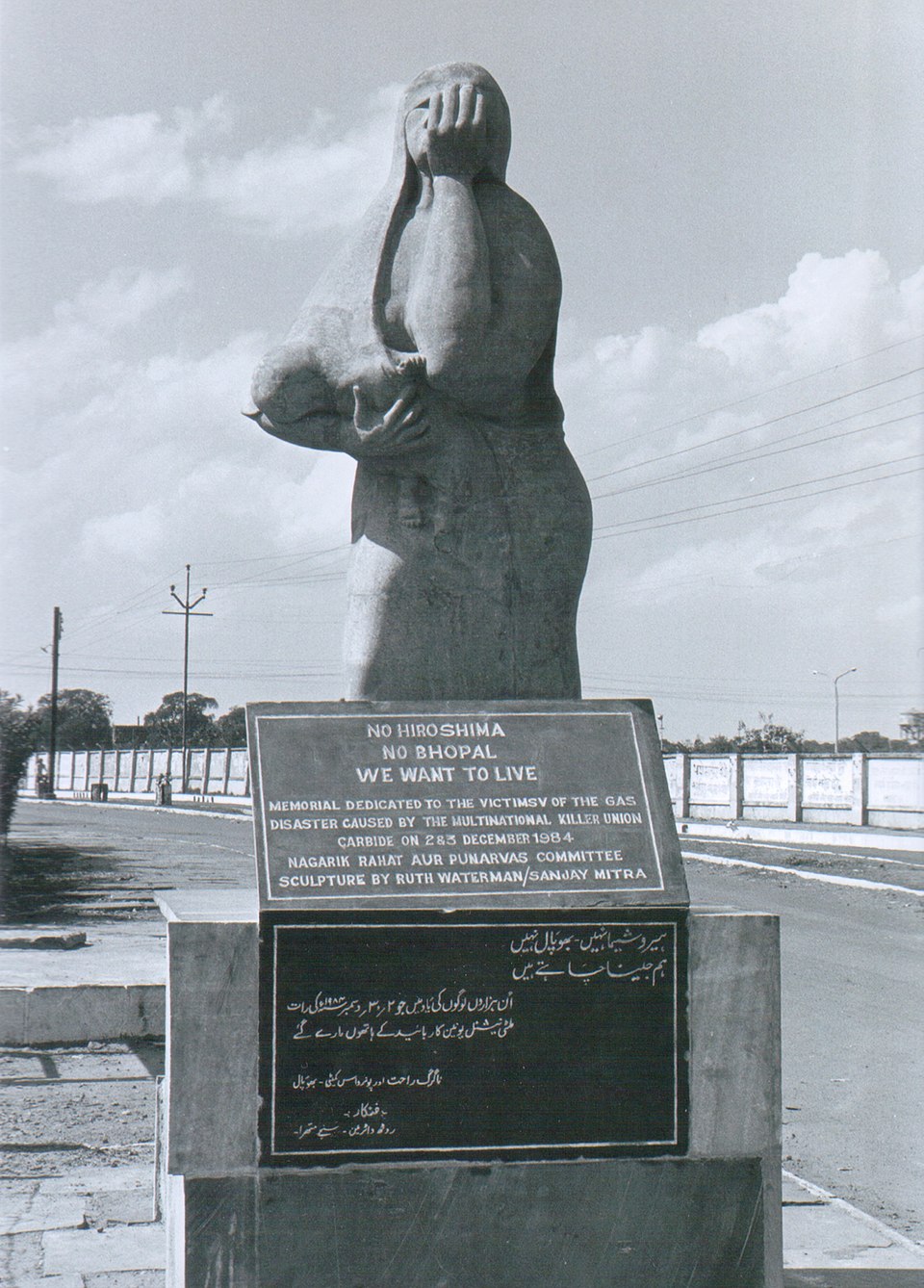
Two anchors fix 1986 in memory. First, the international anchor: the Act was framed under Article 253 to implement the Stockholm Conference decisions of 1972. Second, the domestic anchor: it was enacted in the aftermath of the Bhopal gas leak of December 1984, which exposed how thin India's regulatory cover over hazardous industry then was. Because it is an enabling parent Act, a great many familiar instruments — the EIA Notification 2006, the Coastal Regulation Zone notifications, the Genetic Engineering Appraisal Committee, the Central Ground Water Authority, the e-waste and bio-medical waste rules — all sit under this one 1986 law.
- Environment (Protection) Act — Act No. 29 of 1986; in force from 19 November 1986
- Enacted under Article 253 to implement the decisions of the 1972 Stockholm Conference on the Human Environment
- Umbrella powers: set emission/discharge standards, restrict industries in an area, order closure or stoppage of a polluting operation, make rules
- Bodies and instruments created under it include the Genetic Engineering Appraisal Committee, the Central Ground Water Authority, the EIA Notification 2006 and the CRZ notifications
- Order of the main statutes: Water Act 1974 → Forest (Conservation) Act 1980 → Air Act 1981 → Environment (Protection) Act 1986
- Swapping 1981 (Air Act) for 1986 (Environment Protection Act) — the classic year confusion in this set
- Treating rules and notifications issued under the 1986 Act (EIA 2006, CRZ, bio-medical waste 1998) as separate Acts
- Assuming the National Green Tribunal was set up under the 1986 Act — it comes from the NGT Act, 2010
MPPSC asks the year straight. UPSC almost never asks the year — it asks which body, committee or notification was constituted under the Environment (Protection) Act, 1986, so learn the Act's family of subordinate instruments alongside its date.
Consider the following statements: The Environment Protection Act, 1986 empowers the Government of India to 1. State the requirement of public participation in the process of environmental protection, and the procedure and manner in which it is sought 2. Lay down the standards for emission or discharge of environmental pollutants from various sources Which of the statements given above is/are correct?
- (a) 1 only
- (b) 2 only
- (c) Both 1 and 2
- (d) Neither 1 nor 2
Answer(b) 2 only
The same Act, from the powers side — UPSC checks what the 1986 law actually empowers the Centre to do.
The Genetic Engineering Appraisal Committee is constituted under the
- (a) Food Safety and Standards Act, 2006
- (b) Geographical Indications of Goods (Registration and Protection) Act, 1999
- (c) Environment (Protection) Act, 1986
- (d) Wildlife (Protection) Act, 1972
Answer(c) Environment (Protection) Act, 1986
Shows the 1986 Act working as an umbrella law — a regulator (GEAC) created under it rather than by a separate statute.
- practice — not a real PYQ
Which one of the following environmental laws was enacted BEFORE the Environment (Protection) Act, 1986?
- (a)Air (Prevention and Control of Pollution) Act
- (b)Biological Diversity Act
- (c)National Green Tribunal Act
- (d)Forest Rights Act
Answer(a) Air (Prevention and Control of Pollution) Act, 1981 — the others are 2002, 2010 and 2006 respectively. - practice — not a real PYQ
The National Green Tribunal was established under:
- (a)the Environment (Protection) Act, 1986
- (b)the National Green Tribunal Act, 2010
- (c)the Water (Prevention and Control of Pollution) Act, 1974
- (d)an executive order of the Ministry of Environment, Forest and Climate Change
Answer(b) the National Green Tribunal Act, 2010 — the NGT is a statutory body under its own Act, not under the 1986 Act.