
15th November is celebrated as 'Janjatiya Gaurav Divas' in honour of birth of which tribal leader?
- (a)Tantya Mama
- (b)Rani Durgavati
- (c)Bhagwan Birsa Munda
- (d)Mahua Kol (Maha Singh)
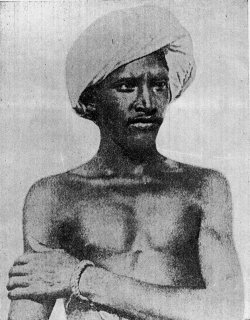
Correct — C, Bhagwan Birsa Munda. He was born on 15 November 1875 at Ulihatu in the Chotanagpur plateau (Khunti district of present-day Jharkhand), and in November 2021 the Union Cabinet declared his birth anniversary a national day — Janjatiya Gaurav Divas — to honour the tribal contribution to the freedom struggle. Birsa led the Ulgulan or 'Great Tumult' of 1899–1900 against the colonial land settlement, the dikus (outsider landlords and moneylenders) and forced labour, was revered by his followers as 'Dharti Aaba' (Father of the Earth) and as Bhagwan, and died in Ranchi jail on 9 June 1900 while barely 25. The agitation he led fed directly into the Chotanagpur Tenancy Act, 1908, which restricted the transfer of tribal land to non-tribals.
- (a)Tantya Mama — Tantya Bhil, affectionately 'Tantya Mama', is a genuine Bhil hero of the Nimar region of Madhya Pradesh who was hanged by the British in 1889, and Madhya Pradesh honours him with a self-employment scheme in his name. But the national day of 15 November is tied specifically to Birsa Munda's birth anniversary, not to Tantya Bhil.
- (b)Rani Durgavati — A 16th-century Gond queen of Garha-Katanga who died fighting Akbar's army in 1564 — a towering tribal icon of Madhya Pradesh, but from the medieval period, not the colonial freedom struggle. Her birth anniversary falls on 5 October, not 15 November.
- (d)Mahua Kol (Maha Singh) — A local Kol figure of regional memory. Whatever the exact identity intended by the booklet, the Cabinet's 2021 notification names one person alone — Birsa Munda — as the leader whose birth anniversary Janjatiya Gaurav Divas commemorates.
Janjatiya Gaurav Divas is a national observance, approved by the Union Cabinet in November 2021 and first held on 15 November 2021, that fixes the tribal contribution to India's freedom struggle on the calendar. The date is Birsa Munda's birthday. Birsa was a Munda of the Chotanagpur plateau who fused a religious reform movement (the Birsait faith) with an armed agrarian revolt: his Ulgulan of 1899–1900 demanded the restoration of the khuntkatti communal-tenure system that colonial land settlements and immigrant landlords had eroded.
The question is a straight 'day ↔ person' recall, but the option set is deliberately mixed: it puts three genuine tribal icons of Madhya Pradesh beside the one figure whom the Government of India actually named. The reasoning shortcut is chronological — Janjatiya Gaurav Divas honours a freedom-struggle-era leader, which immediately rules out the 16th-century Rani Durgavati, and among the colonial-era names it is Birsa Munda whose birthday (not martyrdom day) the Centre notified.
- Birsa Munda: born 15 November 1875 at Ulihatu (Khunti district, Jharkhand); died 9 June 1900 in Ranchi jail
- Ulgulan ('the Great Tumult'), 1899–1900 — his revolt against colonial land settlement, dikus and forced labour; followers called him 'Dharti Aaba'
- Janjatiya Gaurav Divas: approved by the Union Cabinet in November 2021, first observed on 15 November 2021
- Chotanagpur Tenancy Act, 1908 — the legislative outcome that curbed alienation of tribal land
- 15 November is also Jharkhand's foundation day; the state was created in 2000
- From 15 November 2024 the Centre marked a year-long 'Janjatiya Gaurav Varsh' for Birsa Munda's 150th birth anniversary
- Swapping the leaders of two different revolts — Sidhu–Kanhu led the Santhal Hool, Birsa Munda led the Ulgulan
- Assuming a national tribal day must honour the questioner's own state's hero (Tantya Bhil in MP's case)
- Confusing a birth anniversary with a martyrdom day — 15 November is Birsa's birth, 9 June is his death
MPPSC asks it as a date-to-person or scheme-to-namesake recall; UPSC prefers the movement itself — 'Ulgulan', the khuntkatti system, or matching a revolt to its region — so learn Birsa Munda as a chain: 15 November ↔ Ulgulan 1899–1900 ↔ Chotanagpur Tenancy Act 1908.
With reference to the history of India, "Ulgulan" or the Great Tumult is the description of which of the following events?
- (a) The Revolt of 1857
- (b) The Mappila Rebellion of 1921
- (c) The Indigo Revolt of 1859–60
- (d) Birsa Munda's Revolt of 1899–1900
Answer(d) Birsa Munda's Revolt of 1899–1900
The same figure from the other side: UPSC asked for the name of Birsa Munda's movement, MPPSC asked for the day that marks his birth.
Match List I with List II and select the correct answer by using the codes given below the lists: List I I. Moplah revolt II. Pabna revolt III. Eka Movement IV. Birsa Munda revolt List II A) Kerala B) Bihar C) Bengal D) Awadh
- (a) I-A, II-C, III-D, IV-B
- (b) I-B, II-C, III-D, IV-A
- (c) I-A, II-B, III-C, IV-D
- (d) I-C, II-D, III-A, IV-B
Answer(a) I-A, II-C, III-D, IV-B — the Birsa Munda revolt is placed in the Bihar (then undivided) region of Chotanagpur
Same leader, tested as region-matching — Birsa's Ulgulan belongs to the Chotanagpur plateau of undivided Bihar, today's Jharkhand.
In Madhya Pradesh, the self-employment scheme for tribals is run in the name of:
- (a) Dalpat Shah
- (b) Tantya Bhil
- (c) Birsa Munda
- (d) Raghunath Shah
Answer(b) Tantya Bhil or (c) Birsa Munda
The same two names that head this question's option list — MPPSC repeatedly tests which tribal hero a scheme or a day is named after.
Who was the main leader of the Santhal rebellion?
- (a) Sidho
- (b) Birsa Munda
- (c) Bhima Nayak
- (d) Swami Govindgiri
Answer(a) Sidho
Same 'tribal leader ↔ movement' pairing, with Birsa Munda used as the trap option — proof that the commission expects you to keep the leaders of the Hool and the Ulgulan apart.
- practice — not a real PYQ
Which law, enacted after the Munda Ulgulan, restricted the transfer of tribal land to non-tribals in the Chotanagpur region?
- (a)Chotanagpur Tenancy Act, 1908
- (b)Bengal Tenancy Act, 1885
- (c)Indian Forest Act, 1927
- (d)Government of India Act, 1919
Answer(a) Chotanagpur Tenancy Act, 1908 — the colonial state's response to Birsa Munda's agrarian revolt. - practice — not a real PYQ
The Santhal rebellion (Hool) of 1855–56 was led by:
- (a)Sidhu and Kanhu
- (b)Birsa Munda
- (c)Tantya Bhil
- (d)Jatra Bhagat
Answer(a) Sidhu and Kanhu Murmu — Birsa Munda's Ulgulan came four decades later, in 1899–1900.