
Based on the following statements regarding Mahan Aluminium plant in Singrauli district, select the correct answer from the codes given below : 1. Mahan Aluminium plant is located near Bargawan in Singrauli district. 2. Production started in 2013. 3. Eighty percent of its total production is exported. 4. French technology is used for smelting. Codes :
- (a)1, 2 and 3 are correct
- (b)2, 3 and 4 are correct
- (c)1, 2 and 4 are correct
- (d)1, 2, 3 and 4 are correct
Correct — C, statements 1, 2 and 4. Statement 1 is right: Mahan Aluminium is Hindalco's greenfield smelter at Bargawan in Singrauli district of Madhya Pradesh. Statement 2 is right in the sense the commission intends: the smelter tapped its commissioned in the 2010s (the full pot line was ramped up over the following two years). Statement 4 is right: Mahan smelts using AP-36 pot-line technology developed by Aluminium Pechiney of France — hence 'French technology'. Statement 3 is the planted error: no official figure fixes eighty per cent of this particular plant's output as exported; Hindalco reports export shares at company level, not for the Mahan unit, and the commission's key excludes statement 3. Dropping 3 and keeping 1, 2 and 4 gives option C.
- (a)1, 2 and 3 are correct — It admits the unsupported eighty-per-cent export claim (statement 3) and throws out statement 4, which is the one genuinely distinctive fact about the plant — its French AP-36 smelting technology.
- (b)2, 3 and 4 are correct — It drops the plainly correct location statement (Bargawan, Singrauli) and keeps the unsupported export figure — exactly the wrong trade.
- (d)1, 2, 3 and 4 are correct — The 'all of them' option, which only works if statement 3 is true. An exact-sounding percentage attached to a single plant with no official source is the classic inserted error in this format.
Aluminium smelting is the most power-hungry step in Indian metallurgy — roughly 14,000 units (kWh) of electricity per tonne of metal. That single fact decides where smelters go: they sit on cheap captive coal power, while alumina is railed in. Mahan is the textbook Indian case — a smelter of roughly 360,000 tonnes a year with a captive thermal power plant of about 900 MW, planted in Singrauli, India's 'energy capital', not on a bauxite field.
Statement-set questions on a named plant are won by triage. Location and ownership/technology are stable, documented facts you can verify; trade shares and percentages drift year to year and are almost never officially published per plant. So when one statement carries a suspiciously round figure like 'eighty percent is exported', treat it as the error and check whether an option exists that keeps everything else — here, option C.
- Mahan Aluminium is Hindalco's smelter at Bargawan, Singrauli district, Madhya Pradesh, with a captive thermal power plant of about 900 MW.
- First hot metal was produced in 2013; the full pot line was commissioned over the following couple of years.
- Smelting uses AP-36 pot technology developed by Aluminium Pechiney (France).
- Aluminium smelting consumes roughly 14,000 kWh per tonne — which is why Indian smelters sit on coalfields (Singrauli, Korba, Renukoot, Angul) rather than on bauxite mines.
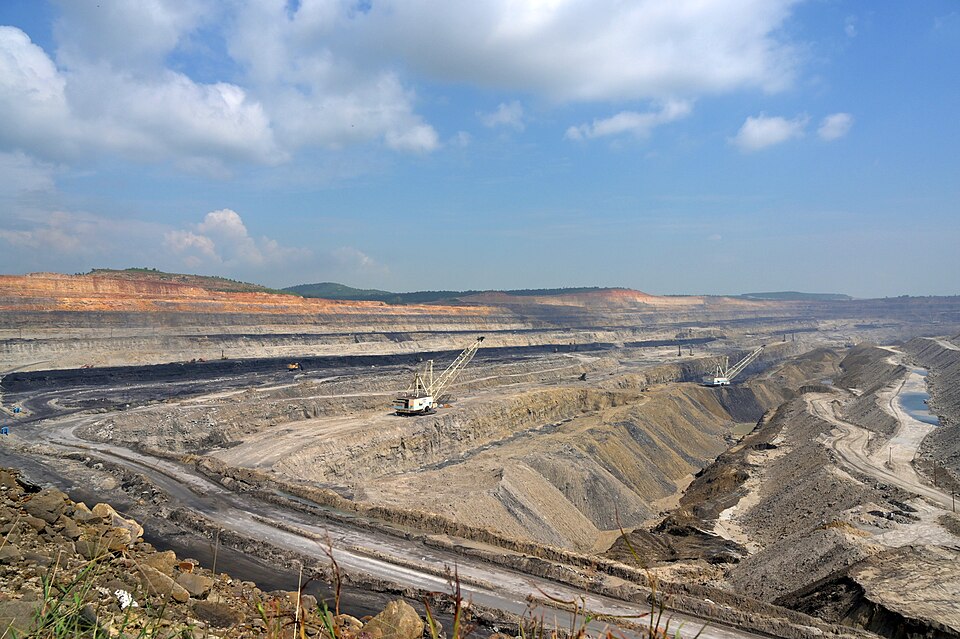
- Assuming a smelter must sit on bauxite — it sits on cheap electricity; alumina travels, power does not
- Trusting a precise percentage inserted into a statement set; unsourced plant-level trade shares are usually the planted error
- Confusing Singrauli district of MP with Singrauli town/Sonbhadra district across the Uttar Pradesh border
As a statement set on one named plant. MPPSC keeps location and technology honest and corrupts a number; UPSC asks the same idea conceptually — 'why is this smelter located here?'
HINDALCO, an aluminium factory located at Renukoot owes its site basically to
- (a) proximity of raw materials
- (b) abundant supply of power
- (c) efficient transport network
- (d) proximity to the market
Answer(b) abundant supply of power
The same company and the same locational logic that explains Mahan — Hindalco's older Renukoot smelter is sited on power (Rihand), not on ore, exactly as Mahan is sited on Singrauli's coal-fired captive power.
Match List-I with List-II and select the correct answer using the code given below the Lists : List-I (Aluminium Company) A. BALCO B. HINDALCO C. Indian Aluminium Company D. NALCO List-II (Location) 1. Hirakud 2. Korba 3. Koraput 4. Renukoot
- (a) A-3 B-1 C-4 D-2
- (b) A-2 B-4 C-1 D-3
- (c) A-3 B-4 C-1 D-2
- (d) A-2 B-1 C-4 D-3
Answer(b) A-2 B-4 C-1 D-3 — BALCO: Korba, HINDALCO: Renukoot, Indian Aluminium: Hirakud, NALCO: Koraput.
Maps India's aluminium smelters to their locations — the national frame into which Mahan (Hindalco, Singrauli) fits.
Which of the following place and district in Madhya Pradesh is NOT associated with a Thermal Power Station?
- (a) Sarani, Betul
- (b) Amarkantak, Anuppur
- (c) Birsingpur, Umaria
- (d) Dongaliya Mundi, Khargone
Answer(d) Dongaliya Mundi, Khargone
Same skill applied to MP's energy map — pinning a named plant to its exact place and district, the half of this question that is genuinely checkable.
Out of these, which State has the largest deposits of Bauxite?
- (a) Andhra Pradesh
- (b) Odisha
- (c) Jharkhand
- (d) Gujarat
Answer(b) Odisha
The raw-material end of the same aluminium chain — bauxite sits mainly in Odisha, which is precisely why smelters like Mahan are placed on power rather than on ore.
- practice — not a real PYQ
Aluminium smelting plants in India are located primarily with reference to:
- (a)bauxite deposits
- (b)cheap and abundant electric power
- (c)coastal ports for export
- (d)proximity to consumer markets
Answer(b) cheap and abundant electric power — smelting needs roughly 14,000 kWh per tonne, so smelters follow coalfields and captive power. - practice — not a real PYQ
The Mahan Aluminium plant is located in which district of Madhya Pradesh?
- (a)Sidhi
- (b)Singrauli
- (c)Shahdol
- (d)Anuppur
Answer(b) Singrauli — the plant stands near Bargawan in Singrauli district.