
The date 6th April, 1930 is well known in the history of India because this date is associated with :
- (a)Quit India Movement
- (b)Partition of Bengal
- (c)Jallianwala Bagh massacre
- (d)Dandi March by Mahatma Gandhi
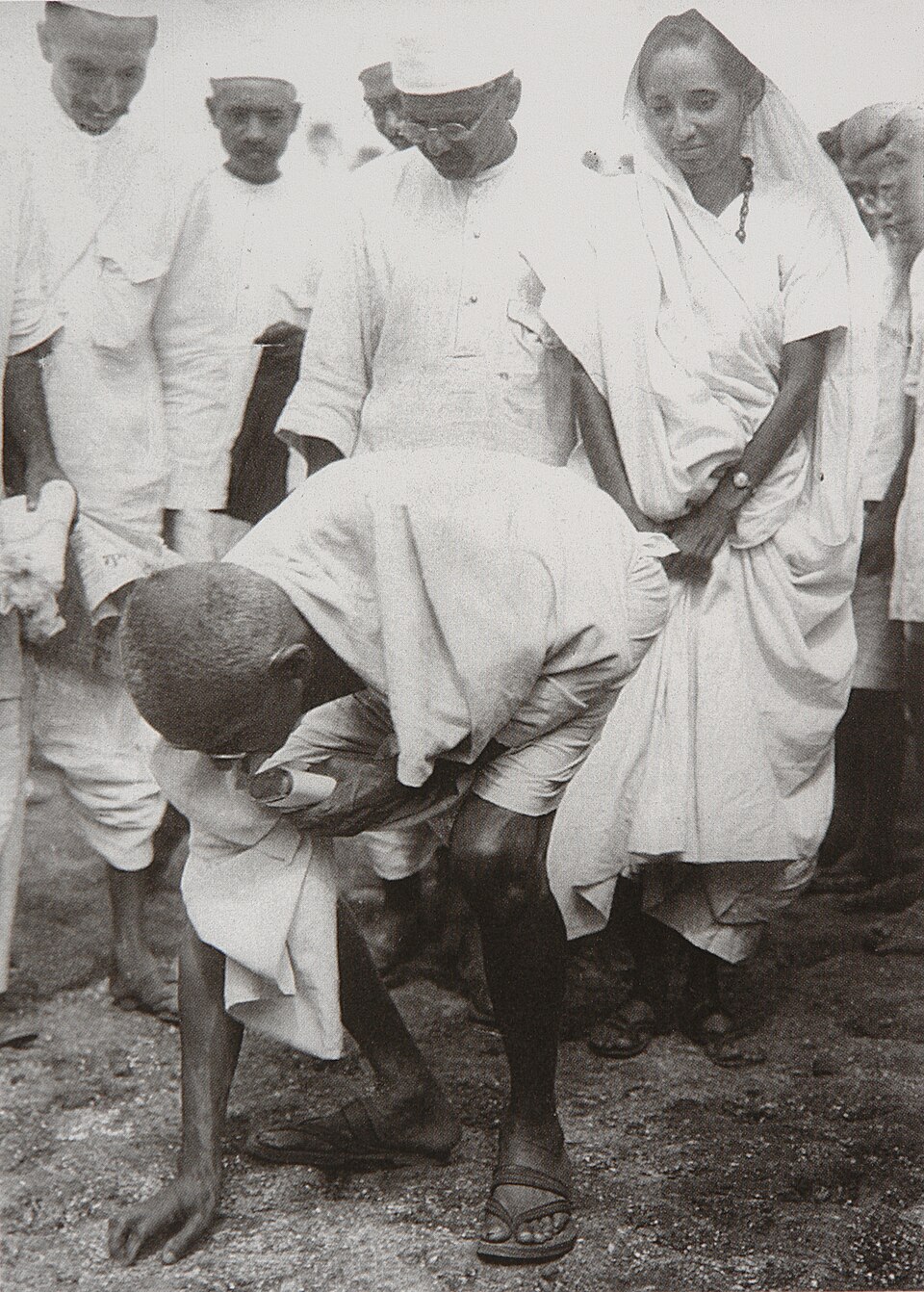
Correct — D, the Dandi March by Mahatma Gandhi. On the morning of 6 April 1930 Gandhi picked up a lump of natural salt from the shore at Dandi and broke the British salt law, the act that formally launched the Civil Disobedience Movement. The march had set out from Sabarmati Ashram near Ahmedabad on 12 March 1930 with 78 chosen satyagrahis and covered roughly 385 km (about 240 miles) to the coastal village of Dandi in Gujarat, reaching it on 5 April.
- (a)Quit India Movement — Quit India belongs to 1942 — the Congress passed the resolution at Bombay on 8 August 1942 and the movement erupted from 9 August, twelve years after Dandi.
- (b)Partition of Bengal — Curzon's partition of Bengal was announced in July 1905 and took effect on 16 October 1905; it was annulled in 1911. Nothing about it falls in 1930.
- (c)Jallianwala Bagh massacre — The firing at Jallianwala Bagh, Amritsar, happened on 13 April 1919 — the same month of the year, a different decade, which is what makes this the tempting wrong option.
Salt was chosen as the target because the state monopoly on it touched every household, rich or poor, and could be broken by an act anyone could copy. The Lahore Congress of December 1929 had adopted Purna Swaraj and 26 January 1930 was observed as Independence Day; Gandhi's eleven demands to Irwin went unanswered, and the salt march followed. Breaking the salt law at Dandi opened a countrywide campaign of law-breaking, boycott of foreign cloth and liquor, and refusal of taxes.
The question is a date-to-event match, and its difficulty is entirely in the neighbouring dates a student half-remembers: 12 March for the start of the march, 6 April for the breach of the law, 13 April for Jallianwala Bagh. Keep 6 April 1930 tied to the salt being lifted at Dandi, not to the departure from Sabarmati.
- 12 March 1930 — the march begins at Sabarmati Ashram with 78 satyagrahis; 6 April 1930 — Gandhi breaks the salt law at Dandi.
- The route ran about 385 km (240 miles) to Dandi, in Navsari district of coastal Gujarat.
- The breach of the salt law launched the Civil Disobedience Movement of 1930-34.
- Parallel salt campaigns followed: C. Rajagopalachari's march to Vedaranyam on the Tanjore coast, and the raid on the Dharasana Salt Works in May 1930 led by Sarojini Naidu after Gandhi's arrest.
- The first phase of the movement was suspended by the Gandhi-Irwin Pact of 5 March 1931.
- Mixing the start of the march (12 March 1930) with the breaking of the salt law (6 April 1930).
- Reading April 1930 as April 1919 and answering Jallianwala Bagh.
- Treating Dandi as the start of Quit India — Dandi began Civil Disobedience; Quit India came in 1942.
MPPSC asks the plain date-to-event link. UPSC asks which movement began with the Dandi March, who led the parallel salt marches, or places the march in a chronological sequence with other events.
Which one of the following began with the Dandi March?
- (a) Home Rule Movement
- (b) Non-Cooperation Movement
- (c) Civil Disobedience Movement
- (d) Quit India Movement
Answer(c) Civil Disobedience Movement
The same event tested from the movement side — what the breaking of the salt law on 6 April 1930 actually launched.
Who of the following organized a march on the Tanjore coast to break the Salt Law in April 1930?
- (a) V. O. Chidambaram Pillai
- (b) C. Rajagopalachari
- (c) K. Kamaraj
- (d) Annie Besant
Answer(b) C. Rajagopalachari
The same April 1930 salt-law campaign, tested through the parallel march at Vedaranyam that followed Gandhi's action at Dandi.
From which ashrama did Mahatma Gandhi start the "Dandi March"?
- (a) Sabarmati
- (b) Pavnar
- (c) Sewagram
- (d) Ramanandiya
Answer(a) Sabarmati
MPPSC has asked the same march before, from the starting-point angle rather than the date.
- practice — not a real PYQ
The Dandi March of 1930 started from:
- (a)Sevagram Ashram, Wardha
- (b)Sabarmati Ashram, Ahmedabad
- (c)Phoenix Settlement, Durban
- (d)Champaran, Bihar
Answer(b) Sabarmati Ashram, Ahmedabad — the march began there on 12 March 1930. - practice — not a real PYQ
The first phase of the Civil Disobedience Movement was suspended following the:
- (a)Poona Pact
- (b)Gandhi-Irwin Pact, 1931
- (c)Lucknow Pact
- (d)Cripps Mission
Answer(b) Gandhi-Irwin Pact, 1931 — after which Gandhi attended the Second Round Table Conference in London.