
Read the following statements regarding manganese in Madhya Pradesh and select the correct answer from the codes given below: 1. In 2020 - 21, Madhya Pradesh was ranked second in the country for manganese deposits. 2. In 2020 - 21, Madhya Pradesh was ranked first in the country for manganese production. 3. There are manganese deposits in Godavari and Wardha river valleys in Chhindwara district. 4. There are manganese deposits in Thandla tehsil of Jhabua district. Codes:
- (a)1, 2 and 3 are correct
- (b)2, 3 and 4 are correct
- (c)1, 3 and 4 are correct
- (d)1, 2, 3 and 4 are correct
Correct — B, statements 2, 3 and 4. The official key accepts the production claim and both location claims, and rejects the deposits-rank claim. Statement 2 is accepted: for 2020-21 Madhya Pradesh is credited with the country's top rank in manganese-ore production, which fits the state's position as the home of the Balaghat–Chhindwara–Seoni manganese belt. Statements 3 and 4 are the standard state-geography entries — manganese occurrences in Chhindwara district (the Godavari and Wardha valley tracts of the Satpura region) and in Thandla tehsil of Jhabua district in the west of the state. Statement 1 is the one the key rejects: Madhya Pradesh's strength in manganese lies in output, not in the size of its resource base, where Odisha holds by far the largest share of India's manganese resources.
- (a)1, 2 and 3 are correct — It carries statement 1, the deposits-rank claim that the official key rejects, and it also drops statement 4 (Thandla tehsil, Jhabua), which the key accepts.
- (c)1, 3 and 4 are correct — It keeps the rejected statement 1 and leaves out statement 2 — the production rank, which is precisely the claim about Madhya Pradesh's manganese standing that the key does accept.
- (d)1, 2, 3 and 4 are correct — 'All of them' would be right only if the deposits-rank claim also held. Because statement 1 fails, every code containing it fails with it.
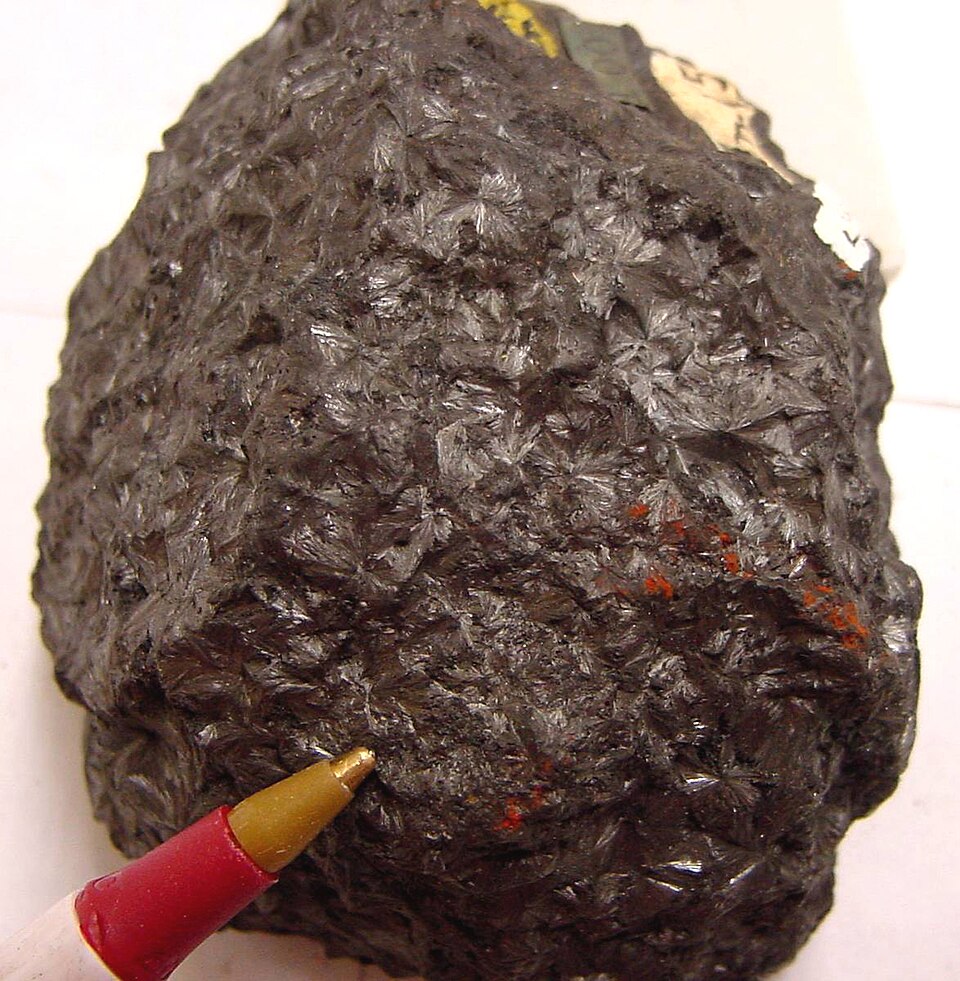
India's central manganese belt runs across the Balaghat–Chhindwara–Seoni districts of Madhya Pradesh and continues into Bhandara and Nagpur in Maharashtra; the ore occurs in the Precambrian rocks of this tract, with pyrolusite (MnO2) as the principal ore mineral. Balaghat is the state's most important manganese district — MOIL Ltd, a central public-sector undertaking, runs its largest manganese mine there. Manganese matters because it is an alloying metal: the bulk of it goes into steel-making as ferro-manganese and silico-manganese, with dry-cell batteries a smaller use.
This is a statement-code question, so the real skill is treating each of the four statements as a separate true/false test and then reading the codes backwards. Notice that three of the four codes contain statement 1 — so the moment you know the deposits-rank claim is the weak one, option B is the only survivor without even judging statements 3 and 4. Also keep 'reserves rank' and 'production rank' apart in your head: they are different rankings and states rarely top both.
- Madhya Pradesh's manganese tract is Balaghat–Chhindwara–Seoni, continuing into Bhandara–Nagpur in Maharashtra.
- MOIL Ltd, a central PSU headquartered at Nagpur, operates the Balaghat mine — its largest manganese mine.
- Pyrolusite (MnO2) is the chief ore mineral of manganese.
- Main use: steel-making alloys — ferro-manganese and silico-manganese; also dry-cell batteries.
- Odisha holds the largest share of India's manganese resources; Madhya Pradesh's claim to rank in this question is on production, not deposits.
- Assuming the state that produces the most also holds the most reserves — these are different rankings.
- Balaghat means manganese, not diamonds; Panna and its Majhgawan pipe are the diamond area of Madhya Pradesh.
- In statement-code questions, testing statements one by one instead of pairing them with the codes — here, disproving statement 1 alone eliminates three options.
MPPSC likes district-to-mineral mapping and 'rank of MP in production/reserves'; UPSC prefers pairing a place with a mineral and asking whether the pairing holds (Balaghat and Majhgawan, 2007).
Consider the following statements : 1. Balaghat is known for its diamond mines. 2. Majhgawan is known for its manganese deposits. Which of the statements given above is/are correct?
- (a) 1 only
- (b) 2 only
- (c) Both 1 and 2
- (d) Neither 1 nor 2
Answer(d) Neither 1 nor 2
The same Madhya Pradesh mineral geography, deliberately swapped — Balaghat is the manganese district and Majhgawan the diamond pipe, which is exactly the pairing this MPPSC question rests on.
Match List I (Ores) with List II (States where they are mined) and select the correct answer by using the codes given below the lists: List I I. Manganese II. Nickel III. Lead-zinc IV. Asbestos List II A. Madhya Pradesh B. Orissa C. Rajasthan D. Andhra Pradesh Codes:
- (a) I-A, II-C, III-B, IV-D
- (b) I-D, II-C, III-B, IV-A
- (c) I-A, II-B, III-C, IV-D
- (d) I-D, II-B, III-C, IV-A
Answer(c) I-A, II-B, III-C, IV-D — Manganese–Madhya Pradesh, Nickel–Orissa, Lead-zinc–Rajasthan, Asbestos–Andhra Pradesh
Same association tested by UPSC — manganese is matched to Madhya Pradesh, the state whose manganese standing this 2025 question probes.
In which of the following districts are large deposits of manganese found?
- (a) Balaghat
- (b) Neemuch
- (c) Sagar
- (d) Damoh
Answer(a) Balaghat
MPPSC asked the district-level version of the same fact three years earlier — where Madhya Pradesh's manganese actually lies.
- practice — not a real PYQ
MOIL Ltd, which operates the Balaghat mine, is associated with the mining of which mineral?
- (a)Manganese
- (b)Iron ore
- (c)Copper
- (d)Bauxite
Answer(a) Manganese — MOIL is India's public-sector manganese-ore producer, and Balaghat in Madhya Pradesh is its largest mine. - practice — not a real PYQ
The largest share of manganese consumed in India goes to which industry?
- (a)Iron and steel (ferro-alloys)
- (b)Fertilizer
- (c)Cement
- (d)Glass
Answer(a) Iron and steel — manganese is used mainly as ferro-manganese and silico-manganese in steel-making.