
'Imitation Game' was the original name of which test/problem?
- (a)LISP
- (b)The Turing Test
- (c)The Halting Problem
- (d)All of the above
Correct — B, The Turing Test. In his 1950 paper 'Computing Machinery and Intelligence,' the British mathematician and computer scientist Alan Turing proposed a test he originally called the 'Imitation Game' — a human judge holds a text conversation with an unseen human and an unseen machine, and if the judge cannot reliably tell which is which, the machine is said to have passed. This became the founding thought-experiment of artificial intelligence and is now universally known as the Turing Test.
- (a)LISP — LISP is a programming language (created 1958 by John McCarthy), one of the earliest languages built for AI research — but it is not a name for the 'Imitation Game' or any test/problem.
- (c)The Halting Problem — A different foundational problem, also posed by Alan Turing (1936) — it asks whether a general algorithm can determine if a given program will finish running or loop forever, and Turing proved it undecidable. It concerns computability, not machine intelligence, so it is unrelated to the 'Imitation Game.'
- (d)All of the above — Wrong — only the Turing Test carries the 'Imitation Game' name; LISP is a programming language and the Halting Problem is a separate, decades-older computability question, so 'all of the above' cannot hold.
Alan Turing proposed the 'Imitation Game' in his 1950 paper 'Computing Machinery and Intelligence' as a practical way to sidestep the philosophical question 'Can machines think?' — instead asking whether a machine can convincingly imitate a human in text conversation. This test, now called the Turing Test, remains a foundational benchmark concept in artificial intelligence.
Exams sometimes pair Turing's 'Imitation Game' with other real AI/computing landmarks — a programming language (LISP) or a different Turing result (the Halting Problem) — to check whether a candidate knows the concept's origin precisely, rather than just recognising AI-adjacent buzzwords.
- Alan Turing proposed the 'Imitation Game' in his 1950 paper 'Computing Machinery and Intelligence.'
- The test involves a human judge conversing (via text) with a hidden human and a hidden machine, trying to tell them apart.
- Now universally known as the Turing Test — a foundational concept in artificial intelligence.
- Turing separately posed the Halting Problem (1936) — a different, computability-theory question, not to be confused with the Imitation Game.
- LISP (1958, John McCarthy) is an early AI-oriented programming language, unconnected to the 'Imitation Game' name.
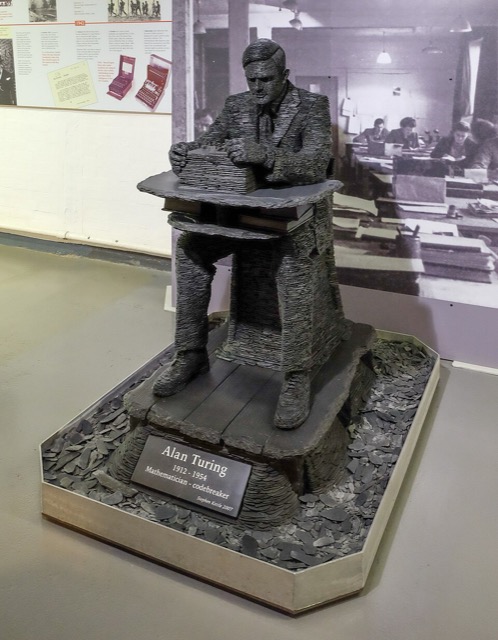
- Confusing the Imitation Game/Turing Test (1950, machine intelligence) with the Halting Problem (1936, computability) — both are Turing's ideas but decades and domains apart.
- Assuming a plausible-looking 'all of the above' is safe when only one option actually shares the tested name/identity.
MPPSC/UPSC computer-awareness sets like to test a concept's ORIGINAL name (Imitation Game) against its popular name (Turing Test), sometimes padding the options with other real but unrelated computing landmarks (LISP, Halting Problem) or a tempting 'all of the above.'
- practice — not a real PYQ
The Turing Test, originally called the 'Imitation Game,' was proposed by Alan Turing in which landmark 1950 paper?
- (a)'On Computable Numbers'
- (b)'Computing Machinery and Intelligence'
- (c)'A Mathematical Theory of Communication'
- (d)'Cybernetics'
Answer(b) 'Computing Machinery and Intelligence' — Turing's 1950 paper proposing the Imitation Game. - practice — not a real PYQ
Alan Turing's 'Halting Problem' (1936), distinct from the Imitation Game, asks whether:
- (a)a machine can convincingly imitate a human in conversation
- (b)a general algorithm can determine if any given program will finish running or loop forever
- (c)a computer can defeat a human at chess
- (d)data can be transmitted without error
Answer(b) a general algorithm can determine if any given program will finish running or loop forever — the Halting Problem, which Turing proved undecidable.