
Mandwara festival is celebrated by the:
- (a)Gond
- (b)Baiga
- (c)Bharia
- (d)Sahariya
Correct — A, Gond. The official key attributes the Mandwara festival to the Gond community — Madhya Pradesh's (and India's) largest Scheduled Tribe, concentrated in districts such as Mandla, Dindori, Chhindwara, Seoni, Betul and Balaghat. The Gond observe a rich calendar of seasonal and agricultural festivals — including Madai and the month-long sapling-planting festival Hari Jiroti (celebrated jointly with the Korku) — and Mandwara is a further such Gond festival named in the official key.
- (b)Baiga — A distinct Madhya Pradesh PVTG (Particularly Vulnerable Tribal Group), concentrated around the Dindori-Mandla-Balaghat belt ('Baiga Chak') — a separate community from the Gond, though sharing the same broader tribal region.
- (c)Bharia — A PVTG confined mainly to the Patalkot valley of Chhindwara district; the Bharia consider themselves 'younger brothers' of the Gond but are a much smaller, separate community — not credited with this festival in the official key.
- (d)Sahariya — A PVTG found mainly in the Gwalior-Chambal belt of Madhya Pradesh (and in Rajasthan) — geographically and culturally distinct from the central-MP Gond heartland.
The Gond are Madhya Pradesh's largest tribal (Scheduled Tribe) community and one of India's largest, having historically ruled Gondwana kingdoms (e.g. Garha-Mandla, Deogarh) before Mughal and British expansion. Their homeland spans Mandla, Dindori, Chhindwara, Seoni, Betul, Balaghat and other central-MP districts, and MPPSC frequently tests Gond festivals as a state-GK item.
MPPSC often names a locally-specific tribal festival and asks which community celebrates it — treat the community identity (Gond, here) as the core testable fact even where the festival's exact ritual detail is not widely documented outside state gazetteers and local sources.
- Gond — Madhya Pradesh's largest Scheduled Tribe, and among India's largest tribal communities.
- Core Gond districts: Mandla, Dindori, Chhindwara, Seoni, Betul, Balaghat.
- Historically ruled Gondwana kingdoms such as Garha-Mandla and Deogarh.
- Other confirmed Gond festivals: Madai, and Hari Jiroti — a month-long sapling-planting festival observed jointly with the Korku tribe (tested in UPSC 2014).
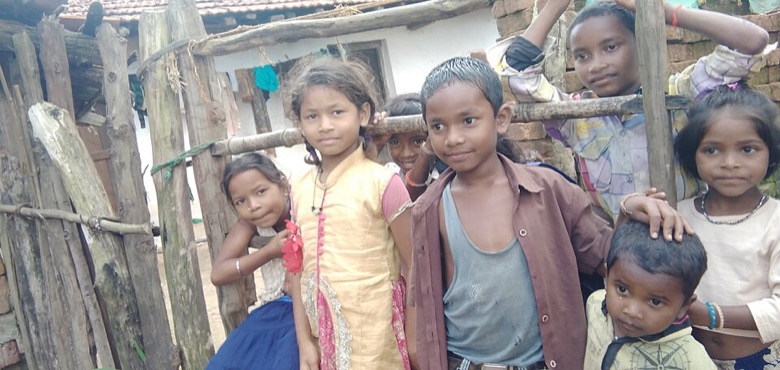
Four Madhya Pradesh tribal communities — only the Gond is credited with the Mandwara festival in the official key.
- Assuming any Madhya Pradesh tribal festival is automatically Gond simply because Gond is the largest tribe — each festival-community pairing must be learnt individually
- Confusing the Gond with the smaller, PVTG-status Baiga, Bharia or Sahariya communities that share the same broader region
MPPSC frequently names a specific, locally-known tribal festival or ritual and asks which community celebrates it — a pure recall item testing state-specific tribal GK.
Every year, a month-long ecologically important campaign/festival is held during which certain communities/tribes plant saplings of fruit-bearing trees. Which of the following are such communities/tribes?
- (a) Bhutia and Lepcha
- (b) Gond and Korku
- (c) Irula and Toda
- (d) Sahariya and Agariya
Answer(b) Gond and Korku — the tribes who observe the month-long Hari Jiroti sapling-planting festival.
A different specific festival (Hari Jiroti, a tree-planting festival) but the same underlying concept — a Gond community festival of Madhya Pradesh — and the same tribe (Gond) as this MPPSC question's answer.
- practice — not a real PYQ
Which of the following is the largest Scheduled Tribe of Madhya Pradesh by population?
- (a)Gond
- (b)Bhil
- (c)Baiga
- (d)Korku
Answer(a) Gond. - practice — not a real PYQ
'Hari Jiroti', a month-long sapling-planting festival, is celebrated jointly by the Gond and which other tribe?
- (a)Korku
- (b)Baiga
- (c)Bharia
- (d)Sahariya
Answer(a) Korku — as tested directly in a UPSC 2014 prelims question.