
'Aryamanjushrimulakalpa' is related to which of the following?
- (a)Mahayana
- (b)Hinayana
- (c)Thervada
- (d)Vajrayana
Correct — A or D (both accepted). The Aryamanjushrimulakalpa is a Sanskrit Buddhist text centred on the bodhisattva Manjushri, the embodiment of wisdom — its core content (bodhisattva doctrine, praise of Manjushri) is Mahayana. But the text also contains ritual material — mandalas, mantras and prophecy — that places it among the texts bridging toward Vajrayana (tantric) Buddhism. Because it genuinely carries both characters, the commission granted grace and accepted both (a) Mahayana and (d) Vajrayana.
- (b)Hinayana — Hinayana is the older, more conservative early-Buddhist tradition; this text's Mahayana-bodhisattva and tantric content has no connection to that lineage.
- (c)Thervada — Theravada is the surviving school of the same older Hinayana tradition — like Hinayana, it is unrelated to this Mahayana-Vajrayana text.
Buddhism is broadly grouped into an older tradition (Hinayana, whose surviving form is Theravada) and a later Mahayana tradition, out of which Vajrayana (tantric Buddhism) developed with its own ritual apparatus of mandalas and mantras. Some texts sit at the boundary between Mahayana and Vajrayana rather than fitting cleanly into one — the Aryamanjushrimulakalpa is one such text.
The question tests text-to-school classification, but this particular text resists a single clean label, which is exactly why it earned grace marks. The trap is picking Hinayana or Theravada: both name the older tradition, and this text's content has nothing to do with it.
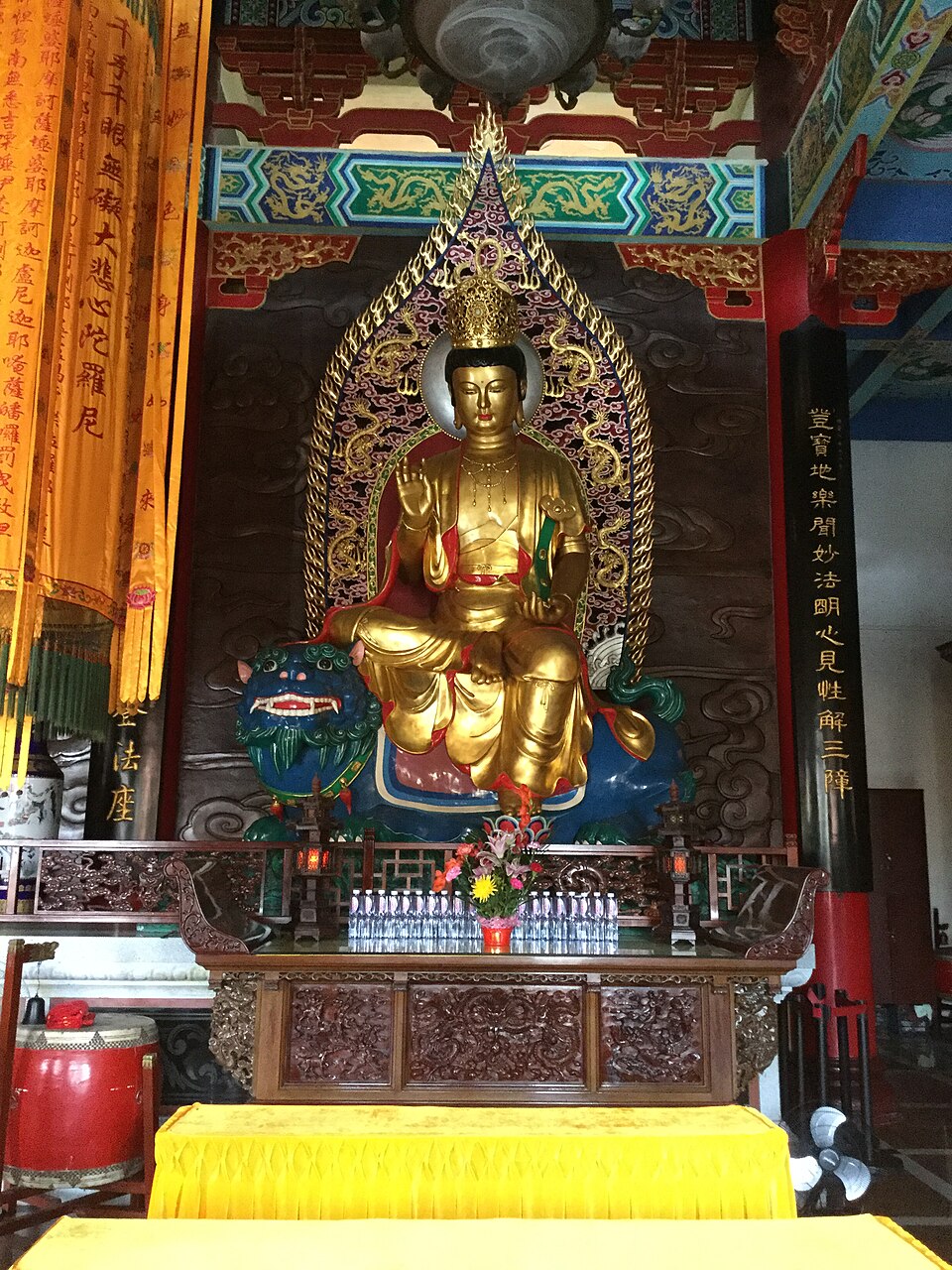
- Aryamanjushrimulakalpa is centred on Bodhisattva Manjushri, the personification of wisdom in Mahayana Buddhism
- It also contains early tantric ritual material (mandalas, mantras) — a bridge toward Vajrayana Buddhism
- Historians also cite it as an early source on the selection of Gopala, founder of the Pala dynasty, to end anarchy (matsyanyaya) in Bengal
- 'Hinayana' and 'Theravada' both name the older, non-Mahayana tradition — neither fits this text
- Treating 'Hinayana' and 'Theravada' as two different schools rather than two names for the same older tradition
- Assuming a Mahayana text cannot also carry Vajrayana material — several later Mahayana texts bridge into tantra, as this one does
MPPSC/UPSC test 'text ↔ Buddhist school' pairings; this one is unusual because it genuinely spans two schools, which is why the commission accepted both options.
- practice — not a real PYQ
The Manjushrimulakalpa is cited by historians as an early source on the selection of which ruler to end anarchy (matsyanyaya) in Bengal?
- (a)Gopala, founder of the Pala dynasty
- (b)Harshavardhana
- (c)Dharmapala
- (d)Shashanka
Answer(a) Gopala, founder of the Pala dynasty. - practice — not a real PYQ
'Theravada' is another name for which older, more conservative school of Buddhism?
- (a)Mahayana
- (b)Hinayana
- (c)Vajrayana
- (d)Zen
Answer(b) Hinayana — Theravada is the surviving form of the older Hinayana tradition.