
In which session was the Congress divided into Moderates and Extremists?
- (a)Bombay
- (b)Surat
- (c)Calcutta
- (d)Nagpur
Correct — B, Surat. At the 1907 annual session of the Indian National Congress held in Surat, the simmering tension between the Moderates (who favoured constitutional agitation) and the Extremists (led by Tilak, Bipin Chandra Pal and Lala Lajpat Rai, who wanted more assertive Swadeshi/boycott methods after the 1905 Partition of Bengal) came to a head over the choice of session president, splitting the party into two rival factions for nearly a decade.
- (a)Bombay — Bombay hosted the founding 1885 session of the INC (under W.C. Bonnerjee) and several later sessions, but not the 1907 Moderate–Extremist split.
- (c)Calcutta — The 1906 Calcutta session (under Dadabhai Naoroji) adopted the Swaraj, Swadeshi, boycott and national-education resolutions whose fate triggered the split — but the actual split happened at the following year's session, at Surat.
- (d)Nagpur — Nagpur hosted the 1920 session where the Non-Cooperation programme was adopted — a different event, unrelated to the 1907 split.
The Surat Split (1907) was the first major internal rupture in the Indian National Congress. After the 1905 Partition of Bengal, Extremists (Tilak, Pal, Lajpat Rai) pushed for Swadeshi, boycott and passive resistance, while Moderates (Gokhale, Pherozeshah Mehta) preferred petitions and dialogue with the British. The immediate trigger was disagreement over retaining the 1906 Calcutta resolutions and over the choice of session president — the Extremists walked out.
Exams frequently test 'which INC session did X happen at' as a rote pairing exercise — 1885 Bombay (founding), 1906 Calcutta (Swaraj resolution), 1907 Surat (split), 1916 Lucknow (reunion + Congress-League Pact), 1920 Nagpur (Non-Cooperation). Anchoring the split specifically to Surat — not Calcutta, where the underlying resolutions were only passed — is the key discrimination this question tests.
- 1907 Surat session split the INC into Moderates and Extremists
- Trigger: dispute over the 1906 Calcutta resolutions (Swaraj, Swadeshi, boycott, national education) and the session presidentship
- Extremist leaders: Bal Gangadhar Tilak, Bipin Chandra Pal, Lala Lajpat Rai (the 'Lal-Bal-Pal' trio)
- The two factions reunited at the 1916 Lucknow session
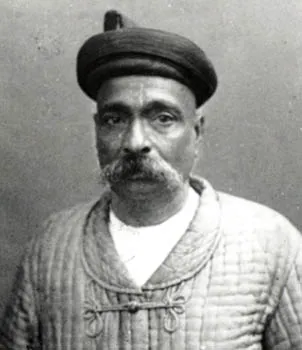
- Confusing the 1906 Calcutta session (where the contested resolutions were passed) with the 1907 Surat session (where the actual split occurred)
- Mixing up Nagpur 1920 (Non-Cooperation) with Surat 1907 (the Moderate–Extremist split)
MPPSC/UPSC usually test this as a direct session-to-event pairing, or as part of a chronology/matching question across several INC sessions.
What was the main reason for the split in the Indian National Congress at Surat in 1907?
- (a) Introduction of communalism into Indian politics by Lord Minto
- (b) Extremists’ lack of faith in the capacity of the moderates to negotiate with the British Government
- (c) Foundation of Muslim League
- (d) Aurobindo Ghosh’s inability to be elected as the President of the Indian National Congress
Answer(b) Extremists’ lack of faith in the capacity of the moderates to negotiate with the British Government
Direct UPSC 2016 prelims question on the same event — the cause of the 1907 Surat split.
- practice — not a real PYQ
The Moderates and Extremists of the Indian National Congress reunited at which session?
- (a)Lahore, 1929
- (b)Lucknow, 1916
- (c)Amritsar, 1919
- (d)Nagpur, 1920
Answer(b) Lucknow, 1916 — the same session also produced the Congress-League (Lucknow) Pact. - practice — not a real PYQ
Who was elected President of the Indian National Congress at the 1907 Surat session, triggering the Extremists' walkout?
- (a)Bal Gangadhar Tilak
- (b)Rash Behari Ghosh
- (c)Gopal Krishna Gokhale
- (d)Dadabhai Naoroji
Answer(b) Rash Behari Ghosh — the Moderate-backed candidate whose election the Extremists contested.