
Which of the following is not an advantage of robots?
- (a)They can assist humans with disabilities.
- (b)They can replace jobs.
- (c)They can be used in dangerous environments.
- (d)They do not get tired or require a break.
Correct — B, 'They can replace jobs.' Robots do replace human labour in many tasks, but this is consistently framed as a disadvantage or societal challenge of automation — job/livelihood displacement — not a benefit of using robots, unlike options A, C and D, which are all genuine advantages.
- (a)They can assist humans with disabilities. — This IS a genuine advantage of robots — e.g., robotic prosthetics, mobility aids and assistive exoskeletons — so it does not fit the 'NOT an advantage' criterion the question asks for.
- (c)They can be used in dangerous environments. — This is a genuine advantage — bomb disposal, nuclear facilities, and deep-sea or space exploration are classic cases where robots protect human life by taking on hazardous work.
- (d)They do not get tired or require a break. — This is a genuine advantage — robots can run continuously without fatigue, boosting productivity, unlike human workers who need rest.
Robots are automated machines valued for consistent, tireless operation, precision, and the ability to work in environments unsafe for humans. These strengths are genuine 'advantages' of using robots. Job displacement — robots replacing human workers — is a real consequence of automation, but it is framed as a societal cost/disadvantage (a challenge for labour markets and livelihoods), not a benefit of the robot itself.
The question tests whether you can separate genuine benefits of robots from a widely-discussed downside of automation hidden among plausible-sounding advantage statements.
- Robots can operate continuously without fatigue or breaks, unlike human workers
- Robots are deployed in hazardous settings: bomb disposal, nuclear facilities, deep-sea and space exploration
- Robots assist people with disabilities via robotic prosthetics and mobility aids
- Job displacement/replacement of human labour is a commonly cited concern of automation, not a benefit of robots
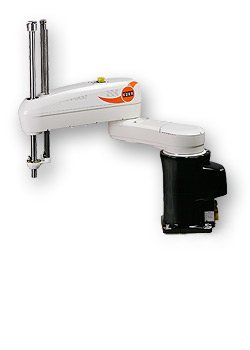
- Treating every listed statement as an 'advantage' without checking whether the question asks for the exception (NOT an advantage)
- Confusing robots (physical machines) with AI/software automation
Commonly framed as 'which is NOT an advantage/feature of X' — read the question stem for the negative ('not') before picking the most agreeable-sounding option.
- practice — not a real PYQ
Which of these is NOT typically cited as a benefit of industrial robots in manufacturing?
- (a)Consistent, tireless 24/7 operation
- (b)Risk of large-scale job displacement
- (c)Ability to work in hazardous/toxic environments
- (d)High precision and repeatability
Answer(b) Job displacement — a societal cost of automation, not a benefit. - practice — not a real PYQ
Robots are especially valued for performing tasks in which of the following settings?
- (a)Routine desk-based office work
- (b)Environments hazardous to humans (e.g., radioactive sites, bomb disposal, deep-sea or space exploration)
- (c)Creative/artistic work requiring subjective judgment
- (d)Tasks needing empathetic human interaction
Answer(b) Hazardous environments unsafe for humans.