
The shape of which tree is found on the seals from the Indus Civilization?
- (a)Mango
- (b)Pipal
- (c)Parijat
- (d)Sal
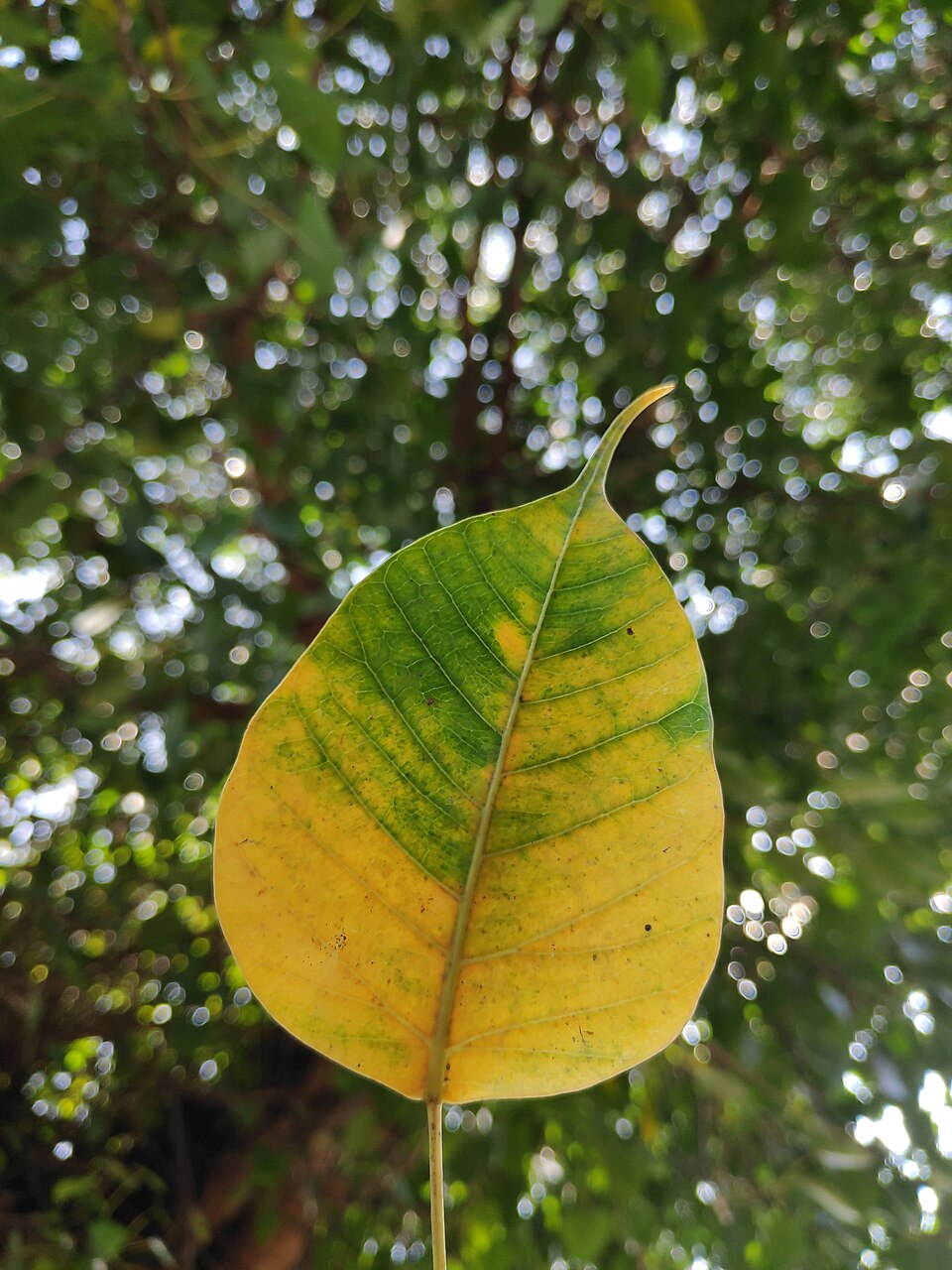
Correct — B, Pipal (Ficus religiosa). The pipal leaf's distinctive heart shape recurs on Indus seals and tablets — most famously on the 'Pashupati' seal from Mohenjodaro, where a horned figure sits beneath a pipal branch, and on seals showing a figure worshipped within a pipal tree. This is read as early evidence of tree worship in Harappan religion, well before the tree's later Buddhist association (the Bodhi tree).
- (a)Mango — A common Indian fruit tree, but not the tree depicted in Indus seal iconography.
- (c)Parijat — The mythical coral-jasmine tree of later Puranic/Krishna legend — not an Indus Valley seal motif.
- (d)Sal — Significant in later Buddhist tradition (Buddha's birth and death are both linked to Sal trees) — not the tree found on Indus seals.
Indus seals — small engraved steatite tablets usually showing an animal (bull, 'unicorn') with a script line — occasionally carry religious scenes instead. The pipal (Ficus religiosa) tree recurs in these: as the backdrop to a horned/seated deity, and as a tree within which a worshipped figure stands. This is treated as the earliest attested instance of tree worship in the subcontinent.
Exams pair this with other early religious motifs — the 'proto-Shiva'/Pashupati seal and animal worship on seals — and with the later continuity of pipal reverence into Buddhism (Bodhi tree) and Hinduism. The trap is picking a tree important in a LATER Indian religious context (Sal for Buddha, Parijat for Krishna) rather than the one actually attested on Harappan seals.
- Pipal (Ficus religiosa) motif recurs on Indus Valley seals
- Seen on the Pashupati seal scene and on seals depicting worship of a figure within a pipal tree
- Read as evidence of tree worship in Harappan religion, pre-dating its Buddhist association (Bodhi tree)
- Indus seals are typically steatite, mostly engraved with animals and script; the pipal scenes are a religious subset
- Picking Sal or Parijat because they matter in LATER (Buddhist/Puranic) religion, not the Indus period
- Assuming Indus seals only show animals — some depict tree-worship/religious scenes
Usually a direct one-liner ('which tree/animal/motif is found on Indus seals'), sometimes embedded in a statement-based question on Indus religion.
- practice — not a real PYQ
The 'Pashupati seal' from Mohenjodaro shows a horned figure seated amidst animals beneath which tree?
- (a)Sal
- (b)Pipal
- (c)Banyan
- (d)Neem
Answer(b) Pipal — the seal's religious scene is set beneath a pipal branch. - practice — not a real PYQ
Which of the following is evidence of tree worship in the Indus Valley Civilization?
- (a)Sal-tree processions on seals
- (b)A worshipped figure depicted within a pipal tree on seals
- (c)Parijat groves near citadels
- (d)Banyan-shaded assembly halls
Answer(b) — seals show a figure standing within a pipal tree being worshipped, the clearest evidence of Harappan tree worship.