
Which of the following canals has made agricultural activities of the western districts of Rajasthan more productive?
- (a)Kanhar Canal
- (b)Ramganga Canal
- (c)Sharda Sahayak Canal
- (d)Indira Gandhi Canal
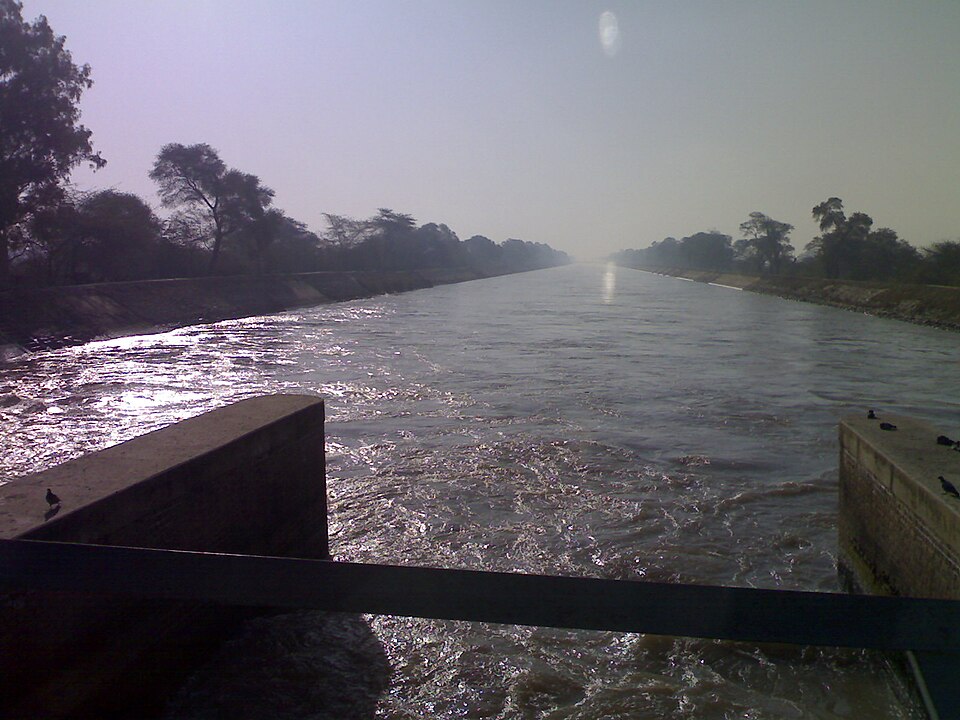
Correct — D, Indira Gandhi Canal. Originally called the Rajasthan Canal, it draws water from the Harike Barrage (the Sutlej–Beas confluence in Punjab) and carries it across roughly 650 km of the Thar Desert, irrigating the western/north-western Rajasthan districts (Ganganagar, Hanumangarh, Bikaner, Jaisalmer and others) that were otherwise arid and largely unproductive.
- (a)Kanhar Canal — A tributary-based irrigation project in the Sonbhadra region of Uttar Pradesh, unrelated to western Rajasthan.
- (b)Ramganga Canal — Draws from the Ramganga river/dam system in the Bareilly-Moradabad belt of Uttar Pradesh, far from Rajasthan's Thar tract.
- (c)Sharda Sahayak Canal — A canal system linking the Sharda and Ghaghra rivers to irrigate central-eastern Uttar Pradesh, not Rajasthan.
The Indira Gandhi Canal is India's longest canal and the single biggest reason the arid western Rajasthan districts — once dependent on scarce, erratic rainfall and deep groundwater — now support irrigated agriculture, drinking-water supply and afforestation across the Thar Desert fringe.
MPPSC/UPSC frequently test 'which canal irrigates which region.' The trap is mixing up Uttar Pradesh canal projects (Kanhar, Ramganga, Sharda Sahayak) with the Indira Gandhi Canal, the one actually built to green the Thar Desert.
- Formerly named the Rajasthan Canal; later renamed after Indira Gandhi
- Source: Harike Barrage, at the Sutlej–Beas confluence in Punjab
- India's longest canal, running through the Thar Desert
- Irrigates north-western Rajasthan districts including Ganganagar, Hanumangarh, Bikaner and Jaisalmer
- Confusing Uttar Pradesh canal projects (Kanhar, Ramganga, Sharda Sahayak) with Rajasthan's Indira Gandhi Canal
- Not knowing the canal's true source is the Sutlej-Beas system via Harike Barrage, not a Rajasthan-origin river
Usually a direct 'which canal irrigates region X' question, or a source/river-of-origin question (as in the linked 2000 UPSC PYQ testing whether the Ghaggar or the Sutlej-Beas feeds the canal).
Which one of the following statements is not true?
- (a) Ghaggar’s water is utilised in the Indira Gandhi Canal
- (b) Narmada rises from Amarkantak region
- (c) Nizam Sagar is situated on the Manjira River
- (d) Penganga is a tributary of the Godavari
Answer(a) 'Ghaggar's water is utilised in the Indira Gandhi Canal' is the FALSE statement — the canal actually draws from the Sutlej-Beas system via Harike Barrage, not the Ghaggar.
Same subject, tested from the opposite angle — the Indira Gandhi Canal's true water source (Sutlej-Beas, not Ghaggar).
- practice — not a real PYQ
The Indira Gandhi Canal draws its water primarily from the confluence of which two rivers at Harike Barrage?
- (a)Ravi and Chenab
- (b)Sutlej and Beas
- (c)Yamuna and Ganga
- (d)Chambal and Banas
Answer(b) Sutlej and Beas — the canal is fed from the Harike Barrage where these two rivers meet. - practice — not a real PYQ
The Indira Gandhi Canal was originally known by which name?
- (a)Rajasthan Canal
- (b)Thar Canal
- (c)Bikaner Canal
- (d)Ganganagar Canal
Answer(a) Rajasthan Canal — it was renamed the Indira Gandhi Canal later.