
The Indian Parliament consists of
- (a)President
- (b)Rajya Sabha and Lok Sabha
- (c)President, Rajya Sabha and Lok Sabha
- (d)None of the above
Correct — C, President, Rajya Sabha and Lok Sabha. Article 79 states: 'There shall be a Parliament for the Union which shall consist of the President and two Houses to be known respectively as the Council of States (Rajya Sabha) and the House of the People (Lok Sabha).' The President is thus a constitutional part of Parliament, not an authority outside it — no Bill becomes law without Presidential assent, and the President summons, prorogues, and can dissolve the Lok Sabha.
- (a)President — Incomplete — the President is only one of Parliament's three constituent parts; the two Houses are missing.
- (b)Rajya Sabha and Lok Sabha — Incomplete — the most common trap: naming only the two Houses and forgetting that Article 79 makes the President a formal part of Parliament too.
- (d)None of the above — Wrong — Option C states Parliament's composition correctly.
Article 79 defines 'Parliament' to include the President plus the two Houses — Rajya Sabha (Council of States) and Lok Sabha (House of the People). This differs from a presidential system such as the United States', where the President sits outside the legislature. In India, no Bill becomes an Act without Presidential assent (Article 111), and the President summons and prorogues both Houses and can dissolve the Lok Sabha (Article 85) — powers that only make sense because the President is legally part of Parliament, not external to it.
The classic trap is thinking of 'Parliament' colloquially as just the two Houses where MPs sit, and forgetting the President's constitutional membership. This is a pure definitional-recall question.
- Article 79 — Parliament = President + Rajya Sabha (Council of States) + Lok Sabha (House of the People)
- No Bill becomes an Act without the President's assent (Article 111)
- The President summons and prorogues both Houses, and can dissolve the Lok Sabha (Article 85)
- Contrast with the US: the American President is NOT part of Congress
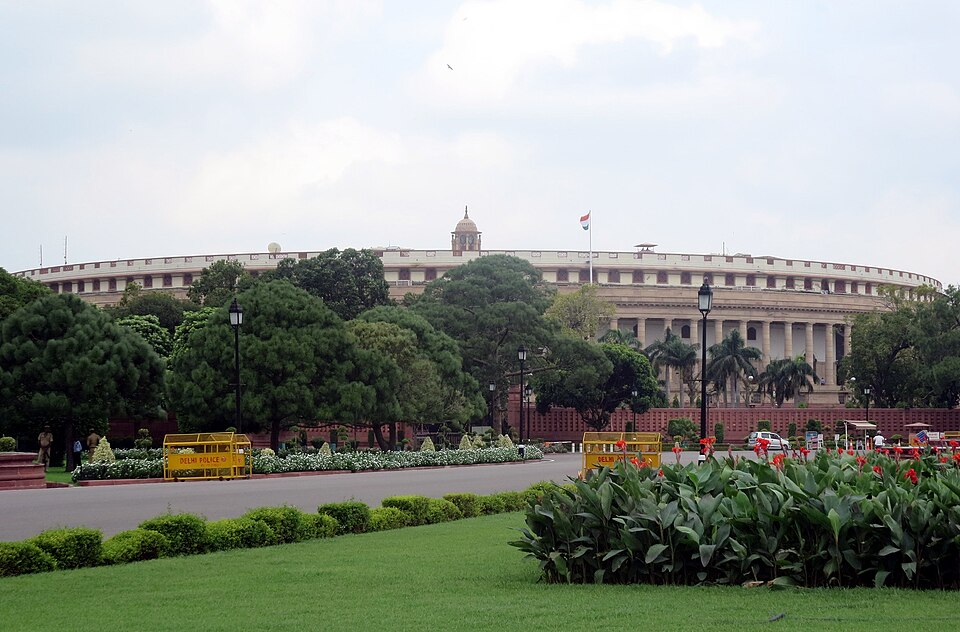
- Forgetting the President is formally part of Parliament under Article 79
- Confusing India's parliamentary system (President inside Parliament) with a presidential system (President outside the legislature)
A direct definitional question (as here), or embedded inside a 'consider the statements' question about Articles 79, 85, or 111.
- practice — not a real PYQ
Which Article of the Constitution defines the composition of the Indian Parliament?
- (a)Article 74
- (b)Article 79
- (c)Article 85
- (d)Article 111
Answer(b) Article 79 — it defines Parliament as consisting of the President and the two Houses. - practice — not a real PYQ
A Bill passed by both Houses of Parliament becomes an Act of Parliament only after:
- (a)It is published in the Gazette
- (b)The Speaker of the Lok Sabha signs it
- (c)The President gives assent to it
- (d)The Prime Minister counter-signs it
Answer(c) The President gives assent (Article 111) — confirming the President's constitutional role as part of Parliament, not outside it.