
UPSC Current Affairs

4 topicsGS-1: 1GS-2: 1GS-3: 2
0/4 done
GS-2Polity

1.Tribunal Reforms in India (Tribunal Reforms)

Economic Times

What & Where

Definition: Statutory quasi-judicial bodies resolving specialised disputes outside regular courts across India

Constitutional basis: Part XIV-A; Articles 323-A (service tribunals) & 323-B (other matters); inserted by 42nd Amendment 1976

Core process: Appeals lie to High Courts/Supreme Court; SC urges creation of National Tribunals Commission for appointments

Quick Facts for MCQs

Judiciary Oversight

  • Basic-structure: High Court & SC review cannot be ousted, L. Chandra Kumar 1997
  • Tenure: Four-year term held arbitrary, violates independence, SC 2025
  • Composition: Technical members not to outnumber judicial members, R. Gandhi 2010

Governance Concerns

  • Executive-control: Government dominates appointments, service terms, removal, hurting separation of powers
  • Vacancies: Persistent non-filling forces SC to grant ad-hoc extensions to avert tribunal paralysis
  • Quality: Outsourced, poorly reasoned orders inflate SC correction workload and delay justice

Reform Measures

  • NTC: Independent body for selection, evaluation, finance of all tribunals repeatedly directed by Supreme Court
  • Funding: Budgets to be charged on Consolidated Fund ensuring autonomy, uniform infrastructure, regional benches
  • Digitisation: Electronic case management proposed to expedite massive commercial and service dispute backlogs

Key Data Points

FeatureData-Point
42nd Amendment year1976
Armed Forces Tribunal pendency~38,000 cases
Commercial tribunal backlog3.56 lakh cases
Economic value of backlog₹24.7 lakh crore (≈7.5 % GDP)
HC jurisdiction restored byL. Chandra Kumar 1997
Technical≯Judicial rule set inR. Gandhi 2010
4-yr tenure struck downMadras Bar Association 2025
SC-suggested retirement age67 years

Related UPSC Prelims PYQs

GS1 2009PYQ 1

Consider the following statements :

GS1 2019PYQ 2

Which one of the following suggested that the Governor should be an eminent person from outside the State and should be a detached figure without intense political links or should not have taken part in politics in the recent past?
GS-3Infrastructure

2.Industrial Corridor Development Programme (Industrial Corridors)

PIB

What & Where

Industrial corridors = strategic linear zones linking big economic centres via road-rail-port-airport networks for seamless freight

National Industrial Corridor Development Programme (NICDP) = umbrella scheme creating 11 greenfield smart cities along priority transport corridors

Fresh 2026-27 push = Integrated East Coast Industrial Corridor, node Durgapur (WB), aligned to Purvodaya

Quick Facts for MCQs

Legal & Policy

  • Alignment with PM GatiShakti National Master Plan ensures multimodal connectivity mapping
  • NICDIT acts as dedicated trust for financing, loan negotiation, resource mobilisation
  • SEZ components inside corridors provide tax incentives, relaxed regulations

Economic Angle

  • Plug-and-play land, assured utilities slash setup time, attract FDI in EVs, semiconductors
  • Corridors aim to cut logistics cost, deepen integration with global value chains
  • Job creation already in thousands; further boost expected from East Coast corridor

Infrastructure & Tech

  • Multimodal trunk: Dedicated Freight Corridors, NHs, ports, airports enable 24×7 freight flow
  • Smart cities planned with walk-to-work layouts, extensive green spaces, ICT-based utilities
  • Renewable power, smart grids and recycled water embedded for carbon-light industrialisation

Key Data Points

FeatureData-Point
2026-27 Budget outlay to NICDIT₹3,000 crore
Implementing agencyNational Industrial Corridor Development Corporation Ltd (NICDC)
Parent ministryDPIIT, Ministry of Commerce & Industry
Year NICDC set up2008 (as DMICDC)
Total industrial corridors under NICDP11
New smart city projects cleared in 202412
Phase-I investment attracted₹2.02 lakh crore
Economic Survey reference year2025-26
Sustainability modelLow-Carbon Cities framework, renewable energy, water & waste recycling
Key East Coast node announced 2026Durgapur, West Bengal
GS-1History

3.Freedom Fighter Chandra Shekhar Azad (Freedom Movement)

PIB
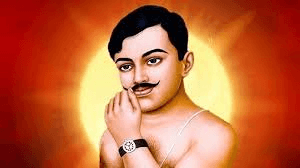
Illustration for Freedom Fighter Chandra Shekhar Azad (Freedom Movement)

What & Where

Revolutionary Chandra Shekhar Azad; icon of militant phase of Indian National Movement.

Geography links: Bhabhra-Alirajpur (birth), Kakori-Lucknow, Lahore, Delhi, Allahabad’s Alfred Park (death).

Processes: participation in Non-Cooperation, formation of HRA, transition to socialist HSRA.

Quick Facts for MCQs

Early Activism

  • Arrested age fifteen during Non-Cooperation; flogging earned enduring pseudonym Azad.
  • Ideological shift after movement suspension; embraced armed struggle for complete independence.
  • Networking with Ram Prasad Bismil shaped tactical outlook.

Revolutionary Organisations

  • Hindustan Republican Association founded 1924 by Sanyal, Sen, Ganguli; Azad joined 1922 post-suspension.
  • HRA reorganised as Hindustan Socialist Republican Association at Feroz Shah Kotla, 9-Sep-1928.
  • HSRA leadership core: Azad, Bhagat Singh, Sukhdev, Jogesh Chatterjee.

Key Actions

  • Fund-raising via expropriation; Kakori train raid executed 9-Aug-1925.
  • Retaliatory assassination: J P Saunders shot 17-Dec-1928 avenging Lajpat Rai.
  • Continual arms practice in forest hideouts near Orchha and Jhansi.

Key Data Points

FeatureData-Point
Birth date23 July 1906
Birth villageBhabhra, Alirajpur, Madhya Pradesh
Alias before magistrateName Azad; Father Swatantrata; Address Jail
First mass movementNon-Cooperation (Dec 1921)
Principal groupsHRA 1924 → HSRA 1928
Kakori raid date9 Aug 1925
Saunders shooting date17 Dec 1928
Martyrdom27 Feb 1931, Alfred Park, Allahabad

Related UPSC Prelims PYQs

GEO_GS 2023PYQ 1

Who among the following revolutionaries founded the Hindustan Socialist Republican Army?

GS-3S&T

4.AI for Rural Governance (AI Applications)

PIB

What & Where

India–AI Impact Summit 2026 spotlighted nationwide AI roll-out for rural livelihoods, governance and service delivery.

Key integration arenas: Panchayati Raj operations, agriculture decision support, rural health, school education, multilingual access.

Anchored by IndiaAI Mission, Digital India and e-Panchayat programmes spanning > 2.5 lakh Gram Panchayats.

Quick Facts for MCQs

Tech & Schemes

  • Platforms: SabhaSaar, eGramSwaraj, Gram Manchitra, BhuPRAHARI digitise minutes, funds, spatial assets, MGNREGA works.
  • Agriculture stack: Kisan e-Mitra, Pest Surveillance, satellite–weather analytics push real-time advisories.
  • Health: Suman Sakhi WhatsApp chatbot offers maternal-newborn info via AI conversation.

Policy Framework

  • NITI Aayog 2018 AI Strategy stresses augmentation, affordability, inclusive access.
  • MeitY Responsible-AI Guidelines list fairness, accountability, transparency; six-pillar action roadmap.
  • Sovereign AI: BharatGen, Sarvam Vision prioritise indigenous data, multilingual LLM capability.

Risk & Challenges

  • Infrastructure gap: patchy broadband, low 4.2 % rural PC ownership hinder uptake.
  • Algorithmic bias: urban-weighted training data may skew welfare eligibility; opaque “black box” decisions erode trust.
  • Automation threat: autonomous tractors, clerical AI risk rural job losses without reskilling buffers.

Skilling & Education

  • DIKSHA adds AI keyword search, read-aloud tools for inclusive learning.
  • YUVAI trains Class VIII-XII students in foundational AI, socio-technical problem solving.
  • IndiaAI FutureSkills envisioned for mass rural reskilling against automation shocks.

Inclusion & Language

  • BHASHINI supplies translation, voice UI in 36+ languages; integrated with 23+ e-services.
  • Adi Vaani enables tribal-language access to governance, education, health.
  • Bulbul V3 voice agent targets illiterate users in native dialects.

Key Data Points

FeatureData-Point
Summit year2026
eGramSwaraj Gram Panchayats onboarded (FY 24-25)2.53 lakh
Gram Manchitra GPDPs uploaded2.44 lakh
BHASHINI language support36 +
BharatGen language coverage22
AIKosh datasets / AI models7,500 / 273
Urban vs rural computer ownership21.6 % / 4.2 %
Ethical-AI guiding Sutras7

Related UPSC Prelims PYQs

ESE_GS, GEO_GS 2026PYQ 1

Which Ministry released the India AI Governance Guidelines in 2025?

ESE_GS, GEO_GS 2024PYQ 2

Which of the following statements about GPAI (Global Partnership on Artificial Intelligence) is/are correct?

Ready to practice?

Test your knowledge with our UPSC test series.

Start Free Trial