UPSC Current Affairs

12 topicsGS-1: 1GS-2: 4GS-3: 7
0/12 done
GS-1HistoryQuick Bite

1.Century of Ol Chiki Script

PIB
Illustration for Century of Ol Chiki Script

What & Where

Ol Chiki = indigenous script of Santhali, invented 1925 for precise phonetic representation

Core geography: Jharkhand, Odisha, West Bengal, Assam, Bihar tribal belts

Centenary celebration slated in New Delhi, Ministry of Culture, 16 Feb 2026

Quick Facts for MCQs

Historical Origin

  • Invention intended to grant distinct literary identity to Santhals
  • Murmu revered as cultural icon across Santhal society
  • High Serena kick-started written Santhali literature in 1930s

Linguistic Features

  • Phonetic mapping ensures effortless literacy acquisition for tribal learners
  • No borrowed graphemes, fully indigenous design philosophy
  • Absence of conjuncts simplifies handwriting and printing

Constitutional & Policy

  • 8th Schedule status drives state recruitment, education, broadcasting in Santhali
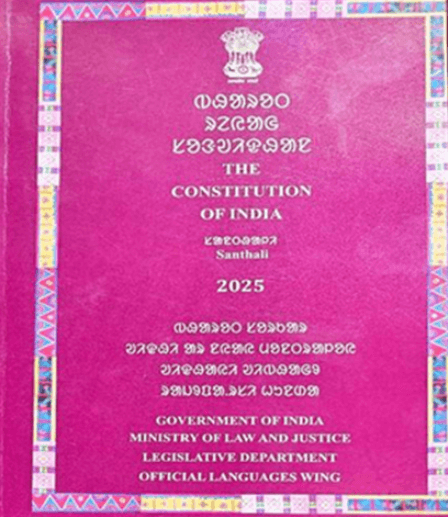
  • Santhali Constitution version enhances linguistic inclusion in governance
  • Centenary event aligns with Azadi Ka Amrit Mahotsav heritage focus

Centenary Celebrations

  • Ministry of Culture hosting inaugural in national capital
  • 2025-26 programs likely include exhibitions, script workshops, literary meets
  • Anniversary underscores preservation of tribal linguistic heritage

Key Data Points

FeatureData-Point
InventorPandit Raghunath Murmu (Guru Gomke)
Year of creation1925
Script type30-letter, one-symbol-one-sound
LanguageSanthali
Language familyAustroasiatic – Munda branch
First major bookHigh Serena, 1936
Unique soundsCaptures glottal stops
Conjunct lettersNone
States spokenJH, OD, WB, AS, BR
8th Schedule entry2003, 92nd Amendment
Constitution in SanthaliReleased Dec 2025
Centenary event date16 Feb 2026
Organising ministryCulture
Script originNot derived from Brahmi/Roman
GS-2Polity

2.Rebalancing Indian Cooperative Federalism

The Hindu

What & Where

Structural reset – fundamental recalibration of Union-State power in Indian federalism

Key instruments – Seventh Schedule, Finance Commission (Art 280), Basic Structure doctrine

Core arena – Union of States under Art 1; debate triggered by Justice Kurian Joseph Committee for Tamil Nadu

Quick Facts for MCQs

Legal & Policy

  • Encroachment – subordinate legislation overrides State laws in education, health, policing
  • Governor friction – assent delays in Kerala, Tamil Nadu drew repeated SC notices (2024-25)
  • Inter-State Council reform demand – mandatory consultative status for Concurrent matters

Fiscal Federalism

  • Vertical imbalance – non-divisible cesses dilute States’ Article 270 share
  • Borrowing caps – Kerala 2025 case on Centre-imposed ceilings highlights autonomy clash
  • Suggestion – include cesses within divisible pool via revised Finance-Commission ToR

Political Representation

  • Delimitation worry – Southern States may lose Lok Sabha seats post-2026 due to lower fertility
  • Proposal – decouple seat allocation from raw population to protect performance incentive

Governance Capacity

  • Overburdened Union – NITI Aayog sets micro benchmarks like village water, stretching executive bandwidth
  • State laboratories – schemes such as Tamil Nadu noon-meal later adopted nationally, showing sub-national innovation

Key Data Points

FeatureData-Point
Art 1 term“Union of States”; indissoluble Union
Federalism statusPart of Basic Structure (S.R. Bommai 1994)
Seventh Schedule listsUnion 97; State 59; Concurrent 52
Centre override clauseArt 254 over Concurrent List
Finance Commission articleArticle 280
Cesses & surcharges share≈ 18 % of gross tax revenue (FY 2025)
CSS micromanagement toolRigid cost-sharing templates
Delimitation freeze end2026
Governor bill-assent limit (suggested)Punchhi Comm: 6 months
Principle soughtSubsidiarity—lowest competent tier handles policy

Related UPSC Prelims PYQs

UPSC 2017PYQ 1

Which one of the following is not a feature of Indian federalism?

UPSC 2009PYQ 2

With which one of the following has the B. K. Chaturvedi Committee dealt?

GS-2Scheme

3.Bharat-VISTAAR AI Advisory Platform

Indian Express

What & Where

Definition – AI-driven multilingual Digital Public Infrastructure for agriculture offering one-stop gateway to schemes, advisories, markets, grievances

Key process – personalised voice/chat/mobile guidance using farm profiles, real-time data, and integration with major Central agri-schemes

Geography – pan-India roll-out; starts with Hindi & English, phases up to 11 languages; toll-free 155261 answered by AI “Bharati”

Quick Facts for MCQs

Tech & Schemes

  • Integration – PM-KISAN, PMFBY, Soil Health Card, AIF, PMKSY, Sub-Mission Mechanization under single dashboard
  • Personalisation – AI analyses crop stage, weather, market trends for tailored alerts
  • Interoperability – APIs planned with e-NAM, IMD, ICAR databases

Service Delivery

  • Advisory – crop, livestock, pest, disease, fertiliser, irrigation recommendations in conversational format
  • Market – live mandi prices with sell/hold suggestions enhancing price realisation
  • Grievance – digital registration and tracking replacing physical office visits

Inclusivity & Access

  • Multilingual – phase-wise addition of 9 more regional tongues for wider outreach
  • Low-tech reach – basic phone voice service bridges smartphone and literacy gaps
  • Cost relief – toll-free number eliminates call charges for smallholders

Governance & Monitoring

  • Dashboard – single window for eligibility checks, application status, benefit tracking
  • Analytics – usage data aids evidence-based policy tweaks and resource allocation
  • Transparency – common grievance pipeline reduces duplication across schemes

Key Data Points

FeatureData-Point
Launch announcementUnion Budget 2026-27
Implementing ministryAgriculture & Farmers’ Welfare
Full acronymVirtually Integrated System to Access Agricultural Resources
Platform natureAI-powered Digital Public Infrastructure
Initial languagesHindi, English
Planned languagesTotal 11 Indian languages
Helpline number155261
Voice assistant nameBharati
Access modesBasic phone, mobile app, chat
24×7 availabilityYes
Integrated income schemePM-KISAN
Integrated insurancePMFBY
Soil advisory sourceSoil Health Card data
Credit linkageKisan Credit Card
Market data feedReal-time mandi prices

Related UPSC Prelims PYQs

UPSC 2026PYQ 1

What is the name of the national digital framework launched at India Maritime Week 2025 to make Indian ports data-driven and AI-enabled?

UPSC 2022PYQ 2

Recently launched ‘Jan Samarth’ portal

GS-2SecurityQuick Bite

4.UN Asia-Pacific SALW Control Fellowship

DD News

What & Where

Programme: UN Fellowship Training on SALW Control—3-week capacity-building against illicit small-arms trade and misuse.

Geography: First-ever Asia-Pacific edition; India hosts delegates from 13 regional countries.

Venue & Host: Military College of Materials Management, Jabalpur (Madhya Pradesh); conducted by Indian Army.

Quick Facts for MCQs

Security Dimension

  • Illicit SALW drive terrorism, insurgency, transnational crime across Asia-Pacific.
  • Training stresses marking, record-keeping, secure storage to block diversion.
  • Safe-disposal protocols showcased to prevent recovered-weapon recycling.

International Cooperation

  • Builds peer network for joint border controls and information-sharing among 13 states.
  • Aligns regional practices with UN PoA to promote rules-based disarmament.
  • Positions India as trusted multilateral training hub.

Tech & Schemes

  • Modules on digital record systems, weapon marking, ITI-compliant tracing requests.
  • Demonstrations of Indian Army inventory-management software and depot security norms.
  • Field exposure to explosive-ordnance disposal and surplus destruction sites.

Key Data Points

FeatureData-Point
UN lead agenciesUNODA & UNRCPD
Core frameworksUN Programme of Action (PoA); International Tracing Instrument (ITI)
Duration3 weeks
Local hostIndian Army
Training venueMilitary College of Materials Management, Jabalpur, MP
Region coveredAsia-Pacific; 13 participating states
Primary goalStrengthen national tracing & stockpile systems

Related UPSC Prelims PYQs

UPSC 2023PYQ 1

Exercise Ajeya Warrior is a biennial training event between the Indian Army and the army of:

GS-2SchemeQuick Bite

5.PM RAHAT Cashless Accident Treatment Scheme

PIB

What & Where

Central PM RAHAT scheme of MoRTH for immediate, cashless treatment of road-accident victims across India.

Seeks ≤ Golden Hour deaths via digital pipeline from accident reporting to claim settlement.

Provides up to Rs 1.5 lakh per victim for first 7 days, any road category.

Quick Facts for MCQs

Tech & Schemes

  • eDAR auto-captures accident data; TMS 2.0 processes hospital claims paper-lessly.
  • Seamless digital link spans reporting, ambulance dispatch, beneficiary verification, payment.
  • Good Samaritans can trigger system via ERSS 112 app/call.

Funding & Insurance

  • Insured offending vehicle: cost met through General Insurance companies’ MVAF contributions.
  • Uninsured, hit-and-run: MVAF replenished by central budget.
  • Hospital reimbursement direct, avoiding victim out-of-pocket.

Service Delivery & Oversight

  • Designated hospitals must begin treatment without upfront payment proof.
  • District-level Grievance Redressal Officer ensures timely dispute resolution.
  • Scheme relocation debut: first major decision after government shift to Seva Teerth.

Key Data Points

FeatureData-Point
Nodal ministryRoad Transport & Highways
Cashless ceiling₹1.5 lakh/victim
Coverage periodFirst 7 days post-accident
Stabilisation care24 h non-life-threatening; 48 h life-threatening
Digital stackeDAR + TMS 2.0
Reimbursement fundMotor Vehicle Accident Fund
Uninsured/Hit-and-run payerGOI budget allocation
Emergency numberERSS 112
District grievance officerNominated by District Road Safety Committee
Police roleAuthenticating accident for claim

Related UPSC Prelims PYQs

UPSC 2020PYQ 1

Which one of the following is not a feature of the Ayushman Bharat Scheme?

GS-3Economy

6.Regulated Indian Fertiliser Industry Challenges

Indian Express
Illustration for Regulated Indian Fertiliser Industry Challenges

What & Where

Fertiliser industry = policy-regulated link between chemical manufacturing & farm productivity, dominated by Urea, P&K grades, emerging Nano variants

Core controls cover pricing, branding, logistics under Essential Commodities Act & Nutrient Based Subsidy (NBS) regime

Hotspots: Uttar Pradesh ban highlights North-Indian demand belt; imports feedstock via Arabian Gulf, Belarus, Jordan corridors

Quick Facts for MCQs

Legal & Policy

  • Price_capping: Urea MRP frozen 12 yrs; P&K “decontrolled” but Centre tweaks subsidy to hold retail rates
  • Movement_control: DOF’s monthly Agreed Supply Plan fixes state-wise rake destinations under ECA
  • Branding_standard: ONOF forces all subsidised bags to carry “Bharat”, limiting company logo to 33 % space

Economic Angle

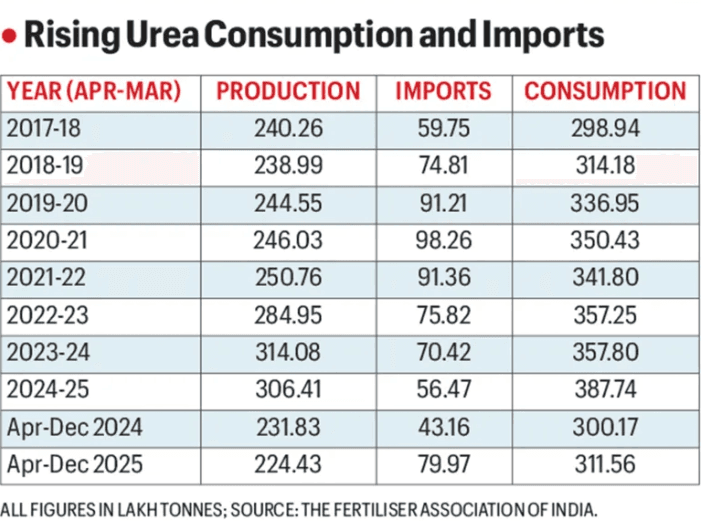
  • Subsidy_burden: Budgeted ₹1.71 lakh cr, yet volatile imports lifted previous outgo to ₹1.86 lakh cr
  • Investment_dampener: Non-subsidised sale bans, rigid MRPs stall new urea plant proposals & R&D spends
  • Cashflow_issue: Inverted GST—inputs taxed higher than final fertiliser—locks working capital

Environmental Impact

  • Nutrient_imbalance: Cheap urea skews application, pushing soil ratio to 11:4:1 vs ideal 4:2:1
  • Soil_degradation: Punjab-Haryana fields show salinity, falling crop response from chronic N overuse
  • Local_shortages: Central micromanagement triggers queues, black marketing despite national surplus

Tech & Schemes

  • Nano_push: Nano Urea & Nano DAP sold via 3 lakh+ PMKSK centres to trim subsidy load
  • Green_PLI: Proposed incentive for green ammonia & nano fertilisers to reduce import dependence
  • DBT_plan: Shifting subsidy to farmers’ accounts envisioned to enable market-linked retail pricing

Key Data Points

FeatureData-Point
FY 24-25 total fertiliser use65.3 million t
Urea share in consumption~40 million t
Peak monthly P&K output (Jan 2026)15.76 lakh t
Subsidy allocation 2026-27₹1.71 lakh cr
2025-26 subsidy overshoot₹1.86 lakh cr
Potash import dependence100 %
Phosphate import dependence~90 %
Urea MRP (45 kg)₹266.5 since 2012
DAP indicative MRP₹1,350
Observed N:P:K ratio11 : 4 : 1

Related UPSC Prelims PYQs

UPSC 2020PYQ 1

As per the Budget Estimates of expenditure on major subsidies during 2019–20, the maximum expenditure was likely to be on

UPSC 2022PYQ 2

Which one of the following statements about fertilizers is not correct?

GS-3Infrastructure

7.International Dam Safety Conference 2026 Outcomes

PIB

What & Where

ICDS 2026: 2nd International Conference on Dam Safety, held Bengaluru, Karnataka; platform to strengthen India’s dam-safety ecosystem.

Central focus: execution of Dam Safety Act 2021 and DRIP (Ph II & III) for ageing-dam surveillance, rehab and revenue.

Geography: India—3rd globally with 6 628 large dams; 736 dams in 19 states targeted under current DRIP phases.

Quick Facts for MCQs

Legal & Policy

  • Act-2021 mandates surveillance, inspection, EAPs and assigns liability to dam owners for failure prevention.
  • Institutional layer: NCDS blue-prints policy; NDSA regulates; state bodies implement.

Tech & Schemes

  • DRIP introduces instrumentation, remote-sensing sediment tracking, dynamic rule-curves, hydrological modelling for climate resilience.
  • Revenue focus: explore hydropower, tourism, fisheries to fund O&M long-term.

Disaster Management

  • Conference flagged sedimentation, catchment treatment, basin-level reservoir coordination to cut flood/drought risk.
  • Emphasis on simplified risk-screening, dam-break tools, real-time data sharing for early warnings.

Key Data Points

FeatureData-Point
ICDS series1st Jaipur 2023; 2nd Bengaluru 2026
Core organisersGoK, MoJS, CWC, IISc-B, World Bank
DRIP external loan per phaseUSD 500 million (World Bank + AIIB)
DRIP Phase-I output223 dams rehabilitated, 7 states, 2012-21
DRIP Phase-II & III target736 dams, 19 states, 2021-31
Funding ratio (General states)Centre 70 : State 30
Funding ratio (Special states)Centre 80 : State 20
Special grant window90 % of loan for Manipur, Meghalaya, Uttarakhand
Dam Safety Act tiersNCDS, NDSA, State Committee, State DSO
India’s large-dam count6 628 (NRS-Dams 2025)

Related UPSC Prelims PYQs

UPSC 2023PYQ 1

Which one of the following is the venue of the UN 2023 Water Conference?

GS-3S&T

8.Indigenous 6th-Gen Adaptive Aero Engines

New Indian Express
Illustration for Indigenous 6th-Gen Adaptive Aero Engines

What & Where

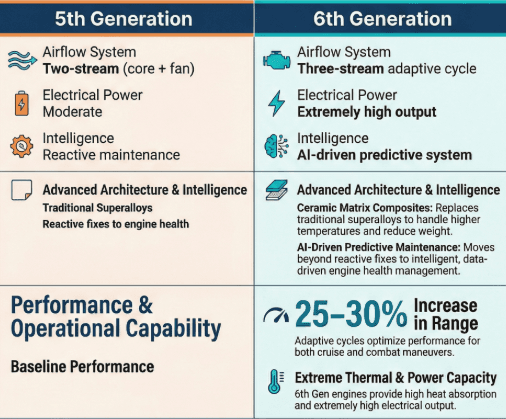
6th Generation Aero Engine = adaptive-cycle jet for next-gen stealth fighters; shifts between fuel-saving cruise and high-thrust combat.

Core process: three-stream airflow managed by Adaptive Cycle Engine (ACE) providing thrust, electrical power and thermal control.

India: DRDO tasked to deliver an indigenous variant within 5–7 years, per Defence Minister directive.

Quick Facts for MCQs

Tech & Schemes

  • Adaptive-cycle tech auto-balances bypass ratio, boosting range ≥25 % and thrust ≥10 %.
  • Embedded generators supply mega-watts, surpassing legacy engines’ kilo-watt outputs.
  • CMC blades endure ≥300 °C higher than nickel super-alloys, lifting thrust-to-weight ratio.

Security Dimension

  • Higher thrust enables super-cruise, improving first-strike and escape in contested airspace.
  • Thermal management masks infrared signature, enhancing stealth.
  • Indigenous engine cuts import dependence on US F-class or Russian AL-series powerplants.

Maintenance & Lifecycle

  • AI-driven health monitoring flags component wear early, trimming downtime and spares costs.
  • Modular hot section eases field swaps, shortening turnaround during high-tempo ops.
  • Predictive analytics feed logistics planning, lowering life-cycle expense curve.

Energy Management

  • Third stream doubles as heat sink, protecting sensitive Gallium-Nitride AESA arrays.
  • Excess electrical output readies platform for future directed-energy weapons.
  • Balanced airflow reduces compressor exit temps, mitigating thermal fatigue.

Key Data Points

FeatureData-Point
Core airflow streamsThree (inner, outer, switchable third)
Key operating modesCruise (fuel-save), Combat (high-power)
Adaptive system nameACE – Adaptive Cycle Engine
Added roleOnboard power & cooling hub
High-temp materialCeramic Matrix Composites (CMCs)
AI usePredictive maintenance & anomaly detection
Indicative Indian timeline5–7 years target
Cooling beneficiaryRadars, AI computers, laser weapons

Related UPSC Prelims PYQs

UPSC 2025PYQ 1

रक्षा अनुसंधान एवं विकास संगठन (DRDO) का एक अंग, भारत के गैस टरबाइन अनुसंधान स्थापना (GTRE) ने एक एयरो-इंजन विकसित किया है जो संभवतः भारत को एयरो-इंजन प्रौद्योगिकी में आत्मनिर्भर बनाएगा। इस इंजन का नाम क्या है?

UPSC 2022PYQ 2

P-75 I (या P-75 भारत) परियोजना किनके निर्माण से संबंधित है?

GS-3Environment

9.NGT Clears Great Nicobar Project

Indian Express
Illustration for NGT Clears Great Nicobar Project

What & Where

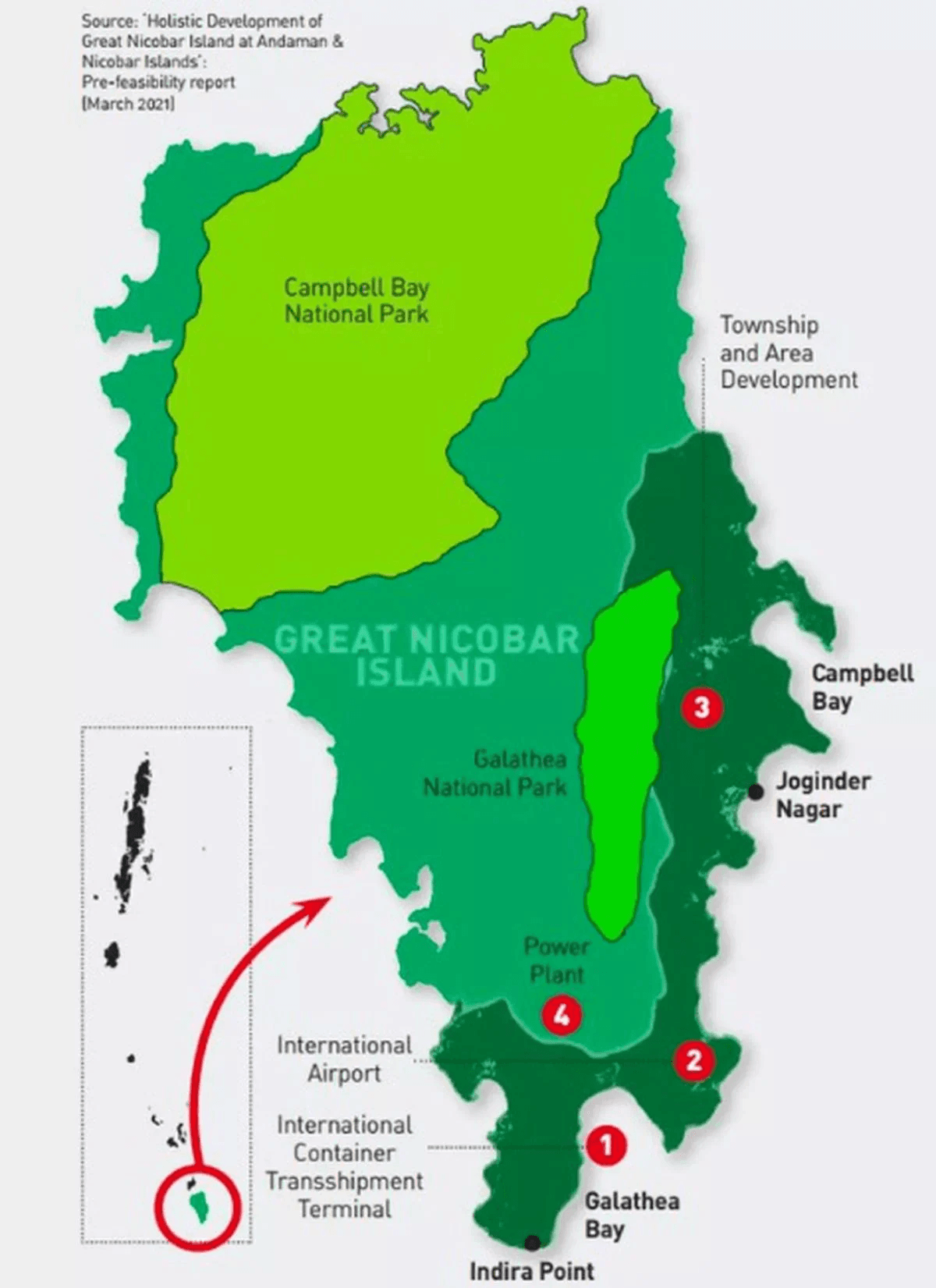
Great Nicobar Island Project: 2021 NITI Aayog mega-infra plan on India’s southernmost island.

Geography: GNI at 6°45′ N, 90 nm north of Sumatra; astride Malacca-Sunda-Lombok sea lanes.

Assets: 20-m-draft ICTT, dual-use greenfield airport, township, gas-solar power plant.

Quick Facts for MCQs

Environmental Safeguards

  • NGT: forbids shoreline erosion, beach loss; orders coral translocation via ZSI.
  • Conditions protect leatherback turtle, Nicobar megapode, robber crab, crocodile, macaque.
  • Compliance government bound; breach invites NGT enforcement.

Tribal Rights

  • Consultations AAJVS, NCST, FRA 2006 mandatory before any diversion.
  • Resettlement packages respect pre-tsunami patterns; construction zones with restricted outsider access.
  • Risk Nicobarese ancestral land displacement highlighted by petitions.

Security Dimension

  • Location overlooks Malacca, Sunda, Lombok Straits, enabling Indo-Pacific chokepoint monitoring.
  • ICTT targets reduced reliance on Colombo, Singapore transhipment.
  • Military supports large warships, aircraft, missile batteries, strengthening deterrence against PLA Navy.

Key Data Points

FeatureData-Point
Project cost₹81,000 crore
Launch year2021
Clearance authorityNational Green Tribunal
Forest loss projected130 sq km (≈15 % GNI)
Trees estimated felled>10 million
Planned wildlife corridors8
A&N dividing channelTen Degree Channel, 150 km wide
UNESCO biosphere tag2013
Distance GNI–Coco Islands55 km north
Indira Point–Sumatra gap90 nautical miles

Related UPSC Prelims PYQs

UPSC 2020PYQ 1

Recently islands of Andaman and Nicobar were connected with mainland by Submarine Optical Fibre Cable. Which one of the following islands was not connected initially?

GS-3Species

10.Shrinking Loggerhead Sea Turtles

The Hindu
Illustration for Shrinking Loggerhead Sea Turtles

What & Where

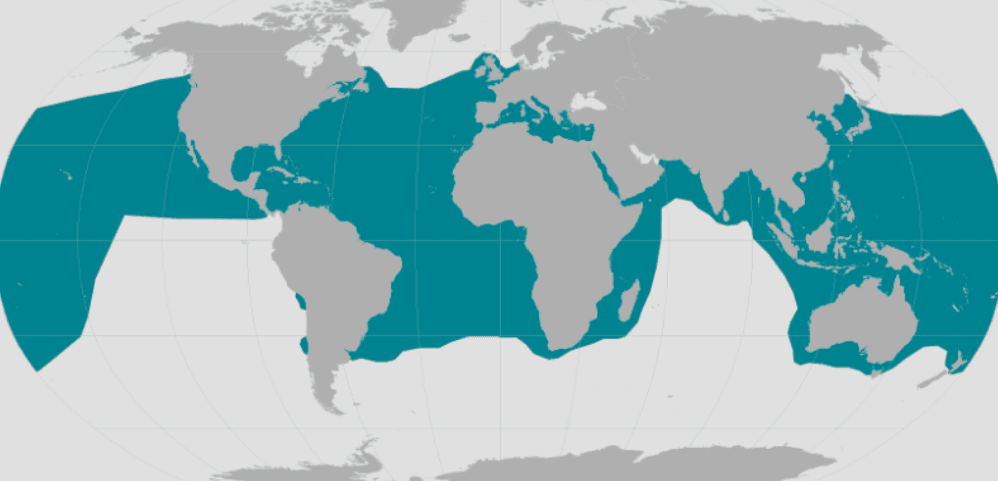
Large temperate-subtropical sea turtle; scientific name Caretta caretta.

Global in Atlantic, Pacific, Indian Oceans; key nesting Florida, Oman, Cabo Verde, Japan, Australia.

2026 study flags shrinking body, fewer eggs from warming seas, lower productivity.

Quick Facts for MCQs

Physical Traits

  • Massive head; muscular jaws enable durophagy.
  • Carapace length 70–110 cm; weight up to 180 kg.
  • Paddle-shaped forelimbs suited for extended pelagic travel.

Reproduction

  • Nesting interval 2–4 years; 3–6 clutches each season.
  • Incubation ~60 days; ~100–120 eggs per clutch.
  • Sand temperature skews sex ratio, shaping population dynamics.

Behaviour & Migration

  • Natal homing; females revisit birthplace beaches.
  • Juveniles ride oceanic gyres as developmental habitat.
  • Nocturnal nesting limits predation, heat stress.

Ecological Significance

  • Regulates benthic invertebrates, maintaining seagrass balance.
  • Egg remnants fertilise coastal dune vegetation.
  • Acts as indicator of broader marine ecosystem health.

Climate Impact

  • Warmer oceans reduce body size, fecundity (Animals 2026 study).
  • Hotter sand feminises nests, risking demographic imbalance.
  • Declining prey productivity heightens energy constraints for capital breeders.

Key Data Points

FeatureData-Point
Scientific nameCaretta caretta
IUCN statusVulnerable
Typical lifespan70–80 + years
Female maturity age30–35 years
Nesting interval2–4 years
Eggs per clutch≈ 100–120
Sex determinationTemperature-dependent; warm sand → females
Core diet toolMassive head & crushing jaws
Migration styleLong-distance, often trans-oceanic
GS-3SecurityQuick Bite

11.Exercise Vajra Ghaat Desert Artillery Drill

Times of India

What & Where

Exercise Vajra Ghaat: Indian Army field drill showcasing K9 Vajra self-propelled howitzer.

Venue: Pokhran Field Firing Range, Jaisalmer district, Thar Desert, Rajasthan.

Purpose: Validate refined tactics, techniques & procedures for desert artillery operations.

Quick Facts for MCQs

Tech & Specs

  • K9 Vajra tracked self-propelled howitzer derived from K9 Thunder platform.
  • Compatible with Indian and NATO ammunition, allowing flexible logistics.
  • All-welded steel armour provides enhanced crew and system protection.

Operational Aim

  • Exercise validated refined Tactics, Techniques & Procedures to boost survivability.
  • Emphasised rapid deployment of heavy artillery across harsh desert terrain.
  • Demonstrated combat readiness of K9 Vajra gun crews.

Security Dimension

  • Strengthens Indian Army’s deterrence posture in western sector.
  • Enhances desert warfare proficiency critical for Thar frontier security.

Key Data Points

FeatureData-Point
Exercise codenameVajra Ghaat
LocationPokhran Field Firing Range, Rajasthan
Simulated terrainDesert warfare (Thar Desert)
Lead formationWhite Tiger Division
Main weaponK9 Vajra SP howitzer
Weapon ancestryBased on South Korea’s K9 Thunder
Procurement route‘Buy Global’ category, Defence Procurement Procedure
Ammo compatibilityIndian & NATO standards
Armour typeAll-welded steel

Related UPSC Prelims PYQs

UPSC 2024PYQ 1

Which one among the following Joint Military Exercises was NOT conducted between India and USA?

UPSC 2021PYQ 2

Which one of the following statements is most appropriate about ‘Exercise Kavach’?

GS-3S&TQuick Bite

12.India-AI Impact Summit 2026 Initiatives

PIB
Illustration for India-AI Impact Summit 2026 Initiatives

What & Where

India-AI Impact Summit 2026: first Global South-hosted global AI summit, organised by MeitY.

Flagship processes: AI Pitch Fest (“UDAAN”), Global Innovation Challenges, AI Expo.

Venue & timing: New Delhi, February 2026.

Quick Facts for MCQs

Tech & Schemes

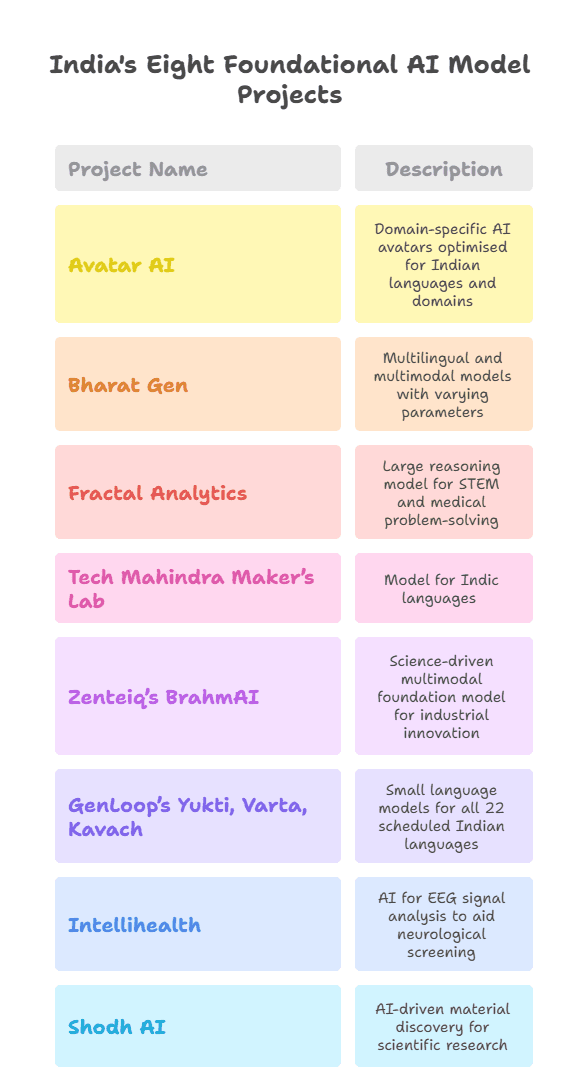
  • Indigenous-model projects cover multilingual, health, science, industry, governance, agriculture domains.
  • UDAAN provides demo platform plus funding visibility for smaller-city AI startups.
  • Global Innovation Challenges solicit AI solutions to public-sector problems with potential procurement.

Logo & Symbolism

  • Ashoka Chakra denotes ethical governance, constitutional values.
  • Radiating neural flares signify AI’s multilingual, cross-sector transformative reach.

Global Standing

  • Summit displays India’s leadership push in responsible, inclusive AI within Global South narrative.
  • Seven-Chakra framework aims for tangible, cooperative AI outcomes among participating nations.

Key Data Points

FeatureData-Point
Host ministryMeitY
Summit date & placeFeb 2026, New Delhi
Global first1st AI summit hosted by a Global South nation
Official logoAshoka Chakra + neural-network flares
Guiding principlesPeople, Planet, Progress
Implementation blocksSeven “Chakras” for multilateral cooperation
Flagship initiatives3 (Pitch Fest UDAAN, Innovation Challenges, AI Expo)
Indigenous AI models8 foundational projects
Pitch Fest focusTier 2 & Tier 3 AI startups

Related UPSC Prelims PYQs

UPSC 2025PYQ 1

ग्रैण्ड पैलै (Grand Palais) पेरिस में नवम्बर 2025 में आयोजित होने वाले AI शिखर सम्मेलन के सन्दर्भ में, निम्नलिखित कथनों पर विचार कीजिए : I. भारत के प्रधानमंत्री ने ब्रिटेन में 2023 में सम्पन्न सम्मेलन सहित 2024 में भारत द्वारा किए गए प्रयासों का विवरण प्रस्तुत किया। II. अन्य देशों के साथ-साथ US और UK ने UK में सम्पन्न AI शिखर सम्मेलन पर सहमति व्यक्त की। उपयुक्त कथनों में से कौन-सा/कौन-से सही है/हैं?

UPSC 2024PYQ 2

Which of the following statements about GPAI (Global Partnership on Artificial Intelligence) is/are correct? 1. It is a multi-stakeholder initiative, which aims to bridge the gap between theory and practice on AI by supporting cutting edge research. 2. The Annual GPAI Summit was held at New Delhi in December 2023. Select the answer using the code given below:

Ready to practice?

Test your knowledge with our UPSC test series.

Start Free Trial