UPSC Current Affairs

14 topicsGS-2: 6GS-3: 7GS-4: 1
0/14 done
GS-2Polity

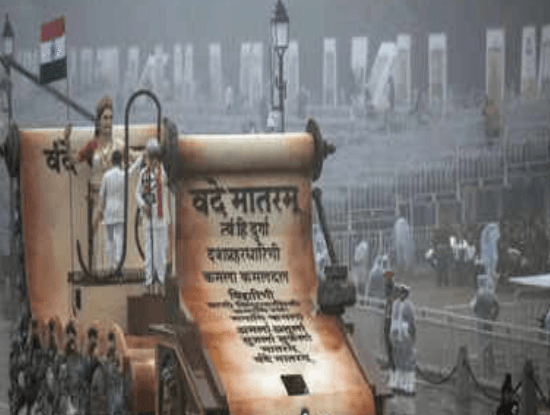
1.Vande Mataram Full Rendition Guidelines

Times of India
Illustration for Vande Mataram Full Rendition Guidelines

What & Where

National song ‘Vande Mataram’; six-stanza Bengali–Sanskrit poem by Bankim Chandra Chatterjee, 1873.

MHA 2024 guidelines standardise full 3 min 10 sec rendition at Union, State, school & cultural functions.

Applies across India; protocols similar to National Anthem Order, 1971.

Quick Facts for MCQs

Legal & Policy

  • Standardisation eliminates state-wise variance; aligns with National Anthem Rules precedent.
  • Directive lacks statutory backing yet treated as official protocol under MHA powers.

Protocol Details

  • Drumroll cue ensures coordinated start; identical to anthem ceremonial practice.
  • Attention posture compulsory; respects song’s equal symbolic stature beside anthem.

Educational Angle

  • Mandatory school assemblies embed patriotic symbolism early; complements existing flag-hoisting routine.
  • Group singing promotes linguistic familiarity with composite Sanskrit-Bengali text.

Cultural Significance

  • Anniversary linkage underscores freedom-movement heritage; reinforces national integration narrative.
  • Full rendition revival counters practice of singing only first two stanzas post-1947.

Key Data Points

FeatureData-Point
Issuing ministryMinistry of Home Affairs
Year of notification2024 (150th anniversary)
Stanzas mandatedAll 6
Official duration3 min 10 sec
Pre-song cueDrumroll (mridang/trumpet)
Audience postureStand at attention
Standing exceptionCinema halls (film/newsreel)
Union-level useCivil investitures; President arrival/departure; before/after President’s broadcast
State-level useGovernor/LG arrival & departure
School mandateMorning assembly group singing
Marching drill7 preparatory steps
Informal allowanceMay be sung at minister-attended events

Related UPSC Prelims PYQs

GS1 2003PYQ 1

Which one of the following statements is correct?
GS-2Polity

2.No-confidence Motion Against Lok Sabha Speaker

Indian Express
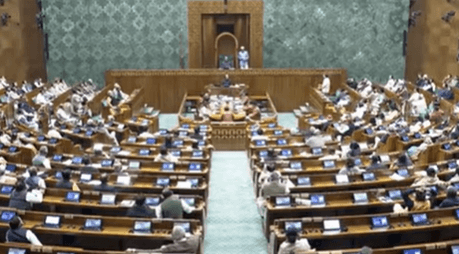
Illustration for No-confidence Motion Against Lok Sabha Speaker

What & Where

Motion: resolution to remove Speaker/Deputy Speaker of Lok Sabha before term expiry

Jurisdiction: applies only to Lok Sabha under Article 94(c) Constitution of India

Rule-base: governed by Lok Sabha Rules 200-203; needs effective majority of total membership

Quick Facts for MCQs

Constitutional Basis

  • Article 94 lists vacation, resignation, removal grounds for Speaker and Deputy Speaker
  • Resolution must secure majority of total House strength, not just present and voting
  • Provision applies only to Lok Sabha, Rajya Sabha Chairperson excluded

Procedural Steps

  • Notice submitted to Secretary-General, placed in List of Business after 14 days
  • Support check: Speaker asks House; fewer than 50 standing causes motion lapse
  • Admitted resolution debated strictly on stated charges within 10 days

Historical Instances

  • G V Mavalankar 1954, Hukam Singh 1966, Balram Jakhar 1987 faced motions, none removed
  • No Speaker has ever been ousted through this process
  • Rarity underscores high removal threshold and political costs

Institutional Implications

  • Mechanism reinforces accountability of presiding officer to elected House
  • Frequent politically-driven motions risk eroding decorum and stability
  • Opposition use signals heightened executive-legislature tensions

Key Data Points

FeatureData-Point
Constitutional articleArticle 94(c)
Lok Sabha rulesRules 200-203
Minimum notice period14 days
Members who must stand≥50 on motion admission
Debate windowWithin 10 days of admission
Voting thresholdEffective majority of all then members
Speaker first voteAllowed
Casting vote on tieNot permitted
Speaker tenure post-dissolutionTill first sitting of new House
Previous motion years1954, 1966, 1987

Related UPSC Prelims PYQs

CDS_GK 2025PYQ 1

Regarding 'motions' in the Parliament of India, which one of the following statements is correct?
CDS_GK 2022PYQ 2

Which one of the following statements about the Speaker of Lok Sabha is not correct?

GS-2Polity

3.IT Rules 2026 Amendment on Deepfakes

LL

What & Where

Amendment: IT (Intermediary Guidelines & Digital Media Ethics Code) Rules 2026 revises 2021 framework

Scope: regulates Synthetically Generated Information including deepfakes across all Indian digital intermediaries

Geography: applies pan-India; legal cross-reference shifted to Bharatiya Nyaya Sanhita 2023

Quick Facts for MCQs

Legal & Policy

  • SafeHarbour: Section79 immunity conditional on compliance; breach brings direct platform liability
  • Alignment: IPC references replaced by BNS 2023 ensuring procedural consistency
  • Timeline: Platforms must reveal creator identity to police on demand

Tech Requirements

  • Labelling: Watermark for video; spoken disclaimer for audio; persistent metadata for provenance
  • Filtering: Mandatory AI tools to block CSAM, NCII, weapon guides, impersonations
  • Traceability: Digital fingerprints allow investigators to locate originating AI tool

Social & Electoral

  • Misinformation: Rapid takedown curbs viral fake speeches during 2025 state polls
  • Dignity: Swift removal aids victims of celebrity deepfake incidents
  • Elections: Disclosure of AI content protects Model Code of Conduct integrity

Implementation Challenges

  • Accuracy: Detection algorithms can mis-flag satire or partly altered clips
  • Capacity: Smaller apps struggle with 24x7 teams for 180-minute response
  • Privacy: Metadata mandates may weaken end-to-end encryption for whistleblowers

Key Data Points

FeatureData-Point
Gazette notification date10 Feb 2026
New legal termSynthetically Generated Information
Standard takedown window3 hours (court or govt order)
Faster removal category2 hours for non-consensual deepfake nudity
Grievance reply limit7 days (earlier 15)
Safe-harbour loss triggerMissed labelling or 3-hour deadline
Criminal code referencedBharatiya Nyaya Sanhita 2023
User dutyDeclare AI use on upload

Related UPSC Prelims PYQs

ESE_GS 2026PYQ 1

Which Ministry released the India AI Governance Guidelines in 2025?

GS-2Polity

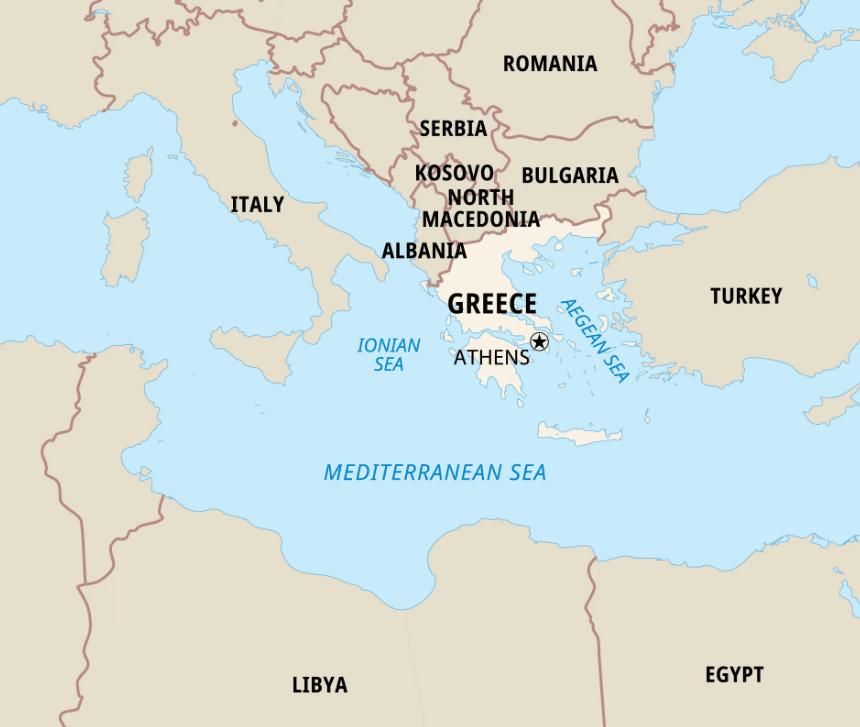
4.Strategic Partnership Between India and Greece

Indian Express
Illustration for Strategic Partnership Between India and Greece

What & Where

Joint Declaration of Intent (JDI): five-year roadmap linking India’s Aatmanirbhar Bharat with Greece’s Agenda 2030 defence reforms

Bilateral Military Cooperation Plan 2026: scheduled exercises, training and staff talks between the two armed forces

IFC-IOR, Gurugram: Indian maritime information hub where Greece will post an International Liaison Officer

Quick Facts for MCQs

Defence & Security

  • JDI enables co-development, co-production, spares sourcing under Diversify-from-traditional-suppliers strategy
  • Plan 2026 covers joint drills, officer exchanges, technology seminars
  • Greece partnership counters Turkey–Pakistan axis in East Med-Indo-Pacific arc

Maritime Connectivity

  • IFC-IOR link boosts real-time Maritime Domain Awareness Indo-Pacific to Aegean
  • IMEC positions Greek ports as EU entry nodes for Indian cargo
  • Blue-Raman submarine cable via Greece can bypass Suez digital chokepoint

Geo-economic Significance

  • Greece acts gateway to EU markets, logistics, shipping finance
  • Green Maritime Corridor proposal targets hydrogen, ammonia bunkering, decarbonised fleet
  • Labour-short Greece can tap Indian workforce, formalised through MMPA

Challenges

  • Trade value low and commodity-skewed, missing high-tech depth
  • No 2+2 or regular policy review; institutional lag hampers follow-up
  • Chinese-controlled Piraeus raises long-term security dilemma for Indian supply chains

Key Data Points

FeatureData-Point
Strategic Partnership statusElevated August 2023
Bilateral trade (FY 2022-23)≈ USD 2 billion
Greek share in world merchant fleet~20 % of global tonnage
Key Greek port for IMECPiraeus (majority-owned by COSCO, China)
New Greek post in IndiaLiaison Officer at IFC-IOR
Planned corridorIndia-Middle East-Europe Economic Corridor
India-supported Cyprus solutionBi-zonal, bi-communal federation
Proposed labour pactMigration & Mobility Partnership Agreement

Related UPSC Prelims PYQs

CAPF_GAI, ESE_GS 2026PYQ 1

What is the name of the initiative launched by India and Denmark in November 2025 to enhance bilateral ties?

CAPF_GAI, ESE_GS 2025PYQ 2

India and Poland have agreed to implement the 'India-Poland Strategic Partnership' in terms of a Five-Year Action Plan. Identify the current Five-Year Action Plan.

GS-2Polity

5.PM CARES Fund Questions in Lok Sabha

Indian Express

What & Where

“Question” during Lok Sabha Question Hour: MPs’ device under Rules 41-44 to seek ministerial information and ensure accountability.

PM CARES, PMNRF, NDF: voluntary-contribution trusts outside Consolidated Fund, yet closely associated with Prime Minister’s Office.

Rules 41(2)(viii)/(xvii): bar questions on matters or bodies not primarily under Union Government control/responsibility.

Quick Facts for MCQs

Parliamentary Procedure

  • Admissibility; Speaker ultimate authority using Rules 41-44, Direction 10A, precedents.
  • Rejection; triggers include sub-judice, repetition, defamatory, secret Cabinet, divisive, personal matters.
  • Practice; ministries normally contest individual questions, blanket prohibition unusual.

Funds Specifics

  • PM CARES; emergency-relief trust created 2020, financed solely through voluntary donations.
  • PMNRF; 1948 fund now aids natural-disaster, accident, riot victims.
  • NDF; welfare pool for armed forces families, chaired by PM, open to public contributions.

Transparency Debate

  • RTI-status; PM CARES & PMNRF litigation ongoing, NDF already under Act.
  • Government; labels funds private trusts, outside public-authority ambit.
  • Critics; say opacity weakens donor accountability.

Executive vs Legislature

  • PMO; cited Rule 41 clauses to block all Lok Sabha questions on funds.
  • Experts; call directive “procedurally highly unusual”, conflicting with conventions.
  • Oversight; blanket ban viewed as diluting Question Hour scrutiny.

Key Data Points

FeatureData-Point
Question Hour timingFirst hour of Lok Sabha sitting
Starred questionOral answer; supplementary allowed
Unstarred questionWritten answer; no supplementaries
Short-Notice question<10 days’ notice; oral reply
Rule 41(2)(viii)Excludes issues not Union concern
Rule 41(2)(xvii)Excludes bodies not answerable to Union
PM CARES establishment2020 public charitable trust
PMNRF establishment1948 by PM Nehru
National Defence Fund chairPrime Minister
RTI coverageNDF yes; PM CARES & PMNRF sub-judice

Related UPSC Prelims PYQs

GEO_GS 2024PYQ 1

Which of the following statements is/are not correct about the parliamentary practice of asking Questions in the Parliament of India?

GS-2Economy

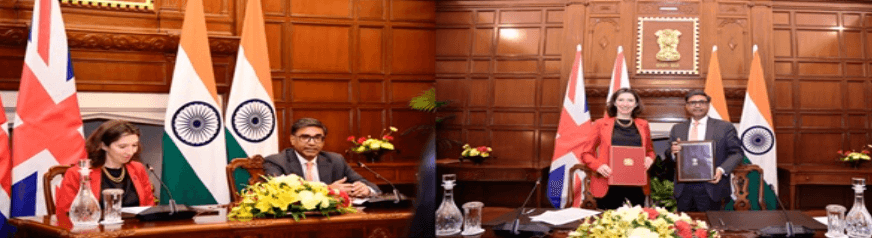
6.India–UK Social Security Agreement for Expat Employees

News on Air
Illustration for India–UK Social Security Agreement for Expat Employees

What & Where

Reciprocal Social Security Agreement between India & United Kingdom to eliminate dual contributions for temporary workers

Covers overseas assignments up to 36 months; employees keep paying into home-country system only

Certificate of Coverage via EPFO proves exemption; pact to activate alongside India–UK CETA

Quick Facts for MCQs

Legal & Policy

  • Reciprocity clause applies identically to Indian workers in UK and UK workers in India
  • Activation expected first half 2025 with CETA entry into force
  • Prevents pension, benefit record fragmentation across jurisdictions

Economic Angle

  • Eliminates duplicate employer social security outlay, lowering project costs
  • Enhances competitiveness of Indian professional services in UK market
  • Supports projected bilateral trade expansion under wider India–UK trade architecture

Labour Mobility

  • CoC obtainable online through EPFO before departure
  • Home-system coverage preserves retirement, disability, survivorship benefits during posting
  • Streamlines short-term skilled worker deployment, reducing administrative hurdles

Key Data Points

FeatureData-Point
Signing partiesIndia & United Kingdom
Alternate nameDouble Contributions Convention
Max tenure covered36 months
Exemption proofCertificate of Coverage (CoC)
Issuing authorityEmployees’ Provident Fund Organisation
Implementation linkIndia–UK Comprehensive Economic & Trade Agreement
Key beneficiary sectorsIT, finance, consulting, engineering
GS-3Economy

7.World Bank Business Ready (B-READY) Index

PIB

What & Where

Definition: World Bank Group’s Business Ready (B-READY) benchmarks global business-investment climate, replacing Doing Business report

Coverage: Rates economies on ten firm-lifecycle topics via three pillars; India slated for 2026 cycle

Locale: Data sourced worldwide through expert consultations + Enterprise Surveys; exercise coordinated from Washington DC

Quick Facts for MCQs

Structure & Pillars

  • Pillar I Regulatory Framework assesses statutes on entry, operation, closure
  • Pillar II Public Services gauges infrastructure, licensing, digital systems, dispute bodies
  • Pillar III Operational Efficiency measures real-world compliance via firm responses

Data & Surveys

  • Methodology blends de jure laws with de facto firm experiences
  • Lifecycle model tests entry, operation, expansion, exit regulations
  • Annual publication boosts transparency after past DBR controversies

Cross-Cutting Focus

  • Digital adoption evaluated within every topic
  • Environmental sustainability integrated to align with green growth goals
  • Gender inclusion mapped to track female-owned firm hurdles

India Angle

  • India formally included for B-READY 2026 benchmarking
  • Upcoming score likely to influence domestic reforms in licensing, insolvency, taxation
  • Earlier DBR rank 63 (2020); new baseline will reset comparative narrative

Key Data Points

FeatureData-Point
Launch year2024
PredecessorDoing Business Report (ended 2020)
Administered byWorld Bank Group
FrequencyAnnual global release
Pillars countThree
Topics coveredTen across lifecycle
Dual data sourcesLegal expert inputs; WB Enterprise Surveys
Cross-cutting themesDigital, Environment, Gender

Related UPSC Prelims PYQs

CDS_GK, GS1 2016PYQ 1

India's ranking in the 'Ease of Doing Business Index' is sometimes seen in the news. Which of the following has declared that ranking?

CDS_GK, GS1 2020PYQ 2

As per the World Bank's Ease of Doing Business Ranking, India's rank has improved from 142 in 2014 to 63 in 2019. During this period, in which of the following parameters has India's rank deteriorated?

GS-3S&T

8.Continental Mantle Earthquakes Global Map

Down to Earth

What & Where

Definition: rare earthquakes >80 km deep in continental mantle, occurring below Moho, unlike common crustal quakes.

Process: triggered by deep stress propagation, subduction remnants, or brittle cooler mantle patches.

Geography: 459 events mapped globally; clusters under Himalayan collision zone and Bering Strait tectonic region.

Quick Facts for MCQs

Origin Mechanisms

  • Tectonic-stress: collision forces penetrate mantle, inducing rupture.
  • Subduction-remnants: descending plate retains brittleness at unusual depths.
  • Thermal-rheology: local cooler or compositionally distinct mantle patches fracture.

Spatial Distribution

  • Himalayan collision: Indian Plate under Eurasian hosts notable mantle quakes.
  • Bering Strait: complex Arctic plate interactions show second prominent cluster.
  • Overall scatter: events rare elsewhere, linking occurrence to active continental margins.

Research Approach

  • Stanford-led: first global catalogue produced.
  • Seismic-waves: Sn (mantle) stronger than Lg (crust) flagged deep-source events.
  • Insight: data refine models of continental lithosphere strength and orogeny dynamics.

Key Data Points

FeatureData-Point
Depth criterion>80 km
Boundary crossedMohorovičić discontinuity
Total events mapped459 worldwide
Major clustersHimalayas; Bering Strait
Identification methodSn : Lg seismic‐wave ratio
Usual crustal depth10–29 km
Surface shakingMinimal
Tectonic settingContinental collision zones

Related UPSC Prelims PYQs

NDA_GAT 2022PYQ 1

Which one of the following 'discontinuities' separates the Earth's crust from the mantle?

GS-3S&T

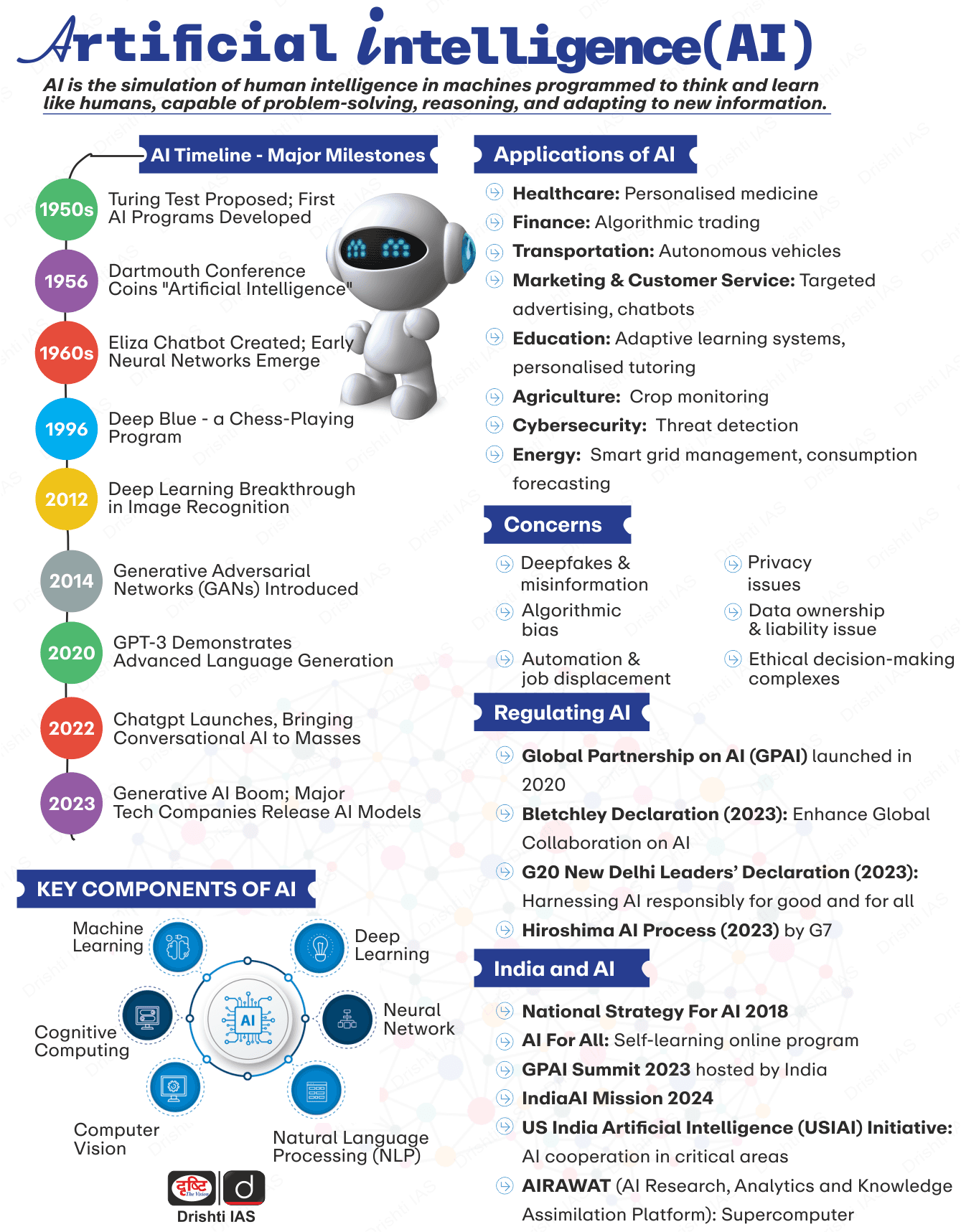
9.Sarvam Vision Advances India’s Sovereign AI

Times of India
Illustration for Sarvam Vision Advances India’s Sovereign AI

What & Where

Sovereign AI = nationally owned AI creation & governance; ensures strategic autonomy over data, models, hardware.

Sarvam Vision (3 B parameters) digitises Indian manuscripts, tables, charts; trained on 22 scheduled-language scripts.

Bulbul V3 TTS offers 35 region-tuned voices across 11 languages; Bengaluru-built under ₹10,300 cr IndiaAI Mission.

Quick Facts for MCQs

Tech & Schemes

  • Mission-linkage: Sarvam chosen to build Sarvam-Large, Small, Edge variants for population-scale deployment.
  • Hardware push: ISM urged to fabricate AI-specific ASICs/TPUs; IIT-Madras ‘Shakti’, ‘Vega’ cited.
  • Frugal-AI focus: small, efficient models prioritised over trillion-parameter western giants.

Economic Angle

  • Cost-edge: 3 B model cheaper, energy-light; suits developing-nation budgets.
  • Capital gap: Deep-tech needs patient funding; Indian VC prefers low-risk consumer apps.
  • Moat risk: Global firms could quickly fine-tune on Indic data, shrinking Sarvam advantage.

Social Concerns

  • Linguistic exclusion: scarce tokenised datasets create “token inequality” for thousands of dialects.
  • Bias peril: uncurated societal data may amplify caste, gender, religious prejudices.
  • Inclusion boost: Bulbul’s natural speech can aid illiterate users’ digital access.

Security Dimension

  • Data-sovereignty: indigenous models keep Aadhaar, financial records off foreign servers.
  • Regulatory tools: proposed AI Safety Institute to certify high-impact models before public rollout.
  • DPDP enforcement: mandatory local processing incentivises domestic cloud & compute providers.

Key Data Points

FeatureData-Point
Startup HQBengaluru
Vision model size3 billion parameters
Bulbul voices35 professional voices
Languages covered (Bulbul now / target)11 / 22 scheduled
olmOCR-Bench score (Sarvam Vision)84.3 %
OmniDocBench v1.5 score93.28 %
IndiaAI Mission outlay₹10,300 crore
Planned large LLM70-billion parameters
Core benchmarks beatenGoogle Gemini 3 Pro, DeepSeek OCR v2
Key Act for data residencyDPDP Act, 2023

Related UPSC Prelims PYQs

CAPF_GAI, GS1 2025PYQ 1

ग्रैण्ड पैलै (Grand Palais) पेरिस में नवम्बर 2025 में आयोजित होने वाले AI शिखर सम्मेलन के सन्दर्भ में, निम्नलिखित कथनों पर विचार कीजिए :

CAPF_GAI, GS1 2023PYQ 2

What are Airawat, Param Siddhi, Pratyus and Mihir?

GS-3SecurityQuick Bite

10.Boeing P-8I Maritime Patrol Aircraft

Indian Express

What & Where

Acquisition: six additional Boeing P-8I maritime patrol aircraft for Indian Navy under India–US Inter-Governmental Agreement.

Geography: Platforms bolster surveillance across entire Indian Ocean Region from INS Rajali (Tamil Nadu) & INS Hansa (Goa).

Decision-maker: Defence Procurement Board clearance within Defence Acquisition Procedure 2020 framework.

Quick Facts for MCQs

Tech & Capability

  • Sensor-suite integrates APY-10 radar, sonobuoys, electro-optics enabling deep-water submarine detection.
  • Weapon-options include Harpoon anti-ship missiles and Mk-54 torpedoes for layered maritime strike.
  • Airframe based on Boeing 737-800 enabling 1,200+ nm patrol radius with aerial refuelling compatibility.

Legal & Policy

  • DAP 2020 exempts IGAs from 30–50 % offset mandate, fast-tracking urgent imports.
  • No technology transfer or domestic co-production stipulated for this P-8I tranche.
  • Defence Procurement Board functions under Defence Acquisition Council chaired by Defence Minister.

Security Dimension

  • Persistent airborne coverage enhances India’s Anti-Submarine Warfare posture against increasing PLA-N deployments.
  • Fleet synergy with MH-60R helicopters creates multi-layer detection-kill chain in Indian Ocean chokepoints.
  • Data fusion from P-8I feeds Information Management & Analysis Centre at Gurugram for real-time maritime picture.

Bilateral Defence Deals

  • India-US defence trade crossed USD 20 bn since 2008, shifting largely to Government-to-Government modality.
  • Recent procurements emphasize induct-ready systems over Make-in-India co-development for time-sensitive gaps.
  • Foundational pacts LEMOA, COMCASA, BECA streamline logistics, secure comms, geospatial sharing for platforms like P-8I.

Key Data Points

FeatureData-Point
Aircraft modelBoeing P-8I Poseidon
New units approved6
Existing fleet12
Current P-8I basesINS Rajali (INAS 312); INS Hansa (INAS 316)
Procurement routeIndia–US Inter-Governmental Agreement
Governing manualDefence Acquisition Procedure 2020
Offset obligationNil for IGAs under DAP 2020
Primary rolesASW, ASuW, ISR, SAR, Maritime Domain Awareness
Manufacturer countryUnited States
Other ongoing US dealsExcalibur projectiles; Javelin missiles; MH-60R sustainment

Related UPSC Prelims PYQs

CDS_GK, NDA_GAT 2022PYQ 1

P-75 I (या P-75 भारत) परियोजना किनके निर्माण से संबंधित है?

CDS_GK, NDA_GAT 2022PYQ 2

India signed a deal with which one of the following countries to supply MH-60R helicopters to the Indian Navy?

GS-3S&TQuick Bite

11.Gravity Governing Earth and Planetary Motion

The Hindu

What & Where

Gravity; universal attractive force acting between masses, provides centripetal pull for orbital motion in the Solar System

Planetary motion; Earth–Sun, Moon–Earth systems maintained by gravity in near-vacuum of space

Michelson–Morley experiment; 1887 Cleveland, USA test disproving luminiferous aether hypothesis

Quick Facts for MCQs

Physics Basics

  • Gravity supplies centripetal force, preventing linear escape of orbiting bodies
  • Absence of friction in vacuum eliminates kinetic energy loss during planetary travel
  • Binding force keeps atmosphere, oceans, life anchored to rotating, orbiting Earth

Planetary Motion Metrics

  • Earth traverses ~30 km s⁻¹ along elliptical solar orbit
  • Combined daily rotation plus orbital travel gives composite spatial trajectory
  • Orbital mechanics dictate predictable revolution timing used in calendar systems

Historical Experiment

  • Michelson–Morley interferometry showed constant light speed irrespective of Earth motion
  • Null result invalidated stationary aether, supporting empty-space traversal concept
  • Paved way for Einstein’s special relativity in 1905

Key Data Points

FeatureData-Point
Earth orbital period1 sidereal year (~365.25 days)
Earth orbital distance per year~1 billion km
Earth average orbital speed≈1,07,000 km h⁻¹
Moon orbital natureBound to Earth via gravity-as-centripetal force
Space friction levelNegligible; motion persists without energy input
Aether concept statusRejected by Michelson–Morley, 1887

Related UPSC Prelims PYQs

GS1, NDA_GAT 2011PYQ 1

An artificial satellite orbiting around the Earth does not fall down. This is so because the attraction of Earth

GS1, NDA_GAT 2020PYQ 2

Planets move in their orbits.

GS-3SpeciesQuick Bite

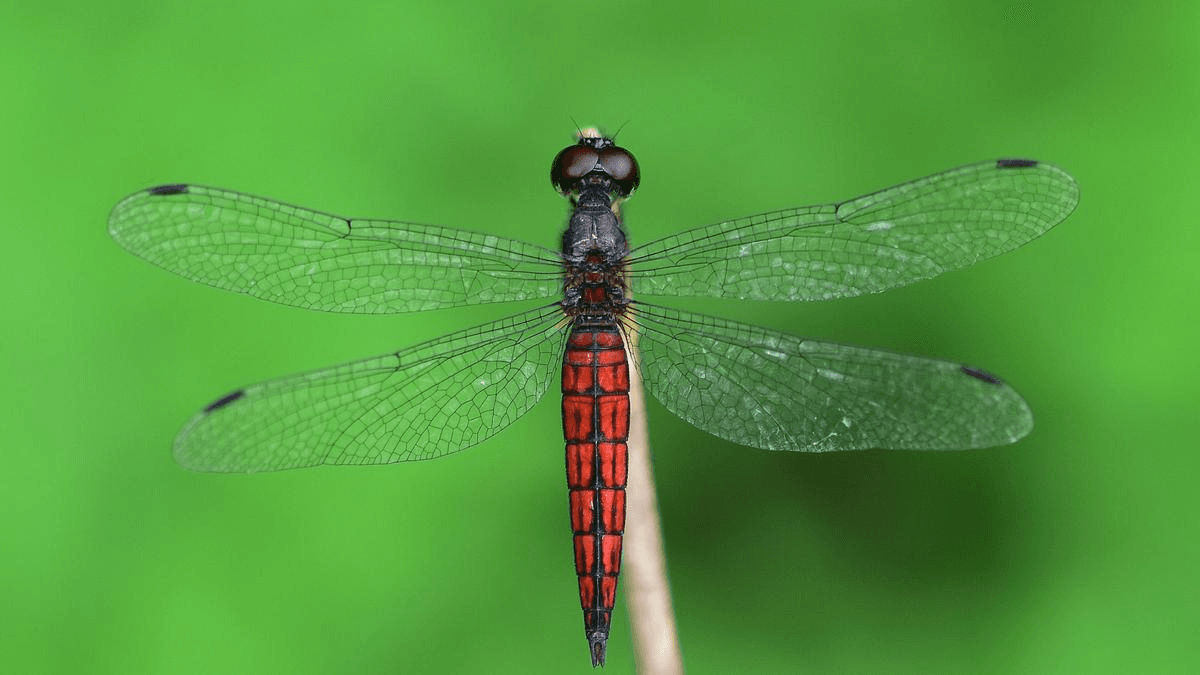
12.Lyriothemis keralensis Dragonfly Discovery in Kerala

The Hindu
Illustration for Lyriothemis keralensis Dragonfly Discovery in Kerala

What & Where

Lyriothemis keralensis; newly validated dragonfly distinct from L. acigastra

Range now spans central Kerala’s plantation belt, extending beyond earlier Northeast India records

Prefers shaded irrigation canals within pineapple and rubber estates, mostly outside Protected Areas

Quick Facts for MCQs

Biodiversity Significance

  • Range-extension; confirms Western Ghats as continuing biodiversity hotspot
  • Microscopic and museum-specimen crosschecks; critical for accurate taxonomy

Habitat & Ecology

  • Larval stage persists year-round in shaded irrigation channels
  • Adult emergence aligns with humid prey-rich Southwest Monsoon

Conservation Concerns

  • Populations mostly outside Protected Areas; vulnerable to agro-chemical runoff
  • Plantation landscapes lack biodiversity buffers; threaten microhabitat integrity

Key Data Points

FeatureData-Point
TaxonDragonfly, Lyriothemis keralensis
First Kerala record2013; confirmed distinct in 2026 study
Male colourBright blood-red with black
Female colourYellow with black
Adult visibilitySouthwest Monsoon, late May – Aug
Main habitatShaded canals in pineapple/rubber plantations
GS-3Mapping

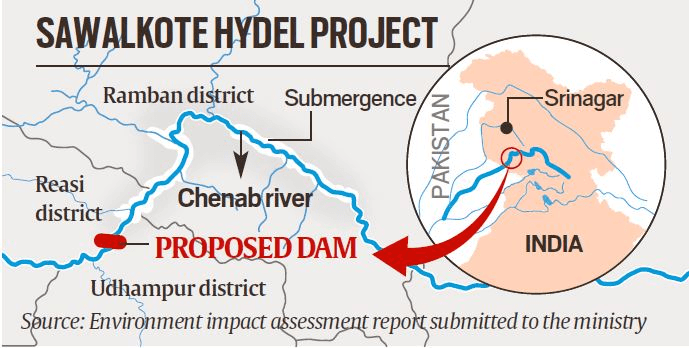
13.Sawalkot Hydroelectric Project on Chenab

IT
Illustration for Sawalkot Hydroelectric Project on Chenab

What & Where

Project: 1,856-MW run-of-the-river hydel scheme on Chenab, J&K.

Geography: Ramban & Udhampur districts; part of Indus western-river system.

Promoter: NHPC; India’s largest hydropower plant in Jammu & Kashmir.

Quick Facts for MCQs

Legal & Policy

  • Treaty: Falls within design limits allowed under Indus Waters Treaty for non-consumptive use.
  • Dispute: Pakistan reviewing project after India suspended treaty obligations in 2025.
  • Allocation: Chenab classified as western river, India retains run-of-river rights.

Environmental Impact

  • Clearance: Expert Appraisal Committee revalidated approval September 2025.
  • Reservoir: Minimal storage limits ecological submergence due to RoR design.
  • Compliance: RCC dam and underground works reduce surface disturbance.

Security Dimension

  • Infrastructure: Underground powerhouse shields equipment from air or artillery threats.
  • Strategic: Largest J&K project strengthens northern grid resilience amid border tensions.
  • Oversight: Pakistan audit reflects geopolitical sensitivity of transboundary Himalayan dams.

Key Data Points

FeatureData-Point
Installed capacity1,856 MW
Main riverChenab
BasinIndus (western rivers)
Dam type/heightRCC gravity, 192.5 m
Project typeRun-of-the-River
Turbines9, underground powerhouse
Annual generation~8,000 MU
Cost estimate₹5,129 crore
DistrictsRamban, Udhampur
Clearance reaffirmedSeptember 2025
Implementing agencyNHPC

Related UPSC Prelims PYQs

CDS_GK 2025PYQ 1

Salal Power Project is situated on which one among the following rivers?

CDS_GK 2021PYQ 2

The Luhri Hydro-Electric Power Project is being constructed on the river

GS-4Misc

14.India’s 2025 Corruption Perceptions Index Ranking

New Indian Express

What & Where

Corruption Perceptions Index: annual Transparency International ranking of public-sector corruption perceptions

Scale 0 (highly corrupt) – 100 (very clean); covers 182 countries & territories

India in CPI 2025: rank 91, score 39, still below global mean 42

Quick Facts for MCQs

Global Trends

  • Stagnation; two-thirds countries below 50, world mean hits record low 42
  • Democracy slippage; US 29th, UK 20th amid weakened standards, opaque funding
  • Asia-Pacific unrest; Nepal, Indonesia see Gen Z protests against unaccountable leadership

India Drivers

  • Red-tape; complex approvals create bribe-seeking gatekeepers
  • Political money; opaque electoral funding entrenches corruption ecosystem
  • Whistleblower peril; investigative journalists face harassment, 90 % killings in low-score nations

Reform Measures

  • Digitalisation; DBT, e-governance reduce human interface
  • Prevention of Corruption Amendment 2024; asset forfeiture, tougher penalties
  • Blockchain pilots; immutable land records, transparent tenders in several states

Persistent Challenges

  • Judicial backlog; decade-old cases await verdicts, deterrence weak
  • Informal economy; cash dominance hides illicit transactions
  • Tech misuse; encrypted apps, deepfakes enable sophisticated frauds

Key Data Points

FeatureData-Point
Index publisherTransparency International
Edition year2025
Countries ranked182
Global average score42
India rank / score91 / 39
Top performerDenmark; score 89
Bottom performersSomalia & South Sudan; score 9
US rank29
UK rank20
Journalist risk note90 % killings in <50-score states

Related UPSC Prelims PYQs

CAPF_GAI, GEO_GS 2021PYQ 1

In the latest Chandler Good Government Index (CGGI), which classifies 104 countries in terms of government capabilities and outcomes, India has been ranked

CAPF_GAI, GEO_GS 2023PYQ 2

According to the Climate Change Performance Index (CCPI), 2023, India climbed two spots to rank

Ready to practice?

Test your knowledge with our UPSC test series.

Start Free Trial