UPSC Current Affairs

13 topicsGS-1: 2GS-2: 4GS-3: 7
0/13 done
GS-1HistoryQuick Bite

1.Bharat Parv 2026 Cultural Showcase

PIB

What & Where

Festival — six-day national cultural & tourism event “Bharat Parv” at Red Fort, New Delhi

Organiser — Ministry of Tourism; held annually since 2016 during Republic Day week

Scope — pan-India showcase of culture, cuisine, crafts, tableaux and bands under unity-in-diversity theme

Quick Facts for MCQs

Cultural Showcase

  • Tableaux — states, UTs, ministries narrate culture, development, innovation
  • Performances — state troupes deliver folk, classical art forms strengthening intangible heritage
  • Heritage — spotlight on 150-year legacy of Bankim Chandra’s patriotic hymn

Patriotic Highlights

  • Bands — Armed Forces, paramilitary units add ceremonial valor
  • Timing — synchronised with Republic Day celebrations for national fervour
  • Messaging — unity-in-diversity amplified through Ek Bharat Shreshtha Bharat drive

Culinary Heritage

  • Stalls — over 60 vendors curate regional thalis, millet menus, tribal recipes
  • Sustainability — focus on local produce, traditional cooking practices
  • Tourism — food court acts as soft-power tool to promote domestic travel

Key Data Points

FeatureData-Point
Edition year2026
Dates26–31 January
Commemoration150 yrs of “Vande Mataram”
Flagship initiativesEk Bharat Shreshtha Bharat; Dekho Apna Desh
Republic Day tableaux41 displays
Folk & classical shows48 performances
Armed Forces/paramilitary bands22 performances
Food court stalls60 +
Special cuisine focusMillets; tribal foods; regional dishes
Launch year of festival2016
VenueRed Fort Lawns, Delhi
Nodal ministryTourism

Related UPSC Prelims PYQs

CDS_GK, ESE_GS 2024PYQ 1

‘Bharat Parv’ was organized by the Government of India during which of the following programmes?

CDS_GK, ESE_GS 2021PYQ 2

With a view to encourage and promote Indian artisans and their handicraft, Hunar Haat offers an effective platform. Where was the 22nd Hunar Haat held ?
GS-1Mapping

2.Pennaiyar River Inter-State Mapping Overview

DH
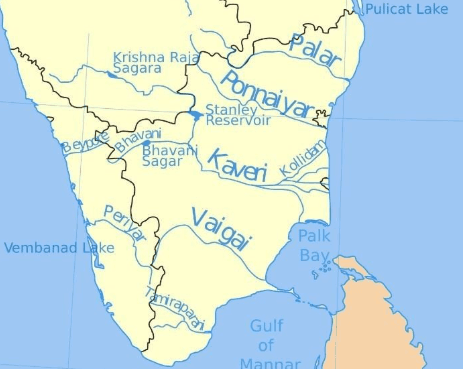
Illustration for Pennaiyar River Inter-State Mapping Overview

What & Where

East-flowing seasonal river (~497 km) rising at Nandi Hills, Karnataka, draining into Bay of Bengal near Cuddalore, Tamil Nadu

Known as Thenpennai/Ponnaiyar (Tamil) & Dakshina Pinakini (Kannada); second-longest river of Tamil Nadu after Cauvery

Forms inter-state basin; upstream Karnataka, downstream Tamil Nadu reliant for irrigation & drinking water

Quick Facts for MCQs

Legal & Policy

  • SupremeCourt directive; Union must set up Pennaiyar Water Tribunal within one month
  • Article131; Tamil Nadu used original SC jurisdiction for inter-state water conflict
  • ISRWDA1956; statutory basis for tribunal adjudication and award enforcement

Hydraulic Infrastructure

  • SathanurDam largest; gross capacity ~7.3 TMC supporting lower-basin irrigation
  • Krishnagiri & Kelavarapalli dams regulate upper reaches, augment Bengaluru–Hosur supply
  • IrrigationCoverage spans nine districts across both states enhancing agrarian economies

Environmental Impact

  • IndustrialPollution from Bengaluru–Hosur corridor degrades water quality and ecology
  • SandMining accelerates channel erosion, reduces baseflow, threatens delta stability
  • Seasonality amplified by catchment degradation, limiting perennial character

Cultural Context

  • SangamLiterature celebrates Thenpennai’s fertility and strategic importance
  • TevaramHymns and numerous ancient temples along banks highlight religious relevance

Key Data Points

FeatureData-Point
Source hill rangeNandi Hills, Chikkaballapura
States traversedKarnataka, Tamil Nadu
Total length~497 km
River natureSeasonal; SW & NE monsoon-fed
MouthBay of Bengal, near Cuddalore
Delta formationSmall delta south of Cuddalore
Major tributariesMarkandeya, Varaha Nadhi, Pambar, Pampar
Dispute-focus tributaryMarkandeya River
Largest damSathanur Dam
Sathanur gross capacity~7.3 TMC
Other key damsKrishnagiri, Kelavarapalli
Alternate namesThenpennai, Ponnaiyar, Dakshina Pinakini
Key irrigated TN districtsKrishnagiri, Dharmapuri, Tiruvannamalai, Villupuram, Cuddalore
Pollution hotspotBengaluru–Hosur industrial belt
Supreme Court actionOrdered tribunal formation within one month
Constitutional routeArticle 131 suit
Governing statuteInter-State River Water Disputes Act, 1956

Related UPSC Prelims PYQs

NDA_GAT 2024PYQ 1

Which of the following is/are east flowing rivers in India?

GS-2Editorial

3.Corporate Social Responsibility Strategic Evolution

Economic Times

What & Where

CSR; business integration of social and environmental concerns; mandatory spend regime in India

Thresholds; applies to net worth ₹500 cr, turnover ₹1000 cr, or profit ₹5 cr companies

Geography; funds over-concentrated in Maharashtra and Gujarat, shift urged toward Aspirational Districts

Quick Facts for MCQs

Legal & Policy

  • Mandatory_status; India first to legislate CSR via Companies Act 2013
  • Governance_tools; Board CSR Committee, Unspent CSR Account, third-party impact assessment
  • Market_linkage; Social Stock Exchange facilitates fundraising for NGOs, social enterprises

Operational Shifts

  • ROI_focus; projects tie to business needs, eg TCS goIT builds coder pipeline
  • Livelihood_models; HUL Project Shakti turns rural women into supply-chain micro-entrepreneurs
  • Ecosystem_restoration; Reliance mangrove initiative prioritises carbon-sink, watershed health over beautification

Tech & Innovation

  • AI_upskilling; Infosys Foundation adds AI modules in rural digital literacy programmes
  • Monitoring_future; satellite and blockchain proposed for real-time CSR tracking
  • Bias_guard; human audits mandated for AI based grant or scholarship decisions

Challenges

  • Tickbox_approach; 2025 penalties for greenwashing expose superficial compliance
  • Regional_skew; FY24-25 Aspirational Districts received under 5 % national CSR outlay
  • Capacity_gap; Odisha grassroots NGOs lack GIS, impact-reporting skills hindering partnerships

Key Data Points

FeatureData-Point
Mandatory sinceCompanies Act 2013, Section 135
Spend rate2 % of 3-year average net profit
Applicability threshold₹500 cr net worth / ₹1000 cr turnover / ₹5 cr profit
OversightBoard-level CSR Committee
Activity listSchedule VII items
Unspent money ruleShift to Unspent CSR A/c or specified govt funds
Transparency portalNational CSR Data Portal (MCA)
Impact assessmentThird-party compulsory when spend > ₹10 cr
Capital market linkSocial Stock Exchange operational 2023
Regional gap FY24-25<5 % CSR flow to Aspirational Districts

Related UPSC Prelims PYQs

GS1 2024PYQ 1

भारत में निगमित सामाजिक उत्तरदायित्व (CSR) नियमों के संदर्भ में, निम्नलिखित कथनों पर विचार कीजिए:

GS1 2025PYQ 2

Consider the following statements:

GS-2Polity

4.Parliament Motion of Thanks Procedure

ANI
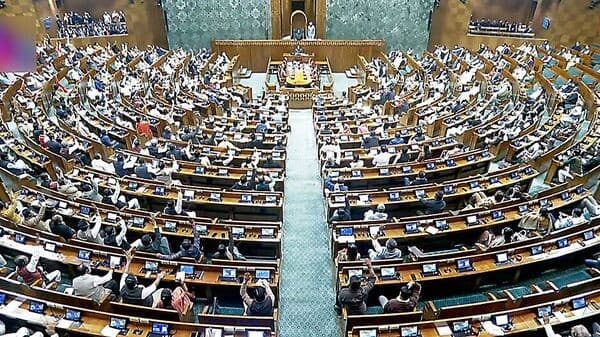
Illustration for Parliament Motion of Thanks Procedure

What & Where

Resolution: Motion of Thanks, moved in Lok Sabha & Rajya Sabha to acknowledge President’s Special Address

Process: Only forum to debate, critique, amend government policy statement read by President

Timing: Taken up after Address at first session post-election and every calendar year’s opening session

Quick Facts for MCQs

Constitutional Provisions

  • Article 87(1): President must deliver Special Address at first annual session and first post-election session
  • Article 87(2): Houses to set rules for discussing matters in Address via Motion
  • Address content drafted by Council of Ministers, approved by Cabinet

Parliamentary Procedure

  • Selection: Government chooses mover & seconder, Speaker/Chair allots debate days
  • Amendment: Regret lines typically start with That the House regrets omission of…, voted before main Motion
  • Failure consequence: Motion defeat symbolises loss of majority, treated like no-confidence indicator

Political Record

  • Rajya Sabha saw only five successful amendments across 1950-2024, none in Lok Sabha
  • First RS amendment carried 1980 on refugee issue; latest 2016 on agrarian distress
  • Debates often span 3–4 days, largest speaker count usually from opposition benches

Key Data Points

FeatureData-Point
Constitutional anchorArticles 86(1), 87(1) & 87(2)
MoversTwo members picked by Ministry of Parliamentary Affairs
Debate scopeAny national or international matter, even if absent in Address
Amendment rightAny MP; regret motions common
Rajya Sabha amendments carried1980, 1989, 2001, 2015, 2016
Lok Sabha amendments carriedNever
Vote sequenceDebate → PM reply → voting on amendments → main Motion
Passage effectAdopted text becomes formal thanks conveyed to President

Related UPSC Prelims PYQs

CDS_GK 2025PYQ 1

Regarding 'motions' in the Parliament of India, which one of the following statements is correct?

GS-2Polity

5.India-Arab Foreign Ministers Dialogue Outcomes

The Hindu

What & Where

India–Saudi Arabia Security Working Group: bilateral counter-terror forum under 2019 Strategic Partnership Council; 3rd meeting in Riyadh, Feb 2026.

India-Arab Foreign Ministers’ Meeting: multilateral dialogue with 22 Arab League states; 2nd edition in New Delhi, Feb 2026.

“Board of Peace for Gaza”: proposed US-led body to police Israel-Hamas cease-fire and reconstruction; India yet to accept seat.

Quick Facts for MCQs

Security Dimension

  • Cooperation: Riyadh talks commit to joint action against terror finance, cyber threats and organised-terror nexus.
  • Maritime: Delhi meet flagged Red Sea insecurity affecting Indian shipping lanes.
  • Peacekeeping: India reaffirmed UNIFIL troop role, sought Lebanese stability.

Diplomatic Balancing

  • Sequencing: Saudi dialogue, Arab ministers meet and Tehran visit conducted within same week.
  • Neutrality: Supported Gaza cease-fire yet withheld decision on US-led Board.
  • Outreach: Highlighted crises in Libya, Sudan, Syria, Yemen alongside Gaza concerns.

Multilateral References

  • UNSC 2803 authorises transitional Gaza authority and International Stabilisation Force.
  • Sharm-el-Sheikh 2025 summit underpins two-state, cease-fire roadmap.
  • SPC security track operates via Political, Consular & Security Cooperation Committee.

Key Data Points

FeatureData-Point
India-Saudi Security WG3rd round, Riyadh
Parent mechanismStrategic Partnership Council (2019)
Supervising committeePolitical, Consular & Security Cooperation
Core agendaTerror finance, cyber-terror, crime-terror nexus
India-Arab FMs Meet2nd round, New Delhi
Arab participant highlightPalestine FM Riyad al-Maliki
UNSC resolution cited2803 on Gaza transition & ISF
Peace summit referencedSharm-el-Sheikh, 2025
US proposalBoard of Peace for Gaza (membership pending)
Indian visit to IranDeputy NSA in Tehran, Feb 2026

Related UPSC Prelims PYQs

CAPF_GAI, ESE_GS 2024PYQ 1

Which of the following statements with regard to the outcomes of the talks between the Prime Minister of India and the President of UAE held in February, 2024 is/are correct?

CAPF_GAI, ESE_GS 2026PYQ 2

What is the name of the initiative launched by India and Denmark in November 2025 to enhance bilateral ties?

GS-2PolityQuick Bite

6.Expert Panel on Transgender Healthcare Policy

The Hindu

What & Where

Panel: Multidisciplinary medical experts constituted for transgender-specific healthcare guidance

Ministry: Social Justice & Empowerment nodal body coordinating policy adoption nationwide

Focus: Align healthcare frameworks with Articles 14 15 19 21 ensuring dignity equality non-discrimination

Quick Facts for MCQs

Legal & Policy

  • Directive: Supreme Court in Jane Kaushik 2025 ordered advisory committee leading to panel creation
  • Compliance: Panel operationalises constitutional guarantees against discrimination in workplaces and healthcare
  • Governance: Inputs expected to shape national guidelines on hormone therapy surgeries mental health support

Demographics

  • Census2011: 4.88 lakh transgender persons recorded nationwide
  • Concentration: Uttar Pradesh highest followed by Andhra Pradesh and Maharashtra
  • Coverage: Census figures likely underestimate due to stigma driven under-reporting

Reform Timeline

  • 2009: Election Commission added Others category enabling non-binary voter registration
  • 2014: NALSA judgement declared transgender people Third Gender securing fundamental rights
  • 2019: Transgender Persons Act legislated comprehensive anti-discrimination safeguards

Key Data Points

FeatureData-Point
Constituting ministrySocial Justice & Empowerment
Panel mandateTechnical & policy advice on transgender healthcare
Triggering caseJane Kaushik vs Union of India, 2025
Transgender census 20114.88 lakh persons
Top three statesUttar Pradesh, Andhra Pradesh, Maharashtra
Key constitutional articles14, 15, 19, 21
First EC inclusion year2009 (“Others” option)
Third gender SC recognitionNALSA case, 2014
Protective legislationTransgender Persons Act, 2019

Related UPSC Prelims PYQs

CDS_GK 2024PYQ 1

India's first dedicated OPD for the Transgenders was opened at which one among the following hospitals?

GS-3Editorial

7.Drivers and Risks in Indian Consumer Confidence

Indian Express

What & Where

Consumer Confidence Survey (CCS): RBI bi-monthly poll tracking households’ views on economy, jobs, inflation, income & spending.

Two arms: urban CCS in 13–19 metros; Rural CCS (RCCS) across 31 States/UTs for inclusive sentiment read.

Core geography: nationwide sample split urban–rural; findings guide monetary stance and demand estimates.

Quick Facts for MCQs

Economic Angle

  • Disinflation plus GST cuts boosted purchasing power, lifting festival-season durables demand.
  • Urban staff-cost proxy showed 5.7 % real wage rise Jul–Sep ’25, aiding city consumption.
  • K-shaped recovery evident: premium segments thrive while mass-market demand lags.

Household Finance

  • Household bank debt grew 2.9 × (FY09-23) against 1.9 × industrial wages, stressing balance sheets.
  • Rising liabilities, shrinking net assets heighten debt-service burden and damp discretionary spends.
  • Reduced education spend and higher ultra-processed food outlays signal skewed consumption mix.

Policy Prescriptions

  • Prioritise labor-intensive exports, farm supply-chain upgrades for durable income gains.
  • Incentivise positive-real-return savings; tighten norms on unsecured consumer credit.
  • Maintain food-price stability, transparent tax regime, and balanced capex–human-capital budgeting.

Key Data Points

FeatureData-Point
CCS frequencyEvery alternate month (bi-monthly)
Urban CCS coverage13–19 large cities
Rural CCS coverage31 States/UTs
RBI repo cuts in 2025125 basis points
Headline retail inflation Oct 20250.25 % (record low)
Real rural wage growth Q1 FY264.1 %
Nominal rural wage growth Q1 FY266.5 %
Household financial liabilities FY246.2 % of GDP
Net financial assets FY234.9 % of GDP (multi-decade low)
Consumer durable loan demand (Festive ’25)1.5 × previous year

Related UPSC Prelims PYQs

CDS_GK, GEO_GS 2025PYQ 1

Which one of the following is a good statistic to evaluate where an economy stands in the financial cycle?

CDS_GK, GEO_GS 2025PYQ 2

With regard to the findings of the Second All India Rural Financial Inclusion Survey of NABARD, which of the following statements is/are correct?

GS-3Economy

8.SBI CHAKRA Centre for Sunrise Sector Financing

Indian Express

What & Where

Platform CHAKRA is SBI’s knowledge-led Centre of Excellence financing emerging technology-driven sunrise sectors

Combines sector expertise, innovative risk frameworks, tailor-made debt structures for capital-intensive projects

Headquartered India; targets eight sectors including renewable energy, green hydrogen, semiconductors, e-mobility

Quick Facts for MCQs

Economic Angle

  • Capex demand pegged at ₹100 lakh crore for sunrise sectors by 2030
  • Debt-mobilisation targets domestic banks and international investors for long-tenor funding
  • Innovative financing structures aimed at reducing capital costs and crowding private investment

Tech & Schemes

  • Priority sectors include RE, ACC batteries, e-mobility, green hydrogen, semiconductors
  • Smart infrastructure and data centres financed to bolster digital public goods
  • Decarbonisation funding complements National Green Hydrogen Mission and PLI schemes

Institutional Architecture

  • Publications offer granular sector insights guiding credit appraisal
  • Roundtables link lenders, policymakers, investors for policy-aligned capital flow
  • Model scales earlier MSME CoE experience to large corporates

Climate Finance

  • Green sectors positioning supports India’s NDCs and net-zero 2070 roadmap
  • DFI and multilateral tie-ups expected to unlock concessional green finance windows

Key Data Points

FeatureData-Point
Launching institutionState Bank of India
Primary goalStrengthen debt flow to eight sunrise sectors
No. of focus sectors8
Sector listRE, ACC battery, e-mobility, green hydrogen, semiconductors, decarbonisation, smart infra, data centres
Expected sectoral capex by 2030≈ ₹100 lakh crore
Knowledge toolsWhite papers, sectoral reports, roundtables
Risk toolsAdvanced assessment frameworks, innovative financing models
Collaboration networkDFIs, multilateral agencies, NBFCs, banks, start-ups, academia
Previous SBI templateExtends MSME Centre of Excellence

Related UPSC Prelims PYQs

GS1 2017PYQ 1

Which of the following statements best describes the term ‘Scheme for Sustainable Structuring of Stressed Assets (S4A)’, recently seen in the news?

GS-3Economy

9.Miniratna Category-I Autonomy for Yantra India

News on Air

What & Where

Miniratna: profit-making CPSE tag giving enhanced operational/financial autonomy, India

Two categories: I (higher powers), II (moderate)

2024 upgrade: Yantra India Limited, Nagpur-based defence PSU, granted Category-I

Quick Facts for MCQs

Historical Evolution

  • 1997 reform decentralised CPSE decision authority beyond Navratna group
  • Miniratna placed below Navratna, Maharatna in autonomy ladder
  • YIL joins 57 existing Category-I enterprises

Eligibility Norms

  • Profitability, positive net worth, no loan default, no budgetary support mandatory
  • Board must induct independent directors ensuring corporate governance
  • Category-II needs profit all 3 yrs; no minimum rupee threshold

Delegated Powers

  • Capex, JV, M&A allowed within ₹500 cr or net worth limit
  • Boards may enter tech alliances, overseas ventures with CCEA intimation
  • HR autonomy covers recruitment, training, VRS, CRS below Board level

Key Data Points

FeatureData-Point
Policy launchOct 1997
Granting ministryGovt of India
Profit requirement (common)Continuous profit 3 yrs
Net worth ruleMust be positive
Board condition≥3 independent directors
Extra bar Category-IPre-tax profit ≥ ₹30 cr in any 1 of last 3 yrs
Capex freedom≤ ₹500 cr or net worth (lower)
JV/Subsidiary spendSame ceiling as capex
Emergency foreign tourCEO may clear ≤ 5 days
Latest recipientYantra India Ltd

Related UPSC Prelims PYQs

CAPF_GAI 2023PYQ 1

‘Rail Vikas Nigam Limited’ is a:

GS-3S&T

10.Integrated Solar Energy Capture and Storage Device

DD News

What & Where

Device: single-unit photo-rechargeable supercapacitor capturing and storing solar energy simultaneously

Where: developed at CeNS, Bengaluru, under Department of Science & Technology

Purpose: efficient, compact, eco-friendly energy storage for portable, wearable, off-grid technologies

Quick Facts for MCQs

Technology & Design

  • Material: NiCo₂O₄ nanowires form highly porous 3-D conductive network
  • Integration: same nanostructure serves as photo-harvester and supercapacitor electrode
  • Architecture: single package removes external wiring, minimizes voltage/current mismatch losses

Performance Metrics

  • Durability: retains ~88 % capacitance after 1,000 repeated photo-charging cycles
  • Consistency: delivers steady ≈ 1.2 V output without external regulators
  • Versatility: functions across broad illumination spectrum, maintaining charge storage efficiency

Application Areas

  • Portable: ideal for wearables, IoT sensors, miniaturised electronics
  • Off-grid: suited for remote, energy-poor regions needing autonomous power supply
  • Emergency: lightweight, compact unit simplifies field deployment for disaster-relief gadgets

Sustainability Push

  • Fossil reduction: direct solar storage cuts dependence on conventional batteries
  • Efficiency: integrated system lowers energy losses from separate harvest-storage interfaces
  • Eco-friendly: nickel-foam substrate and binder-free growth reduce toxic processing residues

Key Data Points

FeatureData-Point
Device categoryPhoto-rechargeable supercapacitor
Active materialBinder-free NiCo₂O₄ nanowires on nickel foam
Fabrication methodIn-situ hydrothermal growth
Stable output voltage≈ 1.2 V
Capacitance retention (1,000 cycles)≈ 88 %
Light operating rangeIndoor low light to intense sunlight
Energy-management electronicsNot required
Developing instituteCeNS, Bengaluru
GS-3Environment

11.Wetlands as National Public Goods

The Hindu
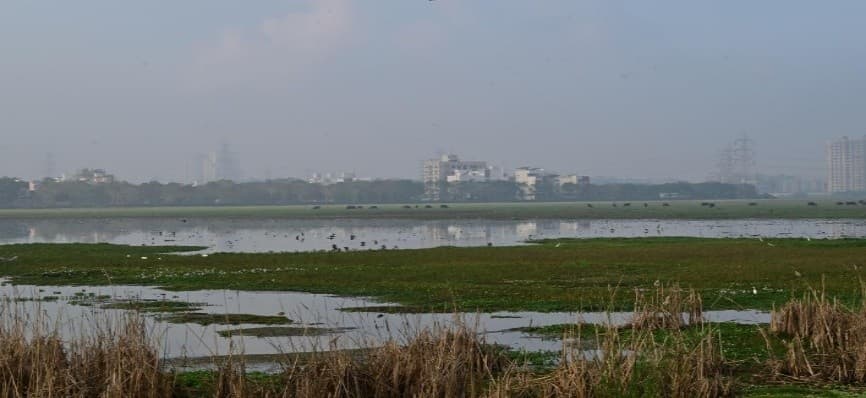
Illustration for Wetlands as National Public Goods

What & Where

Wetlands: water-saturated lands with hydric soils & hydrophytes; ecotone between dry land and aquatic systems.

Indian spread ≈15.9 million ha (≈5 % land); 98 Ramsar sites across 18 states/UTs.

New 2026 additions: Patna Bird Sanctuary (U.P.) & Chhari-Dhand Wetland (Guj.).

Quick Facts for MCQs

Ecosystem Services

  • Flood-control: wetlands act sponges, mitigate monsoon surges protecting urban areas.
  • Water-purification: plant–microbe uptake strips N, P, heavy metals, lowering treatment costs.
  • Carbon-storage: mangroves/peatlands sequester CO₂, cushion cyclone impacts.

Threats

  • Urban-encroachment: infilling shrank Pallikaranai, Harike catchments.
  • Pollution: effluents caused 2025 fish-kills in Ashtamudi; wetlands used as dump sites.
  • Invasives/hydrological cuts: water hyacinth, dams, sand-mining degrade Loktak, disrupt inflows.

Livelihood & Economy

  • Agriculture: Kuttanad wetland enables below-sea-level rice, >6 lakh t annually.
  • Fisheries & bird tourism: Chhari-Dhand sustains flamingos, local income.
  • Fodder/crafts: reeds, grasses harvested for livestock, mat-making.

Policy & Governance

  • Boundary notification & public maps proposed to curb illegal conversion.
  • Watershed-scale governance urged over piecemeal beautification projects.
  • National mission planned for GIS, hydrology, community-led restoration skills.

Traditional Knowledge

  • Kenis (Wayanad) showcase indigenous water-diversion aiding paddy.
  • Sewage-fed aquaculture of East Kolkata integrates waste treatment with livelihoods.
  • 2026 theme stresses mainstreaming such practices into urban planning.

Key Data Points

FeatureData-Point
World Wetlands Day 2026 themeWetlands and traditional knowledge
India Ramsar tally (Feb 2026)98 sites
Highest Ramsar-holding stateTamil Nadu – 20 sites
National wetland loss 1990-2020~40 %
Share of land area5 % (15.9 m ha)
Flood buffer exampleDeepor Beel absorbs 40 % Brahmaputra overflow
Natural sewage treatmentEast Kolkata Wetlands – 750 MLD
Cyclone bioshield caseBhitarkanika mangroves cut Cyclone Dana wind speeds
Major invasive coverageWater hyacinth spans 40 % Loktak Lake
New Ramsar sites 2026Patna Bird Sanctuary, Chhari-Dhand

Related UPSC Prelims PYQs

CAPF_GAI, CDS_GK 2025PYQ 1

The Ramsar Convention is an intergovernmental treaty which provides the framework for national action and international cooperation for the conservation of

CAPF_GAI, CDS_GK 2022PYQ 2

The ‘Ramsar Convention’ relates to which one of the following areas?

GS-3Species

12.Gujarat Reclaims Tiger-Bearing State Status

Indian Express

What & Where

Event: Sustained Royal Bengal Tiger recorded in Jambughoda–Ratanmahal forests, Gujarat.

Geography: Tiger migrated 60 km from Katthiwada WLS (Madhya Pradesh) via 90 km corridor to Kanjeta–Jambughoda.

Status: Gujarat only Indian state with Asiatic Lion, Royal Bengal Tiger and Leopard.

Quick Facts for MCQs

Biodiversity Significance

  • Tri-predator distinction: Gujarat hosts lions, tigers, leopards, unmatched nationwide.
  • Rich-fauna: Leopards, Sloth Bears, Chausingha, Nilgai, Hyena thrive in contiguous forests.
  • Forest-flora: Teak, Mahua, Bamboo thickets supply cover, forage, medicinal herbs.

Conservation Measures

  • Prey-augmentation: Herbivore Breeding Centre raising chital, sambar for phased wild release.
  • Genetic-viability: NTCA, Gujarat plan translocation of female tiger to establish breeding pair.
  • Conflict-mitigation: Availability of caves, water sources expected to curb village incursions.

Sanctuary Profiles

  • Jambughoda: Dry southern tropical, deciduous forests interspersed grasslands functioning as ecological corridor.
  • Ratanmahal: Dry teak-mixed deciduous, bamboo, mahua, jamun; highest state Sloth Bear population.
  • Hydrology: Sanctuary forms Panam River catchment sustaining Dahod and Panchmahal districts.

Key Data Points

FeatureData-Point
State regaining tiger tagGujarat
Unique big-cat comboLion, Tiger, Leopard
Migration start sanctuaryKatthiwada WLS, MP
Destination forestsKanjeta range & Jambughoda WLS
Corridor length~90 km
Tiger travel distance~60 km
Breeding centre siteNear Kada dam
Prey species bredChital, Sambar
Central authorityNational Tiger Conservation Authority
Ratanmahal notified1982
Highest Sloth Bear densityRatanmahal WLS
River safeguardedPanam

Related UPSC Prelims PYQs

CDS_GK, GS1 2017PYQ 1

Recently there was a proposal to translocate some of the lions from their natural habitat in Gujarat to which one of the following sites?

CDS_GK, GS1 2025PYQ 2

‘नीलगिरि’, ‘सूट्र’ और ‘वायशार्क’ के बारे में निम्नलिखित में से कौन-सा कथन सही है?

GS-3EconomyQuick Bite

13.Minimum Import Price on Penicillin G

Economic Times
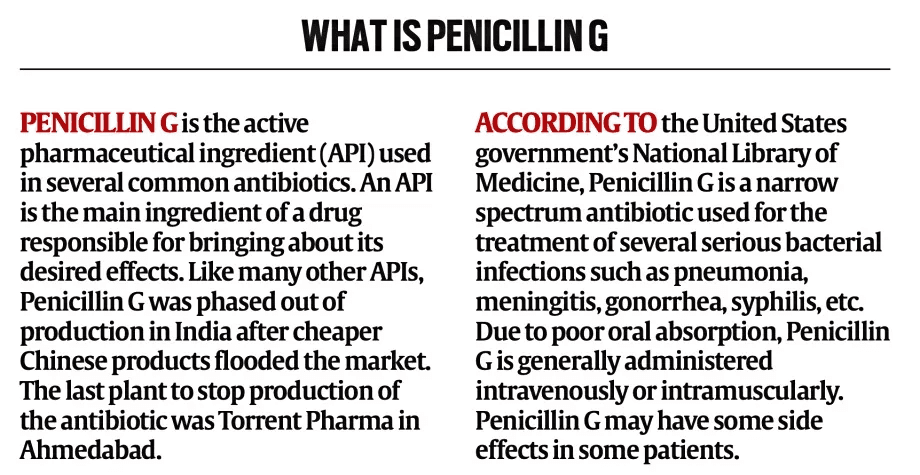
Illustration for Minimum Import Price on Penicillin G

What & Where

Minimum Import Price (MIP): temp floor on import price to shield domestic producers from cheap/dumped goods.

Coverage: Penicillin G & salts, 6-Amino Penicillanic Acid (6-APA), amoxicillin; notified across Indian customs ports.

Import hotspot: China—dominant supplier of ~70 % API raw materials to India.

Quick Facts for MCQs

Policy Measures

  • Notification: MIP leverages Customs tariff powers; applies only to domestic-consumption imports.
  • Exemption: EOUs/SEZs/advance-authorisation allowed if inputs not sold in domestic tariff area.
  • Continuity: Complements API-focused PLI and prior sulphadiazine MIP.

Economic Angle

  • Dependence: Heavy Chinese sourcing threatens viability of Indian bulk-drug units.
  • Intent: Curb predatory pricing, stabilise domestic API prices, spur capacity utilisation.
  • Export safety-valve: Policy designed not to inflate costs for outward-oriented pharma producers.

Drug Details

  • Penicillin G: benzylpenicillin; narrow-spectrum β-lactam; poor oral absorption necessitates IV/IM administration.
  • 6-APA: key intermediate for semi-synthetic penicillins including amoxicillin.
  • Amoxicillin: widely prescribed broad-spectrum antibiotic in respiratory, ENT, and urinary infections.

Key Data Points

FeatureData-Point
MIP duration1 year
Key inputs coveredPenicillin G, 6-APA, amoxicillin
China’s raw-material share≈ 70 %
Import value from ChinaUSD 10–12 billion/yr
Exempted entities100 % EOUs, SEZ units, advance-authorisation imports
Earlier related actionNov 2025 MIP on sulphadiazine
Support schemeProduction Linked Incentive (PLI) for APIs
Penicillin G routeIntravenous / intramuscular

Ready to practice?

Test your knowledge with our UPSC test series.

Start Free Trial