UPSC Current Affairs

16 topicsGS-1: 1GS-2: 7GS-3: 8
0/16 done
GS-1MappingQuick Bite

1.Seychelles Archipelago Overview

DD News
Illustration for Seychelles Archipelago Overview

What & Where

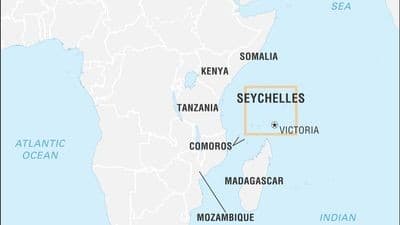
Sovereign island-nation; 115-island archipelago in western Indian Ocean, ~1,500 km east of mainland Africa.

Two groups: Inner granitic (Mahé, Praslin, La Digue) & Outer coralline atolls/reefs; capital Victoria on Mahé.

Possesses ~1.35 million km² EEZ; globally noted for blue-economy drive and strong marine conservation.

Quick Facts for MCQs

Geographical Features

  • Granitic-islands age among oldest oceanic granite formations worldwide.
  • Coral atolls, reef systems host rich biodiversity supporting tourism & fisheries.
  • Strategic location astride key Indian Ocean sea-lanes.

Blue Economy

  • Policy focus leverages fisheries, tourism, maritime services within vast EEZ.
  • Branding as high human-development, ocean-based economy enhances global partnerships.
  • Conservation commitments underpin sustainable resource extraction.

Conservation Goals

  • Government designates 30 % EEZ as Marine Protected Areas to safeguard ecosystems.
  • Reef and atoll protection central to national climate resilience strategy.

Key Data Points

FeatureData-Point
CapitalVictoria (Mahé Island)
President (visiting)Patrick Herminie
Total islands115
Island groupsInner granitic & Outer coralline
Distance from Africa~1,500 km east
Neighbouring territoriesMaldives, Mauritius, Madagascar, Comoros, Réunion (France)
Exclusive Economic Zone~1.35 million km²
Marine protection pledge30 % of national waters

Related UPSC Prelims PYQs

GS1 2002PYQ 1

In the map given below, four islands of Indian Ocean region, i.e. A) Seychelles, B) Chagos, C) Mauritius and D) Socatra are marked as 1, 2, 3 and 4. Match them and select the correct answer from the codes given below.
GS-2Editorial

2.IOM Global Appeal 2026 Highlights

IOM
Illustration for IOM Global Appeal 2026 Highlights

What & Where

Appeal: IOM Global Appeal 2026—central funding ask aligned to Strategic Plan 2024-28 for lifesaving aid and safe migration.

Coverage: 41 million beneficiaries across 120-plus countries under “Humanitarian Reset” amid shrinking donor budgets.

Scope: Internal, cross-border and climate-driven mobility tracked via Displacement Tracking Matrix on every continent.

Quick Facts for MCQs

Scale & Trends

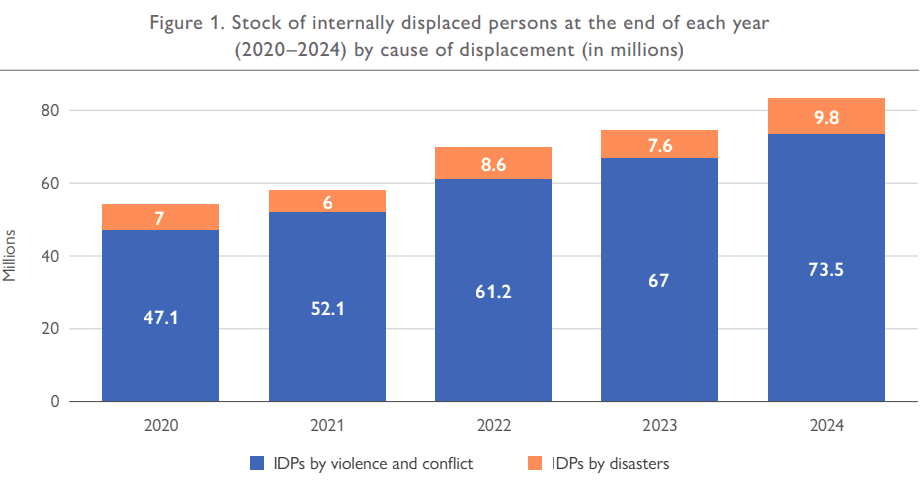
  • Record: 2024 set all-time high internal displacement at 83.4 million.
  • Deadliest: 9,197 migrant deaths in 2024, worst since 2014.
  • Acceleration: Climate shocks drove 29 % rise in disaster displacement to 9.8 million.

Funding & Resources

  • Shortfall: Only 28 % of required USD 4.7 bn secured, risking operational cuts.
  • Flexibility: IOM pushes unearmarked, multi-year funding for agile field responses.
  • Remittances: USD 905 bn sent by migrants, often exceeding official aid flows.

Drivers of Mobility

  • Economics: 168 million workers filling labour gaps, spurring innovation.
  • Conflict: Sudan, DR Congo crises continue mass displacement.
  • Environment: Extreme weather forcing rural families into urban or cross-border moves.

Challenges

  • Protection: Many migrants in insecure jobs lacking health or social security nets.
  • Exploitation: Wage theft, unsafe worksites common among seasonal and construction labourers.
  • Policy: Stricter visa rules (e.g., 2025 H-1B fee hikes) narrow legal entry routes.

Operational Priorities

  • Route-based: Corridor-wide, data-informed responses over fragmented country plans.
  • Localization: Greater role for local actors in humanitarian and development delivery.
  • Data: Scaling Displacement Tracking Matrix for real-time decision making.

Key Data Points

FeatureData-Point
Total funding need (2026)USD 4.7 billion
Secured so farUSD 1.3 billion
Funding gapUSD 3.4 billion
People targeted41 million
Internal displacement (2024)83.4 million
Disaster displacement rise (2024)9.8 million (↑29 %)
Migrant deaths (2024)9,197
International remittances (2024)USD 905 billion
Global migrant workers168 million
Countries with regular-labour pathways< 20 %
GS-2Editorial

3.Supreme Court Ruling on Menstrual Health

Indian Express

What & Where

Menstrual Health & Hygiene (MHH) declared fundamental right under Article 21 by Supreme Court, Feb 2026

Applies pan-India; mandates free sanitary products, gender-segregated toilets, safe disposal in every school

Origin: Dr Jaya Thakur v Government of India; Court issues continuing mandamus for compliance

Quick Facts for MCQs

Constitutional Ruling

  • Article 21 expanded to dignity, bodily autonomy, menstrual health; violations seen in forced absenteeism
  • Court stresses substantive equality; ignoring biological needs = structural exclusion under Article 14
  • Free education redefined: pads, toilets, water integral to RTE compliance

SC Directions

  • Free oxo-biodegradable pads via vending machines in all schools
  • Mandatory functional gender-segregated toilets, MHM corners, disposal compliant with SWM 2026
  • DEOs plus NCPCR/CPCR to inspect; anonymous student feedback for accountability

Govt Schemes

  • Samagra Shiksha finances vending machines & incinerators in schools
  • PMBJP distributes Suvidha pads through 16k+ Kendras at ₹1
  • Mission Shakti, RKSK, SAG, Swachh Bharat drive awareness, guidelines on MHM

Implementation Challenges

  • Infrastructure gaps: water, soap, O&M budgets; rural vending upkeep weak
  • Procurement of quality biodegradable pads strains state finances
  • Stigma, power hierarchies may blunt honest student feedback

Strengthening Measures

  • Policy inclusion for trans-men and non-binary menstruators
  • SHGs to locally produce biodegradable pads, boosting supply & livelihoods
  • Link school toilets to Jal Jeevan Mission ensuring continuous water supply

Key Data Points

FeatureData-Point
Year of judgement2026
Case typeContinuing mandamus
Constitutional hooksArticles 21, 14 & RTE Act 2009
NFHS-5 hygienic method use (15-24 yrs)77.3 %
Girls dropout/absenteeism post-puberty≈23 %
Suvidha pad price₹1 per pad
Janaushadhi Kendras (Nov 2025)>16,000
Suvidha pads sold till Nov 202596 crore
Waste rule referencedSWM Rules 2026

Related UPSC Prelims PYQs

CDS_GK 2022PYQ 1

Which one of the following statements is correct?

GS-2Editorial

4.16th Finance Commission Key Recommendations

The Hindu
Illustration for 16th Finance Commission Key Recommendations

What & Where

Finance Commission : Article 280 body deciding Centre-State tax devolution & grants every five years.

16th FC (Arvind Panagariya) covers FY 2026-27 → 2030-31; report tabled with Union Budget 2026-27.

Emphasis shifts from “entitlement” to compliance- & performance-linked fiscal federalism.

Quick Facts for MCQs

Devolution Formula

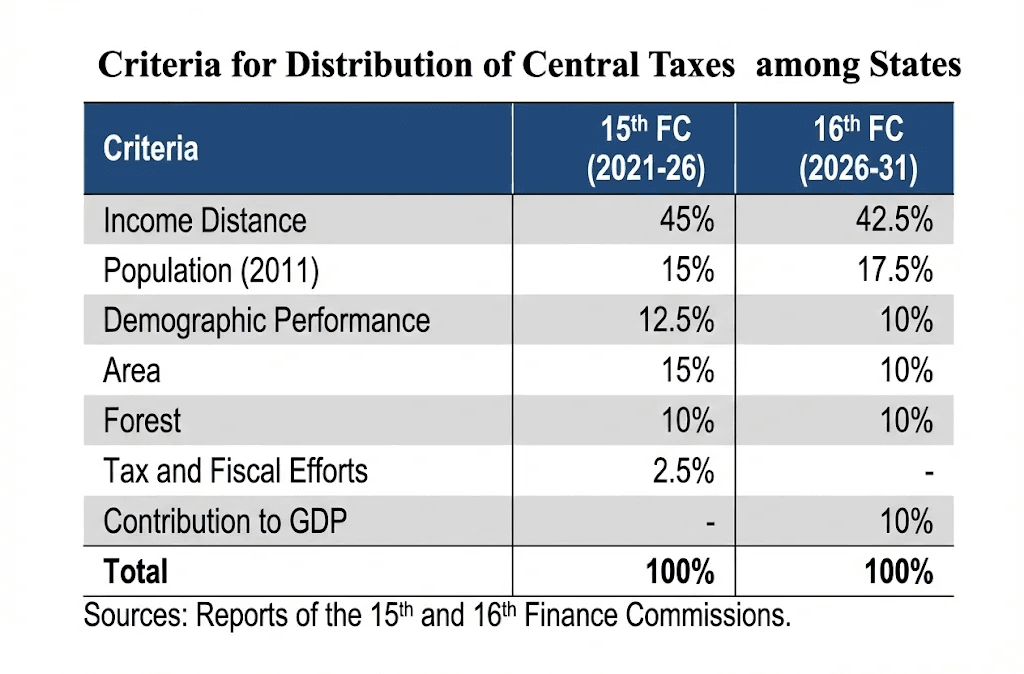
  • Income-distance weight lowered; GDP-contribution 10 % added; tax-effort criterion dropped.
  • Population 2011 gets 17.5 %; demographic performance 10 % uses 1971-2011 growth.
  • Forest weight includes open forests; area parameter stays at 10 %.

Grants & Conditions

  • Local bodies receive ₹8 lakh cr; entry tests: elected bodies, audited accounts, timely SFCs.
  • Basic grant 50 % untied; balance tied to sanitation/water; performance split outcome vs reforms.
  • Disaster funds ₹2.04 lakh cr; Centre share ₹1.56 lakh cr.

Fiscal Discipline

  • States limited to 3 % GSDP deficit; off-budget borrowings merged into debt.
  • Centre to reach 3.5 % deficit; DISCOM privatisation, subsidy pruning, 308 SPSE closures urged.
  • Combined Centre-State debt projected to fall 4.2 %-points in award period.

Equity Concerns

  • Southern, low-growth states cite penalty for population control and GDP weight bias.
  • Revenue-deficit grants scrapped; hill & special-category states fear structural gaps unaddressed.
  • Rise in tied funds seen as over-centralisation, squeezing states’ fiscal autonomy.

Key Data Points

FeatureData-Point
Vertical devolution share41 % of divisible tax pool
New horizontal weight10 % Contribution to GDP
Biggest parameter weight42.5 % Income distance
Population base year2011 Census (17.5 %)
Total grants 2026-31₹9.47 lakh crore
Local-body grants mix80 % basic / 20 % performance
Disaster grant sharing90:10 NE/Himalaya; 75:25 others
State fiscal-deficit cap3 % of GSDP
Centre deficit target3.5 % of GDP by 2030-31
Combined debt aim 2030-3173.1 % of GDP

Related UPSC Prelims PYQs

CAPF_GAI, GS1 2024PYQ 1

Population of the year 2011 was first introduced in the tax devolution formula for sharing Union tax revenue with the States by

CAPF_GAI, GS1 2025PYQ 2

Which of the following statements with regard to recommendations of the 15th Finance Commission of India are correct?

GS-2Polity

5.Chief Election Commissioner Removal Process

DH
Illustration for Chief Election Commissioner Removal Process

What & Where

Chief Election Commissioner: head of ECI overseeing all national, state & presidential elections in India.

Constitutional base: Art 324 (ECI powers); removal tied to Art 124(4) like Supreme Court judge.

Parliamentary locus: Impeachment motion can originate in either Lok Sabha or Rajya Sabha.

Quick Facts for MCQs

Legal & Policy

  • 2023 Act codifies appointment, limiting executive discretion.
  • Art 324(5) equates CEC security of tenure to that of SC judges.
  • President’s role post-resolution is mandatory, not discretionary.

Appointment Details

  • President appoints after committee recommendation; PM leads panel deliberations.
  • LoP vacancy filled by leader of single-largest opposition group.
  • Service ends on earlier of 6 yrs or 65 yrs age.

Removal Procedure

  • Written motion with required MP signatures triggers process.
  • Independent inquiry committee investigates, reports on charges.
  • Both Houses must pass resolution by constitutional special majority.

Key Data Points

FeatureData-Point
Appointing authorityPresident of India
Selection committee size3 members
Committee compositionPM (chair) + LoP-LS + Union Cabinet Minister (PM-nominated)
Governing lawCEC & OEC Act, 2023
Tenure ceiling6 years or 65 yrs, whichever earlier
Removal articleArt 324(5) read with Art 124(4)
Valid groundsProved misbehaviour or incapacity
Initiating HouseEither House of Parliament
Voting requirementSpecial majority (≥ total majority + ⅔ present & voting) in both Houses
Final removal orderPresident, post-resolution

Related UPSC Prelims PYQs

CDS_GK, GS1 2022PYQ 1

Which one of the following statements with regard to the Election Commission is not correct ?

CDS_GK, GS1 2002PYQ 2

Consider the following statements with reference to India:

GS-2Polity

6.Manipur Assembly Session Deadlock

The Hindu

What & Where

Article 174 regulates State Legislature sessions, prorogation, dissolution across India

Manipur dispute: 60-member Assembly idle since 12 Aug 2024 sitting

Six-month lapse without session key to plea on unconstitutional gubernatorial action

Quick Facts for MCQs

Legal & Policy

  • Article 174 empowers Governor summon, prorogue, dissolve; must ensure ≤6-month interval
  • Cancellation of Feb 2025 session alleged breach of constitutional morality, prompts demand to dissolve House
  • Misuse of gubernatorial discretion seen as pathway to Article 356 intervention

Judicial Scrutiny

  • Manipur High Court flags substantial constitutional question; sends to Division Bench
  • Petition seeks declaration Assembly unconstitutional post six-month lapse
  • Court outcome may delineate limits on Governor’s summoning powers

Governance & Federalism

  • Episode underscores Centre-State friction; Union-appointed Governor vs elected majority
  • Regular Assembly sittings vital for State-level executive accountability
  • Frequent Article 356 use criticised for eroding cooperative federalism

Key Data Points

FeatureData-Point
Article governing state sessionsArticle 174
Maximum gap allowed6 months
Manipur Assembly seats60
Last sitting held12 Aug 2024
Must reconvene by11 Feb 2025
Session cancelled on9 Feb 2025
Triggering eventChief Minister resignation
President’s Rule imposedFeb 2025
Case statusHC Division Bench referral

Related UPSC Prelims PYQs

CDS_GK, GS1 2018PYQ 1

If the President of India exercises his power as provided under Article 356 of the Constitution in respect of a particular State, then

CDS_GK, GS1 2022PYQ 2

In which one of the following States has the President’s Rule been imposed most number of times ?

GS-2Polity

7.Code of Wages 2019 Overview

The Hindu

What & Where

Code on Wages 2019 = umbrella wage law consolidating 4 Acts; applicable pan-India, both organised & unorganised sectors

Empowers Centre to notify National Floor Wage; States fix rates ≥ floor, revise ≈ every 5 yrs

Supreme Court 2026 prod: States must decide on extending Act/Code benefits to domestic workers

Quick Facts for MCQs

Legal & Policy

  • Consolidation reform recommended by 2nd National Commission on Labour 2002; led to 4 labour codes
  • Inspector-cum-Facilitator model introduces web-based random inspections, easing erstwhile “Inspector Raj”
  • Decriminalisation: first-time fine-only offences compoundable at 50 % max fine (Sec 56)

Worker Rights

  • Universalised statutory minimum wage ensures social-security floor across skill levels, geographies, arduousness categories
  • Timely-payment rule now applies irrespective of wage ceiling, covering piece-rate and managerial cadres alike
  • Domestic-worker inclusion pending; SC pressing states for “suitable mechanism” decision

Compliance Reforms

  • Single Registration, Single Licence, Single Return shrink rules 163→58, forms 20→6, registers 24→2
  • Employer deposits with government protected from court attachment except employee dues (Sec 64)
  • Digital inspections and compounding expected to cut litigation, boost Ease-of-Doing-Business ranking

Gender & Social Justice

  • Section 3 forbids gender (incl. transgender) discrimination in recruitment, wages, service conditions
  • Advisory boards empowered to suggest strategies increasing female employment share
  • Floor wage concept anchors living-wage principle, aligning with ILO Convention 131

Key Data Points

FeatureData-Point
Enactment year2019
Acts mergedPWA 1936, MWA 1948, Bonus 1965, Equal Pay 1976
Coverage shift~30 % to universal (100 %)
National Floor WageSection 9; baseline set by Centre
Minimum wage revisionOrdinarily every 5 years
Working hours cap48 hrs / week; 12 hrs day incl. rest
Overtime rate2 × normal wage (Sec 14)
Wage payment deadlineMonthly wages within 7 days next month
Wage slip mandateSec 50; compulsory for all workers
Women on advisory boards≥ 33 % (Sec 42)

Related UPSC Prelims PYQs

CAPF_GAI, CDS_GK 2025PYQ 1

The Code on Wages was notified by the Government of India in the year

CAPF_GAI, CDS_GK 2022PYQ 2

भारत सरकार द्वारा अधिसूचित निम्नलिखित श्रम संहिताओं में से किसमें केंद्रीय श्रम अधिनियमों, यथा कारखाना अधिनियम, 1948 और खदान श्रम अधिनियम, 1951 के विशेष उपबंध को शामिल किया गया है?

GS-2Mapping

8.UN Blue Line Demarcation

UN
Illustration for UN Blue Line Demarcation

What & Where

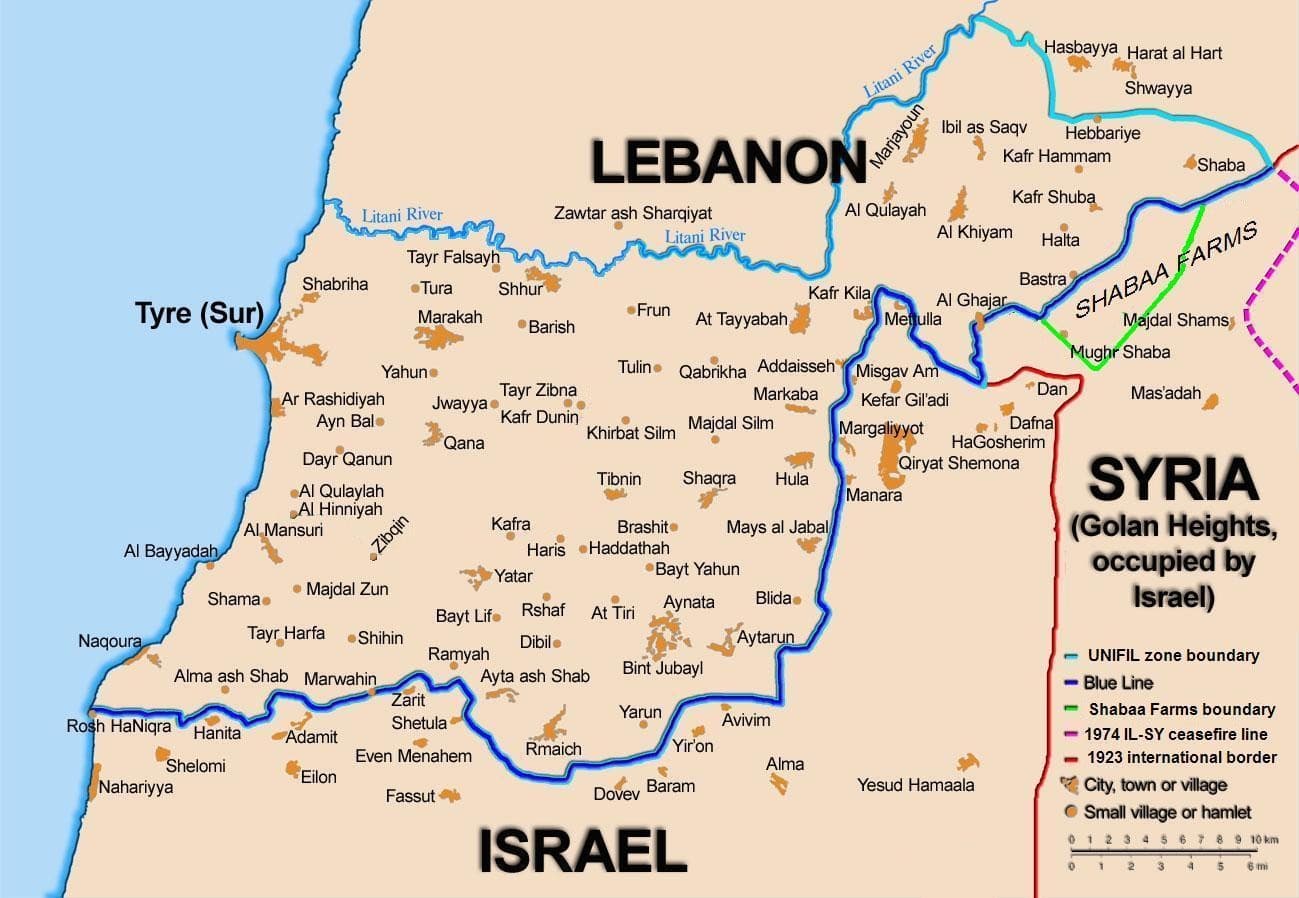
Definition: UN-identified withdrawal line marking Israel’s 2000 pullback from southern Lebanon; not a formal international border

Geography: Stretches ~120 km from Mediterranean coast (Naqoura/Rosh HaNikra) to tri-junction near Shebaa Farms/Golan Heights

Role: Serves as reference for UNIFIL patrols to monitor compliance with UNSC mandates and prevent cross-border escalation

Quick Facts for MCQs

Origin & History

  • 1978: UNSC Res. 425-426 created UNIFIL after Israeli invasion of Lebanon
  • 2000: UN cartographers fixed Blue Line to verify complete Israeli withdrawal
  • Both states accepted line status without prejudicing future border negotiations

Security Dimension

  • Monitoring: UNIFIL conducts land & air patrols; current partial suspension after reported chemical release
  • Violations: Regular aerial overflights, cross-border fire, unauthorized construction flagged in UN reports
  • Infrastructure: Israel erected fencing/wall segments to deter Hezbollah infiltration and tunnel activity

Disputed Areas

  • Hotspots: Shebaa Farms, northern Ghajar village, Kfarchouba hills lie along/near line yet sovereignty unresolved
  • Contestation: Lebanon claims, Israel controls; Syria’s 1967 loss of Golan adds complexity
  • Sensitivity: Even minor troop or engineering moves in these pockets risk rapid escalation

Key Data Points

FeatureData-Point
Year first linked to UNSC1978 (Res. 425, 426)
Year Blue Line delineated2000
Supervising missionUNIFIL
Partner forceLebanese Armed Forces
Total length≈ 120 km
Western terminusMediterranean at Naqoura / Rosh HaNikra
Eastern terminusTri-junction near Shebaa Farms
Nature of lineTemporary, technical withdrawal marker
Key UNSC resolution post-2006 war1701
Main barrier built byIsrael

Related UPSC Prelims PYQs

GEO_GS 2024PYQ 1

Which of the following statements about the ‘Blue Line’ is correct?

GS-3Scheme

9.Electronics Components Manufacturing Scheme Boost

PIB

What & Where

Electronics Components Manufacturing Scheme (ECMS) – April 2025, MeitY; nationwide fiscal-incentive programme for electronics components value-chain

Targets sub-assemblies, bare components, capital equipment; integrates Indian firms into Global Value Chains

Union Budget 2026-27 outlay Rs 40,000 cr; supports USD 500 bn domestic electronics manufacturing goal by 2030-31

Quick Facts for MCQs

Scheme Design

  • First-come-first-served incentive disbursal encourages early production
  • Capex incentive available five years; turnover incentive five years after one-year gestation
  • Coverage of ~90 % mobile-phone BoM strengthens domestic depths

Economic Impact

  • Investment pledges doubled initial Rs 59,350 cr target
  • Electronics production up 6-fold to Rs 11.3 lakh cr (2024-25)
  • Sector created 25 lakh jobs since 2014; poised for major export share

Supporting Policies

  • PLI across 14 sectors; drives 70 % of USD 4 bn electronics FDI since 2020
  • SPECS offers 25 % capex incentive; EMC 2.0 funds clusters infrastructure
  • NPE 2019, BCD & SWS exemptions further sweeten manufacturing economics

Export Surge

  • Electronics exports USD 22.2 bn in H1 FY26, fastest-growing category
  • India now world’s second-largest mobile-phone producer, 28-fold output leap in decade
  • Electronics poised to become India’s second-largest export item, trailing only petroleum

Key Data Points

FeatureData-Point
Launch year2025
Nodal ministryMeitY
Budget 2026-27 allocationRs 40,000 cr
Scheme tenure6 years + 1-yr gestation
Incentive typesTurnover, Capex, Hybrid
Employment linkagePortion of both incentives
Investment commits till Dec 2025Rs 1.15 lakh cr
Revenue projected 6 yrsRs 10.34 lakh cr
Direct jobs projected1.41 lakh
Export rank FY26 H13rd, likely 2nd soon

Related UPSC Prelims PYQs

CDS_GK 2024PYQ 1

The Atmanirbhar Bharat Scheme announced by the Government helps in:

GS-3Economy

10.US Project Vault Mineral Stockpile

Business Standard
Illustration for US Project Vault Mineral Stockpile

What & Where

Public–private US stockpiling programme for critical minerals & rare earths, modelled on Strategic Petroleum Reserve.

Aims to shield civilian-defence supply chains from global disruptions and China-centric processing dominance.

Operates through advance-purchase commitments and managed warehouses across the United States.

Quick Facts for MCQs

Security Dimension

  • Strategic-autonomy focus; counters potential Chinese export controls on defence-critical inputs.
  • Ensures availability for jet engines, missiles, advanced electronics in wartime scenarios.

Economic Angle

  • Price-stabilisation clause curbs extreme volatility in rare-earth spot markets.
  • Stockpile mitigates production halts in EV, aerospace, clean-tech manufacturing during shocks.

Tech & Schemes

  • Advance-purchase commitments guarantee offtake, lowering financing risk for miners/refiners.
  • Private-sector execution enables quicker procurement versus traditional federal stockpiles.

Industry Participation

  • Automotive, aerospace, and Big Tech firms already enlisted, signalling wide downstream acceptance.

Key Data Points

FeatureData-Point
Official nameProject Vault
Announced byDonald Trump
Launch valueUSD 12 billion
Funding mixPrivate capital + US Export–Import Bank
ImplementersCommodity traders Mercuria, Traxys (sourcing & storage)
Core mineralsRare earths, cobalt, gallium, other strategic metals
Access ruleWithdraw if replaced; full drawdown during major disruptions
Price clauseMandatory repurchase at fixed inventory price
Primary goalSecure uninterrupted mineral access & reduce China dependence
Key buyersGM, Boeing, Google, Stellantis
Policy analogyStrategic Petroleum Reserve for minerals
GS-3S&T

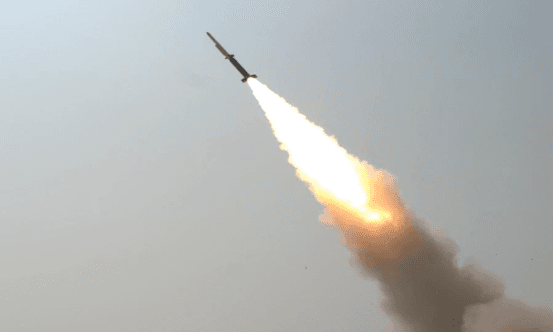
11.DRDO Solid Fuel Ducted Ramjet

PIB
Illustration for DRDO Solid Fuel Ducted Ramjet

What & Where

Solid Fuel Ducted Ramjet: air-breathing missile propulsion using atmospheric oxygen and solid fuel for sustained supersonic thrust.

Demonstrated by DRDO at Integrated Test Range, Chandipur, Odisha.

Two-phase flight: nozzle-less booster to Mach speed, then ramjet takeover via controlled fuel-air combustion.

Quick Facts for MCQs

Propulsion Mechanics

  • Ramjet ignition once dynamic pressure compresses inlet air, eliminating rotating compressors.
  • Continuous thrust reduces drag losses, maintaining velocity through end-game.
  • Stable supersonic combustion mastered indigenously, marking critical tech leap.

Operational Advantages

  • High terminal energy enhances kill probability against fast, manoeuvring targets.
  • Sustained thrust enables sharp end-game manoeuvres, complicating enemy interception.
  • Air-breathing design lowers overall missile weight, boosting range without size increase.

Indigenisation Drive

  • SFDR success cuts dependence on foreign propulsion tech, aligns with Aatmanirbhar Bharat.
  • Indigenous R&D accelerates development of next-gen BVRAAMs for IAF fighters.
  • Demonstration validates domestic capability in advanced combustion control hardware.

Key Data Points

FeatureData-Point
DeveloperDefence Research & Development Organisation
Propulsion classAir-breathing, ramjet
Oxidiser sourceAtmospheric oxygen; no onboard tank
Booster typeNozzle-less solid rocket stage
Demonstration siteChandipur, Odisha (Integrated Test Range)
Speed regimeSustained supersonic / high-Mach
Key terminal traitHigh residual kinetic energy
Prime applicationLong-range Beyond-Visual-Range air-to-air missiles
Range impactMore fuel space, extended engagement envelope
Control systemIndigenous fuel-flow controller for stable combustion
GS-3Environment

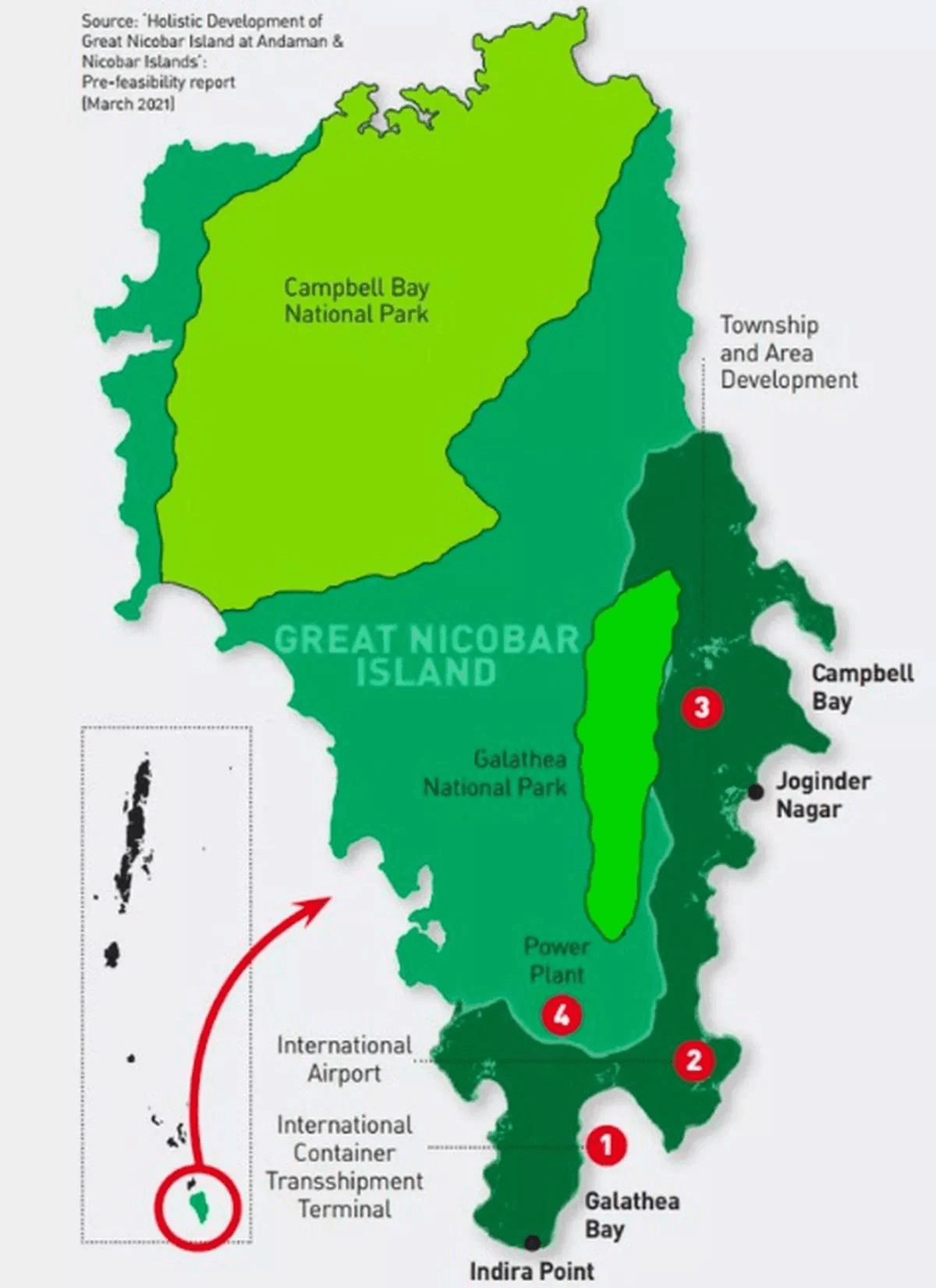
12.Great Nicobar Mega Project Concerns

The Hindu
Illustration for Great Nicobar Mega Project Concerns

What & Where

Great Nicobar Island Project (GNIP): 2021 mega-infrastructure plan on Great Nicobar Island, Andaman & Nicobar UT.

Core components: International Container Transshipment Terminal, greenfield airport, gas-based power plant, township, tourism hub.

Site: Galathea, Pemmaya, Nanjappa Bays near Indira Point; south of 10° Channel in Bay of Bengal.

Quick Facts for MCQs

Security Dimension

  • Location enables surveillance over Malacca, Sunda, Lombok Straits enhancing QUAD-aligned Indo-Pacific posture.
  • Planned airport allows quicker tri-service deployment, tracking of PLA Navy movements.

Economic Angle

  • ICTT targets import-export transshipment, cutting reliance on Singapore, Colombo.
  • Project dovetails with Maritime India Vision 2030 and Amrit Kaal Vision 2047 growth targets.

Environmental Impact

  • Proposal seeks diversion of primary rainforest inside biosphere reserve territory.
  • Island hosts endemic fauna within two national parks and UNESCO-listed biosphere reserve.

Social Concerns

  • Nicobar Tribal Council alleges FRA processes never initiated; refuses ancestral land surrender.
  • Shompen, Nicobarese communities risk displacement from traditional bays post-2004 tsunami.

Key Data Points

FeatureData-Point
Estimated cost₹92,000 crore
Launch year2021
Conceptualised byNITI Aayog
Executing agencyANIIDCO
Key maritime choke-point nearbyMalacca Strait
Island’s national parksCampbell Bay, Galathea
Southernmost Indian pointIndira Point
Islands in A&N group836
Channel separating two groups10° Channel (≈150 km wide)
GS-3Species

13.Indian Peacock Distribution and Status

Times of India

What & Where

Peafowl: large, colourful pheasant‐family birds; male = peacock, female = peahen, young = peachick.

Normal range: warm Indian plains/low hills; altitude usually ≤1,000 m, rarely 1,500 m.

New record: pair observed ~1,800 m (6,000 ft) near Manali, Himachal Pradesh.

Quick Facts for MCQs

Habitat & Distribution

  • AltitudinalShift: Himalayan record shows expansion beyond customary ecological envelope.
  • HabitatChoice: Ground foraging; night roosting on trees across forests, farms, grasslands.
  • TemperatureSensitivity: Warmer microclimates enabling higher-elevation occupancy.

Species Traits

  • SexualDimorphism: Only males sport ornate trains; both sexes have strong legs, short wings.
  • SocialSystem: Males maintain harems during breeding season; flocking common.
  • EcosystemRole: Pest predation benefits agriculture.

Climate Signal

  • IndicatorSpecies: Upslope movement viewed as response to regional climate warming.
  • BiodiversityShift: Similar range adjustments expected for other thermophilic lowland birds.
  • HumanConflictRisk: New overlap with hill agriculture may raise crop-damage incidents.

Key Data Points

FeatureData-Point
Taxonomic familyPhasianidae
National bird of IndiaIndian/Blue Peacock (Pavo cristatus)
Typical altitude limit≤1,000 m (occasional 1,500 m)
Himachal sighting altitude~1,800 m (6,000 ft)
Indian/Blue Peacock IUCNLeast Concern
Green/Javanese Peacock IUCNEndangered
Congo Peacock IUCNVulnerable
Preferred habitatsSemi-arid to moist deciduous forests, grasslands, croplands
DietOmnivorous: seeds, insects, small reptiles
Courtship featureMale’s long iridescent train with eye-spots
GS-3EnvironmentQuick Bite

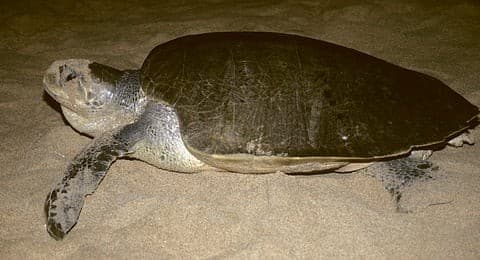
14.Turtle Trail Eco-Tourism Initiative

Down to Earth
Illustration for Turtle Trail Eco-Tourism Initiative

What & Where

Turtle trails: regulated eco-tourism pathways guiding visitors near Olive Ridley nesting beaches.

Geography: Odisha (Rushikulya, Gahirmatha), Karnataka coast, Kerala Arabian Sea stretches.

Timing: Access typically during breeding season for awareness and minimal disturbance.

Quick Facts for MCQs

Legal & Policy

  • Budget provision positions trails under Centre’s eco-tourism push, enabling state-level guidelines.
  • Must comply with Wildlife (Protection) Act coastal nesting safeguards.
  • Aligns with Blue Economy & Responsible Tourism frameworks.

Conservation Impact

  • Regulated visitor flow reduces nest trampling, light & noise disturbance.
  • Awareness drives can boost citizen reporting of illegal egg harvests.
  • Scientific monitoring possible through guided group timings.

Livelihood & Tourism

  • Guided tours create seasonal jobs for coastal youth & fishers.
  • Diversifies income beyond fishing, reducing dependence on turtle-interaction activities.
  • Branding as niche eco-tourism may lengthen tourist season in off-peak months.

Key Data Points

FeatureData-Point
Announced inUnion Budget 2026-27
Target speciesOlive Ridley sea turtle (IUCN: Vulnerable)
Participating statesOdisha, Karnataka, Kerala
Odisha focal sitesRushikulya (Ganjam), Gahirmatha vicinity (Kendrapara)
Core objectivesConservation education, controlled tourism, coastal livelihoods
Infrastructure typeLow-impact walkways / observation zones (proposed)
Key stakeholdersLocal fishers, NGOs, volunteers, forest & tourism depts

Related UPSC Prelims PYQs

NDA_GAT 2021PYQ 1

Operation Olivia, an initiative to protect Olive Ridley turtles, is undertaken by

GS-3Security

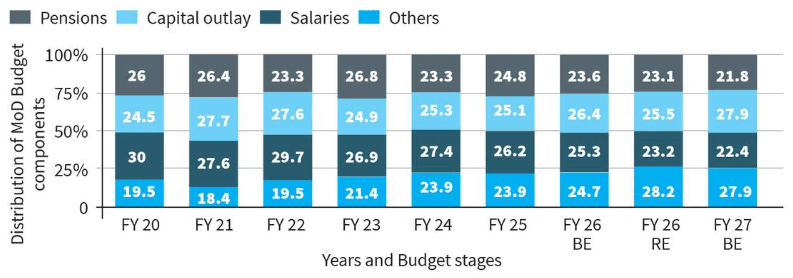
15.Record Defence Capital Allocation 2026-27

The Hindu
Illustration for Record Defence Capital Allocation 2026-27

What & Where

Capital outlay: budget segment for new platforms & modernisation, distinct from salaries/pensions.

FY 2026-27 defence allocation targets gaps revealed by May 2025 Operation Sindoor conflict.

Strategic focus: Line of Actual Control, Indian Ocean Region, high-altitude border infrastructure.

Quick Facts for MCQs

Budget Allocations

  • Modernisation: capital acquisition up 22 %, pivoting from manpower to tech-centric force.
  • Customs duty waived on aircraft raw materials to spur domestic MRO ecosystem.
  • Agnipath scheme funding enlarged 51 % for lean, tech-savvy manpower model.

Drivers of Increase

  • Replenishment: precision-guided munitions stock exhausted during Operation Sindoor.
  • Two-front threat: simultaneous deterrence against China and Pakistan necessitates air & land upgrades.
  • Maritime security: Project 75(I) submarines to counter extra-regional navies in IOR.

Structural Issues

  • Pension burden: ₹1.71 lakh crore rivals capital budget, constraining modernisation pace.
  • Import dependency: aero-engines, MRFA jets still rely on foreign OEMs.
  • Absorption limits: delayed trials often leave capital funds unspent.

Reform Path

  • Emergency procurement: institutionalise fast-track buys used in crises.
  • Theatre commands: surge funding for Joint Staff to improve inter-service synergy.
  • IP ownership: target 50 % contracts with indigenous intellectual property to boost exports.

Key Data Points

FeatureData-Point
Total MoD outlay FY 26-27₹7.85 lakh crore
Capital outlay amount₹2,19,306 crore
Capital outlay YoY rise8 %
Share kept for domestic industry75 % (₹1.39 lakh crore)
BRO allocation₹7,394 crore
DRDO allocation₹29,100 crore
Budget as % of GDP1.99 %

Related UPSC Prelims PYQs

CAPF_GAI 2025PYQ 1

केंद्रीय बजट, 2025-26 में व्यय की निम्नलिखित में से किस मद को उच्चतम आवंटन प्राप्त हुआ?

CAPF_GAI 2023PYQ 2

केंद्रीय बजट 2022-23 में राजस्व व्यय का सबसे बड़ा घटक निम्नलिखित में से कौन-सा है?

GS-3SecurityQuick Bite

16.CERT-In Role and Functions

PIB

What & Where

CERT-In: national cyber-incident response agency, Ministry of Electronics & IT, established under Information Technology Act 2000.

Tasks span prevention, monitoring, mitigation of phishing, ransomware, AI-enabled scams, critical infrastructure attacks across India.

HQ: New Delhi; operates sectoral & state CSIRTs, e.g., CSIRT-Fin (BFSI), CSIRT-Power.

Quick Facts for MCQs

Functional Scope

  • Monitoring; early-warning; real-time response to phishing, ransomware, online fraud, AI-driven exploits.
  • Capacity-building; advisories; incident coordination with government, private and citizen stakeholders.
  • Sector resilience via CSIRTs ensuring BFSI, power grid continuity.

Institutional Tools

  • Cyber Swachhta Kendra: botnet cleaning & malware analysis service.
  • National Cyber Coordination Centre: real-time situational awareness & traffic analytics.
  • Cyber Crisis Management Plan: predefined protocols for large-scale incidents.

Global Recognition

  • WEF cites CERT-In as model for emerging economy cyber resilience.
  • Oxford research lists agency among top national CERT performers.
  • France’s ANSSI acknowledges collaboration and best-practice sharing.

Key Data Points

FeatureData-Point
Parent ministryMeitY
Statutory basisInformation Technology Act 2000 (Sec 70B)
Sector-specific CSIRTsCSIRT-Fin, CSIRT-Power
Key frameworks hostedCyber Swachhta Kendra, NCCC, Cyber Crisis Management Plan
2025 focusSecuring rapidly expanding digital ecosystem amid rising cyber threats
International recognitionWorld Economic Forum, University of Oxford, France’s ANSSI

Related UPSC Prelims PYQs

CAPF_GAI, GS1 2022PYQ 1

भारतीय कंप्यूटर आपातकालीन प्रतिक्रिया दल (CERT-In) द्वारा जारी किए गए नवीनतम दिशानिर्देशों के संदर्भ में निम्नलिखित कथनों पर विचार कीजिए:

CAPF_GAI, GS1 2017PYQ 2

In India, it is legally mandatory for which of the following to report on cyber security incidents?

Ready to practice?

Test your knowledge with our UPSC test series.

Start Free Trial