UPSC Current Affairs

14 topicsGS-1: 4GS-2: 6GS-3: 4
0/14 done
GS-2Editorial

1.Daily Current Affairs Compilation 30 December 2025 (Daily Compilation)

Indian Express
Illustration for Daily Current Affairs Compilation 30 December 2025 (Daily Compilation)

What & Where

Aravalli Hills: Precambrian range stretching Gujarat-Rajasthan-Haryana-Delhi; key for NCR groundwater & climate moderation.

Dispute: Union’s 100 m-elevation yardstick for “hill”; SC stay (Dec 2025) revives earlier function-based eco protection.

Geography tag: Part of Northern Indian Shield, trend SW–NE, highest Guru Shikhar (1,722 m).

Quick Facts for MCQs

Legal & Policy

  • Precautionary principle, Art 21 & public-trust cited to block mining dilution.
  • DAC clears ₹79,000 cr AoNs; stresses Buy(Indian) / Make for self-reliance.
  • Deposit insurance shifting to risk-based premium (cap: 12 paise/₹100).

Banking & Economy

  • Credit & deposits growing >12 %; CRAR >16 % offers strong shock buffer.
  • 514 districts fully digital; 64 lenders live on Unified Lending Interface.
  • Rising loan/card complaints highlight consumer-protection deficit.

Defence & Tech

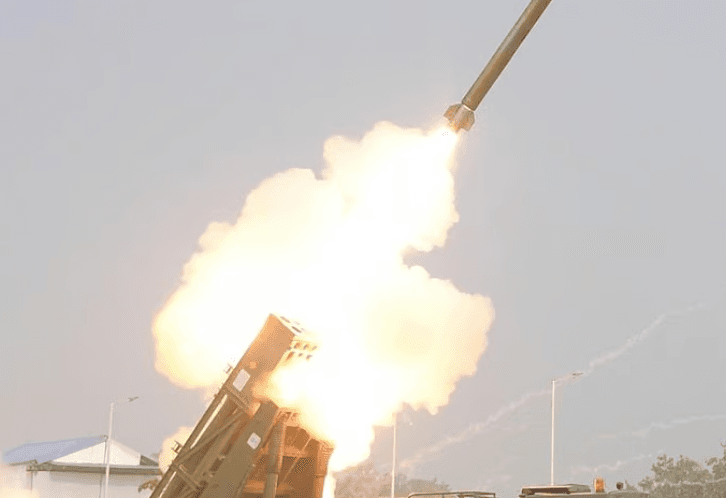
  • Pinaka LRGR-120 adds 120 km precision fire from existing launchers.
  • FREE-AI framework sets fairness, explainability rails for banking AI use.
  • Indigenous acquisition push aligns with Aatmanirbhar Bharat goals.

Environment & Conservation

  • Glacier extinction may peak 2041-55; +4 °C path → ~4,000 glaciers vanish annually.
  • 31 Aravalli hills already lost to quarrying; SC insists on slope-buffer mapping.
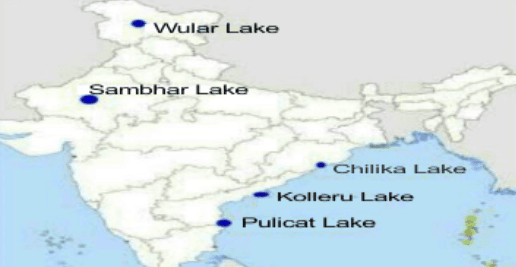
  • Kolleru Lake buffers Krishna-Godavari floods; hosts 20 mn birds.

Culture & Heritage

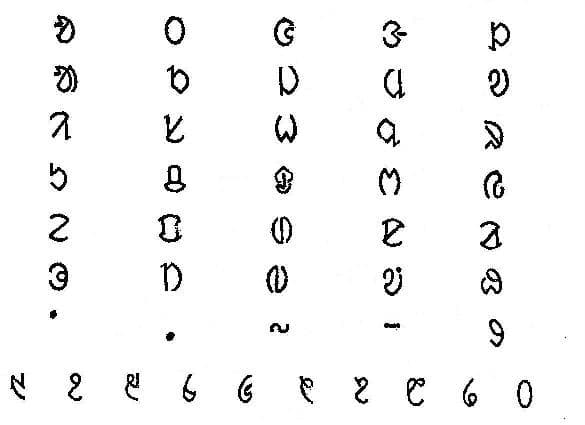
  • Ol Chiki script (1925) gave Santali written form; language added to 8th Schedule 2003.
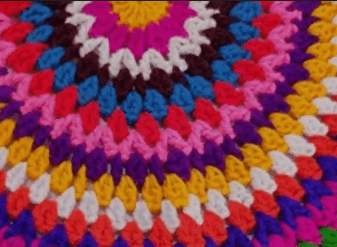
  • 1844-origin Narsapuram crochet lace anchors women-led rural incomes.
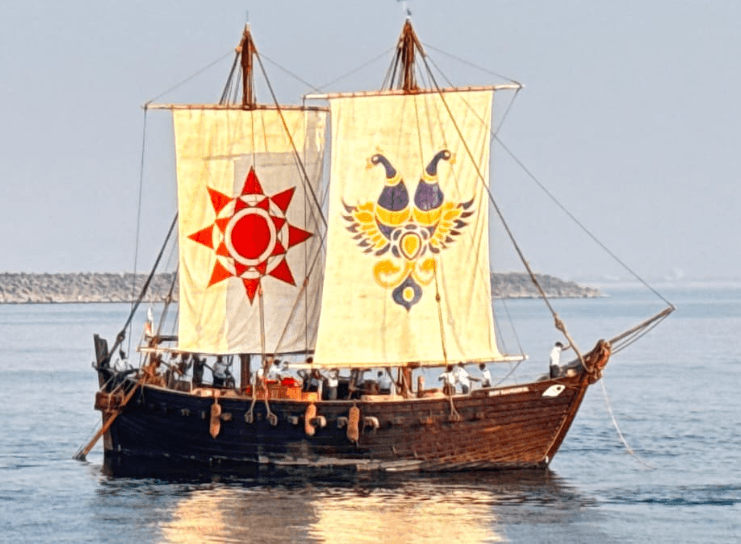
  • INSV Kaundinya retraces Porbandar-Muscat, reviving stitched-ship maritime lore.

Key Data Points

FeatureData-Point
SC stay issued29 Dec 2025
Height test challenged≥100 m local relief
GNPA ratio (SCBs, ’24-25)≈2.1 %
RBI FI Index 202567.0
Pinaka LRGR-120 strike range120 km
INSV Kaundinya build methodCoir-stitched wooden planks
Narsapuram Lace GI stateAndhra Pradesh
Kolleru Lake Ramsar year2002

Related UPSC Prelims PYQs

CDS_GK 2021PYQ 1

Which one of the following is correct about ‘Pinaka’?
GS-2Polity

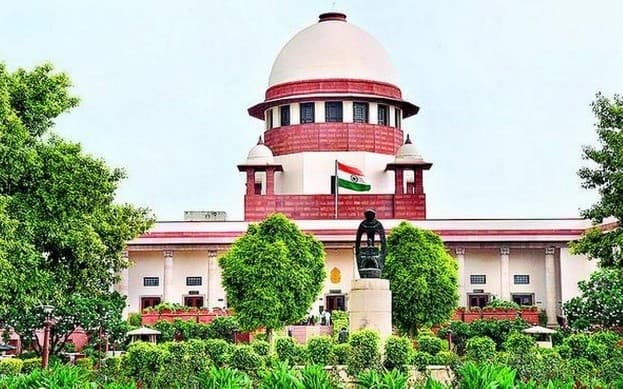
2.Supreme Court Stays Aravalli Height Criterion (Supreme Court Stay)

Indian Express
Illustration for Supreme Court Stays Aravalli Height Criterion (Supreme Court Stay)

What & Where

Aravalli Range: 700 km ancient fold mountains across Rajasthan, Haryana, Delhi, Gujarat.

Dispute: Union sought ≥100 m local relief as hill definition; SC’s 20 Nov 2023 order accepted, 10 Jan 2024 stay paused it.

Status quo ante: Earlier function-based safeguards (slope ≥3°, ridge-buffer mapping) temporarily restored; mining expansion halted.

Quick Facts for MCQs

Legal & Policy

  • Stay revives broader “forest” interpretation from Godavarman, overrides Union’s narrow hill metric.
  • States may impose stricter local safeguards; federal flexibility intact.
  • Court demands science-led statutory criteria under Environment (Protection) Act 1986.

Environmental Impact

  • Low-relief pediments crucial for groundwater recharge; risked exclusion under 100 m rule.
  • 2018 CEC: illegal mining erased 24 % of mapped hills.
  • Ridge protection order (2023) barred tree felling, reinforced morphological approach.

Constitutional Angle

  • Right to healthy environment under Art 21 cited; dilution deemed potential rights breach.
  • Precautionary principle: burden on polluter to prove safety in fragile zones.
  • Public trust doctrine: State trustee role prohibits resource commodification.

Key Data Points

FeatureData-Point
Contested criterion≥100 m elevation above surrounding land
Stayed judgment date20 Nov 2023
Stay order date10 Jan 2024
Key PIL chainsGodavarman (1995-), M.C. Mehta (1985-)
Earlier SC mapping order2010, FSI to apply slope + buffer
Vanished hills flagged31 of 128 (CEC, 2018)
Key constitutional articles14, 21, 48A, 51A(g)
Precautionary principle caseVellore Citizens’ Welfare Forum 1996
Public trust doctrine caseM.C. Mehta v. Kamal Nath 1997
GS-2Polity

3.Viksit Bharat Shiksha Adhishthan Higher Education Bill (Higher Education Bill)

Indian Express

What & Where

Definition: VBSA Bill 2025 proposes a single, tech-driven regulator for India’s entire higher-education ecosystem.

Key processes: Splits functions into three councils—Regulation (Viniyaman), Standards (Manak), Accreditation (Gunvatta)—under one apex Adhishthan.

Jurisdiction: Pan-India law under Union List Entry 66; subsumes UGC 1956, AICTE 1987, NCTE 1993.

Quick Facts for MCQs

Legal & Policy

  • Repeal: Bill eliminates fragmented statutes, creating unified authority with rule-making via digital portal.
  • Oversight: Joint Parliamentary Committee reviewing provisions before enactment.
  • Autonomy: Mandates trust-based self-disclosure instead of prior approvals.

Institutional Changes

  • Council roles: Manak sets minimum academic norms; Viniyaman enforces; Gunvatta accredits.
  • CoA status: Council of Architecture converted into Professional Standard-Setting Body.
  • Single-window: Interactive online system to cut compliance burden.

Systemic Challenges

  • Enrollment: India ranks 129/146 in tertiary enrolment (WEF 2024).
  • Employability: Only 10 Indian universities in top 250 global employability ranking 2025.
  • Curriculum: <5 % students exposed to AI/data-science syllabi.

Reform Measures

  • MEME: Multiple Entry-Exit implemented in 153 universities (entry) & 74 (exit).
  • Funding: Proposal to raise R&D spend to 2 % of GDP via National Research Foundation.
  • Internationalisation: GIFT-City route for world-class foreign universities, plus SPARC-led joint degrees.

Key Data Points

FeatureData-Point
Bill introducedWinter Session, Lok Sabha 2025
Constitutional basisEntry 66, Union List
Apex bodyViksit Bharat Shiksha Adhishthan
Specialised councils3 (Regulation, Standards, Accreditation)
Acts repealedUGC 1956, AICTE 1987, NCTE 1993
Current GER~28 % (lowest in G-20)
Target under NEP50 % vocational exposure by 2025
R&D spend~0.7 % of GDP
IIT faculty vacancy~40 %
India rank, Global Innovation Index 202538

Related UPSC Prelims PYQs

ESE_GS, GEO_GS 2021PYQ 1

Which one of the following statements is NOT correct regarding the National Education Policy 2020 in India ?

ESE_GS, GEO_GS 2023PYQ 2

What is Academic Bank of Credit (ABC) as per the National Education Policy (NEP), 2020?

GS-3Economy

4.RBI Trend and Progress of Banking 2024-25 (Banking Report)

LiveMint

What & Where

RBI’s annual “Trend & Progress of Banking in India” report; statutory review of banks/NBFCs’ health, risks, oversight

Tracks balance-sheet growth, asset quality, capital, tech adoption, payments, inclusion for FY 2024-25

Pan-India coverage; spotlights 514 digitally-enabled districts and rising Financial Inclusion Index

Quick Facts for MCQs

Economic Angle

  • Credit: Double-digit expansion led by industry, MSME, housing, services
  • Deposits: ~12 % growth signals sustained public trust in banks
  • Capital: CRAR >16 % gives strong shock-absorption capacity

Tech & Schemes

  • PRAVAAH portal: centralised digital window for all regulatory applications
  • ULI: 136+ data APIs across 12 loan journeys for faster, safer lending
  • Digital districts: at least one e-payment option for every eligible resident

Risk & Regulation

  • Risk-based deposit insurance to replace flat premium, incentivising prudence
  • Complaints rising in loans, cards, digital channels; stronger ombudsman urged
  • Cyber & AI risks flagged; RBI demands explainability, bias testing, continuous monitoring

Financial Inclusion

  • FI Index 67.0 reflects wider access to accounts, credit, insurance, payments
  • Inclusion push via district-level digital enablement and targeted literacy drives
  • Quality gap: low literacy, language barriers may still limit effective usage

Key Data Points

FeatureData-Point
Report frequencyAnnual
SCB GNPA ratio (FY24)~2.1 % (multi-decadal low)
SCB credit growth~14–16 % YoY
CRAR of SCBs>16 % (Basel III min 11.5 %)
Deposit growth rate~12–13 % YoY
RBI Financial Inclusion Index 202367.0 (from 43.4)
Digitally enabled districts514
Lenders on Unified Lending Interface64 (41 banks, 23 NBFCs)
Deposit-insurance premium ceiling12 paise per ₹100 deposits

Related UPSC Prelims PYQs

ESE_GS, GS1 2022PYQ 1

Which one of the following is NOT important initiatives under EASE 4.0?

ESE_GS, GS1 2010PYQ 2

With reference to India, consider the following :

GS-1History

5.Santhali Tribal Language and Ol Chiki Script (Tribal Language)

PIB
Illustration for Santhali Tribal Language and Ol Chiki Script (Tribal Language)

What & Where

Santhali language — tribal tongue of Santhal community, Munda branch, Austroasiatic family

Core geography — Jharkhand, Odisha, West Bengal, Bihar; pockets in Nepal & Bangladesh

Script — Ol Chiki invented 1925 by Pandit Raghunath Murmu, giving first written form

Quick Facts for MCQs

Historical Evolution

  • Pre-1925 transmission oral; Murmu’s Ol Chiki enabled textbooks, newspapers
  • 2003 schedule inclusion ensured governmental patronage, official exams & broadcasting
  • Centenary celebrations 2025 flagged by President, highlighting literary revival

Linguistic Features

  • Phonetic script letters map one-to-one with Santhali sounds, avoiding borrowed scripts
  • Word-building via suffix chains marks tense, number, case; minimal gender inflection
  • Shares lexicon & grammar traits with Ho and Mundari languages

Cultural Significance

  • Language-script act as symbols of tribal self-respect and socio-political cohesion
  • Folk songs encode community history, ecological knowledge, ethical codes
  • Annual Santali Language Day boosts youth engagement in theatre, publications

Key Data Points

FeatureData-Point
Language familyAustroasiatic (Munda)
Script nameOl Chiki
Script inventorPandit Raghunath Murmu
Year script created1925
Constitutional status8th Schedule, 92nd Amendment Act 2003
Estimated Indian speakers≈ 7 million
Dominant statesJ’khand, Odisha, W. Bengal, Bihar
Structure typeAgglutinative
Tonal elementsPresent
Pre-script traditionOral songs, folklore
GS-1History

6.Narsapuram Crochet Lace GI Craft (GI Handicraft)

DC
Illustration for Narsapuram Crochet Lace GI Craft (GI Handicraft)

What & Where

Handmade crochet-lace tradition transforming fine threads into intricate textiles with a single hook.

Core clusters: Narsapur, Palacole, Razole, Amalapuram in West Godavari & Dr. B.R. Ambedkar Konaseema, Andhra Pradesh.

Holds GI tag; showcased by PM as women-led livelihood model.

Quick Facts for MCQs

Historical Context

  • Introduction 1844 ensured alternate income during colonial famines and depressions.
  • Survival through economic shocks built intergenerational artisan base.

Technical Features

  • Looping–interlocking stitches create varied lace densities sans machinery.
  • Hook size variation adjusts texture, weight, pattern clarity.

Economic Angle

  • Regular income to thousands positions women as primary household earners.
  • GI tag revival boosting national, export demand, raising unit prices.

Cultural Significance

  • Pattern inspirations from local flora sustain regional aesthetic identity.
  • Craft continuity preserves indigenous textile knowledge within Godavari communities.

Key Data Points

FeatureData-Point
Craft origin teachingEuropean missionaries, 1844
GI Tag coverageNarsapuram Lace Craft
Main toolVarying-size crochet hooks
Prime raw fibreFine cotton thread
Add-on yarnsSilk, rayon, synthetics
Common motifsFloral, paisley, geometric
Key productsGarments, doilies, bedspreads, table linen, stoles
Dominant workforceHome-based women artisans
Major marketsDomestic & export
Region riversideGodavari delta
GS-1History

7.INSV Kaundinya Ancient Stitched Ship Replica (Stitched Ship)

PIB
Illustration for INSV Kaundinya Ancient Stitched Ship Replica (Stitched Ship)

What & Where

INSV Kaundinya: stitched-wooden sailing vessel recreating a 5th-century CE Indian ocean-going ship.

Route: maiden voyage Porbandar (Gujarat) → Muscat (Oman), mirroring historic India–West Asia sea lanes in the Indian Ocean.

Technique: indigenous “stitched-ship” method—planks lashed with coconut-coir rope, sealed by natural resins; once common on Indian coasts.

Quick Facts for MCQs

Tech & Schemes

  • Stitched-ship revival under Ministry-of-Culture facilitated “living heritage” demonstration of traditional naval architecture.
  • Flexibility provided by coir lashings absorbs wave shocks, boosting durability on high seas.
  • Vessel sea-worthiness validated through Indian Navy trials before international sail-out.

Cultural Heritage

  • Design draws directly from Ajanta murals, projecting India’s classical maritime prowess.
  • On-deck artefacts and motifs serve floating museum purpose during port calls.
  • Project aligns with government narrative of reviving indigenous knowledge systems.

Maritime Connectivity

  • Voyage commemorates historic India–Arabia trade circuits predating common-era era.
  • Demonstrates contemporary soft-power outreach via heritage vessels in Indian Ocean Region.
  • Highlights India’s seamless nautical linkage to West Asia, Africa, Southeast Asia centuries ago.

Key Data Points

FeatureData-Point
BuilderIndian Navy + Ministry of Culture
Hull methodWooden planks stitched, zero metal fastenings
Core materialCoconut coir rope, natural resin, timber
Symbolic motifsGandabherunda & Sun on sails; Simha Yali on bow
Historic model sourceAjanta Cave paintings (5th century CE)
Anchor styleHarappan stone pattern
NamesakeLegendary mariner Kaundinya, early SE-Asia links
Launch portPorbandar, Gujarat
DestinationMuscat, Oman
Prime Minister’s remark“Retraces ancient maritime routes”
Ocean capabilityFully seaworthy; tested for long-distance navigation

Related UPSC Prelims PYQs

CAPF_GAI, CDS_GK 2023PYQ 1

Which one of the following Indian Naval Ships has recently concluded a 17,000-nm trans-ocean intercontinental voyage?

CAPF_GAI, CDS_GK 2024PYQ 2

Which one of the following statements about 'INS Tarmugli' is not correct?

GS-1History

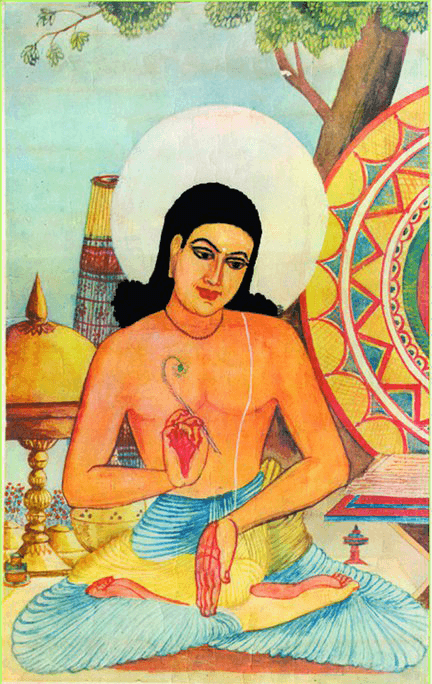
8.Srimanta Sankardeva Neo-Vaishnava Bhakti Reformer (Bhakti Saint)

The Hindu
Illustration for Srimanta Sankardeva Neo-Vaishnava Bhakti Reformer (Bhakti Saint)

What & Where

Srimanta Sankardeva (1449-1568): 15-16 c. Bhakti saint; spearheaded Eka-Sarana Neo-Vaishnavism in Assam.

Key processes: singular refuge in Krishna, public sravana-kirtana, creation of Namghar & Satra for egalitarian worship.

Core geography: Batadrava Than, Nagaon district; movement spread across Brahmaputra Valley, Assam, NE India.

Quick Facts for MCQs

Philosophy & Practice

  • Principle: Ekasarana—exclusive surrender to Krishna, rejection of poly-idol worship.
  • Emphasis: Dasya-bhava servitude, universal brotherhood cutting across caste-tribe lines.
  • Tools: Oral kirtan, translated Bhagavata to democratise scripture access.

Institutions & Social Reform

  • Namghar: open prayer hall enabling caste-neutral congregations, local dispute resolution hub.
  • Satra: monastic centre nurturing arts, discipline, community farming, manuscript copying.
  • Impact: Cemented Assamese identity, fostered social mobility among tribal converts.

Literature

  • Innovation: Bhatima verse for guru praise; early works include Hari-chandra-Upakhyana.
  • Kirtana-Ghosha: daily-sung scripture; one of four sacred Assamese Vaishnava texts.
  • Translation: Rendered 8/12 Bhagavata Purana books into Brajavali.

Performing Arts

  • Sattriya: codified dance with nritta-nritya elements, recognised as classical in 2000.
  • Ankiya Naat: one-act play blending Sanskrit dramaturgy, indigenous motifs; language Brajavali.
  • Borgeet: raga-tala–based hymns accompanied by khol, taal; still central in Naam-Kirtan.

Key Data Points

FeatureData-Point
BirthplaceBatadrava Than, Nagaon, Assam
Year of birthOctober 1449
Year of death1568
Pilgrimage year1481 to Badrinath
Movement nameEka-Sarana-Nama-Dharma / Neo-Vaishnavism
Sole deityVishnu as Krishna
Bhakti forms stressedSravana & Kirtana
Core textsKirtana-Ghosha, Gunamala
Language usedBrajavali dialect
One-night compositionGunamala (6 kirtans)
Institutions foundedNamghar (prayer hall), Satra (monastery)
Estimated Borgeets≈ 240 devotional songs
Classical dance evolvedSattriya
Theatre formAnkiya Naat; enacted as Bhaona
Social aimUnite multi-ethnic Assam via egalitarian worship

Related UPSC Prelims PYQs

CDS_GK, GEO_GS 2023PYQ 1

Which of the following statements about the Vaishnava saint of Assam, Shankardeva, is/are correct?

CDS_GK, GEO_GS 2024PYQ 2

Who among the following is the writer of the Kirtana-Ghosha?

GS-3Mapping

9.Kolleru Lake Ramsar Wetland (Ramsar Wetland)

ETV
Illustration for Kolleru Lake Ramsar Wetland (Ramsar Wetland)

What & Where

Freshwater lake; inter-deltaic wetland between Krishna & Godavari deltas, Andhra Pradesh

Spreads across Krishna & West Godavari districts; shallow, nutrient-rich basin

Functions as natural flood-balancing reservoir and major bird–fish habitat

Quick Facts for MCQs

Ecological Status

  • Ramsar: Internationally important wetland supporting pelicans, storks, ibises
  • Sanctuary: Protects critical wintering ground on Central Asian–Flyway
  • Biodiversity: Aquatic vegetation sustains multi-trophic food web

Hydrological Role

  • Flood-buffer: Absorbs surplus monsoon flows, lowering coastal flood peaks
  • Groundwater recharge: Alluvial sediments enhance subsurface storage
  • Shallow spread: Large surface area aids sediment trapping and nutrient cycling

Economic Angle

  • Fisheries: Nutrient-rich waters yield high fish productivity for local livelihoods
  • Black dried fish: Emerging export commodity benefiting hundreds of lake-side families
  • Eco-tourism: Bird-watching potential adds supplementary income opportunities

Key Data Points

FeatureData-Point
StateAndhra Pradesh
DistrictsKrishna, West Godavari
Main rivers flankingKrishna delta (south), Godavari delta (north)
Feed sourcesSeasonal streams, irrigation canals, drainage channels
Ramsar designation year2002
Wildlife Sanctuary notification1999
Resident + migratory birds≈ 20 million
Fish diversity≈ 90 species

Related UPSC Prelims PYQs

GEO_GS 2026PYQ 1

According to the Ramsar Convention, which one of the following lakes is protected as waterfowl habitat?

GEO_GS 2024PYQ 2

Which of the following pairs is/are not correctly matched?

GS-3S&T

10.Pinaka LRGR-120 Precision Guided Rocket (Guided Rocket)

New Indian Express
Illustration for Pinaka LRGR-120 Precision Guided Rocket (Guided Rocket)

What & Where

Pinaka LRGR-120: indigenous, precision-guided rocket variant of Pinaka multi-barrel system

Developed by DRDO’s ARDE & HEMRL; maiden flight at ITR Chandipur, Odisha

Intended for long-range, high-accuracy strikes with minimal collateral damage

Quick Facts for MCQs

Tech & Schemes

  • Extended-range motor and guidance convert unguided Pinaka rockets into quasi-missile capability
  • In-flight manoeuvre proofs ensure accuracy despite longer flight time
  • Compatibility retains existing Pinaka logistics, easing induction

Security Dimension

  • Force-multiplier enhancing Indian Army deep-strike envelope beyond 100 km
  • Precision impact cuts collateral damage, key for near-built-up targets
  • Indigenous origin reduces foreign dependence, boosts strategic autonomy

Operational Edge

  • Same launcher can fire legacy, guided and future Pinaka variants interchangeably
  • No new launch infrastructure lowers cost, speeds battlefield deployment
  • Multi-variant flexibility aids mixed salvos against diverse target sets

Key Data Points

FeatureData-Point
Maximum range120 km
GuidancePrecision navigation & control kit
DevelopersARDE + HEMRL, DRDO
Launch platformIn-service Pinaka launcher
Test locationITR Chandipur, Odisha
ManoeuvrabilityPlanned in-flight manoeuvres validated
Primary roleLong-range precision firepower
Indigenous content100 % design & development in India

Related UPSC Prelims PYQs

CDS_GK 2021PYQ 1

Which one of the following is correct about ‘Pinaka’?
GS-2MiscQuick Bite

11.UN OCHA Humanitarian Coordination Office Overview (UN Humanitarian Body)

DD News

What & Where

UN OCHA: 1991 GA-mandated hub coordinating global humanitarian response via OSOCC, CERF & CBPFs.

New US umbrella fund: channels a trimmed $2 bn pledge through OCHA to 17 crisis-hit states.

Geographic carve-out: Afghanistan & Yemen excluded over diversion fears; focus on Bangladesh, Haiti, Syria, Ukraine, DRC, etc.

Quick Facts for MCQs

Funding & Burden Sharing

  • Reduction: $2 bn pledge nudges other developed nations to shoulder more.
  • Central umbrella model preserves US top-donor rank amid overall foreign-aid cuts.

Oversight & Accountability

  • Contributions tied to UN agency reforms and tighter audits.
  • Exclusions act as leverage to curb suspected aid diversion.

Operational Mechanisms

  • CERF offers rapid global funding; CBPFs tailor resources country-wise.
  • OSOCC activates immediate coordination during sudden-onset emergencies.

Country Coverage

  • 17 focus states span Asia, Caribbean, MENA, Europe, Africa.
  • Named: Bangladesh, Haiti, Syria, Ukraine, DRC; absent: Afghanistan, Yemen.

Key Data Points

FeatureData-Point
US FY 2025 humanitarian pledge$2 billion
Peak historic US aidUp to $17 billion/year
Fund channelUN OCHA umbrella fund
OCHA creation year1991 (replacing UNDRO)
Key pooled fundsCERF; Country-Based Pooled Funds
Field coordination toolOn-Site Operations Coordination Centres
Initial target crises17 countries
Excluded crisesAfghanistan; Yemen
US stated aimsBurden-sharing; stronger oversight
Largest donor statusMaintained despite cut
GS-2EconomyQuick Bite

12.Australia Removes Tariffs on Indian Exports (Ind-Aus ECTA)

The Hindu

What & Where

India-Australia Economic Cooperation and Trade Agreement (Ind-Aus ECTA) = early-harvest bilateral FTA between New Delhi & Canberra

Operational since December 2022; covers goods, services, investment; pathway to comprehensive CECA

From 1 Jan 2026 Australia grants 100 % duty-free access to all Indian exports

Quick Facts for MCQs

Economic Angle

  • Export surge across manufacturing, chemicals, textiles, plastics, pharma, petroleum, gems & jewellery
  • Improved trade balance tilts favourably for India post-ECTA
  • Wider market access projected to deepen bilateral trade volumes

Sectoral Benefits

  • Agriculture: sharp rises in fruits, vegetables, marine products, spices, coffee
  • Labour-intensive MSMEs gain via zero tariffs, boosting employment and rural incomes
  • Supply-chain resilience strengthened through diversified Australian sourcing & markets

Strategic Significance

  • Agreement anchors India’s Indo-Pacific economic integration agenda
  • Serves as bridge toward full-scale Comprehensive Economic Cooperation Agreement
  • Strengthens bilateral partnership amid evolving global trade dynamics

Key Data Points

FeatureData-Point
In-force sinceDecember 2022
Full tariff-free start1 January 2026
Export growth 2024-258 % YoY rise to Australia
Successor pact under talkIndia-Australia CECA
Fastest-growing agri itemCoffee exports

Related UPSC Prelims PYQs

CAPF_GAI, CDS_GK 2024PYQ 1

If India enters into Free Trade Agreements (FTAs) with other nations, then the growth of exports of India would depend upon which of the following?

CAPF_GAI, CDS_GK 2022PYQ 2

Recently, with which one of the following countries did India sign the 'Comprehensive Economic Partnership Agreement'?

GS-3Security

13.Defence Acquisition Council Capital Procurement Body (Procurement Body)

Economic Times

What & Where

Apex decision body for capital defence procurements, grants Acceptance of Necessity to projects

Functions under Ministry of Defence; covers Army, Navy, Air Force requirements

Latest sitting cleared ₹79,000-crore proposals to enhance operational capability

Quick Facts for MCQs

Legal & Policy

  • Originates from Group of Ministers recommendation on National Security System overhaul post-Kargil
  • Ensures alignment of operational needs, financial prudence, indigenous production under Defence Procurement Procedure
  • Reviews policy issues, resolves inter-service or ministry coordination bottlenecks

Organisational Setup

  • Chaired by Defence Minister; includes political, military, bureaucratic leadership for holistic decisions
  • Supported by Defence Procurement Board for progress feedback on major programmes
  • Meets periodically providing faster clearances than earlier multi-layered processes

Procurement Workflow

  • Approves 15-year Long Term Perspective Plan, screens projects with long gestation periods
  • Categorises cases as Buy, Buy & Make, Make, guiding indigenous content levels
  • Monitors flagship programmes ensuring timely milestones, cost adherence

Indigenisation & Atmanirbhar

  • Categorisation encourages Indian industry participation, tech transfer, R&D spin-offs
  • Supports Atmanirbhar Bharat objective, reducing import dependence for critical platforms
  • Capital approvals linked to Make-I/II schemes, fostering domestic prototypes

Key Data Points

FeatureData-Point
ChairpersonRaksha Mantri
Set-up onGoM reforms post-Kargil
Member secretaryDy CDS (PP&FD)
Other membersRaksha Rajya Mantri, CDS, three Service Chiefs
Core mandateIn-principle capital acquisition approvals
Key approval stepAcceptance of Necessity (AoN)
Latest AoN value~₹79,000 crore

Related UPSC Prelims PYQs

CAPF_GAI 2025PYQ 1

Which one among the following statements about the Department of Defence (DoD) is not correct?

GS-2Scheme

14.Panchayati Raj Year-End Review 2025 Highlights (Panchayati Reforms)

PIB

What & Where

Panchayati Raj Institutions (PRIs): constitutionally mandated three-tier rural local bodies under 73rd Amendment.

Operate across ~2.6 lakh Gram Panchayats, incl. 10 PESA Scheduled-Area States.

2025 thrust: SVAMITVA land mapping, e-governance portals, capacity & inclusion drives.

Quick Facts for MCQs

Tech & Schemes

  • SVAMITVA, Gram Manchitra, One Nation One Map enable geospatial village planning.
  • SabhaSaar AI tool auto-summarises Gram Sabha minutes in 13 regional tongues.
  • eGramSwaraj integrates accounting, assets, payments, enhancing audit trail.

Women & Youth

  • Sashakt Panchayat Netri builds leadership; Model Women-Friendly GP piloted.
  • Model Youth Gram Sabha engages JNV & EMRS students, grooming democratic skills.
  • Legal sensitisation proposed to curb Sarpanch-Pati proxy control.

Fiscal Challenges

  • PRIs raise barely ~1 % revenue themselves; avg own-tax ₹21,000 per GP.
  • Saksham Panchayat module trains 1.10 lakh stakeholders on OSR mobilisation.
  • Social Stock Exchange suggested for innovative PRI financing.

Governance Gaps

  • Key subjects like rural power, skilling still with States, limiting 3F devolution.
  • Bureaucratic parallel bodies (DRDA, secretaries) dilute elected authority.
  • Infrastructure, staffing deficits hinder planning despite RGSA support.

International Recognition

  • World Bank Land Conference lauds SVAMITVA as replicable global best practice.
  • WSIS Champion 2025 positions India as Digital-governance leader in rural domain.

Key Data Points

FeatureData-Point
SVAMITVA property cards2.75 crore+ issued
Villages drone-surveyed3.28 lakh
eGramSwaraj FY25 payments₹34,573 crore
Gram Panchayat Bhawans sanctioned1,638
Women representatives trained44,421 (Sashakt Netri)
Dedicated PESA staff16,000 +
Own-tax revenue FY23₹737 crore of ₹35,354 crore total
Functional devolution drop35.34 % → 29.18 %
Avg. Gram Sabha turnout13 % (men 21 %, women 7 %)
Global awards 2025WSIS Champion for Meri Panchayat

Related UPSC Prelims PYQs

CDS_GK, GS1 1999PYQ 1

In the new Panchayati Raj Bill enacted in 1993, there are several fresh provisions deviating from the past. Which one of the following is not one such provision?

CDS_GK, GS1 2020PYQ 2

Which one of the following statements with regard to the functioning of the Panchayats is not correct?

Ready to practice?

Test your knowledge with our UPSC test series.

Start Free Trial