UPSC Current Affairs

14 topicsGS-1: 3GS-2: 4GS-3: 7
0/14 done
GS-2Polity

1.Bureau of Port Security Formation (Maritime Security)

PIB
Illustration for Bureau of Port Security Formation (Maritime Security)

What & Where

Bureau of Port Security (BoPS): statutory regulator for security of Indian ports, port facilities and ships.

Constituted nationwide under Merchant Shipping Act, 2025; HQ not specified; covers all major & non-major ports.

Mirrors aviation-sector BCAS, providing unified, legally-empowered port-security oversight.

Quick Facts for MCQs

Legal & Policy

  • Statutory-creation streamlines fragmented port-security laws into single command.
  • Empowered to issue regulations, audits and penalties ensuring international compliance.
  • Graded, risk-based security mandated for both major & non-major ports.

Security Dimension

  • Threat-matrix covers terrorism, piracy, arms/drug smuggling, human trafficking, illegal migration, poaching.
  • Cybersecurity division liaises with national cyber agencies to shield critical maritime systems.
  • Standardised training & audits aim at resilient, credible port operations amid rising cargo volumes.

Institutional Coordination

  • BoPS acts nodal hub, synchronising Navy, Coast Guard, CISF, state police to close surveillance gaps.
  • CISF authorised to draft security plans, conduct drills, certify port personnel.
  • Unified framework reduces overlap, quickens response, boosts investor confidence in maritime logistics.

Key Data Points

FeatureData-Point
Parent ministryMinistry of Ports, Shipping & Waterways
Legal basisSection 13, Merchant Shipping Act 2025
NatureStatutory regulatory authority
Modelled onBureau of Civil Aviation Security (BCAS)
Core mandatePort, port-facility & ship security oversight
Key global code enforcedISPS Code (International Ship & Port Facility Security)
Recognised Security OrganisationCentral Industrial Security Force (CISF)
Dedicated cyber wingYes, for port IT & digital infra
Vision alignmentMaritime India Vision 2030
Primary coordination partnersCoast Guard, Navy, State maritime police, port authorities
GS-2Polity

2.Quality Council of India Reforms (National Accreditation)

News on Air

What & Where

Body: autonomous, non-profit national accreditation authority, Quality Council of India (QCI)

Process: promotes, adopts, institutionalises quality standards via PPP model independent of direct government control

Geography: nationwide mandate, interfaces with global accreditation forums for mutual recognition

Quick Facts for MCQs

Legal & Policy

  • Autonomy: operates outside direct government control yet supports national quality objectives
  • Governance: High-level Governing Council chaired by Cabinet-nominated industry leader
  • Reform timing: next-gen quality measures announced on Sushasan Divas 2025 eve

Functions & Services

  • Accreditation: certifies labs, inspection agencies, medical labs per ISO/IEC standards
  • Sectoral frameworks: designs quality assurance for education, healthcare, governance, environment, infrastructure, skilling
  • Capacity-building: trains governments, MSMEs, enterprises; runs benchmarking exercises

Trade & Economic Angle

  • Export credibility: alignment with global benchmarks boosts market access, especially for MSMEs
  • Trust-based regime: shift from inspection-heavy to self-regulation via Q-Mark, Quality Setu
  • Consumer impact: higher product reliability raises quality of life and safeguards interests

International Engagement

  • Mutual recognition: memberships ensure Indian certificates accepted abroad
  • Technical cooperation: shares best practices, harmonises standards with ILAC/IAF protocols
  • Barrier reduction: accredited Indian tests reduce duplication, lower compliance costs

Key Data Points

FeatureData-Point
Year established1996
Legal basisSocieties Registration Act, 1860
Founding triggerCabinet approval on multi-stakeholder committee recommendation
Administrative anchorDepartment for Promotion of Industry & Internal Trade (DPIIT)
Structural modelPublic–Private Partnership
Core aimBuild robust National Quality Infrastructure aligned with global norms
Flagship awareness driveNational Quality Campaign
Recent toolsQ-Mark Desh ka Haq; Quality Setu app
WTO relevanceTackles TBT/SPS barriers through accredited conformity assessment
Key global forumsILAC, IAF, OECD, ISQua, APLAC, PAC

Related UPSC Prelims PYQs

ESE_GS, GS1 2017PYQ 1

With reference to ‘Quality Council of India (QCI)’, consider the following statements:

ESE_GS, GS1 2024PYQ 2

To increase transparency and consumer awareness and handle customer complaints, a 'Centralised Receipt and Processing Centre' and an 'Integrated Ombudsman Scheme' have been set up. These two schemes are related to which one of the following institutions?

GS-3Economy

3.India's Manufacturing Slowdown Analysis (Industrial Growth)

The Hindu

What & Where

Definition Manufacturing = conversion of raw inputs to finished goods using labour, capital, technology, energy

Core subsectors Electronics, defence–aerospace, renewables gear, apparel, light-engineering MSMEs

Major clusters NCR-Noida, Chennai-Sriperumbudur, Bengaluru, Gujarat–Maharashtra industrial belt

Quick Facts for MCQs

Successes

  • Electronics PLI cut cost disability, scaled factories, plugged India into global value chains
  • Defence Indigenisation built local tech, trimmed high-value arms import bill
  • Renewables Policy push spawned solar-module, battery plants supporting climate targets and exports

Structural Challenges

  • Wages Public-sector pay premium raises economy-wide expectations without matching productivity
  • Technology Cheap labour discourages automation and capital deepening; productivity stagnates
  • Skills Industry reports CNC, advanced machining shortages despite high youth unemployment

MSME Constraints

  • Finance High collateral norms limit tech upgrades, export capacity
  • Standards Many MSMEs fail stringent global quality audits e.g., Apple supply chain
  • Scale Fragmentation prevents economies of scale, hampers GVC integration

Policy & Comparative Insights

  • Industry 4.0 Germany shows automation sustains competitiveness amid high wages
  • Vietnam Cluster support linked MSMEs to electronics GVCs, boosting productivity
  • South Korea Stable long-term industrial policy nurtured globally competitive champions

Way Ahead

  • Shift From labour-heavy to innovation-driven manufacturing for sustained productivity gains
  • Focus Labour-intensive sectors for mass jobs; emulate Bangladesh garment model
  • Certainty Predictable trade, tax regimes critical to crowd-in private investment

Key Data Points

FeatureData-Point
Manufacturing share in India’s GDP~13 % (2023)
Services share in GDP~64 %
2011-23 fall in manufacturing share3.2 percentage points
Comparable fall China 2011-236 pp
Mobile phone exportsUSD 0.18 bn (2014) ➜ USD 15 + bn (2024)
Mobile phone importsUSD 5.7 bn (2014-15) ➜ < USD 1 bn (2023-24)
Apple domestic value addition target20 % by FY 25
Garment exports BangladeshUSD 45 bn
Defence import reduction driverStrategic indigenisation
Key incentive schemeProduction-Linked Incentive (PLI)

Related UPSC Prelims PYQs

CDS_GK 2025PYQ 1

Consider the following statements with respect to performance of the merchandise export of India in FY–2024:

CDS_GK 2024PYQ 2

The Atmanirbhar Bharat Scheme announced by the Government helps in:

GS-1History

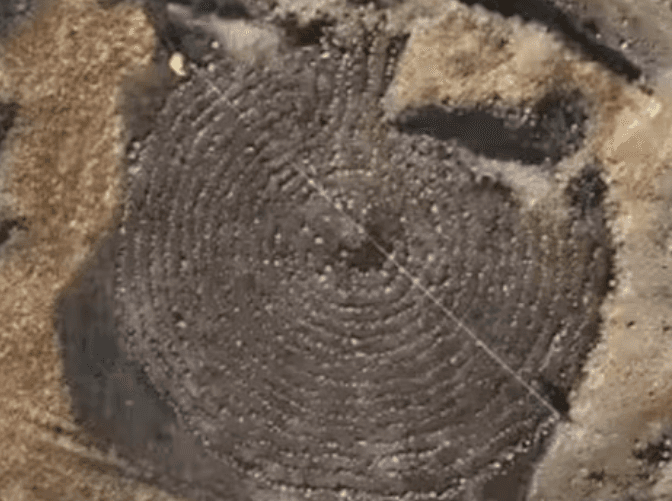
4.Satavahana-Era Solapur Labyrinth Discovery (Satavahana Archaeology)

IT
Illustration for Satavahana-Era Solapur Labyrinth Discovery (Satavahana Archaeology)

What & Where

Structure: 2,000-year-old stone labyrinth with 15 concentric circuits

Geography: Boramani grasslands, Solapur district, semi-arid western Maharashtra

Era: Satavahana period (1st–3rd CE), largest circular labyrinth recorded in India

Quick Facts for MCQs

Art & Architecture

  • Design: 15 concentric stone rings occupying about 50 ft square area
  • Material: Carefully laid local stones ensuring stability without mortar
  • Motif: Mirrors labyrinth imagery on Roman Cretan coins

Trade Networks

  • Alignment: Site lies along inland routes linking Satavahana centres to western ports
  • Signage: Probably served as navigational or symbolic waypoint for spice, textile, gem caravans
  • Evidence: Roman coins with similar labyrinths found at Indian coastal marts

Regional Context

  • Distribution: Smaller stone labyrinths in Sangli, Satara, Kolhapur signal western Maharashtra chain
  • Distinction: Boramani circular form contrasts Tamil Nadu’s square Gedimedu labyrinth
  • Preservation: Remote grassland setting limited disturbance, aiding two-millennia survival

Key Data Points

FeatureData-Point
Discovery siteBoramani grasslands, Solapur
StateMaharashtra
Dynasty eraSatavahana, 1st–3rd CE
Age≈2,000 years
Footprint~50 ft × 50 ft
ShapeCircular
Stone circuits15, highest among Indian circular types
Nearby ecosystemSemi-arid grassland
Comparative siteSquare labyrinth, Gedimedu (TN)
Associated tradeInland Deccan–Arabian Sea Roman routes
GS-1HistoryQuick Bite

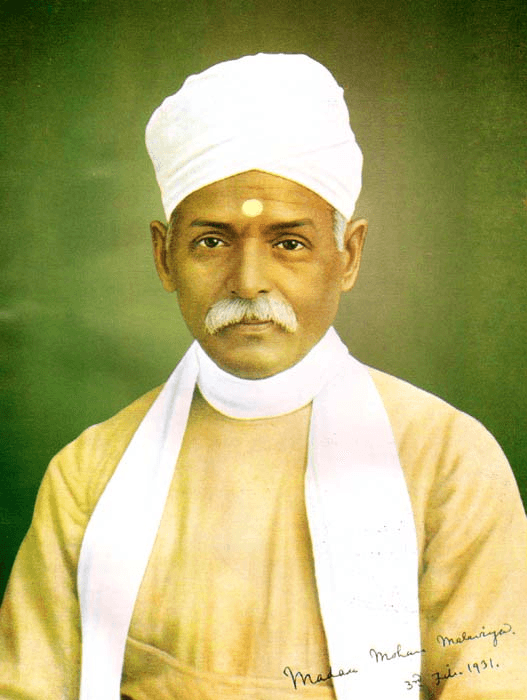
5.Madan Mohan Malaviya Birth Anniversary (Modern Personality)

PIB
Illustration for Madan Mohan Malaviya Birth Anniversary (Modern Personality)

What & Where

Iconic freedom-fighter–educationist Pandit Madan Mohan Malaviya, awarded Bharat Ratna 2014

Born 25 Dec 1861, Prayagraj; major institutions at Varanasi (BHU) and Haridwar (Ganga Mahasabha)

Birth anniversary observed nationwide every 25 December

Quick Facts for MCQs

Freedom Struggle

  • Leadership: Salt Satyagraha, Civil Disobedience Movement, four-time INC president
  • Advocacy: Devanagari script introduced in British courts, slogan Satyameva Jayate propagated
  • Legal aid: Defended Chauri Chaura prisoners 1922, fought indenture abolition

Education & Youth

  • Institution-building: Established BHU 1916, one of world’s largest residential universities
  • Youth work: Pioneered Indian scouting, promoted technical and women’s education
  • Scholarships: Mobilised funds to assist marginalised students nationwide

Media & Communication

  • Publications: Abhyudaya 1907, Leader 1909, Maryada 1910 fostered nationalist opinion
  • Press leadership: Chaired Hindustan Times Board, upheld journalistic ethics
  • Messaging: Used newspapers to popularise Swadeshi, social reform, constitutional methods

Cultural & Environmental

  • River activism: Ganga Mahasabha opposed Bhimgoda damming, preserved religious flow
  • Cultural unity: Helped start Hindu Mahasabha 1915 for Hindu societal interests
  • Honors: Indian Railways launched Mahamana Express 2016 celebrating his legacy

Key Data Points

FeatureData-Point
Birth placePrayagraj, Uttar Pradesh
Birth date25 December 1861
Popular titleMahamana (by Tagore)
Congress President1909 1918 1932 1933
Imperial Council tenure1909 – 1920
Bharat Ratna2014 (posthumous)
University foundedBanaras Hindu University, 1916
Ganga MahasabhaFounded 1905, Haridwar
English dailyLeader, 1909
Hindu MahasabhaCo-founder, 1915
Legal return caseChauri Chaura accused, 1922
Mahamana ExpressVaranasi–New Delhi, 2016

Related UPSC Prelims PYQs

CDS_GK, GS1 1997PYQ 1

“A graduate at 18, professor and associated editor of the Sudharak at 20, Secretary of the Sarvajanik Sabha and of the Provincial Conference at 25, Secretary of the National Congress at 29, leading witness before an important Royal Commission at 31, Provincial legislator at 34, Imperial legislator at 36, President of the Indian National Congress at 39 ……… a patriot whom Mahatma Gandhi himself regarded as his master.” This is how a biographer describes

CDS_GK, GS1 2021PYQ 2

Who founded the Central Hindu School at Benaras which was later developed into Benaras Hindu University?

GS-1Mapping

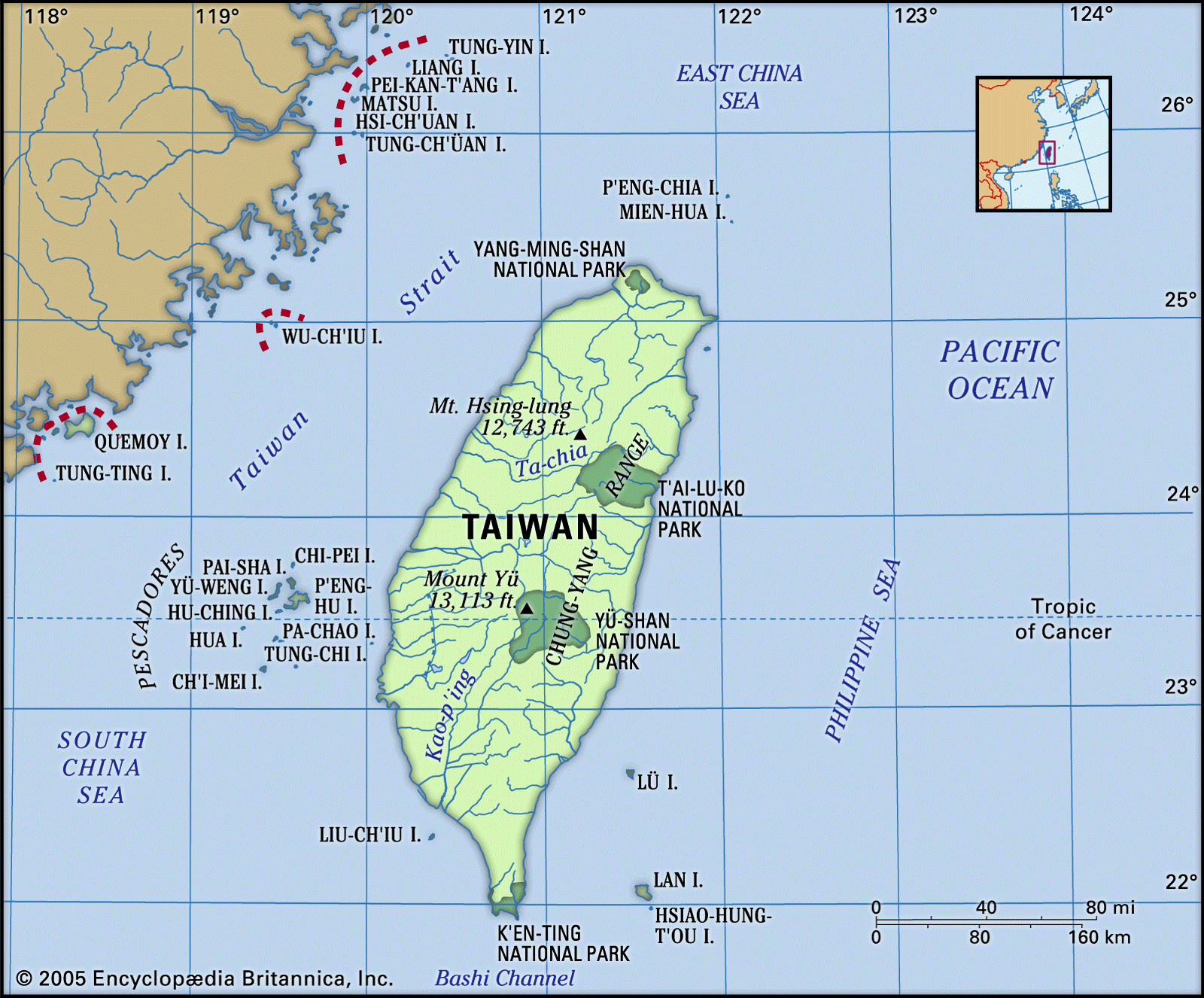
6.Taiwan Island Mapping (Island Geography)

Times of India
Illustration for Taiwan Island Mapping (Island Geography)

What & Where

Taiwan: self-ruled island polity (Republic of China) in western Pacific, sovereignty contested under One-China policy

Sits 160 km off China across Taiwan Strait, between East & South China Seas, Pacific Ocean to east

Lies on Philippine Sea–Eurasian plate boundary within Pacific Ring of Fire, hence frequent strong earthquakes

Quick Facts for MCQs

Geography & Geology

  • Convergence zone induces thrust, strike-slip faults causing high seismicity
  • Over two-thirds terrain mountainous; narrow western plains host bulk population
  • Surrounding contested waters rich in fisheries, hydrocarbons, shipping lanes

History & Politics

  • Indigenous communities pre-17th c; no unified rule before colonial era
  • Dutch colonisation followed by Qing rule, then Japanese annexation post-1895 Treaty of Shimonoseki
  • Separate administration since 1949 civil war, PRC insists on reunification under One-China principle

Security Dimension

  • Strategic location straddles key sea-lanes linking East/South China Seas to western Pacific
  • US, Japan monitor strait for freedom-of-navigation; PRC conducts regular naval, air incursions
  • Indigenous defence force modernising missiles, submarines amid growing cross-strait tensions

Key Data Points

FeatureData-Point
Official designationRepublic of China (ROC)
Capital cityTaipei
Strait separating ChinaTaiwan (Formosa) Strait
Nearest mainland distance~160 km
Northern waterbodyEast China Sea
Southern waterbodySouth China Sea
Highest peakYu (Jade) Mt 3,997 m
Dominant rangeCentral Mountain Range
Tectonic platesPhilippine Sea & Eurasian
Seismic beltPacific Ring of Fire
Recent quake magnitude6.1
Northeast neighbourJapan (Ryukyu Islands)
Southern channelBashi Channel to Philippines
1895-1945 rulerJapan
1949 eventKuomintang retreat after civil war

Related UPSC Prelims PYQs

GS1 2022PYQ 1

Which one of the following statements best reflects the issue with Senkaku Islands, sometimes mentioned in the news?

GS-3Environment

7.ICG Pollution Control Vessel Samudra Pratap (Oil Spill Response)

DD News
Illustration for ICG Pollution Control Vessel Samudra Pratap (Oil Spill Response)

What & Where

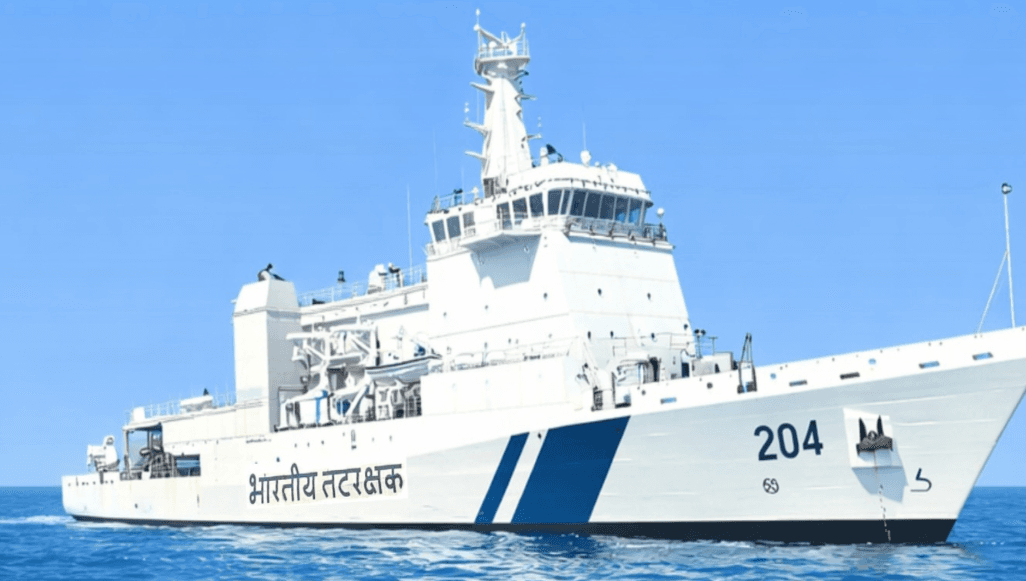
Samudra Pratap – first indigenously designed Pollution Control Vessel (PCV) commissioned into Indian Coast Guard

Built by Goa Shipyard Ltd to safeguard India’s EEZ and adjoining high seas from oil-spill and fire incidents

Largest ICG ship: 114.5 m, 4,170 t, fitted for pollution response, firefighting, limited combat

Quick Facts for MCQs

Technology & Design

  • Dynamic Positioning allows precise station-keeping during containment operations
  • Integrated Bridge, Platform and Power Management systems entirely indigenous
  • External firefighting system delivers high-capacity seawater jets for offshore emergencies

Environmental Role

  • Viscous oil skimmers, containment booms, recovery tanks enable Tier-I to Tier-III spill response
  • Onboard lab rapidly identifies pollutant type aiding evidence and prosecution
  • Enhances readiness against chemical leaks from rigs, tankers, coastal industries

Security Dimension

  • Combat suite deters hostile vessels during pollution missions in EEZ
  • Helicopter deck supports aerial reconnaissance and logistics (specification implicit in PCV design)
  • Long endurance hull permits continuous patrolling of sensitive sea lanes

Indigenisation Push

  • First time India designed, built and weapon-integrated a specialised PCV domestically
  • Aligns with Atmanirbhar Bharat and Maritime India Vision 2030 objectives
  • Demonstrates GSL’s capability for complex, mission-specific green ships

Key Data Points

FeatureData-Point
Vessel classPollution Control Vessel
BuilderGoa Shipyard Limited
Commissioned intoIndian Coast Guard
Project sizeTwo-ship PCV project
Length114.5 m
Breadth16.5 m
Displacement4,170 tonnes
Positioning techDynamic Positioning (DP-1)
Firefighting notationFiFi-2 / FFV-2
Main armament30 mm CRN-91 + two 12.7 mm RC guns
Key sensorsOil fingerprinting & spill detection systems
Pollution labOnboard analysis facility

Related UPSC Prelims PYQs

ESE_GS, NDA_GAT 2026PYQ 1

Where were the Fast Patrol Vessels (FPVs) ICGS Ajit and ICGS Aparajit launched?

ESE_GS, NDA_GAT 2022PYQ 2

Which among the following has initiated a nationwide flagship campaign ‘Puneet Sagar Abhiyan’ to clean seashores/beaches and other water bodies of plastic and other waste materials?

GS-3Environment

8.Sundarbans Sponges Absorb Heavy Metals (Bioindicators)

PIB
Illustration for Sundarbans Sponges Absorb Heavy Metals (Bioindicators)

What & Where

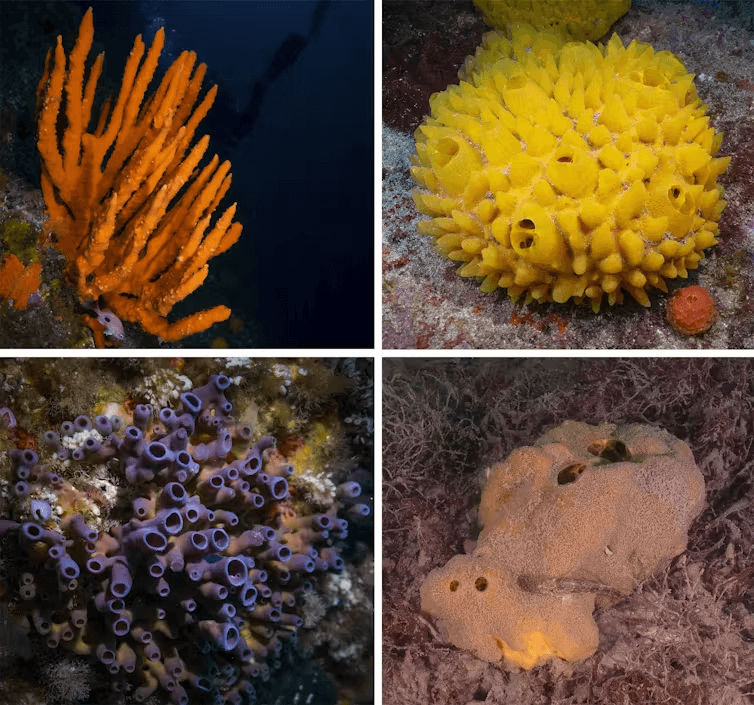
Freshwater sponges (Phylum Porifera) act as bioindicators by bioaccumulating toxic metals from surrounding water.

Study site: Indian Sundarban delta, world’s largest mangrove-estuarine complex along lower Ganga–Brahmaputra.

Process used: filter-feeding via ostia–osculum system; metals adsorb onto porous skeleton (silica/calcium carbonate or spongin).

Quick Facts for MCQs

Environmental Impact

  • Heavy metals persistent; resist degradation, accumulate through trophic levels causing chronic toxicity.
  • Sponge-mediated removal offers passive, ecosystem-based solution needing no external energy/chemicals.
  • Bioindicator status enables early-warning monitoring of riverine contamination before human exposure peaks.

Biological Traits

  • Microbial symbionts aid metal binding, enhancing sponge detox capacity.
  • High filtration rate (litres water / gram tissue / day) maximises pollutant contact.
  • Regenerative ability allows periodic harvesting without long-term population loss.

Indian Hotspots

  • Ganga delta: arsenicosis-linked skin lesions, neuropathy.
  • Malwa-Punjab: uranium, selenium; DNA damage, cancer rise.
  • Delhi-NCR Yamuna: lead in mothers/children, neurotoxicity risk.

Key Data Points

FeatureData-Point
Taxonomic phylumPorifera
Body tissues/organsAbsent; no nerves, muscles, gut
Feeding cellsChoanocytes (“collar cells”)
Skeleton materialSiliceous/calcareous spicules ± spongin
Habitat majorityMarine; minority freshwater (e.g., Sundarbans)
Heavy metals trappedAs, Pb, Cd (high affinity)
Metal capture modeAdsorption & intracellular bioaccumulation
Density criterion for “heavy metal”> 5 g cm⁻³
Bioaccumulation levelIndividual organism; precedes biomagnification
Key Indian hotspot elementArsenic in West Bengal–Bihar plain
GS-3EnvironmentQuick Bite

9.Rhino Dehorning Reduces Poaching (Rhino Conservation)

The Hindu

What & Where

Rhino dehorning = surgical trimming of keratin horn to deter poachers; horns regrow in ~2 yrs.

Study area: 20+ African reserves; evidence of sharp poaching drop post-dehorning.

Indian focus: Kaziranga NP, Assam — world’s largest one-horned rhino habitat.

Quick Facts for MCQs

Conservation Results

  • Dehorning shown statistically to curb kills; supports evidence-based wildlife management.
  • Kaziranga success attributed to patrol grids, community scouts, conflict-mitigation drills.

Economic Angle

  • High Asian demand makes horn a luxury-medicine status symbol, sustaining billion-dollar trade.
  • Low relative cost of dehorning yields high return in saved animal lives.

Tech & Schemes

  • RhODIS collects horn, tissue, dung samples; aids prosecution via genetic matches.
  • Indian Rhino Vision 2005 targets meta-population spread across Assam landscapes.

Security Dimension

  • Smart patrolling, electronic surveillance and rapid-response units key in Indian anti-poaching model.

Key Data Points

FeatureData-Point
Horn compositionPure keratin, not bone
Illegal horn priceUSD 3,382–22,257 /kg
Black-market revenue (2012-22)USD 874 mn–1.13 bn
Poaching fall after dehorning78 % at reserve level
Individual risk cut95 % lower for dehorned rhinos
Dehorning cost share1.2 % of anti-poaching budget
Kaziranga losses (last 3 yrs)Only 1–2 rhinos poached
Rhino DNA Index SystemForensic database linking horns to carcasses
GS-3S&T

10.AILA Autonomous Lab Assistant (AI Robotics)

Business Standard
Illustration for AILA Autonomous Lab Assistant (AI Robotics)

What & Where

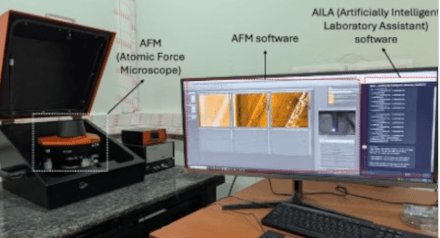
AILA = Artificially Intelligent Lab Assistant; fully autonomous AI system for designing, running, interpreting experiments

Directly controls lab hardware, presently Atomic Force Microscope; performs real-time adaptive decisions

Developed at IIT Delhi; first such experimental AI platform reported from India

Quick Facts for MCQs

Tech & Schemes

  • Alignment with AI for Science agenda; leverages ANRF research grants
  • Combines machine vision, robotics, reinforcement learning for instrument control
  • Potential template for other high-end instruments like SEM, TEM

Research Productivity

  • Drastic throughput boost; multiple iterations per hour enable rapid materials discovery
  • Removes operator fatigue and skill barrier, widening instrument accessibility
  • Generates uniform, reproducible datasets aiding cross-lab validation

International Collaboration

  • Joint algorithm design with Denmark’s Aarhus Univ & Germany’s TU Dresden
  • Demonstrates India’s growing role in global autonomous labs research
  • Opens avenues for shared cloud-controlled laboratory networks

Key Data Points

FeatureData-Point
Lead instituteIIT Delhi
Foreign partnersDenmark, Germany teams
Core instrument handledAtomic Force Microscope
Domain focusMaterials science, experimental physics
Time savedDay-long task cut to 7–10 min
Key capabilityEnd-to-end autonomous experimentation
Learning typeAdaptive, outcome-based refinement
National linkageAI for Science initiative
Funding supportANRF (Anusandhan NRF)
India statusFirst AI to execute real lab work
GS-3S&T

11.Integrating AI into Indian Education (EdTech AI)

Sansad TV

What & Where

Definition: Artificial Intelligence in education (AIEd) deploys ML, analytics, intelligent systems to augment teaching–learning under human oversight.

Key processes: personalised content, automated assessment, predictive analytics, smart-governance dashboards.

Core geography: India via NEP-2020, AI for Science, DIKSHA; aligned with UNESCO/OECD push for SDG-4.

Quick Facts for MCQs

Drivers & Benefits

  • Demography: 250-million learner cohort needs personalised AI pathways.
  • Workforce: AI modules build analytical, digital skills missing in rote-heavy curricula.

Platform Examples

  • Embibe: Adaptive practice engine for JEE/NEET aspirants.
  • Vidya Samiksha Kendra: Predictive analytics dashboard tracking dropout risks.

Challenges

  • Digital-divide: Himalayan and Tier-3 regions lack bandwidth for AI learning.
  • Bias: Western-trained models misinterpret Indian accents and local contexts.

Policy & Ethics

  • UNESCO: Human-centred, equity, transparency, privacy, cultural-sensitivity guidelines.
  • India: Proposal for National AI Regulatory Body; CBSE introduces AI literacy from Grade 6.

Key Data Points

FeatureData-Point
Adoption in premier higher-ed>80 % students use AI tools
Indian learner base≈ 250 million students
Policy anchorNEP-2020 endorses AI-enabled pedagogy
Flagship platformDIKSHA AI recommendation engine
Teacher aid toolUP SwiftChat AI for para-teachers
Global mandateUNESCO tags AI as SDG-4 accelerator

Related UPSC Prelims PYQs

CDS_GK, ESE_GS 2026PYQ 1

Which Ministry released the India AI Governance Guidelines in 2025?

CDS_GK, ESE_GS 2023PYQ 2

Consider the following statements concerning the National Education Policy, 2020:

GS-3S&TQuick Bite

12.Indigenous DHRUV64 Microprocessor Launch (Indigenous Chip)

The Hindu
Illustration for Indigenous DHRUV64 Microprocessor Launch (Indigenous Chip)

What & Where

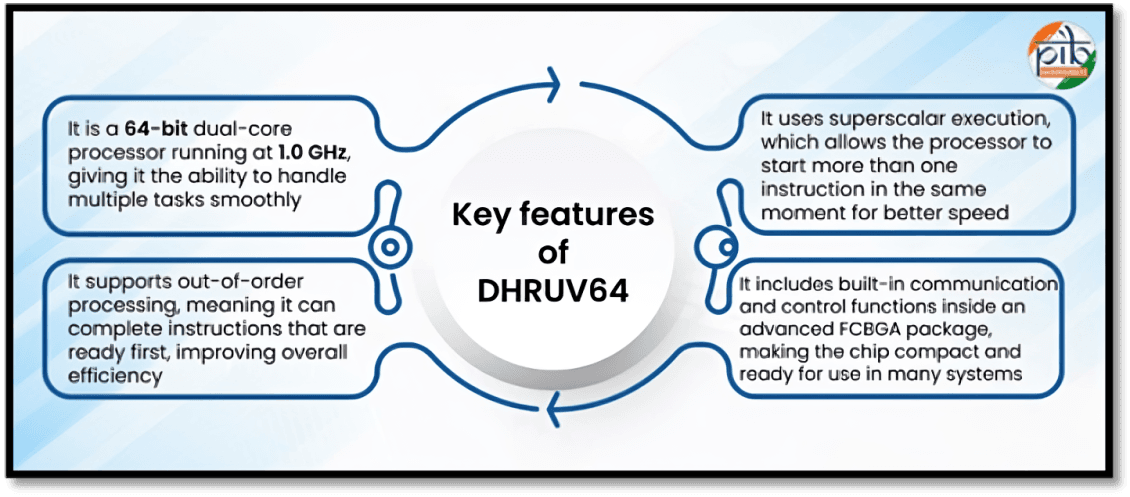
Microprocessor DHRUV64, indigenous 64-bit dual-core general-purpose chip, launched 15 Dec 2025 by MeitY/C-DAC.

Built on open-source RISC-V ISA, ~1 GHz, suited for embedded and OS-level workloads.

Fabricated at SCL Mohali, joins India’s sovereign processor line with SHAKTI, AJIT, VIKRAM, THEJAS.

Quick Facts for MCQs

Tech & Schemes

  • DIR-V, MeitY initiative, builds portfolio of RISC-V chips for strategic and commercial autonomy.
  • RISC-V, royalty-free ISA, allows customisation without ARM/x86 licence fees.
  • THEJAS32 first DIR-V chip (Malaysia), THEJAS64 second (Mohali), DHRUV64 third.

Indigenous Ecosystem

  • SHAKTI (IIT-Madras), AJIT (IIT-Bombay), VIKRAM (ISRO-SCL), THEJAS & DHRUV (C-DAC) form national processor suite.
  • Focus on sovereign semiconductor supply chain, reducing foreign dependency.

Application Sectors

  • Telecom base stations, routers, networking gear.
  • Industrial automation, automotive electronics controllers.
  • Strategic/government defence systems benefit from domestic security control.

Strategic Importance

  • Sovereignty, indigenous design mitigates supply-chain risks and geopolitical export controls.
  • Cost saving, open ISA avoids licensing “tax”, encourages domestic innovation.

Key Data Points

FeatureData-Point
Word size64-bit
Core countDual-core
Clock speed~1 GHz
DeveloperC-DAC
ISARISC-V
Govt programmeDigital India RISC-V (DIR-V)
Launch date15 Dec 2025
Fabrication siteSemiconductor Lab, Mohali
DIR-V fabrication order3rd after THEJAS32, THEJAS64
Sample use caseTelecom base stations
GS-2MiscQuick Bite

13.India's Cyclone Aid to Sri Lanka (Cyclone Relief)

The Hindu

What & Where

Package: India pledges USD 450 mn reconstruction aid to post-Cyclone Ditwah Sri Lanka.

Locale: Island nation in Indian Ocean; aid channelled under SAGAR & Neighbourhood First.

Context: Complements earlier Operation Sagar Bandhu relief and Sri Lanka’s IMF-supported recovery.

Quick Facts for MCQs

Economic Angle

  • Debt-default: 2022 crisis pushed Sri Lanka to IMF; austerity restores macro-stability yet stunts growth.
  • Losses: Cyclone damage equals 4 % GDP, tougher than 2004 tsunami recovery.
  • Financing: India’s credit plus IMF RFI bridge urgent balance-of-payments gap.

Humanitarian Operations

  • Mission: Operation Sagar Bandhu delivered medicines, relief kits, Army field hospital.
  • Timeline: India also aided MV XPress Pearl fire 2021, Cyclone Roanu 2016.
  • Modality: First-responder role via air-sea lift, rapid medical deployment.

Strategic & Security

  • Diplomacy: Aid embeds Neighbourhood First and SAGAR doctrines, boosting regional goodwill.
  • Geopolitics: Timely support counters extraregional influence in Indian Ocean.
  • Continuity: Package sustains India-Sri Lanka ties amid climate-induced security risks.

Key Data Points

FeatureData-Point
Cyclone triggering aidDitwah (Dec 2025)
Indian reconstruction pledgeUSD 450 million
Prior Indian assistance (2022)~USD 4 billion lines of credit, swaps, fuel
Field hospital output>8,000 patients near Kandy
IMF emergency (RFI) trancheUSD 206 million
WB damage estimateUSD 4.1 billion ≈ 4 % GDP
Austerity tools usedTax hikes, subsidy cuts, high interest rates

Related UPSC Prelims PYQs

GS1 2007PYQ 1

What was the purpose of Operation Sukoon launched by the Government of India?

GS-2Scheme

14.Good Governance Day Initiatives (Atal Bhujal Yojana)

PIB
Illustration for Good Governance Day Initiatives (Atal Bhujal Yojana)

What & Where

GoodGovernanceDay – national observance on 25 Dec honouring ex-PM Atal Bihari Vajpayee

AtalBhujalYojana – ₹6000 cr, 5-year Central-Sector plan for community-driven groundwater management in 7 stressed states

AtalTunnel – 8.8 km all-weather road under Rohtang Pass, Pir Panjal, Himachal; highest (>3000 m) motorable tunnel globally

Quick Facts for MCQs

Water Scheme

  • FundingPattern – 50:50 GoI-WorldBank grants transferred wholly to states
  • GovernanceModel – panchayat-led groundwater budgeting, community monitoring, demand-side efficiency incentives
  • SelectionCriteria – over-exploitation severity, legal readiness, prior aquifer projects

Strategic Infrastructure

  • ConnectivityGain – year-round access Kullu↔Lahaul-Spiti; Manali-Leh route shorter by 46 km
  • SafetyFeature – 2.25 m fire-proof emergency tunnel inside main bore
  • StrategicValue – quicker troop and supply movement to Ladakh border areas

Governance Metrics

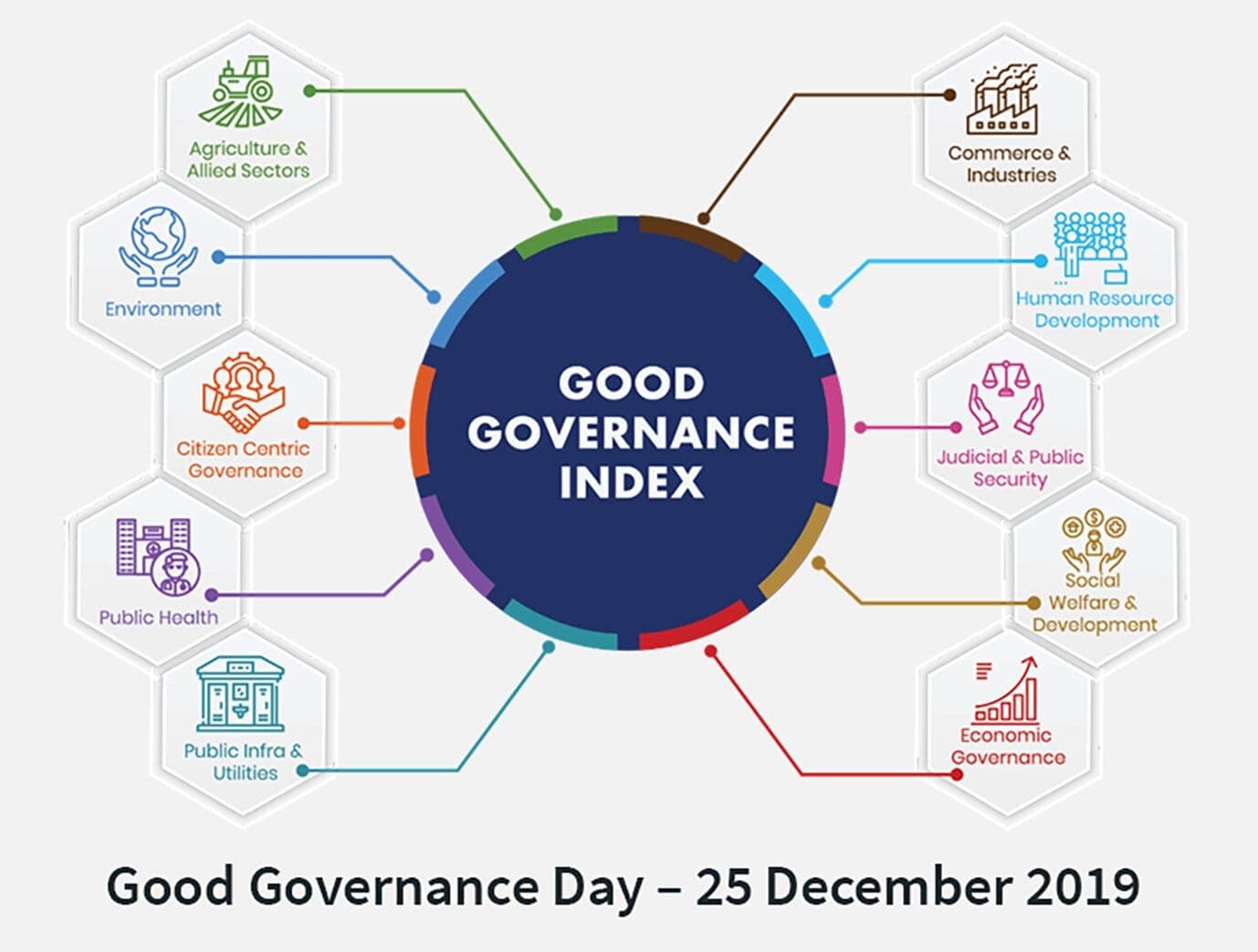
  • IndexStructure – 50 indicators, 10 sectors; categories – Big, NE-Hill, UT
  • Purpose – quantifiable benchmarking, fosters result-oriented administrative reforms, best-practice race
  • LaggingStates – Bihar, Odisha, UP, Jharkhand, Goa bottom Big; Lakshadweep worst UT

Key Data Points

FeatureData-Point
Good Governance Day25 December
ATAL JAL Outlay₹6000 crore
Funding SplitGoI 50 % : World Bank 50 %
Scheme Tenure2020-25 (5 years)
Implementing MinistryJal Shakti
Target StatesGJ, HR, KA, MP, MH, RJ, UP
Atal Tunnel Length8.8 km
Altitude Category>3000 m
Mountain RangePir Panjal, HP
GGI Launch MinistryPersonnel, PG & Pensions
GGI Sector Count10
Top Big StateTamil Nadu
Top NE/HillHimachal Pradesh
Top UTPuducherry
Vajpayee – Bharat Ratna2015

Ready to practice?

Test your knowledge with our UPSC test series.

Start Free Trial