UPSC Current Affairs

14 topicsGS-1: 4GS-2: 4GS-3: 6
0/14 done
GS-2Polity

1.Commission for Air Quality Management (Statutory Body)

News on Air

What & Where

Statutory Commission for Air Quality Management (CAQM) coordinates air-pollution prevention and control in National Capital Region.

Key process: plans, monitors, enforces measures such as biomass co-firing norms for thermal power plants.

Core geography: Delhi NCR plus impacting districts of Haryana, Punjab, Rajasthan, Uttar Pradesh (≈300 km belt).

Quick Facts for MCQs

Legal & Policy

  • Established via 2021 Ordinance; granted overriding authority on regional air-quality management.
  • Issues directions, penalties, or shutdown orders for non-compliance.
  • August 2023: six thermal plants within 300 km served notices for violating biomass norms.

Structure & Tenure

  • Chairperson heads; Member-Secretary (Joint Secretary rank) acts as Chief Coordinating Officer.
  • Includes 1 full-time Central Govt member, 3 technical experts, 3 NGO representatives.
  • Fixed tenure ensures continuity yet allows periodic infusion of expertise.

Core Functions

  • Coordinate Centre-State actions; draft and implement regional air-quality plans.
  • Develop pollutant identification framework; promote research and capacity building with technical bodies.
  • Monitor compliance on stubble burning, plantation drives, biomass co-firing, vehicular and industrial emissions.

Key Data Points

FeatureData-Point
Establishment year2021
Legal basisCommission for Air Quality Management in NCR & Adjoining Areas Ordinance, 2021
Predecessor bodyEnvironment Pollution (Prevention and Control) Authority (EPCA)
HeadquartersNew Delhi
Statutory statusYes; overrides state bodies on air-quality matters
Member tenure3 years or up to 70 years of age
Composition size1 Chairperson, 1 Member-Secretary, 1 Central Govt member, 3 experts, 3 NGO members
Jurisdiction statesDelhi, Haryana, Punjab, Rajasthan, Uttar Pradesh (NCR adjoining areas)
Recent actionShow-cause notices to 6 thermal power plants for poor biomass co-firing
GS-2Polity

2.Consumer Commissions Delay Challenges (Consumer Protection)

The Hindu

What & Where

Consumer Commissions = quasi-judicial bodies under Consumer Protection Act, 2019 for speedy, low-cost buyer–seller dispute redressal.

Three-tier setup: District (≤ ₹50 lakh), State (₹50 lakh–₹2 crore), National (> ₹2 crore); appeals escalate up to Supreme Court.

Pan-India jurisdiction; District & State set up by States, National by Centre, headquartered New Delhi.

Quick Facts for MCQs

Legal & Policy

  • CPA 2019 replaced 1986 Act; adds product liability, e-commerce, CCPA enforcement power.
  • SC in Ambrish Kumar (2016) clarified pecuniary value = price + compensation.
  • Legal metrology amendments 2025 tighten country-of-origin, labelling norms.

Operational Challenges

  • Backlog grows ~14,900 cases in 2024 despite disposal efforts.
  • Frequent adjournments, weak order enforcement, inadequate courtrooms slow 3–5 month statutory timeline.
  • Strategic delays by corporates exploit manpower shortages and expert-evidence gaps.

Tech & Schemes

  • e-Jagriti offers online filing, fee-pay, virtual hearing; multilingual, chatbot, Bharat Kosh gateway.
  • AI-enabled National Consumer Helpline 2.0 resolves 12 lakh+ complaints/yr, median 21 days.
  • Jago Grahak Jago & Jagriti apps plus BIS Care bolster real-time unsafe-site alerts & hallmark checks.

Reform Measures

  • Fast-track appointments & dedicated consumer-judge cadre proposed.
  • Case-age benchmarks, automated listing, digital compliance tracking recommended.
  • Mandatory mediation for low-value disputes and quarterly disposal scorecards to boost accountability.

Key Data Points

FeatureData-Point
National Consumer Day24 Dec; marks 1986 Act assent
2025 theme“Efficient and Speedy Disposal through Digital Justice”
Pending cases (Jan 2024)5.43 lakh
2024 filings vs disposals1.73 lakh vs 1.58 lakh
Vacancy issueMany President/Member posts unfilled
e-Jagriti launch2025; merges e-Daakhil, NCDRC-CMS, CONFONET
National Commission pecuniary limitAbove ₹2 crore
Central Consumer Protection AuthorityOperational since 2020
Key SC ruling (1995)IMA vs V.P. Shantha – medical services covered
Mediation window mandated3-month disposal target under CPA 2019

Related UPSC Prelims PYQs

ESE_GS, GS1 2024PYQ 1

To increase transparency and consumer awareness and handle customer complaints, a 'Centralised Receipt and Processing Centre' and an 'Integrated Ombudsman Scheme' have been set up. These two schemes are related to which one of the following institutions?

ESE_GS, GS1 2010PYQ 2

With reference to the Consumer Disputes Redressal at district level in India, which one of the following statements is not correct?

GS-3Economy

3.China-India WTO Solar Subsidy Dispute (WTO Dispute)

Times of India

What & Where

WTO Dispute Settlement System; compulsory, rules-based forum under DSU for member trade rows

Seat; supervised by Dispute Settlement Body at WTO HQ, Geneva

Context; China seeks consultations over India’s solar subsidies alleging tariff-bind and national-treatment breaches

Quick Facts for MCQs

Legal & Policy

  • Import-substitution subsidies prohibited under SCM Agreement Article 3
  • National treatment mandates equal tariff for domestic and foreign like products
  • Bound tariff ceilings allegedly exceeded on solar inputs

Economic Angle

  • Domestic solar manufacturing boosted via Production-Linked Incentive scheme
  • China defends roughly $30 bn yearly solar exports to India
  • Green-tech trade frictions widening across batteries, PV, EV value chains

Dispute Settlement Process

  • Consultations phase capped at 60 days before panel can be sought
  • Three-member panel formed within 45 days of DSB request if talks fail
  • Non-compliance may trigger authorised countermeasures matching proven trade loss

Key Data Points

FeatureData-Point
ComplainantChina
RespondentIndia
Sector involvedPhotovoltaic (solar)
WTO step filedFormal consultations
Alleged subsidyProhibited import-substitution
Claimed rule breachBound tariff & national treatment
Prior similar caseChina vs India-EV subsidies, Oct 2025
Normal panel timeline~12 months (16 with appeal)
Appellate Body statusNon-functioning since 2019
GS-3Infrastructure

4.PPP Medical Colleges in Tribal Districts (PPP Healthcare)

New Indian Express

What & Where

PPP medical colleges launched in tribal Dhar & Betul; further sites Katni, Panna, all in Madhya Pradesh

PPP = joint govt-private creation/operation of public assets with risk-sharing and performance-linked payments

Each college co-locates with district hospital, enhancing medical seats and rural healthcare services

Quick Facts for MCQs

PPP Structure

  • Model BOT/DBFOT: private designs, finances, operates, then transfers after concession
  • Variant O&M: private maintains and manages public asset for shorter term
  • Lease–Develop–Operate–Maintain: private upgrades leased public facility during concession

Government Support

  • Incentive Viability Gap Funding covers up to 40 % capital cost
  • Facility IIPDF finances detailed project reports and transaction advisors
  • Policy allows 100 % FDI; IIFCL supplies long-tenor loans

Health & Education Impact

  • Benefit Adds MBBS seats within underserved tribal belts
  • Integration District hospitals double as teaching sites, uplifting service quality
  • Goal Combine private efficiency with public access for rural healthcare boost

Key Data Points

FeatureData-Point
First PPP medical collegesDhar & Betul, Madhya Pradesh
Total colleges planned4 (Dhar, Betul, Katni, Panna)
Core delivery modelPublic–Private Partnership
Main PPP variantBOT / DBFOT
Viability Gap Funding cap40 % of project cost
Feasibility fundIndia Infrastructure Project Development Fund
Long-term debt agencyIndia Infrastructure Finance Co. Ltd. (IIFCL)
FDI ceiling in PPP sectors100 % via automatic route
GS-1History

5.Māori Haka Cultural Dance (Maori Dance)

IT
Illustration for Māori Haka Cultural Dance (Maori Dance)

What & Where

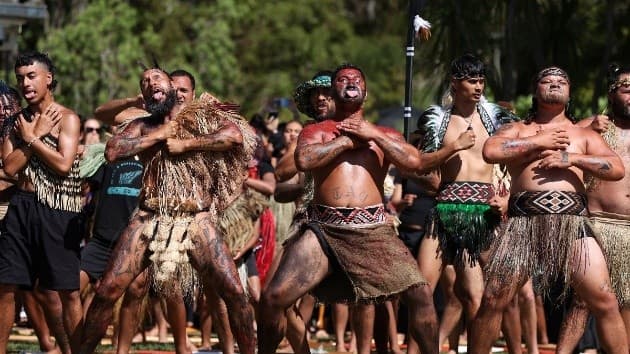
Māori haka = vigorous posture dance with stamping, slapping, chanting; expresses pride, challenge, unity or protest

Key types: Ka Mate (survival), Peruperu (war), Ngeri (energiser), Pōwhiri (welcome), Manawa wera (funeral)

Indigenous to Māori of Aotearoa/New Zealand; now global symbol used from ceremonies to demonstrations

Quick Facts for MCQs

Mythology & Symbolism

  • Tāne-rore embodies dance; hand-tremble epitomises his movement
  • Haka seen as living link to ancestral deities and seasonal cycles
  • Gestures, facial expressions encode lineage, land, cosmology

Varieties

  • Ka Mate celebrates survival; often performed by New Zealand sports teams
  • Peruperu executed with weapons before battle to intimidate foes
  • Ngeri short, informal sequence used to psych up groups swiftly

Contemporary Role

  • Regular in pōwhiri welcomes, graduations, sporting events, funerals
  • Adopted in protests to assert Māori sovereignty, oppose perceived injustices
  • Serves as cultural diplomacy tool showcasing New Zealand identity worldwide

Key Data Points

FeatureData-Point
Indigenous peopleMāori (Polynesian)
Mythic originTāne-rore, son of sun god Tama-nui-te-rā & summer goddess Hine-raumati
Signature hand trembleMimics shimmering air on hot days
Famous haka“Ka Mate” composed c.1820
Composer of Ka MateTe Rauparaha, Ngāti Toa chief
War haka termPeruperu
Welcoming haka termPōwhiri
Funeral haka termManawa wera
Protest usageNon-violent display of indigenous rights
Recent spotlightCounter-protest during Sikh Nagar Kirtan, Auckland
GS-1Environment

6.Lightning: India’s Deadliest Natural Hazard (Lightning Disaster)

Down to Earth

What & Where

Lightning: rapid electrostatic discharge cloud–cloud / cloud–ground, occurs with thunderstorms, intense rain, wind, hail

India’s top natural-hazard killer; sudden, localised, virtually zero lead time

Emerging hotspots: Rajasthan, Gujarat, Haryana, Punjab, Delhi; enduring hotspots: Madhya Pradesh, Bihar, Odisha

Quick Facts for MCQs

Drivers & Climate Linkage

  • Warming temperatures elevate atmospheric electricity, sharply increasing strike frequency
  • Semi-arid, plateau, hilly regions lack shelters, magnifying exposure
  • Lightning concurrence with cloudbursts and floods intensifies compound climate risks

Risk & Impact

  • Mortality highest among outdoor workers: farmers, labourers, fishermen, pastoralists
  • Economic losses—crops, livestock, power lines, telecom towers—remain underreported
  • Scattered single fatalities limit media attention and policy prioritisation

Policy & Mitigation

  • IMD micro-nowcast + NDMA do’s/don’ts disseminated via apps for behaviour change
  • Community training, alert poles, field meters installed under MPLS in schools, anganwadis
  • Formal disaster status absent, curbing dedicated funds, district plans, Panchayat integration

Key Data Points

FeatureData-Point
Annual lightning deaths>2,000
Strike rise (2019-25)~400%
Yearly strike growth7–14%
Forecast lead time≤48 hours
Warning appsDamini, Mausam, Sachet
New hotspot statesRJ, GJ, HR, PB, DL
Key NDMA campaignLightning Resilient India
Targeted projectMPLS in high-risk districts
GS-1Mapping

7.Subansiri Lower Hydropower Project (Hydropower Project)

DH
Illustration for Subansiri Lower Hydropower Project (Hydropower Project)

What & Where

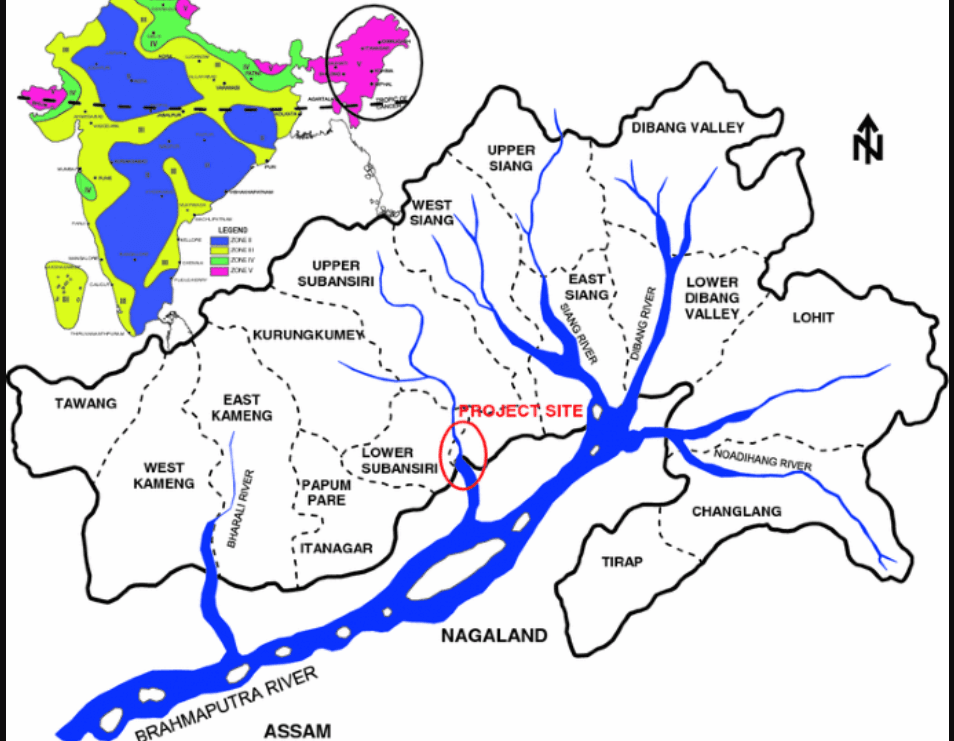
Subansiri Lower HEP: 2 GW run-of-river scheme, India’s largest hydropower project.

Gerukamukh site on Subansiri River, Assam–Arunachal Pradesh border, Brahmaputra basin.

NHPC concrete-gravity dam, 116 m (riverbed) / 210 m (foundation) high.

Quick Facts for MCQs

Project Timeline

  • Construction halted 2011-19 for impact, seismic and protest reviews.
  • First 250 MW unit synchronised Dec 2025; remaining seven due 2026-27.
  • Completion will end almost two-decade gestation period.

Tech & Engineering

  • Carries India’s heaviest hydro rotors, largest stators and inlet valves.
  • Debut use of Rotec Tower-Belt system for high-speed dam concreting.
  • Run-of-river design limits large reservoir, still enables flood moderation.

Environmental & Social

  • Downstream Assam groups feared flood, sediment; sparked prolonged agitation.
  • Multiple expert panels reassessed seismic safety in Himalayan high-risk zone.
  • Limited submergence yet concern over sudden peaking releases persists.

Strategic & Energy

  • Adds 2 GW clean power toward 500 GW RE, Net-Zero 2070 targets.
  • Regulated releases expected to soften Brahmaputra floods in Assam plains.
  • Strengthens North-East grid stability, aiding national frequency management.

Key Data Points

FeatureData-Point
Installed capacity2,000 MW
Unit configuration8 × 250 MW
First unit onlineDec 2025
Final commissioning2026–27
Dam typeConcrete gravity
Dam length284 m
Main riverSubansiri (largest Brahmaputra tributary)
Project approval2003
Implementing agencyNHPC Ltd
Project categoryRun-of-river

Related UPSC Prelims PYQs

CDS_GK 2021PYQ 1

The Luhri Hydro-Electric Power Project is being constructed on the river

GS-3Environment

8.Aravalli Hills Height-Based Definition Row (Aravalli Protection)

FL

What & Where

Aravalli Range; Precambrian fold mountains ≈3.2 bn yrs, 650–700 km Delhi–Gujarat.

Climatic shield halting Thar eastward drift; key recharge for Chambal, Sabarmati, Luni basins.

Biodiversity spine connecting Sariska–Ranthambhore; green-lung moderating heat, dust over Delhi-NCR.

Quick Facts for MCQs

Legal & Policy

  • Supreme Court upheld Centre committee height rule; objective administrative uniformity, “sustainable” mining.
  • Narrow definition can remove Eco-Sensitive Zone, FCA, CRZ style safeguards on low ridges.
  • Temporary mining moratorium till cumulative impact, groundwater and wildlife studies completed.

Environmental Impact

  • Height-only exclusion risks desertification, dust storms, heat-island spikes across Haryana–Delhi corridor.
  • Groundwater recharge loss threatens agrarian belts fed by Sabarmati, Luni, Chambal catchments.
  • Habitat fragmentation severs tiger–leopard corridors between Sariska, Ranthambhore, Kuno.

Social Concerns

  • Redefinition lacked meaningful consultation with local communities, geologists, ecologists.
  • “Save Aravalli” civil campaign warns of real-estate, highway encroachment under derecognition.
  • Precautionary principle weakened; cumulative, irreversible hill degradation feared.

Key Data Points

FeatureData-Point
Geological age~3.2 billion years
Linear extent650–700 km
States traversedDelhi, Haryana, Rajasthan, Gujarat
New SC hill cut-off≥100 m above local relief
Aravalli “range”≥2 such hills within 500 m
Earlier FSI mapping≥3° natural slope
Verdict date20 Nov 2025
Mining statusFresh leases on hold pending study

Related UPSC Prelims PYQs

GS1 1995PYQ 1

Which one of the following mountain ranges is spread over only one State in India?

GS1 2001PYQ 2

The approximate age of the Aravalli’s range is

GS-3EnvironmentQuick Bite

9.Southern Ocean Carbon Sink Anomaly (Southern Ocean)

The Hindu

What & Where

Southern Ocean: waters south of 60° S encircling Antarctica, bounded by the east-flowing Antarctic Circumpolar Current.

Southern Ocean carbon anomaly: continued net CO₂ uptake since early-2000s despite models forecasting weakened sink.

Surface stratification: influx of light freshwater from rainfall, ice-melt, sea-ice transport forms stable layer blocking upwelling of carbon-rich deep water.

Quick Facts for MCQs

Climate Science

  • Models predicted stronger poleward-shifted westerlies enhancing upwelling and weakening sink; observations contradict.
  • Freshwater stratification currently overrides wind-driven mixing, sustaining CO₂ draw-down.
  • Salinity rise since 2010 hints model scenario may yet emerge.

Ocean Circulation

  • ACC links Atlantic, Indian, Pacific basins, drives global meridional overturning circulation conveyor.
  • Cold dense Antarctic Bottom Water sinks, warm surface waters replace, meeting at Antarctic Convergence supporting high productivity.
  • No continental barriers allow uninterrupted circumpolar flow.

Risk Outlook

  • Stratification thinning could suddenly vent stored carbon, flipping sink to source, accelerating warming.
  • Intensified mixing potential under future wind, salinity shifts mandates close monitoring.
  • Rapid CO₂ release would undermine global carbon budgets, heightening climate policy urgency.

Key Data Points

FeatureData-Point
Latitude limit (IHO, 2000)60° South
Share of global ocean area25–30 %
Anthropogenic CO₂ uptake share≈ 40 % of oceanic total
Excess heat absorption≈ 75 % of global ocean heat gain
Drake Passage width~1,000 km
Depth of trapped carbon-rich water100–200 m
Dominant currentAntarctic Circumpolar Current (world’s strongest)
GS-3Science & Technology

10.Akash-NG Surface-to-Air Missile (Missile Technology)

TN
Illustration for Akash-NG Surface-to-Air Missile (Missile Technology)

What & Where

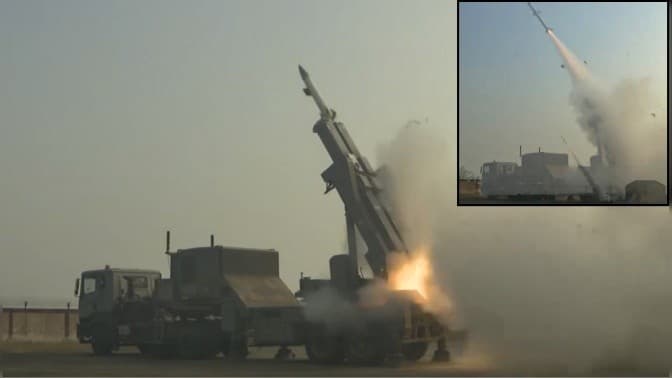
Akash-NG; Indian next-generation surface-to-air missile intercepting aircraft, drones and cruise missiles.

Land-based air-defence system for IAF & Army, replaces earlier Akash variants with longer reach.

Designed, developed and trial-validated in India by DRDO under Atmanirbhar Bharat push.

Quick Facts for MCQs

Tech & Schemes

  • RF-seeker boosts accuracy, resists electronic counter-measures
  • Dual-pulse motor permits variable-range, multi-altitude engagement
  • Networked indigenous radars & C2 enable rapid target designation

Security Dimension

  • Extended range fills gaps against drones, cruise missiles, fighters
  • Enhanced survivability via mobility and ECCM features
  • Successor to legacy Akash strengthens layered national air-defence

Atmanirbhar Drive

  • 100 % indigenous critical subsystems curb imports
  • UET success paves way for large-scale induction and exports
  • Supports Make-II & IDDM procurement categories

Key Data Points

FeatureData-Point
DeveloperDRDO
Missile classNext Generation Akash SAM
Guidance seekerIndigenous Radio-Frequency
PropulsionDual-pulse solid rocket motor
Latest milestoneUser Evaluation Trials cleared; met PSQR
Target envelopeHigh-speed, low-altitude & long-range high-altitude threats
Support systemsFully indigenous radars and C2

Related UPSC Prelims PYQs

GS1, NDA_GAT 2003PYQ 1

With reference to Indian defence, which one of the following statements is correct?

GS1, NDA_GAT 2025PYQ 2

रक्षा अनुसंधान एवं विकास संगठन (DRDO) का एक अंग, भारत के गैस टरबाइन अनुसंधान स्थापना (GTRE) ने एक एयरो-इंजन विकसित किया है जो संभवतः भारत को एयरो-इंजन प्रौद्योगिकी में आत्मनिर्भर बनाएगा। इस इंजन का नाम क्या है?

GS-3Science & Technology

11.National Mathematics Day Celebrations (Srinivasa Ramanujan)

Economic Times
Illustration for National Mathematics Day Celebrations (Srinivasa Ramanujan)

What & Where

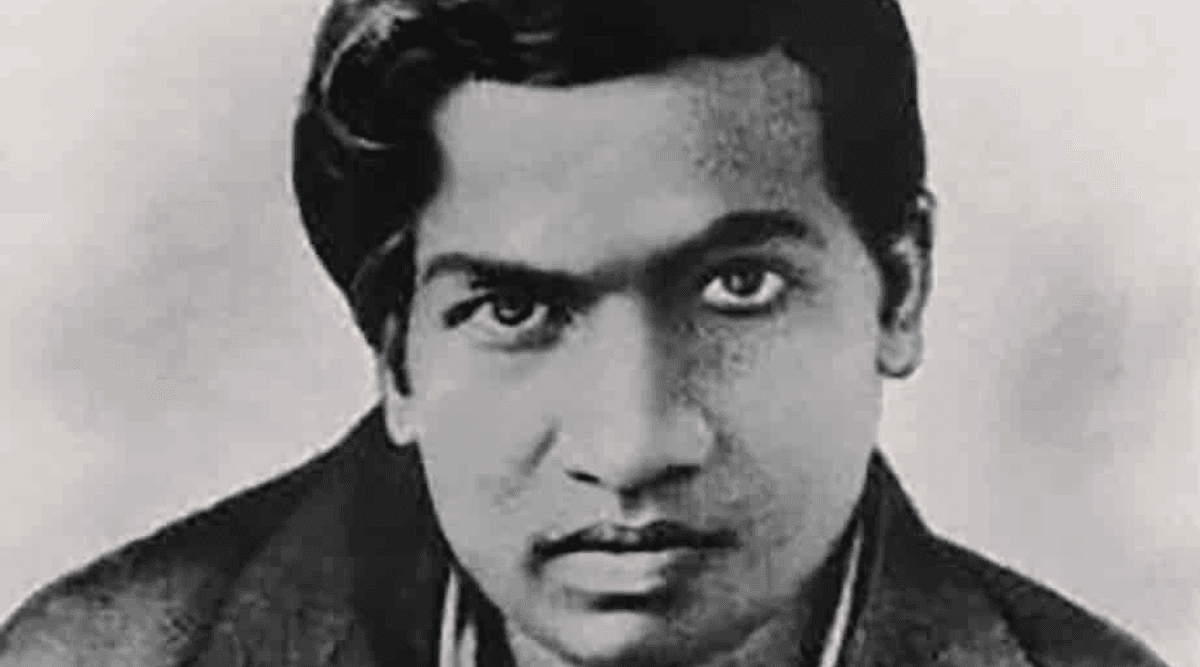
National Mathematics Day (NMD): annual Indian observance on 22 December honouring mathematician Srinivasa Ramanujan.

Proclaimed in 2012 by PM Manmohan Singh during Ramanujan’s 125th birth-anniversary events in Chennai.

Aims to spread mathematics awareness through schools, universities, scientific institutions nationwide.

Quick Facts for MCQs

Career Milestones

  • Scholarship 1903 secured at Madras University; lost for neglecting non-math courses.
  • Correspondence 1913 with G.H. Hardy yielded Trinity College grant and UK relocation.
  • Fellowship 1918: elected Royal Society; first Indian Fellow at Trinity, Cambridge.

Mathematical Output

  • Results 3,900: identities on partitions, continued fractions, modular equations, etc.
  • Pi-series: unconventional infinite series enabling fast π digit computation.
  • Fields: hypergeometric series, mock-theta functions, divergent series, zeta-function functional equations.

Legacy & Trivia

  • Number 1729 famed as smallest integer expressible as two distinct cube sums.
  • Notebook “Lost” until 1976; contents now a standard reference for modern research.
  • Biopic 2015 “The Man Who Knew Infinity” inspired UPSC 2016 prelim question on his life.

Key Data Points

FeatureData-Point
First NMD celebrated22 Dec 2012
OccasionRamanujan’s birth anniversary (22 Dec 1887)
Proclaimed byPrime Minister Manmohan Singh
Ramanujan elected FRS1918 (one of youngest members)
First Indian Fellow, Trinity College1918
Total recorded results≈ 3,900 equations/identities
“Ramanujan number”1729 = 1³+12³ = 9³+10³
Key collaboratorG.H. Hardy, Cambridge
Signature discoveryRapid-converging infinite series for π
Notebook rediscovered1976 by George Andrews, Trinity library
GS-2Economy

12.India-New Zealand Free-Trade Agreement (Bilateral FTA)

Business Standard

What & Where

Agreement: India–New Zealand Comprehensive Economic & Trade Agreement (FTA), signed Dec 2025, covers goods, services, investment.

Geography: Links India’s market with New Zealand and wider Pacific-island supply chains.

Coverage: Zero-duty for 100 % Indian exports; 70 % Indian tariff lines liberalised for NZ goods.

Quick Facts for MCQs

Economic Angle

  • Tariff-Cut: NZ removes 2.2 % average tariff; India phases down with safeguards.
  • Investment-Link: Benefit suspension leverages NZ’s USD 20 bn FDI promise.
  • Export-Boost: Immediate gains for textiles, leather, auto-components facing prior 10 % duty.

Sectoral Safeguards

  • Dairy-Shield: Complete exclusion mirrors RCEP stance, protects 100 m rural livelihoods.
  • TRQ-Use: Apples, kiwifruit, wine get volume/season limits, easing farmer concerns.
  • Gradualism: 10-year glide path cushions MSMEs from import shocks.

Mobility & Services

  • Visa-Liberality: No student cap; new 5,000-slot professional route covers IT, AYUSH, chefs.
  • GI-Recognition: NZ to amend law for Indian GIs beyond wines & spirits.
  • Services-Depth: Digital, engineering, healthcare strongly positioned via 118-sector coverage.

Strategic Context

  • Five-Eyes Outreach: Third FTA with group after Australia, UK; diversifies partners amid geo-fragmentation.
  • Pacific-Footprint: Platform for Indian firms in island economies, counterbalancing China’s influence.
  • Model-Clause: Investment-trade linkage may guide future EU, Canada negotiations.

Key Data Points

FeatureData-Point
NZ duty on Indian goods0 % on 100 % tariff lines, immediate
Indian duty lines liberalised70 % lines = 95 % NZ export value
Indian immediate duty-free lines30 % (wood, wool, sheep meat)
Excluded Indian lines≈30 % (dairy, sugar, select vegetables & nuts)
Avg Indian tariff path16.2 % → 13.18 % (start) → 10.3 % (5 yr) → 9.06 % (10 yr)
NZ FDI pledgeUSD 20 billion over 15 years; suspension clause if unmet
Services chapters118 sectors; India’s most ambitious offer yet
Student work right NZ≥20 h/week during study; STEM 3-yr, PhD 4-yr post-study visa
Professional quota5,000 Indian experts; 1,000 working-holiday visas yearly
Trade expansion goalUSD 2.4 bn → ~USD 5 bn within 5 years

Related UPSC Prelims PYQs

CDS_GK 2024PYQ 1

If India enters into Free Trade Agreements (FTAs) with other nations, then the growth of exports of India would depend upon which of the following?

GS-2MiscQuick Bite

13.UNHCR Suspends Tamil Repatriation (UNHCR)

The Hindu

What & Where

UNHCR — UN Refugee Agency, est. 1950, HQ Geneva; operates in 137 countries.

1951 Refugee Convention & 1967 Protocol — global legal bedrock defining refugee rights, anchored in non-refoulement.

Voluntary repatriation of Sri Lankan Tamil refugees from India to Sri Lanka paused after returnee arrests.

Quick Facts for MCQs

Legal & Policy

  • Convention grants housing, education, work, legal protection; excludes war-crime offenders.
  • Refugees must respect host-country laws under Convention framework.
  • UNHCR supports states in framing refugee policies consistent with international law.

India Angle

  • Refugees managed under general immigration laws, not dedicated refugee statute.
  • Despite non-membership, India collaborates with UNHCR on humanitarian grounds.
  • Suspension affects Tamil refugee repatriation corridor India–Sri Lanka.

Functions & Mandate

  • UNHCR delivers protection, humanitarian aid, durable solutions: local integration, third-country resettlement, voluntary return.
  • Monitors adherence to non-refoulement, preventing forced returns to danger.
  • Coordinates international response to displacement crises post-WWII origin.

Key Data Points

FeatureData-Point
UNHCR establishment1950
UNHCR HQGeneva, Switzerland
Field operations~137 countries
Key legal tools1951 Convention, 1967 Protocol
Core principleNon-refoulement
Refugee definition basisPersecution fear: race, religion, nationality, political opinion, social group
India & ConventionNot a signatory
Major refugee groups in IndiaSri Lankan Tamils, Tibetans, Afghans, Rohingyas
GS-1Polity

14.Census 2027 Enumeration of Denotified Tribes (Denotified Tribes)

Economic Times

What & Where

Denotified Tribes; communities once branded “criminal” under Criminal Tribes Act 1871, present across multiple Indian states

Enumeration; Ministry of Social Justice proposes separate listing in Census 2027, first since 1911 colonial count

Sub-groups; nomadic, semi-nomadic and settled denotified communities share historic stigma, lack unified reservation status

Quick Facts for MCQs

Legal & Policy

  • Recommendation; include DNTs as distinct category for data-led welfare, reservation mapping
  • Ayyangar Committee 1949; basis for repealing Criminal Tribes Act 1871
  • Lokur Committee 1965; sought separate development schemes for DNT/NT/SNT

Committees & Figures

  • Renke Commission 2008; pegged DNT population at 10–12 crore, stressed exclusion gaps
  • Idate Commission 2014; identified 1,200+ denotified, nomadic, semi-nomadic tribes needing documentation
  • Findings; many communities outside SC/ST/OBC lists, hence denied targeted benefits

Lifestyle Typology

  • Nomadic; periodic mobility, livelihoods via pastoralism, itinerant trade; examples Banjara, Rabari
  • Semi-nomadic; seasonal transhumance with base settlement; examples Gaddi, Maldharis
  • Denotified; label independent of mobility, rooted in erstwhile “criminal tribe” classification

Key Data Points

FeatureData-Point
First post-independence countProposed Census 2027
Last official enumeration1911 Census
Repressive actCriminal Tribes Act 1871
Repeal year1949 (Ayyangar Committee)
Population estimate10–12 crore (Renke 2008)
Communities listed>1,200 (Idate 2014)
Nodal ministry 2025Social Justice & Empowerment

Related UPSC Prelims PYQs

GEO_GS, GS1 1996PYQ 1

In the Indian context the term De-notified tribes refers to

GEO_GS, GS1 2020PYQ 2

Which one of the following was NOT a feature of Criminal Tribes Act, 1871?

Ready to practice?

Test your knowledge with our UPSC test series.

Start Free Trial