UPSC Current Affairs

16 topicsGS-1: 2GS-2: 6GS-3: 8
0/16 done
GS-2Editorial

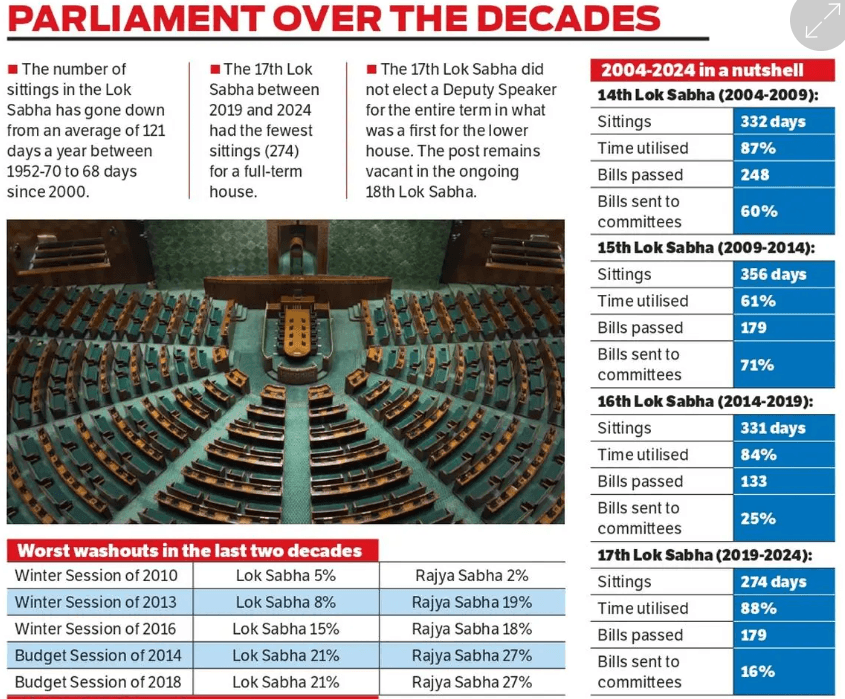
1.Parliamentary Disruptions and Functioning Decline (Parliamentary Functioning)

FL
Illustration for Parliamentary Disruptions and Functioning Decline (Parliamentary Functioning)

What & Where

Parliament: President + Rajya Sabha + Lok Sabha; supreme Indian legislature (Art. 79).

Core functions: law-making, budget approval, executive oversight, articulation of public concerns.

Disruptions: organised protests causing adjournments, shrinking sittings, hasty legislation.

Quick Facts for MCQs

Constitutional Frame

  • Provision: Arts 107, 118 prescribe bicameral agreement & self-made rules, yet require orderly deliberation.
  • Clause: Arts 120-121 restrict language & judge-conduct debates, not disruptions.
  • Power: Presiding officers can suspend members under House rules.

Trends & Data

  • Statistic: Many Bills now passed within days of introduction, often <1 hour debate.
  • Pattern: Budget demands frequently guillotined sans discussion amid din.
  • Oversight: Question Hour often runs for half scheduled time due to adjournments.

Causal Factors

  • Majoritarianism: Government sets agenda with scant opposition consultation.
  • Opposition tactic: “Agitation inside House” viewed as legit publicity device.
  • Incentive: TV visuals reward theatrics, eroding informal trust conventions.

Impacts

  • Legislation quality: Errors, rights breaches arise from truncated scrutiny.
  • Accountability loss: Ministers face fewer queries, weakening checks.
  • Representation gap: Smaller parties, constituency issues sidelined during uproar.

Reform Measures

  • Proposal: Statutory 100–120 sitting days with pre-announced calendar.
  • Mechanism: UK-style Opposition Days to guarantee debate space, curb blocking.
  • Enforcement: Public code of conduct with graded penalties for repeat disorder.

Key Data Points

FeatureData-Point
Article defining ParliamentArt. 79
Rajya Sabha composition articleArt. 80
Lok Sabha composition articleArt. 81
Average sittings early Lok Sabhas120–130 days/yr
Average sittings recent Lok Sabhas55–70 days/yr
17th Lok Sabha distinctionShortest full-term House since 1952
Bills sent to committees earlier60–70 %
Bills sent to committees recently<30 %
Common disruption tacticsSlogan-shouting, entering the Well
Key oversight time affectedQuestion Hour

Related UPSC Prelims PYQs

CDS_GK, GS1 2025PYQ 1

भारत की संसद में स्थगन प्रस्ताव के बारे में निम्नलिखित में से कौन-सा कथन सही नहीं है?

CDS_GK, GS1 2020PYQ 2

निम्नलिखित कथनों पर विचार कीजिए :
GS-2Polity

2.Indian Statistical Institute Governance Bill (Statutory Institute)

Indian Express
Illustration for Indian Statistical Institute Governance Bill (Statutory Institute)

What & Where

Premier national institute for statistics, maths, computer science, quantitative economics; Institution of National Importance.

Founded 1931 by P.C. Mahalanobis; HQ Kolkata; centres: Delhi, Bengaluru, Chennai, Tezpur.

Currently a society under Societies Registration Act; now facing conversion to statutory body via draft ISI Bill 2025.

Quick Facts for MCQs

Legal & Policy

  • Draft Bill supersedes ISI Act 1959, converting institute into statutory corporate body like IITs/IIMs.
  • Registration under Societies Act to end; new legal identity carries perpetual succession and common seal.

Governance Changes

  • Majority BoG representation reserved for Union govt nominees, diluting elected academic presence.
  • Council’s decision-making powers transfer to BoG; Academic Council becomes recommendatory only.

Autonomy Concerns

  • Students, faculty, staff protest citing fear of centralised control over academics, appointments, administration.
  • Removal powers and visitor-ordered reviews viewed as threats to research freedom and institutional culture.

Administrative Structure

  • BoG empowered to make regulations, grant degrees, create posts, approve budgets.
  • Director term, evaluation, and removal now tightly linked to Visitor and BoG oversight.

Key Data Points

FeatureData-Point
Year declared National Importance1959 Act of Parliament
Draft Bill yearIndian Statistical Institute Bill, 2025
Present apex body33-member Council (elected + govt reps + UGC nominee)
Proposed apex bodyBoard of Governance (BoG)
President of India roleVisitor (under draft Bill)
BoG chairperson selectionNominated by Visitor on Centre’s recommendation
Director selectionCentre-constituted search committee; appointment by BoG chairperson
Visitor powersRemove Director; order inquiries/reviews
Academic advisory bodyAcademic Council led by Director
Journal published“Sankhyā”
Initial legal formRegistered society
Key mandateAdvance statistical research, training, data-driven planning

Related UPSC Prelims PYQs

ESE_GS 2024PYQ 1

Which one of the following Institutions launched Centre of Data for Public Good (CDPG) for multidisciplinary research, bringing together experts from academia, industry, and Government to harness the power of data to benefit the public?

ESE_GS 2021PYQ 2

According to the National Institutional Ranking Framework 2020, which institute was on the top in overall ranking ?

GS-2Polity

3.National Commission for Backward Classes Powers (NCBC Functions)

The Hindu

What & Where

NCBC – constitutional watchdog for Socially & Educationally Backward Classes (SEBCs) across India

Operates under Article 338B; advises on Central & State OBC lists via Article 342A process

HQ: New Delhi; jurisdiction spans Union and all States/UTs

Quick Facts for MCQs

Legal & Policy

  • Amendment102 inserted Articles 338B, 342A, giving NCBC constitutional backing and list-alteration protocol
  • Power Advise Union on inclusion/exclusion; Parliament’s law finalises Central OBC List changes
  • Function Inquire into safeguard implementation, rights violations, welfare programme efficacy for SEBCs

Structure & Appointment

  • Composition Chairperson, Vice-Chairperson, three Members; at least one must be woman or minority traditionally ensured
  • Tenure Standard 3 years or till age 65, re-appointment permissible (as per 1993 Act practice)
  • Removal Same grounds/procedure as UPSC members; President acts after Supreme Court enquiry

Contemporary Context

  • Recommendation May 2024: delist 35 Muslim-majority communities from West Bengal Central OBC list, citing 2014 irregularities
  • Impact Could alter reservation benefits, trigger fresh socio-political debate on OBC categorisation criteria

Key Data Points

FeatureData-Point
Constitutional anchoringArticles 338B, 342A
Status gained102nd Constitutional Amendment, 2018
Original statuteNCBC Act, 1993
Total members5 (Chair, Vice-Chair, 3 Members)
Appointing authorityPresident of India
Rank of membersSecretary to Government of India
Reporting mechanismAnnual/Special reports to President, laid in Parliament & State Legislatures
Legal powersCivil-court powers for summons, documents, evidence
Mandatory consultationUnion & States must seek NCBC advice on SEBC policy
Final list changeParliament enacts inclusion/exclusion in Central OBC List

Related UPSC Prelims PYQs

CDS_GK, NDA_GAT 2022PYQ 1

Which one of the following is not a Constitutional Commission of India?

CDS_GK, NDA_GAT 2020PYQ 2

निम्नलिखित में से कौन-सा आयोग अनुच्छेद 338A से संबंधित है?

GS-2PolityQuick Bite

4.Seva Teerth Concept for New PMO (Central Vista PMO)

Indian Express

What & Where

Seva Teerth = new Prime Minister’s Office block within Central Vista, Kartavya Path, New Delhi.

Name fuses spiritual “Teerth” (pilgrimage) with Seva (service) to stress citizen-centric, duty-oriented governance.

Forms part of Central Vista redevelopment, overhauling 1931 imperial complex for modern administrative efficiency.

Quick Facts for MCQs

Symbolic Governance

  • Teerth-label signals pilgrimage-like accountability, transparency, responsiveness.
  • Phrase aligns with Minimum Government, Maximum Governance motto.
  • Rebrands PMO from power centre to service hub.

Gandhian Ideals

  • Seva principle echoes Gandhi’s view of public office as service, not privilege.
  • Naming discourages aloof bureaucratic culture, fosters citizen proximity.
  • Spiritual vocabulary integrates dharma of duty into modern statecraft.

Central Vista Project

  • Redevelopment replaces 1931 British-era offices; includes new Parliament, PMO, executive blocks.
  • Objectives include increased administrative efficiency, sustainability, improved public spaces.
  • Original Vista hosts Rashtrapati Bhavan, North/South Blocks, India Gate, National Archives.

Key Data Points

FeatureData-Point
Term used“Seva Teerth”
Refers toUpcoming PMO building
Announced byUnion Home Minister, Dec 2025
LocationCentral Vista, Kartavya Path, Delhi
Original Central Vista inauguration1931
Governance motto echoedMinimum Government, Maximum Governance
Philosophical rootGandhian Seva (service)
Key legacy structures in VistaRashtrapati Bhavan, North/South Blocks, Parliament, National Archives, India Gate
GS-3EconomyQuick Bite

5.Fully Accessible Route Government Bonds (FAR Bonds)

Economic Times

What & Where

Fully Accessible Route; RBI 2020 framework allowing unrestricted foreign investment in select Central Government securities

Instruments labelled FAR G-secs; free buy-sell access with zero quantitative limits

Operates inside Indian sovereign debt market alongside General Route and Voluntary Retention Route

Quick Facts for MCQs

Capital Market Framework

  • Liberalisation; FAR removes quantitative ceilings improving market depth
  • Liquidity; free entry-exit encourages benchmark pricing and secondary-market trading
  • Visibility; unrestricted access aids integration with global fixed-income investors

Index Inclusion Impact

  • EMBI entry; expected multi-billion passive inflows tracking index allocations
  • Front-loading; investors pre-position ahead of inclusion compressing sovereign yields
  • Rating perception; benchmark presence bolsters case for sovereign upgrade

Drivers of FPI Flows

  • Yield spread; higher rupee bond returns versus peers attract carry trades
  • Currency outlook; stable or appreciating INR reduces hedging cost
  • Policy cues; RBI rate moves, OMOs, liquidity guidance shape sentiment

Alternative Debt Routes

  • General Route; standard corporate bond window capped by aggregate FPI limit
  • Voluntary Retention Route; lighter rules against minimum retention commitment
  • Segmentation; investors choose routes balancing flexibility, regulation, lock-in

Key Data Points

FeatureData-Point
FAR launch year2020
November 2025 FPI via FAR₹5,760 crore
Investor categoriesFPIs, NRIs, OCIs, others
Quantity cap on FAR bondsNone
JP Morgan EMBI inclusion29 FAR G-secs (June 2024)
FPI share ceiling before FDI tag10 % of company equity
Core objectiveInternationalise Indian debt market

Related UPSC Prelims PYQs

GS1 2020PYQ 1

With reference to Foreign Direct Investment in India, which one of the following is considered its major characteristic?

GS1 2021PYQ 2

निम्नलिखित पर विचार कीजिए :

GS-3EconomyQuick Bite

6.Eighth Economic Census 2027 Plan (Economic Census)

Economic Times

What & Where

Economic Census: pan-India count of every goods- and services-producing establishment

Population Census: decennial, village-to-ward headcount of people, housing, amenities

Both cover entire territory of India, coordinated from New Delhi with State/UT field operations

Quick Facts for MCQs

Legal & Policy

  • Census Act 1948 and Census Rules 1990 confer mandatory response and confidentiality safeguards
  • Economic Census conducted under executive instructions, no separate Act yet
  • SBR creation aligns with National Policy on Official Statistics modernisation agenda

Institutional Setup

  • MOSPI-NSO drafts schedules, trains enumerators; State DES executes fieldwork
  • Registrar General’s office supervises 2.5 million enumerators during Population Census
  • Post-enumeration survey validates both censuses for coverage and content error

Economic Angle

  • SBR expected to refine GDP, IIP, MSME counts by pruning dead firms
  • Unified register eases policy targeting, credit flow monitoring, tax compliance
  • Accurate enterprise status boosts Ease of Doing Business analytics

Key Data Points

FeatureData-Point
Next Economic Census8th edition, 2027
First Economic Census1977
Conducting agency (EC)MOSPI-NSO with State/UT DES
Key EC outputStatistical Business Register (SBR)
SBR purposeTrack active/closed enterprises
Next Population CensusTwo-phase, 2026–27
Sequence number16th decennial since 1872
Legal basis (PC)Census Act 1948; Rules 1990
Head of Census Org.Registrar General & Census Commissioner of India
Primary PC data spanHousing, demography, religion, language, literacy, migration

Related UPSC Prelims PYQs

CDS_GK, GS1 2024PYQ 1

Consider the following statements with reference to Census in India:

CDS_GK, GS1 1997PYQ 2

In the Presidential election in India, every elected member of the Legislative Assembly of a State shall have as many votes as there are multiples of one thousand in the quotient obtained by dividing the population of the State by the total number of the elected members of the Assembly. As at present (1997) the expression "population" here means the population as ascertained by the

GS-1History

7.Hornbill Festival Cultural Showcase Nagaland (Hornbill Festival)

DD News

What & Where

Festival-of-festivals showcasing 17 Naga tribes’ heritage, arts, sports.

Annual 1–10 Dec at Kisama Heritage Village, 12 km from Kohima, Nagaland.

Launched 2000 by Nagaland Govt; named after revered hornbill bird.

Quick Facts for MCQs

Cultural Elements

  • Performances: traditional dances, folk songs, war cries, log-drum rituals.
  • Crafts: wood carving, textiles, bamboo works, herbal medicine stalls.
  • Morung exhibitions display each tribe’s lifestyle, attire, weaponry.

Economic Angle

  • Tourism surge fills hotels across Kohima–Dimapur corridor, boosts handicraft sales.
  • Craft bazaars & food courts generate seasonal income for rural artisans.
  • Festival branding positions Nagaland on global cultural tourism circuits.

Symbolism & Identity

  • Hornbill bird denotes valour, beauty, prosperity in Naga folklore.
  • Shared festival fosters inter-tribal assimilation while preserving unique customs.

International Participation

  • Partner countries send cultural troupes, enhancing cross-cultural exchange and visitor inflow.

Key Data Points

FeatureData-Point
Inception year2000
Duration10 days (1–10 December)
VenueKisama Heritage Village, Kohima
OrganiserGovt of Nagaland, Tourism Dept
NicknameFestival of Festivals
Honoured birdGreat Indian Hornbill
Core tribes17 recognised Naga tribes
Flagship music eventHornbill International Rock Festival
Key sportsIndigenous archery, Naga wrestling
Economic driverState’s peak tourist season
GS-1Mapping

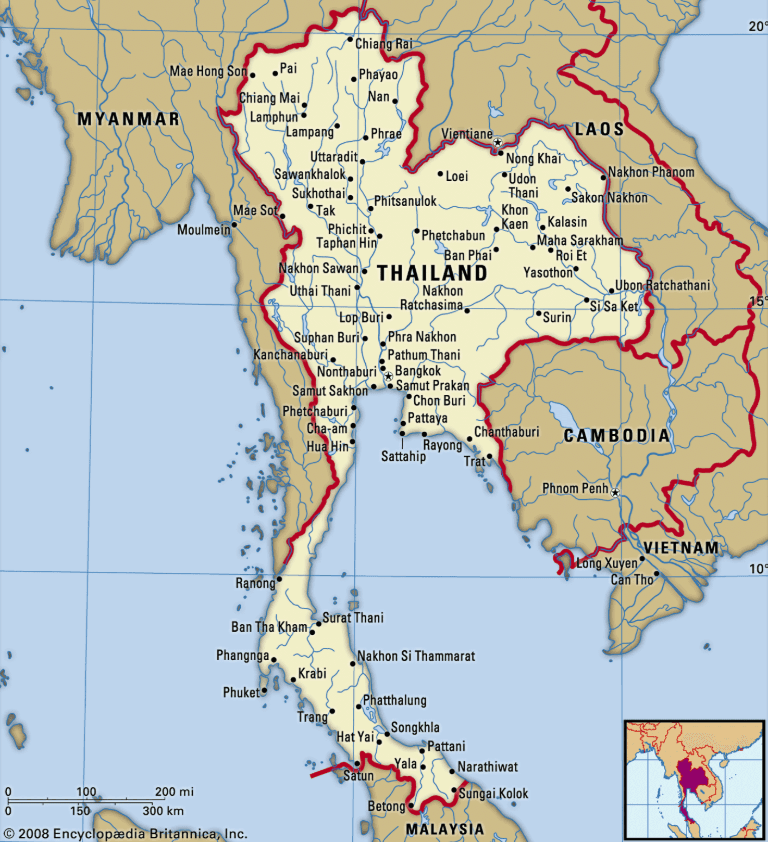
8.Thailand Geography and BRICS Membership Bid (Thailand Mapping)

WION
Illustration for Thailand Geography and BRICS Membership Bid (Thailand Mapping)

What & Where

Thailand: tropical Southeast Asian nation now seeking BRICS entry with Indian backing.

BRICS: 11-country geopolitical bloc; India to chair 18th summit in 2026.

Core geography: northern mountains, Khorat Plateau, Chao Phraya plains, southern peninsula.

Quick Facts for MCQs

Physical Geography

  • Northern mountains: granitic ridges, highest Mount Inthanon 2,585 m
  • Khorat Plateau: tilted tableland, rolling terrain, drained by Mekong tributaries
  • Southern peninsula: narrow landmass, central spine, islands including Phuket

Diplomatic Move

  • Formal request: Thailand seeks BRICS admission, courting Indian backing ahead of New Delhi chairmanship 2026
  • Outreach mode: BRICS offers Members, Partner, Outreach, Plus formats easing future entrants

BRICS Evolution

  • Formation: ministerial 2006, first summit 2009, became BRICS with South Africa 2011
  • Expansion: 2024-25 wave added Saudi Arabia, Egypt, UAE, Ethiopia, Indonesia, Iran
  • Finance arm: New Development Bank supports projects, symbolises economic cooperation

Key Data Points

FeatureData-Point
Thailand capitalBangkok
Geographic zoneTropical mainland Southeast Asia
Neighbour countriesMyanmar, Laos, Cambodia, Malaysia
Highest peakMount Inthanon
Peak elevation2,585 m
Fertile basinChao Phraya River
BRICS concept coined2001
First leaders’ summit2009
Current BRICS members11 countries
2026 BRICS chairIndia

Related UPSC Prelims PYQs

CAPF_GAI 2022PYQ 1

Which of the following sets of nations are members of the BIMSTEC Initiative?

GS-3Environment

9.India Updated NDC Climate Targets (NDC Targets)

Indian Express

What & Where

NDCs – self-declared emission, adaptation & finance pledges under Paris Agreement Article 4, updated quinquennially

India – current NDC horizon 2021-30; next submission due for 2035 targets

Geography – global treaty framework; domestic execution via ministries, state action plans

Quick Facts for MCQs

Targets & Performance

  • Achievement – non-fossil capacity surpassed 50 % in Jun 2025, five years early
  • Electrification – railways, urban buses, 3-wheelers accelerating oil displacement
  • Carbon-intensity – 36 % reduction keeps India ahead of 2030 glide path

Challenges

  • Coal-dependence – grid stability, jobs in coal states hinder rapid phase-down
  • Technology gap – long-duration storage, green hydrogen, CCS not yet commercial
  • Finance shortfall – global pledges lag, forcing higher domestic borrowing

Policy Roadmap

  • Peak-year declaration – formal 2035 peak aligns with 2070 net-zero trajectory
  • Capacity push – 80 % non-fossil target by 2035 requires ~170 GW yearly installs
  • Market reforms – time-of-day tariffs, expanded carbon credit trading incentivise cuts

Key Data Points

FeatureData-Point
Current emission-intensity cut45 % over 2005 levels by 2030
Non-fossil power capacity goal50 % of installed capacity by 2030
Planned carbon sink2.5–3 billion t CO₂ via forests by 2030
Renewable share milestone51.5 % of daily demand (July 2025)
Global renewable rank4th overall; 3rd solar; 4th wind
Emission-intensity achieved36 % cut already vs 2005
Annual finance needUSD 62 billion till 2035
Indicative peak-emission year~2035 (proposal)

Related UPSC Prelims PYQs

CAPF_GAI, GEO_GS 2025PYQ 1

India’s key climate targets include

CAPF_GAI, GEO_GS 2020PYQ 2

India has committed to reduce emission intensity of its GDP from 2005 levels by 33-35 per cent by the year:

GS-3Environment

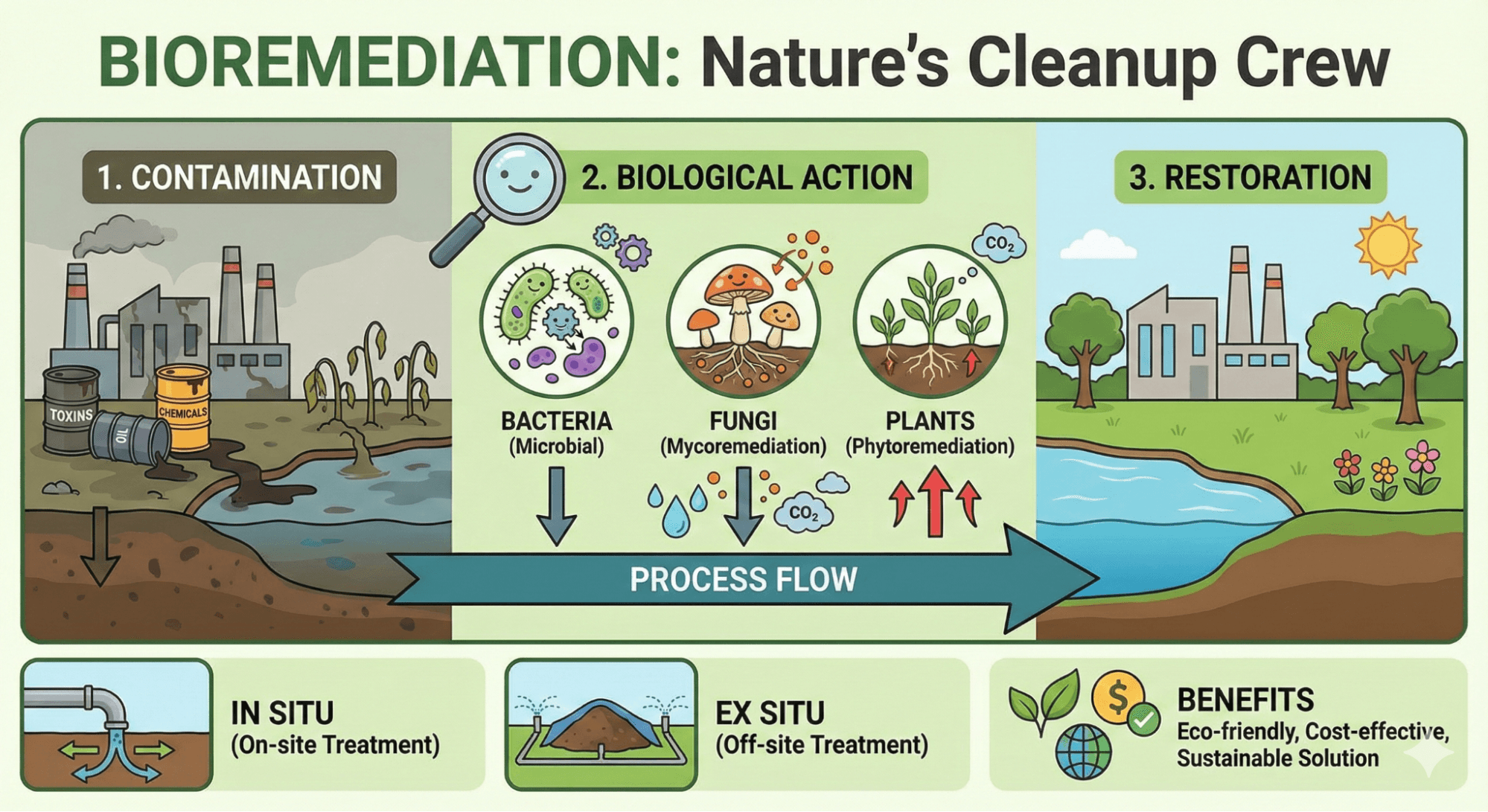
10.Bioremediation Techniques for Pollution Cleanup (Bioremediation Technology)

The Hindu
Illustration for Bioremediation Techniques for Pollution Cleanup (Bioremediation Technology)

What & Where

Definition Use of microbes, algae, fungi or plants to detoxify pollutants into harmless end-products.

Types In-situ treats contamination on site; Ex-situ treats excavated soil/water in controlled facilities.

Geography India prioritising ≥300 polluted river stretches, esp. Ganga-Yamuna basin.

Quick Facts for MCQs

Tech & Schemes

  • GM microbes degrade plastics and recalcitrant oil residues efficiently.
  • Biosensing strains change colour on toxin contact, allow real-time monitoring.
  • BIRAC supports startups (e.g., Econirmal) supplying microbial consortia.

Environmental Impact

  • Pollution load: untreated sewage and effluents overwhelm major rivers, soils.
  • Multi-contaminant mix: oil, pesticides, heavy metals threaten groundwater, biodiversity.
  • Conventional clean-ups energy-intensive, generate secondary waste; bioremediation favoured.

International Examples

  • Japan integrates microbial, phyto-systems in urban waste loops.
  • EU funds cross-border oil-spill & mining-site bioremediation projects.
  • China’s soil law drives GM bacteria deployment on industrial brownfields.

Risks & Safety

  • Biosafety: escaped GM organisms may disrupt native ecosystems.
  • Governance gap: absence of uniform national standards, limited field monitoring.
  • Awareness shortfall: low public understanding risks resistance or misuse.

Key Data Points

FeatureData-Point
Primary organismsBacteria, fungi, algae, higher plants
End productsWater, CO₂, organic acids
Cost benefitCheaper than mechanical/chemical remediation
DBT schemeClean Technology Programme
IIT innovationCotton-based nanocomposites for oil-spill uptake
CPCB figure300 + polluted river stretches
National missionsSwachh Bharat, Namami Gange, NCAP
Relevant SDGsSDG-6 Clean Water; SDG-13 Climate Action

Related UPSC Prelims PYQs

GS1 2011PYQ 1

Recently, ‘oilzapper’ was in the news. What is it?

GS1 2010PYQ 2

Which bacterial strain, developed from natural isolates by genetic manipulations, can be used for treating oil spills ?

GS-3S&T

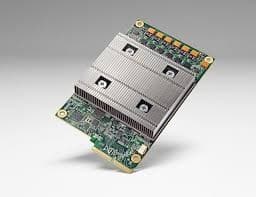
11.Google Tensor Processing Unit Overview (AI Hardware)

Google
Illustration for Google Tensor Processing Unit Overview (AI Hardware)

What & Where

Tensor Processing Unit (TPU): Google-built ASIC accelerating deep-learning, matrix-heavy workloads.

Core process: 128×128 matrix-multiply units plus SparseCores, high-bandwidth memory, cloud-integrated software stack.

Geography: Designed, fabricated for Google data-centres; external access via Google Cloud worldwide since 2018.

Quick Facts for MCQs

Design & Architecture

  • Matrix-multiply units execute tens-of-thousands multiply-accumulate ops each clock.
  • High-bandwidth memory plus optimized interconnects minimise data-movement latency.
  • Purpose-built ASIC omits general-purpose circuitry, boosting area and energy efficiency.

Performance Edge

  • Higher throughput than GPUs by tighter matrix specialisation, reduced overhead.
  • Enables large batch sizes, weeks-long training without performance throttling.
  • Superior efficiency over CPUs; extreme parallelism beats sequential processing.

Timeline

  • 2015: TPUs power internal TensorFlow workloads at Google.
  • 2018: External customers access TPUs through Google Cloud.
  • 2024: Ironwood TPU unveiled amid global AI compute demand surge.

Use Cases

  • Large language models, vision transformers, recommendation engines leverage MXUs + SparseCores.
  • Suited for matrix-intense inference and training across research, enterprise AI.
  • Integral to Google services like Search, Translate, Photos.

Key Data Points

FeatureData-Point
DeveloperGoogle
First internal deployment2015
Public availabilityGoogle Cloud, 2018
Flagship unit size128 × 128 ALU array
Special add-onsSparseCores for embedding models
Key frameworksTensorFlow, JAX, PyTorch
Main rival hardwareGPUs, CPUs
Power traitLower consumption via purpose-built logic
GS-3S&T

12.Lunar Surface Nuclear Power Plan (Space Nuclear Power)

The Hindu

What & Where

Lunar Fission Surface Power Project: small fission reactor (≈10-100 kW) to be emplaced on Moon’s surface by early 2030s.

Forms power spine of NASA’s Artemis Base Camp; would become first permanent, non-solar energy source beyond Earth orbit.

Key nuclear options: RTGs, compact fission units, Nuclear Thermal Propulsion (NTP) & Nuclear Electric Propulsion (NEP) for deep-space logistics.

Quick Facts for MCQs

Tech & Schemes

  • Compact reactor size ~shipping container; scalable to megawatt class for ISRU, habitats, agriculture.
  • NTP cuts Earth-Mars travel months; NEP gives multi-year low-thrust cargo capability.
  • Solar-battery combo insufficient inside permanently shadowed lunar craters or during Martian dust storms.

Legal & Policy

  • OST Article IV bars WMDs yet permits peaceful nuclear power use; no sovereignty claims allowed.
  • 1992 Principles mandate pre-launch safety analysis, end-of-life disposal, public notification.
  • Proposal: COPUOS upgrade rules, create international certification body akin to IAEA for space reactors.

Environmental Impact

  • Reactor failure could irreversibly contaminate pristine lunar or Martian regolith, erasing scientific records.
  • Radioactive ejecta risk multiplanetary spread, complicating future human settlement viability.
  • Absence of global clean-up liability norms heightens ecological stakes.

Security Dimension

  • Exclusive safety zones around reactors risk de-facto territorial control, breaching non-appropriation norm.
  • Perceived dual-use reactors may trigger mistrust, retaliation, weaponisation spiral among spacefaring nations.
  • Harmonised transparency, verification and emergency-response protocols urged to pre-empt conflict escalation.

Key Data Points

FeatureData-Point
Lead agencyNASA + US DOE
Target deploymentEarly 2030s
Planned output10-100 kW continuous
Lunar night length~14 Earth days
Night temperatureBelow –170 °C
Mars dust-storm durationWeeks to months
KRUSTY demo power≤10 kW
DRACO NTP testBy 2026
Banned in OST 1967Nuclear weapons in space
1992 UN PrinciplesSafety & disposal rules for space N-sources

Related UPSC Prelims PYQs

GS1 2024PYQ 1

With reference to radioisotope thermoelectric generators (RTGs), consider the following statements:

GS-3S&T

13.ANEEL Thorium Based Nuclear Fuel (Thorium Fuel)

Economic Times
Illustration for ANEEL Thorium Based Nuclear Fuel (Thorium Fuel)

What & Where

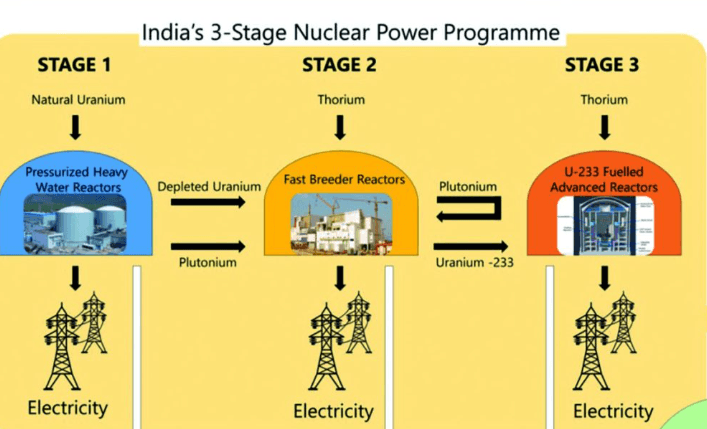
ANEEL fuel: thorium + High-Assay Low-Enriched Uranium blend; drop-in for Pressurized Heavy Water Reactors (PHWRs)

Fleet scope: India operates 18 PHWRs, 4 LWRs; adding 10 new 700 MW PHWRs under construction

Reserves locus: ≈25 % of global thorium in Indian coastal monazite sands; technology from US firm Clean Core Thorium Energy

Quick Facts for MCQs

Technology & Schemes

  • Efficiency: higher burnup, improved thermal margins, no major hardware change
  • Wasteform: lower transuranics; U-232 impurity adds proliferation barrier
  • Scheme: 2024 Budget backed Bharat Small Reactors to use advanced fuels

Economic Angle

  • Cost: ANEEL lowers electricity tariff, enhancing nuclear competitiveness against coal and solar
  • Demand: data-center and AI growth require 24×7 clean baseload, favouring small reactors
  • Industrial: captive reactors eyed for steel, cement, fertilizer decarbonisation

Legal & Policy

  • Act: Civil Liability for Nuclear Damage 2010 spares fuel suppliers from accident liability
  • Programme: Three-stage roadmap targets eventual U-233–thorium cycle for energy autonomy
  • Resource: policy push to utilise abundant thorium, cutting uranium import dependence

International Cooperation

  • Partnership: ANEEL undergoing advanced tests in US before Indian licensing
  • Export: drop-in fuel also fits Canadian-designed PHWRs, widening market
  • Assurance: Department of Atomic Energy to fabricate and manage fuel under IAEA oversight

Key Data Points

FeatureData-Point
CompositionThorium + HALU (≤20 % U-235)
Target reactors220–700 MW PHWRs
Waste reduction~85 % vs natural-uranium fuel
LCOE saving20–30 % below ₹6/kWh baseline
India’s nuclear capacity goal 203222 GW (from 8.2 GW)
Civil Liability Act year2010
Bhabha programme stages3 (PHWR → FBR → Thorium)

Related UPSC Prelims PYQs

GS1 2012PYQ 1

To meet its rapidly growing energy demand, some opine that India should pursue research and development on thorium as the future fuel of nuclear energy. In this context, what advantage does thorium hold over uranium?

GS1 2016PYQ 2

India is an important member of the ‘International Thermonuclear Experimental Reactor’. If this experiment succeeds, what is the immediate advantage for India?

GS-3Security

14.Indian Maritime Doctrine 2025 Highlights (Maritime Doctrine)

Indian Express

What & Where

Indian Maritime Doctrine 2025 = apex guidance defining Navy’s roles, force employment and capability roadmap across peace–war spectrum.

Applies pan-Indian Ocean & Indo-Pacific theatres; integrates space, cyber, cognitive and uncrewed maritime domains.

Celebrated on Navy Day (4 Dec) recalling 1971 Operation Trident strike at Karachi.

Quick Facts for MCQs

Legal & Policy

  • Alignment with Viksit Bharat 2047, Maritime Amrit Kaal Vision 2047, MAHASAGAR strengthens civil-maritime policy coherence.
  • Recognises “no-war, no-peace” grey-zone as distinct operational category needing proactive rules-of-engagement.

Security Dimension

  • Emphasis on jointness; supports tri-service doctrines for Special Forces, Airborne/Heliborne & Multi-Domain Ops.
  • Integrates lessons from hybrid, irregular and cognitive warfare for Indo-Pacific competition management.

Technology & Schemes

  • Adoption priority for uncrewed systems, autonomous platforms, advanced sensors and AI-enabled decision support.
  • Doctrine dovetails with port-led growth schemes: Sagarmala logistics corridors, PM Gati Shakti multimodal hubs.

Historical Context

  • Ancient maritime trade documented at Harappa, Lothal; term navigation from Sanskrit “Navagati”.
  • Medieval powers—Cholas, Zamorins, Marathas under Kanhoji Angre—fielded blue-water forces opposing Europeans.
  • Modern Navy evolved from Royal Indian Navy; shed “Royal” post-Republic in 1950.

Key Data Points

FeatureData-Point
First doctrine issue2004
Earlier updates2009, 2015
Latest release04 Dec 2025
Navy Day date4 December
2025 Navy Day themeCombat Ready, Cohesive, Credible & Aatmanirbhar Force
Operation Trident year1971
Missile boats usedINS Nipat, Nirghat, Veer
Naval motto“Sam No Varunah”
Supreme CommanderPresident of India
Key initiative linksSagarmala, PM Gati Shakti, Maritime India Vision 2030

Related UPSC Prelims PYQs

NDA_GAT 2024PYQ 1

Consider the following statements:

NDA_GAT 2025PYQ 2

Which of the following statements about ‘Jalvahak’ is/are correct?

GS-2Scheme

15.PM-WANI Public Wi-Fi Framework (Public Wi-Fi)

PIB
Illustration for PM-WANI Public Wi-Fi Framework (Public Wi-Fi)

What & Where

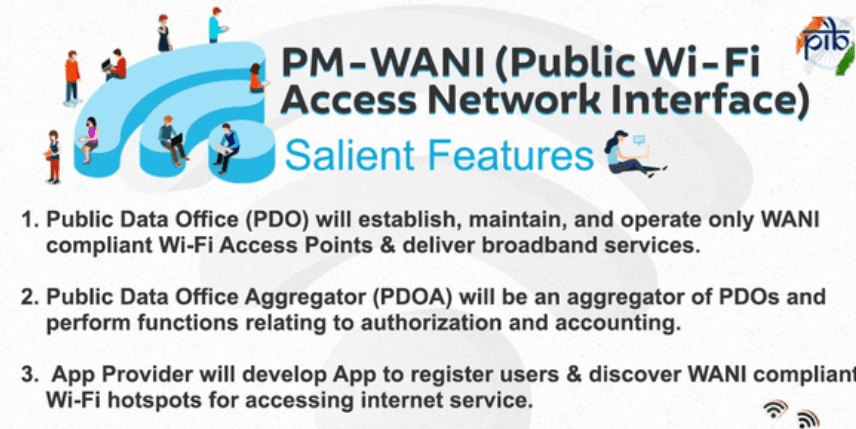
Framework PM-WANI: nationwide public Wi-Fi network delivering affordable broadband via decentralised hotspots run by small entrepreneurs

Implementation DoT, Ministry of Communications; Union Cabinet nod 9 Dec 2020

Coverage Over 3.9 lakh hotspots live across India by Nov 2025

Quick Facts for MCQs

Legal & Policy

  • Licence-exempt operation removes entry barriers, fostering rapid hotspot proliferation
  • TRAI pricing cap safeguards affordable public Wi-Fi bandwidth procurement
  • Alignment with NDCP 2018 advances universal digital access mandate

Tech & Schemes

  • Architecture Four-tier system manages provisioning, authentication, user apps, registry
  • FTTH-based backhaul now permitted, slashing PDO operating costs
  • Roaming & mobile offload enable seamless connectivity and ease cellular congestion

Economic Angle

  • Entrepreneurship Lakhs of small shops become revenue-earning Public Data Offices
  • Affordability Low-cost Wi-Fi boosts e-commerce, digital payments, telemedicine in hinterlands
  • Inclusion Scheme narrows urban-rural digital divide, expanding socio-economic opportunities

Key Data Points

FeatureData-Point
Full namePrime Minister’s Wi-Fi Access Network Interface
Cabinet approval date9 December 2020
Implementing bodyDepartment of Telecommunications
Supervising ministryMinistry of Communications
Hotspots deployed (Nov 2025)>3.9 lakh
Licence fee for PDONil
Architecture tiersPDO, PDOA, App Provider, Central Registry
Central RegistryC-DoT
TRAI fibre pricing cap≤2× retail tariff for ≤200 Mbps plans
Policy alignmentNational Digital Communications Policy 2018

Related UPSC Prelims PYQs

CDS_GK 2025PYQ 1

डिजिटल कॉमर्स के लिए ओपन नेटवर्क (ONDC) के बारे में निम्नलिखित में से कौन-सा/कौन-से कथन सही है/हैं?

GS-2Scheme

16.Samagra Shiksha Integrated Education Scheme (School Education Scheme)

PIB

What & Where

Samagra Shiksha – integrated, Centrally Sponsored scheme covering entire school span Pre-school to Class XII across India

Houses “Vocationalisation of School Education”; offers one vocational subject in Classes IX–XII for employability skills

Subsumes legacy schemes SSA, RMSA, Teacher Education to treat schooling as one continuum

Quick Facts for MCQs

Funding Pattern

  • North-East, Himalayan States receive 90 % Central assistance, States bear 10 %
  • Other States, UTs with legislature follow 60 : 40 sharing
  • UTs without legislature financed completely by Centre

Legal & Policy

  • RTE Act 2009 implementation support integral to scheme
  • Education recognised as Fundamental Right under Article 21-A

Goals & Targets

  • SDG 4.1 targets universal free, quality primary & secondary completion
  • SDG 4.5 seeks elimination of gender gaps, equal access at all education levels
  • Scheme aligns national metrics with these global benchmarks

Tech & Teachers

  • Quality push anchored on upgrading Teacher capacity and Technology integration
  • States allowed flexibility to prioritise tech‐driven interventions within resource envelope

Key Data Points

FeatureData-Point
Coverage spanPre-school to Class XII
Implementing ministryMinistry of Human Resource Development
Earlier schemes mergedSSA + RMSA + Teacher Education
Scheme natureCentrally Sponsored
Focus tag lineTwo T’s – Teacher & Technology
Vision anchorSDG 4.1 & 4.5
Legal backingRTE Act 2009, Article 21-A
Centre:State – NE/Himalayan90:10
Centre:State – Other States60:40
UTs without legislature100 % Centre
Vocational classes coveredIX to XII

Related UPSC Prelims PYQs

CDS_GK, GEO_GS 2023PYQ 1

Which one of the following statements regarding Jan Shikshan Sansthan (JSS) is not correct?

CDS_GK, GEO_GS 2025PYQ 2

NEP 2020 के दिशा-निर्देश के अनुसार, 'पोषण और पढ़ाई पूर्व' (PPBP), निम्नलिखित में से किस कार्यक्रम के अंतर्गत प्रारंभ की गई है?

Ready to practice?

Test your knowledge with our UPSC test series.

Start Free Trial