UPSC Current Affairs

12 topicsGS-1: 4GS-2: 2GS-3: 6
0/12 done
GS-2Polity

1.Opium Poppy Cultivation and Regulation (NDPS Regulation)

DD News
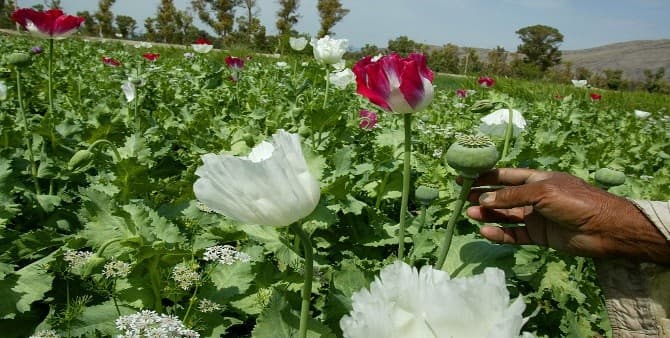
Illustration for Opium Poppy Cultivation and Regulation (NDPS Regulation)

What & Where

Flowering plant Papaver somniferum tapped for latex-rich capsules yielding opium alkaloids

Principal licit Indian belt: Madhya Pradesh, Rajasthan, Uttar Pradesh; illicit hotspots: Myanmar’s Shan, Sagaing, Chin

Harvest via manual pod lancing; winter 120-day crop enables tight monitoring

Quick Facts for MCQs

History & Monopoly

  • East India Company ran monopoly factories at Ghazipur, Patna
  • Post-1950 cultivation placed under Central Government monopoly
  • British legacy continues via Government Opium & Alkaloid Works

Agronomy

  • Climate cool dry low humidity well-drained soils favour resin-rich capsules
  • Latex exudes when pods scored, collected next day then dried
  • Annual winter crop allows predictable regulatory inspection

Medical & Illicit Uses

  • Morphine analgesic, codeine antitussive, thebaine feeds semi-synthetic opioids
  • Ayurveda Unani Homoeopathy employ regulated opium preparations
  • Raw opium converted to heroin driving narcotics trade

Security Dimension

  • Illicit cultivation finances organised crime and insurgencies
  • Myanmar surge endangers Northeast India via porous Sagaing–Chin corridors
  • Rising farm-gate prices lure growers amid conflict and economic distress

Key Data Points

FeatureData-Point
Myanmar 2023 area53,100 ha
Year-on-year rise17 %
Reporting agencyUNODC
Indian control lawNDPS Act 1985
Global uniquenessIndia only licit opium gum producer
Licensed Indian statesMP, Rajasthan, UP
Crop duration≈120 days
Key alkaloidsMorphine, Codeine, Thebaine
GS-2Polity

2.Supreme Court Action on Digital-Arrest Scams (Cyber Fraud Investigation)

The Hindu

What & Where

Definition – “Digital arrest”: fraudsters impersonate enforcement agencies, threaten arrest/account freeze, extort money online.

Core process – Spoofed calls, fake documents, deepfakes, urgent payment demand as “security/fine”.

Geography – Pan-India; ~₹3,000 cr siphoned, seniors heavily targeted.

Quick Facts for MCQs

Legal & Policy

  • SupremeCourt empowered CBI; states/UTs told to give blanket DSPE consent.
  • IntermediaryRules 2021 invoked for platform data disclosure, aiding probes.
  • RBI directed to apply AI/ML for multilayer fund-trail detection.

Tech & Schemes

  • DoT action – blocks international spoofed caller IDs used in FedEx/digital-arrest scams.
  • I4C platform links regional cybercrime coordination centres for intel sharing.
  • National Cyber Crime Reporting Portal allows online FIRs for swift jurisdiction transfer.

Security Dimension

  • INTERPOL collaboration mandated to trace offshore scam networks and mule accounts.
  • Investigation priority set: digital-arrest cases first, then investment & part-time job frauds.
  • CitizenFinancialFraud System via helpline 1930 enables real-time transaction hold within hours.

Key Data Points

FeatureData-Point
SC order year2025
Money lost (Govt estimate)≈ ₹3,000 crore
WhatsApp IDs blocked (till 2024)> 59,000
Primary probe agencyCentral Bureau of Investigation
Statute enabling CBI in StatesDSPE Act 1946 consent
Cybercrime helpline1930

Related UPSC Prelims PYQs

ESE_GS 2024PYQ 1

To increase transparency and consumer awareness and handle customer complaints, a 'Centralised Receipt and Processing Centre' and an 'Integrated Ombudsman Scheme' have been set up. These two schemes are related to which one of the following institutions?

GS-1Environment

3.World Summit on Disaster Management 2025 (Disaster Management)

PIB

What & Where

Global World Summit on Disaster Management (WSDM) 2025; platform for disaster-risk science & policy dialogue.

Hosted in Dehradun, Uttarakhand; focus on fragile Himalayan ecosystem.

Targets hydrometeorological hazards via strengthened early-warning infrastructure.

Quick Facts for MCQs

Tech & Schemes

  • Deployment; Doppler radars, AWS, observatories expand statewide real-time monitoring grid.
  • Nowcast system issues 3-hour alerts to vulnerable districts improving last-mile warning.
  • Agri-startups & CSIR value-addition models promoted for hazard-resilient livelihoods.

International Cooperation

  • Summit gathers scientists, policymakers, industry leaders from multiple nations for shared DRR strategies.
  • Aims aligning Indian adaptation actions with Sendai Framework & Paris climate goals.

Regional Significance

  • Upgrades boost Uttarakhand capacity against cloudbursts, GLOFs, landslides, flash floods.
  • Positions India as South-Asian hub for disaster science & early-warning technology.

Key Data Points

FeatureData-Point
Edition/YearWSDM 2025
Venue city/stateDehradun, Uttarakhand
Summit theme“Strengthening International Cooperation for Building Resilient Communities”
Weather radars announced6 units
New surface observatories33 stations
Automatic Weather Stations (AWS)142 installations
Nowcast forecast window3-hour lead time
Key hazardsCloudburst, GLOF, landslide, flash-flood, forest fire
Principal ecosystemHimalayas
India net-zero pledge year2070

Related UPSC Prelims PYQs

CAPF_GAI, CDS_GK 2023PYQ 1

Which one of the following is the venue of the UN 2023 Water Conference?

CAPF_GAI, CDS_GK 2025PYQ 2

वर्ष 2025 में निम्नलिखित में से किसके तत्वावधान में आयोजित की गई बैठक का विषय 'दुश्मान युग के लिए सहयोग (Collaboration for the Intelligent Age)' था?

GS-1Mapping

4.Bitra Island Lakshadweep Coral Atoll (Island Mapping)

The Hindu
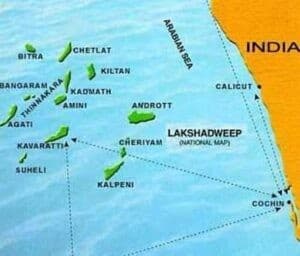
Illustration for Bitra Island Lakshadweep Coral Atoll (Island Mapping)

What & Where

Smallest-inhabited Lakshadweep coral atoll; part of the Amindivi subgroup.

Situated in the Arabian Sea, 483 km west of Kochi, between Perumal Par (N) and Byramgore Reef (NW).

Formed by upward coral growth on a volcanic base, enclosing a calm lagoon protected by a ring reef.

Quick Facts for MCQs

Geological Traits

  • Coral-accretion atop submerged volcano built ring reef structure.
  • Reef barrier dampens monsoon waves, keeping lagoon placid.
  • Sandy cays formed by biogenic debris on reef rim.

Ecological Value

  • Historic seabird breeding ground within fragile Lakshadweep reef ecosystem.
  • Lagoon–reef complex hosts diverse marine fauna, vulnerable to bleaching, erosion.
  • Environmental regulations essential due to limited land and high fragility.

Cultural & Demographic

  • Shrine of Arab saint Malik Mulla attracts inter-island pilgrims annually.
  • Permanent habitation began 1945; island community remains very small.

Security Dimension

  • Naval detachment enhances surveillance of Arabian Sea shipping lanes.
  • Complements IAF runway extensions on Agatti and Minicoy for rapid force projection.

Key Data Points

FeatureData-Point
Archipelago groupAmindivi, Lakshadweep
Island componentsMain Bitra (≈0.177 sq km) + southern cay (≈0.009 sq km)
Lagoon area45–54 sq km
Distance from Kochi483 km W
Reef typeCoral atoll
First permanent settlement1945
Pilgrimage landmarkShrine of Malik Mulla
New defence assetIndian Navy detachment (operational 2024-25)
Adjacent air upgradesIAF facilities at Agatti & Minicoy
GS-1Mapping

5.East African Rift Valley Seafloor Spreading (East African Rift)

Indian Express
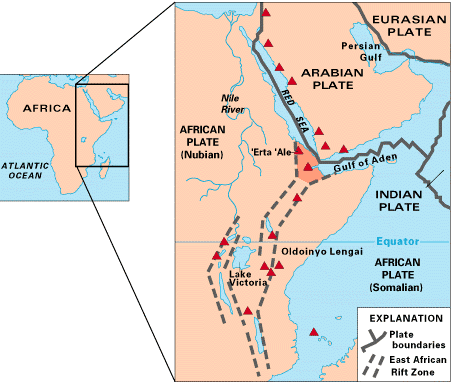
Illustration for East African Rift Valley Seafloor Spreading (East African Rift)

What & Where

Active continental rift valley stretching ~3,500 km Red Sea–Mozambique; divergent boundary between Nubian & Somali plates.

Two arms: volcanic‐rich Eastern Rift (Ethiopia–Kenya) and seismic Western Rift (Uganda–Malawi) with prominent horst–graben faults.

Afar Triple Junction joins Red Sea, Gulf of Aden, East African rifts; GPS shows 5–16 mm/yr plate separation northward.

Quick Facts for MCQs

Tectonic Mechanics

  • Mantle-plume upwelling elevates, thermally weakens lithosphere, promoting crustal extension.
  • Extensional stress generates steep normal faults, fissures, frequent earthquakes.
  • Magma intrusions & flood basalts accommodate strain, advance eventual oceanic crust formation.

Geomorphological Outcomes

  • Linear rift basins evolve into deep lakes: Turkana, Malawi, Tanganyika.
  • Progressive crustal thinning may inundate grabens, forging new coastlines.
  • Surface marked by fault scarps, volcanic cones, fissure lava fields.

Socio-Economic Impact

  • Infrastructure risk: road, farm and settlement damage from fissuring & quakes.
  • Disaster-preparedness costs rising for Ethiopia, Kenya, Tanzania.
  • Potential future seaports for landlocked Uganda, Zambia if ocean basin forms.

Key Data Points

FeatureData-Point
Total length~3,500 km
Diverging platesNubian vs Somali
Northern spreading rate5–16 mm / year
Distinct branchesEastern Rift & Western Rift
Key volcanoErta Ale, Ethiopia
Deepest graben lakeLake Tanganyika
Triple-junction nameAfar Triple Junction
Heat driverEast African mantle superplume
1960s magnetic dataConfirms nascent seafloor spreading
Probable futureNew ocean basin isolating Somali plate
GS-3S&T

6.Solar Flare X1.9-Class Space Weather (Space Weather)

NASA

What & Where

Solar flare: sudden, intense energy burst from Sun’s magnetically stressed regions near sunspots

Formation: magnetic reconnection in twisted field lines releases photons, plasma, sometimes with coronal mass ejection (CME)

Geography: originates in active regions like giant sunspot group AR 4294–96 now Earth-facing

Quick Facts for MCQs

Space Weather Impact

  • Communication: HF signals, aviation routes, maritime systems suffer outages during peak flare minutes
  • Satellites: Charged particles degrade electronics, raise drag on low-Earth orbit craft
  • Power grids: CME-linked geomagnetic storms induce currents, risking transformer burnout

Sunspot Dynamics

  • Magnetic complexity: β-γ-δ configurations favor large flares
  • Solar rotation: Carries active regions into Earth-facing position every ~27 days
  • Size relevance: Larger sunspots statistically yield higher-class flares

Classification & Metrics

  • GOES satellites: Monitor 1–8 Å X-ray flux to grade flare class and strength
  • Subclasses: Numeric suffix (e.g., 1.9) gives magnitude within letter band
  • Forecast centers: NOAA SWPC issues alerts R1–R5 for radio blackouts linked to flare class

Key Data Points

FeatureData-Point
Current eventX1.9-class flare, 29 Mar 2024 (NASA)
Sunspot groupAR 4294–96, >10 × Earth diameter
X-ray scaleA, B, C, M, X; each step = 10× intensity
Radiation spanRadio, UV, X-ray, gamma-ray
Onset speedMinutes; difficult to forecast
Immediate impactHF radio blackout over Australia
Space-weather riskNavigation loss, satellite damage, geomagnetic storms if CME arrives

Related UPSC Prelims PYQs

GS1 2022PYQ 1

If a major solar storm (solar flare) reaches the Earth, which of the following are the possible effects on the Earth ?

GS-3S&T

7.WHO Guideline on GLP-1 Obesity Therapy (GLP-1 Therapy)

Business Standard

What & Where

WHO global guideline on long-term use of GLP-1 receptor agonists for obesity management

Applies to adults worldwide; excludes pregnancy cases

Key drugs: semaglutide, tirzepatide, liraglutide

Quick Facts for MCQs

Legal & Policy

  • Conditional-use status; not a mandatory standard
  • Requires health-system readiness, pricing & procurement plans
  • Added to WHO Essential Medicines List for diabetes, not yet for obesity

Therapeutic Mechanism

  • Appetite-reduction; slows gastric emptying → lower caloric intake
  • Boosts insulin secretion; drops blood glucose, cardio-renal risks
  • Clinical trials show 10–20 % body-weight loss when used long term

Equity & Access

  • Costly injectables risk widening rich-poor obesity gap
  • WHO urges tiered pricing, insurance cover, local manufacturing
  • Combined lifestyle programmes needed to maximise benefit in low-resource settings

Key Data Points

FeatureData-Point
Guideline natureFirst-ever WHO policy on obesity薬
Drug classGLP-1 receptor agonists
Core recommendationConditional, lifelong use + behavioural therapy
Listed exceptionsPregnant women excluded
Access projection<10 % eligible may get drugs by 2030
GS-3S&T

8.Alaknanda Spiral Galaxy Discovery (Early Spiral Galaxy)

Indian Express
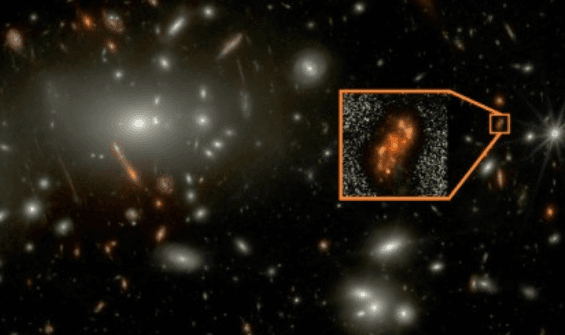
Illustration for Alaknanda Spiral Galaxy Discovery (Early Spiral Galaxy)

What & Where

Galaxy Alaknanda = mature, two-armed spiral formed 1.5 billion yrs after Big Bang, located ~12 billion light-years from Earth

Found with NASA James Webb Space Telescope; analysis by NCRA–TIFR, Pune

Core galaxy types: spiral, elliptical, irregular; spirals show arms, central bulge, sometimes bars

Quick Facts for MCQs

Discovery Details

  • Instrument JWST infrared sensitivity enabled high-redshift spiral imaging
  • Collaboration Indian astronomers leveraged Webb public data archives
  • Naming convention reflects cultural linkage to Milky Way’s Hindi name Mandakini

Early-Universe Implications

  • Observation contradicts expectation of clumpy, turbulent early disks
  • Suggests rapid mass assembly and cooling mechanisms ≤1.5 Gyr post-Big Bang
  • Supports growing dataset of unexpectedly mature high-z galaxies from JWST

Galaxy Evolution Processes

  • Spiral-bar dynamics redistribute gas, trigger star formation
  • Collisions compress gas clouds; mergers can morph spirals into ellipticals
  • Galactic cannibalism slowly strips dwarfs, building massive halos

Milky Way Context

  • Milky Way diameter >100,000 ly; Sun orbits core every ≈240 Myr
  • Member of Local Group within Laniakea Supercluster
  • Shares spiral morphology akin to Alaknanda, though formed much later

Key Data Points

FeatureData-Point
Telescope usedJames Webb Space Telescope
Discovering instituteNCRA–TIFR, Pune
Cosmic age when formed1.5 billion years
Present distance≈ 12 billion light-years
Structure classTwo-armed spiral with bright bulge
Universe’s age fraction~10 % of current age
Name originHimalayan river Alaknanda
SignificanceChallenges late-formation spiral models
GS-3Security

9.INS Taragiri Nilgiri-Class Stealth Frigate (Stealth Frigate)

The Hindu

What & Where

INS Taragiri — fourth Project 17A Nilgiri-class stealth frigate for Indian Navy

Built at Mazagon Dock Shipbuilders Ltd, Mumbai; delivered September 2023

Multi-mission role across air, surface, sub-surface domains in Indian Ocean Region

Quick Facts for MCQs

Tech & Schemes

  • Design integration of BrahMos, MF-STAR and IPMS delivers high automation and network-centric warfare capability
  • CODOG propulsion allows 28+ kn speed with efficient cruising on diesels
  • Project 17A improves earlier Shivalik stealth design via composite superstructure and flush decks

Industrial & Indigenisation

  • MDL executed modular construction with indigenous steel and combat systems
  • Over 200 MSMEs contribute to hull, electronics, weapons achieving 75 % local content
  • Supports Aatmanirbhar Bharat and Indian Navy’s self-reliance roadmap

Fleet Composition

  • Project 17A lineup: INS Nilgiri, Himgiri, Udaygiri, Taragiri, upcoming Dunagiri, two yet unnamed
  • Parallel construction at MDL Mumbai and GRSE Kolkata accelerates deliveries
  • Taragiri delivery showcases compressed timelines against previous frigate projects

Security Dimension

  • Adds potent surface, anti-air and ASW punch boosting Indian Ocean deterrence
  • Stealth profile complicates adversary tracking improving first-strike and survivability
  • Multi-mission capability enables escort, maritime security, and power-projection tasks

Key Data Points

FeatureData-Point
Ship classNilgiri-class (Project 17A)
Sequence in class4th of 7 planned
Builder yardMazagon Dock Shipbuilders Ltd, Mumbai
PropulsionCODOG: diesel engines + gas turbines; CPP shafts
Stealth measuresReduced radar, acoustic, infrared signatures
Key missilesBrahMos cruise, MRSAM air-defence
Primary radarMF-STAR multifunction AESA
Gun armament76 mm SRGM, 30 mm, 12.7 mm CIWS
ASW suiteTorpedoes and rockets
AutomationIntegrated Platform Management System (IPMS)
Indigenisation level~75 %; >200 MSME suppliers

Related UPSC Prelims PYQs

CAPF_GAI, CDS_GK 2023PYQ 1

Which one of the following Indian Naval Ships has recently concluded a 17,000-nm trans-ocean intercontinental voyage?

CAPF_GAI, CDS_GK 2024PYQ 2

Which one of the following statements about 'INS Tarmugli' is not correct?

GS-3Security

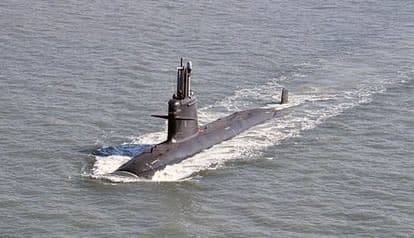
10.INS Aridaman Indigenous Nuclear Ballistic Submarine (Nuclear Submarine)

IT
Illustration for INS Aridaman Indigenous Nuclear Ballistic Submarine (Nuclear Submarine)

What & Where

INS Aridaman: third Arihant-class SSBN, Strategic Forces Command asset for nuclear second-strike.

Built under Advanced Technology Vessel Project at Ship Building Centre, Visakhapatnam.

Deployed primarily in Indian Ocean to maintain continuous at-sea deterrence.

Quick Facts for MCQs

Security Dimension

  • Deterrence: Strengthens nuclear triad, guarantees second-strike under no-first-use.
  • Patrol: Minimum two-boat rotation enables uninterrupted at-sea presence.
  • Reach: SLBMs allow Indo-Pacific coverage, counterbalancing regional forces.

Indigenisation Drive

  • Components: >90 % Indian-made, including reactor, hull, combat systems.
  • Programme: ATV exemplifies domestic nuclear propulsion capability.
  • Policy: Aligns with Aatmanirbhar Bharat, spurring ancillary defence industries.

Historical Timeline

  • Inception: ATV initiated late 1980s for credible submarine deterrent.
  • Milestones: INS Arihant 2016, INS Arighat 2024.
  • Addition: INS Aridaman gives India three operational SSBNs, joining elite six-nation club.

Key Data Points

FeatureData-Point
ClassArihant-class SSBN
Displacement (submerged)~7,000 t
Reactor Power83 MW pressurised water reactor
Launch Tubes4 vertical
Missile Load24 × K-15 (750 km) or K-4 (3,500 km)
Indigenous Content>90 %
Construction ProgrammeAdvanced Technology Vessel (ATV)
Operational ControlStrategic Forces Command

Related UPSC Prelims PYQs

CDS_GK, GS1 2016PYQ 1

Which one of the following is the best description of 'INS Astradharini', that was in the news recently?

CDS_GK, GS1 2025PYQ 2

Which of the following statements are correct about ‘Arnala’, an Anti-Submarine Warfare Shallow Water Craft ?

GS-3SecurityQuick Bite

11.Exercise Ekuverin India-Maldives Joint Drill (India-Maldives Exercise)

PIB

What & Where

Exercise Ekuverin: annual India-Maldives joint army drill; name means “Friends” in Dhivehi.

10th edition: 7–20 Oct 2019, Pune, Maharashtra; alternates yearly between both nations since 2009.

Scenario: counter-insurgency/counter-terrorism in semi-urban terrain under prospective UN peacekeeping mandate.

Quick Facts for MCQs

Security Dimension

  • Interoperability: joint planning, cordon-and-search, casualty evacuation, IED handling for CI/CT readiness.
  • UN-mandate drill: aligns tactics with peacekeeping Rules of Engagement, civilian protection standards.
  • Semi-urban training: mirrors likely terrorist hideouts in island/peninsular settings of both nations.

Bilateral Relations

  • Defense diplomacy: strengthens India’s SAGAR vision, Maldives’ “India First” policy trust.
  • Capacity-building: offers Maldivian troops access to Indian simulators, firing ranges, logistics support.
  • Continuity: decade-long uninterrupted series despite political shifts, signaling strategic stability.

Operational Focus

  • Skill-sharing: room intervention, joint patrols, counter-sniper techniques exchanged.
  • Humanitarian element: includes disaster response drills reflecting Indian Ocean tsunami/cyclone risks.
  • Language integration: mixed platoons use English command to minimize friction, enhance quick coordination.

Key Data Points

FeatureData-Point
Partner forcesIndian Army & Maldives National Defence Force
Edition (2019)10th
Dates (2019)7–20 Oct 2019
Duration14 days
Venue (2019)Pune, Maharashtra
First held2009
Hosting patternAlternates India / Maldives each year
Meaning of “Ekuverin”Friends (Dhivehi language)
Core focusCI/CT operations, semi-urban, UN mandate
Previous edition9th, 2018, Maldives

Related UPSC Prelims PYQs

CDS_GK, NDA_GAT 2023PYQ 1

The 16th edition of Indo-Nepal annual joint training exercise in jungle warfare and counter-terrorism operations was held in December 2022 at Nepal Army Battle School, Saljhandi. What is the name of this exercise?

CDS_GK, NDA_GAT 2024PYQ 2

Which one among the following Joint Military Exercises was NOT conducted between India and USA?

GS-1Misc

12.Inclusive Growth and Disability Rights India (Disability Rights)

PIB
Illustration for Inclusive Growth and Disability Rights India (Disability Rights)

What & Where

Inclusive growth & disability rights: participation of PwDs via accessible infrastructure, education, livelihoods, legal safeguards

Key processes: recognition of 21 disabilities, UDID digital certification, accessibility standards under Sugamya Bharat Abhiyan

Geography: India with 2.68 crore PwDs (2.21% population), aligned to UNCRPD global commitments

Quick Facts for MCQs

Legal & Policy

  • RPwD Act 2016 mandates non-discrimination, inclusive education, 4 % reservation, time-bound accessibility standards
  • National Trust Act 1999 supports autism, cerebral palsy, intellectual and multiple disabilities via community care
  • RCI Act 1992 regulates rehabilitation professional training and national registers

Schemes & Tech

  • UDID Project enables single nationwide certificate, benefit portability, real-time scheme integration
  • Sugamya Bharat Abhiyan audits public buildings, transport, ICT, app allows accessibility grievance uploads
  • ADIP Scheme funds modern aids, cochlear implants, post-operative therapy

Challenges

  • Accessibility gaps persist in buildings, transport, digital services despite campaign targets
  • High out-of-pocket spending on devices, therapy pushes families into poverty
  • Low scheme awareness among women, rural and marginalised caste PwDs limits uptake

Way Forward

  • Strengthen district outreach using multilingual IEC, convergence with PM-DAKSH, legal aid clinics
  • Enforce accessible building codes, transport standards, web guidelines across public and private sectors
  • Expand NAP-SDP skill courses, incentivise inclusive hiring through industry partnerships

Key Data Points

FeatureData-Point
PwD population (Census 2011)2.68 crore / 2.21 %
Disabilities recognised21 categories (RPwD Act 2016)
Job reservation quota4 % in Government posts
Key accessibility missionSugamya Bharat Abhiyan 2015
Digital ID coverageUDID nationwide e-certificates
Assistive device fundingADIP Scheme under DEPwD

Related UPSC Prelims PYQs

CDS_GK, GS1 2011PYQ 1

India is home to lakhs of persons with disabilities. What are the benefits available to them under the law?

CDS_GK, GS1 2024PYQ 2

Consider the following statements regarding the Sugamya Bharat Abhiyan:

Ready to practice?

Test your knowledge with our UPSC test series.

Start Free Trial