UPSC Current Affairs

12 topicsGS-1: 4GS-2: 2GS-3: 6
0/12 done
GS-3Economy

1.WIPO Global Innovation Index 2025 Rankings (Innovation Index)

WIPO

What & Where

Index: WIPO Global Innovation Index, annual benchmarking of 139 economies, 100 innovation clusters

Geography: Switzerland tops globally; India leads Central & Southern Asia, lower-middle income group

Framework: Assesses innovation Inputs (5 pillars) and Outputs (2 pillars) using 80+ indicators

Quick Facts for MCQs

Rankings & Groups

  • Position: India retains 38/139, unchanged from previous year
  • Over-performance: Continues longest streak of above-income-level innovation output
  • Region: Only Central-Southern Asian economy inside global top-40

Framework & Indicators

  • Inputs: Institutions, Human Capital & Research, Infrastructure, Market Sophistication, Business Sophistication
  • Outputs: Knowledge & Technology, Creative Outputs
  • Metrics: R&D intensity, PCT patents, VC flows, unicorn valuations, ICT adoption, high-tech exports

Indian Strengths

  • ICT-services exports: Maintains world No 1 share
  • Finance: Unicorn valuations & late-stage VC deals rank among global top few
  • Knowledge creation: Publications up 7.6 percent; patent filings robust
  • Creative outputs: India improves to 42nd from 49th in two years

Innovation Clusters

  • Count: Four Indian metro areas in world top-100 cluster list
  • Ranks: Bengaluru 21, Delhi 26, Mumbai 46, Chennai enters list
  • Implication: Reflects deepening startup ecosystem and R&D concentration

Key Data Points

FeatureData-Point
Edition number18th (GII 2025)
Launching bodiesWIPO + Portulans Institute & partners
Total economies covered139
Global rank of India38th
India score38.2
India regional standing1st in Central & Southern Asia
Global top-3 nations1 Switzerland 2 Sweden 3 USA
India income-group statusLeader among lower-middle income economies
Consecutive over-performer years15
Indian clusters in top-100Bengaluru 21, Delhi 26, Mumbai 46, Chennai new

Related UPSC Prelims PYQs

CDS_GK 2025PYQ 1

भारत में नवाचार तथा अनुसंधान और विकास के बारे में निम्नलिखित कथनों पर विचार कीजिए :

CDS_GK 2024PYQ 2

विश्व बौद्धिक संपदा संगठन द्वारा प्रकाशित ‘ग्लोबल इनोवेशन इंडेक्स-2023’ में भारत के स्थान (रैंक) के संदर्भ में, निम्नलिखित में से कौन-सा/कौन-से कथन सही है/हैं?

GS-3Economy

2.WTO World Trade Report 2025 on AI (AI and Trade)

WTO
Illustration for WTO World Trade Report 2025 on AI (AI and Trade)

What & Where

Annual WTO flagship “World Trade Report 2025” analyses trade–AI linkages.

Theme 2025: “Making Trade and AI Work Together for All”.

Released by WTO headquarters, Geneva; covers 164-member multilateral trading system.

Quick Facts for MCQs

Economic Angle

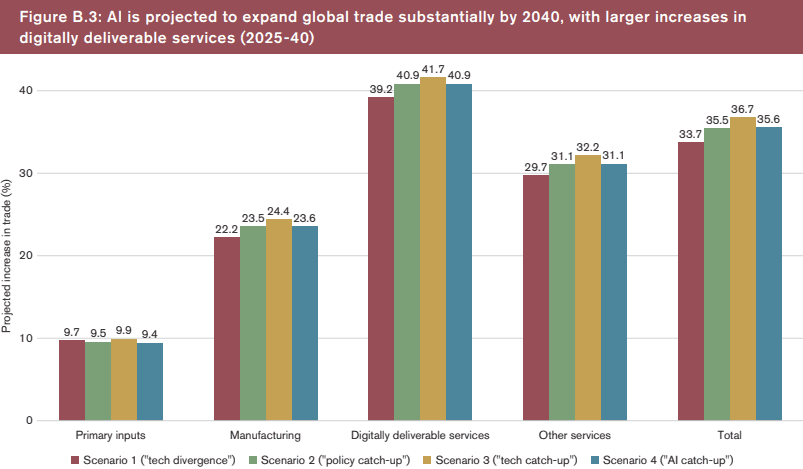
  • Projection: AI cuts trade frictions, lifting flows nearly 40 % by 2040.
  • Value: 2023 AI-enabling goods trade USD 2.3 trn, led by chips, semiconductors, servers.
  • Spillover: 10 % extra digital trade → 2.6 % more AI patent citations, indicating diffusion.

Digital Divide

  • Connectivity: Poor broadband and compute may bar low-income nations from AI trade gains.
  • Infrastructure: WTO urges investment in cloud, data centres, backbone networks to close gaps.
  • Inclusivity: Report emphasises reskilling, social protection and affordable access for equitable AI benefits.

Regulatory & Governance

  • Fragmentation: Quantitative AI-goods restrictions quadrupled 2012-24, raising costs, damping innovation.
  • Call: WTO advocates open trade, interoperable standards, avoidance of protectionist barriers.
  • Governance: Suggests multilateral rules for data flows, algorithmic transparency, ethical safeguards.

Labour Market

  • Displacement: Routine cognitive jobs like translation, transcription at high automation risk.
  • Creation: Demand rises for data annotation, AI engineering and oversight roles, especially in developing economies.
  • Wages: Widespread AI adoption could modestly narrow global skill wage differentials.

Key Data Points

FeatureData-Point
Projected trade boost by AI (2040)34–37 %
Projected global GDP rise12–13 %
AI-enabling goods trade value (2023)USD 2.3 trillion
Restrictions on AI goods130 (2012) → 500 (2024)
Digital trade 10 % rise effect+2.6 % AI patent citations
Data-centre electricity share1.5 % of global
Report year released2025

Related UPSC Prelims PYQs

GS1 2025PYQ 1

ग्रैण्ड पैलै (Grand Palais) पेरिस में नवम्बर 2025 में आयोजित होने वाले AI शिखर सम्मेलन के सन्दर्भ में, निम्नलिखित कथनों पर विचार कीजिए :

GS1 2025PYQ 2

विश्व बैंक ने यह चेतावनी दी है कि भारत वह पहला देश बन सकता है जहाँ आर्टिफ़िशियल इंटेलिजेंस-आधारित ऑटोमेशन (डेटा-ड्रिवन ऑटोमेशन) के कारण 35% से अधिक नौकरियाँ प्रभावित होंगी। निम्नलिखित कथनों पर विचार कीजिए:

GS-3Infrastructure

3.India-FAO Blue Ports Development Programme (Blue Port Framework)

PIB
Illustration for India-FAO Blue Ports Development Programme (Blue Port Framework)

What & Where

Blue Ports: FAO-assisted upgrade of Indian fishing harbours into smart, sustainable, inclusive hubs under FAO-TCP & PMMSY.

Core processes: tech-enabled harbour management, eco-friendly design, climate-resilient operations, traceable value chains.

Geography focus: pilot sites Vanakbara (Diu), Jakhau (Gujarat), Karaikal (Puducherry).

Quick Facts for MCQs

Tech & Schemes

  • Integration: sensor networks, automation, real-time dashboards for catch handling, harbour traffic, safety alerts.
  • Digital traceability: end-to-end data for certification, export compliance, consumer confidence.
  • Funding synergy: PMMSY capital + FAO expertise drive modernisation templates for replication.

Environmental Impact

  • Pollution control: debris clean-up, sewage treatment, energy transition reduce harbour ecological footprint.
  • Climate resilience: infrastructure designed for extreme weather, sea-level rise, disaster readiness.
  • Waste management: segregated collection, recycling loops, minimised plastic leakage into oceans.

Economic Angle

  • Blue Economy push: higher post-harvest value, reduced spoilage, stronger global market access.
  • Employment: infrastructure upgrades generate skilled jobs in logistics, maintenance, cold chain.
  • Competitiveness: smart ports shorten turnaround time, lowering operational costs for fishing fleets.

Social Concerns

  • Safety upgrade: wider decks, non-slip surfaces, emergency medical units for fisherfolk.
  • Inclusion: women-friendly processing zones, stakeholder committees ensure participatory governance.
  • Community uplift: training on digital tools, sustainable fishing practices raise long-term livelihoods.

Key Data Points

FeatureData-Point
Main partnersDept. of Fisheries & FAO
UN programmeFAO Technical Cooperation Programme (TCP)
Indian scheme backingPradhan Mantri Matsya Sampada Yojana
Ministry concernedFisheries, Animal Husbandry & Dairying
Concept launchedBlue Port Framework
Pilot harboursVanakbara, Jakhau, Karaikal
Total pilot outlay₹369.8 crore
Tech toolsIoT, AI, 5G, satellite comms, data analytics
Green measuresRainwater harvesting, LED lighting, electric gear, waste-sewage treatment
Target outcomesExport boost, food security, fisherfolk income, marine pollution cut

Related UPSC Prelims PYQs

CDS_GK, ESE_GS 2026PYQ 1

What is the name of the national digital framework launched at India Maritime Week 2025 to make Indian ports data-driven and AI-enabled?

CDS_GK, ESE_GS 2024PYQ 2

Which of the following statements is not correct?

GS-1Environment

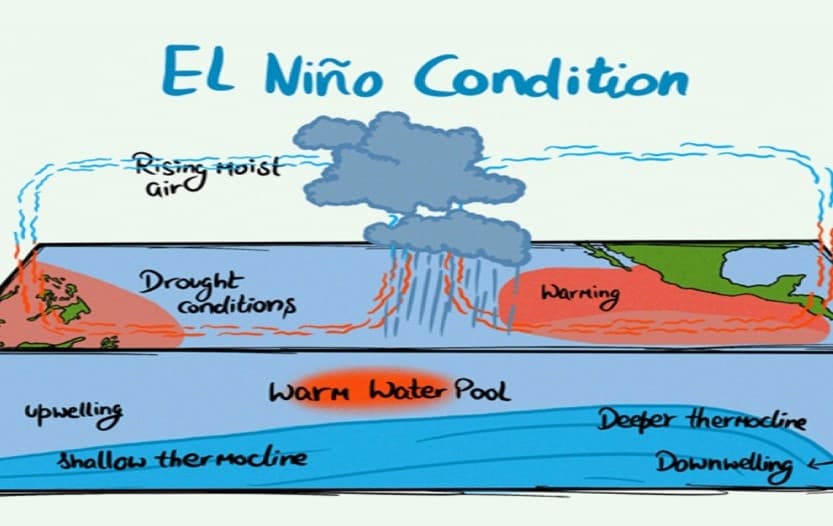
4.El Niño Climatic Phenomenon and Indian Monsoon Impact (El Niño)

DH
Illustration for El Niño Climatic Phenomenon and Indian Monsoon Impact (El Niño)

What & Where

El Niño = warm phase of ENSO, marked by ≥0.5 °C SST anomaly in central-eastern tropical Pacific.

Forms when easterly trade winds weaken, eastward warm-water shift deepens thermocline off South America.

Key geography: Niño 3.4 box (5° N–5° S, 120°–170° W) used for Oceanic Niño Index.

Quick Facts for MCQs

Formation Drivers

  • Westerly wind bursts & active Madden–Julian Oscillation episodes initiate eastward warm-pool migration.
  • Background global warming mildly favours more frequent or intense El Niño events.
  • Positive feedback: weakened trades → warmer SST → further trade-wind weakening.

Indian Monsoon Impact

  • Rain-day count drops; isolated heavy-rain events intensify, per new peer-reviewed study.
  • Onset often delayed; withdrawal erratic, complicating sowing and reservoir planning.
  • Central India faces higher flash-flood hazard despite overall rainfall deficit.

Global Teleconnections

  • Alters Pacific jet streams, shifting storm tracks across Americas, Africa, West Asia.
  • Northern Hemisphere winters often warmer; Atlantic hurricanes generally fewer.
  • Agriculture losses recurrent in rice-growing SE Asia and wheat zones of Australia.

Key Data Points

FeatureData-Point
Cycle periodicityRoughly every 2–7 years
Monitoring indexOceanic Niño Index (ONI)
SST trigger value≥ +0.5 °C for 5 overlapping 3-month means
Trade-wind changeSignificant weakening or reversal of easterlies
Key atmospheric linkSouthern Oscillation (pressure seesaw Tahiti-Darwin)
Study finding+50 % chance of extreme daily rain in central India
Seasonal monsoon effectOverall SW monsoon suppression, drought risk ↑
Typical Pacific fisheries impactUpwelling decline, anchovy catch crashes off Peru
Common regional extremesDroughts: Indonesia, Australia; Floods: Peru, Ecuador

Related UPSC Prelims PYQs

GS1 2002PYQ 1

For short-term climate prediction, which one of the following events, detected in the last decade, is associated with occasional weak monsoon rains in the Indian sub-continent?

GS1 2011PYQ 2

La Nina is suspected to have caused recent floods in Australia. How is La Nina different from El Nino ?

GS-1Environment

5.Seven Indian Sites on UNESCO Tentative Natural List (UNESCO Tentative List)

News on Air

What & Where

Tentative List: UNESCO’s pre-nomination roster, gateway to World Heritage inscription & related global funding.

2023 update: India added seven natural heritage sites, lifting its Tentative List count to 69.

Geographic spread: Maharashtra, Karnataka, Meghalaya, Nagaland, Andhra Pradesh (two) and Kerala.

Quick Facts for MCQs

Geological Highlights

  • Lava province Deccan Traps among world’s best-preserved flood basalts.
  • Naga Hill Ophiolite exposes mantle-ocean crust sequence, vital for plate-tectonic studies.
  • Eparchaean Unconformity shows 900 Ma time gap between Archaean granite & Proterozoic sediments.

Conservation & Funding

  • Tentative listing enables access to UNESCO technical cooperation & global conservation grants.
  • Focus: safeguard India’s geodiversity alongside existing biosphere & cultural protections.
  • Sites offer baseline data for palaeoclimate, tectonic and biodiversity research.

Tourism & Soft Power

  • UNESCO tag prospects boost eco-tourism, community jobs without heavy infrastructure.
  • Adds to India’s cultural diplomacy, projecting natural heritage globally.
  • Visitor management plans mandated to maintain ecological balance.

Key Data Points

FeatureData-Point
UNESCO stepTentative List precedes formal nomination
Indian additions 20237 natural heritage sites
India’s Tentative List total69 properties
Deccan Traps localeKoyna WLS, Maharashtra
Columnar basaltSt. Mary’s Island, Karnataka
Meghalayan Age stratotypeMawmluh Cave, Meghalaya
Oceanic crust on landNaga Hill Ophiolite, Nagaland
Red sand dunesErra Matti Dibbalu, Andhra Pradesh
1.5 Ga unconformityTirumala Hills, Andhra Pradesh
Only SW coastal cliffsVarkala Cliffs, Kerala

Related UPSC Prelims PYQs

GS1 2009PYQ 1

Recently, which one of the following was included in the UNESCO's World Heritage list ?

GS1 2005PYQ 2

Consider the following statements:

GS-3Environment

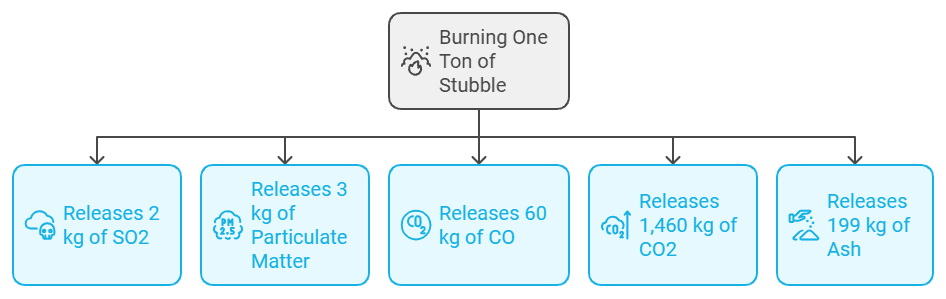
6.Stubble Burning Pollution and Mitigation Measures (Crop Residue Burning)

The Hindu
Illustration for Stubble Burning Pollution and Mitigation Measures (Crop Residue Burning)

What & Where

Practice — burning leftover paddy/wheat straw to clear fields for next sowing

Timing — late September–early November, peak across Punjab, Haryana, Uttar Pradesh Indo-Gangetic belt

Process — combine harvesters leave 10–15 cm stubble, farmers ignite residues to meet tight wheat schedule

Quick Facts for MCQs

Drivers

  • MSP bias toward rice–wheat monoculture, compressing field turnaround
  • Burning cheapest option versus balers, shredders, labor
  • Erratic monsoon shortens harvest-to-sowing gap, forcing quick clearance

Impacts

  • Air-quality decline, smog, respiratory disorders across NCR
  • Soil nutrient, moisture and microbe loss, long-term fertility drop
  • Greenhouse gases CO₂, CH₄ add to warming trajectory

Challenges

  • Machinery shortage at Custom Hiring Centres, weak biomass logistics chain
  • Ambiguous environmental compensation rules, burdening small farmers
  • Limited training and awareness on sustainable residue management

Tech & Schemes

  • In-situ tools — Happy Seeder, Super SMS, bio-decomposers under CAQM plan
  • Ex-situ uses — biomass power, thermal co-firing, 2G ethanol, CBG, packaging material
  • Support systems — SMAM subsidies, Punjab apps i-Khet & Cooperative Machinery Tracker for equipment access

Key Data Points

FeatureData-Point
States with highest incidencePunjab, Haryana, Uttar Pradesh
Peak burning windowLate Sep – Early Nov
Harvester stubble height10–15 cm left uncut
Key policy bodyCommission for Air Quality Management (CAQM)
Flagship in-situ machineHappy Seeder: cuts straw, sows wheat simultaneously
Microbial solutionPusa Decomposer: composts residue in ~25 days
Principal pollutantsPM10, PM2.5, NOx, CH₄, CO, VOCs
Supreme Court (Sep 2025)SPCB vacancies filled in 3 months, penal action for burning
Central subsidy windowSub-Mission on Agricultural Mechanisation (SMAM)

Related UPSC Prelims PYQs

GS1 2019PYQ 1

Consider the following:

GS1 2020PYQ 2

What is/are the advantage/advantages of zero tillage in agriculture?

GS-3Species

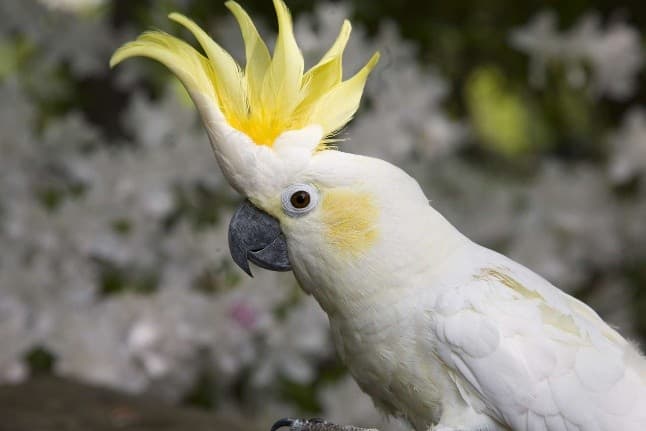
7.Yellow-Crested Cockatoo Conservation Challenges (Critically Endangered Bird)

The Hindu
Illustration for Yellow-Crested Cockatoo Conservation Challenges (Critically Endangered Bird)

What & Where

Definition Medium-sized white parrot with striking yellow crest; member of genus Cacatua

Native range Endemic to Indonesia and Timor-Leste; historically common across Nusa Tenggara, Sulawesi, Masalembu

Core geography today Fragmented pockets on Komodo, Flores, Sumbawa, Timor, small Sulawesi islands; urban Hong Kong hosts introduced but breeding flock

Quick Facts for MCQs

Species Features

  • Crest yellow, smaller stature than sulphur-crested cockatoo
  • Vocalization loud squawks serving flock cohesion, alarm
  • Diet seeds, nuts, fruits; beak adapted for cracking

Breeding Ecology

  • Season lays 2–3 white eggs in tree cavities
  • Incubation both parents share 26–28 day duty
  • Fledging chicks cared cooperatively until independence

Threats & Conservation

  • Habitat loss logging, farmland conversion, urban pruning remove cavities
  • Trade pressure historical cage-bird demand decimated wild numbers
  • Intervention conservationists installing nest boxes in Hong Kong & native islands

Urban Context

  • Adaptation feeds, roosts in city parks; tolerates close human presence
  • Conflict tree management cuts nesting limbs, prompting artificial sites
  • Citizen role local birdwatchers monitor boxes, report breeding success

Key Data Points

FeatureData-Point
Scientific nameCacatua sulphurea
IUCN statusCritically Endangered
Average lengthMedium, c. 35 cm
PlumageSnow-white body, fan-shaped yellow crest
Bill typeStrong curved black beak for nuts & seeds
Social natureHighly gregarious; noisy flocks
Pair bondLifelong monogamy
Nest siteNatural tree hollows; accepts nest boxes
Clutch size2–3 eggs
Parental careBoth sexes incubate & feed chicks
MovementMostly sedentary with local shifts for food
Preferred habitatTropical dry forests & woodlands
Urban adaptationUses park canopies, coexists with humans
Key threatTree-cavity loss via logging & urban trimming
Conservation aidArtificial wooden/metal nest boxes
GS-3S&T

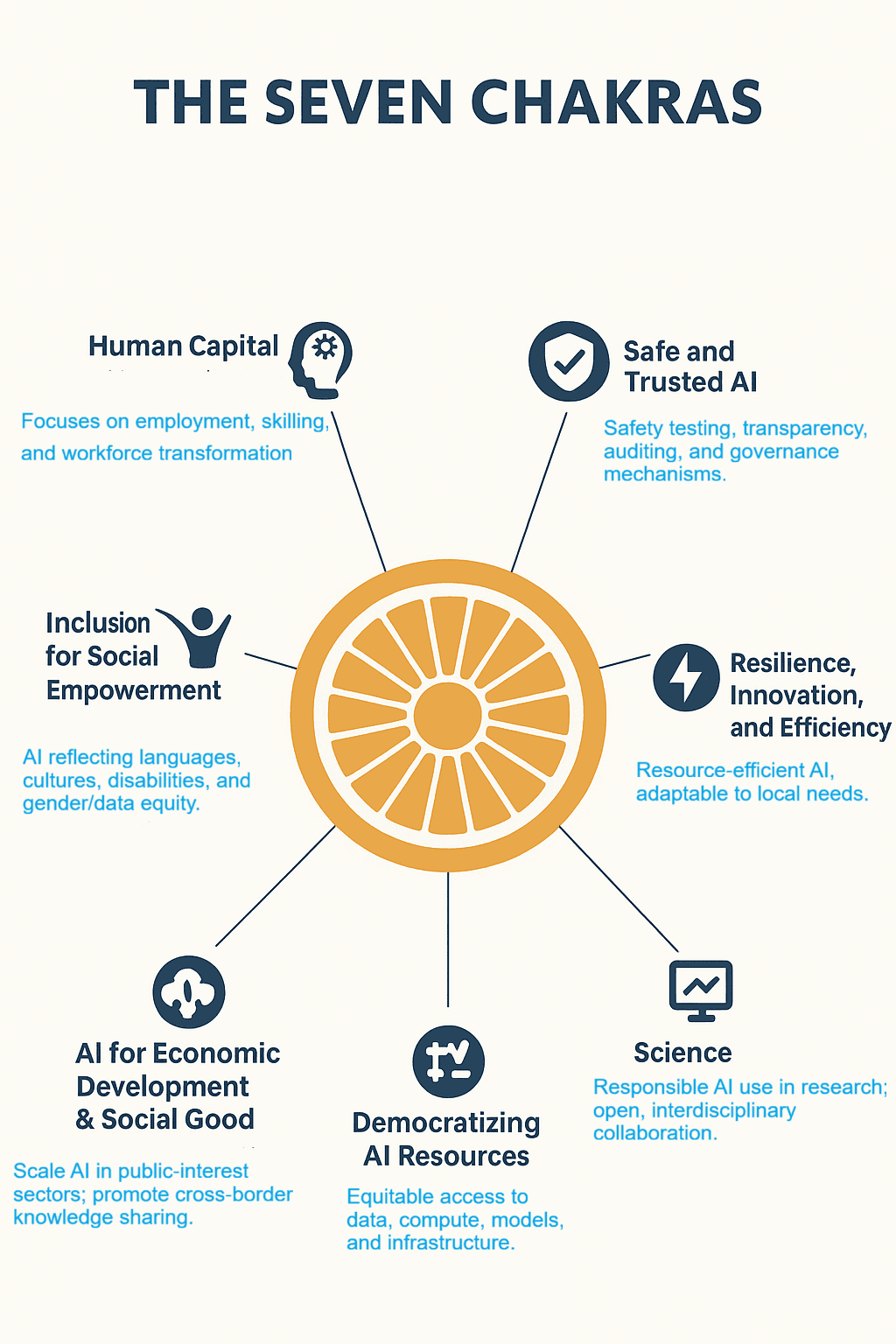
8.India-AI Impact Summit 2026 Initiatives (AI Summit)

DD News
Illustration for India-AI Impact Summit 2026 Initiatives (AI Summit)

What & Where

Global platform India-AI Impact Summit 2026 to showcase responsible AI for inclusive growth and sustainability

First Global South-hosted AI summit; organised by Ministry of Electronics & IT (MeitY), Government of India

Scheduled 19–20 Feb 2026 at Bharat Mandapam, New Delhi

Quick Facts for MCQs

Tech & Schemes

  • Models: 8 indigenous foundations span healthcare, agriculture, governance, multilingual, materials science
  • Infrastructure: 570 Data & AI Labs offer annotation, curation, FutureSkills training
  • Talent: IndiaAI Fellowship enlarged to 13,500 UG/PG/PhD researchers

Inclusion & Social Good

  • Principle People ensures human dignity, cultural respect, equitable opportunities
  • Programs: YuvaAI Challenge and AI by HER nurture youth and women innovators
  • Challenge: Global Innovation Challenge targets public-interest problems, social impact focus

Sustainability & Resilience

  • Principle Planet promotes resource-efficient AI, environmental protection, climate resilience
  • Chakra Resilience emphasises disaster readiness and sustainable development solutions
  • AI Expo features thematic pavilions on climate tech, green energy, circular economy

Key Data Points

FeatureData-Point
EditionFirst
Host ministryMeitY
Summit dates19–20 Feb 2026
VenueBharat Mandapam, New Delhi
Guiding principlesPeople, Planet, Progress
Thematic chakras7
Total flagship events5 major showcases
Indigenous foundation models8 announced
Data & AI Labs network570 planned; 30 launched
Fellowship seats13,500 scholars
AI Expo scale300+ exhibitors, 30+ countries
Pitch fest nameUDAAN Global AI Pitch Fest

Related UPSC Prelims PYQs

ESE_GS, GS1 2025PYQ 1

ग्रैण्ड पैलै (Grand Palais) पेरिस में नवम्बर 2025 में आयोजित होने वाले AI शिखर सम्मेलन के सन्दर्भ में, निम्नलिखित कथनों पर विचार कीजिए :

ESE_GS, GS1 2026PYQ 2

Which Ministry released the India AI Governance Guidelines in 2025?

GS-2SchemeQuick Bite

9.EPFO Passbook Lite Online Facility (EPFO Passbook Lite)

IT
Illustration for EPFO Passbook Lite Online Facility (EPFO Passbook Lite)

What & Where

Passbook Lite = new simplified provident-fund balance view inside EPFO Member Portal, no separate passbook login.

Operated by Employees’ Provident Fund Organisation, Ministry of Labour & Employment, pan-India coverage.

Displays snapshot of contributions, withdrawals, current balance plus PF transfer status and Annexure K download.

Quick Facts for MCQs

Tech & Schemes

  • Integration; Passbook Lite housed within existing Unified Member Portal framework.
  • Lightweight coding reduces bandwidth, quick loads on low-end devices.
  • Retains option; full detailed passbook still accessible for advanced queries.

Administrative Reform

  • Transparency; members instantly verify employer contributions each wage month.
  • Grievance-cut; removes password-sync errors of dual-portal system.
  • Efficiency; lower concurrent hits on main passbook server during peak hours.

Social Security

  • Accessibility; digital view empowers informal-sector workers with smartphones.
  • Trust-building; regular balance visibility encourages sustained EPF participation.

Key Data Points

FeatureData-Point
Launch authorityUnion Labour & Employment Minister
Parent schemeEPF under Employees’ Provident Fund Organisation
User group reached≈ 2.7 crore registered members
Login methodSingle Member-Portal sign-in; no second password
Core outputsContribution tally, withdrawal record, live balance
Added utilityTransfer tracking + Annexure K download
Key benefitLighter server load, faster access, fewer grievances
GS-2SchemeQuick Bite

10.Swachhata Hi Seva 2025 Cleanliness Campaign (Swachhata Campaign)

PIB

What & Where

Swachhata Hi Seva 2025: nationwide cleanliness campaign under Swachh Bharat Mission framework, Government of India.

Dual SBM streams: Grameen (rural) and Urban; phased approach to ODF, waste management.

Geography: all 6 lakh+ villages and 4,041 statutory towns across India.

Quick Facts for MCQs

Legal & Policy

  • Mission anchored by Ministry of Jal Shakti (Grameen) and Housing & Urban Affairs (Urban).
  • SHS 2025 reinforces SBM goals aligned with SDG 6 sanitation targets.
  • Voluntarism embedded; campaign operates outside coercive legal penalties.

Implementation Targets

  • Rural Phase II stresses sustained ODF Plus status with solid–liquid waste systems.
  • Urban Phase II pushes 100 % scientific municipal solid-waste processing.
  • Collective action through community drives during festive window.

Social & Environmental Impact

  • Improved sanitation linked to reduced diarrhoeal disease and women’s dignity.
  • 3R focus lowers landfill load and fosters circular economy behaviour.
  • Public participation nurtures behavioural change, mainstreaming cleanliness culture.

Key Data Points

FeatureData-Point
SHS 2025 launchSeptember 2025
SHS 2025 theme“Swachhotsav”
Core sloganReduce Reuse Recycle
SBM launch year2014
SBM-Grameen Phase I2014-2019
Toilets built Phase I10 crore household units
SBM-Grameen Phase II2020-2025/26
SBM-Urban Phase I2014-2021
SBM-Urban Phase II2021-2026 (SBM-U 2.0)
No. of statutory towns4,041
Key urban aim Phase II“Garbage Free” cities
Villages declared ODF100 %

Related UPSC Prelims PYQs

ESE_GS, GEO_GS 2021PYQ 1

The Programme of Swachh Bharat Mission (Gramin) is implemented by:

ESE_GS, GEO_GS 2023PYQ 2

Consider the following statements regarding the aim of Jal Jeevan Mission to provide every rural household of the country with adequate tap water of prescribed quality on regular basis:

GS-1Editorial

11.Equalising Primary Food Consumption through PDS (Food Security)

The Hindu
Illustration for Equalising Primary Food Consumption through PDS (Food Security)

What & Where

Primary Food Consumption – minimum balanced diet covering carbs, protein, micronutrients for healthy life in India

Thali Index – benchmark meal of rice/roti, dal, vegetables, curd, salad to price nutritional adequacy

Geography – Findings from 2024 NSS Household Consumption Survey across rural and urban India

Quick Facts for MCQs

Nutritional Gap

  • Protein deficit: pulse access main shortfall despite calorie security
  • Hidden hunger: anaemia, stunting persist alongside adequate cereal intake
  • Equity concern: poorest consume half pulses of richest quintile

PDS Achievements & Gaps

  • Success: cereal consumption equalised across classes via subsidised rice & wheat
  • Inefficiency: high-consumption groups still get subsidy causing excess FCI stocks
  • Rural skew: richer rural households capture larger cereal benefit share

Policy Proposals

  • Rationalise cereals: trim entitlements, remove top 20 % subsidies
  • Diversify basket: add pulses, millets, fortified oil, iodised salt under PDS
  • Dynamic targeting: Aadhaar + SECC, e-POS, DBT for pulses to cut leakages

Implementation Challenges

  • Fiscal space: universal cereal subsidy limits funds for diversified nutrition
  • Logistics: pulse procurement, storage, transport more complex than cereals
  • Behavioural uptake: cultural preferences and awareness may limit pulse consumption

Key Data Points

FeatureData-Point
Rural Indians unable to afford 2 thalis≈ 50 %
Urban Indians unable to afford 2 thalis≈ 20 %
Pulse intake bottom 5 % vs top 5 %½ quantity
Population receiving PDS cereals≈ 80 %
Cereal consumption rich vs poorNear equal
Thali components monitoredRice/Wheat, Pulses, Veg, Curd

Related UPSC Prelims PYQs

GS1 2004PYQ 1

Which one of the following statements is NOT correct?

GS1 2018PYQ 2

राष्ट्रीय खाद्य सुरक्षा अधिनियम, 2013 के अधीन बनाए गए नियमों के संदर्भ में, निम्नलिखित कथनों पर विचार कीजिए :

GS-1Editorial

12.Kerala Sustainable Urbanisation Policy Recommendations (Urban Policy)

The Hindu
Illustration for Kerala Sustainable Urbanisation Policy Recommendations (Urban Policy)

What & Where

Kerala Urban Policy Commission (KUPC): first state-level body with a 25-year roadmap for sustainable urbanisation

Mandate views cities as climate-aware ecosystems; Kerala’s urban share forecast to cross 80 % by 2050

Coverage spans 93 urban local bodies focusing on governance reform, climate resilience, finance, and inclusive wellbeing

Quick Facts for MCQs

Governance & Finance

  • Municipal autonomy via elected city cabinets, specialist cells for waste, climate, transport
  • Funding mix urged: municipal bonds for metros, pooled bonds for smaller towns, green fees for eco projects
  • Youth technocrats inducted through Jnanashree to modernise urban administration

Climate Resilience

  • Hazard mapping embedded in zoning; LiDAR, satellite, sensor network forms real-time digital observatory
  • Parametric climate insurance proposed for swift disaster payouts and resilience funding
  • Wetland, waterway, heritage restoration prioritised to buffer floods and heat risks

Inclusive Planning

  • City Health Councils to secure welfare of migrants, gig workers, students
  • Community datasets merge fisherfolk, street-vendor insights with tech analytics for participatory planning
  • Place-based branding: Kochi FinTech, Thiruvananthapuram-Kollam knowledge corridor, Kozhikode literary city

Urbanisation Drivers

  • Migration, shrinking farm holdings, climate stress accelerate rural exodus to cities
  • Economic shift to IT, manufacturing, services positions cities as job and innovation hubs
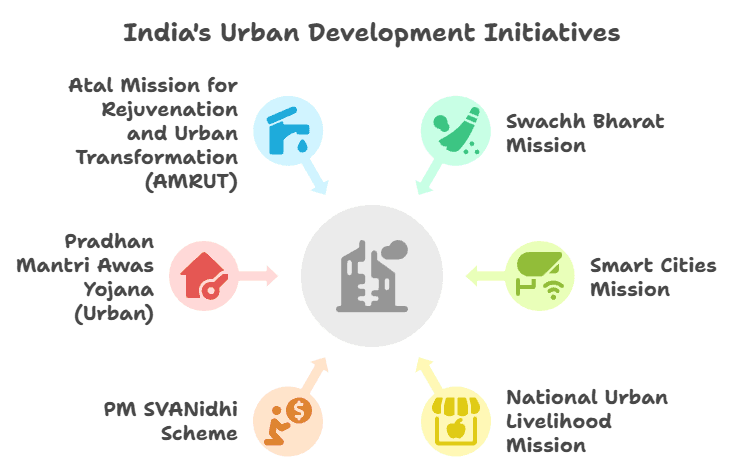
  • Flagship missions: Smart Cities, AMRUT, PMAY-U, Infrastructure Pipeline catalyse urban infrastructure rollout

Key Data Points

FeatureData-Point
First State with Urban Policy CommissionKerala
Roadmap horizon25 years
Kerala urbanisation by 2050>80 % population
India urban share by 2036600 mn; 40 %
Urban GDP contribution India~70 %
Key finance toolsMunicipal bonds, pooled bonds, green fees, parametric insurance
Youth governance schemeJnanashree

Ready to practice?

Test your knowledge with our UPSC test series.

Start Free Trial