UPSC Current Affairs

17 topicsGS-1: 2GS-2: 4GS-3: 11
0/17 done
GS-2Editorial

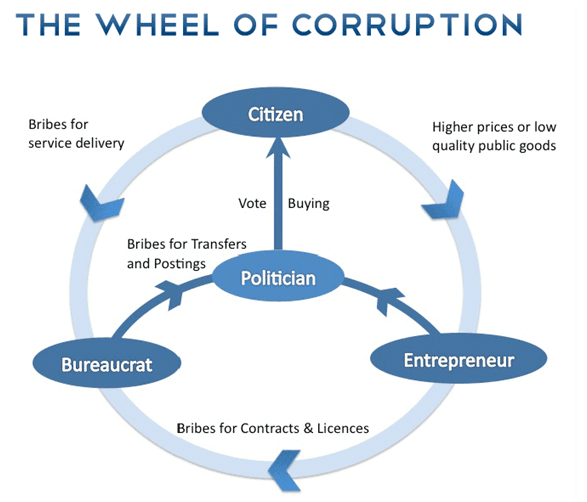
1.Public Office Corruption Dynamics (Corruption)

Financial Express
Illustration for Public Office Corruption Dynamics (Corruption)

What & Where

Corruption = misuse of public office/power for personal gain, eroding trust and diverting public resources

Key types: Bribery, Embezzlement, Nepotism, Collusive-corruption

Spotlight case: Odisha IAS Dhiman Chakma caught accepting ₹10 lakh to avert unit closure

Quick Facts for MCQs

Drivers

  • Election-expenditure: Massive campaign funding fosters quid-pro-quo with businesses
  • Red-tape: High discretion, unclear timelines create rent-seeking windows
  • Inequality: Rising aspirations, low pay push officials toward bribe income

Government Initiatives

  • Vigilance-raids: Trap cases, cash seizures targeting senior officials increasing
  • Digital-payments: PFMS & DBT cut leakages in PDS, welfare transfers
  • Transparency-laws: RTI, Whistle-blower Acts enable citizen scrutiny and protection

Suggested Reforms

  • Empower-Lokpal: Independent budget, mandatory audit reports for credibility
  • Cap-funding: Enforce spending limits, full donor disclosure, ban cash donations
  • AI-surveillance: Real-time anomaly flags in tenders, mining, property records

Key Data Points

FeatureData-Point
Bribe caught (Odisha 2024)₹10 lakh demanded, officer trapped red-handed
Extra cash recovered₹57 lakh unaccounted from same officer
Estimated 2024 LS poll spend (CMS)≈ ₹1 lakh crore
Core anti-graft lawsLokpal & Lokayuktas Act 2013; Whistle-blower Act 2014; RTI 2005
Tech toolse-Tendering, PFMS, DBT, AI anomaly detection
Mandatory disclosureAnnual asset declaration for all public servants

Related UPSC Prelims PYQs

GS1 2025PYQ 1

Consider the following statements about Lokpal:
GS-2Polity

2.Sixteenth Finance Commission Mandate (Finance Commission)

Business Standard
Illustration for Sixteenth Finance Commission Mandate (Finance Commission)

What & Where

Finance Commission: Article 280 constitutional body allocating Union–State tax shares across India.

16th Finance Commission (XVIFC): set up 31 Dec 2023; award years 2026-27 to 2030-31.

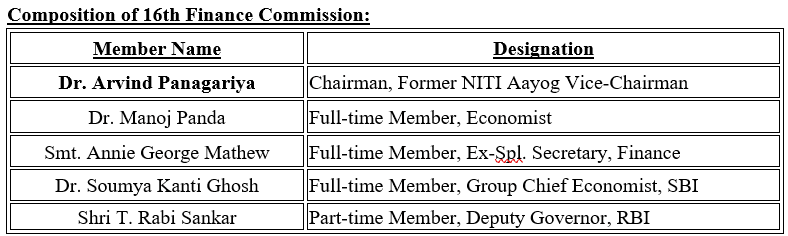
RBI Dy. Governor T. Rabi Sankar named part-time XVIFC member after Ajay N. Jha resigned.

Quick Facts for MCQs

Legal & Policy

  • XVIFC functions under Part XII and Code of Civil Procedure 1908 civil-court powers.
  • Can summon witnesses, seek documents, requisition records nationwide.
  • Recommendations cover tax pool split and revenue-gap grants.

Membership Criteria

  • Eligible backgrounds: judiciary, finance, economics, administration, government accounts expertise.
  • Tenure fixed by Presidential notification; reappointment allowed; resignation via letter to President.
  • Disqualifications include insolvency or moral-turpitude conviction.

Fiscal Focus

  • Must suggest principles for Article 275 revenue support excluding specific-purpose grants.
  • Advises measures to boost State Consolidated Funds for Panchayats & Municipalities per SFC inputs.

Key Data Points

FeatureData-Point
Constitutional baseArticle 280
Governing lawFinance Commission Act 1951
XVIFC set-up date31 Dec 2023
Award period1 Apr 2026 – 31 Mar 2031
Recent appointmentT. Rabi Sankar (part-time)
Vacancy reasonResignation of A. N. Jha
Key TORTax devolution, Article 275 grants, local-body augmentation
Disqualification groundsUnsound mind, insolvency, moral turpitude, conflicting interests

Related UPSC Prelims PYQs

CAPF_GAI, GS1 2024PYQ 1

Population of the year 2011 was first introduced in the tax devolution formula for sharing Union tax revenue with the States by

CAPF_GAI, GS1 2002PYQ 2

Which one of the following authorities recommends the principles governing grants-in-aid of the revenues to the states out of the Consolidated Fund of India?

GS-3Economy

3.World Bank Poverty Line Update (Poverty Measurement)

LiveMint
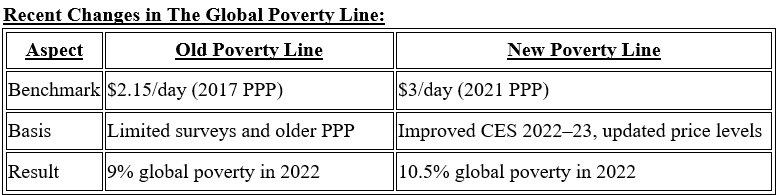
Illustration for World Bank Poverty Line Update (Poverty Measurement)

What & Where

Global poverty line: minimum daily spend ensuring basic needs, set by World Bank using PPP for cross-country comparability

Revised benchmark: $3/day (PPP 2021), replaces $2.15/day (PPP 2017) to capture updated prices, richer consumption surveys

Geography: applied worldwide; extreme line reflects median poverty line of low-income countries

Quick Facts for MCQs

Methodology Changes

  • Update uses richer household consumption panels, improved inflation adjustment, newer PPP factors
  • Extreme line now anchored to median poverty line of low-income economies rather than arbitrary threshold
  • Comparison across years cautioned due to survey design and deflator shifts

India Snapshot

  • CES 2022-23 shows higher consumption, enabling visible poverty decline despite stricter $3 threshold
  • Share of extreme poor fell ~11 ppt from 2011-12 to 2022, signalling welfare gains
  • Moderate poverty still sizeable; nearly one-quarter Indians below $4.20/day benchmark

Comparative Benchmarks

  • $3 line enhances global comparability, especially for large economies like India with rapid price changes
  • PPP 2021 revision narrows bias from currency movements, reflecting true cost-of-living differences
  • New line aids UN SDG tracking by aligning extreme poverty definition with updated economic realities

Key Data Points

FeatureData-Point
New extreme poverty line$3 per person per day (PPP 2021)
Previous line$2.15 per person per day (PPP 2017)
Reference price dataset2021 International Comparison Program
India extreme poor 2022 (new line)5.3 % of population
India extreme poor 2022 (old line)2.4 % of population
India extreme poor 2011-12 (old line)16.2 %
Lower-middle-income poverty line$4.20/day
India poor at $4.20 line (2022)23.9 %
Key data source for India2022-23 Consumer Expenditure Survey
Time gap since last CES11 years

Related UPSC Prelims PYQs

GEO_GS, GS1 2021PYQ 1

Which one of the following statements with regard to poverty is correct?

GEO_GS, GS1 1998PYQ 2

According to the World Development Report, low-income economies are those for which the per capita GNP in 1994 was

GS-3Economy

4.India Textile-Apparel Sector Overview (Textile Industry)

Indian Express

What & Where

Heritage Textile & Apparel industry; converts fibre to garments; second-largest employment generator after agriculture

Core processes: spinning, weaving/knitting, processing, garmenting; dominated (80%) by MSME clusters

Major hubs: Tiruppur & Coimbatore (TN), Surat (Guj.), Bengaluru (Karn.), Kolkata (WB), Noida (UP)

Quick Facts for MCQs

Economic Angle

  • Export-earnings: $37.8 bn, merely 4.2 % of $897.8 bn global trade; apparel share only 3 %
  • Value-addition: chain from raw cotton to garments multiplies returns, attracts dyes, chemicals, machinery, retail
  • Employment-multiplier: 10 % garment output rise spurs proportional demand in spinning and processing units

Structural Bottlenecks

  • Fragmentation: 80 % small units lack scale, integrated supply chains, global marketing
  • Capital-cost: domestic lending ~9 % vs China/Vietnam 3–4.5 % restricts capacity expansion
  • Labour-rigidity: mandatory 2× overtime, complex laws curb formalisation and large-scale hiring

Government Schemes

  • PM-MITRA: seven integrated parks for common infra, lower logistics, global competitiveness
  • RoSCTL: refunds embedded state & central levies on apparel exports; boosts net realisation
  • PLI-Textiles: ₹10,683 cr incentives for MMF, technical textiles; draft 2.0 may include garments

Policy Proposals

  • Capex-support: 25–30 % subsidy plus 5–7-year tax holiday for factories with 1,000+ machines
  • Labour-rationalisation: align overtime to ILO 1.25×, simplify compliance, enable flexible hiring
  • Export-Linked Incentive: shift from production-linked, reward high-value markets, push toward $40 bn apparel goal

Key Data Points

FeatureData-Point
Sector GDP share2.3 %
Share in manufacturing jobs12 %
Direct employment>45 million
India’s T&A export value$37.8 bn
India share in global T&A trade4.2 %
Global T&A trade size$897.8 bn
India share in global apparel trade3 %
Apparel export target (2030)$40 bn
Apparel units that are MSME>80 %
Women share in apparel hubs~70 %

Related UPSC Prelims PYQs

CDS_GK 2024PYQ 1

Which of the following industries was most affected by the ‘de-industrialisation’ of India in the 19th century?

CDS_GK 2025PYQ 2

Consider the following statements with reference to the Cotton textile industry in India:

GS-3Economy

5.UN WESP 2025 Economic Outlook (Global Economic Prospects)

PIB

What & Where

Report WESP: UN DESA–UNCTAD annual economic outlook, mid-2025 update cuts India growth to 6.3 %.

Scope Global: covers major economies, emerging markets, LDCs; underpins SDG-aligned fiscal-monetary advice.

Geography India: fastest-growing major economy despite downgrade, strong manufacturing, services and defence exports.

Quick Facts for MCQs

India Outlook

  • Growth-driver Manufacturing, services, defence exports surge despite policy-tightening environment.
  • Inflation-track Within target band, aiding RBI policy stability, unemployment largely steady.
  • Challenge Gender labour-participation gap persists, seen as structural barrier.

Global Outlook

  • Slowdown Global growth dips from 2.9 % (2024) to 2.4 % (2025); advanced and EMEs both soften.
  • US-China US faces tariff uncertainty; China burdened by real-estate stress, weak demand.
  • LDC-strain Falling ODA, tighter finance raise debt distress, cut growth to 4.1 %.

Major Risks

  • Food-inflation Climate shocks, currency slides, protectionism keep food prices above headline; 343 mn acutely insecure.
  • Trade-tensions Rising US tariffs cause tariff-shock, spike trade costs, hurt multilateralism, widen inequality.

Institutional Info

  • UN DESA Secretariat pillar for SDGs, services ECOSOC, GA, HLPF, gives data-policy bridge to nations.

Key Data Points

FeatureData-Point
Publishing bodyUN DESA with UNCTAD + 5 regional commissions
Latest editionMid-2025 update
India GDP 20247.1 % (projection)
India GDP 20256.3 % (revised)
India GDP 20266.4 % (projection)
Global GDP 20252.4 %
China GDP 20254.6 %
LDCs GDP 20254.1 %
India CPI 20254.3 % (within RBI 2-6 %)
India Manufacturing GVA 23-24₹27.5 lakh crore
India Total exports 24-25USD 824.9 bn
Services exports shareUSD 387.5 bn
Non-petro merchandiseUSD 374.1 bn
Defence export rise~3×; reach to ~100 countries

Related UPSC Prelims PYQs

CAPF_GAI, ESE_GS 2023PYQ 1

IMF raises its projection for economic growth in 2021-22 to

CAPF_GAI, ESE_GS 2025PYQ 2

भारत के सेवा निर्यात के संबंध में निम्नलिखित में से कौन-सा/कौन-से कथन सही नहीं है/हैं?

GS-3Economy

6.IEA World Energy Investment 2025 (Energy Investment)

Down to Earth

What & Where

World Energy Investment Report 2025 — IEA’s annual survey tracking global public-private spending across energy value chain

Coverage spans generation, grids, fuels, storage; highlights clean-versus-fossil capital flows and regional splits

Geography global; compiled by Paris-based International Energy Agency, 32 members + 13 association states

Quick Facts for MCQs

Investment Trends

  • Clean technologies attract two-thirds global funds, driven by emission cuts and falling electricity costs
  • Material costs for grids nearly doubled in five years, widening generation-grid investment gap
  • LNG projects in US, Qatar, Canada push gas spending upward despite oil decline

Regional Patterns

  • China energy spend equals US + EU combined, leads new coal 100 GW in 2024
  • Africa sees fossil decline but marginal clean rise, remains least invested continent
  • India boosts renewables 3× since 2015 yet grids and storage fall 20 %

Fossil Fuels

  • Coal approvals highest since 2015; China main contributor
  • Oil exploration budgets shrink, signaling investor pivot
  • LNG capacity expansions anchor medium-term gas demand

IEA Basics

  • Focus pillars: energy security, economic growth, environmental awareness, global engagement
  • Major outputs: World Energy Outlook, India Energy Outlook, World Energy Investment Report

Key Data Points

FeatureData-Point
Global energy investment 2025USD 3.3 trillion (record)
Clean-energy shareUSD 2.2 trillion; twice fossil fuels
Fossil-fuel investmentUSD 1.1 trillion
Solar PV spend 2025~USD 450 billion
Battery storage 2025> USD 65 billion
Nuclear investment 2025USD 75 billion; +50 % since 2020
India renewablesUSD 37 billion (2025) vs 13 billion (2015)
India grid + storageUSD 25 billion (down from 31 billion in 2015)
China 2025 share> 25 % of global energy outlay
Africa clean-energy share2 % despite 20 % population
Oil E&P 2025–6 % investment forecast
Global generation vs grids 2025USD 1 trillion vs 400 billion
IEA founding year1974, post-1973 oil crisis
IEA headquartersParis, France
IEA membership32 members; India an association country

Related UPSC Prelims PYQs

GEO_GS 2026PYQ 1

India's installed solar capacity in 2025 is close to

GS-1Infrastructure

7.ICDRI 2025 Conference Highlights (Disaster Resilient Infrastructure)

PIB
Illustration for ICDRI 2025 Conference Highlights (Disaster Resilient Infrastructure)

What & Where

Coalition for Disaster Resilient Infrastructure (CDRI) – multilateral platform, launched 2019 by India, to harden global infrastructure against climate/disaster shocks

Secretariat in New Delhi; network spans 46 countries + 8 partner bodies (UN, MDBs, private sector)

Annual International Conference on Disaster Resilient Infrastructure (ICDRI); 2025 edition hosted first-ever in Europe, theme “Resilient Coastal Regions”

Quick Facts for MCQs

Membership & Funding

  • Composition includes national governments, UN agencies, multilateral banks, private sector entities
  • Financing voluntary; no mandatory dues; primary support from India, G7 partners, World Bank
  • Legal status registered under Indian Societies Registration Act, enabling global donations

Functions & Initiatives

  • Knowledge-exchange through research, toolkits, capacity-building programmes, global digital repository
  • Operates 10 thematic initiatives: SIDS, urban resilience, African infra, critical systems etc.
  • Supports innovative finance mechanisms, early-warning solutions, post-disaster reconstruction models

ICDRI 2025 Highlights

  • Focus Coastal resilience: storm-surge protection, nature-based barriers, climate-proof ports
  • Five Indian priorities: Education-skills, Digital repository, Innovative finance, SIDS focus, Early-warning outreach
  • Rebrands SIDS as Large Ocean Countries to underline oceanic stewardship and vulnerability

Key Data Points

FeatureData-Point
Launch year2019
Founding countryIndia
HQ cityNew Delhi
Current members46 countries
Partner organisations8
Core objective yearResilient infra by 2050
People targeted>3 billion
Funding natureVoluntary contributions
Largest contributorIndia
Other contributorsUSA, UK, France, Japan, Germany, Australia, Canada, World Bank
ICDRI 2025 venueEurope (first time)
ICDRI 2025 theme“Shaping a Resilient Future for Coastal Regions”

Related UPSC Prelims PYQs

CDS_GK, GS1 2023PYQ 1

Which one of the following is the venue of the UN 2023 Water Conference?

CDS_GK, GS1 2025PYQ 2

निम्नलिखित में से किस एक ने 'एशिया और प्रशांत क्षेत्र के लिए प्रकृति समाधान (नेचर सॉल्यूशन्स) फंड' प्रारंभ किया?

GS-3Environment

8.Solar Geoengineering Techniques (Geoengineering)

The Hindu
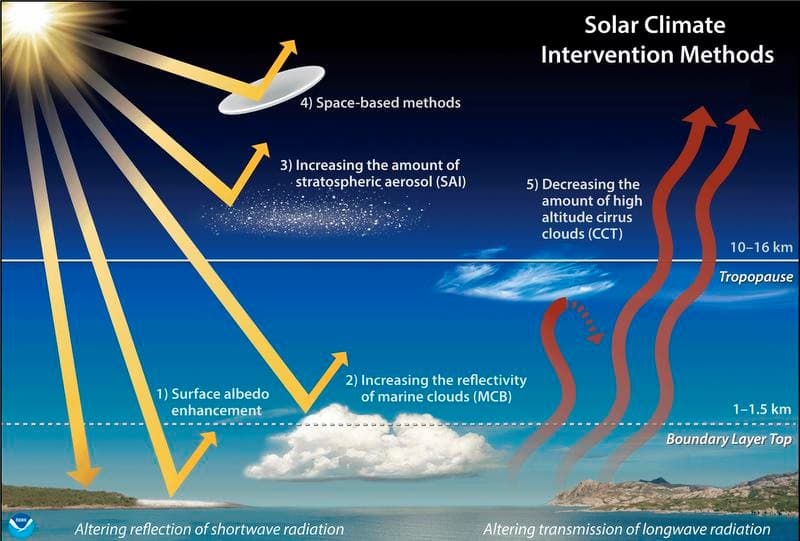
Illustration for Solar Geoengineering Techniques (Geoengineering)

What & Where

Solar Climate Intervention: geoengineering suite cutting incoming sunlight, not greenhouse gases.

Key techniques: Stratospheric Aerosol Injection (SAI), Marine Cloud Brightening, Space-Based Reflectors, Surface Albedo Modification.

SAI: sulphur dioxide sprayed at ~13–20 km (stratosphere) to mimic volcanic cooling (e.g., Mt Pinatubo).

Quick Facts for MCQs

Environmental Impact

  • Cooling uneven; monsoons, regional crops may suffer.
  • Sulphur aerosols risk acid rain, biodiversity stress.
  • Ozone layer delay highlighted in modelling studies.

Economic Angle

  • Lower upfront cost than global mitigation pathways.
  • Acts as climate “pause button” while renewables expand.
  • Low-altitude variant inflates aerosol volumes, raising operational spend.

Technology Details

  • Aerosol: sulphur dioxide chosen for high reflectivity, volcanic precedent.
  • Aircraft retrofits enable continuous injection below classic stratosphere.
  • Reflective layer scatters solar radiation, lowering surface energy input.

Governance & Geopolitics

  • Any state could act unilaterally, creating transboundary disputes.
  • Absence of binding treaty on solar geoengineering oversight.
  • Global consequences necessitate multilateral decision & liability sharing.

Key Data Points

FeatureData-Point
Journal of new studyEarth’s Future
Proposed deliveryModified existing aircraft
Typical SAI altitude13–20 km
Aerosol residenceMonths to years
Cooling onset≈ 1 year after deployment
Extra sulphur needed at 13 km2–3 × vs 20 km
Volcanic analogueMount Pinatubo 1991
Key side-effect riskMonsoon & rainfall disruption
Ozone implicationMay delay hole recovery
Cost tag vs decarbonisationSignificantly cheaper

Related UPSC Prelims PYQs

GS1 2019PYQ 1

In the context of which of the following do some scientists suggest the use of cirrus cloud thinning technique and the injection of sulphate aerosol into stratosphere?

GS-3S&T

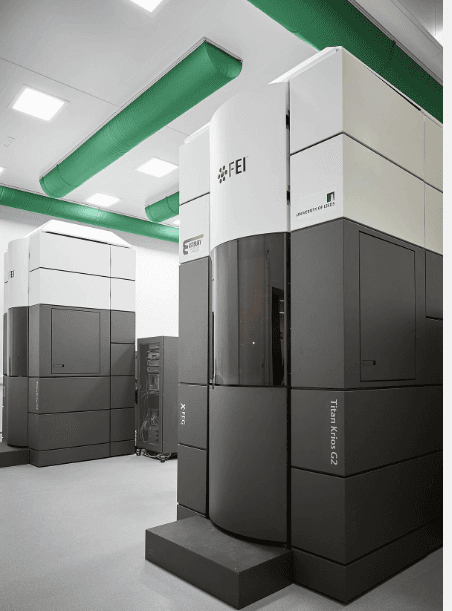
9.MagIC Cryo-EM Enhancement (Cryo-EM Technique)

The Hindu
Illustration for MagIC Cryo-EM Enhancement (Cryo-EM Technique)

What & Where

MagIC: Magnetic Isolation & Concentration add-on to cryo-electron microscopy (cryo-EM) for ultra-dilute biomolecule imaging

Process chain: bead tagging → magnetic clustering on grid → AI DuSTER filtering → cryo-EM capture

Operates inside standard cryo-EM facilities worldwide; no new hardware beyond small magnet and software

Quick Facts for MCQs

Technique Workflow

  • Tagging: biomolecules covalently linked to super-paramagnetic nanobeads
  • Magnetic pull: external magnet concentrates tagged particles onto specific grid zones
  • DuSTER: discards noise by selecting particles recurring across multiple scan passes

Advantages

  • Sensitivity: enables structural work on scarce proteins, membrane receptors, signalling complexes
  • Throughput: fewer microscope hours per dataset due to enriched particle fields
  • Compatibility: integrates with existing single-particle or tomography pipelines without major instrument modifications

Applications

  • Structural biology: ribosomes, ion channels at picomolar yields
  • Virology: dilute viral spike proteins, vaccine antigen mapping
  • Drug discovery: low-abundance receptor–ligand complexes guiding inhibitor design

Awards & Recognition

  • Cryo-EM pioneers Dubochet, Frank, Henderson received 2017 Nobel Chemistry for methodology underlying MagIC’s platform

Key Data Points

FeatureData-Point
MagIC full formMagnetic Isolation and Concentration
Dilution handled100 × lower; < 0.0005 mg ml⁻¹
Magnetic bead size≈ 50 nm diameter
AI filter nameDuSTER algorithm
Result per imageHigher usable particle density
Parent techniqueCryo-electron microscopy
Cryo-EM origin decade1980s
Nobel honour year2017 Chemistry Prize
Key freezing mediumLiquid ethane for vitrification
Ice stateAmorphous (vitreous) ice
GS-3S&T

10.Axiom-4 Space Mission (Human Spaceflight)

Economic Times
Illustration for Axiom-4 Space Mission (Human Spaceflight)

What & Where

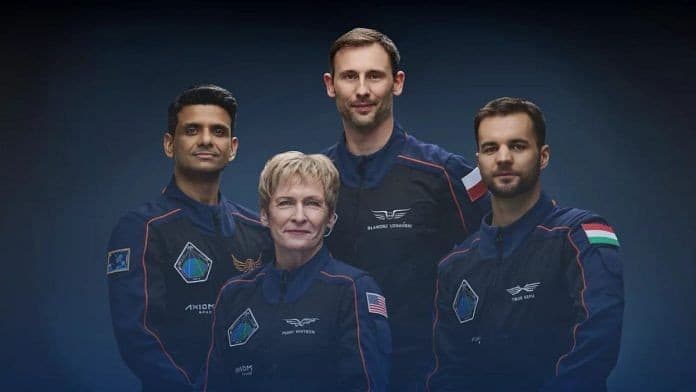
Commercial 14-day Ax-4: fourth human spaceflight by Axiom Space, travels to International Space Station (ISS).

Launch from Kennedy Space Center, Florida via SpaceX Falcon 9 with Crew Dragon capsule.

Multinational crew: USA, India, Poland (ESA), Hungary.

Quick Facts for MCQs

Crew Composition

  • Diversity: four crew, three national first-timers, veteran commander Whitson ensures experience balance.
  • Representation: India, Poland, Hungary gain inaugural private orbital seats.
  • Training: Crew prepares via SpaceX, NASA & Axiom joint protocols.

Mission Objectives

  • Science: conduct 60 microgravity experiments covering biology, materials, Earth imaging.
  • Education: promote global STEM outreach, industry collaboration among 31 participating countries.
  • Commercialization: advance public-private model for sustained LEO research.

Indian Significance

  • Gaganyaan prep: Shukla gains real-time piloting, docking exposure before ISRO’s 2027 human flight.
  • Tech feed-forward: Data aids SpaDeX autonomous docking and future Bharatiya Antriksh Station (2035).
  • Diplomacy: Enhances India’s image as proactive space-science partner.

Key Data Points

FeatureData-Point
Mission codeAxiom-4 (Ax-4)
Launch date10 June 2025 (planned)
Mission length~14 days
DestinationLow-Earth orbit; ISS
Launch vehicleSpaceX Falcon 9
CapsuleCrew Dragon
Launch siteKennedy Space Center, Florida
Mission operatorAxiom Space (USA)
Key partnersNASA, ESA, India, Poland, Hungary
Mission commanderPeggy Whitson (USA)
PilotGroup Capt Shubhanshu Shukla (India)
Mission specialistsSławosz Uznański (Poland), Tibor Kapu (Hungary)
Experiments planned~60 across 31 nations
Research focusHuman health, life & material sciences, Earth observation, space biology

Related UPSC Prelims PYQs

CDS_GK, GS1 2025PYQ 1

निम्नलिखित अंतरिक्ष मिशनों पर विचार कीजिए :

CDS_GK, GS1 2022PYQ 2

India's maiden human space mission will be launched in 2023. What is its name?

GS-3S&T

11.DRUM Green Mobility App (Urban Mobility Tech)

The Hindu
Illustration for DRUM Green Mobility App (Urban Mobility Tech)

What & Where

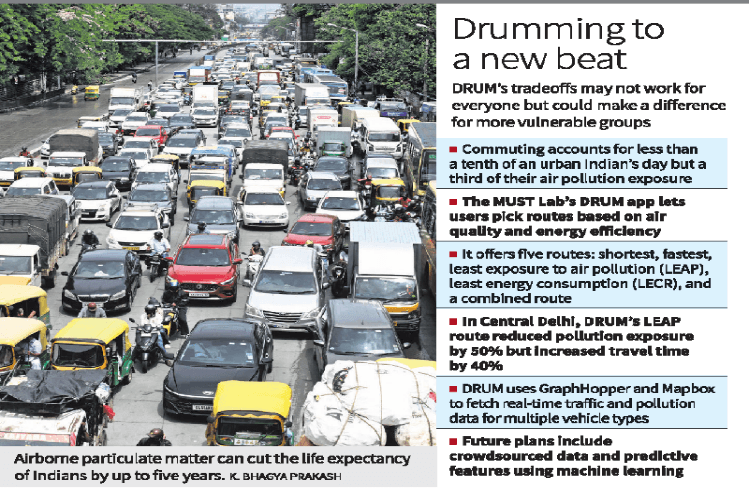
DRUM (Dynamic Route Planning for Urban Green Mobility): web‐based app giving eco-friendly, real-time route suggestions.

Originated by IIT-Kharagpur; simulation-tested, now entering on-ground trials in Delhi NCR.

Supplies five route types—Shortest, Fastest, LEAP, LECR, Balanced—to cut travel time, energy use, pollution exposure.

Quick Facts for MCQs

Tech Stack

  • Integration: GraphHopper routing, Mapbox interface, pollutant layers merged with traffic APIs.
  • Scalability: Designed for data-sparse zones via interpolated AQI; future crowdsourced sensor ingestion.

Environmental Impact

  • Mitigation: Route choice can halve commuter pollutant exposure in dense urban cores.
  • Alignment: Advances SDG 11 (Sustainable Cities) & SDG 13 (Climate Action) through smarter mobility.

Governance & Health

  • E-governance: Enables data-driven urban transport planning for agencies.
  • Public health: Aids cyclists, pedestrians, transit users in avoiding high-emission corridors.

Key Data Points

FeatureData-Point
Full formDynamic Route Planning for Urban Green Mobility
DeveloperIIT-Kharagpur researchers
Current trial cityDelhi
Route variants5 (Shortest, Fastest, LEAP, LECR, Balanced)
Core data feedsCPCB & World AQI real-time air quality, live traffic
Mapping enginesGraphHopper + Mapbox
Key optimisation metricExposure time to pollutants
Max exposure cut (simulated)≈50 % in Central Delhi
Vehicle customisationSupported
Planned upgradeDRUM 2.0 with ML & crowdsourced sensors
GS-3S&TQuick Bite

12.Vanadium Nanozyme Thrombosis Therapy (Medical Nanozymes)

The Hindu

What & Where

Nanozyme = 1–100 nm engineered particle mimicking natural enzymes.

Spherical vanadium (V₂O₅) nanozyme counters abnormal clotting within blood vessels/lungs.

Works where oxidative stress elevates ROS: PTE, Covid-19, ischemic stroke risk zones.

Quick Facts for MCQs

Health Applications

  • Prevents platelet over-activation, averting thrombosis and ischemic stroke.
  • Offers adjunct therapy for Covid-19–linked coagulopathies.
  • Could lower mortality from PTE by keeping lung arteries patent.

Mechanism & Materials

  • Vanadium pentoxide is redox-active, repeatedly neutralises ROS.
  • Nanozyme acts as catalytic antioxidant, not consumed like natural enzymes.
  • Metal, metal-oxide, carbon, MOF structures also serve as nanozyme platforms.

Potential Advantages

  • Metal-based design enables scalable, cost-efficient synthesis.
  • Higher stability than protein enzymes; longer shelf-life in clinics.
  • Selective platelet modulation reduces bleeding risk versus conventional anticoagulants.

Key Data Points

FeatureData-Point
Optimal nanozyme shapeSpherical V₂O₅
Mimicked enzymeGlutathione peroxidase
Core actionScavenges reactive oxygen species
Physiological agonists in normal clottingCollagen, thrombin
Key disorders targetedPulmonary thromboembolism, thrombosis, Covid-19 clotting
GS-2Polity

13.UNSC 2026 Non-Permanent Members (UNSC Membership)

UN
Illustration for UNSC 2026 Non-Permanent Members (UNSC Membership)

What & Where

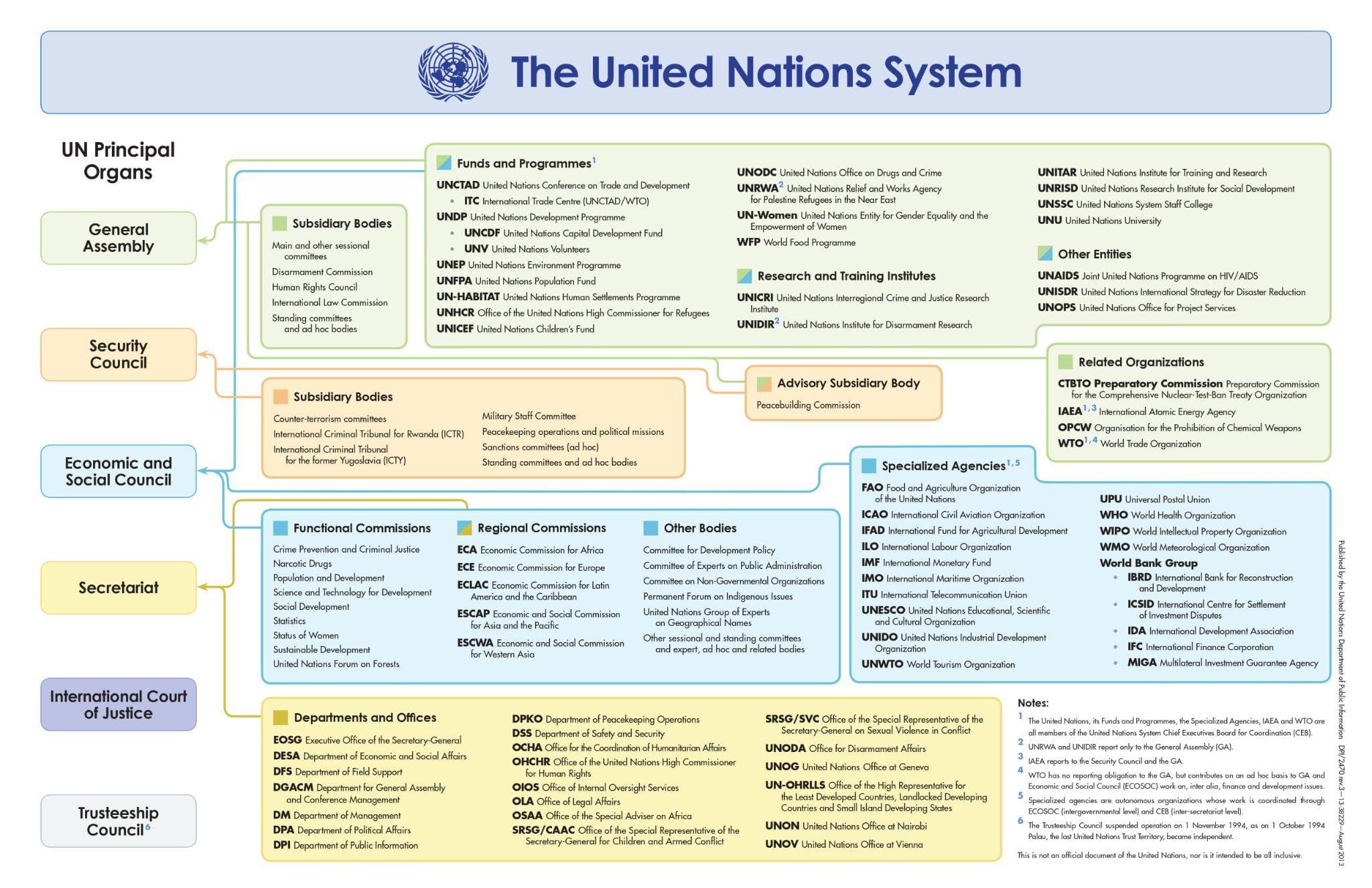
UNSC: 15-member UN organ tasked with international peace; only UN body with legally binding decisions.

Non-permanent seats: 10, regionally allocated; elected by UNGA for 2-year terms via secret two-thirds ballot.

2026 cohort: Bahrain, Colombia, DRC, Latvia, Liberia join 2025-elected Denmark, Greece, Pakistan, Panama, Somalia.

Quick Facts for MCQs

Institutional Composition

  • Veto-holding P5 can block substantive resolutions unilaterally.
  • UNSC elections held annually to replace 5 outgoing NPMs.
  • Decisions require 9 affirmative votes, including P5 concurrence.

Sanctions Committee 1988

  • Mandate: monitor compliance, update Taliban sanctions list, approve exemptions.
  • Membership: all 15 UNSC states; decisions by consensus.
  • Support: Analytical Support & Sanctions Monitoring Team provides reports.

Counter-Terrorism Committee

  • Mandate: supervise implementation of Resolution 1373—criminalise financing, block safe havens, share intel.
  • Composition: full UNSC; assisted by CTED (Executive Directorate).
  • India chaired CTC in 2022, spotlighted Pakistan-based UN-listed terrorists.

India Angle

  • India advocates UNSC expansion to include it as permanent member.
  • Emphasis on linking state sponsorship of terror with sanctions enforcement.
  • Chaired 1988 Committee until Dec 2021; leveraged role for stronger Afghan peace focus.

Pakistan Role

  • First time simultaneously UNSC member and chair of 1988 Committee.
  • Holds vice-chair in CTC 2025-26, elevating influence on counter-terror discourse.

Key Data Points

FeatureData-Point
Election date9 Jun 2025 (UNGA)
Term begins1 Jan 2026
New NPMs 2026-27Bahrain, Colombia, DRC, Latvia, Liberia
Continuing NPMs 2025-26Denmark, Greece, Pakistan, Panama, Somalia
P5 with vetoChina, France, Russia, UK, USA
Total UNSC seats15 (5 permanent + 10 non-permanent)
Voting methodSecret ballot, two-thirds majority
Regional allocationAfrica/Asia 5, WEOG 2, LAC 2, E. Europe 1
1988 Committee focusAsset freeze, travel ban, arms embargo on Taliban-linked actors
1988 Committee 2025 chairPakistan
CTC establishmentResolution 1373, 2001 post-9/11
CTC 2025 chairAlgeria
CTC 2025 vice-chairsFrance, Russia, Pakistan
India UNSC stints8 times; latest 2021-22

Related UPSC Prelims PYQs

GS1, NDA_GAT 2009PYQ 1

The Security Council of UN consists of 5 permanent members, and the remaining 10 members are elected by the General Assembly for a term of

GS1, NDA_GAT 2021PYQ 2

Which of the following statements about the non-permanent members of the Security Council of the United Nations is/are correct?

GS-3Security

14.Exercise Nomadic Elephant 2025 (Military Exercise)

New Indian Express

What & Where

Joint field exercise; India–Mongolia armies rehearse counter-terror, UN peacekeeping, cyber–mountain warfare skills.

17th iteration titled “Nomadic Elephant 2025”.

Venue: Special Forces Training Centre, Ulaanbaatar, Mongolia (31 May – 13 Jun 2025).

Quick Facts for MCQs

Security Dimension

  • Counter-terror emphasis; drills include sniper fire, room clearance, hostage rescue.
  • UN-mandated peacekeeping scenarios refine multinational coordination, civilian protection.
  • Mountain warfare familiarises forces for high-altitude India–China border and Mongolian steppes.

Training Components

  • Modules cover cyber warfare awareness, communications security, basic hacking defences.
  • Rock-climbing, cliff rappelling, survival tactics hone agility in rugged terrain.
  • Joint command-post planning exercises test rapid decision-making and inter-operability.

Bilateral Milestones

  • Continuation of defence cooperation begun 2004; annual/alternate-year schedule sustained.
  • Builds on strategic partnership established during 2015 Modi Ulaanbaatar visit.
  • Cultural evenings and sports foster soldier-level camaraderie, reinforcing soft-power ties.

Key Data Points

FeatureData-Point
Host countryMongolia
Indian participation45 soldiers
Indian formationArunachal Scouts (mountain-warfare unit)
Edition number17th
Duration31 May–13 June 2025
Exercise typeBilateral Army field training
Core focusCounter-terrorism & peacekeeping
Training terrainMountain & urban settings
Venue facilitySpecial Forces Training Centre, Ulaanbaatar

Related UPSC Prelims PYQs

CDS_GK, ESE_GS 2024PYQ 1

Aim of exercise 'Nomadic Elephant' is to build positive military relations, exchange best practices, develop interoperability, bonhomie, camaraderie and friendship between India and which one of the following countries?

CDS_GK, ESE_GS 2023PYQ 2

The 16th edition of Indo-Nepal annual joint training exercise in jungle warfare and counter-terrorism operations was held in December 2022 at Nepal Army Battle School, Saljhandi. What is the name of this exercise?

GS-3Security

15.National Cadet Corps Expansion (Youth Military Training)

PIB

What & Where

Organisation: voluntary Tri-Services youth wing under MoD, created by NCC Act 1948, HQ New Delhi

Coverage: units in schools & colleges across all States/UTs; 2025 plan ups intake by 3 lakh cadets

Scale: largest uniformed youth body worldwide; strength set to rise from 15 lakh to ~18 lakh

Quick Facts for MCQs

Historical Evolution

  • 1917 University Corps raised under Indian Defence Act amid WW I
  • 1920 renamed University Training Corps; 1942 became University Officers Training Corps
  • 1946 Kunzru Committee spurred NCC Act 1948; Girls Division introduced 1949

Training & Structure

  • Command: six regional directorates under Director General, Lt Gen rank
  • Curriculum: basic drills, leadership, social service; certificates boost OTA/IAF/Navy selection weightage
  • Membership: voluntary; tenure typically 2–3 yrs alongside academics

Security Dimension

  • 1965 & 1971 wars: cadets guarded key points, aided logistics, traffic, rescue
  • Post-1971 pivot: greater emphasis on nation-building, civic action, disaster relief than combat skills
  • Tri-Services exposure cultivates defence awareness, civil-military synergy

Policy Update

  • 2025 announcement targets border & coastal districts for new battalions
  • Objective: wider youth reach, discipline infusion, talent pool for armed forces reserve
  • Expansion complements Agnipath, Make-in-India defence ecosystem initiatives

Key Data Points

FeatureData-Point
Parent ministryMinistry of Defence
Statutory basisNCC Act, 1948
HQ cityNew Delhi
Present strength≈15 lakh cadets
Planned expansion+3 lakh cadets
Global rankLargest youth uniformed force
Command headDirector General, Lt Gen rank
First girls entry1949
Core certificatesA, B, C
Enrollment sourcesSchools, Colleges, Universities

Related UPSC Prelims PYQs

CDS_GK, NDA_GAT 2022PYQ 1

Which among the following has initiated a nationwide flagship campaign ‘Puneet Sagar Abhiyan’ to clean seashores/beaches and other water bodies of plastic and other waste materials?

CDS_GK, NDA_GAT 2024PYQ 2

राष्ट्रीय भर्ती एजेंसी के संबंध में निम्नलिखित में से कौन-सा कथन सही है ?

GS-2Scheme

16.Unnat Bharat Abhiyan Objectives (Rural Development Scheme)

PIB

What & Where

Definition: Unnat Bharat Abhiyan (UBA) – MHRD flagship linking Higher Education Institutions (HEIs) with 5+ adopted villages.

Process: Faculty–student teams diagnose rural problems, customise/implement tech & support govt programmes.

Coverage: Pan-India; 13,072 villages under 2,474 institutes (as on 2020).

Quick Facts for MCQs

Objectives

  • Engagement: Involve HEI faculty/students in identifying rural development issues & sustainable fixes.
  • Technology: Spot, customise or implement innovative technologies matching local needs.
  • Governance: Aid streamlined execution of various government schemes in villages.

Version 2.0 Features

  • Expansion: Open to all HEIs; selection through defined eligibility filters.
  • Upgrade: Greater focus on measurable impact, multi-disciplinary interventions, cluster approach.
  • Status: Functioning since 2018 alongside legacy 1.0 institutions.

Performance Metrics

  • Adoption: 13,072 villages; average ≈ 5.3 villages per institute.
  • Reach: Institutes from IITs, NITs, IISERs to state universities & colleges.
  • Impact: Reported improvements in agri-practices, water management, livelihood diversification & energy access.

Technology Domains

  • Sustainable Agriculture: Soil health cards, organic inputs, smart irrigation pilots.
  • Water Resources: Rainwater harvesting, check-dams, GIS-based watershed plans.
  • Rural Energy: Biomass gasifiers, solar pumps, efficient cook-stoves dissemination.

Key Data Points

FeatureData-Point
Nodal ministryMinistry of Human Resource Development
Launch year (UBA 1.0)2014
Upgrade launch (UBA 2.0)2018
Village quota per instituteMinimum five
Present adoption count13,072 villages
Participating institutes2,474 HEIs
Selection basis in 2.0Fulfilment of set criteria
Key domainsAgriculture, water, artisans & livelihood, basic amenities, rural energy
Scheme natureCentrally sponsored, non-financial to villagers
Core objectiveSustainable rural development via academic knowledge

Related UPSC Prelims PYQs

CDS_GK, GS1 2017PYQ 1

What is the aim of the programme ‘Unnat Bharat Abhiyan’?

CDS_GK, GS1 2024PYQ 2

Which one among the following statements about the objectives of Vibrant Village Programme is correct?

GS-1Editorial

17.World Food Safety Day 2025 (Food Safety Regulation)

The Hindu

What & Where

Definition – ensuring food is free from hazards across production, processing, distribution, consumption

Regulator – Food Safety & Standards Authority of India (FSSAI), statutory, under Health Ministry, Act 2006

Jurisdiction – Pan-India; food in Concurrent List, Centre sets norms, States enforce licensing & inspection

Quick Facts for MCQs

Legal & Policy

  • Evolution – shift from binary adulteration regime to risk-based standards, MRL, ADI, Codex alignment
  • MSG rule – India still mandates infant-safety label despite JECFA 1971 safety clearance
  • Food subject – Concurrent List necessitates Centre-State coordination for uniform enforcement

Regulatory Gaps

  • Data – lack of India-specific Total Diet Studies, toxicology, exposure profiles
  • Labelling – no mandatory Front-of-Pack; Indian Nutrition Rating voluntary, can mislead
  • Informal sector – street vendors, micro-units often outside licensing, hamper surveillance

Recommended Reforms

  • Mandate traffic-light/Star FOPL for HFSS, finalise HFSS definition, ban child-targeted celebrity ads
  • Expand INFoLNET & FoSCoS for real-time compliance, simplify registration for SHGs under PM-SVANidhi
  • Integrate AMR action in poultry, dairy, aquaculture; build cold chain via PM-SAMPADA, Operation Greens

Reports & Indices

  • State Food Safety Index shows wide inter-state disparity, Tamil Nadu, J&K, Gujarat also top performers
  • SOFI 2024 flags affordability gap despite undernourishment decline from 240 million (2004-06)
  • Supreme Court links misleading HFSS advertising to Article 21 right to life

Key Data Points

FeatureData-Point
World Food Safety Day7 June, UN-mandated since 2019
2025 WFSD Theme“Food Safety: Science in Action”
Legacy lawPrevention of Food Adulteration Act 1954
Current umbrella lawFood Safety & Standards Act 2006
FSSAI HQNew Delhi; 8 regional offices
Codex membership189 members; India joined 1964
State Food Safety Index ’23-24 leaderKerala (large states category)
Global Food Security Index 2022 rankIndia 68th
Undernourished in India (SOFI 2024)194.6 million people
Share unable to afford healthy diet55.6 % (≈ 790 million)

Related UPSC Prelims PYQs

GS1 2018PYQ 1

निम्नलिखित कथनों पर विचार कीजिए :

GS1 2010PYQ 2

As regards the use of international food safety standards as reference point for the dispute settlements, which one of the following does WTO collaborate with?

Ready to practice?

Test your knowledge with our UPSC test series.

Start Free Trial