UPSC Current Affairs

14 topicsGS-2: 4GS-3: 10
0/14 done
GS-3Editorial

2.Synchronising Irrigation and Cropping Decisions (Irrigation Policy)

Financial Express

What & Where

Irrigation–cropping nexus: farmers synchronise crop choice with real-time water, price and rainfall signals

2011-23 India: irrigated share of gross sown area climbed from 46.9 % to 55.8 %

Green-Revolution belt (Punjab, Haryana, W-UP) most water-intensive; central-eastern belt still predominantly rain-fed

Quick Facts for MCQs

Policy & Schemes

  • PMKSY amalgamates AIBP, HKKP, Per Drop More Crop, Watershed Development
  • Punjab pilot Paani Bachao Paise Kamao rewards reduced groundwater use through DBT credits
  • Proposed National Drainage Mission to tackle Indo-Gangetic waterlogging and salinity

Environmental Impact

  • Paddy-centric support plus free power driving critical aquifer decline in Punjab, Haryana, W-UP
  • Delayed, mismatched canals spur waterlogging, salinisation; yields may drop 80 % on affected land
  • Micro-irrigation with soil-moisture sensors cut water use 30 % in Punjab cotton & maize trials

Technology & Innovation

  • Real-Time Governance Society, Andhra Pradesh uses satellites, soil sensors for adaptive water scheduling
  • Solar pumps, smart drip kits, mobile alerts promoted under PDMC cluster subsidies
  • Remote sensing adoption still limited beyond Andhra Pradesh and Karnataka pilot projects

Implementation Gaps

  • Long-gestation projects like Gosikhurd miss kharif window, remain under-utilised
  • Irrigation gains plateau without quality seeds, fertiliser, credit; seen in Uttar Pradesh case
  • Traditional tanks, johads rarely integrated into formal grids despite MGNREGA potential

Key Data Points

FeatureData-Point
Gross Irrigated Area 2022-23122.3 million ha
GIA increase 2011-23+30.5 million ha
Gross Sown Area 2022-23219.4 million ha
Irrigated share of GSA55.8 %
Average yield 2022-231 009 kg/acre
Yield CAGR 2011-231.67 %
Canal water loss estimateup to 40 %
Groundwater depletion range122–199 billion m³
Projected saline/waterlogged land 202513 million ha
Haryana annual crop loss from salinity>2 million t

Related UPSC Prelims PYQs

ESE_GS, GEO_GS 2024PYQ 1

Which one among the following statements about PDMC scheme (Per Drop More Crop) is not correct?

ESE_GS, GEO_GS 2025PYQ 2

Which one of the following Yojanas replaces two schemes – National Agricultural Insurance Scheme (NAIS), 1999 as well as the Modified National Agricultural Insurance Scheme (MNAIS), 2010 – by incorporating the best features of all these schemes while removing the previous shortcomings and weaknesses?

GS-3Economy

3.SEBI Framework for ESG Bonds (ESG Bonds Regulation)

Economic Times

What & Where

Instrument: ESG debt securities—bonds funding projects with Environmental, Social or Governance benefits.

Key labels: Social, Sustainability, Sustainability-Linked (SEBI also recognises Green under classification).

Geography: Operational framework issued by SEBI; effective across Indian bond markets.

Quick Facts for MCQs

Legal & Policy

  • Classification: issuer must tag bond green/social/sustainability in offer document.
  • Compliance: alignment with recognised international ESG standards compulsory.
  • Enforcement: framework applies to all future issuances, not retrospective.

Disclosure & Verification

  • Prospectus: list project eligibility, selection process, finance vs refinance split.
  • Ongoing: yearly impact report until maturity; data signed by management.
  • Assurance: verifier validates ESG alignment pre-issue and may review updates.

Monitoring & Impact

  • Responsibility: issuer tracks actual environmental/social outcomes continuously.
  • Metrics: quantitative indicators preferred for transparency; qualitative allowed when data scarce.
  • Corrective action: misallocation requires disclosure and re-deployment within next reporting cycle.

Key Data Points

FeatureData-Point
RegulatorSEBI
Framework start date5 June 2025
Mandatory reviewerIndependent third-party verifier/certifier
Primary classification basisDominant project objective (green, social, sustainability)
Annual disclosures coverFund utilisation & impact metrics
Eligible issuancesPublic issues and private placements

Related UPSC Prelims PYQs

GS1 2022PYQ 1

भारतीय अर्थव्यवस्था के संदर्भ में, 'मुद्रास्फीति-संलग्न बांड (Inflation-Indexed Bonds — IIBs)' के क्या लाभ हैं?

GS-3Economy

4.World Milk Day 2025 Observance (Dairy Sector)

The Hindu
Illustration for World Milk Day 2025 Observance (Dairy Sector)

What & Where

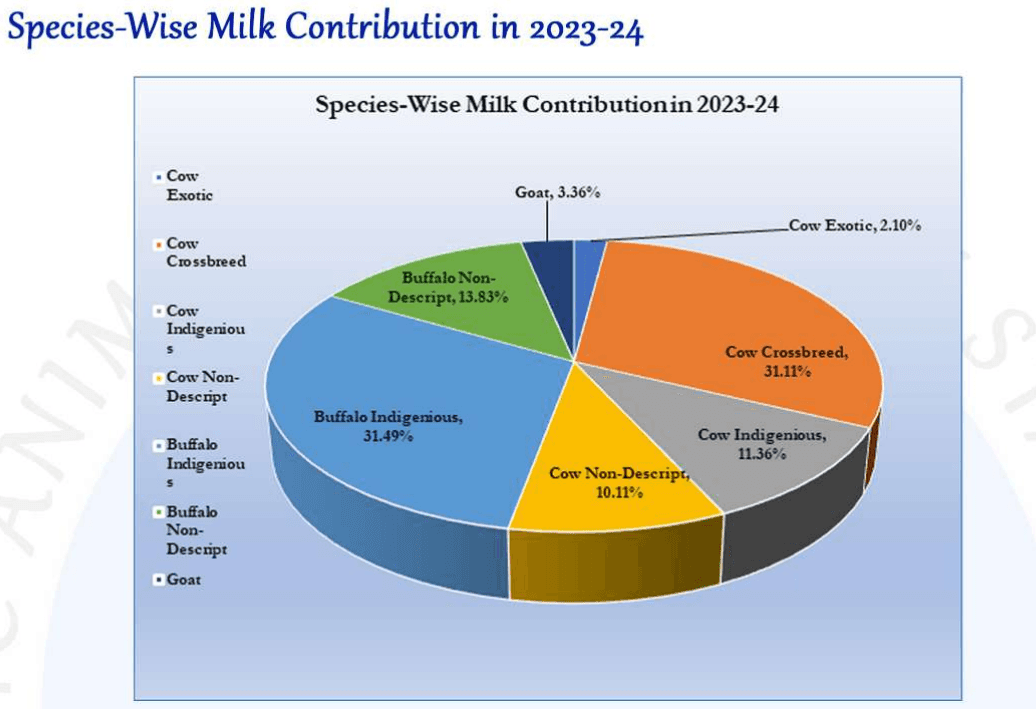
World Milk Day (FAO, 1 Jun) celebrates nutrition, livelihoods & sustainability of dairy; India marks National Milk Day on 26 Nov (Kurien).

India, top global milk producer since 1998, supplies ≈25 % of world output; key states — UP, Rajasthan, MP, Gujarat, Maharashtra.

White Revolution 2.0 targets cooperative procurement hike to 1,000 lakh L/day, stressing women, nutrition, climate-smart dairying.

Quick Facts for MCQs

Economic Angle

  • Contribution 12-14 % of farm income; rural backbone via 303 m bovines & 74 m goats.
  • Unorganised dominance limits cold-chain, credit, quality premiums.
  • Gobar-Dhan converts dung to bio-CNG & fertiliser, adding revenue streams.

Social Concerns

  • Women: 35 % in dairy cooperatives; 48 k women-led societies empower rural households.
  • Milk’s calcium & B-12 combat anaemia, stunting; vegetarian diets rely heavily on it.
  • Indigenous breed erosion from 30 % crossbred average (Kerala 96 %) threatens biodiversity.

Environmental Impact

  • Heatwaves in north (30 % output) jeopardise supply, incomes.
  • Methane mitigation via digestible forages & feed additives; TMR plants by Amul.
  • Climate-resilient A2 breeds under Rashtriya Gokul Mission bolster adaptation.

Tech & Schemes

  • Sex-sorted semen skews births toward high-yield females; Embryo Transfer gives 12 calves/yr.
  • IoT collars, AI udder scanners, automated milking slash disease & labour costs.
  • Flagship funds: AHIDF, NADCP, Gokul Mission, NAIP, Livestock Mission.

Key Data Points

FeatureData-Point
Global rank1st since 1998
2023-24 production239.2 million t
10-yr growth (2014-24)+63.56 %
Per-capita milk availability471 g/day (world avg 322 g)
GDP share> 6 %
Farmers engaged80 million
Organised sector share28 %
Feed price rise (30 yrs)246 % vs milk price 68 %
Heatwave yield loss10-30 % forecast
Mastitis loss₹14,000 crore/yr

Related UPSC Prelims PYQs

GEO_GS 2024PYQ 1

Which of the following statements with respect to milk production in India is/are not correct?

GS-3Infrastructure

5.Chenab Railway Bridge Inauguration (USBRL Project)

Financial Express
Illustration for Chenab Railway Bridge Inauguration (USBRL Project)

What & Where

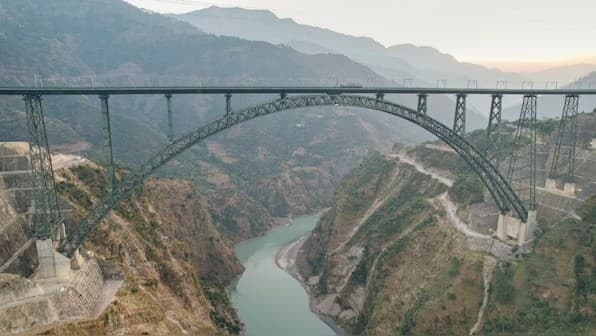
Bridge: steel-arch railway span over Chenab River between Bakkal & Kauri villages, Reasi district, J&K

Corridor: integral to Udhampur–Srinagar–Baramulla Rail Link, stitching Katra with Sangaldan en route to Srinagar

Record: tallest railway bridge globally at 359 m above riverbed, located in seismic Zone V Himalayas

Quick Facts for MCQs

Engineering Specs

  • Steel arch with composite deck; high-strength steel & concrete mix
  • Safety envelope covers wind, quake, blast, temperature, corrosion factors
  • Foundation depth and anchorage engineered for fractured Himalayan geology

Strategic Significance

  • Connectivity upgrade ensures year-round rail access to Kashmir frontier region
  • Infrastructure symbol enhances national integration and rapid troop mobilisation ability
  • Tourism and local commerce expected to gain via faster, cheaper logistics

Project Execution

  • Construction involved cable-crane methodology across 467 m deep gorge
  • Remote terrain required 28,000 t steel, modular on-site fabrication
  • Inauguration signals physical completion of 272 km USBRL megaproject

Key Data Points

FeatureData-Point
Height above riverbed359 m
Taller than Eiffel35 m
Total bridge length1,315 m
Main arch length785 m
Approach span length530 m
Design wind speed266 km/h
Seismic resistanceup to Magnitude 8
Temperature tolerance−20 °C
Blast resistance40 t TNT
Permitted train speed100 km/h
Design life120 years
Implementing agencyKonkan Railway Corporation
ConstructorsAfcons-Ultra (South Korea)-VSL JV
GS-3EconomyQuick Bite

6.Flipkart Secures RBI NBFC Licence (NBFC Regulation)

LiveMint

What & Where

Flipkart now holds RBI-issued Non-Banking Financial Company (NBFC) licence in India.

Licence lets the e-commerce firm lend directly to buyers and sellers nationwide.

NBFCs regulated under RBI Act 1934; incorporation under Companies Act 1956/2013 mandatory.

Quick Facts for MCQs

Legal & Policy

  • Registration needs RBI nod plus ₹10 crore NOF and Companies Act incorporation.
  • NBFC definition excludes primary agriculture, manufacturing, trade, real estate businesses.

Bank–NBFC Differences

  • Deposit acceptance limited; no demand deposits permitted for NBFCs.
  • Payment-system exclusion stops NBFCs from issuing cheques or providing settlement services.

Business Impact

  • Direct lending by Flipkart may lower platform credit costs for sellers and consumers.

Key Data Points

FeatureData-Point
First Indian e-commerce NBFCFlipkart
Regulator for NBFCsReserve Bank of India
Minimum Net Owned Fund₹10 crore
Governing company lawCompanies Act 1956 or 2013
Deposit insurance coverNot available under DICGC
Demand depositsProhibited for NBFCs
Cheque-issuing rightNo; outside payment & settlement system
Residuary NBFC main activityCollect deposits via schemes/instalments

Related UPSC Prelims PYQs

CDS_GK 2022PYQ 1

गैर-बैंकिंग वित्तीय कंपनियों (NBFCs) के बारे में निम्नलिखित में से कौन-सा कथन सही नहीं है?

GS-3Environment

7.Dhanushkodi Flamingo Sanctuary Notification (Bird Sanctuary)

The Hindu
Illustration for Dhanushkodi Flamingo Sanctuary Notification (Bird Sanctuary)

What & Where

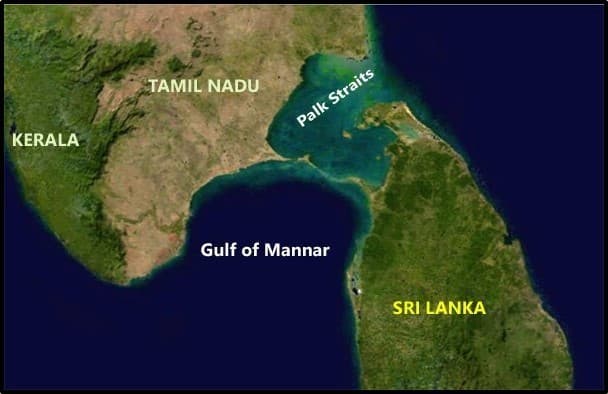
Newly declared Greater Flamingo Sanctuary; protects migratory wetland birds at a key Central Asian Flyway stopover

Lies in Dhanushkodi, Rameshwaram taluk, Ramanathapuram district, Tamil Nadu; inside Gulf of Mannar Biosphere Reserve

Encompasses >500 ha of wetlands, mangroves, mudflats, marshes and sand dunes along the Palk Bay coast

Quick Facts for MCQs

Ecology & Biodiversity

  • Habitat mosaic supports flamingos, herons, sandpipers, egrets, sea-turtle nesting
  • Coastal vegetation buffers erosion, aids climate resilience
  • 2023-24 survey reaffirmed high avifaunal density in winter months

Conservation Significance

  • Legal notification strengthens Gulf of Mannar marine conservation network
  • Sanctuary status enables stricter regulation of tourism, fishing intrusions
  • Potential model for other Central Asian Flyway wetland nodes

Species Biology

  • Flamingos filter-feed using down-curved bill rich in lamellae
  • Pink plumage derived from carotenoid pigments in algal and invertebrate diet
  • Highly gregarious; breed in large colonies, display synchronized V-shaped flights

Livelihood & Tourism

  • Eco-tourism prospects for bird-watching, nature trails may boost local income
  • Community engagement envisioned for mangrove restoration and guided tours

Key Data Points

FeatureData-Point
Sanctuary areaOver 500 ha (includes 7 ha revenue + forest land)
StateTamil Nadu
Biosphere ReserveGulf of Mannar
Migratory flywayCentral Asian Flyway
Bird species listed128
Wetland birds counted 2023-2410,700 +
Flagship speciesGreater Flamingo
Flamingo scientific namePhoenicopterus roseus
Flamingo height range90–150 cm
Flamingo clutch size1–2 eggs
Nest typeCone-shaped mud mounds
Key mangrovesAvicennia, Rhizophora
GS-3Environment

8.World Environment Day 2025 (UN Environment Day)

UNEP

What & Where

Observance — UN-led World Environment Day, annual global outreach on 5 June for environmental protection

Geography — 2025 official celebrations in Jeju Province, Republic of Korea

Focus — Mobilising worldwide action to beat plastic pollution and advance a global treaty

Quick Facts for MCQs

Legal & Policy

  • Treaty focus — Global Plastics Treaty seeks binding rules across full plastic life-cycle
  • National plan — Mexico Beach Cleanup Plan 2025-30 targets plastic-free coasts within five years
  • Host nation role — Korea spotlights marine litter laws during Jeju event

Tech & Schemes

  • Platform launch — Global Plastics Hub offers datasets, best practices, collaboration tools on marine litter
  • Youth drive — Tide Turners Summit shares scalable plastic-reduction models led by volunteers worldwide
  • Cleanup model — Community beach audits integrate app-based tracking for waste hotspots

Awareness & Culture

  • Mural outreach — 245-foot Chicago Ecosystem Restoration Mural raises visibility of plastic crisis
  • Campaign hashtag — #BeatPlasticPollution trends during WED, amplifying citizen pledges
  • Visual storytelling — Art installations in Jeju translate plastic waste into public exhibits

Key Data Points

FeatureData-Point
Lead UN agencyUNEP
First edition1973
Observance date5 June (annual)
2025 themeBeat Plastic Pollution
2025 host locationJeju Province, South Korea
Key 2025 objectiveMomentum for legally binding Global Plastics Treaty
Next treaty talksAugust 2025
Youth programme reachTide Turners – 980,000+ youth, 60 countries
New data platformUNEP Global Plastics Hub
Mexico coastal targetZero plastic waste by 2030

Related UPSC Prelims PYQs

NDA_GAT 2022PYQ 1

Which among the following was the host country of the United Nations World Environment Day, 2022?

GS-3Environment

9.EnviStats India 2025 Report (Environmental Statistics)

Times of India
Illustration for EnviStats India 2025 Report (Environmental Statistics)

What & Where

EnviStats India: annual MoSPI publication providing national-level environment statistics using UN-FDES 2013 framework

8th edition released 5 Jun 2025, covers energy, biodiversity, climate, water, waste and fiscal spending

Geographic scope: pan-India data with select global comparability indicators (e.g., Ramsar sites, SDGs)

Quick Facts for MCQs

Energy & Power

  • Thermal generation up 67% in decade; renewables multiplied 3.4 × reflecting transition momentum
  • Data aids tracking Paris Agreement NDCs and RE targets

Biodiversity

  • India hosts ≈7.5 % world fauna; soil and aquatic groups prominently catalogued
  • Report enriches Ramsar-linked wetland information sets

Climate Metrics

  • Mean, max, min temperatures all showing sustained upward drift since early 2000s
  • Erratic monsoon highlighted without definitive long-term precipitation trend

Public Finance

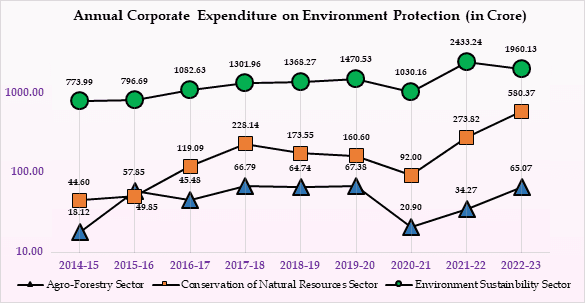
  • Environmental Sustainability Sector tops allocations; agroforestry receives minimal funds
  • Spending matrix useful for green budgeting, SDG-aligned fiscal audits

Data & Methodology

  • FDES structure ensures international comparability and indicator standardisation
  • Gaps: limited sub-national granularity, lagged datasets, scant vulnerability mapping

Key Data Points

FeatureData-Point
Edition year2025 (8th)
Thermal power 2023-2413.26 lakh GWh
Renewable power 2023-242.25 lakh GWh
Renewable jump 2013-14→2023-2465,520 → 2.25 lakh GWh
Inland fish 2023-24139.07 lakh t
Marine fish 2023-2444.95 lakh t
Mean temp 2001 vs 202425.05 °C → 25.74 °C
Long-term rainfall trendNo clear rise or fall
Total recorded faunal spp.1,04,561
Soil fauna spp. share22,404
Freshwater fauna spp.9,436
Mangrove fauna spp.5,023
Highest 2021-22 env. outlay₹2,433 cr (Environmental Sustainability)
Lowest 2021-22 env. outlayAgroforestry (value not specified)
New indicators addedRamsar sites, sanitation, transport, electricity access

Related UPSC Prelims PYQs

GEO_GS 2020PYQ 1

India has committed to reduce emission intensity of its GDP from 2005 levels by 33-35 per cent by the year:

GEO_GS 2026PYQ 2

India's installed solar capacity in 2025 is close to

GS-3S&T

10.India Emerges Global Biotech Hub (Biotech Industry)

PIB

What & Where

ICGEB: 1983 inter-governmental biotech centre; 69 members; hubs—New Delhi, Trieste (Italy), Cape Town (SA).

DST-ICGEB Bio-foundry: India’s first public-funded scale-up platform for bio-innovation; launched June 2025, New Delhi.

BioE3 Policy: “Biotechnology for Economy-Environment-Employment” blueprint to deepen pan-India bio-manufacturing.

Quick Facts for MCQs

Legal & Policy

  • BioE3 Policy anchors incentives, sustainability, job creation in bio-manufacturing.
  • Mission Covid Suraksha accelerated indigenous Covid vaccine R&D funding.
  • Public-funded Bio-foundry showcases PPP thrust within DST mandate.

Economic Angle

  • Bioeconomy CAGR ~43 % (2014-24) indicating rapid sector monetisation.
  • Startup base grew 200× in a decade, signalling strong innovation pipeline.
  • USD 300 bn 2030 target aligns with Atmanirbhar Bharat export ambitions.

Tech & Schemes

  • Bio-foundry offers design-build-test-learn pipelines, reducing lab-to-market time for synthetic biology products.
  • Facilities support vaccine, enzyme, bio-fuel, biomaterial prototyping at industrial scale.
  • Platform open to academia, startups, MSMEs under DST-BIRAC programs.

Product Milestones

  • ZyCoV-D: plasmid DNA platform enables needle-free delivery, WHO emergency listing awaited.
  • CERVAVAC: quadrivalent HPV vaccine priced for LMIC affordability, targets cervical cancer burden.
  • Pneumosil: 10-valent PCV covering serotypes prevalent in India, WHO prequalification earned 2020.

Key Data Points

FeatureData-Point
ICGEB Indian host cityNew Delhi
ICGEB member countries69
India biotech rank12th world; 3rd Asia-Pacific
Indian biotech startups 2024>10,000 (50 in 2014)
Bioeconomy value 2014USD 10 bn
Bioeconomy value 2024USD 165.7 bn
Bioeconomy target 2030USD 300 bn
India vaccine statusLargest global producer
First DNA Covid vaccineZyCoV-D
Indigenous macrolide antibioticNafithromycin
Indigenous qHPV vaccineCERVAVAC
Indigenous PCVPneumosil

Related UPSC Prelims PYQs

CAPF_GAI, CDS_GK 2020PYQ 1

Which one of the following Indian institutes was approved by the Drugs Controller General of India for conducting human trials of the Oxford-AstraZeneca Covid-19 vaccine candidate?

CAPF_GAI, CDS_GK 2024PYQ 2

Biotechnological research is promoted through the development of "Biotechnology Parks". Which of the following is/are essential to bring technology to market?

GS-3S&TQuick Bite

11.Thermophilic Bacteria Offer New Antibiotics (Antimicrobial Resistance)

The Hindu

What & Where

Thermophilic bacteria: heat-loving microbes thriving ≥ 45 °C in hot springs, deep-sea vents, compost piles

Rajgir Hot Springs, Bihar: 16S rRNA metagenomics reveals antibiotic-rich Actinobacteria dominance

Actinobacteria/Actinomycetales: classic antibiotic producers (streptomycin, tetracycline) forming 40-43 % Rajgir community

Quick Facts for MCQs

Scientific Technique

  • Metagenomics, culture-independent DNA/RNA recovery from environmental samples
  • 16S rRNA sequencing, fast taxonomic profiling of uncultured microbes
  • Focus on antibiotic biosynthetic gene clusters detection

Health Significance

  • AMR, silent epidemic escalating multiple-drug prescriptions and costs
  • Novel thermophile antibiotics, potential arsenal against resistant gram-positive strains
  • Diethyl phthalate from Actinomycetales, active versus foodborne Listeria

Industrial & Agricultural Uses

  • Thermostable Taq polymerase, backbone of COVID-19 PCR diagnostics
  • Leh thermophile consortium, enhances crop growth and soil health
  • Heat-stable enzymes, valuable in high-temperature bioprocessing

International Examples

  • Saudi Arabian thermophiles, yield antibiotics targeting gram-positive pathogens
  • Global hot-spring surveys, expanding extremophile antibiotic libraries

Key Data Points

FeatureData-Point
Dominant phylum in Rajgir sampleActinobacteria 40–43 %
Key extracted compoundDiethyl phthalate
Inhibited pathogenListeria monocytogenes
Core method used16S rRNA metagenomics
WHO AMR cost forecastUSD 1 trillion by 2050
Thermophile habitatsHot springs, deep-sea vents, compost
Famous thermophile enzymeTaq polymerase for PCR
Leh hot-spring mixPromotes plant growth
GS-2Polity

12.India Wins IIAS Presidency (IIAS Presidency)

The Hindu

What & Where

Global, non-governmental scientific body advancing public-administration research, reform and comparative governance.

Founded 1930; almost century-old platform for scholars & practitioners from 90+ countries.

Headquarters Brussels, Belgium; rotating conferences and forums hosted worldwide.

Quick Facts for MCQs

India Angle

  • Milestone; India secures presidency on first attempt, signalling higher global administrative stature.
  • Leadership term starts 2025, aligning with vision of enhanced Global South representation.

Governance & Mandate

  • Objectives: promote comparative studies, intercultural dialogue, reform models, contemporary governance discourse.
  • Functions: organize conferences, publish journal, serve as policy-scholar forum.

UN Linkages

  • Collaboration with UNPAN & UN CEPA integrates IIAS research into UN public-administration initiatives.

Key Data Points

FeatureData-Point
Indian presidency term2025 – 2028
India vote share61.7 %
Election firsts1st Indian president; 1st ballot-based poll in IIAS history
Year of establishment1930
Headquarters cityBrussels
Annual conferencesThree, rotated among members
Flagship journalInternational Review of Administrative Sciences (EN, FR, Mandarin)
UN partnersUNPAN, UN CEPA
Membership reach90 + countries

Related UPSC Prelims PYQs

CDS_GK 2025PYQ 1

Which of the following pairs of Institute and their location is/are correctly matched?

GS-2Scheme

13.Waste Picker Enumeration App Launch (NAMASTE Scheme)

PIB
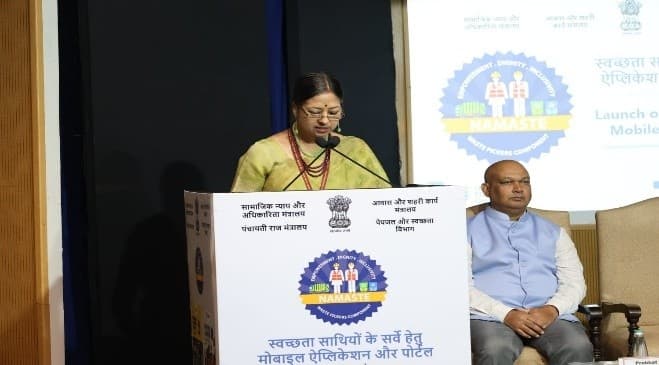
Illustration for Waste Picker Enumeration App Launch (NAMASTE Scheme)

What & Where

Waste Picker Enumeration App – nationwide digital platform mapping 2.5 lakh waste pickers under NAMASTE scheme.

Operates across urban India; spearheaded by MoSJE with MoHUA convergence.

Implemented through National Safai Karamcharis Finance & Development Corporation (NSKFDC).

Quick Facts for MCQs

Tech & Schemes

  • Digital-first enumeration enables real-time beneficiary tracking and benefit delivery.
  • NAMASTE emphasizes mechanised sanitation, eliminating manual scavenging practices.
  • App integrates with Swachh Bharat urban waste streams.

Beneficiary Support

  • Health; Ayushman Bharat policies cover hospitalisation expenses.
  • Livelihood; upskilling aligned with waste management value-chain jobs.
  • Safety; PPE distribution reduces occupational hazards.

Institutional Setup

  • MoSJE nodal authority; funds and policy oversight.
  • MoHUA ensures urban-local-body coordination for waste logistics.
  • NSKFDC channels credit, subsidies, training modules to ground-level collectives.

Key Data Points

FeatureData-Point
Scheme full nameNational Action for Mechanised Sanitation Ecosystem
Scheme natureCentral Sector
Launch (NAMASTE)July 2023
Lead ministryMoSJE
Convergence partnerMoHUA
Implementing agencyNSKFDC
App purposeEnumerate, issue ID cards, extend benefits to waste pickers
Enumeration target2.5 lakh persons
Identity outputOccupational ID cards
Health coverAyushman Bharat insurance
Safety gearPPE + seasonal safety kits
Livelihood aidSkill training + capital subsidy for collection vehicles
Collective support750 dry-waste collection centres
Key guides releasedMainstreaming Waste Picker Collectives, Charting Change report
Core aimFormalize, secure, mechanize sanitation workforce
GS-2Scheme

14.Ayush Nivesh Saarthi Investment Portal (Ayush Investment)

PIB

What & Where

Digital portal to channel investments into India’s Ayush (Ayurveda, Yoga, Naturopathy, Unani, Siddha, Homeopathy) sector.

Led by Ministry of Ayush; built with Invest India; accessible worldwide.

Centralised platform integrating policies, incentives, project pipeline for traditional-medicine entrepreneurship.

Quick Facts for MCQs

Tech & Schemes

  • Unified-interface merges policies, incentives, invest-ready projects for quicker decisions.
  • Dynamic-dashboard offers live guidance, clearance tracking, investor support.
  • Investor-centric design enables simplified navigation and end-to-end digital journey.

Economic Angle

  • FDI focus expected to accelerate Ayush market already growing 17 % annually.
  • Portal aims to funnel capital to startups and MSMEs in natural health products.
  • Strengthens USD 13 bn medical-tourism segment through credible traditional-medicine offerings.

Global Outreach

  • Platform targets both domestic and international stakeholders for wider capital base.
  • Supports India’s positioning as trusted global wellness hub via structured investment landscape.
  • Enhances soft-power by exporting traditional-medicine expertise and products.

Key Data Points

FeatureData-Point
Launch entityMinistry of Ayush + Invest India
Investment route allowed100 % FDI via automatic route
Sector coverageAyurveda, Yoga, Naturopathy, Unani, Siddha, Homeopathy
Ayush industry CAGR~17 % during 2014-2020
Indian Medical Value Travel size≈ USD 13 billion
Core portal toolsUnified policy hub, dynamic dashboard, real-time facilitation

Related UPSC Prelims PYQs

CDS_GK, GEO_GS 2022PYQ 1

Which of the following are the parts of the Government of India's AYUSH initiative?

CDS_GK, GEO_GS 2022PYQ 2

Recently launched ‘Jan Samarth’ portal

Ready to practice?

Test your knowledge with our UPSC test series.

Start Free Trial