UPSC Current Affairs

18 topicsGS-1: 4GS-2: 6GS-3: 8
0/18 done
GS-2Polity

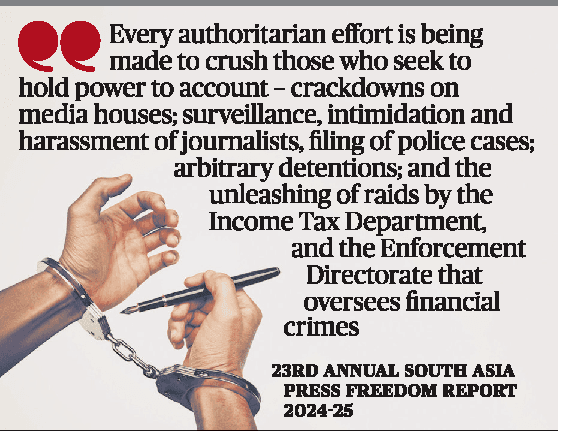
1.South Asia Press Freedom Report (Press Freedom)

The Hindu
Illustration for South Asia Press Freedom Report (Press Freedom)

What & Where

Report Asia Press Freedom Report 2024-25; annual assessment of newsroom liberties

Scope Eight South Asian countries: India, Pakistan, Afghanistan, Sri Lanka, Bangladesh, Nepal, Bhutan, Maldives

Focus Shrinking media freedom via legal coercion, disinformation, surveillance, AI threats

Quick Facts for MCQs

Legal & Policy

  • Laws UAPA, PMLA, sedition, defamation routinely used against critical media
  • Raids Income Tax and ED searches; government ads withheld to choke independents
  • Gatekeeping DPDP Act 2023 plus weakened RTI curtail citizen information access

Violence & Detention

  • Violations 250 + cases logged; 69 journalists behind bars region-wide
  • Deaths 20 media persons killed; Pakistan tops violence chart
  • Gender Harassment endemic; newsroom leadership overwhelmingly male

Disinformation & Tech

  • Ecosystem Political IT cells amplify hate speech and fake news during polls
  • AI Risk Generative content erodes authenticity; gig reporters endure low wages, job insecurity
  • Ranking Global Risks Report 2024 tags misinformation as top short-term global threat

Reform Measures

  • Bill Media Transparency Bill 2024 proposed to curb monopolies, politicised ad flow
  • Ombudsman Independent media ombudsman sought for censorship appeals, editorial standards
  • Safety Labour protections, legal aid, independent fact-checking funds urged for journalists

Key Data Points

FeatureData-Point
Edition23rd annual
PublisherAsia Press Freedom group
Regional coverage8 South Asian states
Total rights violations250 + cases
Journalists jailed/detained69
Journalists killed20
India press-freedom rank151st globally
Bhutan rank drop152nd; lowest ever
Pakistan situationMost violent year in 20 yrs
Key listed risksDisinformation, legal suppression, surveillance, AI
GS-2PolityQuick Bite

2.Stamp Vendors as Public Servants (Prevention of Corruption Act)

The Hindu

What & Where

Supreme Court of India (10 May 2025) affirms licensed stamp vendors are “public servants” under Prevention of Corruption Act 1988.

Ruling upholds Delhi High Court view; appeal arose from corruption case involving stamp-paper distribution in Delhi.

Vendors supply non-judicial stamp papers nationwide; earn government-fixed commission/discount, linking them to state remuneration.

Quick Facts for MCQs

Legal & Policy

  • Section2(c) covers persons paid by Government through fees or commission for public duty.
  • SupremeCourt adopts purposive interpretation to widen anti-corruption reach.
  • Decision aligns with earlier rulings expanding public-servant ambit beyond regular employees.

Anti-Corruption Focus

  • Classification enables CBI/ACB to invoke PC Act against bribery by stamp vendors.
  • Strengthens integrity of stamp-paper supply vital for contracts, property and court fees.
  • Supports deterrence by subjecting quasi-private actors to criminal sanctions.

Administrative Implications

  • State treasury departments must audit vendor commissions as public funds.
  • Licensing authorities gain grounds for suspension or cancellation on misconduct alongside prosecution.
  • Vendors now liable to vigilance enquiries and mandatory asset disclosures like other public servants.

Key Data Points

FeatureData-Point
Apex court order date10 May 2025
Governing statutePrevention of Corruption Act 1988
Relevant clauseSection 2(c) – definition of public servant
Newly covered entityLicensed stamp vendors
Remuneration modeCommission / discount from Government
Lower court affirmedDelhi High Court
Core public dutyEnsuring access to stamp papers for legal transactions
GS-3Economy

3.One State One RRB Consolidation (Regional Rural Banks)

BL

What & Where

Policy: One State-One RRB (OS-OR) merges all Regional Rural Banks within a state into one entity.

Geography: Phase-4 (FY 2025-) covers 10 states + 1 UT; pan-India RRB count now 28.

Process: Mergers executed under Sec 23A(1), Regional Rural Banks Act 1976; each new RRB authorised capital ₹2,000 cr.

Quick Facts for MCQs

Legal & Policy

  • Provision: Sec 23A(1) allows public-interest amalgamations without separate legislation.
  • Oversight: RBI regulates; NABARD supervises; dual control complicates decisions.
  • Taxation: Treated as cooperative societies under IT Act 1961.

Economic Angle

  • Profitability: Consolidation credited for turnaround from losses to record profit FY 24.
  • Credit: Larger capital base expected to widen rural lending, spur inclusive growth.
  • Risk: Single-RRB model heightens state-specific agricultural shock exposure.

Operational Challenges

  • Efficiency: Wage/operating expense 72 %; branch rationalisation politically sensitive.
  • Technology: Cyber-security upgrades demand heavy outlays despite thin margins.
  • Staffing: Legacy employees, varied systems hinder seamless post-merger integration.

Key Data Points

FeatureData-Point
First consolidation year2005
Total RRBs 2005 vs Mar 2021196 → 43
Phase-4 outcome (FY 2025)43 → 28 RRBs
Sponsor ratio (Centre:State:Bank)50 % : 15 % : 35 %
Latest net profit (FY 24)₹7,571 cr, all-time high
Cost/Income ratio FY 2477.4 %
PSL target for RRBs75 % of ANBC/CEOBE
First RRBPrathama Bank, Moradabad (1975)
Authorised capital post-merger₹2,000 cr per RRB
Relevant committeeDr Vyas Committee 2001
GS-3Economy

4.IMF World Economic Outlook 2025 (Global Growth Outlook)

DD News
Illustration for IMF World Economic Outlook 2025 (Global Growth Outlook)

What & Where

IMF World Economic Outlook (WEO): biannual April/October report providing five-year forecasts, policy analysis for member economies

April 2025 edition: India projected to overtake Japan, becoming world’s 4th-largest economy by nominal GDP

Compiled at IMF HQ, Washington DC; serves governments, investors, academia for macro-economic benchmarking

Quick Facts for MCQs

Global Outlook

  • Projection: World ageing; average age +11 years 2020-2100, yet healthy ageing adds 0.4 pp to growth 2025-50
  • Inflation: Moderation slower than hoped; financial-market volatility and trade frictions cited as risks
  • Projection: Global growth path subdued versus history, with advanced-economy weakness led by US 1.8 %

India Growth Drivers

  • Consumption: Rural-led private spending hit ₹1.83 lakh cr 2024, CAGR 7.2 %, propelling demand
  • Reform: PLI, Make in India, Bharatmala, Sagarmala, Smart Cities accelerate manufacturing and logistics capacity
  • Digital: Digital economy already 11.74 % of GDP; startup boom targets USD 1 tn value, 50 mn jobs by FY30

Fiscal & Demographics India

  • Debt: 56.8 % ratio offers fiscal space relative to advanced-economy peers
  • Workforce: Labour force to reach 457.6 mn by 2028; female participation up from 23.3 % to 41.7 %
  • Trade: India’s share of global services exports doubled to 4.3 % between 2005-2023

Key Data Points

FeatureData-Point
Global GDP growth 20252.8 %
Global GDP growth 20263.0 %
US growth 20251.8 %
Emerging-market growth 20253.7 %
India GDP growth 20256.2 % (fastest major economy)
China GDP growth 20254.0 %
India nominal GDP 2025USD 4.187 tn (rank 4)
Japan nominal GDP 2025USD 4.186 tn (rank 5)
India debt-to-GDP FY2556.8 %
US debt-to-GDP FY25124 %

Related UPSC Prelims PYQs

CAPF_GAI, ESE_GS 2023PYQ 1

IMF raises its projection for economic growth in 2021-22 to

CAPF_GAI, ESE_GS 2025PYQ 2

Which one among the following is the estimated fiscal deficit as a percentage of GDP of India in the Budget Estimates of 2025-26?

GS-3EconomyQuick Bite

5.US Priority Watch List on India (IPR Enforcement)

The Hindu

What & Where

Priority Watch List: USTR Special 301 tag for nations with major IPR enforcement gaps

Special 301 Report: annual USTR review of global IP regimes influencing US innovation, trade

India: again on 2025 PWL, potentially affecting ongoing Indo-US trade negotiations

Quick Facts for MCQs

Legal & Policy

  • TRIPS compliance: India maintains existing IP laws already align with WTO obligations
  • Enforcement lever: PWL status allows USTR to initiate unilateral Section 301 actions
  • Reform nudge: Listing intended to spur tougher civil, criminal, border IP enforcement

Economic Angle

  • Trade talks: PWL tag may slow concessions in Indo-US market-access negotiations
  • Business risk: US firms cite innovation losses, piracy costs within Indian market
  • Sanction threat: Tariff or import restrictions possible if progress remains insufficient

International Outlook

  • Dialogue forum: India-US Trade Policy Forum regularly addresses IPR concerns
  • Multilateral recourse: India may use WTO dispute settlement against unilateral US measures

Key Data Points

FeatureData-Point
Listing authorityUnited States Trade Representative
Report editionSpecial 301 Report 2025
India’s 2025 statusPriority Watch List country
Legal benchmark citedWTO TRIPS Agreement
USTR follow-up optionsSection 301 investigation, trade sanctions

Related UPSC Prelims PYQs

ESE_GS, GS1 2017PYQ 1

‘राष्ट्रीय बौद्धिक सम्पदा अधिकार नीति (National Intellectual Property Rights Policy)’ के सन्दर्भ में, निम्नलिखित कथनों पर विचार कीजिए :

ESE_GS, GS1 2026PYQ 2

Consider the following regarding intellectual property rights:

GS-1History

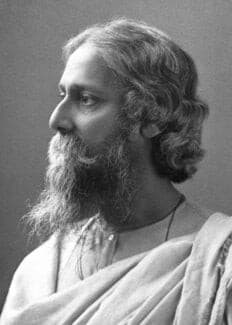
6.Rabindranath Tagore Contributions (Freedom Movement)

NDTV
Illustration for Rabindranath Tagore Contributions (Freedom Movement)

What & Where

Rabindranath Tagore: Bengali polymath—poet, composer, philosopher—born 7 May 1861 in Calcutta, Bengal Presidency.

Tagore Jayanti: annual observance (mainly West Bengal) celebrating his birth, literature, music and ideas.

Santiniketan, Birbhum (W.B.): open-air, nature-linked campus started by Tagore; evolved into Visva-Bharati University.

Quick Facts for MCQs

Freedom Struggle Role

  • Swadeshi writings & songs galvanised boycott of British goods.
  • Knighthood rejection symbolised moral defiance after Amritsar massacre.
  • Cordial yet ideologically distinct from Gandhi; mutual respect endured.

Literary Corpus

  • Output: 50+ poetry volumes, 12 novels, many plays, short stories, essays.
  • Novels Gora, Ghare Baire; plays The Post Office, Raktakaravi noted for nationalist themes.
  • Composed 2,000+ Rabindra Sangeet shaping Bengali cultural identity.

Educational Vision

  • Holistic pedagogy; emphasis on arts, crafts, nature over rote colonial curriculum.
  • Visva-Bharati sought global cultural synthesis; now Central University.
  • Championed individual dignity, anti-dogmatic spirituality from Upanishads.

Global Recognition

  • First non-European Nobel laureate; applauded by W.B. Yeats, Romain Rolland.
  • Worldwide lecture tours fostered East-West dialogue, universal humanism.
  • Influenced thinkers incl. Einstein; promoted harmony between man and nature.

Key Data Points

FeatureData-Point
Birth date7 May 1861
FatherDebendranath Tagore
Reform linkBrahmo Samaj
Nobel Prize year1913
Nobel categoryLiterature
Nobel textGitanjali
National anthemJana Gana Mana (1911)
Knighthood renounced1919 (Jallianwala Bagh protest)
Core movement backedSwadeshi
Education experimentVisva-Bharati, 1921

Related UPSC Prelims PYQs

GS1 2004PYQ 1

The name of the famous person of India who returned the Knighthood conferred on him by the British Government as a token of protest against the atrocities in Punjab in 1919 was

GS1 2007PYQ 2

The song ‘Amar Sonar Bangla’, written during the Swadeshi Movement of India, inspired the Liberation Struggle of Bangladesh and was adopted as the National Anthem of Bangladesh. Who wrote this song?

GS-1Mapping

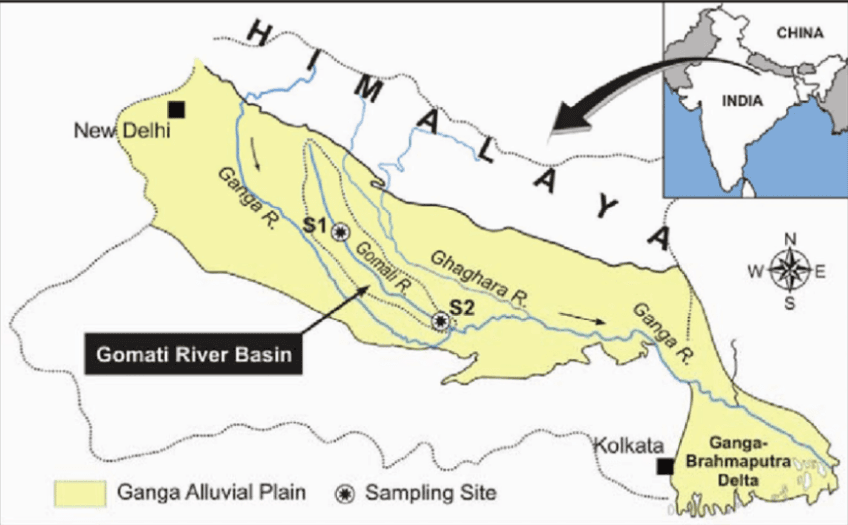
7.Gomti River Ecology Concerns (Indian Rivers)

Hindustan Times
Illustration for Gomti River Ecology Concerns (Indian Rivers)

What & Where

Gomti River; left-bank tributary of the Ganga flowing wholly in Uttar Pradesh

Originates from Gomat Taal (Fulhaar Jheel), near Madho Tanda, Pilibhit district

Confluences with Ganga at Kaithi, Ghazipur district; ~960 km course

Quick Facts for MCQs

Environmental Impact

  • Untreated sewage inflow; faecal coliform levels breaching safe limits
  • Declining dissolved oxygen; river nearing ecologically dead status in Lucknow stretch
  • Monsoon dilution temporary; dry-season stagnation worsens pollution

Geography & Hydrology

  • Perennial river; sluggish gradient except during monsoon surge
  • Basin spans central-east Uttar Pradesh; 18,750 sq km catchment
  • Tributary network: Sai joins near Jaunpur; others feed seasonally

Cultural Significance

  • Sacred identity; ritual baths and festivals along Lucknow ghats
  • River personified as Vashishtha’s daughter; invoked in local hymns
  • Gomti Chakra shells valued in Vaishnavite and Tantric worship

Key Data Points

FeatureData-Point
Origin lakeGomat Taal / Fulhaar Jheel
Source districtPilibhit, Uttar Pradesh
Total length~960 km
Drainage area~18,750 sq km
Flow characterPerennial; sluggish except monsoon
Confluence riverGanga
Confluence siteKaithi, Ghazipur district
Key districtsLucknow, Sitapur, Sultanpur, Jaunpur, Faizabad
Major tributariesSai, Chowka, Kathina, Saryu, Sarayan
Dissolved oxygen trendDeclining; threat of ecological death
Faecal coliform trendRising due to untreated sewage
Religious tagSacred; daughter of Rishi Vashishtha
Text mentionBhagavata Purana lists among five transcendental rivers
Unique objectGomti Chakra found in river sands
GS-3Environment

8.United Nations Forum on Forests (Global Forest Policy)

UN
Illustration for United Nations Forum on Forests (Global Forest Policy)

What & Where

UN Forum on Forests (UNFF): functional commission under ECOSOC for global forest-policy dialogue.

Headquarters: UN HQ, New York; established 2000 by ECOSOC Resolution 2000/35.

Holds biennial sessions: odd years technical reviews, even years policy decisions.

Quick Facts for MCQs

Legal & Policy

  • Objective: promote management, conservation, sustainable development of all forest types.
  • Supports Agenda 21 and Rio Forest Principles implementation.
  • Coordinates Voluntary National Contributions (VNCs) monitoring under 6 Global Forest Goals.

India Highlights

  • Showcased Aravalli Green Wall restoration as landscape-level intervention.
  • Reported commitment to VNCs aligning with UN Strategic Plan targets.
  • Invited members to join International Big Cat Alliance for integrated conservation.

Global Cooperation

  • Dehradun Country-Led Initiative (CLI 2023) on forest fire management & certification pushed for inclusion in UNFF mechanisms.
  • Congo, DPR Korea, Austria lauded for CLI inputs.

Key Data Points

FeatureData-Point
Parent bodyUN Economic & Social Council (ECOSOC)
Establishment year2000
HQ cityNew York, United States
Flagship planUN Strategic Plan for Forests 2017-2030
Core goalHalt deforestation & promote Sustainable Forest Management (SFM)
Session cycleBiennial; odd-year technical, even-year policy
India’s forest & tree cover25.17 % of geographical area
Mangrove cover change (India)+7.86 % in last decade
Green India Mission afforestation1.55 lakh ha
Ek Ped Maa Ke Naam seedlings1.4 billion planted

Related UPSC Prelims PYQs

GS1 2021PYQ 1

With reference to the ‘New York Declaration on Forests’, which of the following statements are correct?

GS1 2015PYQ 2

‘BioCarbon Fund Initiative for Sustainable Forest Landscapes’ is managed by the

GS-3EnvironmentQuick Bite

9.Marine Plastic Impact on Seabirds (Marine Pollution)

Down to Earth

What & Where

Plastic ingestion: seabirds worldwide consume floating debris, causing endocrine disruption and internal injury.

Highest risk group: albatrosses, petrels, shearwaters—open-ocean foragers of order Procellariiformes.

Marine setting: 50–75 trillion plastic pieces form garbage patches and microplastic clouds across oceans.

Quick Facts for MCQs

Environmental Impact

  • Biodiversity: debris injures fauna, alters habitats, weakens food webs.
  • Oxygen levels: surface litter reduces light, promoting hypoxia in water columns.
  • Deep-sea: microplastics accumulate on seabed, disrupting nutrient cycling.

Species Impact

  • Foraging behaviour: surface skim-feeding increases plastic uptake in Procellariiformes.
  • Endocrine effects: plastic additives interfere with hormones, impairing reproduction and growth.
  • Physical harm: gut obstruction, perforation and malnutrition elevate mortality.

Legal & Policy

  • GPML: voluntary global platform unites governments, industry, science on marine litter solutions.
  • London Convention 1972 & MARPOL 1978: restrict sea dumping and operational ship discharges.
  • UNEP Source-to-Sea Unit: coordinates knowledge sharing, source-reduction strategies.

Key Data Points

FeatureData-Point
Share of marine waste that is plastic≈ 80 %
Annual plastic inflow to oceans8–10 million t
Plastic pieces currently in oceans50–75 trillion
2050 projectionPlastics may outweigh all fish
Seabird order most affectedProcellariiformes
Key species examplesAlbatross, petrel, shearwater
GPML launch year2012
GPML secretariatUNEP Source-to-Sea Pollution Unit
Anti-dumping treatyLondon Convention 1972
Ship-discharge controlMARPOL 1978 Protocol

Related UPSC Prelims PYQs

GS1 2019PYQ 1

पर्यावरण में निष्क्रिय हो जाने वाली ‘सूक्ष्ममणिकाएँ’ (Micro-beads) के विषय में अत्यधिक चिंता क्यों है?

GS-3S&T

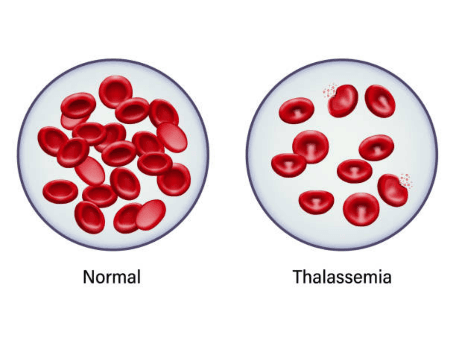
10.Thalassemia Genetic Disorder (Genetic Disease)

The Hindu
Illustration for Thalassemia Genetic Disorder (Genetic Disease)

What & Where

Inherited anaemia from defective haemoglobin synthesis; commonest single-gene disorder worldwide.

Two key forms: Alpha (≤4 gene deletions) and Beta (beta-globin mutations).

South-Asian hotspot; West Bengal carrier rate 6–10 % against India’s 3–4 %.

Quick Facts for MCQs

Genetics

  • Mutation- or deletion-driven loss of α/β chains disrupts oxygen delivery.
  • Autosomal-recessive; child affected when both parents are carriers.
  • Carrier state identifiable via Hb electrophoresis or targeted DNA test.

Regional Burden

  • Low awareness plus scant premarital screening sustain high carrier pool in West Bengal.
  • High prevalence generates pronounced social, emotional and financial stress on families.

Clinical Management

  • Regular transfusions every 2–5 weeks keep haemoglobin adequate.
  • Iron chelators (deferasirox/deferoxamine) avert transfusion-induced iron overload.
  • Matched-donor stem-cell transplant offers definitive cure in select children.

Key Data Points

FeatureData-Point
WB carrier prevalence6–10 %
National carrier average3–4 %
Severe form labelThalassemia Major / Cooley Anaemia
Curative optionBone-marrow / stem-cell transplant
Routine therapyRegular blood transfusion + iron chelation
Untreated major outcomeDeath often before age 30
Typical symptomsFatigue, jaundice, splenomegaly

Related UPSC Prelims PYQs

GS1 1998PYQ 1

Haemophilia is a genetic disorder which leads to

GS-3S&TQuick Bite

11.AI-Enabled Haryana Water Atlas (Water Management Tech)

Hindustan Times
Illustration for AI-Enabled Haryana Water Atlas (Water Management Tech)

What & Where

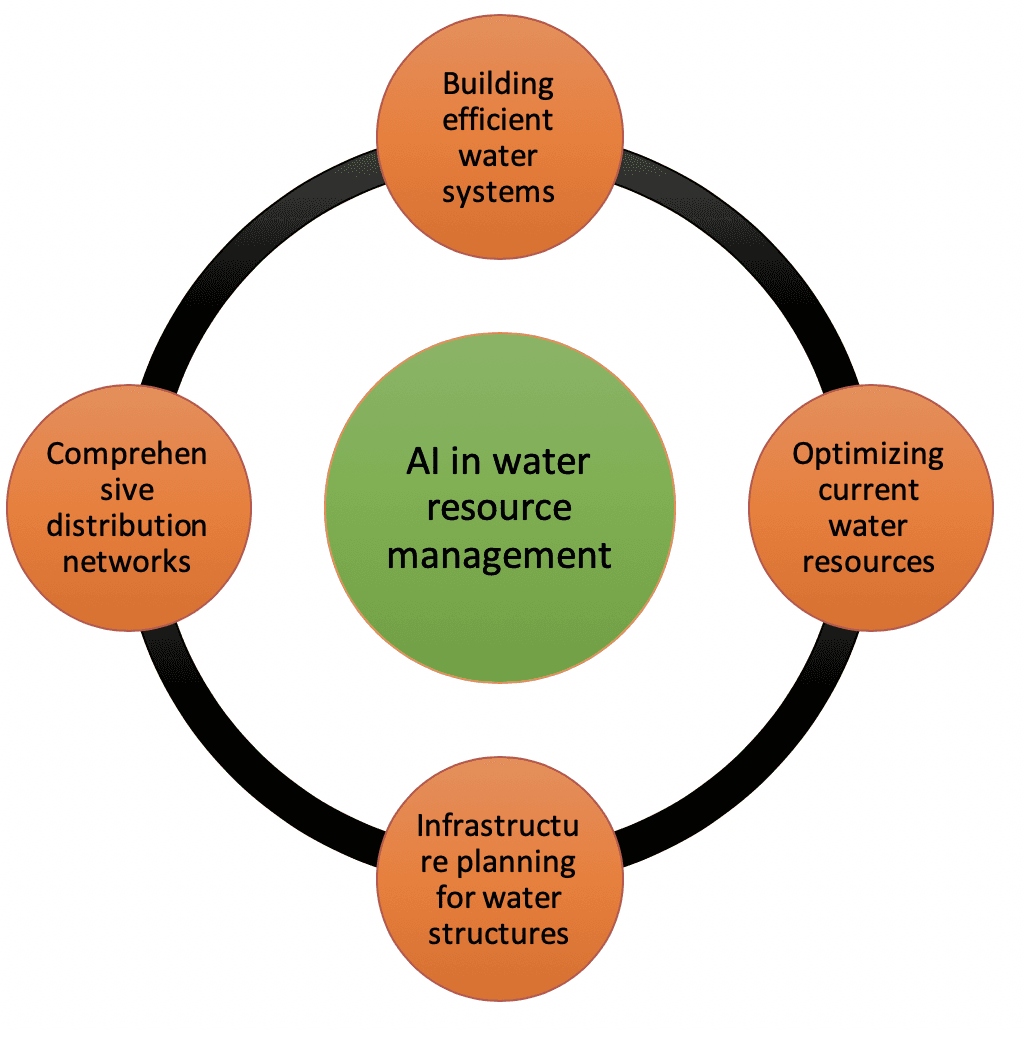
Definition – AI-powered Water Resource Atlas 2025, geospatial platform for real-time water-resource monitoring.

Location – Haryana; statewide mapping of groundwater, surface water, aquifers, recharge zones, canals, cropping patterns.

Mechanism – Integrates satellite imagery, GPS surveys, IMD weather, CGWB, Irrigation & Agriculture data for analytics.

Quick Facts for MCQs

Tech & Schemes

  • Functionality – Delivers real-time dashboards on water levels and canal flows.
  • Coverage – Tracks cropping patterns to align irrigation schedules.
  • Support – Provides data-driven inputs for state water-conservation schemes.

Environmental Impact

  • Conservation – Enables early warning on groundwater depletion zones.
  • Recharge – Identifies optimal recharge areas for aquifer restoration.
  • Agriculture – Promotes water-efficient cropping, reducing over-extraction.

Research & Innovation

  • Synergy – Complements IIT-Kharagpur AI model spotting arsenic in drinking water.
  • Trend – Marks India’s move toward AI-backed integrated water management.
  • Data fusion – Combines meteorological and hydrological inputs for predictive analytics.

Key Data Points

FeatureData-Point
Launch year2025
Implementing stateHaryana
Core techArtificial-Intelligence geospatial platform
Key datasetsSatellite, GPS, IMD, CGWB, Dept. surveys
Primary objectivesConservation, sustainable farming, infra planning
Recent allied researchIIT-Kharagpur AI model for arsenic detection

Related UPSC Prelims PYQs

CAPF_GAI 2021PYQ 1

Scientists at CSIR-NCL Pune, with support from the Water Technology Initiative of the Department of Science and Technology (DST), Government of India, have recently developed a novel hybrid technology to bring safe and healthy drinking water. What is the name of the hybrid technology?

GS-2Editorial

12.India-Pakistan Tension Dynamics (Bilateral Tensions)

Indian Express
Illustration for India-Pakistan Tension Dynamics (Bilateral Tensions)

What & Where

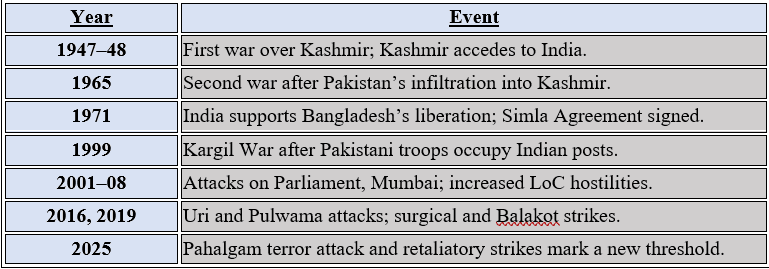
Operation Sindoor: Indian cross-LoC strikes on terror camps in Pakistan & PoK after Pahalgam attack

Theatre: Line of Control and Pakistan-occupied Kashmir; highest escalation since 2019 Balakot air-strike

Actors: Nuclear-armed India & Pakistan; China as silent backer of Islamabad in wider SAARC region

Quick Facts for MCQs

Economic Angle

  • Escalation-Costs: Military spend crowds out development, trimming GDP up to 1.2 % (post-Kargil RBI data)
  • Investment-Climate: Conflict spikes sovereign-risk premiums, depressing FDI inflows across South Asia
  • Bailout-Pressure: India lobbying IMF to condition Pakistan aid on demonstrable terror-control steps

Security Dimension

  • Deterrence-Shift: India employed drones/precision strikes without troop crossing, altering response doctrine
  • Nuclear-Risk: Any kinetic spiral triggers global alarm over tactical nukes in a densely populated corridor
  • Multi-Front-Threat: Sino-Pak nexus could synchronise Ladakh or Arunachal pressure with LoC hostilities

Regional & Multilateral

  • SAARC-Paralysis: Political frictions freeze summits; South Asia remains least-integrated trade bloc globally
  • Track-II: Confidential channels suggested to restart dialogue, shielded from electoral politics
  • FATF-Action: Grey-list threat leveraged to force Islamabad on terror-financing crackdown

Governance Challenges

  • Leadership-Vacuum: No visionary accord post-Musharraf; Kashmir dispute remains unsettled
  • Terror-Policy: Pakistan’s reliance on non-state actors sustains perpetual insecurity
  • Public-Narratives: Hyper-nationalism erodes cultural linkages, hardening negotiating positions

Key Data Points

FeatureData-Point
Civilians killed in Pahalgam attack26
GDP slowdown during past wars (RBI)0.5 – 1.2 %
Intra-South Asia trade share≈ 5 % of region’s trade
Comparative escalation levelPeak since Balakot 2019
Main external ally of PakistanChina
Multilateral levers cited by IndiaIMF, FATF, UN

Related UPSC Prelims PYQs

CAPF_GAI, CDS_GK 2024PYQ 1

भारत और पाकिस्तान के बीच के निम्नलिखित समझौतों को कालानुक्रम के अनुसार व्यवस्थित कीजिए:

CAPF_GAI, CDS_GK 2025PYQ 2

भारत द्वारा पाकिस्तान के विरुद्ध संचालित निम्नलिखित सैन्य अभियानों (military operations) को सही कालानुक्रमानुसार व्यवस्थित कीजिए :

GS-2Economy

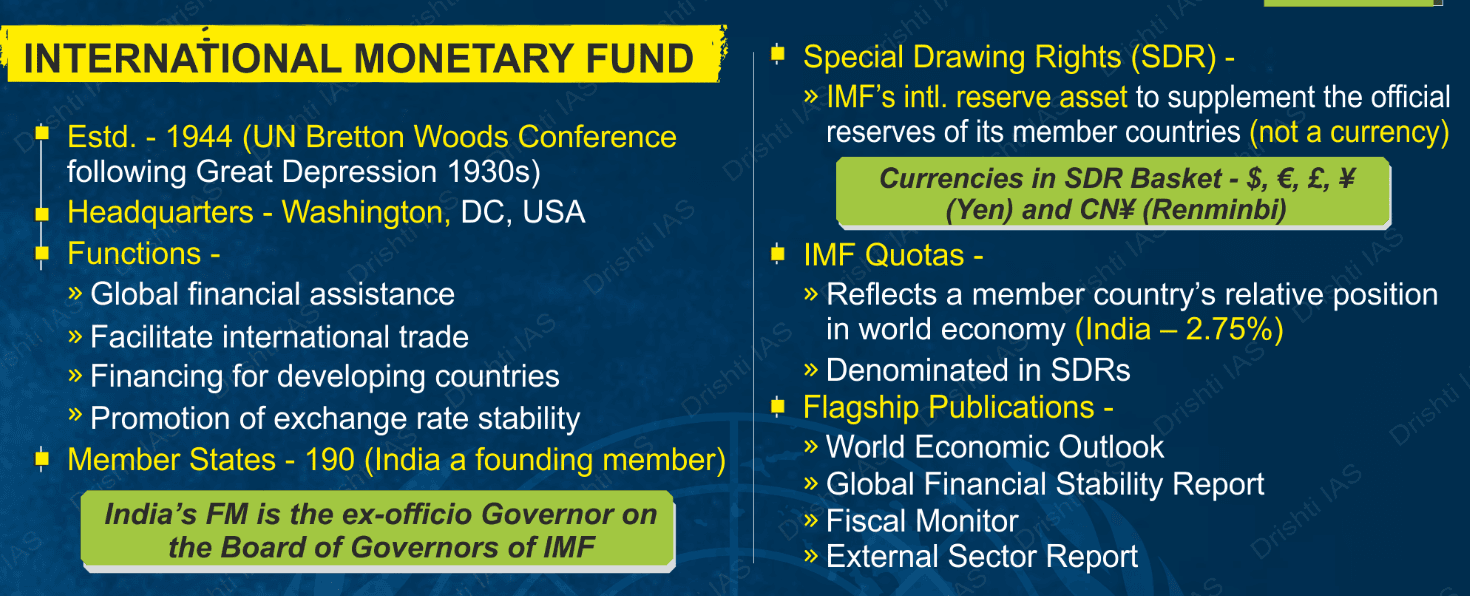
13.International Monetary Fund Overview (IMF Functions)

DH
Illustration for International Monetary Fund Overview (IMF Functions)

What & Where

Multilateral lender promoting monetary cooperation, exchange-rate stability and global trade expansion

Created 1945 via Bretton Woods Agreement; headquarters Washington D.C., United States

Core processes: surveillance, technical assistance, conditional crisis lending through multiple facilities

Quick Facts for MCQs

Governance & Funding

  • Quotas determined by economic size govern voting power and borrowing limits
  • SDR allocations supplement global reserves, boosting liquidity for members

Lending Instruments

  • Extended Fund Facility enables medium-term structural reform programmes
  • Stand-By Arrangement offers swift balance-of-payments assistance during crises
  • Resilience and Sustainability Facility supports long-term climate or pandemic resilience

Security Dimension

  • India abstained on IMF vote, citing Pakistan’s terror-linked reform failures
  • Concerns flagged: repeated misuse of earlier IMF loans, inadequate structural changes
  • Delhi linked future financial discipline to curbing cross-border terrorism risks

Key Data Points

FeatureData-Point
Establishment Year1945
Operations Began1947
Headquarters CityWashington D.C.
Founding FrameworkBretton Woods Agreement
Principal ResourceMember quota subscriptions
Reserve AssetSpecial Drawing Rights (SDR)
Flagship ReportWorld Economic Outlook
Rapid-relief FacilityStand-By Arrangement (SBA)

Related UPSC Prelims PYQs

CDS_GK, GS1 2022PYQ 1

Which one of the following assists a country through ‘Extended Fund Facility’, often talked about in news ?

CDS_GK, GS1 2022PYQ 2

“Rapid Financing Instrument” and “Rapid Credit Facility” are related to the provisions of lending by which one of the following?

GS-3SecurityQuick Bite

14.Stealth Frigate INS Tamal (Naval Vessels)

Times of India
Illustration for Stealth Frigate INS Tamal (Naval Vessels)

What & Where

Classification; INS Tamal is a stealth, multi-role frigate for the Indian Navy.

Build sites; Second Russian-built unit under 2016 Indo-Russian four-frigate agreement.

Geography; Constructed at Yantar Shipyard, Kaliningrad, to be delivered to India 2025.

Quick Facts for MCQs

Technological Features

  • Propulsion; High-power plant enables 30-knot sprint and long-range sorties.
  • Weapon suite; BrahMos, torpedoes, ASW rockets allow land, surface, sub-surface strikes.
  • Aviation; Flight deck supports helicopter for surveillance, ASW, logistics.

Defence Procurement

  • Agreement; Four-ship deal splits construction between Russia and India for capacity building.
  • Serial order; INS Tushil commissioned 2024; INS Tamal next; Indian hulls under Mazagon Dock.
  • Offset; Pact includes technology transfer to strengthen domestic frigate production.

Security Dimension

  • Stealth; Angular design, composites lower radar signature, boosting survivability in contested seas.
  • Deterrence; Mach-3 BrahMos enhances rapid, precision strike against high-value maritime targets.
  • IOR posture; New frigates expand blue-water deployment strength amid Indo-Pacific naval competition.

Key Data Points

FeatureData-Point
Ship classProject 11356 derivative (Grigorovich-class)
Order year2016 Inter-Governmental Agreement
Batch composition2 Russian-built, 2 Indian-built
Sequence2nd Russian frigate after INS Tushil (Dec 2024)
Top speed30 knots
Mission range≈ 3,000 km per deployment
Main missileBrahMos supersonic cruise, 300–400 km, ~Mach 3
ASW weaponsTorpedoes and rocket launchers
Aviation facilityOne multi-role helicopter
Stealth designReduced radar cross-section hull & superstructure

Related UPSC Prelims PYQs

CDS_GK, GS1 2024PYQ 1

Which one of the following statements about 'INS Tarmugli' is not correct?

CDS_GK, GS1 2004PYQ 2

INS Trishul acquired by the Indian Navy in 2003 has been built by

GS-2Scheme

15.Jan Suraksha Insurance Schemes (Social Security)

PIB

What & Where

Jan Suraksha Trinity: PMJJBY (life), PMSBY (accident), APY (pension); pan-India launch 9 May 2015.

Delivered via bank/post-office auto-debit; focuses on unorganised, low-income citizens.

Executing bodies: LIC/other life insurers, general insurers, PFRDA-NPS network.

Quick Facts for MCQs

Eligibility Bands

  • PMJJBY ends at 50 yr, PMSBY at 70 yr, APY entry closes at 40 yr.
  • APY excludes present income-tax payers to focus on economically weaker.

Benefit Structure

  • PMJJBY single benefit: ₹2 lakh lump sum death cover.
  • PMSBY tiered: ₹2 lakh death/total disability, ₹1 lakh partial disability.
  • APY guarantees lifelong pension; spouse continuation option on premature death.

Premium & Funding

  • Ultra-low premiums: ₹436 (life) vs ₹20 (accident) collected via auto-debit.
  • APY contributions vary; higher monthly pension demands larger periodic input.

Implementation & Renewal

  • Annual renewal cycle synced to 1 June for both insurance schemes.
  • Automatic renewal unless subscriber opts out/insufficient balance.

Key Data Points

FeatureData-Point
Common launch date9 May 2015
PMJJBY age band18–50 yr
PMJJBY premium₹436 / year
PMJJBY cover₹2 lakh on death (any cause)
PMSBY age band18–70 yr
PMSBY premium₹20 / year
PMSBY cover₹2 lakh death/total disability; ₹1 lakh partial
APY entry age18–40 yr
APY pension range₹1,000–₹5,000 / month after 60
APY income tax payer statusNot allowed to be IT payer
Coverage period (PMJJBY & PMSBY)1 Jun–31 May; auto-renewable
APY contribution modesMonthly, quarterly, half-yearly
PMJJBY implementerLIC + approved life insurers
PMSBY implementerPublic & private general insurers
APY regulatorPFRDA under NPS

Related UPSC Prelims PYQs

CDS_GK, NDA_GAT 2021PYQ 1

Which of the following is/are social security scheme(s)?

CDS_GK, NDA_GAT 2022PYQ 2

भारत सरकार की प्रमुख टेलीमेडिसिन सेवा ‘ई-संजीवनी’ को हाल ही में किसके साथ एकीकृत किया गया?

GS-2Scheme

16.Credit Guarantee Scheme for Startups (Startup Finance)

Financial Express

What & Where

Credit Guarantee Scheme for Startups (CGSS); collateral-free debt support to DPIIT-recognised startups across India

Operationalised October 2022 via National Credit Guarantee Trustee Company (NCGTC) portal

Under DPIIT, Ministry of Commerce & Industry; covers term loans, working capital, venture debt, other fund/non-fund instruments

Quick Facts for MCQs

Tech & Schemes

  • Expansion 2024 notification doubles guarantee ceiling, slashes fee for Champion Sectors
  • Automatic guarantee issuance integrated into NCGTC online platform

Economic Angle

  • Risk-mitigation encourages banks/NBFCs to extend venture debt, subordinated debt, debentures
  • Expected boost to R&D, innovation, domestic manufacturing in priority areas

Operational Details

  • AGF collected annually on outstanding guarantee amount, not on sanctioned sum
  • Claims settled on amount in default after recovery efforts by lender

Key Data Points

FeatureData-Point
Launch underStartup India Action Plan, Oct 2022
Trustee agencyNational Credit Guarantee Trustee Company
Parent ministryDPIIT, Commerce & Industry
Eligible lendersScheduled banks, BBB+ NBFCs (₹100 cr NW), SEBI-registered AIFs
Borrower eligibilityDPIIT startup; not NPA, no lender default
Guarantee limit (2024)Raised to ₹20 crore per borrower
Earlier limit₹10 crore
Coverage ≤₹10 cr loan85 % of amount in default
Coverage >₹10 cr loan75 % of amount in default
Annual Guarantee Fee1 % for 27 Champion Sectors; 2 % others
Umbrella guarantee cap5 % of pooled investment or ₹20 crore, whichever lower
Key aimLower lender risk, spur early-stage debt funding
Vision alignmentViksit Bharat & Startup India

Related UPSC Prelims PYQs

CAPF_GAI 2022PYQ 1

The ‘Stand-Up India Scheme’ is related to which one of the following issues?

CAPF_GAI 2024PYQ 2

Which of the following statements is NOT correct for Pradhan Mantri Mudra Yojana (PMMY)?

GS-1Editorial

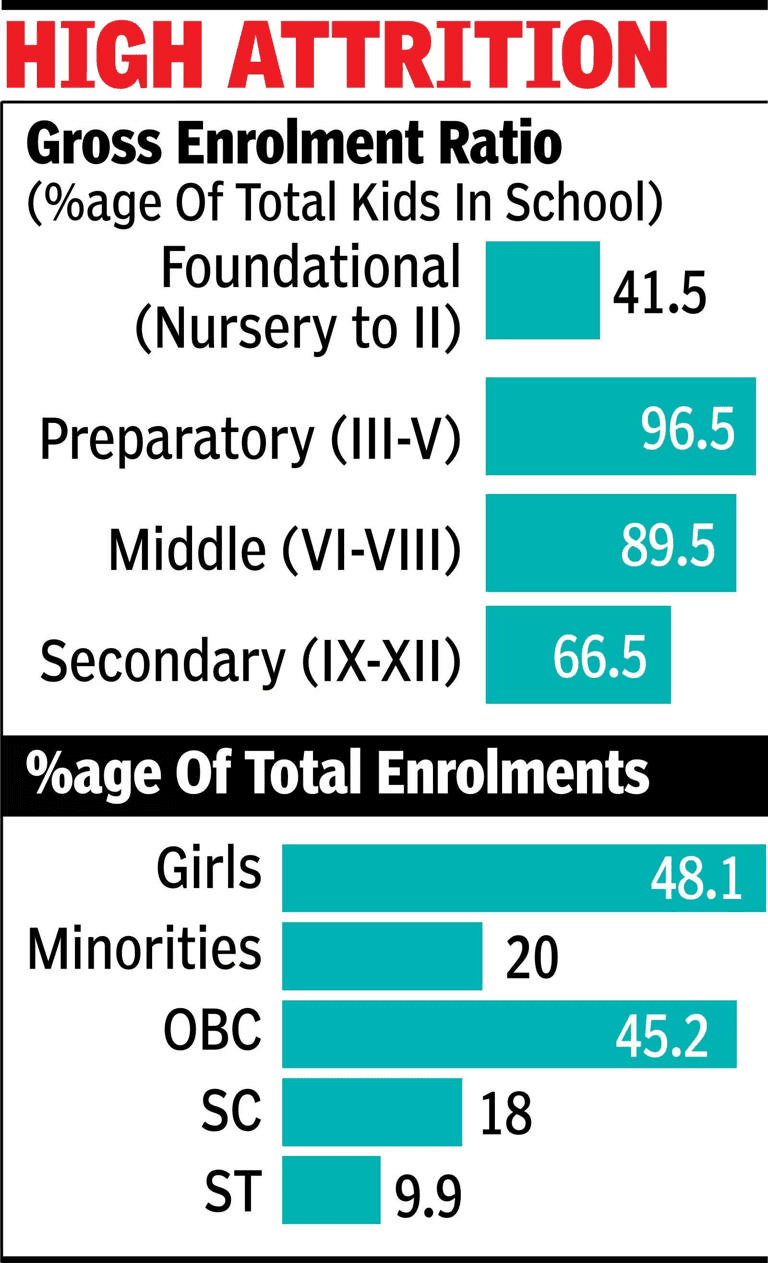
17.State of School Education India (Foundational Learning)

Financial Express
Illustration for State of School Education India (Foundational Learning)

What & Where

NEP 2020 shifts school pattern from 10+2 to 5+3+3+4 across ages 3-18

Four stages: Foundational (Pre-K-Class 2), Preparatory (3-5), Middle (6-8), Secondary (9-12)

Applies nationwide, covering ~26 crore students in government & private schools

Quick Facts for MCQs

Learning Outcomes

  • ASER 2024: 76.6 % Class-3 cannot read Class-2 text across 19 languages
  • World Bank: learning poverty rose to 70 % from 55 % (2019)
  • Exam-centric pedagogy restricts creativity, critical-thinking, life-skills

Human Resources

  • Teacher vacancies >1 million; UP & MP each exceed 1 lakh gaps
  • Pupil-teacher ratio peaks at 47 : 1; RTE norm 30 : 1 (primary)
  • Many instructors underqualified; in-service professional development minimal

Infrastructure Gaps

  • 1.52 lakh schools lack electricity; 67,000 lack functional toilets
  • Computers in 43.5 % government versus 70.9 % private unaided schools
  • Disabled-friendly toilets functional in only 33.2 % government schools

Governance & Regulation

  • NEP calls for State School Standards Authority to set outcome-based benchmarks
  • Current oversight input-heavy; lacks independent quality monitoring, transparency
  • CABE, NCERT, SCERT, CBSE handle advisory, curriculum, training, examinations

Key Data Points

FeatureData-Point
Public education spend4.6 % of GDP
NEP spending target6 % of GDP
ASER 2024 Class-3 reading23.4 % proficient
Learning poverty (WB 2024)70 %
Teacher vacancies>1 million
Max pupil-teacher ratio47 : 1
Secondary dropout rate14.1 %
Govt schools with computers43.5 %
Schools without electricity1.52 lakh
Govt schools with disabled toilets33.2 %

Related UPSC Prelims PYQs

CDS_GK, ESE_GS 2025PYQ 1

NEP 2020 के दिशा-निर्देश के अनुसार, 'पोषण और पढ़ाई पूर्व' (PPBP), निम्नलिखित में से किस कार्यक्रम के अंतर्गत प्रारंभ की गई है?

CDS_GK, ESE_GS 2021PYQ 2

Which one of the following statements is NOT correct regarding the National Education Policy 2020 in India ?

GS-1Editorial

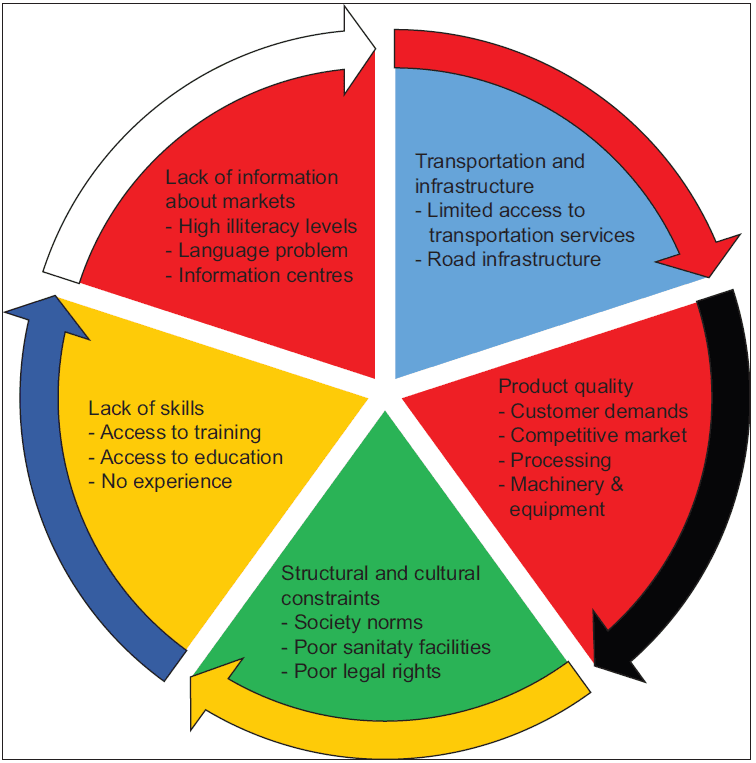
18.Women Participation in Cooperatives (Women Cooperatives)

Indian Express
Illustration for Women Participation in Cooperatives (Women Cooperatives)

What & Where

Cooperative society – voluntary, member-owned body for shared economic & social needs; distinct from profit firms

Key types – Consumer, Producer, Marketing, Credit, Farming (PACS), Housing; dairy & housing dominate Indian share

Geography – Maharashtra, Gujarat, Telangana, MP, Karnataka host bulk; India holds 27 % of global cooperatives

Quick Facts for MCQs

Historical & Legal

  • Milestone 1904 & 1912 Acts formalised credit then multi-purpose societies
  • Maclagan Committee 1914 proposed three-tier coop banking
  • 2023 MSCS Amendment mandates two women directors per multi-state coop

Status & Numbers

  • India hosts 27 % of world’s cooperatives; 8.5 lakh units across sectors
  • Women’s co-ops only 2.52 %, mixed units show 26 % female membership
  • Half of women’s societies dormant due to finance, training, market gaps

Govt Schemes

  • NCDC Swayam Shakti loans SHGs; Nandini Sahakar term loans with 2 % subvention
  • Model PACS bye-laws reserve women board seats across > 1 lakh societies
  • NABARD-NDDB project makes dairy women Business Correspondents with RuPay KCC

Challenges

  • Finance scarcity, low literacy, limited tech curb scalability of women units
  • Patriarchy restricts mobility, decision space; unpaid labour creates time poverty
  • Market linkage weak; quality, branding, e-commerce adoption minimal

Key Data Points

FeatureData-Point
Total Indian cooperatives≈ 8.5 lakh
Women-only share2.52 %
Dormant women co-ops≈ 50 %
Global cooperative members avg.12 % population
Indian cooperative membership20 % population
Top sectors shareHousing 24 %, Dairy 17.7 %, PACS 13 %
Maharashtra contribution> 25 % of national co-ops
SEWA membership3.2 million women
Amul women dairy farmers3.6 million
Lijjat Papad producers45,000 +
Time Use Survey 2024Women 16.4 % day unpaid work; men 1.7 %
97th Constitutional Amendment2011 – cooperative as fundamental right
UN theme 2025“Cooperatives Build a Better World”

Related UPSC Prelims PYQs

CAPF_GAI, CDS_GK 2025PYQ 1

नवीनी सहकार योजना के बारे में निम्नलिखित कथनों पर विचार कीजिए:

CAPF_GAI, CDS_GK 2025PYQ 2

राष्ट्रीय महिला आयोग के बारे में निम्नलिखित में से कौन-से कथन सही हैं?

Ready to practice?

Test your knowledge with our UPSC test series.

Start Free Trial