UPSC Current Affairs

16 topicsGS-1: 2GS-2: 5GS-3: 9
0/16 done
GS-2Polity

1.Kerala Senior Citizens Commission (Elderly Welfare)

IT

What & Where

Kerala State Senior Citizens Commission: first state-level statutory body for elderly welfare, under Kerala State Senior Citizens Commission Act, 2025.

Where: Kerala; becomes India’s pioneer in instituting a dedicated senior-citizen commission.

Why: Rehabilitation, protection, empowerment, and active societal participation of people aged 60+.

Quick Facts for MCQs

Legal & Policy

  • Act obliges commission to submit periodic reports/suggestions to state government for course-correction.
  • Recommends schemes, budgets, administrative measures exclusively targeting senior-citizen welfare.
  • Provides facilitation of legal support in abuse, neglect, property or inheritance disputes.

Social Concerns

  • Dedicated mechanism to tackle neglect, exploitation, loneliness among elderly populace.
  • Awareness drives educate families on statutory responsibilities toward elders’ care.
  • Initiatives push community use of seniors’ experience for mentoring, volunteering.

Functional Scope

  • Single window for policy advice, grievance redress, skill-utilisation, legal aid, awareness campaigns.
  • Coordinates rehabilitation programmes and platforms ensuring dignified, productive ageing.
  • Monitors implementation of existing central/state laws and recommends enhancements.

Key Data Points

FeatureData-Point
Commission typeStatutory advisory + grievance body
Enabling legislationKerala State Senior Citizens Commission Act, 2025
First state to set upKerala
Bill passage year2025
Core mandatePolicy input, abuse redressal, legal aid, awareness for elderly
GS-2Polity

2.Information Technology Act 2000 (Cyber Law)

Times of India

What & Where

IT Act 2000 – India’s umbrella cyber-law setting rules for e-records, security, intermediary liability

Sahyog Portal – MHA online system that automates nationwide takedown notices to digital intermediaries

Dispute – X Corp contests Section 69A blocking orders and Sahyog in Karnataka High Court, Bengaluru

Quick Facts for MCQs

Legal & Policy

  • Section69A upheld by Supreme Court in Shreya Singhal 2015; mandates due process, recorded reasons
  • X Corp labels Sahyog a censorship portal bypassing IT Act safeguards, seeks quashing of orders
  • Section79 provides only liability notice, not direct blocking; government relying on 69A for bans

Tech & Schemes

  • Sahyog digitises issuance, tracking, compliance of takedown notices to improve turnaround time
  • Platform links authorised agencies and intermediaries on single dashboard for real-time coordination
  • Objective to maintain clean, secure cyberspace and boost enforcement efficiency across jurisdictions

Security Dimension

  • Government cites sovereignty, national security, public order as grounds for online content blocking
  • CERT-In plus MHA key executing bodies under amended IT Act cybersecurity framework
  • Automated portal expected to curb terror propaganda, fake news, unlawful content faster than manual process

Key Data Points

FeatureData-Point
Parent legislationInformation Technology Act, 2000
Key power Section 69AWritten blocking orders for sovereignty, security, public order, incitement prevention
Section 79(3)(b)Conditional safe-harbour lost if intermediary ignores government notice
Sahyog Portal MinistryMinistry of Home Affairs
Litigation forumKarnataka High Court

Related UPSC Prelims PYQs

CDS_GK, ESE_GS 2024PYQ 1

Which one of the following Acts mandates schools and libraries in India to use some form of technological protection to block computer access to obscene material, pornography, and anything else considered harmful to minors?

CDS_GK, ESE_GS 2024PYQ 2

Which of the following statements, as per the Information Technology Act, 2000, is/are correct?

GS-2Polity

3.Armed Forces Special Powers Act (AFSPA Provisions)

The Hindu

What & Where

Statute: Armed Forces (Special Powers) Act 1958 empowers armed forces in notified “disturbed areas”

Authority: Governor or Centre declares area disturbed through Gazette notification, reviewed every six months

Current footprint: Manipur, Nagaland, Assam, parts of Arunachal Pradesh, Jammu & Kashmir via 1990 Act

Quick Facts for MCQs

Legal & Policy

  • Notification: Official Gazette declaration mandatory before enforcement or withdrawal
  • Review: Union Home Ministry with state assesses law-order before extension or revocation
  • Withdrawal: Requires improved security, joint Centre-state decision, fresh Gazette order

Security Dimension

  • Purpose: Counter insurgency, external threats, severe violence in Northeast and J&K
  • Recent trigger: Ethnic clashes in Manipur, law-order issues in Nagaland, Assam prompting review
  • Assistance: Act enables armed forces to support civil administration where police inadequate

Operational Powers

  • Force: Officers may open fire after warning to maintain public order
  • Arrest/Search: Warrantless detention, premise entry for arms, explosives or suspects
  • Immunity: Personnel shielded from civil or criminal proceedings without Central approval

Key Data Points

FeatureData-Point
Enactment year1958
Declaration authorityState Governor or Central Government
Minimum notification validity6 months, renewable
States presently covered (Feb 2025)Manipur, Nagaland, Assam, Arunachal Pradesh, J&K
Prosecution safeguardPrior Central Government sanction mandatory
GS-3Economy

4.Projected Summer Power Shortage 2025 (Power Demand)

Indian Express

What & Where

NLDC flags evening–night power deficit of 15–20 GW across India during May–June 2025.

Gap arises as projected summer peak hits 270 GW with no matching baseload expansion.

Contrast between 200 GW intermittent renewables and only 4.86 GW storage deepens non-solar shortfall.

Quick Facts for MCQs

Supply-Side Gaps

  • Stagnant coal fleet as new units delayed by theft, fire, supply issues
  • Solar meets daytime load yet leaves large evening baseload vacuum
  • Existing 4.86 GW storage cannot cover 15 GW anticipated deficit

Demand-Side Measures

  • Load-shifting incentives move industrial use to off-peak slots
  • Dynamic pricing via time-of-day tariffs curbs peak consumption
  • Smart meters enable real-time data and automated demand response

Risk Metrics

  • LOLP peaks at 31 % in May indicating severe reliability threat
  • NLDC projects >15 GW unserved demand even during July monsoon

Way Ahead

  • Fast-track BESS and PSP commissioning before summer 2025
  • Schedule thermal maintenance Nov–Jan to free capacity in summers
  • Fiscal sweeteners urged to revive private investment in new coal units

Key Data Points

FeatureData-Point
High-risk monthsMay 2025, then June
Projected unmet demand15–20 GW (non-solar hours)
Peak demand summer 2025270 GW
Peak demand summer 2024250 GW
LOLP May 202519 % (best) – 31 % (median)
Installed renewables200 GW
Commissioned storage4.86 GW (BESS + PSP)
Thermal additions 2017-22Largely nil; plan de-prioritised coal
Example DR programSingapore demand-response incentive

Related UPSC Prelims PYQs

GEO_GS 2026PYQ 1

India's installed solar capacity in 2025 is close to

GS-3Economy

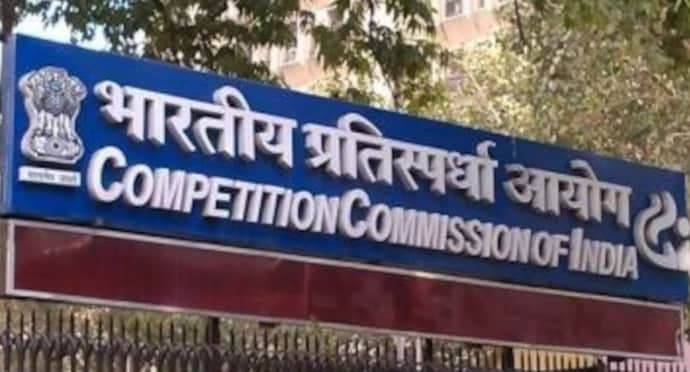
5.Regulating Digital Giants (Competition Regulation)

The Hindu
Illustration for Regulating Digital Giants (Competition Regulation)

What & Where

Digital giants: large, data-driven tech platforms dominating social media, e-commerce, search.

Indian spotlight: CCI fines, NCLAT appeals, proposed Competition Act tweaks to curb data monopolies.

Global frameworks: EU DMA & GDPR guiding cross-border regulation of Meta, Google, Amazon, Apple, Microsoft.

Quick Facts for MCQs

Legal & Policy

  • Amendment push: include “data monopolization” as explicit dominance criterion in Competition Act.
  • Coordination ask: formal synergy between CCI and forthcoming Data Protection Board.
  • Judicial oversight: NCLAT stayed CCI’s five-year data-sharing ban on Meta.

Competition Watchdog

  • Enforcement: CCI penalties target predatory pricing, forced pre-installation, exclusive agreements.
  • Meta case: abuse via WhatsApp-Facebook data integration, targeted advertising muscle.
  • Resource gap: need tech expertise, investigative capacity for algorithmic scrutiny.

International Examples

  • EU DMA: mandates interoperability, data-sharing among gatekeepers.
  • US antitrust subcommittee: principles cited for Indian harmonisation.
  • Google Android case: global precedents influence CCI reasoning.

Challenges

  • Data-centric power: traditional price tests inadequate for zero-price platforms.
  • Jurisdiction maze: global operations let firms forum-shop and delay compliance.
  • Tech pace: AI-driven targeting eclipses slow legislative cycles.

Way Ahead

  • Interoperability mandates: compulsory data-sharing to lower entry barriers.
  • Capacity building: recruit data scientists, digital economists within CCI.
  • Global alignment: mirror EU-style ex-ante rules for timely deterrence.

Key Data Points

FeatureData-Point
Recent CCI fine on Meta₹213.14 crore (2024)
Earlier CCI fine on Google₹1,337.76 crore (2022)
Core law governing dominance in IndiaCompetition Act, 2002
New data lawDigital Personal Data Protection Act, 2023
Appellate body hearing Meta appealNCLAT
EU benchmark legislationDigital Markets Act, GDPR
Survey flagging AI/digital regulation needEconomic Survey 2024-25
GS-3InfrastructureQuick Bite

6.Deferred GNSS Tolling Rollout (Tolling Technology)

Indian Express

What & Where

GNSS tolling – satellite-based, distance-linked fee via onboard units; rollout in India postponed.

ANPR FASTag System – camera-read number plate + RFID FASTag enables barrier-less toll in motion.

Geography – Indian national highways; satellites currently non-Indian, cameras placed at toll plazas.

Quick Facts for MCQs

Tech & Schemes

  • FASTag – passive UHF RFID tag on windscreen linked to prepaid/bank account for auto debit.
  • ANPR cameras – OCR software matches plate to FASTag wallet, allows boom-barrier removal.
  • OBUs – GNSS receivers that log kilometre usage, transmit for pay-per-use billing.

Security Dimension

  • Concern – foreign-controlled satellites may expose location data to interception or manipulation.
  • Data risk – continuous GNSS tracking creates granular movement profiles susceptible to misuse.
  • AFS choice – limits tracking to plaza points, reducing real-time surveillance surface.

Implementation Route

  • Policy shift – continue barrier-less goal without full satellite reliance.
  • Infrastructure need – retrofit plazas with high-resolution ANPR, integrate with NPCI backend.
  • Future review – GNSS adoption kept open pending indigenous sat-coverage & stronger privacy framework.

Key Data Points

FeatureData-Point
Postponed systemGlobal Navigation Satellite System (GNSS) tolling
Interim systemANPR-enabled FASTag (AFS)
Key GNSS toolsSatellites + On-Board Units (OBUs)
AFS core techAutomatic Number Plate Recognition cameras + RFID FASTag
Implementer of FASTagNational Payments Corporation of India (NPCI)
Main government worryOperational control, data privacy, security breaches
GNSS dependencyNon-Indian satellites
Fee calculation under GNSSActual distance travelled
Fee trigger under AFSVehicle detected at toll plaza

Related UPSC Prelims PYQs

GS1 2025PYQ 1

GPS-युक्त स्वदेशी ऑग्मेन्टेड नेविगेशन (GAGAN) के संदर्भ में निम्नलिखित कथनों पर विचार कीजिए :

GS-3EconomyQuick Bite

7.Cabinet Economic Package 2025 (Cabinet Approvals)

LiveMint

What & Where

Union Cabinet okays ₹22,791-cr FY25 package spanning digital payments, highway, fertilizer & dairy sectors.

Geography focus: nationwide UPI & dairy schemes; Chowk-Pagote highway, Maharashtra; Namrup-IV urea plant, Dibrugarh, Assam.

UPI Incentive Scheme: 0.15 % reward for sub-₹2,000 P2M transactions under Zero-MDR, routed via acquiring banks.

Quick Facts for MCQs

Tech & Schemes

  • UPI plan promotes low-value P2M use, boosts financial inclusion, keeps Zero-MDR regime viable.
  • Incentive shared among acquiring bank, issuer bank, PSPs, app providers; no direct merchant payout.
  • NPDD & Gokul Mission revisions focus on breed improvement, milk processing and cooperative digitisation.

Infrastructure Push

  • Chowk-Pagote six-lane under PM Gati Shakti strengthens road-port logistics for Mumbai region exports.
  • Namrup-IV modernises oldest gas-based unit; supports Act East policy & potential Southeast Asia urea exports.

Economic & Social Impact

  • Combined projects aim 3.2 lakh new jobs, with high female participation via dairy cooperatives.
  • Package supports balanced regional growth—Northeast fertilizer, Western corridor highway, pan-India digital payments.

Key Data Points

FeatureData-Point
Total package size₹22,791 crore
UPI incentive outlay (FY25)₹1,500 crore
Incentive rate0.15 % of txn value
Txn value eligible< ₹2,000
Small-merchant cut-offDigital receipts < ₹50,000/month
Highway approvedChowk-Pagote 6-lane
Connectivity aimJawaharlal Nehru Port Trust
Urea plant nameNamrup-IV, Assam
Fertilizer project cost₹10,601 crore
Dairy co-ops target10,000 units
Dairy job goal3.2 lakh (mainly women)
NPDD revised outlay₹2,970 crore
Rashtriya Gokul Mission outlay₹3,400 crore

Related UPSC Prelims PYQs

CAPF_GAI 2025PYQ 1

Which one among the following schemes focuses on developing modern infrastructure and optimizing supply chain from farm to retail in Indian agriculture sector?

CAPF_GAI 2024PYQ 2

निम्नलिखित कथनों पर विचार कीजिए :

GS-3Infrastructure

8.Silahalla Pumped Storage Project (Pumped Storage)

New Indian Express
Illustration for Silahalla Pumped Storage Project (Pumped Storage)

What & Where

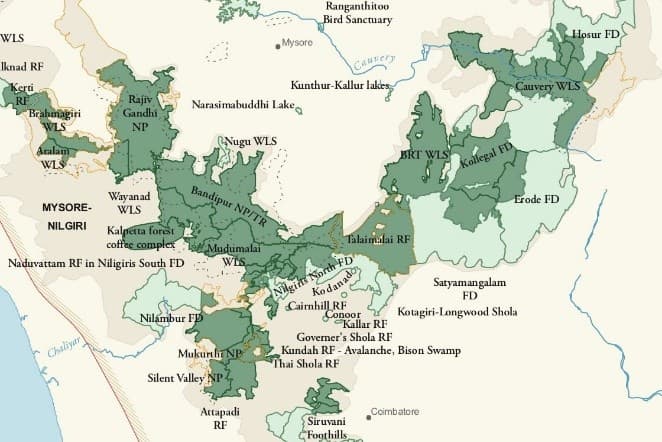
Pumped-storage hydro project for 1 000 MW peak power in Kundah Taluk, Nilgiris district, Tamil Nadu

Transfers water of Silahalla stream, tributary → Kundah → Bhavani → Cauvery, inside Nilgiri Biosphere Reserve, Western Ghats

Public hearing cancelled by TNPCB after strong environmental opposition

Quick Facts for MCQs

Environmental Impact

  • Habitat loss threat to evergreen sholas, grasslands within biodiversity hotspot
  • Hydrology disruption likely along Silahalla–Bhavani–Cauvery river chain
  • Wildlife corridors for elephants, tigers risk fragmentation

Legal & Policy

  • TNPCB cancellation aligns with EIA 2006 public-consultation clause
  • UNESCO protection triggers higher scrutiny for Nilgiri Biosphere Reserve projects
  • Statutory acts: Forest (Conservation) Act, Wildlife (Protection) Act applicable

Social Concerns

  • Indigenous dependence on forests: Todas, Kotas, Irulas, Kurumbas, Paniyas, Adiyans
  • Submergence risk to traditional settlements and sacred groves
  • Community demand for cumulative impact assessment before clearance

Tech & Schemes

  • Mechanism: off-peak surplus power pumps water uphill, supplies peak demand
  • Grid balancing aid for Tamil Nadu’s wind-solar heavy energy mix
  • Underground caverns reduce surface footprint versus conventional surface powerhouse

Key Data Points

FeatureData-Point
DeveloperTANGEDCO
Installed capacity1 000 MW
Project typePumped-storage hydro
DistrictNilgiris, Tamil Nadu
ReservoirsUpper & lower dams
Head race tunnel2.8 km
Tail race tunnel1.56 km
PowerhouseUnderground
Biosphere Reserve year1986 (UNESCO-MAB)
States coveredTN, Kerala, Karnataka
Endemic plant species132
Endangered flagship faunaNilgiri tahr, Lion-tailed macaque
GS-3S&T

9.Bose Metal State Discovery (Quantum Materials)

The Hindu

What & Where

NbSe₂ monolayer, probed by China–Japan team, evidences rare Bose-metal state.

Bose metal: Cooper pairs exist; zero resistance absent; conductivity between insulator and superconductor.

Emerges near absolute zero under tuned magnetic fields and quantum fluctuations.

Quick Facts for MCQs

Material Science

  • Type-II superconductivity: magnetic vortices coexist with pairing in NbSe₂.
  • Intermediate-conductivity: sheet resistance settles between 0 Ω and ∞ at 0 K.
  • Charge-density-wave interaction suspected, enhancing phase fluctuations.

Experimental Setup

  • Single-layer geometry amplifies disorder and quantum phase slips.
  • Temperature sweeps show resistivity plateau below critical Tc, confirming AMS.
  • Perpendicular magnetic field toggles superconductor-Bose-metal-insulator transitions.

Applications & Scope

  • Quantum-computing: platform for studying exotic qubits and non-Fermi liquids.
  • Advanced-electronics: prospect for low-loss interconnects when controllable.
  • Superconductivity-research: clarifies pathway toward high-temperature Tc materials.

Constraints

  • Theoretical-ambiguity: no universally accepted Bose-metal definition.
  • Experimental-challenge: needs milli-kelvin scales and stable magnetic fields.
  • Practical-deployment: device integration absent due to phase fragility.

Key Data Points

FeatureData-Point
Material studiedNiobium diselenide (NbSe₂)
DimensionalitySingle-layer (2D)
Superconductor classType-II
Observed quantum phaseBose metal / Anomalous Metallic State
Cooper pair statusFormed but non-condensing
Resistance at 0 KFinite, saturation plateau
Magnetic behaviourPartial flux penetration; phase tuned by field
Key researchersChina & Japan collaboration
Potential sectorsQuantum computing, advanced electronics, high-Tc studies
Main limitationRequires ultralow temperature, precise magnetic control
GS-3S&TQuick Bite

10.Birefringence Phenomenon (Optical Physics)

PR

What & Where

Birefringence: anisotropic media split incoming light into two rays moving at unequal speeds

Occurs in natural crystals, engineered synthetics, or is induced by stress/electric/magnetic fields

Absent in isotropic substances where light keeps single velocity path

Quick Facts for MCQs

Material Classification

  • Isotropic: glass, NaCl; uniform lattice, single refraction
  • Anisotropic: calcite, quartz, tourmaline; differing axes cause birefringence
  • Induced anisotropy: stress or external fields create temporary double refraction

Optical Parameters

  • Refractive index: ratio c/v defining light speed reduction
  • Higher value means greater optical density and slower propagation
  • Birefringent media yield ordinary and extraordinary rays with orthogonal polarizations

Technology Uses

  • LCD displays rely on controllable birefringent layers for pixel switching
  • Lithium niobate, barium borate used for frequency conversion, laser modulation
  • Waveplates, optical switches exploit phase delay between split rays

Key Data Points

FeatureData-Point
Basic phenomenonBirefringence (double refraction)
Root causeDirection-dependent refractive index
Refractive index of vacuum1
Higher index impliesGreater optical density; slower light
Natural crystalsCalcite, quartz, mica
Synthetic crystalsBarium borate, lithium niobate
Induced viaPhysical stress, electric or magnetic fields
Isotropic behaviourOne ray, constant velocity, no split
Anisotropic behaviourTwo rays, perpendicular polarization
Key applicationsLCDs, waveplates, microscopes, lasers

Related UPSC Prelims PYQs

GEO_GS, NDA_GAT 2021PYQ 1

When a light beam falls on a triangular glass prism, a band of colours is obtained. Which one of the following statements is correct in this regard?

GEO_GS, NDA_GAT 2022PYQ 2

The refractive index of a prism made of flint glass is

GS-2Editorial

11.UNCAT Ratification Debate (Anti-Torture Convention)

The Hindu

What & Where

UN Convention against Torture (UNCAT): 1984 UNGA treaty to ban torture worldwide; entered into force 26 Jun 1987.

Key processes: absolute prohibition (Art 2), non-refoulement (Art 3), universal jurisdiction to prosecute/extradite (Art 5).

India geography: signed 1997, still un-ratified; lacks dedicated anti-torture statute.

Quick Facts for MCQs

Legal & Policy

  • Extradition hurdle: UK & US courts cite India’s non-ratification to refuse fugitives’ surrender.
  • Draft Prevention of Torture Bill 2010/2017 still pending; Law Commission 273rd report urges enactment.
  • Constitution Articles 51(c) & 253 empower Parliament to implement UN treaties domestically.

Judicial Pronouncements

  • DK Basu 1997: laid arrest safeguards; bans third-degree methods.
  • Prakash Singh 2006: ordered Police Complaints Authorities for independent oversight.
  • Nambi Narayanan 2018: recognised mental trauma from custodial abuse; compensation awarded.

Human Rights Concerns

  • NHRC data: 1,731 custodial deaths reported 2019; termed “rampant”.
  • Disproportionate impact on Dalits, minorities, refugees; torture persists despite Article 21 protections.
  • NHRC mandates 24-hour reporting of custodial deaths by DM/SP; non-compliance viewed as suppression.

International Examples

  • Guantanamo Bay illustrates soft-power loss from torture practices.
  • Universal jurisdiction obliges any UNCAT state to try or extradite alleged torturers irrespective of venue.

Key Data Points

FeatureData-Point
Adoption date10 Dec 1984
In-force date26 Jun 1987
Parties (Feb 2024)173 States
India statusOnly signed, not ratified
Monitoring bodyCommittee Against Torture (10 experts)
Optional Protocol (OPCAT)2002;regular detention visits
Absolute ban clauseArticle 2(2)
Non-refoulement clauseArticle 3
Criminalisation mandateArticle 4
Victim redressArticle 14

Related UPSC Prelims PYQs

CAPF_GAI 2023PYQ 1

The Judgment of the Supreme Court in Peoples’ Union for Civil Liberties v. Union of India 2004 is related to which of the following ?

GS-2Editorial

12.India-US Farm Trade Talks (Agricultural Trade)

Indian Express

What & Where

Issue: India-US trade talks over farm-sector market access and subsidy disparity.

Support types: India—input & MSP subsidies; USA—direct income, insurance, disaster aids.

Geography: World’s two largest democracies; 111 mn Indian farmers vs <2 mn US farms.

Quick Facts for MCQs

Support Instruments

  • India: fertiliser, power, irrigation subsidies plus MSP procurement.
  • USA: price-loss, revenue-risk, margin coverage, federal crop insurance, disaster grants.
  • Aim divergence: Indian input cost relief vs US income smoothing.

Fiscal Comparison

  • Per-farmer US aid roughly 450× Indian direct grant.
  • India’s larger absolute spend spread thin across 55× more farmers.
  • US programmes federally funded, multi-year; India mixes Centre & state budgets.

Trade & WTO

  • Protection: India invokes AoA flexibilities, keeps bound tariffs high.
  • Reciprocity: Developing economies not obliged to match developed-country concessions.
  • Risk: Rapid tariff cuts could erode livelihood, food-security goals for 50% workforce.

Key Data Points

FeatureData-Point
India annual agri support₹5 lakh crore ≈ US$57.5 bn
US annual agri supportUS$32.2 bn
Beneficiary farmsIndia 111 mn; USA < 2 mn
Direct payment/US farmUS$30,782 (₹26.8 lakh)
Direct payment/Indian farm₹6,000 (US$69)
Key US schemesPLC, ARC, Dairy Margin, Crop Insurance, Disaster Aid
Key Indian schemePM-Kisan (₹6k/yr)
WTO clause aiding India“Non-reciprocity” in market access
India tariff stanceHigh import duties to shield smallholders
US demandTariff cuts & wider market entry

Related UPSC Prelims PYQs

GS1 2020PYQ 1

Consider the following statements :

GS-3Security

13.Defence Acquisition Council (Defense Procurement)

The Print

What & Where

Defence Acquisition Council (DAC) – apex MoD body for capital defence buys; set up 2001 post-Kargil; New Delhi HQ.

Key processes: grants Acceptance of Necessity, classifies Buy / Buy & Make / Make, clears 15-yr Integrated Perspective Plan.

Latest AoN ₹54,000 cr covers 1350 HP T-90 engines, Varunastra torpedoes, indigenous AEW&C for Army, Navy, IAF.

Quick Facts for MCQs

Organisational Structure

  • Members include Service Chiefs, Defence & Defence-Prodn Secretaries, DRDO, Financial Adviser.
  • Contracts >₹3,000 cr require final nod from Cabinet Committee on Security.
  • Operates under current Defence Acquisition Procedure (2020).

Technology & Systems

  • 1350 HP engines raise T-90 high-altitude mobility and acceleration.
  • Varunastra: 250 kg HE warhead, active-passive acoustic homing, GPS/NavIC guidance.
  • Indigenous AEW&C grants 360° radar, data-link fusion, real-time interceptor vectoring.

Security Dimension

  • Tri-service upgrades boost deterrence across land borders, IOR seas, and airspace.
  • Indigenous procurements advance Atmanirbhar Bharat, trim import dependence.
  • Enhances anti-submarine warfare, situational awareness, and punch of armoured formations on LAC & LOC.

Key Data Points

FeatureData-Point
Establishment year2001
Chaired byDefence Minister (Rajnath Singh)
Latest AoN value~₹54,000 crore
T-90 new engine power1350 HP
Varunastra speed>40 knots
Varunastra range~40 km

Related UPSC Prelims PYQs

ESE_GS 2024PYQ 1

Ministry of Defence signed contract with which one of the following organizations for Upgraded Super Rapid Gun Mount (SRGM) and other equipment for around 3000 crores?

GS-3Security

14.Exercise Sea Dragon 2025 (ASW Exercise)

Business Standard
Illustration for Exercise Sea Dragon 2025 (ASW Exercise)

What & Where

Exercise Sea Dragon 2025: annual multinational anti-submarine warfare (ASW) drill led by US Navy 7th Fleet

Conducted at Andersen Air Force Base, Guam, Western Pacific

Focus on interoperable submarine detection, tracking and neutralisation among Indo-Pacific allies

Quick Facts for MCQs

Security Dimension

  • Objective: bolster maritime security, uphold free, open, secure Indo-Pacific vision
  • Scenarios: live submarine hunt on operational US Navy subs, graded tactical drills
  • Outcome: sharper coalition readiness against under-sea threats

Tech & Assets

  • Platforms: advanced Maritime Patrol & Reconnaissance Aircraft from each nation
  • Aid system: MK-30 SLED provides reusable, mobile acoustic target for realistic tracking
  • US Patrol Squadrons VP-16, VP-47 supply Poseidon aircraft support

Indian Participation

  • Deployment: one P-8I with Navy crew plus Integrated Aircraft Support Team
  • Continuous presence: India has attended every edition since 2021, enhancing P-8I proficiency
  • Bilateral gain: improves coordination with QUAD partners US, Australia, Japan

Key Data Points

FeatureData-Point
EditionSea Dragon 2025 (SD25)
Exercise typeLive, competitive ASW
Host authorityUS Navy 7th Fleet
Core venueAndersen AFB, Guam
DurationTwo weeks
FrequencyAnnual
Indian entry year2021
Indian assetP-8I Neptune MPRA
Other participantsUS, Australia, Japan, South Korea
US assets usedP-8A Poseidon, real subs
Training aidMK-30 ‘SLED’ mobile target
EvaluationGraded ASW effectiveness

Related UPSC Prelims PYQs

ESE_GS, GEO_GS 2022PYQ 1

Which one of the following countries did the Indian Navy participate in the U.S. Navy-led Southeast Asia Cooperation and Training (SEACAT) military exercise, to demonstrate its maritime manoeuvres?

ESE_GS, GEO_GS 2025PYQ 2

Naseem-Al-Bahr, held in October 2024, was a joint maritime exercise between the navies of India and

GS-1Misc

15.World Happiness Report 2025 (Happiness Index)

Hindustan Times
Illustration for World Happiness Report 2025 (Happiness Index)

What & Where

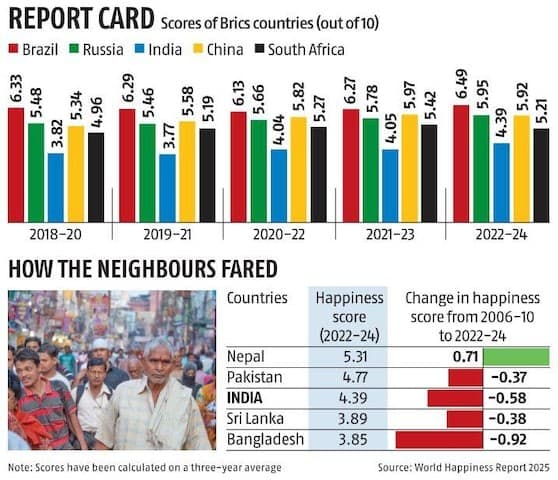
Annual World Happiness Report; gauges life satisfaction across 147 UN-member countries

Produced by Oxford Wellbeing Research Centre with Gallup & UN-SDSN collaboration

2025 edition places India 118th; Finland tops for 8th straight year

Quick Facts for MCQs

Methodology

  • Weightage combines survey life-evaluation answers with national GDP & health statistics
  • Scale uses Cantril ladder: 0 = worst, 10 = best conceivable life
  • Three-year average (2022-24) smooths volatility in annual polling

Global Trends

  • Nordic dominance sustained; Western nations like US 24 & UK 23 slide due to loneliness metrics
  • Generosity scores rose globally post-pandemic, corruption perception largely stagnant
  • Costa Rica & Mexico breakthrough reflects social cohesion despite mid-income status

India Snapshot

  • Strength: robust family-based social support lifts relative score component
  • Weakest pillar: freedom to make life choices—lowest sub-score among six indicators
  • Rank still lags Pakistan 109; marginal improvement from 2021-23 average 4.054

Key Data Points

FeatureData-Point
Edition assessedWorld Happiness Report 2025
Publishing hubWellbeing Research Centre, Univ. of Oxford
Partner bodiesGallup World Poll; UN-Sustainable Development Solutions Network
Countries covered147
Core indicatorsGDP pc, Healthy life-expectancy, Social support, Freedom, Generosity, Corruption perception
No. 1 rankFinland
India rank/score118 / 4.389
South-Asia bestNepal 92
Bottom rankAfghanistan 147
New entrants Top-10Costa Rica 6, Mexico 10

Related UPSC Prelims PYQs

CAPF_GAI, GEO_GS 2024PYQ 1

Arrange the following countries in the descending order of their rank in the World Happiness Report, based on a three-year average 2020-2022, published by the Sustainable Development Solutions Network:

CAPF_GAI, GEO_GS 2021PYQ 2

In the latest Chandler Good Government Index (CGGI), which classifies 104 countries in terms of government capabilities and outcomes, India has been ranked

GS-1Misc

16.World Consumer Rights Day 2025 (Consumer Protection)

PIB
Illustration for World Consumer Rights Day 2025 (Consumer Protection)

What & Where

World Consumer Rights Day – 15 March; honours JFK’s 1962 Congress speech on consumer rights

National Consumer Day India – 24 December; anniversary of original Consumer Protection Act assent

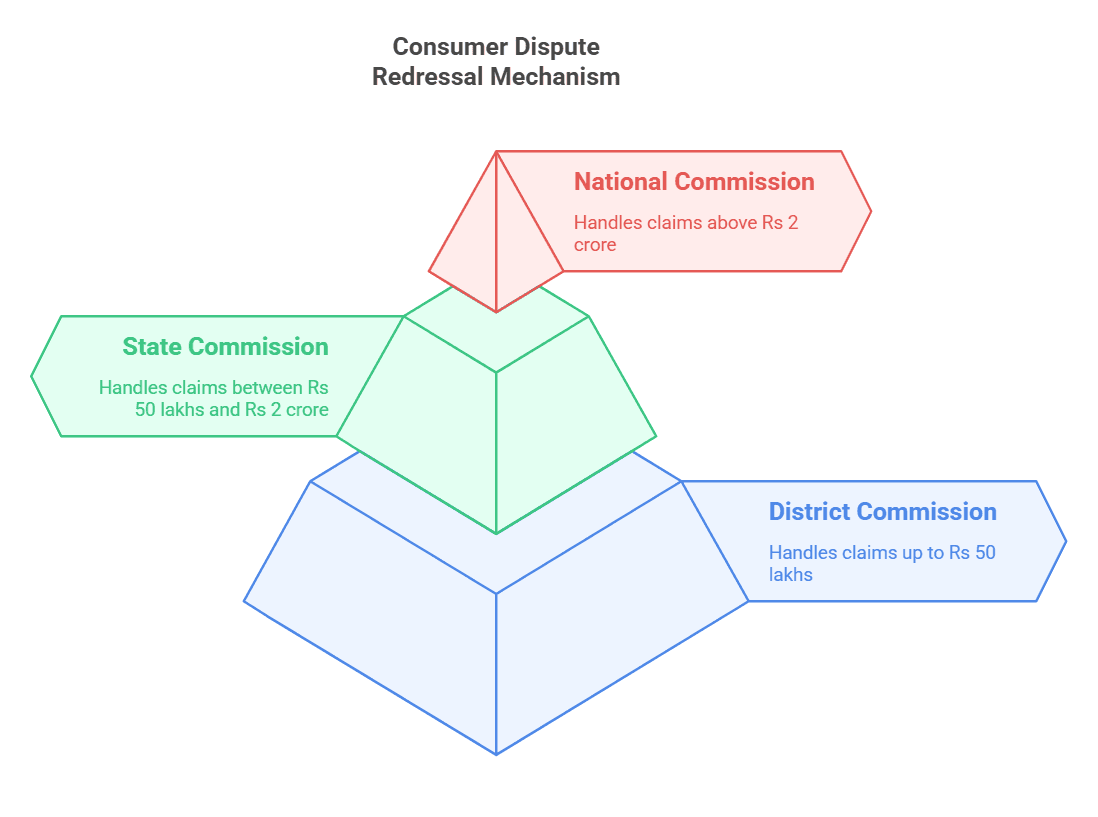
Consumer Protection Act 2019 – nationwide framework replacing 1986 law, covers e-commerce, product liability, CCPA

Quick Facts for MCQs

Legal & Policy

  • Provision – CCPA empowered to act against unfair trade, misleading ads, rights violations
  • Rule – E-Commerce Rules 2020 mandate transparency, grievance mechanisms for online platforms
  • Penalty – Misleading ads attract stricter fines and possible imprisonment under 2019 Act

Tech & Schemes

  • Portal – E-Dakhil enables end-to-end e-filing, fee payment, document upload
  • Helpline – NCH 2.0 uses AI voice, chatbots, WhatsApp, UMANG for 24 × 7 assistance
  • Campaign – Jaago Grahak Jaago flags fraudulent URLs, boosts informed digital purchases

Challenges

  • Delay – Consumer courts overloaded, enforcement uneven despite statutory timelines
  • Awareness – Rights literacy low in rural and informal sectors, limits grievance uptake
  • Overlap – Multiple regulators create compliance confusion, dilute accountability

International Reference

  • Benchmark – JFK first global leader to formally recognise consumer rights in 1962
  • Observance – UN-recognised WCRD now marked in 130 + jurisdictions

Social Concerns

  • Fraud – Rise of dark patterns, hidden charges in online marketplaces targets vulnerable buyers
  • Equity – Resource starved state agencies hamper rural consumer protection reach

Key Data Points

FeatureData-Point
2025 WCRD themeA Just Transition to Sustainable Lifestyles
WCRD instituted15 March 1983
National Consumer Day date24 December
Governing ActConsumer Protection Act 2019
Statutory rights count6 consumer rights
Disposal time Sec 38(7)3–5 months
Central regulatorCentral Consumer Protection Authority
E-Dakhil launch2020
E-Jagriti rollout2024
NCH 2.0 languages17
Partner companies on NCH1,000 +
Dark Patterns rule year2023
Product liability scopeManufacturer, seller, service-provider

Ready to practice?

Test your knowledge with our UPSC test series.

Start Free Trial