UPSC Current Affairs

10 topicsGS-1: 1GS-2: 5GS-3: 4
0/10 done
GS-2Misc

1.Daily Current Affairs Compilation 14 March 2025 (Daily Digest)

Indian Express

What & Where

ASHA: female community health volunteer cadre under National Health Mission (2005); ~10 lakh workers across rural India.

South-East Asia Surveillance Network: India-led WHO-SEARO proposal for integrated, multi-source disease monitoring among 11 regional states.

PM Surya Ghar Muft Bijli Yojana: 2024 rooftop-solar subsidy scheme granting up to 300 free electricity units per month to households.

Quick Facts for MCQs

Social Concerns

  • Low, irregular ASHA pay; absence of pension, PF, maternity or accident cover.
  • Kerala strike demands employee status, minimum wage, timely DBT.
  • Committee advice: base salary + incentive; boosted NHM outlay.

Tech & Schemes

  • Rooftop solar uses domestic cells; 17 lakh direct jobs forecast.
  • SpaDeX gives India autonomous in-orbit rendezvous, docking, power-swap capability.
  • NECTAR Shillong campus to push saffron, bamboo, drone land-mapping.

Security Dimension

  • Astra BVRAAM Mach 4.5; integration on Tejas, MiG-29 underway, cutting import reliance.
  • Surveillance network to merge genomic, wastewater, syndromic AI alerts for pandemics.
  • Armenia-Azerbaijan treaty ends Nagorno-Karabakh conflict; 120k Armenians displaced 2023.

Environmental Impact

  • Solar scheme expected 720 Mt CO₂ avoidance, ₹75k cr annual subsidy savings.
  • NECTAR’s bamboo & honey projects boost Northeast green livelihoods, carbon sinks.
  • Climate-linked rodent spread heightens hantavirus, dengue early-warning need.

Key Data Points

FeatureData-Point
Launch year – ASHA2005
Avg ASHA honorarium₹5k – ₹15k/month
SEARO members covered11 countries
Solar-powered homes10 lakh (Mar 2025)
Subsidy released₹4,770 crore
Astra missile range>100 km
SpaDeX docking orbit460 km, 45° inclination

Related UPSC Prelims PYQs

CDS_GK, GS1 2012PYQ 1

With reference to National Rural Health Mission, which of the following are the jobs of ‘ASHA’, a trained community health worker?

CDS_GK, GS1 2024PYQ 2

Which one of the following is an ‘end-to-end secure mobile ecosystem’ developed recently by the Indian Army?
GS-3EconomyQuick Bite

2.Indian Rupee Symbol Adoption (Currency Symbol)

Hindustan Times

What & Where

Indian Rupee symbol (₹): official currency sign embodying India’s economic identity in global transactions.

Chosen via 2010 GoI contest; blend of Devanagari ‘Ra’ & Roman ‘R’ with tricolour-mimicking double strokes.

2025-26 Tamil Nadu Budget used Tamil letter ‘ரு’ instead of ₹, igniting state-centre political friction.

Quick Facts for MCQs

Design Elements

  • Minimalistic curve merges Indic & Latin scripts for bilingual resonance.
  • Open top avoids enclosing loops, easing digital font integration.
  • Strokes ratio matches Devanagari glyph grid, ensuring print-screen clarity.

Adoption Process

  • Finance Ministry ran open nationwide competition, 3,000+ entries.
  • Unicode & ISO included ₹ in currency code charts by 2010-11.
  • RBI directed banks/type foundries to update keyboards & cheques.

Recent Political Row

  • DMK-led Tamil Nadu asserts linguistic pride via “ரு” in budget documents.
  • Opposition criticises move as dilution of nationally accepted ₹ emblem.
  • Centre yet to issue advisory; debate framed under federal vs. cultural autonomy.

Key Data Points

FeatureData-Point
Official adoption15 July 2010
DesignerD. Udaya Kumar, IIT-Bombay
Script fusionDevanagari र + Roman R
Two horizontal lines signifyNational flag stripes & ‘equal to’ (≈) stability
Core aimUnique, easily recognisable Indian currency mark
Tamil Nadu replacement symbolTamil letter “Ru” (ரு), Budget 2025-26

Related UPSC Prelims PYQs

GEO_GS, GS1 2016PYQ 1

Recently, which one of the following currencies has been proposed to be added to the basket of IMF's SDR?

GEO_GS, GS1 2022PYQ 2

Which one of the following was one of the major currencies in circulation in India when the East India Company first considered the introduction of a uniform currency?

GS-3S&T

3.ISRO SpaDeX Space Docking Demonstration (Space Docking)

IT
Illustration for ISRO SpaDeX Space Docking Demonstration (Space Docking)

What & Where

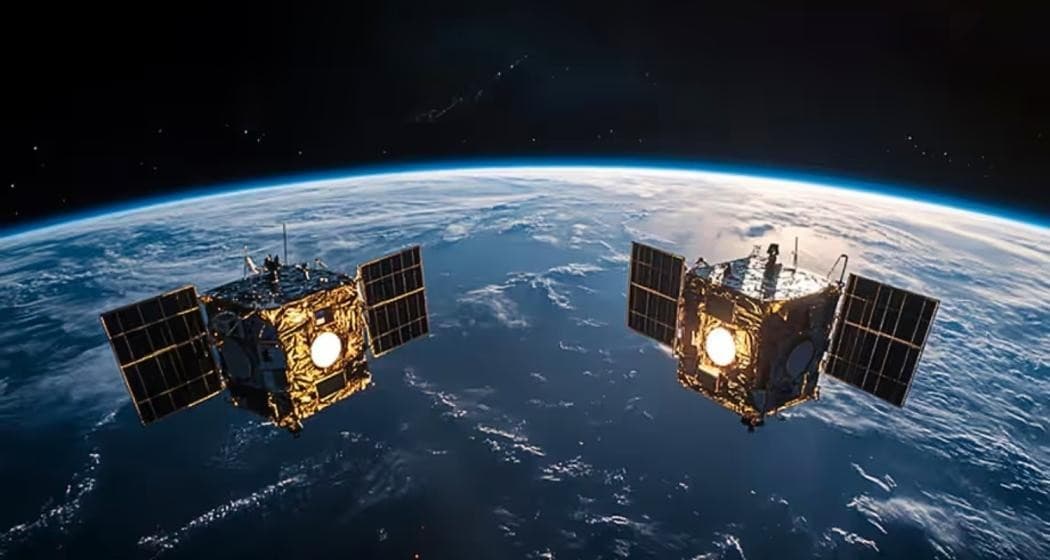
SpaDeX: ISRO’s in-orbit experiment validating autonomous rendezvous, docking and undocking techniques.

Conducted with twin satellites SDX-01 (chaser) & SDX-02 (target) in 460 km, 45° LEO.

Makes India 4th nation, after USA-Russia-China, to show full docking cycle in space.

Quick Facts for MCQs

Tech & Schemes

  • Autonomous-guidance system enabled proximity ops, soft capture, hard-docking, separation.
  • Demonstrated inter-satellite power sharing for modular spacecraft servicing.
  • Data aids future robotic fuel transfer, in-orbit repair missions.

Human Spaceflight Prep

  • Docking mastery critical for crewed Gaganyaan rescue, resupply, station berthing.
  • Validates technologies for lunar sample-return capsules and Mars logistics.
  • Enhances crew safety via redundant orbital rendezvous capability.

International Standing

  • Adds strategic capability earlier limited to Cold-War superpowers & China.
  • Strengthens India’s candidature for global space-station partnerships.
  • Showcases low-cost PSLV adaptability for complex tech demos.

Key Data Points

FeatureData-Point
Launch vehiclePSLV-C60
Launch date30 Dec 2024
Docking achieved16 Jan 2025
Undocking achieved14 Mar 2025
Orbit460 km circular, 45° inclination
Active satelliteSDX-01 (Chaser)
Passive satelliteSDX-02 (Target)
Key demoElectric power transfer while docked
Ground stationsBengaluru, Lucknow, Mauritius
Future useIndian Space Station assembly & Gaganyaan support

Related UPSC Prelims PYQs

CDS_GK 2025PYQ 1

Which one of the following PSLVs, launched by ISRO, is not correctly matched with their Missions?

CDS_GK 2024PYQ 2

भारत का ‘मिशन शक्ति’ (DRDO) निम्नलिखित में से किससे संबंधित है?

GS-3S&T

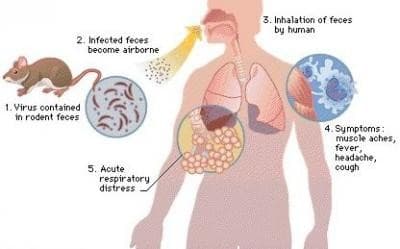
4.Hantavirus Transmission and Symptoms (Rodent Virus)

The Hindu
Illustration for Hantavirus Transmission and Symptoms (Rodent Virus)

What & Where

Zoonotic RNA pathogen of Bunyaviridae family causing Hantavirus Pulmonary Syndrome (HPS) and Hemorrhagic Fever with Renal Syndrome (HFRS)

Infection via inhalation of aerosolised urine, droppings, saliva from deer mice, rice rats, cotton rats

Human-to-human spread absent except limited Andes-virus clusters in South America

Quick Facts for MCQs

Transmission & Reservoirs

  • Aerosolisation triggered while sweeping nests, opening barns, stirring contaminated dust
  • Virus shed in rodent urine, faeces, saliva; arthropod vectors absent
  • Highest exposure in rural, forest-edge, agricultural habitats

Clinical Progression

  • Prodromal phase mirrors influenza; diagnostic delay common
  • Severe escalation yields ARDS, internal bleeding, renal impairment
  • Rapid pulmonary oedema can develop within 24 hours of respiratory onset

Treatment & Prevention

  • Supportive therapy: oxygen supplementation, mechanical ventilation, fluid balance
  • No licensed vaccine; early hospitalisation markedly improves prognosis
  • Prevention relies on rodent proofing, sanitation, gloves–mask use during cleanup

High-Risk Occupations

  • Farmers working in grain silos or barns inhale contaminated dust
  • Campers, hikers staying in infested cabins disturb rodent nests
  • Construction crews entering long-closed structures face elevated exposure

Key Data Points

FeatureData-Point
Virus familyBunyaviridae
Natural hostsDeer mouse, rice rat, cotton rat
Main transmission routeAerosolised rodent excreta inhalation
Confirmed human-to-humanOnly Andes virus, South America
Incubation window1–8 weeks
Early symptomsFever, myalgia, fatigue, nausea, dizziness
Critical phaseLung fluid surge, ARDS, kidney failure
Specific antiviralNone; supportive care only
GS-2Editorial

5.South-East Asia Regional Surveillance Network Proposal (Regional Surveillance)

New Indian Express

What & Where

India proposes South-East Asia Surveillance Network under WHO-SEARO for joint, real-time pandemic and epidemic monitoring.

Uses multi-source inputs—genomic sequencing, wastewater analytics, public-health intelligence—via One Health integration.

Covers 11 SEARO members: India, Bangladesh, Bhutan, DPR Korea, Indonesia, Maldives, Myanmar, Nepal, Sri Lanka, Thailand, Timor-Leste.

Quick Facts for MCQs

Health Security Drivers

  • COVID-19 exposed fragmented regional data flows, slowing coordinated action.
  • Climate change intensifies vector-borne, water-borne, zoonotic outbreaks across borders.
  • Antimicrobial resistance escalating; shared genomic tracking now critical.

Technology & Infrastructure

  • AI-based predictive modelling and cloud dashboards for near-real-time alerts.
  • Expansion of genomic sequencing labs and wastewater surveillance nodes.
  • Digital health record integration ensures seamless multi-source data feeds.

Implementation Challenges

  • Sovereignty concerns; states reluctant to share sensitive outbreak data.
  • Varied surveillance standards hinder interoperable analytics and reporting.
  • Sustained financing needed for labs, diagnostics, workforce upskilling.

Policy & Capacity

  • Regional legal agreements to operationalise IHR 2005 and guarantee transparent exchange.
  • Proposed health emergency fund to underwrite network operations and rapid response.
  • Cross-sector training linking health, environment, agriculture, and tech ministries.

Key Data Points

FeatureData-Point
ProposerGovernment of India
Discussing forumWHO South-East Asia Regional Committee (later 2024)
Member count11 countries
Core objectiveRegional health security & early-warning system
Surveillance sourcesGenomic data + wastewater + public-health intel
Conceptual lensOne Health (human–animal–environment)
Key risk factorsCOVID-19 gaps, climate-driven vectors, AMR surge
Major hurdlesData-sharing hesitancy, non-standard platforms, funding
Legal referenceInternational Health Regulations (IHR) 2005
Capacity focusAI modelling, high-tech labs, digital health tools
GS-2Mapping

6.Armenia-Azerbaijan Peace Treaty (Nagorno Karabakh)

CNN
Illustration for Armenia-Azerbaijan Peace Treaty (Nagorno Karabakh)

What & Where

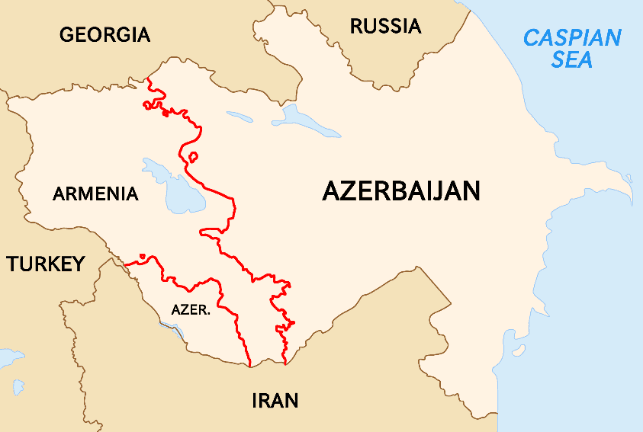
Nagorno-Karabakh: landlocked enclave in South Caucasus; legally Azerbaijan, majority ethnic Armenians, mountainous terrain between Black & Caspian Seas.

2024 Armenia-Azerbaijan peace treaty ends nearly 40-year armed dispute over the enclave’s status.

Region bordered by Greater Caucasus (N) & Lesser Caucasus (S); Aras & Kura rivers key hydrological markers.

Quick Facts for MCQs

Conflict Timeline

  • Independence claim 1980s triggered First War; ceasefire 1994 left separatist control.
  • Sept 2023 lightning operation re-established Baku’s authority.
  • 2024 treaty marks formal conflict termination.

Geographic Highlights

  • Greater vs Lesser Caucasus create rugged relief influencing defense & climate.
  • Kura-Aras river system supports agriculture, hydro projects, forms partial borders.
  • Caspian littoral gives Azerbaijan maritime trade leverage.

Humanitarian Impact

  • 120,000 Armenians displaced to Armenia after 2023 offensive.
  • Long conflict caused cyclical displacement, heritage site damage, landmine contamination.

Key Data Points

FeatureData-Point
Disputed regionNagorno-Karabakh
International statusRecognised part of Azerbaijan
Dominant ethnicityArmenian
Independence declaredLate 1980s (USSR collapse era)
First war period1988-1994
Sept 2023 event24-hr Azeri offensive regained full control
Refugee outflow 2023≈ 1.2 lakh ethnic Armenians
Armenia terrainPredominantly Lesser Caucasus mountains
Armenia highest peakMount Aragats 4,090 m
Key Armenian lakeLake Sevan
Border-forming riverAras (Armenia-Turkey/Iran)
Azerbaijan terrainNorth dominated by Greater Caucasus
Azerbaijan highest peakMount Bazardüzü 4,466 m
Major Azeri riversKura & Aras
Capital of AzerbaijanBaku, oil-rich Caspian coast
Caspian coastlineCrucial for trade & energy exports
GS-3Security

7.DRDO Astra Beyond-Visual-Range Missile (Air Combat Missile)

DD News
Illustration for DRDO Astra Beyond-Visual-Range Missile (Air Combat Missile)

What & Where

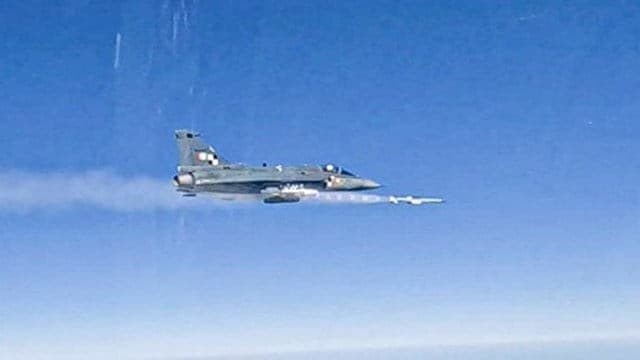
Astra: DRDO-developed beyond-visual-range air-to-air missile for fighter aircraft

Test-fired from Tejas LCA AF Mk1 prototype over Bay of Bengal near Odisha coast

Indigenous air-defence asset under Make in India push

Quick Facts for MCQs

Technological Edge

  • Stand-off engagement keeps launch aircraft outside enemy surface-to-air envelope
  • Smokeless solid-fuel motor and high agility suit close or long-range dogfights
  • Active seeker delivers fire-and-forget capability with high single-shot kill probability

Operational Integration

  • Su-30MKI already fielding Astra on combat patrols
  • Integration trials progressing on Tejas Mk1 and MiG-29 fleets
  • Common missile inventory simplifies training, maintenance and logistics chains

Industrial Impact

  • Large BDL order injects demand into domestic defence manufacturing ecosystem
  • Programme exemplifies Atmanirbhar Bharat by replacing imports like R-77 and Derby
  • Successful BVRAAM development builds confidence for future Astra Mk2, Mk3 variants

Key Data Points

FeatureData-Point
DeveloperDRDO
ManufacturerBharat Dynamics Ltd
Contract value₹2,971 crore
Max range>100 km
Service ceiling20 km altitude
Peak speedMach 4.5
Guidance suiteInertial nav + mid-course update + active radar homing
Integrated aircraftSu-30MKI, Tejas, MiG-29
Recent test platformTejas LCA AF Mk1 prototype

Related UPSC Prelims PYQs

ESE_GS, GS1 2003PYQ 1

With reference to Indian defence, which one of the following statements is correct?

ESE_GS, GS1 2024PYQ 2

Ministry of Defence signed contract with which one of the following organizations for Upgraded Super Rapid Gun Mount (SRGM) and other equipment for around 3000 crores?

GS-2Scheme

8.North East NECTAR Technology Centre (Tech Outreach)

PIB

What & Where

Definition: NECTAR is an autonomous society under DST leveraging technology for Northeast socio-economic development

Geography: HQ Shillong; interventions span all eight Northeastern States

Core Areas: agriculture innovation, drone mapping, bamboo-honey value chains, rural connectivity, skill hubs

Quick Facts for MCQs

Tech & Schemes

  • Drone-Mapping: supports Swamitva GIS surveys improving rural land titling accuracy
  • Rural-Connectivity: scientific interventions for low-cost roads and bridges in hilly terrain
  • Eco-Industries: tech packages for bamboo composites and Apiculture 4.0

Agriculture Initiatives

  • Saffron-Expansion: replicates J&K lavender model to diversify high-value crops in NER
  • Precision-Farming: sensor kits and IoT advisory piloted with local Krishi Vigyan Kendras
  • Post-Harvest: solar dryers and cold chains deployed to cut spoilage

Skill & Research

  • Centre-of-Excellence: planned labs on AI, drones, biotech within new Shillong campus
  • Capacity-Building: short courses for tribal youth on CAD, 3D printing, honey processing
  • R&D-Linkage: platform bridges IITs, CSIR labs with grassroots innovators

Key Data Points

FeatureData-Point
Parent ministryDepartment of Science & Technology
Year established2014
Legal statusAutonomous body (Societies Registration Act)
HeadquartersShillong, Meghalaya
New asset50-acre permanent campus foundation stone laid
Flagship farming focusSaffron, Bamboo
Drone use caseLand mapping for Swamitva scheme
Upcoming facilityCentre of Excellence for advanced tech training
Key livelihood sectorsBamboo, Honey
Region coveredNortheastern Region (NER)

Related UPSC Prelims PYQs

ESE_GS 2026PYQ 1

Which organization is responsible for implementing the National Beekeeping & Honey Mission (NBHM)?

GS-2Scheme

9.PM Surya Ghar Rooftop Solar Scheme (Rooftop Solar)

DD News

What & Where

PM Surya Ghar Muft Bijli Yojana: central scheme promoting grid-connected rooftop solar for residential users.

Coverage: pan-India with subsidies via Direct Benefit Transfer.

Objective: cut household bills, CO₂ emissions, subsidy burden through ≤3 kW systems.

Quick Facts for MCQs

Achievements

  • Installations: 10 lakh rooftops operational by 10 Mar 2025, strong western-northern uptake.
  • Subsidy: ₹4,770 crore transferred via DBT covering 13 lakh households.
  • Demand: 47 lakh applications reflect accelerating citizen interest in solar adoption.

Economic Angle

  • Savings: ₹75,000 crore yearly reduction expected in government electricity subsidies and procurement.
  • Employment: 17 lakh direct jobs foreseen across installation, maintenance, manufacturing.
  • Make-in-India: Use of domestic modules and cells mandated, deepening local solar supply chain.

Challenges & Gaps

  • Affordability: High upfront costs persist despite subsidies, limiting low-income participation.
  • Finance: Only 1.28 lakh loans cleared, slowing uptake relative to demand.
  • Grid: Legacy distribution network struggles with intermittent, decentralised rooftop generation.

Way Forward

  • Outreach: Leverage digital, NGOs, panchayats for mass awareness on benefits and application steps.
  • Credit: Zero-interest loans and faster disbursal mechanisms to broaden access.
  • Infrastructure: Invest in smart grids plus storage to seamlessly integrate rooftop solar.

Key Data Points

FeatureData-Point
Operational homes10 lakh (as on 10 Mar 2025)
Total applications47 lakh
Subsidy released₹4,770 crore
Beneficiary HH via DBT13 lakh
Top stateGujarat 3.51 lakh installs (41.47 %)
Second & thirdUttar Pradesh 73,602; Kerala 65,423
Annual govt saving₹75,000 crore (projected)
CO₂ avoided720 million t over 25 years
Direct jobs17 lakh (estimated)
Loans sanctioned1.28 lakh

Related UPSC Prelims PYQs

CDS_GK, GS1 2025PYQ 1

Consider the following statements about ‘PM Surya Ghar Muft Bijli Yojana’ :

CDS_GK, GS1 2020PYQ 2

Saubhagya, a Government of India Scheme, relates to which of the following areas?

GS-1Scheme

10.ASHA Workers Honorarium Dispute (Community Health)

Indian Express
Illustration for ASHA Workers Honorarium Dispute (Community Health)

What & Where

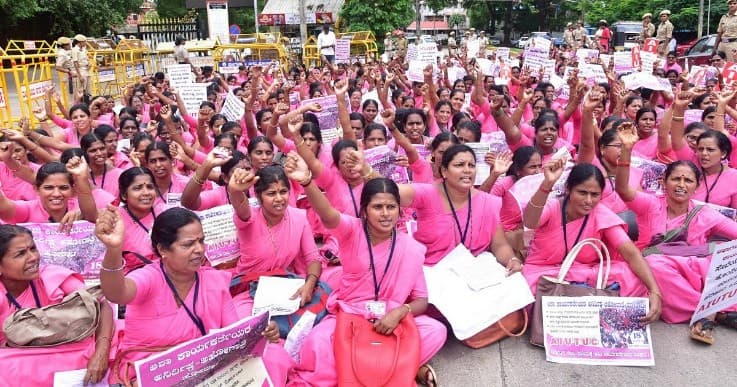
ASHA = community-based female health volunteers under National Health Mission, operating mainly in rural India since 2005

Act as frontline link between households and public health system; >10 lakh workers nationwide

Current flashpoint: month-long wage & status strike by Kerala ASHAs

Quick Facts for MCQs

Roles & Functions

  • Maternal-child care; promote institutional delivery, antenatal visits, immunisation
  • Surveillance; record birth, death, communicable & NCD cases, outbreak alerts
  • Behaviour change; sanitation, menstrual hygiene, nutrition, safe water advocacy

Employment Issues

  • Classification volunteer; denied minimum wage, pension, ESI, gratuity
  • Payment delays and inter-state honorarium disparity persistent
  • No career progression ladders unlike ANMs or Anganwadi workers

Financial Model

  • Cost-containment; incentive-based remuneration encourages task completion, lowers fixed fiscal outgo
  • Decentralised; states free to top-up, causing uneven earnings
  • Central share routed via NHM flexi-pools to districts

Reform Proposals

  • Grant worker status with base salary plus performance bonus
  • Earmark higher NHM budget for timely, uniform payments
  • Extend social security: health insurance, maternity benefit, pension

Key Data Points

FeatureData-Point
Launch year2005 (under NRHM, now NHM)
Nodal ministryMoHFW
Workforce size≈10 lakh nationally
Kerala strike demandFixed salary, formal employee status, social security
Present pay range₹5,000–₹15,000 / month (honorarium + incentives)
Gender share98 % women
Major achievementMMR fell 130 → 97 (2014-16 to 2018-20)
Key COVID roleSurveillance, awareness, vaccination enrolment

Related UPSC Prelims PYQs

GS1 2012PYQ 1

With reference to National Rural Health Mission, which of the following are the jobs of ‘ASHA’, a trained community health worker?

Ready to practice?

Test your knowledge with our UPSC test series.

Start Free Trial