UPSC Current Affairs

18 topicsGS-1: 1GS-2: 5GS-3: 12
0/18 done
GS-2Editorial

1.Good Governance Challenges (Accountability Mechanisms)

New Indian Express
Illustration for Good Governance Challenges (Accountability Mechanisms)

What & Where

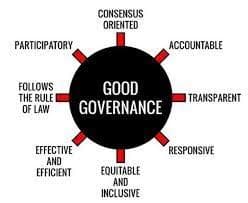
Good Governance = transparent, accountable, participatory decision-making ensuring efficient service delivery and public trust.

Principles include rule of law, responsiveness, equity, inclusivity, efficiency, accountability.

India spotlight: New Delhi railway stampede exposes inquiry suppression and systemic governance lapses.

Quick Facts for MCQs

Governance Challenges

  • Transparency deficit; disaster inquiry reports often withheld, blocking accountability.
  • Political interference triggers frequent transfers, eroding institutional autonomy.
  • Corruption, nepotism misallocate resources, widening trust deficit.

Reform Measures

  • RTI, PRAGATI, Digital India, Mission Karmayogi strengthen transparency, monitoring, skill upgradation.
  • Citizens’ Charter-Sevottam embeds measurable service-delivery standards across departments.
  • Emerging AI tools proposed for predictive, data-driven governance.

Way Forward

  • Independent, time-bound inquiries with compulsory public disclosure of findings.
  • Merit-based postings; statutory insulation of civil servants from partisan pressure.
  • Strong whistle-blower shield and transparent political funding to deter corruption.

Key Data Points

FeatureData-Point
Right to Information ActEnacted 2005; grants citizens access to official records
PRAGATI portalPM-led monthly videoconference; real-time monitoring of projects & grievances
Digital IndiaUmbrella programme for e-governance, digital services, data transparency
Mission KarmayogiNational Civil-Service capacity-building for competency-based governance
Citizens’ Charter & SevottamFramework to rate, improve departmental service quality
Core governance challengeBureaucratic red tape delaying decisions and execution

Related UPSC Prelims PYQs

ESE_GS, GEO_GS 2020PYQ 1

Which one of the following is not the characteristic of Good Governance and e-Governance that are closely linked and depend on each other?

ESE_GS, GEO_GS 2024PYQ 2

Which of the following statements about 'Good Governance Index' (GGI) is/are not correct?
GS-1Mapping

2.Yamuna River Profile (Indian River)

IT
Illustration for Yamuna River Profile (Indian River)

What & Where

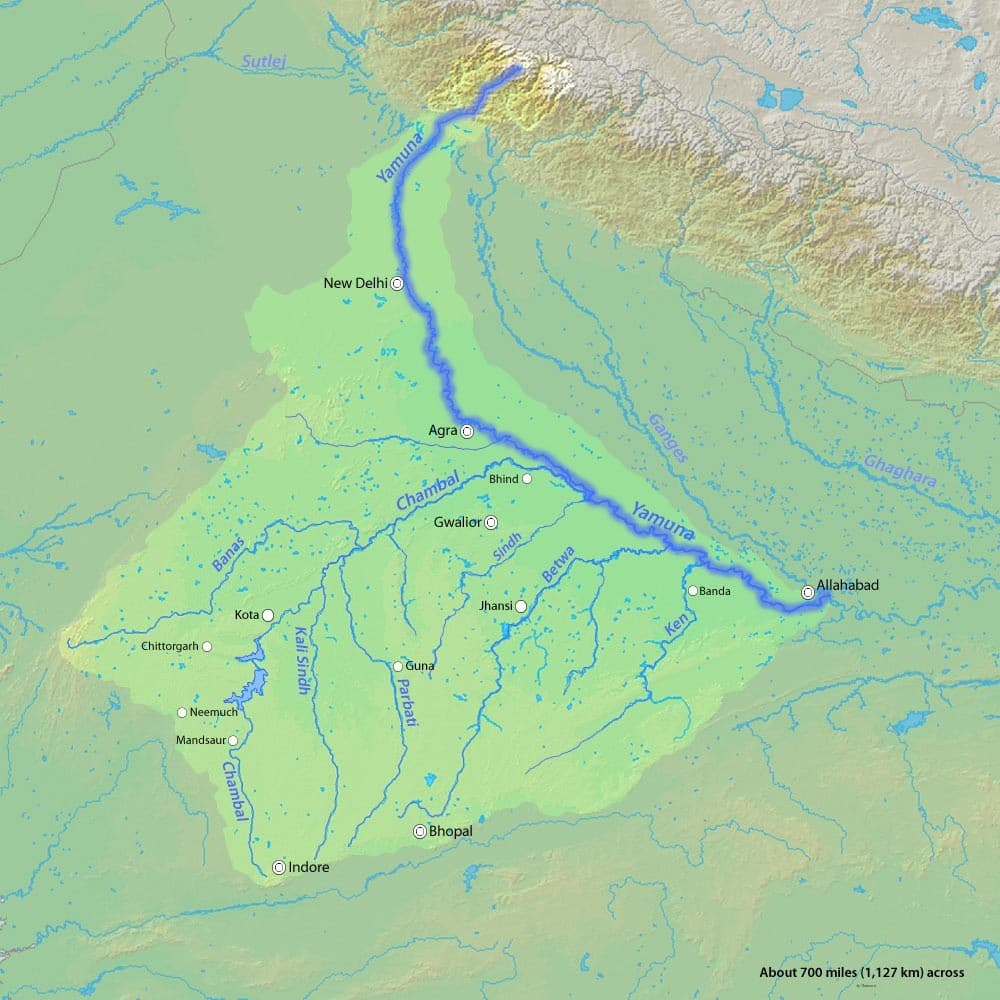
Solar-hybrid river cruise: eco-tour boats on 22 km Sonia Vihar–Jagatpur Yamuna reach, Delhi.

Yamuna: 1,376 km glacier-fed Ganga tributary, longest Indian river not entering sea; meets Ganga at Prayagraj.

Basin spans Uttarakhand, Himachal Pradesh, Haryana, Delhi, Uttar Pradesh, Rajasthan.

Quick Facts for MCQs

Tech & Schemes

  • Solar-hybrid craft reduce diesel reliance; aligns with urban e-mobility push.
  • Cruise improves riverfront connectivity between North-East Delhi clusters.

Environmental Impact

  • Solar propulsion cuts carbon emissions, supports Delhi Climate Action targets.
  • Initiative showcases renewable integration in inland waterways.

River Geography

  • Himalayan tributaries: Rishi Ganga, Hanuman Ganga, Tons, Giri.
  • Plain-zone tributaries bolster irrigation across UP, MP, Rajasthan hinterlands.

Key Data Points

FeatureData-Point
Cruise stretch length22 km
PropulsionSolar-battery hybrid
River origin glacierYamunotri Glacier
Origin altitude4,421 m
Total river length1,376 km
Tributary giving max flowTons ≈ 60 %
Delhi entry–exit pointsPalla Village → Jaitpur
Delhi river length52 km
Sangam cityPrayagraj
Key plain tributariesHindon, Chambal, Sind, Betwa, Ken

Related UPSC Prelims PYQs

CDS_GK 2021PYQ 1

D बेंगलुरु से नई दिल्ली की अपनी रेल यात्रा लघुत्तम मार्ग से करती है। उस यात्रा के दौरान वह निम्नलिखित में से किस नदी को पार नहीं करेगी ?

GS-3Infrastructure

3.Great Nicobar Project Concerns (Great Nicobar Project)

Hindustan Times
Illustration for Great Nicobar Project Concerns (Great Nicobar Project)

What & Where

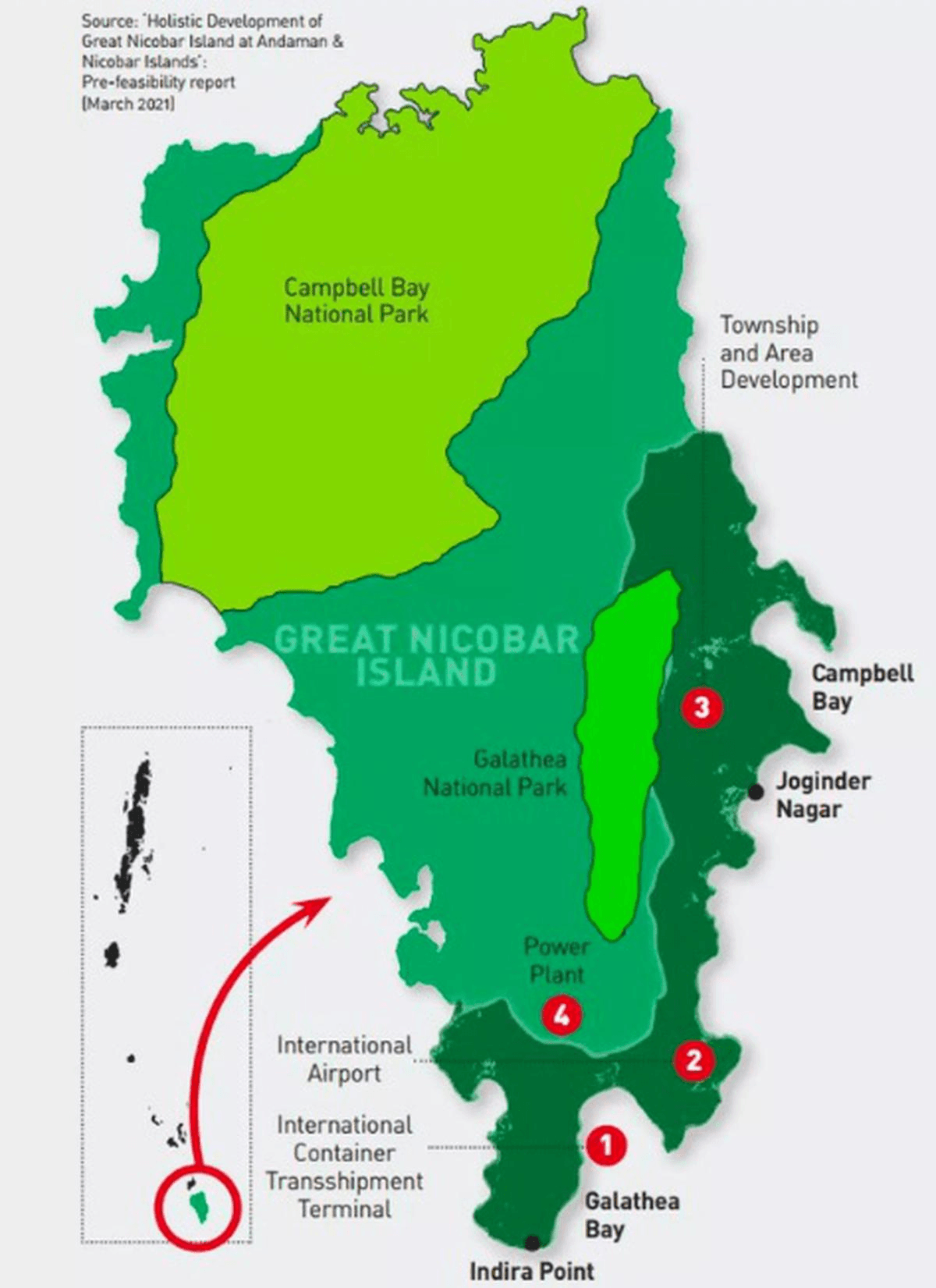
Great Nicobar Island, southernmost Andaman & Nicobar, overlooks Malacca-Sunda-Lombok Straits.

Rs 80,000 cr NITI-Aayog plan: transshipment port (Galathea Bay), greenfield airport, township, tourism zone, gas plant.

Site spans CRZ-1A coral-reef coast & ≈130 km² undisturbed tropical rainforest.

Quick Facts for MCQs

Environmental Impact

  • Deforestation: 130 km² clearing; probable >1 crore trees lost.
  • Coral reefs: Ship repair & dredging in CRZ-1A threaten reef stability.
  • Fauna: Leatherback nesting beaches, endemic species at risk.

Legal & Policy

  • SC-mandated 2002 report sought zero felling; norms bypassed.
  • Galathea WLS denotified; CRZ-1A limits overridden.
  • EC details withheld on security grounds, diluting transparency.

Security Dimension

  • Location enables monitoring of Indo-Pacific chokepoints.
  • Greenfield airport speeds tri-service response to PLA-Navy moves.
  • Supports Act East & QUAD maritime strategy.

Economic Angle

  • ICTT targets independence from Singapore/Colombo hubs.
  • Anchors Maritime India Vision 2030 & Amrit Kaal Vision 2047.
  • Cruise, shipbuilding add-ons likely inflate costs further.

Social Concerns

  • Shompen tribe faces habitat, livelihood disruption.
  • Consultation and compensation mechanisms reportedly weak.

Key Data Points

FeatureData-Point
Total project costRs 80,000 crore
Forest diversion130 km²
Trees likely felledUp to 10 million
Denotified WLSGalathea Bay, 2021
Flagship speciesLeatherback sea turtle
CRZ sub-category1A (ecologically sensitive)
Afforestation statesHaryana, Madhya Pradesh
SC panel citedShekhar Singh, 2002
Terminal cost rise20 % (’21-’24)
Strategic straitsMalacca, Sunda, Lombok
GS-3Environment

4.World Air Quality Report 2024 (PM2.5 Pollution)

Times of India
Illustration for World Air Quality Report 2024 (PM2.5 Pollution)

What & Where

World Air Quality Report 2024; PM2.5 audit by Swiss firm IQAir across 134 countries

PM2.5; particles ≤2.5 µm, penetrate lungs, trigger cardio-respiratory disease

Hotspots; Indo-Gangetic Plain, South Asia, Central Africa; only 12 nations within WHO limit

Quick Facts for MCQs

India Snapshot

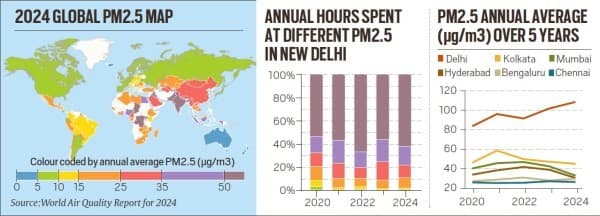
  • Ranking; India 5th globally at 50.6 µg/m³, 10 × WHO limit
  • Hotspots; 13 of world’s 20 worst cities, Byrnihat 128.2 µg/m³, Delhi 91.6 µg/m³
  • Health burden; 2.1 million Indian deaths in 2021 linked to PM2.5

Global Trends

  • Coverage; 99 % world population breathes air above 5 µg/m³ guideline
  • Geography; South Asia, Africa, Middle East dirtiest, Europe & Oceania cleanest via strict rules
  • Mortality; 1 million global deaths 2021, air pollution second risk after hypertension

Causative Factors

  • Combustion; fossil-fuel power, industry, vehicles dominate PM2.5 load
  • Agriculture; Punjab-Haryana-UP stubble supplies 60 % of Delhi winter pollution
  • Construction; unregulated urban dust spikes particulate levels in fast-growing cities

Policy & Action

  • Enforcement; GRAP, emission norms weak, penalties low, inter-state coordination poor
  • Monitoring; many Tier-2/3 towns lack continuous AQI sensors hindering response
  • Transition; renewables, EVs, green belts, dust controls, public awareness drives pushed

Key Data Points

FeatureData-Point
WHO annual PM2.5 guideline5 µg/m³
India average PM2.5 (2024)50.6 µg/m³
Indian cities in top-20 global list13
Most polluted Indian cityByrnihat 128.2 µg/m³
Global population above WHO limit99 %
Most polluted countryChad 91.8 µg/m³
Air-pollution deaths in India (2021)2.1 million

Related UPSC Prelims PYQs

GEO_GS, GS1 2022PYQ 1

WHO के वायु गुणवत्ता दिशानिर्देशों के संदर्भ में, निम्नलिखित कथनों पर विचार कीजिए :

GEO_GS, GS1 2022PYQ 2

Which of the following major parameters are considered while deriving the Air Quality Index (AQI) of an area in India?

GS-3Environment

5.Seagrass Conservation Priority (Seagrass Decline)

Down to Earth
Illustration for Seagrass Conservation Priority (Seagrass Decline)

What & Where

Definition: Submerged flowering marine plants forming dense meadows in shallow coastal bays and lagoons

Taxonomy: Order Alismatales with ~60 species in four families such as Cymodocea, Syringodium, Halodule

Indian hotspots: 516.6 km² in Gulf of Mannar, Palk Bay, Andaman-Nicobar, Lakshadweep and Gulf of Kutch

Quick Facts for MCQs

Ecological Services

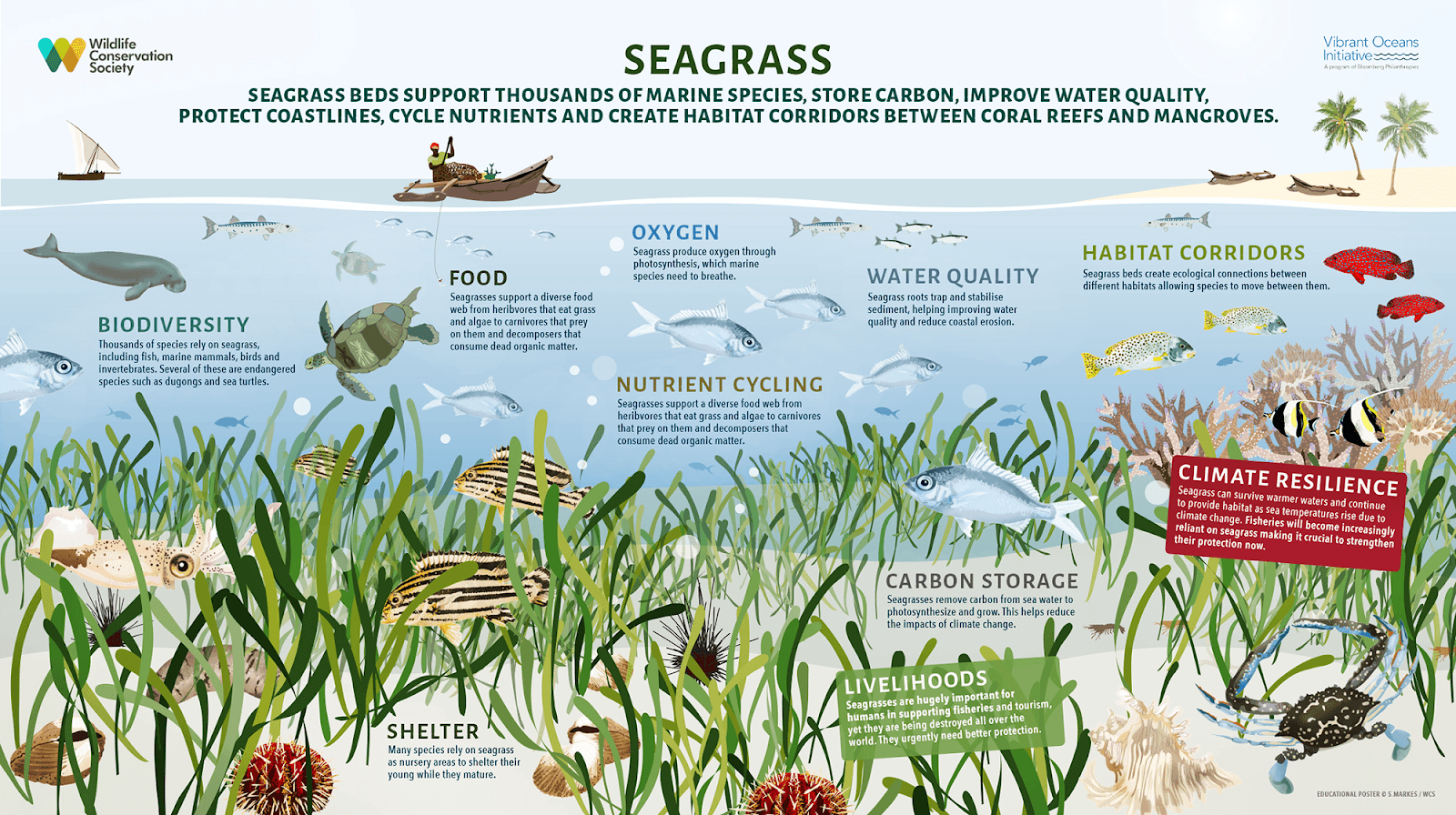
  • Carbon-sink: Stores 11 % oceanic organic carbon; absorbs 83 Mt CO₂ annually
  • Biodiversity: Supports 750 fish species and 121 threatened species including dugong and green turtle
  • Coastal-shield: Roots stabilize seabed; trap sediments; reduce erosion and enhance water clarity

Threats

  • Pollution: Industrial, agricultural and urban effluents degrade meadows and reduce photosynthetic capacity
  • Coastal-development: Tourism infrastructure and dredging uproot rhizomes and fragment habitat
  • Climate-stress: Warming waters, acidification and stronger storms elevate mortality and hinder recovery

Conservation & Policy

  • India-action: Community bamboo and coconut-rope transplants restored 14 acres with up to 90 % survival
  • Global-MPA: Only 23.9 % protected; Virginia success shows 1 700 ha scalable restoration model
  • Policy-ask: Integrate into NBAP, expand MPAs beyond 2.5 % EEZ, align with Blue Carbon initiative

Key Data Points

FeatureData-Point
Global cover0.1 % of ocean floor
Annual decline rate1–2 %
Species endangeredNearly 5 %
Carbon stored11 % of oceanic organic carbon
Sequestration speed35 × faster than rainforests
CO₂ absorbed yearly83 million tonnes
India sequestration434.9 t CO₂ km⁻² yr⁻¹
Indian restoration14 acres (85–90 % success, 2011-20)
Global MPA coverage23.9 % of seagrass area
Virginia project1 700 ha Zostera marina restored
GS-3SpeciesQuick Bite

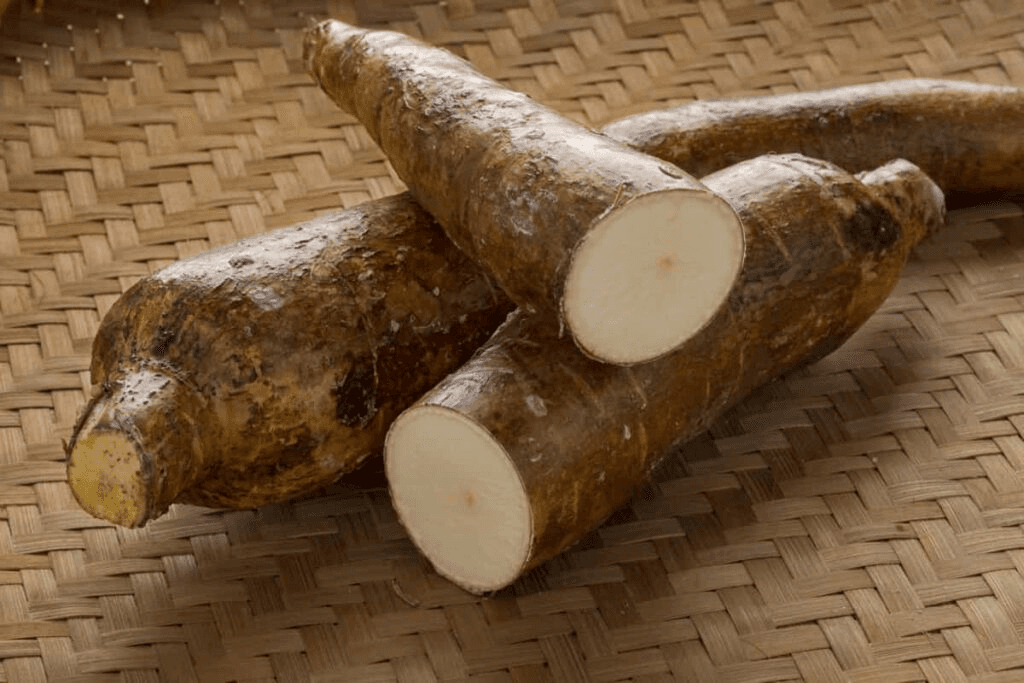
6.Cassava Crop Significance (Starchy Root Crop)

Down to Earth
Illustration for Cassava Crop Significance (Starchy Root Crop)

What & Where

Cassava = starchy root crop (Manihot esculenta) dubbed “bread of the tropics”

Native to South America; now staple across Africa, Asia, Latin America

Indian belts: Kerala, Tamil Nadu, Andhra Pradesh, North-East

Quick Facts for MCQs

Cultivation & Propagation

  • Resilience enables farming on marginal tropical soils with minimal inputs
  • Brazilian Kukurro encourages farmers to allow flowering, harvest seeds, replant seedlings
  • Seed mixing maintains wide allelic pool against pests, climate shocks

Biodiversity

  • Indigenous practices credited with preserving cassava’s genetic diversity repertoire
  • Diversity underpins global food security for tropical smallholders
  • FAO recognises cassava as strategic crop against climate variability

Health & Nutrition

  • Resistant starch lowers post-prandial glucose, aids type-2 diabetes risk reduction
  • High fibre moderates appetite, supports probiotic gut bacteria
  • Gluten-free nature broadens dietary inclusivity

Industrial & Green Uses

  • Fermentable starch suitable for second-generation bioethanol blending
  • Biodegradable plastic feedstock aligns with circular-economy goals
  • Agro-waste converted to livestock feed, reducing fodder deficit

Key Data Points

FeatureData-Point
Common namesYuca, Manioc, Tapioca (starch)
Propagation normVegetative stem cuttings
Kukurro traditionSeed-based sowing boosting genetic diversity
NicknameFeeds nearly 1 billion people
Climate traitHigh drought & poor-soil tolerance
Key Indian statesKerala, TN, AP, NE states
Major industrial starch useBakery, paper, adhesives
Emerging green usesBioethanol, biodegradable plastics
By-productsPeels/leaves as animal fodder
Health angleResistant starch supports gut health, moderates blood sugar

Related UPSC Prelims PYQs

GS1 2020PYQ 1

“This crop is of tropical origin. For its development it requires about 210 frost-free days and 50–100 centimetres of rainfall annually. Its adaptability to moist, deep, well-drained soils makes it ideally suited for plantation agriculture.” Which one of the following crops is described in the above passage?

GS-3S&T

7.Plastic Ice VII Phase (High-pressure Ice)

NewsX

What & Where

Phase; Plastic Ice VII is water with crystalline lattice yet freely rotating molecules

Formation; Emerges at 450–600 K plus 0.1–6 GPa in diamond-anvil pressure cells

Location; Likely in deep icy moons/exoplanets; laboratory proof at ILL-France, 2025

Quick Facts for MCQs

Planetary Science

  • Interiors; Phase clarifies high-pressure water behaviour inside Ganymede, Callisto, Titan
  • Astrobiology; Accurate ice maps refine subsurface ocean habitability estimates

Extreme Environment Research

  • High-pressure physics; Validates hybrid solid-liquid models for water equations of state
  • Material science; Benchmarks rotationally disordered plastic crystals under gigapascal loads

Energy & Technology

  • Hydrogen storage; Molecular rotation hints at reversible hydrogen-hosting capability
  • Thermal management; Insights may guide heat-stable materials with tunable molecular mobility

Key Data Points

FeatureData-Point
Year prediction2008
Year confirmation2025
Temperature window450–600 K (177–327 °C)
Pressure window0.1–6 GPa (~60 000 atm)
Experimental toolQuasi-Elastic Neutron Scattering
LaboratoryInstitut Laue-Langevin, France
Planetary relevanceGanymede, Callisto, Titan, selected exoplanets
GS-3S&T

8.Mycelium Bio-Bricks Innovation (Bioengineered Material)

The Hindu

What & Where

Definition: Bioengineered brick grown from fungal mycelia plus sawdust/husk agro-waste.

Process: Room-temperature cultivation; no high-temperature kilns, yielding lightweight yet sturdy blocks.

Geography: Piloted by Roha Biotech (IIT-Madras incubated); parallel work in several global research labs.

Quick Facts for MCQs

Environmental Impact

  • Emission-cut: Substitutes kilned clay, slashing embodied carbon.
  • Waste-use: Converts agricultural residues, reducing open-burning pollution.
  • Decomposability: Returns to soil, curbing construction debris.

Tech & Schemes

  • Process: Mycelium colonises substrate in moulds, forming fibrous composite within days.
  • Players: Roha Biotech, IIT-Madras; multiple international institutes optimising strains.
  • Durability fix: Requires coatings/sealants for moisture and long-term service.

Applications & Limitations

  • Use-case: Best for non-load-bearing walls, insulation, furniture.
  • Market pull: Fits LEED, GRIHA green-building certifications, rising eco-premium demand.
  • Constraint: Lower compressive strength restricts primary structural deployment.

Key Data Points

FeatureData-Point
Core materialFungal mycelia + sawdust/husk
Kiln requirementNone; ambient curing
CO₂ from clay bricks≈ 300 million t per year
Strength-to-weightHigh, still below concrete
Thermal propertyEffective insulator
Fire behaviourNaturally flame-resistant
End-of-lifeFully biodegradable
Potential usesPanels, filters, sports gear, circuit boards
GS-3S&T

9.Neural Networks Fundamentals (Artificial Neural Networks)

DD News
Illustration for Neural Networks Fundamentals (Artificial Neural Networks)

What & Where

Artificial Neural Networks (ANNs): brain-inspired machine-learning models of interconnected “neurons”.

Core process: Input → Hidden → Output layers; weights updated via backpropagation.

Deployed worldwide across vision, language and autonomous AI systems.

Quick Facts for MCQs

Tech & Schemes

  • Architecture: neurons use weighted links; hidden layers transform inputs non-linearly.
  • Learning: gradient updates minimise loss iteratively during training epochs.
  • Deep learning: many hidden layers discover hierarchical feature representations.

Application Sectors

  • Forecasting: models aid weather, stock, medical outcome predictions.
  • Language: drives chatbots, translation engines, sentiment filters.
  • Vision & autonomy: powers image classification, self-driving perception modules.

Benefits

  • Automation: enables minimal human oversight in decision workflows.
  • Accuracy: excels on complex, noisy datasets versus rule-based systems.
  • Scalability: performance improves with more data and compute resources.

Key Data Points

FeatureData-Point
Alternate nameArtificial Neural Network
Minimum layers3 (input, hidden, output)
Key algorithmBackpropagation with gradient descent
Data requirementLarge, labelled datasets
Handles data typeUnstructured—images, text, speech
Core rolePattern recognition & decision-making
Popular assistantsChatGPT, Siri, Google Assistant
GS-3S&TQuick Bite

11.Lunar Water Ice Discovery (Lunar Water Ice)

Indian Express

What & Where

ChaSTE = Chandra’s Surface Thermophysical Experiment measuring surface & sub-surface temperatures near lunar poles

Data hint subsurface water-ice on shaded high-latitude slopes beyond traditional polar cold traps

Observations stem from Chandrayaan-3 landing zone at south-polar Shiv Shakti Point

Quick Facts for MCQs

Scientific Findings

  • ChaSTE readings confirm colder temperatures on sun-shielded slopes similar to polar cold traps
  • Indicates water-ice distribution may extend outside permanent polar shadows

Resource Utilisation

  • Wider ice spread lowers mining difficulty for future crewed or robotic missions
  • In-situ ice supports life support, propellant manufacture, sustained deep-space exploration

Mission Milestones

  • Chandrayaan-3 delivered first Indian soft landing near lunar south pole
  • Site christened Shiv Shakti Point honoring scientific prowess and women power

Key Data Points

FeatureData-Point
SpacecraftChandrayaan-3
InstrumentChaSTE thermometer probe
Landing date23 Aug 2023
Landing site nameShiv Shakti Point
Suggested ice zoneHigh-latitude shaded slopes
Key utility of lunar waterDrinking, oxygen, rocket fuel via H₂-O₂ split
Region traditionally known for icePermanently shadowed polar craters
GS-3S&TQuick Bite

12.Urine-to-Fertilizer Technology (Urine-Derived Fertilizer)

The Hindu
Illustration for Urine-to-Fertilizer Technology (Urine-Derived Fertilizer)

What & Where

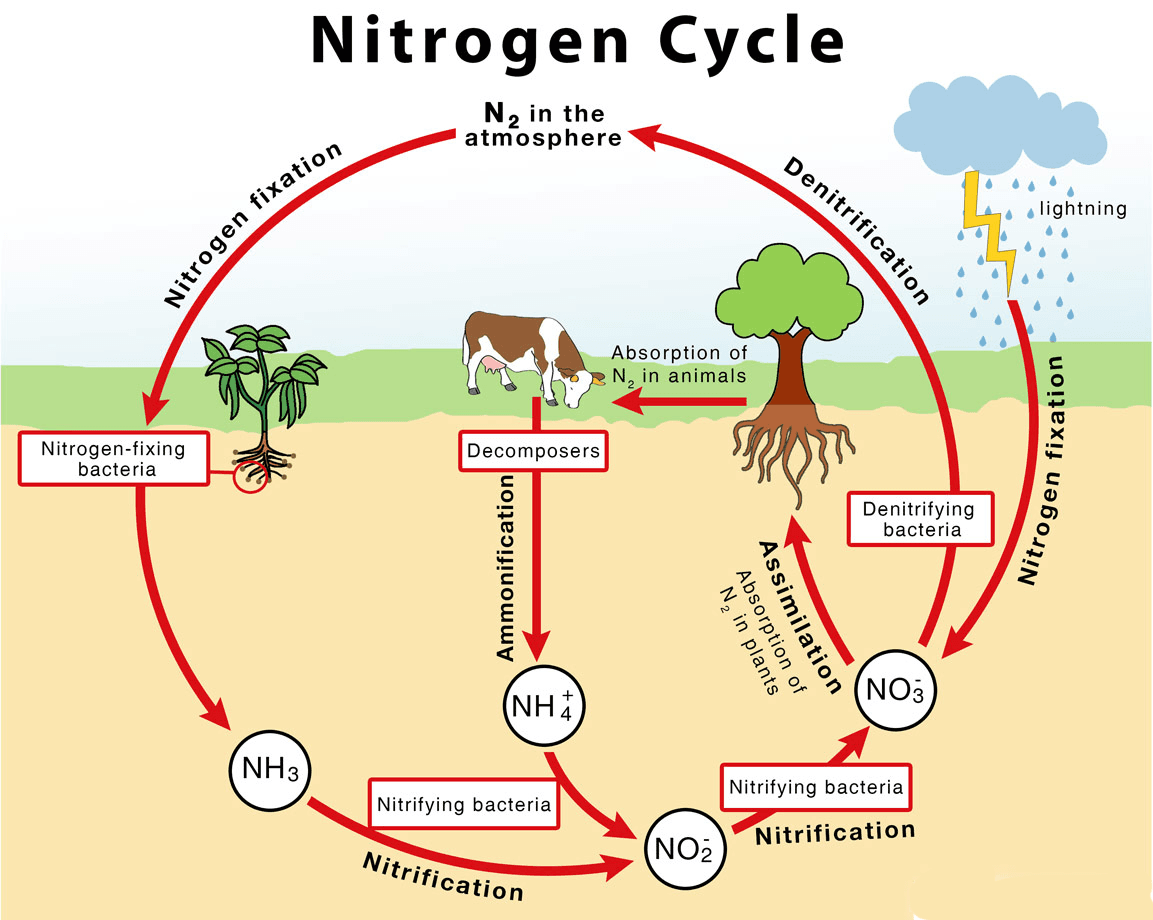
Technique: electrochemical conversion of urine urea into Percarbamide, a crystalline peroxide fertiliser

Location of feedstock: human & animal urine collected at source or wastewater plants

Output use: slow-release nitrogen fertiliser, closes nitrogen cycle on farms

Quick Facts for MCQs

Tech & Schemes

  • SBM-U ODF++ targets integrated solid-liquid waste management, technology aids compliance
  • Technique compatible with dairy effluent streams, lowering treatment load

Environmental Impact

  • Nitrogen slow release minimises leaching & eutrophication risks
  • Conversion reduces GHGs from dairy waste and synthetic fertiliser manufacture

Agriculture Use

  • Percarbamide supplies N along growth cycle, boosting yields without frequent top-dressing
  • Urine-derived fertiliser recovers P, K alongside N, valuable for nutrient-poor soils

Key Data Points

FeatureData-Point
Product formedPercarbamide (urea peroxide)
Purity achieved≈ 100 % extraction from urine
Annual urine per adult450–680 litres
Nutrient yield/adult/year4 kg N, 0.3 kg P
Potential crop supportWheat for one daily bread loaf for a year
Relevant missionSwachh Bharat Mission-Urban ODF++

Related UPSC Prelims PYQs

ESE_GS, NDA_GAT 2022PYQ 1

Which one of the following statements about fertilizers is not correct?

ESE_GS, NDA_GAT 2025PYQ 2

The process of converting the solid wastes—sewage sludge, domestic and agricultural wastes into compost manure is called

GS-3S&TQuick Bite

13.Solar Maximum and Missions (Solar Cycle Missions)

Indian Express
Illustration for Solar Maximum and Missions (Solar Cycle Missions)

What & Where

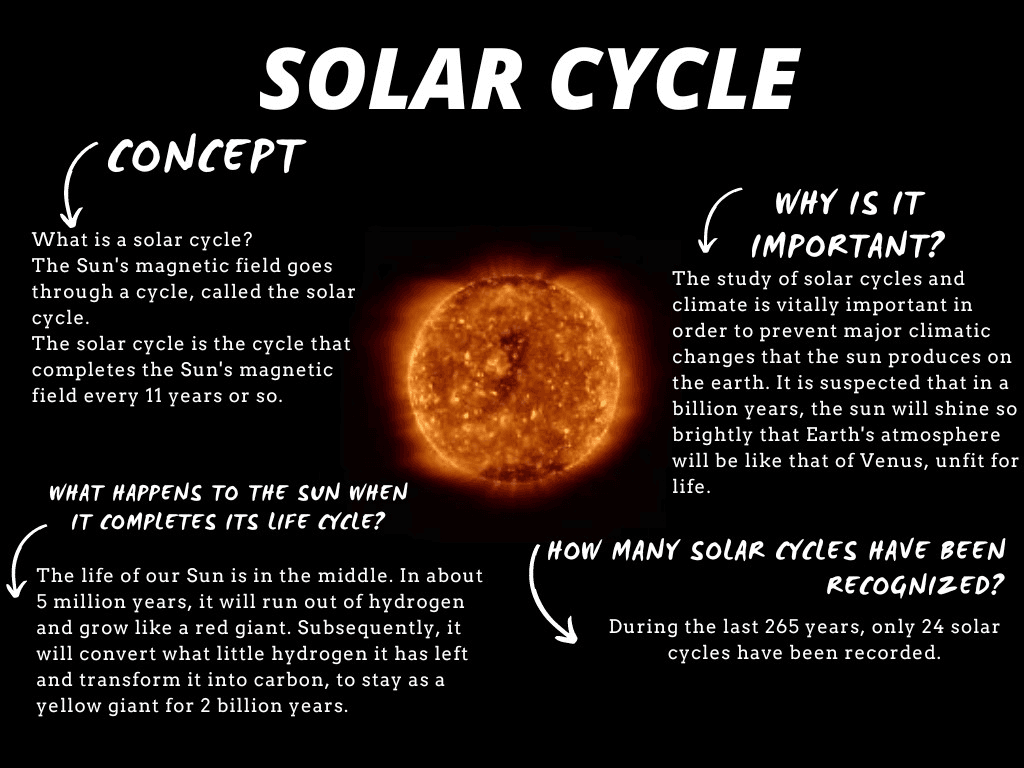
Solar cycle: 11-year magnetic polarity flip of Sun, tracked via sunspot counts

NASA PUNCH mission: four microsats imaging Sun’s corona–heliosphere interface from Earth orbit

Solar maximum zone (2022-24) ideal for observing intensified sunspots, flares, CMEs

Quick Facts for MCQs

Space Missions

  • Surge: More missions launched near maximum to study heightened solar activity
  • Predecessors: Aditya-L1 (ISRO) and Proba-3 (ESA) preceded PUNCH
  • PUNCH: Four suitcase-sats will produce 3-D coronal imagery via polarimetry

Solar Cycle Dynamics

  • Counting: International Sunspot Number records daily spots to benchmark cycle phase
  • Maximum: Heightened sunspots, flares, CMEs; magnetic flips complete
  • Minimum: Few sunspots, reduced solar activity until next buildup

Infrastructure Impact

  • Satellites: Increased charged particle flux degrades electronics, induces communication blackouts
  • Grids: Geomagnetically-induced currents overheat transformers, risking outages
  • Forecasting: Cycle knowledge improves space-weather advisories and mitigation planning

Key Data Points

FeatureData-Point
Mission acronymPUNCH
AgencyNASA
Rank since 20233rd major solar mission
Target regionSun’s corona & heliosphere
Solar cycle length11 years
Current peak window2022-24 solar maximum
Next peak forecast2035-36
Magnetic flipPoles swap at maximum
Sunspot natureSmall, dark, cooler, strong magnetism
Key risksSatellite comm & power grids

Related UPSC Prelims PYQs

ESE_GS, GS1 2026PYQ 1

Which space organization launched the PUNCH Space Mission?

ESE_GS, GS1 2022PYQ 2

If a major solar storm (solar flare) reaches the Earth, which of the following are the possible effects on the Earth ?

GS-2Editorial

14.India–Mauritius Strategic Partnership (India-Mauritius Ties)

PIB
Illustration for India–Mauritius Strategic Partnership (India-Mauritius Ties)

What & Where

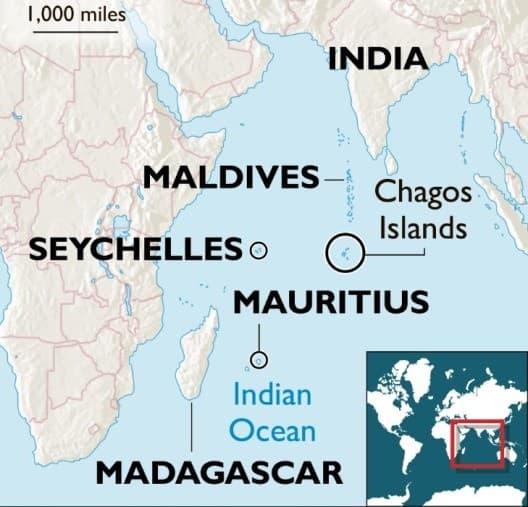
Enhanced Strategic Partnership (ESP) between India & Mauritius, announced Feb 2024 during PM visit to Port Louis.

Focus: defence, blue economy, infrastructure, digital public goods, health, capacity building across Indian Ocean.

Geography: Mauritius EEZ, Agalega island facility, wider Western Indian Ocean under SAGAR–MAHASAGAR vision.

Quick Facts for MCQs

Defence & Maritime

  • Refit support: India funding overhaul of three Mauritian Coast Guard vessels.
  • Surveillance boost: Regular Indian naval ships/aircraft deployments & white-shipping data sharing.
  • Agalega asset: Runway enables P-8I class operations, counters growing Chinese footprint.

Infrastructure & Green Mobility

  • Clean-transport: 100 e-buses supplied with maintenance and charging ecosystem.
  • Water-security: ₹487 cr rupee LoC replaces ageing 100 km pipeline network.
  • Symbolic-aid: India gifting new Mauritius Parliament building under ACTEAST-Africa outreach.

Digital & Capacity Building

  • Judiciary digitisation: End-to-end e-courts platform assistance via NIC-style stack.
  • Human-resource: 500 Mauritian police and civil officers to train in India over 5 years.
  • Cyber-resilience: Joint work on Digital Public Infrastructure, CERT linkages and fintech safeguards.

Key Data Points

FeatureData-Point
ESP upgrade year2024
Trade pact in forceCECPA 2021
First rupee-denominated LoC₹487 crore for 100 km water pipeline
E-mobility grant100 electric buses + chargers
Coast Guard ships under refitVictory, Valiant, Barracuda
Strategic facilityAgalega runway & jetty for EEZ patrol
Mauritius joined SAGAR2020
ISRO-assisted first Mauritian satellite2022
DTAA original year1983
Blue Economy cooperation expansion2024

Related UPSC Prelims PYQs

CAPF_GAI, GS1 2010PYQ 1

A great deal of Foreign Direct Investment (FDI) to India comes from Mauritius than from many major and mature economies like UK and France. Why?

CAPF_GAI, GS1 2022PYQ 2

Recently, with which one of the following countries did India sign the 'Comprehensive Economic Partnership Agreement'?

GS-3Security

15.No Money for Terror Conference (Terror Financing)

PIB
Illustration for No Money for Terror Conference (Terror Financing)

What & Where

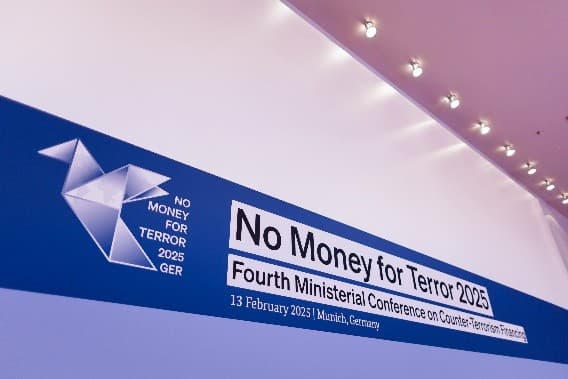
Definition Global ministerial initiative to stop terror financing

Processes Intelligence sharing, legal cooperation, policy formulation against illicit funds

Geography Origin Paris 2018; latest host Munich, Germany 2025

Quick Facts for MCQs

Security Dimension

  • Disruption focus financial networks of terrorist organisations
  • Enhances real-time intelligence sharing to trace cross-border flows

Tech & Schemes

  • Targets risks from cryptocurrency, fintech channels, online crowdfunding
  • Collaborates with banks, fintech firms, FIUs for suspicious transaction detection
  • Promotes updated digital monitoring tools across jurisdictions

Legal & Policy

  • Encourages legislative upgrades aligning with FATF standards
  • Promotes harmonised regulatory frameworks among participant states
  • Offers training and technical assistance for enforcement agencies

Key Data Points

FeatureData-Point
Initiative typeMinisterial-level global conference
Primary objectiveCombat terrorist financing
Established2018
First edition cityParis, France
4th edition year2025
4th edition venueMunich, Germany
Supervising bodiesFATF & UN Counter-Terrorism entities
Indian stance at 4th meetCall for stronger multilateral cooperation
GS-2Scheme

16.Mission Amrit Sarovar Water Conservation (Water Conservation)

The Hindu

What & Where

Nationwide Mission Amrit Sarovar constructs/rejuvenates ponds for local water security across all Indian districts.

Launched 24 Apr 2022 under Azadi Ka Amrit Mahotsav; led by Ministry of Rural Development with eight partner ministries.

Indian Railways to excavate new waterbodies near rail sites, re-using spoil for embankments and sharing work with States.

Quick Facts for MCQs

Tech & Schemes

  • BISAG-N provides satellite imagery, GIS layers for pond site selection and progress tracking.
  • Excavated soil reused for rail embankments, lowering material costs and transport footprint.
  • Digital dashboard integrates mission data for central review and course correction.

Institutional Setup

  • Eight ministries coordinate; Railways, Jal Shakti, Panchayati Raj among key partners.
  • State governments sign MoUs with Railways for land, maintenance, community linkage.
  • Jan Bhagidaari mandates local panchayats in pond maintenance, ensuring ownership.

Environmental Impact

  • Ponds expected to recharge aquifers, mitigate summer water scarcity in semi-arid belts.
  • Restored waterbodies enhance micro-climate, biodiversity, and carbon sequestration potential.
  • Climate-resilient infrastructure aligns with national target of groundwater revival and drought proofing.

Key Data Points

FeatureData-Point
Launch date24 April 2022
Parent celebrationAzadi Ka Amrit Mahotsav
Nodal ministryMinistry of Rural Development
Supporting ministries8
District-level target75 ponds per district
Implementing tech agencyBISAG-N
Railways rolePond excavation + spoil for embankments

Related UPSC Prelims PYQs

CAPF_GAI, GEO_GS 2025PYQ 1

Which of the following statements about the 'Kaveri Meets Ganga' Programme is/are correct?

CAPF_GAI, GEO_GS 2022PYQ 2

'अटल नवोन्मेष और शहरी परिवर्तन मिशन (ए एम आर यू टी)' के अंतर्गत निम्नलिखित में से कौन-सा, प्रमुख लक्ष्य नहीं है?

GS-2Scheme

17.PM-YUVA 3.0 Mentoring Scheme (Young Author Mentoring)

DD News
Illustration for PM-YUVA 3.0 Mentoring Scheme (Young Author Mentoring)

What & Where

Central mentoring scheme for writers under 30, run by Ministry of Education, India.

Third edition (PM-YUVA 3.0, 2025); National Book Trust executes, covering 22 Indian languages + English.

Process: nationwide contest → 75 winners → training by eminent authors → multilingual publication & outreach.

Quick Facts for MCQs

Tech & Schemes

  • Mentorship: online & onsite masterclasses, editing sessions, publishing support.
  • Deliverables: manuscripts translated, printed, e-books for domestic & global markets.
  • Funding: winners receive scholarship (Rs 50k/month for 6 months) by NBT.

Cultural Goals

  • Promotion: showcase Indian heritage, culture, knowledge systems on global literary platforms.
  • Diversity: encourages regional language literature, reinforcing linguistic plurality.
  • Outreach: authors deputed to literary festivals, cultural exchanges, book fairs.

Youth Development

  • Skill-build: narrative craft, research methods, copyright basics taught by veteran writers.
  • Leadership: scheme aligns with NEP call for creative, culturally rooted youth leaders.
  • Exposure: interaction with diaspora institutions to broaden national and global perspectives.

Key Data Points

FeatureData-Point
Full NamePM’s Scheme for Mentoring Young Authors (PM-YUVA 3.0)
Launched first2021
Present edition year2025
Nodal ministryMinistry of Education (Dept. of Higher Education)
Implementing agencyNational Book Trust, India
Age eligibilityBelow 30 years
No. of winners75 young authors
Key focus themesIndian Diaspora, Indian Knowledge System, Makers of Modern India (1950-2025)
Language coverage22 scheduled languages + English
NEP 2020 linkFosters creative leadership & reading culture

Related UPSC Prelims PYQs

NDA_GAT 2024PYQ 1

निम्नलिखित में से किस युवा संगठन/योजना का आदर्श वाक्य “स्वयं से पहले आप (Not me, but you)” है ?

GS-2Scheme

18.MPLADS Fund Decline (MPLADS Funding)

BL
Illustration for MPLADS Fund Decline (MPLADS Funding)

What & Where

MPLADS: Central Sector Scheme (1993) letting MPs fund locally felt, durable assets nationwide

Process: MoSPI releases ₹5 cr/MP/yr to district authorities in two ₹2.5 cr instalments; state nodal dept monitors

Geography: Projects sited within constituencies; limited sums allowed outside state or for national calamities

Quick Facts for MCQs

Fiscal Trends

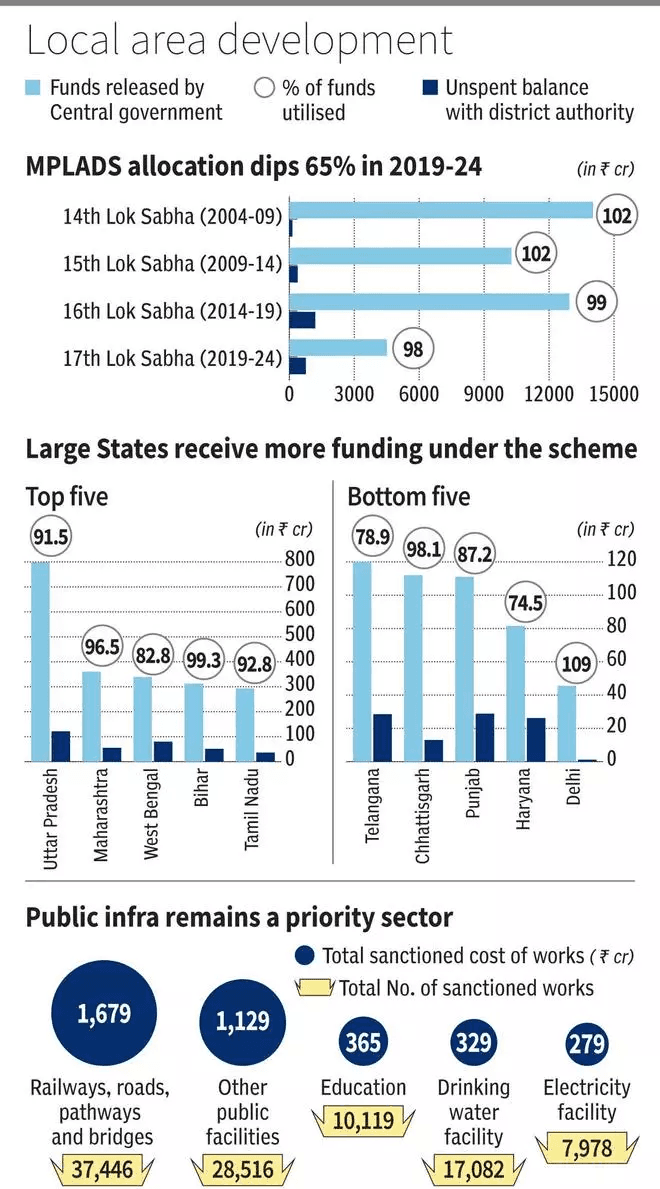
  • Decline: Covid-19 diversion caused sharp 65 % cut in central releases during 17th Lok Sabha
  • Utilisation: Consistently high, hovering near 100 % despite lower allotments
  • Regional spread: Three largest states corner bulk; smaller northern states receive least

Scheme Mechanics

  • Funding: Non-lapsable, permitted convergence with MGNREGS, Khelo India for asset creation
  • Oversight: District Collector sanctions, monitors; state nodal dept compiles reports for MoSPI
  • Eligibility: Prohibited on land of societies where MP/family holds office; requires three-year NGO track-record

Equity & Social Focus

  • SC/ST quotas: Statutory minimum earmarks ensure targeted asset creation in marginalised habitats
  • National unity: ₹25 lakh window supports inter-state or symbolic projects beyond home constituency
  • Disaster response: ₹1 cr flexibility allows quick MP-led rebuilding after severe calamities

Key Data Points

FeatureData-Point
Latest Lok Sabha assessed17th (2019-24)
Total funds 17th LS₹4,510 cr
Decline vs 16th LS65.2 %
Utilisation rates14th LS 102 %; 16th LS 99 %; 17th LS 98 %
Annual MP entitlement₹5 cr since 2011-12
Instalment patternTwo × ₹2.5 cr
Mandatory SC share≥15 % of annual kitty
Mandatory ST share≥7.5 % of annual kitty
Non-lapsable statusUnused funds carry forward
Outside-constituency cap₹25 lakh/yr; ₹1 cr for calamity anywhere
Top recipient statesUttar Pradesh, Maharashtra, West Bengal
Lowest recipient states/UTsDelhi, Haryana, Punjab
Leading sector 17th LSInfrastructure (roads, bridges, rail) – ₹1,679 cr
Implementing ministryMoSPI

Related UPSC Prelims PYQs

CDS_GK, GS1 2020PYQ 1

Which of the following statements is not correct regarding the Members of Parliament Local Area Development Scheme (MPLADS)?

CDS_GK, GS1 2020PYQ 2

With reference to the funds under Members of Parliament Local Area Development Scheme (MPLADS), which of the following statements are correct?

Ready to practice?

Test your knowledge with our UPSC test series.

Start Free Trial