UPSC Current Affairs

17 topicsGS-1: 5GS-2: 6GS-3: 6
0/17 done
GS-2Polity

1.Article 101(4) MP Attendance Rule (Parliament Vacancies)

Indian Express

What & Where

Article 101(4): constitutional clause for vacating a Lok Sabha/Rajya Sabha seat due to prolonged absence.

Trigger: 60 consecutive sittings missed without House-sanctioned leave.

Venue of action: House concerned formally declares vacancy; not automatic.

Quick Facts for MCQs

Constitutional Basis

  • Article 101 covers vacation, disqualification, dual membership of MPs.
  • Provision applies equally to Lok Sabha and Rajya Sabha seats.
  • Vacancy declaration takes effect only after House resolution.

Procedural Steps

  • MP submits written request to Committee on Members’ Absence before/within absence.
  • Committee evaluates reasons, tables report; House votes to accept/reject.
  • Fresh application needed for leave beyond 59 days.

Limits & Powers

  • No automatic seat loss; House discretion central.
  • Majority vote requisite for declaring vacancy or expelling member.
  • Absence without sanctioned leave after 60 sittings qualifies for expulsion motion.

Key Data Points

FeatureData-Point
Constitutional article101(4)
Consecutive sittings that invoke clause60
Leave-sanctioning bodyHouse via majority vote
Scrutiny armCommittee on Members’ Absence
Max leave per sanction59 days
Typical valid groundsIllness, detention, emergencies
Outcome if leave denied/not soughtHouse may declare seat vacant

Related UPSC Prelims PYQs

CDS_GK 2022PYQ 1

Which one of the following statements about the Speaker of Lok Sabha is not correct?

GS-2Polity

2.Remission of Sentences Provisions (Criminal Justice)

Indian Express

What & Where

Remission – sentence-cut for convicts, India-wide, does not annul conviction

Power located in Constitution Arts 72 & 161, CrPC 1973 §432-433A, BNSS 2023 §473-475

2025 Supreme Court order directs all States/UTs to suo motu screen eligible prisoners for premature release

Quick Facts for MCQs

Legal & Policy

  • Mandate – every State must maintain explicit remission policy; Legal Services Authorities to monitor via digital portal
  • Criteria – offence motive, prior record, public safety, rehabilitation potential
  • Cancellation – only for serious violations; arbitrary or vague clauses disallowed

Judicial Precedents

  • Sangeet 2013 & Mohinder 2013 rejected automatic remission, now overruled in part
  • Mafabhai Sagar 2024: conditions must be reasonable, non-vague
  • New 2025 order harmonises precedents, embeds procedural fairness

Operational Procedure

  • Prison authorities compile eligible list, forward to State Home Dept for decision
  • Suo motu screening periodic; no convict application prerequisite
  • Breach leads to re-arrest possible after due process

Transparency & Data

  • Legal aid bodies to keep real-time prisoner remission dashboards
  • Public reporting aimed to curb discretion abuse
  • Data expected to feed into policy reviews and SC oversight

Key Data Points

FeatureData-Point
Minimum jail for life convicts14 yrs (CrPC §433A; BNSS §475)
Central remission authoritiesPresident, Governor
State statutory powerCrPC §432; BNSS §473
Key SC shift 2025Suo motu consideration; no application needed
Time to frame policy (if absent)2 months
Leading 2013 rulingSangeet v Haryana – remission needs application
Revocation safeguardNotice + hearing; no cancellation for minor breach
GS-2Polity

3.OTT Platforms Code of Ethics (IT Rules 2021)

NDTV
Illustration for OTT Platforms Code of Ethics (IT Rules 2021)

What & Where

Code of Ethics: self-regulatory content rules for OTTs, mandated via IT (Intermediary Guidelines & Digital Media Ethics Code) Rules, 2021.

Applies pan-India to publishers of “online curated content”; overseen by Ministry of Information & Broadcasting.

Advisory issued 2024 after ‘India’s Got Latent’ controversy to curb obscene, vulgar or age-inappropriate streaming.

Quick Facts for MCQs

Legal & Policy

  • IT Rules demand publisher disclosure, monthly compliance reports, grievance officer in India.
  • Advisory reiterates prohibition of content under IPC 292–294, Indecent Rep Act 1986.
  • MIB may use Emergency Blocking powers without prior notice.

Implementation Challenges

  • Ambiguous terms like “morality”, “decency” enable varied platform interpretations.
  • Tech limits: robust, ID-based age verification yet absent on most Indian OTTs.
  • Global libraries complicate jurisdiction-specific edits and simultaneous release schedules.

International Examples

  • Ofcom code: strict watershed hours, mandatory age-gates, £250k fine cap.
  • EU Audiovisual Media Directive: transparency reports, annual third-party audits, cross-border cooperation.

Governance & Ethics Angle

  • Protects minors, public decency; boosts viewer trust via transparent ratings & disclaimers.
  • Combines state oversight with industry self-regulation—mirrors “co-regulation” model in ethics literature.

Key Data Points

FeatureData-Point
Parent lawIT Act 2000, sec 69A & IT Rules 2021
Rule invoking CodeRule 9, Schedule I of IT Rules
Age classificationsU, U/A 7+, U/A 13+, U/A 16+, A
‘A’ content safeguardsPIN/OTP parental lock; reliable age verification
Grievance tiersPublisher → Self-regulatory body → MIB Inter-Departmental Committee
Penalty for non-complianceContent take-down, site blocking, ₹ up to 1 lakh (ad-rules)
Intl parallelsOfcom (UK) & European Audiovisual Observatory frameworks
Recent trigger caseRanveer Allahbadia’s remark on India’s Got Talent (2024)

Related UPSC Prelims PYQs

ESE_GS 2024PYQ 1

Which one of the following Acts mandates schools and libraries in India to use some form of technological protection to block computer access to obscene material, pornography, and anything else considered harmful to minors?

GS-2Polity

4.National Commission for STs Overview (NCST)

PIB

What & Where

Constitutional Commission for Scheduled Tribes, created 19 Feb 2004 by 89th Amendment inserting Article 338A

Nation-wide jurisdiction from HQ New Delhi; monitors safeguards, advises Centre-States, reports to President

Structure: Chairperson, Vice-Chairperson, three Members (≥ 1 woman); term 3 yrs, max two terms

Quick Facts for MCQs

Composition & Tenure

  • Appointment: President selects all five members
  • Reappointment: permissible once; continuity gaps common due to delayed fills
  • Ranks: Vice-Chairperson equals MoS, Members equal Secretary

Mandate & Functions

  • Oversight: monitors constitutional safeguards, evaluates ST welfare schemes, suggests socio-economic measures
  • Advisory: recommends land rights under FRA 2006, alternative livelihoods, shifting-cultivation reduction
  • Reporting: submits study reviews, investigation findings annually or whenever required

Operational Challenges

  • Autonomy: budgetary control with Tribal Affairs Ministry limits independent functioning
  • Staffing: chronic vacancies, lean support staff slow complaint disposal
  • Enforcement: recommendations non-binding; lacks penalty power like CIC

Reform Proposals

  • Empowerment: statutory power to levy penalties for non-compliance
  • Cadre: dedicated NCST service to stabilise manpower
  • Mandatory consultation: strict adherence to Article 338A(9) before any ST-related policy rollout

Key Data Points

FeatureData-Point
Parent Amendment89th Constitutional Amendment Act, 2003
Relevant Articles338A (NCST), 338 (NCSC)
First Foundation Day19 Feb 2004
Latest Foundation Day celebrated19 Feb 2025 (22nd)
Composition strength5 (1+1+3)
Rank of ChairpersonCabinet Minister
Mandatory woman memberMinimum one
Reporting lineAnnual & special reports to President
Consultation clauseArticle 338A(9) requires Union/States to consult on ST policies
Administrative ministryMinistry of Tribal Affairs
Binding nature of adviceRecommendatory, not enforceable
Key legal focusPESA 1996, FRA 2006 implementation
Typical petitionsAtrocities, land alienation, reservation denial
Term length3 years
Reappointment cap2 terms

Related UPSC Prelims PYQs

CDS_GK, GEO_GS 2024PYQ 1

Consider the following statements:

CDS_GK, GEO_GS 2020PYQ 2

निम्नलिखित में से कौन-सा आयोग अनुच्छेद 338A से संबंधित है?

GS-1History

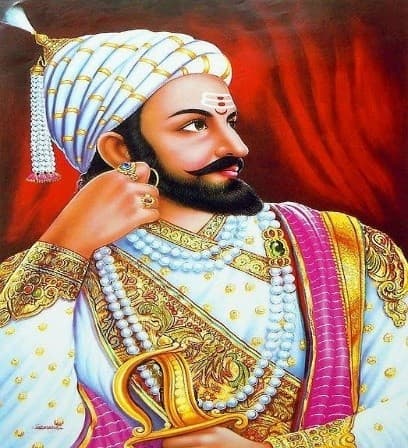
5.Chhatrapati Shivaji Maharaj Legacy (Maratha Empire)

News on Air
Illustration for Chhatrapati Shivaji Maharaj Legacy (Maratha Empire)

What & Where

Maratha sovereign who established Hindavi Swarajya across western Deccan in 17th C

Core geography: Pune–Raigad heartland; Konkan coast and Sahyadri hill forts as strategic rim

Key process: Guerrilla warfare Ganimi Kawa combined with nascent blue-water navy

Quick Facts for MCQs

Military Innovations

  • Guerrilla: Swift raids, terrain advantage against numerically superior foes
  • Navy: Timber warships surveilled Arabian Sea trade routes, deterred European privateers
  • Cavalry: Light horsemen enabled rapid multi-front offensives

Administrative Reforms

  • Ashta Pradhan: Eight specialized ministers for finance, foreign, justice, etc
  • Revenue: Replaced jagir excesses with equitable Kathi survey; levied Chauth outside realm
  • Inclusivity: Appointed Muslims, Europeans, lower castes, affirming religious tolerance

Battles & Expeditions

  • Pratapgad 1659: Afzal Khan slain, Bijapur morale crushed
  • Escape Agra 1666: Decoy baskets enabled return to Swarajya, boosting legend
  • Southern campaign 1677-80: Marathas entered Karnataka, Tamil Nadu after treaty with Golconda

Fortifications

  • Hill forts: Torna, Sinhagad controlled Sahyadri passes
  • Naval strongholds: Sindhudurg walls fused with seabed, preventing cannon breaches
  • Raigad: Coronation seat, double-gate defenses, cliff-top granaries

Key Data Points

FeatureData-Point
Birth19 Feb 1630, Shivneri Fort
FatherShahaji Bhonsle
MotherJijabai
TeachersDadoji Kondadev, Jijabai
Coronation6 Jun 1674, Raigad Fort
Empire termHindavi Swarajya
Guerrilla termGanimi Kawa
Ministerial councilAshta Pradhan Mandal (8)
Revenue systemsKathi survey & Chauth levy
Naval fortsSindhudurg, Vijaydurg

Related UPSC Prelims PYQs

CDS_GK 2023PYQ 1

Arrange the following events associated with Shivaji in chronological order :

CDS_GK 2024PYQ 2

Consider the following statements about the administrative measures of Shivaji:

GS-1EconomyQuick Bite

6.India–Argentina Lithium Exploration MoU (Critical Minerals)

PIB
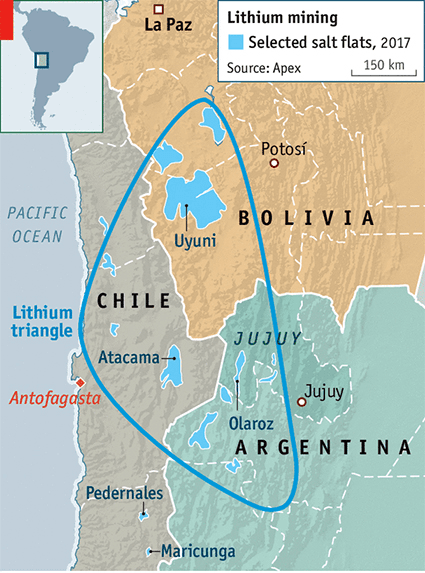
Illustration for India–Argentina Lithium Exploration MoU (Critical Minerals)

What & Where

Lithium: soft, silvery-white alkali metal, lightest solid element, termed ‘white gold’.

Sources: hard-rock ores (petalite, lepidolite, spodumene) and subsurface brines.

Core geography: Lithium Triangle (Argentina-Bolivia-Chile); Indian finds—Reasi (J&K), Koderma & Giridih (Jharkhand), Mandya (Karnataka).

Quick Facts for MCQs

International Cooperation

  • MoU: exploration and investment opportunities in Argentine lithium sector signed by India.
  • Argentina: hosts vast reserves within South American Lithium Triangle.

Mineral Properties

  • Reactivity: highly reactive, flammable; requires oil storage to prevent oxidation.
  • Classification: alkali metal yet often labelled rare metal due to limited viable deposits.

Reserves & Geography

  • Global hierarchy: Chile tops reserve tally, followed by China and Australia.
  • India: Salal-Haimna, Koderma, Giridih, Mandya identified for domestic resource potential.

Key Data Points

FeatureData-Point
Fresh MoUIndia & Argentina, Feb 2025
Storage needImmersed in mineral oil
Key battery useElectric vehicles & renewable storage
Lithium Triangle membersArgentina, Bolivia, Chile
Largest global reserves rankChile 1st, China 2nd, Australia 3rd
Ore mineralsPetalite, Lepidolite, Spodumene
Indian deposit statesJ&K, Jharkhand, Karnataka
Element groupAlkali metal; also tagged rare metal
Distinct propertyLightest metal & solid element

Related UPSC Prelims PYQs

CDS_GK, GS1 2024PYQ 1

Recently the Government of India entered into an agreement for a lithium exploration and mining project with which one among the following countries?

CDS_GK, GS1 2025PYQ 2

Consider the following pairs:

GS-1Mapping

7.Andaman Sea Location & Features (Regional Seas)

Times of India
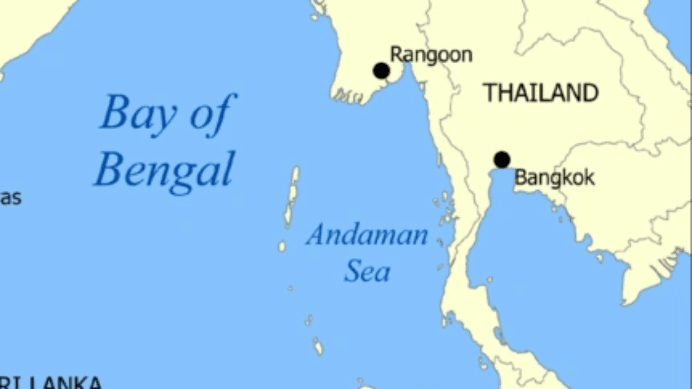
Illustration for Andaman Sea Location & Features (Regional Seas)

What & Where

Semi-enclosed marginal sea of NE Indian Ocean, lying between 4°–20° N & 92°–100° E.

Flanked by Myanmar, Thailand, Malaysia, Sumatra; separated from Bay of Bengal by India’s Andaman-Nicobar chain.

Vital segment of India–Pacific maritime corridor, feeding Strait of Malacca traffic.

Quick Facts for MCQs

Physical Geography

  • Islands: Andaman & Nicobar (India), Breueh (Indonesia) punctuate sea surface.
  • Trench: Andaman-Nicobar subduction trench exceeds 4.4 km depth along eastern margin.
  • Sedimentation: Irrawaddy deposits heavy silt load into northern basin.

Biodiversity & Geology

  • Coral reefs: extensive, high biodiversity, support tourism and fisheries.
  • Volcanism: Barren Island only active Indian volcano, periodic strombolian eruptions.
  • Seismicity: 5.2 magnitude quake shows ongoing tectonic activity of Sunda subduction zone.

Strategic Importance

  • Shipping: primary India-China route funnels through Strait of Malacca, linking Andaman Sea to South China Sea.
  • Myanmar access: Ports Yangon, Bassein, Mergui rely on this sea for maritime trade.
  • Geo-politics: Sea’s chokepoint status critical for energy supplies and naval deployments.

Key Data Points

FeatureData-Point
Latitude range4° N – 20° N
Longitude range92° E – 100° E
Border westAndaman & Nicobar Islands
Major river inflowIrrawaddy (Myanmar)
Deepest trench depth>14,500 ft (≈4,400 m)
Active Indian volcanoBarren Island
Strategic straitStrait of Malacca
Recent quake magnitude5.2 (near Malaysia)

Related UPSC Prelims PYQs

GS1 2014PYQ 1

Which one of the following pairs of islands is separated from each other by the 'Ten Degree Channel'?

GS-3Environment

8.Biennial Transparency Report under Paris Agreement (Climate Reporting)

The Hindu
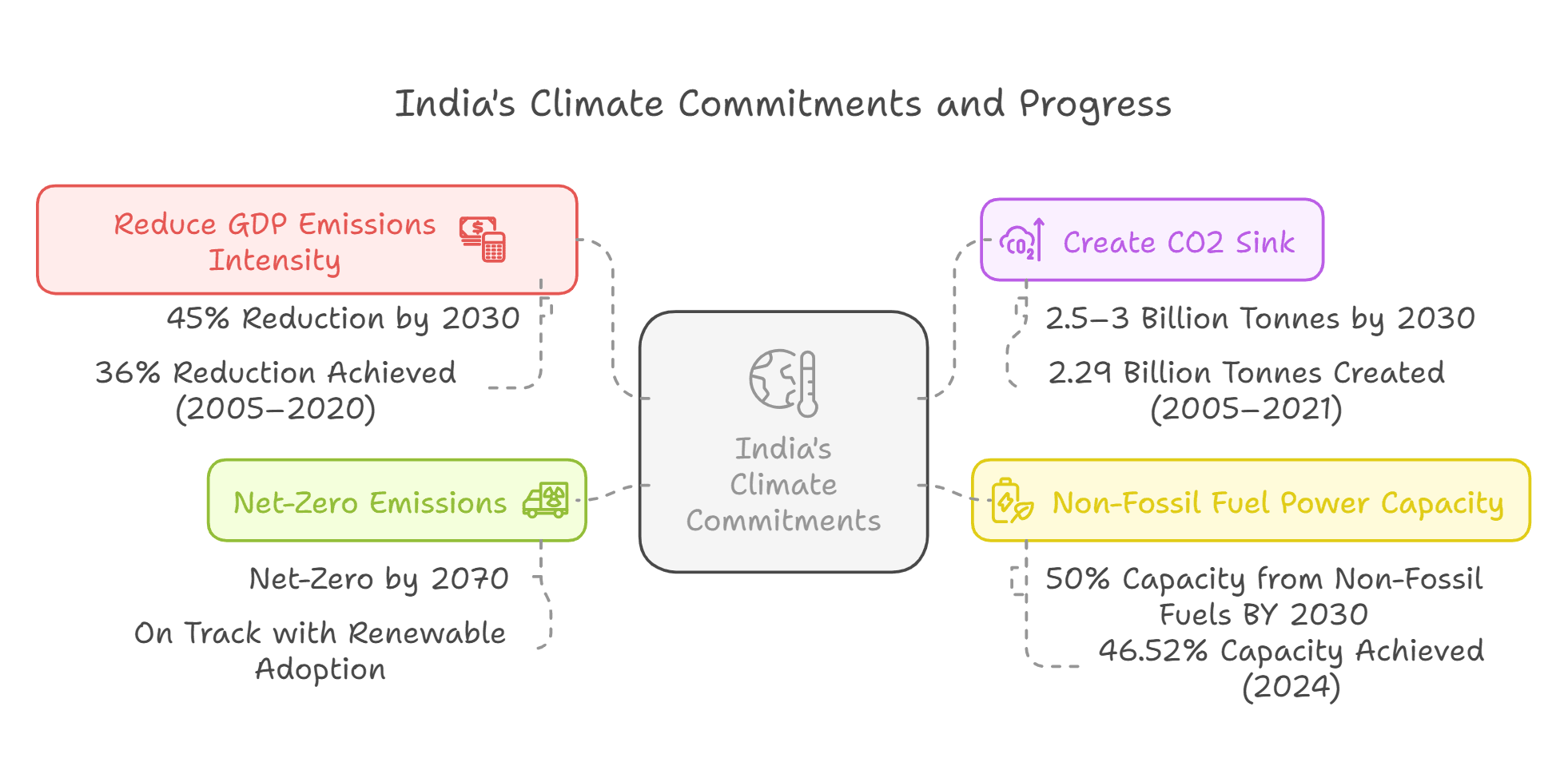
Illustration for Biennial Transparency Report under Paris Agreement (Climate Reporting)

What & Where

Biennial Transparency Report (BTR) – mandatory reporting tool under Paris Agreement 2015, submitted every two years to UNFCCC.

Tracks national GHG inventory, NDC progress, adaptation; SIDS & LDCs may submit voluntarily.

India to file first BTR in 2025; earlier sent four Biennial Update Reports (BURs) covering 2000-2020 period.

Quick Facts for MCQs

Reporting Framework

  • Requirement; BTR replaces BUR for non-Annex I from 2024 cycle
  • Independent expert review; facilitative multilateral consideration under UNFCCC
  • India preparing inventory in IPCC 2006 guidelines, 5 gases plus LULUCF

Emission Profile 2020

  • Methane share 13.32 %, nitrous oxide 5.13 %, others 1.02 %
  • Sectoral ranks: Energy > Agriculture > IPPU > Waste
  • Agriculture emissions driven by enteric fermentation & rice paddies

Carbon Sink & Intensity

  • Forest & tree cover national sink creditable under Art. 5 Paris Agreement
  • Sequestration offset equals emissions of entire agriculture sector
  • Intensity decline aligns with updated NDC pledge (Aug 2022)

Key Data Points

FeatureData-Point
Paris Agreement article mandating BTRArt. 13 (Enhanced Transparency)
Submission cycleEvery 2 years
Voluntary exemptionSIDS & LDCs
India’s last BUR number & yearBUR-4, 2024
Inventory year covered in BUR-42020
India’s 2020 gross emissions2,959 Mt CO₂e
Net emissions incl. LULUCF2,437 Mt CO₂e
CO₂ share in total GHG80.53 %
Energy sector emission share75.66 %
Forest/tree CO₂ sequestration 2020522 Mt; 22 % of CO₂ emitted
Emission intensity fall 2005-2036 %; target 45 % by 2030

Related UPSC Prelims PYQs

GEO_GS, GS1 2016PYQ 1

What is 'Greenhouse Gas Protocol'?

GEO_GS, GS1 2020PYQ 2

India has committed to reduce emission intensity of its GDP from 2005 levels by 33-35 per cent by the year:

GS-3Species

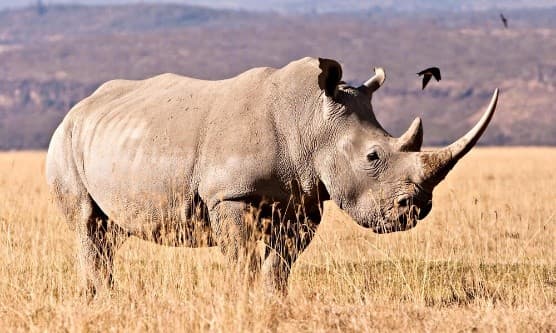
9.Northern White Rhino Conservation (Endangered Species)

The Hindu
Illustration for Northern White Rhino Conservation (Endangered Species)

What & Where

White rhino = square-lipped rhinoceros, one of five rhino species, Afrikaans “weit” = wide muzzle

Two subspecies: Southern (Ceratotherium simum simum) & Northern (C. s. cottoni)

Northern subspecies down to 2 females at Ol Pejeta Conservancy, Kenya; IVF created 36 embryos for rescue

Quick Facts for MCQs

Tech & Schemes

  • IVF programme harvested oocytes, fertilised with frozen male sperm, produced 36 viable embryos
  • Embryos await uterine transfer into surrogate Southern females to rebuild Northern genotype
  • Collaboration among Ol Pejeta, Leibniz-IZW, Avantea; showcases assisted reproduction in megafauna

Biological Traits

  • Two-horn morphology, keratin composition, anterior horn primary for combat and display
  • Wide square muzzle adapts for lawn-mower style grazing on short grasses
  • Thick grey skin; “white” misnomer stems from Afrikaans “weit,” not pigmentation difference

Geography & Distribution

  • Southern subspecies stronghold South Africa; smaller groups Kenya, Namibia, Zimbabwe
  • Historic Northern range once included Uganda, Chad, Sudan; now functionally extinct in wild
  • Remaining Northern duo kept under 24×7 armed guard within 700-acre enclosure at Ol Pejeta

Key Data Points

FeatureData-Point
Common nameWhite / square-lipped rhino
Scientific nameCeratotherium simum
Subspecies count2 – Southern & Northern
IUCN status–SouthernNear Threatened
IUCN status–NorthernCritically Endangered
Northern survivors2 females (Najin, Fatu)
IVF embryos36, stored in liquid nitrogen
Planned surrogatesSouthern white rhino females
HabitatLong & short grass savannahs
DietExclusive grazers on short grasses
Body size rankSecond-largest land mammal
HornsTwo; front horn larger
Lip typeSquare, wide upper lip
Colour differenceNone between white & black rhinos
GS-3EnvironmentQuick Bite

10.Water Ministers’ Conference Initiatives (Water Management)

PIB

What & Where

Conference: 2nd All-India State Water Ministers’ Conference, pan-India policy forum on water management

Venue: Udaipur, Rajasthan; theme “India@2047 – A Water Secure Nation”

Focus: Integrated initiatives across agriculture, rivers, drinking water, storage and governance for long-term security

Quick Facts for MCQs

Agricultural Water Management

  • Micro-irrigation: Push for drip, sprinkler, Pressurised Irrigation Networks to lift farm water-use efficiency
  • ET-based assessment: Evapotranspiration metrics suggested for real-time crop water need tracking
  • Expansion target: Wider micro-irrigation coverage to cut agri withdrawal share

River Rejuvenation

  • Floodplain zoning recommended to curb encroachment and manage seasonal flows
  • Springs rejuvenation proposed to naturally augment base flow in upper catchments
  • Consumption quantification: Emphasis on measuring sectoral withdrawals for evidence-led restoration

Drinking Water & Sanitation

  • Jal Jeevan Mission: Strengthening via Village Water & Sanitation Committees for post-HH-tap sustainability
  • AMRUT focus: Urban supply upgrades and non-revenue water reduction
  • Grey-water reuse: Swachh Bharat Mission 2.0 flagged for decentralised treatment and recycling

Water Storage & Infrastructure

  • ERM priority: Extension, Renovation, Modernisation of aging dams and tanks to extend service life
  • Small water bodies: Restoration highlighted for localised rural-urban supply buffers
  • Automated reservoirs: Call for SCADA-based operations to optimise releases

Governance & Participation

  • IWRM adoption: State-specific integrated resource planning urged for basin-level coherence
  • Grassroots role: Scaling “Jal Sanchay Jan Bhagidari” to embed community stewardship
  • Data governance: Push for transparent, interoperable water information systems

Key Data Points

FeatureData-Point
Edition2nd
DateFeb 2025
Venue cityUdaipur
Host stateRajasthan
Organising ministryJal Shakti
Conference themeIndia@2047 – A Water Secure Nation
1st edition venueBhopal (Jan 2023)

Related UPSC Prelims PYQs

ESE_GS, GS1 2012PYQ 1

If National Water Mission is properly and completely implemented, how will it impact the country?

ESE_GS, GS1 2023PYQ 2

Consider the following statements regarding the aim of Jal Jeevan Mission to provide every rural household of the country with adequate tap water of prescribed quality on regular basis:

GS-3Scheme

11.Technology Adoption Fund for Space (Space Startups)

Times of India

What & Where

Technology Adoption Fund (TAF) — IN-SPACe scheme financing transition of early-stage Indian space tech to market-ready products.

Process: grants cover ≤60 % cost for startups/MSMEs, ≤40 % for larger industry; cap ₹25 crore per project.

Geography: Implemented by IN-SPACe, HQ Bopal-Ahmedabad, under Department of Space, Govt of India.

Quick Facts for MCQs

Tech & Schemes

  • Funding-mix encourages indigenous IP creation, reducing import dependence on space hardware and services.
  • Scheme supports product development, process enhancement, patent generation within domestic ecosystem.

Economic Angle

  • Lower capital barrier aims to accelerate growth of ~190 Indian space startups/MSMEs.
  • Public money leverage expected to crowd-in private investment, boosting overall sector valuation.

Institutional Setup

  • IN-SPACe facilitates private access to ISRO labs, launchpads, testing facilities.
  • Body authorises, supervises and promotes non-governmental space activities under Space Act reforms.

Key Data Points

FeatureData-Point
Implementing bodyIN-SPACe (autonomous DOS unit)
IN-SPACe set-up year2020
TAF launch year2024
Max funding share – startups/MSMEs60 % of project cost
Max funding share – large industry40 % of project cost
Funding ceiling per project₹25 crore
Eligible entitiesAll non-government entities with viable space tech
Core focus areasLaunch vehicles, satellites, space-based services
IN-SPACe HQBopal, Ahmedabad, Gujarat
Key IN-SPACe mandateSingle-window for private space activities

Related UPSC Prelims PYQs

ESE_GS 2020PYQ 1

What is TADF?

GS-3S&T

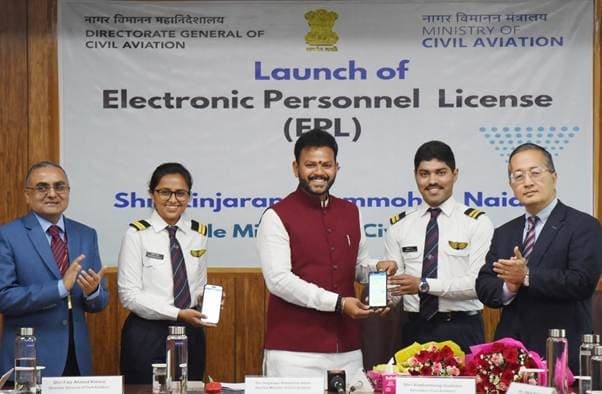
12.Electronic Pilot Licence Initiative (Digital Aviation)

Economic Times
Illustration for Electronic Pilot Licence Initiative (Digital Aviation)

What & Where

Electronic Personnel License (EPL): digital pilot licence issued by DGCA, India

Hosted on eGCA mobile app; replaces plastic smart-card licences nationwide

India = 2nd country worldwide (after China) to roll out ICAO-aligned e-licensing

Quick Facts for MCQs

Tech & Schemes

  • Digital format eliminates printing/shipping delays, enables instant updates
  • eGCA app provides 24×7 offline QR code for authenticity checks
  • Part of Digital India stack modernising civil-aviation workflows

Environmental Impact

  • Removal of plastic cards lowers polymer consumption and associated carbon footprint
  • Paperless processing trims administrative stationery waste
  • Aligns with GoI’s green-governance targets in transport sector

International Examples

  • China first to operationalise ICAO e-licence standard
  • DGCA adoption positions India as early mover in Asia-Pacific digital licensing
  • Facilitates global pilot mobility via interoperable electronic credentials

Key Data Points

FeatureData-Point
Implementing ministryMinistry of Civil Aviation
Licence issuing authorityDirectorate General of Civil Aviation (DGCA)
Global rank in adoptionSecond, after China
ICAO complianceAmendment 178 to Annex 1
Access platformeGCA Mobile Application
Key objectivesSafety, security, efficiency; Ease of Doing Business
Sustainability angleCuts plastic & paper use
Verification benefitReal-time credential check for global employers

Related UPSC Prelims PYQs

CAPF_GAI 2021PYQ 1

E-100 pilot project, launched in Pune in June 2021, is related to the production and distribution of

GS-2Security

13.India–US COMPACT Partnership Highlights (India-US Defence)

Indian Express

What & Where

COMPACT: US-India pact catalyzing military partnership, accelerated commerce & technology; launched Washington DC, 21 Feb 2025

Ten-year Major Defence Partnership (2025-35) steers defence sales, co-production, joint Indo-Pacific exercises

Covers trade, energy, critical tech, space & mobility, eyeing USD 500 bn bilateral trade by 2030

Quick Facts for MCQs

Defence Collaboration

  • Framework renews Major Defence Partnership; adds Reciprocal Defence Procurement for smoother arms sourcing
  • Javelin ATGM production, ASIA for autonomous systems, enlarged Tiger Triumph exercise pipeline
  • Quad used for counterterrorism cooperation and Indo-Pacific maritime security

Trade & Investment

  • Mission 500 with upcoming Bilateral Trade Agreement trims tariffs on beverages, vehicles, ICT hardware
  • Greater US market access for Indian farm, pharma products; semiconductor supply-chain integration pushed
  • US cumulative FDI 2000-24 at USD 65.19 bn; IMEEC corridor earmarked for freight diversification

Technology & Energy

  • TRUST drives collaboration in semiconductors, quantum, AI; establishes lithium, rare-earth supply lines
  • NASA-ISRO projects: NISAR launch and first Indian astronaut visit to ISS backed by COMPACT
  • Energy basket widens oil, gas, civil nuclear; US formally supports India’s IEA membership bid

Challenges

  • Tariff frictions persist; absence of FTA sustains high duties despite reciprocal rhetoric
  • Immigration stress: undocumented return clause, uncertain H-1B quotas hamper talent mobility
  • Divergences on Russia, data localization and sensitive tech transfer test strategic convergence

Key Data Points

FeatureData-Point
Launch date21 Feb 2025
Mission 500 targetUSD 500 bn trade by 2030
2024 goods tradeUSD 129.2 bn
2024 India surplusUSD 45.7 bn
US FDI rank3rd largest in India
Defence framework span2025 – 2035
Tech pact renameiCET → TRUST
Co-production focusJavelin ATGM

Related UPSC Prelims PYQs

CDS_GK, ESE_GS 2022PYQ 1

समृद्धि के लिए हिंद-प्रशांत आर्थिक ढाँचा (Indo-Pacific Economic Framework for Prosperity) का गठन करते समय, सदस्य देशों ने चार स्तंभों पर भावी समझौता-वार्ता के लिए सामूहिक परिचर्चा शुरू की है। उन स्तंभों में, निम्नलिखित में से कौन-सा नहीं है ?

CDS_GK, ESE_GS 2026PYQ 2

What is the name of the initiative launched by India and Denmark in November 2025 to enhance bilateral ties?

GS-2MiscQuick Bite

14.Colour Revolutions in Post-Soviet States (Democratic Uprisings)

The Hindu
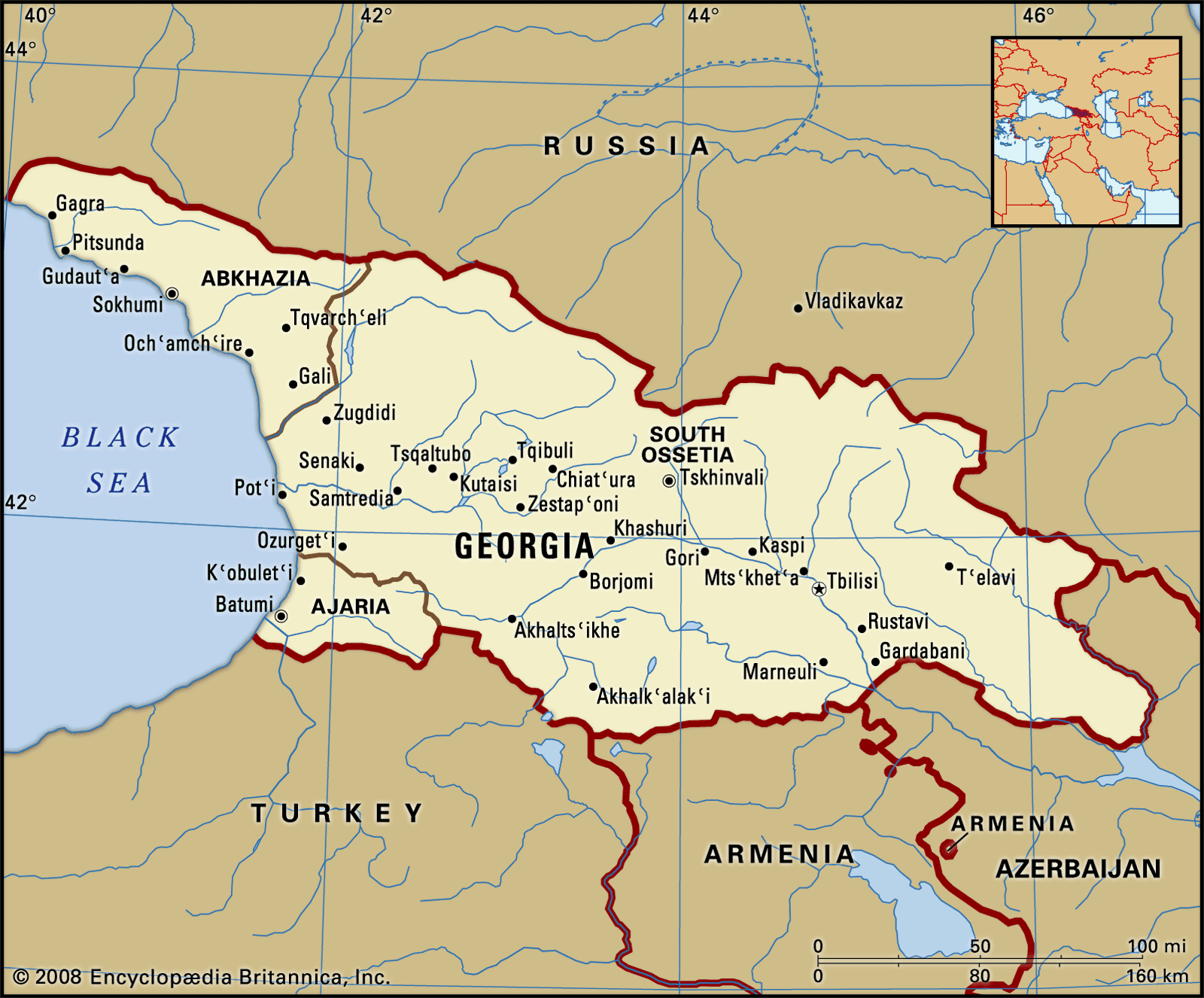
Illustration for Colour Revolutions in Post-Soviet States (Democratic Uprisings)

What & Where

Colour Revolutions: peaceful, colour-coded mass protests in post-Soviet states to replace pro-Moscow regimes.

Aim: install democratic, frequently pro-Western governments; Russia brands them Western interference.

Core geography: Eastern Europe & Central Asia, notably Georgia, Ukraine, Kyrgyzstan.

Quick Facts for MCQs

International Examples

  • Rose Revolution 2003 in Georgia symbolised by roses, ended pro-Moscow rule
  • Orange Revolution 2004 in Ukraine challenged disputed presidential runoff
  • Tulip Revolution 2005 in Kyrgyzstan triggered leadership change

Security Dimension

  • Russia views colour revolutions as hybrid Western aggression undermining its sphere
  • 2024 Georgian protests arose after incumbent alleged fraud and refused to concede
  • Post-revolution nations often experience prolonged political instability and corruption

Country Geography

  • Georgia located in Caucasus, bridging Eastern Europe and West Asia
  • Shares land borders with Russia, Azerbaijan, Armenia, Turkey; maritime boundary on Black Sea
  • Strategic transit corridor amplifies external geopolitical interests

Key Data Points

FeatureData-Point
DefinitionPeaceful, colour-branded uprisings in post-Soviet space
First major caseGeorgia’s Rose Revolution 2003
Other key casesUkraine Orange 2004; Kyrgyzstan Tulip 2005
Common outcomesInitial democratic gains followed by instability, corruption, disillusionment
Russian perceptionThreat to regional influence, proxy Western meddling
Georgia bordersRussia, Azerbaijan, Armenia, Turkey; Black Sea coast
GS-3SecurityQuick Bite

15.Distributed Denial of Service Attack (Cyber Security)

The Hindu
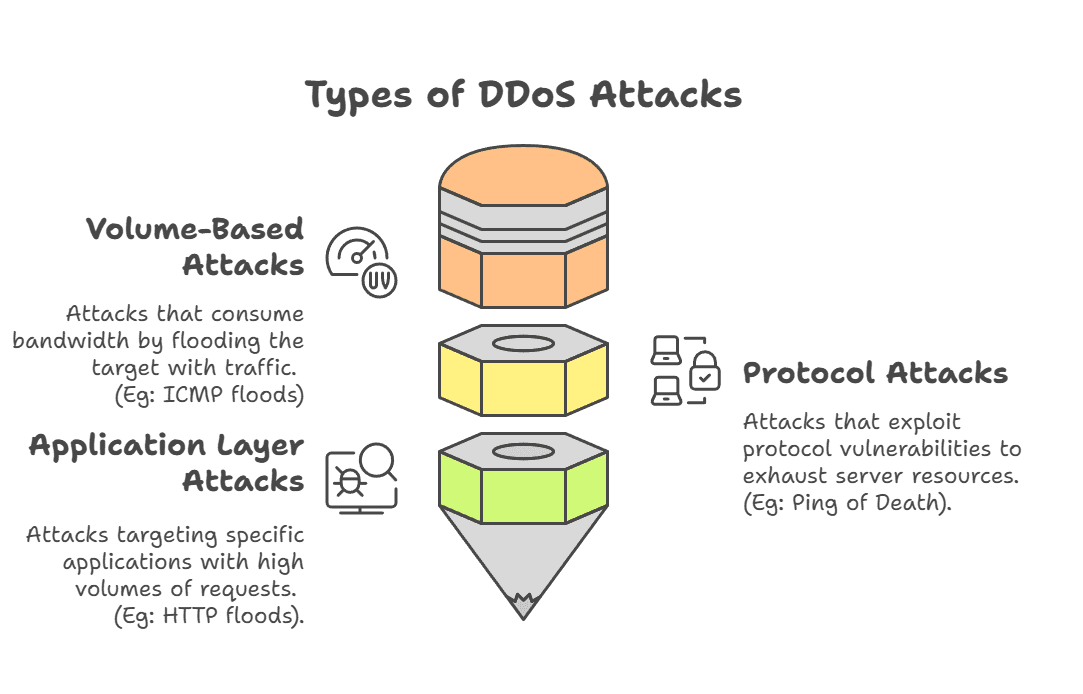
Illustration for Distributed Denial of Service Attack (Cyber Security)

What & Where

Distributed Denial of Service (DDoS); cyber-attack that overloads target with malicious traffic

Hit Karnataka’s “Kaveri 2.0” property-registration portal; caused prolonged downtime

Uses botnet of multiple compromised devices instead of single source

Quick Facts for MCQs

Security Dimension

  • Vulnerability; public-facing e-governance portals attractive to volumetric attacks
  • Detection; abnormal surge in concurrent requests signals ongoing DDoS
  • Response; incident plan plus real-time scrubbing vital for continuity

Tech & Schemes

  • Botnet; geographically dispersed hijacked devices amplify traffic volumes
  • CAPTCHAs; distinguish humans from automated scripts, throttling malicious flows
  • Security audit; periodic stress-testing uncovers bandwidth thresholds

Economic Angle

  • Revenue loss; halted property registrations delay stamp-duty collection
  • Recovery cost; additional bandwidth, mitigation appliances, forensic analysis
  • Indirect loss; citizen hours wasted, productivity dip

Key Data Points

FeatureData-Point
Target portalKaveri 2.0, Karnataka
Attack categoryDistributed Denial of Service (DDoS)
Primary vectorBotnet-generated fake accounts & automated requests
Immediate impactPortal downtime, service disruption
Reputation riskExposes cybersecurity gaps; erodes public trust
Key defencesTraffic filtering, rate-limiting, CAPTCHA, behavioural analysis, MFA

Related UPSC Prelims PYQs

ESE_GS 2024PYQ 1

Which one of the following attacks is one in which a malicious hacker takes over computers via the Internet and causes them to flood a target site with demands for data and other small tasks?

ESE_GS 2026PYQ 2

Which one of the following statements is related to key feature of ThreatRadar reputation to prevent DDoS attacks on cloud infrastructure?

GS-1Editorial

16.Live-in Relationship Registration Debate (Privacy Rights)

Indian Express

What & Where

Definition: consensual cohabitation of two adults without marriage, rooted in Mitru Sambhandh concept

Geography: legality clarified mainly through Indian Supreme Court & various HCs; recent Nainital HC under Uttarakhand UCC spotlight

Process queried: draft UCC Rule-6 mandates 30-day registration of every live-in union before Sub-Registrar

Quick Facts for MCQs

Judicial Precedents

  • Badri Prasad 1978, Lata Singh 2006, Khushboo 2010, Shafin Jahan 2018 affirm autonomy and legitimacy
  • Kiran Rawat 2023 flagged ambiguity under Islamic law for interfaith cohabitation
  • Courts view prolonged cohabitation as rebuttable presumption of marriage for inheritance, legitimacy

Privacy & Autonomy

  • Mandate Concerns: compulsory listing seen as state intrusion into intimate sphere protected post-Puttaswamy
  • Support View: registration purportedly offers maintenance, property, domestic-violence shield
  • Cultural Clash: traditional sanctity of marriage fuels social stigma, moral policing

Policy & Reform

  • Need: clear legal definition, optional registration, gender-neutral rights across personal laws
  • Suggestions: public awareness drives, stakeholder consultation, judicial oversight on UCC rules
  • Balance Aim: safeguard individual choice while ensuring remedies for abandonment, abuse

Key Data Points

FeatureData-Point
Key 1978 verdictBadri Prasad presumed marriage after 50-yr cohabitation
First SC nodLata Singh 2006 upheld inter-caste live-in freedom
Privacy anchorPuttaswamy 2017 treats intimate choices as fundamental right
Uttarakhand UCC statusPassed 2024; yet to be notified
Possible jail term for non-registration (draft)up to 3 months fine ₹10,000
GS-1Polity

17.Draft UGC Regulations 2025 Debate (Higher Education)

Business Standard

What & Where

Draft UGC Regulations 2025: pan-India rules on VC appointment, teacher eligibility, funding conditions.

Issued by University Grants Commission, statutory body (UGC Act 1956), HQ New Delhi, under Ministry of Education.

Opposed by six states citing encroachment on state powers in higher-education administration.

Quick Facts for MCQs

Draft Provisions

  • Centralisation: State role in VC selection removed; Chancellor/Visitor to appoint from UGC-approved panel.
  • Academic-industry linkage: encourages joint research, Indian-language publications, sportspersons as faculty.
  • Compliance tool: Funding leverage to enforce standards across universities and colleges.

UGC Structure & Evolution

  • Origin: 1944 Sargeant Report → 1945 University Grants Committee → revamped 1953, statute 1956.
  • Mandate: Allocate grants, set standards, advise on higher-education reforms nationwide.
  • Jurisdiction: Coordination and determination of standards per Union List item 66.

Federalism Concerns

  • States allege erosion of cooperative federalism and institutional autonomy.
  • Appointment power shift seen as violating constitutional spirit of shared responsibilities.
  • Threat of funding cuts viewed as coercive central overreach.

Constitutional Lists

  • Union List: Standards coordination, national institutions (IIT, AIIMS), funding of technical education.
  • State List: Incorporation/regulation of general universities unless of national importance.
  • Concurrent List: Education, medical, technical training—allows dual legislation, enables NEP 2020, UGC, AICTE roles.

Key Data Points

FeatureData-Point
Draft regulation year2025
Proposed VC tenure5 years (current 3)
VC eligibility add-onNon-academics with ≥10 yrs senior public-administration/policy experience
Penalty for non-complianceDebarment from UGC schemes, funding denial
Mandatory entrance testFor all undergraduate admissions
UGC statutory since1956 (UGC Act)
UGC compositionChairman + Vice-Chairman + 10 members, all Centre-appointed
Education moved to Concurrent List42nd Amendment, 1976

Related UPSC Prelims PYQs

ESE_GS, GS1 2021PYQ 1

Which one of the following statements is NOT correct regarding the National Education Policy 2020 in India ?

ESE_GS, GS1 2006PYQ 2

Which one among the following commissions was set up in pursuance of a definite provision under an Article of the Constitution of India?

Ready to practice?

Test your knowledge with our UPSC test series.

Start Free Trial