UPSC Current Affairs

15 topicsGS-1: 1GS-2: 4GS-3: 10
0/15 done
GS-2Polity

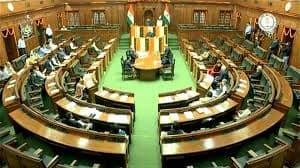
1.Delhi Legislative Assembly Evolution (Delhi Assembly)

LiveMint
Illustration for Delhi Legislative Assembly Evolution (Delhi Assembly)

What & Where

Delhi Legislative Assembly; unicameral legislature for National Capital Territory under Article 239AA.

70 elected MLAs; meets at Old Secretariat, Civil Lines, Delhi.

Can legislate on State & Concurrent Lists, except Public Order, Police & Land.

Quick Facts for MCQs

Historical Timeline

  • 1956-1993 period governed by 56-member Metropolitan Council with merely advisory powers.
  • 37-year stretch without elected legislature ended by 1993 GNCTD elections.
  • Balakrishnan Committee 1987 recommended special status, leading to 69th Amendment.

Constitutional Design

  • Article 239AA grants Delhi special National Capital Territory status within Union Territory category.
  • Assembly empowered on State & Concurrent Lists barring security-linked subjects.
  • Council of Ministers collectively responsible to Assembly; size capped at 10 %.

Governance Structure

  • Chief Minister appointed by President; recommends other ministers to LG.
  • LG may summon, prorogue, dissolve Assembly; retains discretion on reserved subjects.
  • Union Home Ministry controls Delhi Police, public order, land through LG.

Judicial Interpretation

  • 2018 SC bench: LG bound by aid & advice except in reserved matters.
  • 2023 SC bench: Elected government holds executive power over services excluding police, public order, land.

Key Data Points

FeatureData-Point
First Assembly constituted1952 (Part-C State)
Assembly abolished1956; Delhi became Union Territory
Assembly restored1993 elections
Constitutional basis69th Amendment Act, 1991
Inserted Article239AA
Total seats70
Majority mark36
Max Council of Ministers7 (10 % of strength)
Excluded State-List entries1 (Public Order), 2 (Police), 18 (Land)
Administrator titleLieutenant-Governor (LG)
Supreme Court benches2018 & 2023 Constitution Benches

Related UPSC Prelims PYQs

GS1 2008PYQ 1

Consider the following statements:

GS1 2001PYQ 2

Match List I with List II and select the correct answer using the codes given below the Lists:
GS-2Polity

2.Bill Mandating 100 Parliamentary Days (Parliamentary Sittings)

The Hindu

What & Where

Proposal: Private Member Bills seek mandatory 100-120 Lok Sabha/Rajya Sabha sittings annually.

Key process: Amending Articles 85 & 174 or passing statute to fix calendar.

Geography: Applies to Parliament of India; similar move suggested for State Legislatures.

Quick Facts for MCQs

Legal & Policy

  • Article 85/174 silence enables Executive to decide session length, prompting reform demand.
  • Private Member Bills reference General Purposes Committee 1955 & NCRWC 2002 recommendations.
  • Proposal includes fixed calendar, stronger committee scrutiny, anti-disruption rules.

Comparative International

  • United Kingdom House of Commons meets ~150-160 days, ensuring sustained oversight.
  • United States Congress averages 133-140 legislative days, with additional committee work.
  • Canada’s House of Commons clocks 130-140 days, reinforcing debate culture.

Governance & Accountability

  • Low sittings weaken budget examination, policy debate, executive questioning.
  • Rapid passage: 44 % bills cleared same day, curbing deliberative quality.
  • Enhanced calendar expected to reduce judicial interventions by vetting constitutionality early.

Implementation Challenges

  • Executive dominance may resist longer sessions to evade scrutiny.
  • Frequent disruptions, walkouts, adjournments erode effective working hours.
  • Added sittings demand higher outlay for security, staff, member logistics.

Key Data Points

FeatureData-Point
Proposed minimum sittings100–120 days per year
Present constitutional ruleGap ≤ 6 months between sessions (Art 85/174)
17th Lok Sabha total (2019-24)274 days – lowest full-term record
Bills passed within a day, 202344 % of total bills
Average annual sittings, UK150–160 days
Average annual sittings, USA133–140 days
Average annual sittings, Canada130–140 days

Related UPSC Prelims PYQs

CDS_GK, GS1 2025PYQ 1

भारत की संसद में स्थगन प्रस्ताव के बारे में निम्नलिखित में से कौन-सा कथन सही नहीं है?

CDS_GK, GS1 2020PYQ 2

निम्नलिखित कथनों पर विचार कीजिए :

GS-3Economy

3.Repo Rate Reduction Impact (Monetary Policy)

Economic Times
Illustration for Repo Rate Reduction Impact (Monetary Policy)

What & Where

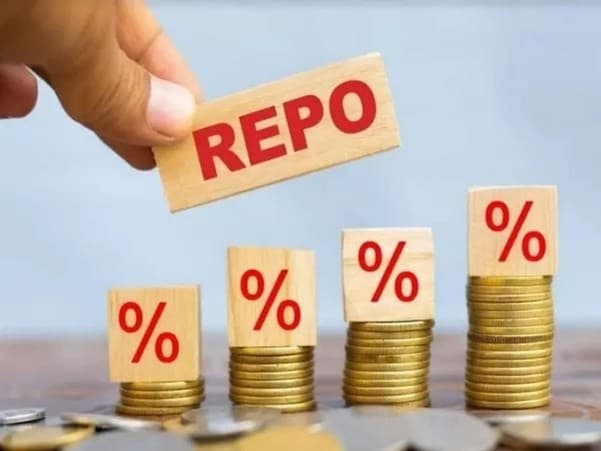
Repo rate — interest RBI charges banks for overnight liquidity against approved securities

Decided bi-monthly by Monetary Policy Committee (6 members) at RBI HQ, Mumbai

Nationwide tool guiding bank lending, liquidity and inflation expectations

Quick Facts for MCQs

Economic Angle

  • Cheaper credit lowers EMIs, boosts housing, auto, consumer durables demand
  • Lower borrowing cost encourages MSME capex and corporate investment pipelines
  • Demand revival expected to translate into incremental job creation across sectors

Inflation Management

  • Cut stimulates demand yet risks CPI uptick; RBI to monitor core inflation bands
  • Transmission lag moderates immediate price impact, offering policy reaction time
  • MPC signals readiness to reverse stance if inflation breaches 4 % ± 2 % target

Global Context

  • India joins Fed, ECB, BoE in accommodative cycle amid slowing world growth
  • Competitive domestic rates curb capital outflow, steadying rupee trajectory
  • Synchronised easing aims to pre-empt trade-linked slowdown in emerging markets

Key Data Points

FeatureData-Point
Latest change25 bps cut
Effective rate6.25 %
Last previous cut≈ 5 years ago
Policy instrument typeShort-term collateralised lending
Key objectivesLiquidity control, inflation targeting, growth support

Related UPSC Prelims PYQs

CDS_GK, GS1 2020PYQ 1

Which one of the following is not correct about Repo rate?

CDS_GK, GS1 2011PYQ 2

The lowering of Bank Rate by the Reserve Bank of India leads to

GS-3Economy

4.'Bank.in' Secure Domain (Bank Domain Security)

IT

What & Where

Exclusive domain ‘bank.in’ mandated for all registered Indian banks

Purpose: distinguish genuine banking sites, curb cyber fraud, raise customer trust

Geography: Pan-India initiative supervised by Reserve Bank of India

Quick Facts for MCQs

Legal & Policy

  • RBI circular mandates single-domain usage, ensuring regulatory uniformity
  • Non-adherence can trigger supervisory action under Banking Regulation Act

Security Dimension

  • Fraud prevention removes spoofed sites, reducing phishing and credential theft
  • Verification prerequisite for domain issuance strengthens customer confidence

Tech & Schemes

  • DNS segregation: e.g., sbi.bank.in, hdfc.bank.in for quick legitimacy check
  • AFA extension doubles security layers on cross-border digital payments
  • Future ‘fin.in’ to cover insurers, NBFCs, fintechs under same secure framework

Key Data Points

FeatureData-Point
Launch authorityReserve Bank of India
Domain labelbank.in
Mandatory fromApril 2025
Covered entitiesAll registered Indian banks
Planned allied domainfin.in (wider financial services)
Extra authentication scopeInternational digital transactions now under AFA
Added compliance askStronger cyber risk detection & incident response for banks/NBFCs
GS-3EconomyQuick Bite

5.Beggar-Thy-Neighbour Trade Policy (Protectionist Tariffs)

The Hindu

What & Where

Definition: Protectionist strategy using tariffs, devaluation, subsidies to advance domestic economy at others’ expense

Geography: Practised worldwide; 2025 US tariffs on China, Canada, Mexico spotlight usage

Origin: Coined by Adam Smith in “The Wealth of Nations”, 1776, critiquing mercantilism

Quick Facts for MCQs

Economic Angle

  • Tariffs: Raise import prices making domestic goods comparatively cheaper
  • Currency: Devaluation lowers export cost, raises import cost, aiding trade surplus
  • Jobs: Strategy seeks to shield critical industries and preserve employment

Historical Example

  • Depression: 1929-39 saw widespread protectionism worsening economic contraction
  • Trade: Global trade and investment fell sharply after successive retaliatory measures

Supporters' Claims

  • Protection: Shields sunrise or strategic sectors from foreign competition
  • Surplus: Trade balance may turn positive, boosting national income

Critics' Concerns

  • Retaliation: Other nations impose counter-tariffs, igniting tariff wars
  • Consumers: Import curbs hike prices, shrinking consumer welfare
  • Growth: Prolonged protectionism hampers supply chains and investment

Alternative Approach

  • FreeTrade: Economists suggest unilateral free trade, avoiding tit-for-tat escalation

Key Data Points

FeatureData-Point
Term coined1776 by Adam Smith
Primary toolsTariffs, quotas, subsidies, currency devaluation
Recent usersUSA on China, Canada, Mexico (2025)
Major riskRetaliatory tariffs lowering global trade
Historic consequenceDeepened Great Depression 1929-39
GS-1HistoryQuick Bite

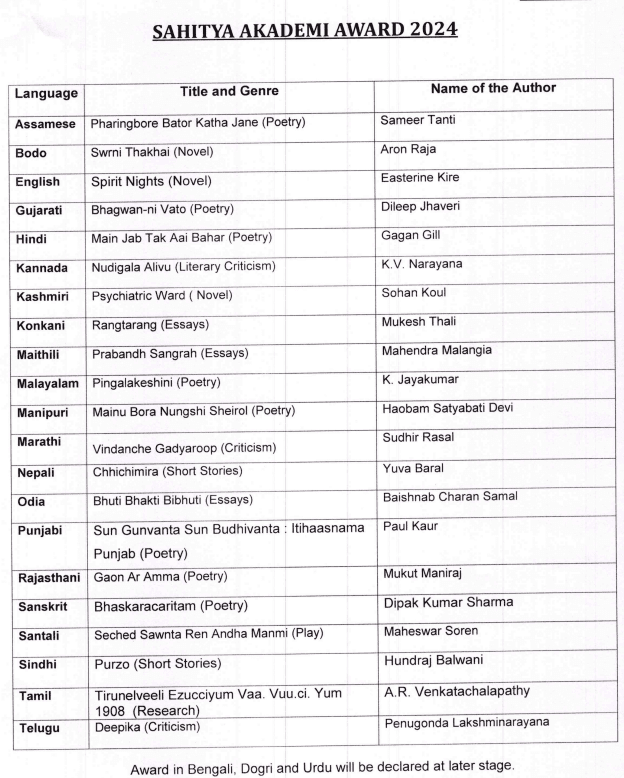
6.Sahitya Akademi Awards 2024 (Sahitya Akademi)

PIB
Illustration for Sahitya Akademi Awards 2024 (Sahitya Akademi)

What & Where

Sahitya Akademi Awards: annual national honour for outstanding books in 24 recognised Indian languages

Presented by Sahitya Akademi, autonomous body under Ministry of Culture, New Delhi headquarters

2024 list: 22 winners declared; Bengali and Urdu awards pending

Quick Facts for MCQs

Award Structure

  • Annual jury selects one work per language published within previous five years
  • Cash prize, plaque and shawl constitute honour package
  • Decision final; no posthumous award unless work published before author’s death

Eligibility & Coverage

  • Coverage extends to original works; separate category for translations
  • Rajasthani and English included despite non-Eighth Schedule status
  • No award if jury finds no suitable book in a language year

Other Initiatives

  • Gramalok fosters rural and remote writers via workshops, readings
  • Dalit Chetna platform promotes Dalit authors and literature

Key Data Points

FeatureData-Point
Award rank2nd-highest after Jnanpith
First year1954
Administering bodySahitya Akademi, Ministry of Culture
Languages covered22 Eighth Schedule + English, Rajasthani
2024 winners22 announced; total 24 after pending
Eligible creatorIndian citizen only
Literary formsNovels, poetry, essays, plays
Companion awardsBal Sahitya Puraskar; Yuva Puraskar

Related UPSC Prelims PYQs

CDS_GK, GS1 2023PYQ 1

Match List-I with List-II relating to Sahitya Akademi Award Winners, 2022 and select the correct answer using the code given below the Lists:

CDS_GK, GS1 2009PYQ 2

Consider the following statements :

GS-3Environment

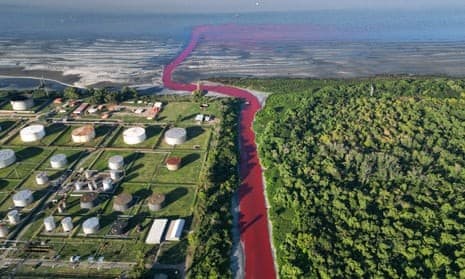
7.Sarandí Stream Chemical Pollution (Water Pollution)

Times of India
Illustration for Sarandí Stream Chemical Pollution (Water Pollution)

What & Where

Stream: Sarandí, small urban watercourse in Villa Inflamable, Avellaneda, near Buenos Aires, Argentina

Course: Drains industrial zone, then joins Río de la Plata estuary shared by Argentina-Uruguay

Episode: Turned crimson red, spotlighting chronic chemical dumping from nearby tanneries & factories

Quick Facts for MCQs

Pollution Sources

  • Tanneries: Chromium, dyes, organic waste routinely discharged into stream
  • Chemical: Aniline leakage suspected for crimson hue event
  • Pattern: Residents note repeated multi-colour discharges, signifying varied industrial effluents

Environmental Impact

  • Basin: Contaminants travel to already degraded Matanza-Riachuelo, compounding estuarine pollution
  • Biodiversity: Toxic load threatens aquatic fauna, mangrove-like shoreline vegetation in Río de la Plata
  • Cumulative: Multi-industry runoff accelerates eutrophication and heavy-metal sediment buildup

Health Concerns

  • Exposure: Local population faces dermal contact and inhalation of volatile chemicals
  • Diseases: Increased cases of dermatitis, asthma, gastrointestinal infections reported anecdotally
  • Vulnerable: Children in Villa Inflamable at heightened risk due to play near banks

Geographic Linkages

  • Estuary: Río de la Plata forms natural border Argentina-Uruguay, feeds South Atlantic Ocean
  • Urban proximity: Stream lies within Greater Buenos Aires industrial belt
  • Hydrology: Short but crucial conduit transferring inland waste to coastal waters

Key Data Points

FeatureData-Point
Country/ProvinceArgentina, Buenos Aires Province
Immediate localityVilla Inflamable, Avellaneda
Ultimate outflowRío de la Plata estuary
River basin linkedMatanza-Riachuelo (one of LATAM’s most polluted)
Suspected chemicalAniline dye intermediate
Key industries nearbyTanneries, assorted factories
Reported coloursRed, blue, green, violet, brown
Odour indicatorStrong foul smell of industrial waste
Health risks citedSkin ailments, respiratory issues, waterborne diseases
GS-3Environment

8.India Hits 100 GW Solar (Solar Capacity)

EW
Illustration for India Hits 100 GW Solar (Solar Capacity)

What & Where

Milestone India reached 100 GW installed solar capacity by Jan 2025, core of 500 GW non-fossil target 2030.

Technology Mix of rooftop, utility-scale parks, indigenous module manufacturing under PLI tranches.

Geography Solar hotspots: Rajasthan, Gujarat, Tamil Nadu, Maharashtra, Madhya Pradesh lead large-scale deployments.

Quick Facts for MCQs

Growth Trends

  • Surge 3,450 % capacity in decade, fastest among major economies.
  • 2024 additions 24.5 GW, twice 2023, lifts solar to almost half of RE base.
  • Utility-scale plants delivered 75 % of 2024 growth.

Government Schemes

  • PM Surya Ghar Muft Bijli Yojana 2024 incentivises 1–3 kW rooftop units with subsidy & cheap loans.
  • Solar Parks Scheme aggregates land, grid; fosters multi-GW clusters across states.
  • PLI Scheme for high-efficiency modules enlarged manufacturing pipeline; attracts FDI, boosts jobs.

State Leaders

  • Rajasthan >20 GW; vast desert land and high DNI advantage.
  • Gujarat, Tamil Nadu leverage robust grids, policy stability for rapid uptake.
  • Maharashtra, Madhya Pradesh expanding utility parks; cumulatively dominate 2024 additions.

Key Data Points

FeatureData-Point
Solar share in India’s renewable mix47 %
Capacity in 2014 vs 20252.82 GW → 100 GW
Percentage jump 2014-20253,450 %
Record annual addition (2024)24.5 GW
Utility-scale slice of 2024 addition18.5 GW
Domestic module output 20142 GW
Domestic module output 202460 GW
Module output target 2030100 GW
Rooftop installs under PM Surya Ghar (2024)~9 lakh
Key enabling ministryMNRE

Related UPSC Prelims PYQs

GEO_GS, GS1 2026PYQ 1

India's installed solar capacity in 2025 is close to

GEO_GS, GS1 2025PYQ 2

Consider the following statements about ‘PM Surya Ghar Muft Bijli Yojana’ :

GS-3Species

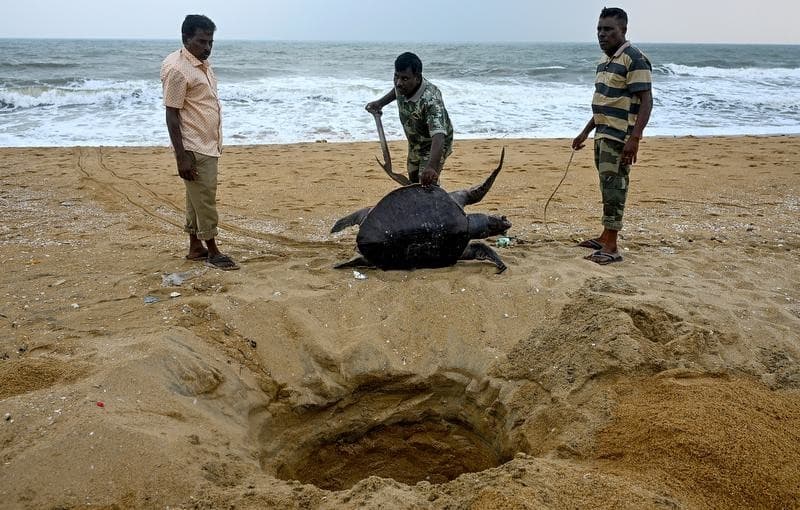
9.Olive Ridley Mass Mortality (Olive Ridley)

The Hindu
Illustration for Olive Ridley Mass Mortality (Olive Ridley)

What & Where

Species Olive Ridley is smallest sea turtle with heart-shaped olive carapace weighing up to 45 kg

Behavior Arribada mass nesting between Nov–Apr on select beaches

Range Tropical Pacific, Indian, Atlantic; Indian rookeries Gahirmatha, Devi, Rushikulya, Tamil Nadu, Andhra, A&N

Quick Facts for MCQs

Mortality Spike 2025

  • Tamil Nadu Chennai-Chengalpattu logged 1,200+ carcasses January outweighing yearly mean by threefold
  • Andhra coastline Tirupati-Visakhapatnam recorded 2,000+ deaths same month indicating regional scale event
  • Extended monsoon rough seas suspected in altering migration increasing net interactions

Threat Drivers

  • Illegal bottom trawling and gill nets cause drowning due to forced submergence
  • Absence of Turtle Excluder Devices despite regulation exacerbates bycatch mortality
  • Plastic litter groynes seawalls degrade nesting habitat obstructing female emergence

Conservation Gaps

  • Many trawl boats operate without mandated TEDs indicating poor enforcement of marine regulations
  • Coastal infrastructure expansions proceed despite known turtle nesting zones lacking cumulative impact assessments
  • Community egg safeguarding initiatives undermined by continued illegal collection in some beaches

Key Data Points

FeatureData-Point
Scientific nameLepidochelys olivacea
IUCN categoryVulnerable
Adult weightUp to 45 kg
Mass nesting seasonNovember – April
Key behaviourArribada (simultaneous mass nesting)
Indian rookeriesGahirmatha, Devi, Rushikulya, Tamil Nadu, Andhra, A&N
Carcasses Jan 2025 Tamil Nadu> 1,200
Carcasses Jan 2025 Andhra Pradesh> 2,000
Main death causeEntanglement in bottom trawls & gill nets
Regulatory gapAbsence of Turtle Excluder Devices
GS-3S&T

10.Quantum Teleportation Breakthrough (Quantum Computing)

NDTV

What & Where

Quantum teleportation – instant transfer of a qubit’s state to a distant qubit using entanglement; no physical particle moves

First inter-computer gate teleportation achieved by University of Oxford, UK; links separate quantum processors into one system

Process pillars: entangled qubit pairs, state-swap protocol, logical-gate (not qubit) transmission for scalability

Quick Facts for MCQs

Technological Significance

  • Scalability; gate teleportation sidesteps limited qubit counts of single chips
  • Faster computation; removes inter-processor communication bottlenecks common in classical links
  • Loss-free transfer; minimizes decoherence by avoiding physical qubit movement

Security Dimension

  • Entanglement-based links enable quantum key distribution offering theoretically unbreakable encryption
  • Instantaneous state transfer reduces interception windows during data transit
  • Foundation for ultra-secure defence and banking networks

Future Prospects

  • Quantum internet; continent-spanning entangled nodes for real-time, secure communication
  • Modular quantum supercomputers; many small processors networked as one high-qubit machine
  • Cross-disciplinary impact; accelerates drug discovery, optimisation, climate modelling

Scientific Milestone

  • Bridges theory–practice gap; first lab proof of networked quantum computing
  • Validates entanglement over processor boundaries, a prerequisite for large quantum networks
  • Inspires international R&D races among US, EU, China, Japan

Key Data Points

FeatureData-Point
Lead institutionUniversity of Oxford
CountryUnited Kingdom
Demonstrated methodLogical-gate teleportation
Underlying principleQuantum entanglement
Core benefitDistributed quantum computing scalability
Long-term visionGlobal quantum internet

Related UPSC Prelims PYQs

ESE_GS 2023PYQ 1

Which one of the statements is NOT relevant to quantum computing?

GS-3S&TQuick Bite

11.SARAT Version-2 Rescue Tool (SARAT Rescue Tech)

PIB

What & Where

SARAT V2 = satellite-based Search and Rescue Aid Tool for distress alerts at sea

Operational focus: Indian Ocean region; assists vessels, aircraft, individuals in remote/high-risk zones

Developed by ESSO-INCOIS under Ministry of Earth Sciences, India

Quick Facts for MCQs

Tech & Schemes

  • Customization: user selects object type; system refines drift modelling accordingly
  • Visualization: enhanced graphics enable quicker SAR planning by maritime agencies
  • Alerts: automatic SMS/email to registered fishermen and Coast Guard nodes

Disaster Management

  • Integration: feeds into national Maritime Rescue Coordination Centres for real-time operations
  • Prediction: combines ocean–atmosphere models to delimit probable debris/ survivor fields
  • Coverage: 10-day window aids prolonged cyclone & tsunami rescue phases

Institutional Recognition

  • INCOIS acknowledged by UNESCO as leading Regional Tsunami Service Provider
  • Subhash Chandra Bose award 2025 honours sustained excellence in ocean hazard early warnings
  • Ministry highlights SARAT as flagship Make in India success story

Future Upgrades

  • R&D focus on finer 1-km resolution current data from forthcoming satellite missions
  • Plan to embed AI-driven drift error correction for faster convergence
  • Mobile app roadmap to widen fisherman accessibility beyond SMS/email

Key Data Points

FeatureData-Point
Launch ministryMinistry of Earth Sciences
DeveloperESSO-INCOIS
Version releasedSARAT Version 2
Technology baseSatellite-enabled distress alert
Coverage regionIndian Ocean
Tracking capacity60 object types
Forecast horizonUp to 10 days
Key data inputsWind, surface currents, drifting buoys
Interface toolsInteractive maps, SMS/email, local languages
Make in India tagYes
UNESCO statusINCOIS = top tsunami service provider
National award 2025Subhash Chandra Bose Aapda Prabandhan Puraskar (Institutional)
Core upgradeMore accurate search areas
Future upgrade planBetter surface-current & wind prediction

Related UPSC Prelims PYQs

GS1 2015PYQ 1

The term ‘IndARC’, sometimes seen in the news, is the name of

GS-3S&TQuick Bite

12.Asteroid 2024 YR4 Impact Risk (Near-Earth Asteroid)

Indian Express
Illustration for Asteroid 2024 YR4 Impact Risk (Near-Earth Asteroid)

What & Where

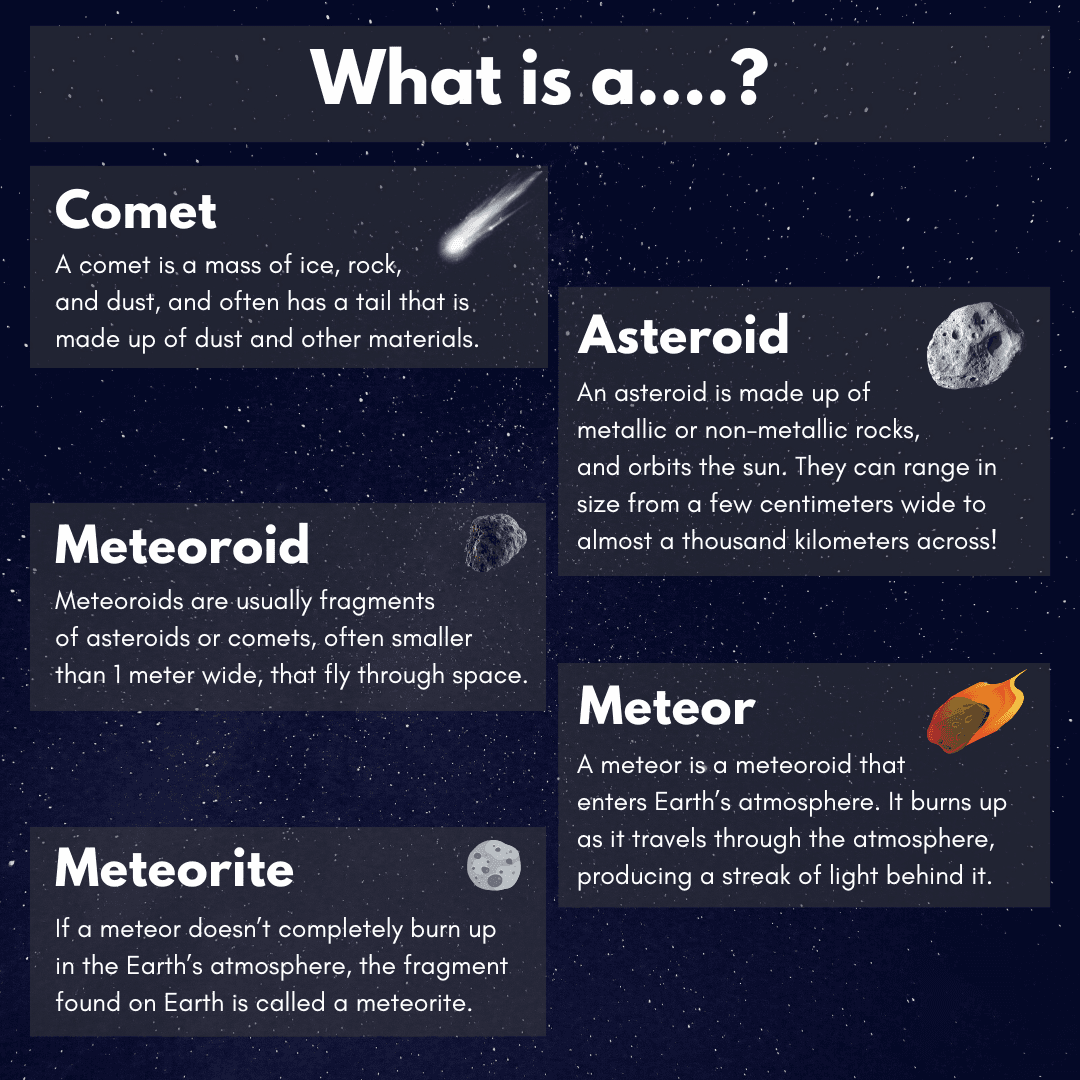
Asteroid 2024 YR4: Near-Earth object detected Dec 2024; re-encounter window 2028; 1 % impact chance in 2032.

December 2024 fly-by: 800 000 km from Earth, roughly twice Moon’s distance.

Asteroid zones: Main Belt (Mars–Jupiter), Trojan swarms at L4/L5, Near-Earth crossers intersecting Earth orbit.

Quick Facts for MCQs

Risk Assessment

  • Torino-3 signifies close encounter needing contingency plans without mass evacuation.
  • Expected 8–10 Mt yield capable of city-level devastation, >15× Chelyabinsk.
  • >1 % collision chance ranks among highest currently monitored NEAs.

Classification & Terminology

  • Near-Earth Asteroids listed on NASA Sentry when Earth-crossing probability exceeds threshold.
  • Torino Scale merges kinetic energy and impact probability into single integer rating.
  • Level 3 denotes possible localized destruction, warrants astronomer tracking and public notice.

Planetary Defense & Missions

  • NASA DART 2022 kinetic impactor cut Dimorphos orbital period by 33 min, proof-of-concept deflection.
  • ESA Hera (launch 2024) to survey Dimorphos–Didymos system, validate momentum-transfer modeling.
  • ISRO NETRA programme building ground sensors for NEO and space-debris early warning.

Key Data Points

FeatureData-Point
Detection monthDecember 2024
Closest 2024 distance8 × 10⁵ km (≈2 LD)
Next visibility2028
Possible impact year2032
Impact probability>1 %
Torino Scale ratingLevel 3
Torino Scale span0 – 10
Energy on impact8–10 megatons TNT
Chelyabinsk energy0.5 megaton
IAU adoption of Torino Scale1999
Global-scale impact frequency~1/260 million years
DART mission year2022
GS-2International Relations

13.US Deportation of Indians (US Deportations)

The Print

What & Where

Deportation: forced removal of foreign nationals violating visas, illegal entry or posing security threat

Process run by U.S. Immigration & Customs Enforcement (ICE); detainees held, legally processed, then flown out

Latest case: 104 Indians shackled, flown on U.S. military aircraft to Amritsar, classed as national-security operation

Quick Facts for MCQs

Legal & Policy

  • Stricter U.S. migration stance under Trump driving expedited removals
  • Shackling contravenes UN Standard Minimum Rules on prisoner treatment
  • Expedited removal bypasses full judicial review, limiting asylum claims

Diplomatic Angle

  • MEA sought explanation, demanded humane procedures for Indian nationals
  • Collective protests lodged by India, Brazil, Colombia over treatment practices
  • India exploring UN forums for global deportation protocol guidelines

Human Rights Concerns

  • Shackles used on men, women, possible minors flagged as inhumane
  • Limited legal aid within detention centres raises due-process issues
  • Psychological trauma and social stigma upon return acknowledged by NHRC

Socio-Economic Impact

  • Deportees face joblessness, debt from migration expenses, family instability
  • Need for reintegration programmes offering legal aid, counseling, skilling
  • Government urged to intensify public awareness on lawful migration channels

Key Data Points

FeatureData-Point
Deportees on 24-day flight104 Indians
Total Indians on final removal list487
Transport mode usedU.S. military aircraft (not commercial)
ICE classificationNational security operation
Other objecting nationsBrazil, Colombia
Undocumented Indians at U.S. risk≈7.25 lakh
Lead U.S. enforcement agencyICE
GS-3Security

14.TROPEX-25 Naval Exercise (Naval Exercise)

PIB
Illustration for TROPEX-25 Naval Exercise (Naval Exercise)

What & Where

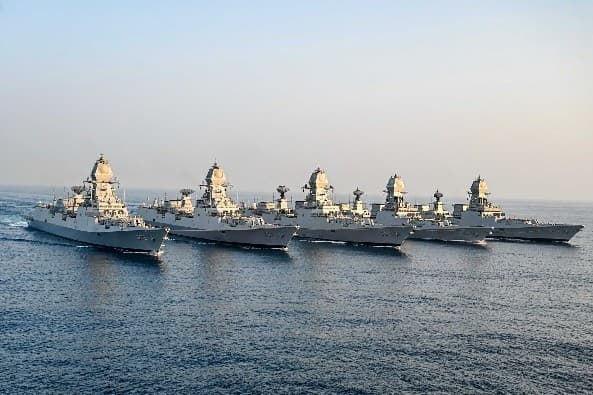
Exercise TROPEX largest biennial theatre-level operational readiness drill of Indian Navy

Geography spans entire Indian Ocean Region including critical sea lanes and island territories

Schedule Jan–Mar 2025 hosted by India along eastern and western seaboards

Quick Facts for MCQs

Security Dimension

  • Threat matrix spans conventional, asymmetric, hybrid challenges across IOR maritime commons
  • Firing serials employ missiles, torpedoes, precision munitions validating combat effectiveness
  • Cyber modules test electronic support, jamming, network defence under contested spectrum environment

Multi-Service Integration

  • Tri-service participation enhances interoperability, joint planning and execution credibility
  • Amphibious phases integrate landing craft, helicopters, artillery for seamless shore assaults
  • Work-up schedule aligns doctrines, communications, logistics before full-scale tactical moves

Operational Focus

  • Anti-submarine warfare drills deploy P-8I, MH-60R, indigenous corvettes against simulated adversary submarines
  • Scenario sets include convoy defence, sea denial, high-value unit protection across blue-water stretches
  • Outcome analysis feeds Navy Operational Plans and Maritime Capability Perspective 2030 roadmap

Key Data Points

FeatureData-Point
Full formTheatre Level Operational Readiness Exercise
FrequencyBiennial
Scheduled monthsJanuary – March 2025
Area of operationsEntire Indian Ocean Region
Lead serviceIndian Navy
Other participantsIndian Army, Air Force, Coast Guard
Core focusMaritime security, ASW, cyber/EW, live weapon firings
Key phasesJoint work-up, amphibious drills, combat simulations

Related UPSC Prelims PYQs

ESE_GS, GEO_GS 2025PYQ 1

Naseem-Al-Bahr, held in October 2024, was a joint maritime exercise between the navies of India and

ESE_GS, GEO_GS 2022PYQ 2

Which one of the following countries did the Indian Navy participate in the U.S. Navy-led Southeast Asia Cooperation and Training (SEACAT) military exercise, to demonstrate its maritime manoeuvres?

GS-2Scheme

15.PM-JAY Boosts Cancer Treatment (PM-JAY Healthcare)

Indian Express
Illustration for PM-JAY Boosts Cancer Treatment (PM-JAY Healthcare)

What & Where

Cancer: uncontrolled proliferation of abnormal cells invading tissues; major NCD globally and in India.

Study scope: Pan-India analysis (Lancet, 2024) on time-to-treatment pre- & post-2018 AB PM-JAY rollout.

Focus organs: Reproductive, genitourinary, breast, blood cancers saw sharpest delay reduction.

Quick Facts for MCQs

Health Infrastructure

  • Deficit: 779 radiotherapy machines vs WHO 1,350–5,000; oncologist & diagnostic centre shortages persist.
  • Rural-urban gap widens access inequity despite scheme coverage.
  • Diagnostics & follow-ups excluded from AB PM-JAY, pressuring tertiary hospitals.

Demographic Insights

  • Youth & educated cohorts secure faster initiation owing to awareness, navigation skills.
  • Higher-income groups experience fewer delays even without PM-JAY.
  • Gender-specific cancers (breast, reproductive) show largest improvement post-scheme.

Financial Burden

  • Out-of-pocket expenses remain high because scheme omits diagnostics, follow-up therapy.
  • Sub-2 % GDP public spending limits state capacity for oncology expansion.
  • Delays in radiotherapy, chemo, surgery link directly to lower survival, raising long-term costs.

Disease Burden & Trends

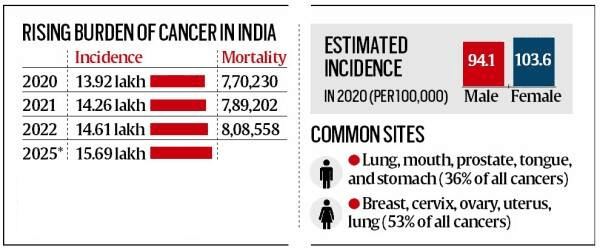
  • Cancer incidence rising: 14.6 lakh (2022) to 15.7 lakh (2025) projected.
  • Global 2022 tally: 20 mn new cases, 9.7 mn deaths.
  • Breast cancer dominates Indian profile, >26 % of female cases.

Key Data Points

FeatureData-Point
Timely-treatment gain (overall)36 % rise post-2018
Timely-treatment gain (PM-JAY)90 % rise
Young patients (<30 yr) timely care77 %
Higher-education patients timely care70.2 %
Insurance users timely care69 %
India radiotherapy machines779 units
WHO radiotherapy norm1,350–5,000 units
Projected cases India 202515.7 lakh
Breast-cancer share (all cancers)13.6 %
Public health spend India< 2 % of GDP

Related UPSC Prelims PYQs

CDS_GK 2020PYQ 1

Which one of the following is not a feature of the Ayushman Bharat Scheme?

Ready to practice?

Test your knowledge with our UPSC test series.

Start Free Trial