UPSC Current Affairs

15 topicsGS-1: 5GS-2: 3GS-3: 7
0/15 done
GS-3Economy

1.RBI Repo Rate Cut and Growth Outlook (Monetary Policy)

Indian Express

What & Where

Monetary Policy Committee (MPC): six-member RBI body deciding policy rates via majority vote, meets bi-monthly in Mumbai

Repo rate: short-term rate at which RBI lends to banks; primary monetary policy instrument

Coverage: Applies to all scheduled commercial banks and NBFC credit operations across India

Quick Facts for MCQs

Economic Angle

  • GrowthBoost: rate cut aims to lower borrowing costs, spur consumption and private capex
  • LoanPricing: banks likely to drop MCLR & EBLR, reducing home-loan EMIs
  • Liquidity: accommodative stance maintains adequate systemic liquidity for credit expansion

Inflation Outlook

  • SofteningTrend: food price stability and past tightening expected to anchor CPI near 4 % target
  • RealRate: positive real interest rate preserved despite cut, supporting inflation mandate
  • Vigilance: RBI flags upside risks from commodity spikes and supply shocks

Banking & Tech

  • Authentication: AFA mandated for all cross-border digital payments to curb fraud
  • DomainShift: exclusive “.bank.in” and “.fin.in” URLs prescribed for regulated entities
  • Supervision: enhanced IT risk audits ordered for large lenders and payment operators

Global Context

  • VolatilityWatch: RBI to intervene only to smooth excessive forex swings, not fix a level
  • ExternalRisks: US policy shifts, strong dollar, geopolitics cited as key spillover threats
  • PolicySpace: moderate domestic inflation gives RBI room compared with other EM central banks

Key Data Points

FeatureData-Point
Repo cut size25 basis points
New repo rate6.25 %
Previous repo rate6.50 %
First cut sinceMay 2020
FY26 GDP growth forecast6.7 %
FY26 CPI inflation forecast4.2 %
CPI quarterly path FY264.5 %, 4.0 %, 3.8 %, 4.2 %
Meeting frequencyBi-monthly (every 2 months)
MPC composition3 RBI officials + 3 Govt-nominated experts
Cybersecurity stepsAdditional Factor Authentication; shift to “.bank.in”/“.fin.in” domains

Related UPSC Prelims PYQs

CDS_GK, GS1 2017PYQ 1

मौद्रिक नीति समिति (Monetary Policy Committee/MPC) के सम्बन्ध में निम्नलिखित कथनों में से कौन-सा/से सही है/हैं ?

CDS_GK, GS1 2020PYQ 2

Which one of the following is not correct about Repo rate?
GS-3Economy

2.Budget 2025 MSME Support Measures (MSME Sector)

Indian Express
Illustration for Budget 2025 MSME Support Measures (MSME Sector)

What & Where

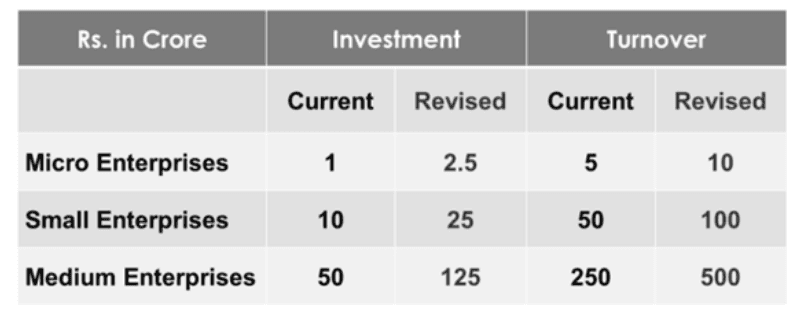
MSMEs India: enterprises now eligible under higher ₹ investment (2.5×) & turnover (2×) ceilings

Budget 2025-26: credit boosts, sector-specific schemes, clean-tech Manufacturing Mission to deepen domestic value-addition

Spread: pan-India with nodal projects such as National Institute of Food Technology Bihar; export-facilitating factoring globally

Quick Facts for MCQs

Budgetary Provisions

  • Investment-Turnover hike enlarges eligibility, enabling tech adoption and government incentive access
  • Credit-Guarantee doubles plus Fund of Funds ₹10k cr widen cheap capital lanes
  • MSME-Card offers instant ₹5 lakh working capital bypassing paperwork

Sectoral Performance

  • Employment exceeds 25 crore, underscoring labour-absorption capacity
  • GVA contribution climbed to 30.1 % in FY23, reflecting rising productivity
  • Exports jumped three-fold since FY21, now deliver 45 %+ national outbound trade

Structural Challenges

  • Labour rigidity, skills gaps, interstate wage disparities restrain productivity
  • Limited formalisation; missing PAN/GST blocks benefits, finance, global compliance
  • Regulatory maze with multilayer licences, inspections increases small-firm costs

Schemes & Missions

  • National Manufacturing Mission steers solar, EV-battery, wind supply-chains away from import reliance
  • Focus Product & Toy clusters promise 22 lakh jobs, ₹4 lakh cr turnover, design-led value
  • Cross-border factoring expansion eases exporter cashflow, aligning with 3 % global norm

Key Data Points

FeatureData-Point
Micro & small credit guarantee₹5 cr → ₹10 cr
Additional credit unlocked₹1.5 lakh cr over 5 yrs
Startup guarantee ceiling₹20 cr; fee 1% for 27 sectors
MSME credit card limit₹5 lakh; 10 lakh cards Yr-1
Fund of Funds size₹10,000 cr
First-time entrepreneur coverage5 lakh persons; loan ≤ ₹2 cr
MSME employment25.18 crore people
GVA share 2022-2330.1 %
Export value 2024-25₹12.39 lakh cr
Export share May 202445.79 % of total exports
Cross-border factoring target3 % of merchandise exports
Focus Product jobs22 lakh
Toy-sector scheme aimGlobal manufacturing hub

Related UPSC Prelims PYQs

GEO_GS, GS1 2023PYQ 1

Consider the following statements with reference to India:

GEO_GS, GS1 2021PYQ 2

Micro, Small & Medium Enterprises (MSMEs) contribute significantly in the economic and social development of the country. Which of the following measures is / are taken by the Government with respect to MSMEs?

GS-1History

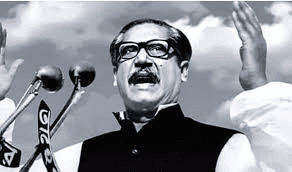
3.Sheikh Mujibur Rehman Legacy (Bangladesh Liberation)

NOA
Illustration for Sheikh Mujibur Rehman Legacy (Bangladesh Liberation)

What & Where

Residence vandalised: Sheikh Mujibur Rehman’s historic home in Bangladesh

Site symbolises: Bangladesh’s 1971 freedom struggle & Mujib leadership

India reaction: New Delhi strongly condemns vandalism, underscores shared liberation history

Quick Facts for MCQs

Political Journey

  • Early phase: joined Muslim League, later formed Awami League pushing Bengali nationalism
  • Six-Point Movement 1966 demanded autonomy, paving way for 1971 war & independence declaration

Governance & Legacy

  • Post-1971: drafted Constitution, forged diplomatic ties for new nation
  • 1975: instituted one-party BAKSAL; killed same year yet remains revered national figure

Security Dimension

  • India condemns vandalism of Mujib residence, labels act affront to shared liberation heritage
  • Incident spotlights need to safeguard liberation-era heritage sites in Bangladesh

Key Data Points

FeatureData-Point
Founding father ofBangladesh
Initial party linkAll-India Muslim League
Party foundedAwami League
Key autonomy plankSix-Point Movement
Liberation War year1971
First national postsPresident & Prime Minister
One-party rule year1975 (BAKSAL)
Assassination15 Aug 1975, military coup
Popular honorificBangabandhu
GS-1History

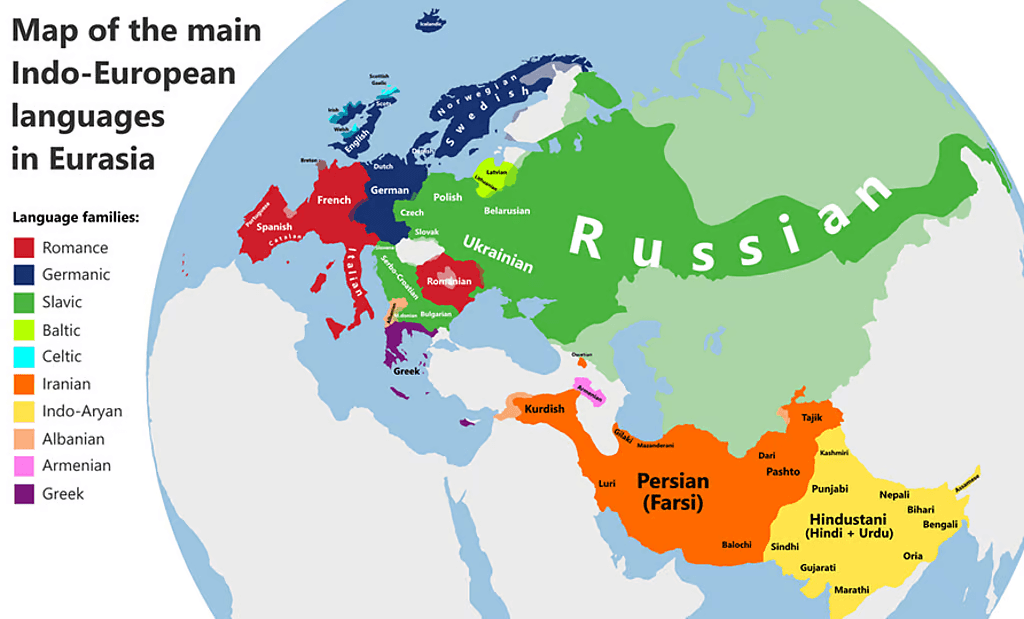
4.Indo-European Languages New Origin Theory (Historical Linguistics)

Down to Earth
Illustration for Indo-European Languages New Origin Theory (Historical Linguistics)

What & Where

Caucasus Lower Volga people: 6,500-yr-old steppe community now tagged as Proto-Indo-European genetic core

Spread process: descendants (Yamnaya) moved west & south, mingled locally, transmitting Indo-European languages

Core geography: Volga River–Caucasus Mountains corridor on the Eurasian steppe

Quick Facts for MCQs

Genetic Evidence

  • Genome-wide analysis links CLV DNA to all later Indo-Europeans
  • Yamnaya genome shows admixture of CLV with western hunter-gatherers
  • Genetic continuity supports single steppe homeland hypothesis refinement

Migration & Demography

  • Westward spread created Corded Ware and related European cultures
  • Southward wave reached Indus-Gangetic plains, catalysing Indo-Aryan linguistic layer
  • Population boom aided by pastoral mobility and wagon technology

Economic Angle

  • Livestock herding offered portable wealth sustaining long-range movement
  • Ox-drawn wagons enabled family migration across steppe grasslands
  • Economic shift from foraging to herding marked demographic expansion

Language Distribution

  • Indo-European splits into Celtic, Germanic, Romance, Hellenic, Balto-Slavic, Indo-Iranian, etc
  • Indo-Iranian branch spans Iran, Central Asia, South Asia
  • Non-IE Indian families: Dravidian 24.47 %, Sino-Tibetan <1 %, Austro-Asiatic minor

Key Data Points

FeatureData-Point
Study sourceNature, Feb 2025
Earliest groupCaucasus Lower Volga, ~4500 BCE
Key descendantsYamnaya culture, 3700–3300 BCE
Core homelandEurasian steppe, Volga–Caucasus belt
Yamnaya economyLivestock herding + ox wagons
Demographic changeFew thousand → tens of thousands
Indo-European languages today>400
Largest Indian branchIndo-Aryan, 73.3 % population, 574 tongues
Other Indian familiesDravidian 24.47 %, Sino-Tibetan <1 %, Austro-Asiatic 6.19 m speakers
Migration footprintEurope, Indian subcontinent, parts of China

Related UPSC Prelims PYQs

CDS_GK 2020PYQ 1

The major part of Central Asia is dominated by which one of the following language families?

GS-1MappingQuick Bite

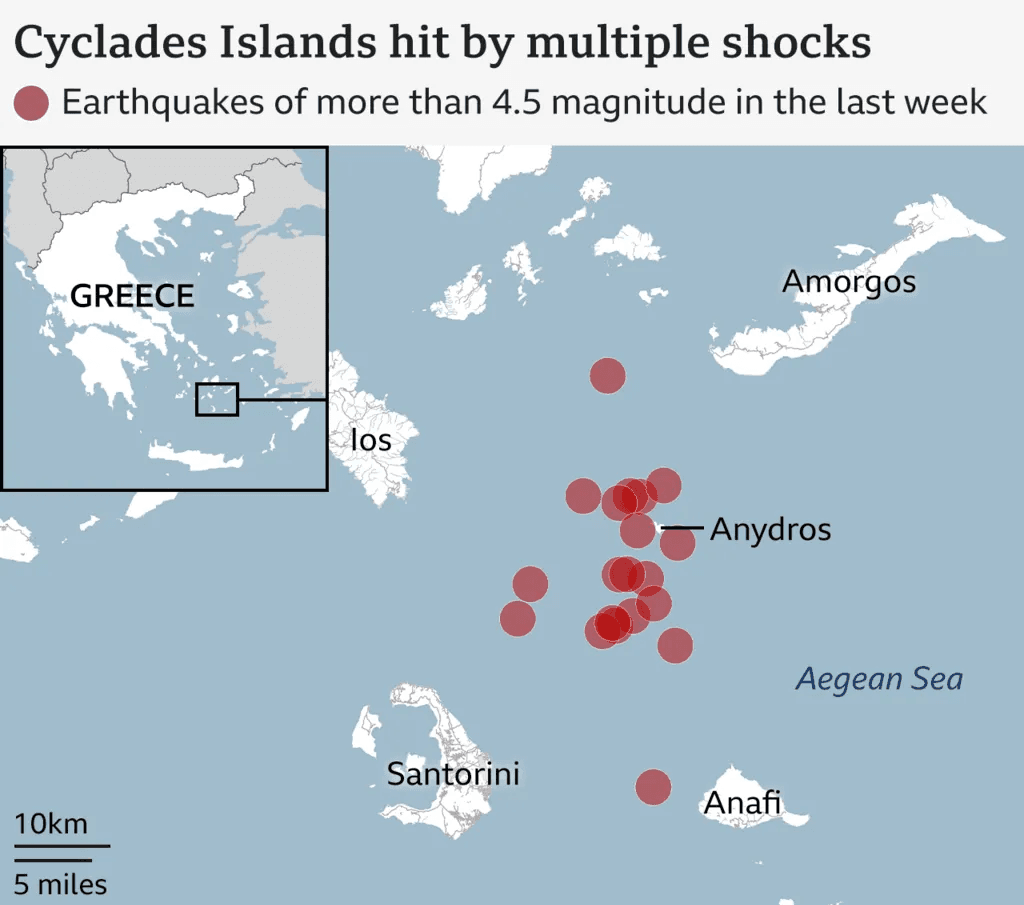
5.Santorini Islands Seismic Activity (Islands in News)

Indian Express
Illustration for Santorini Islands Seismic Activity (Islands in News)

What & Where

Santorini – volcanic island in southern Aegean Sea; belongs to Greece’s southern Cyclades archipelago.

Sits on Hellenic Volcanic Arc; recent earthquakes stem from African–Eurasian plate convergence, not present-day volcanism.

Covers ~73 km²; capital Fira; ~200 km southeast of Greek mainland.

Quick Facts for MCQs

Geology & Seismicity

  • Plate-driven quakes dominate; unrelated to immediate magmatic events.
  • Subduction zone genesis: Hellenic Arc formed by African Plate sliding beneath Eurasian Plate.

Tourism & Heritage

  • Attractions: black/red beaches, caldera views, sunset tourism, PDO-certified wines.
  • Akrotiri: Bronze-Age Minoan town preserved in ash, key archaeological resource.

Climate

  • Dry, warm summers and mild rainy winters sustain continuous tourist season.

Key Data Points

FeatureData-Point
Sea locationSouthern Aegean Sea
Distance from mainland≈200 km SE of Greece
Island groupSouthern Cyclades (≈2200 islands)
Geological arcHellenic Volcanic Arc
Tectonic interactionAfrican Plate subducting under Eurasian Plate
Capital townFira
Approx. area73 km²
Signature sitesAkrotiri ruins, cliff-top villages
Popular productsVolcanic-soil wines
Climate typeYear-round Mediterranean
GS-1Mapping

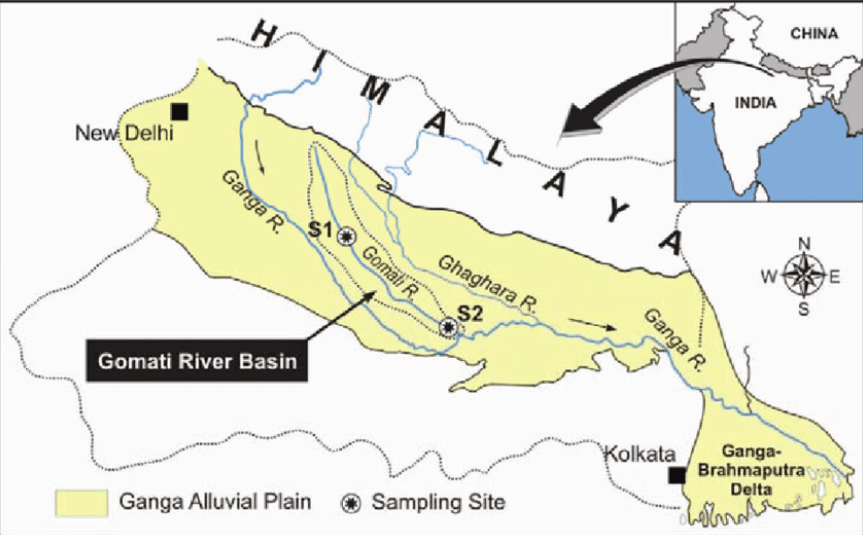
6.Gomti River Overview (Indian Rivers)

Hindustan Times
Illustration for Gomti River Overview (Indian Rivers)

What & Where

Gomti River – perennial, sluggish, right-bank tributary of the Ganga flowing wholly inside Uttar Pradesh

Originates at Gomat Taal (Fulhaar Jheel), Pilibhit district; merges with Ganga near Kaithi, Ghazipur

Lucknow launching tourist cruise service on Gomti, offering skyline and riverfront views

Quick Facts for MCQs

Hydrology

  • Source Gomat Taal at ~200 m; rainfall-fed perennial river
  • Sluggish channel gains volume during southwest monsoon
  • Receives tributaries before joining Ganga at Kaithi

Urban & Tourism

  • Cruise service targets heritage tourism, city skyline experience
  • Riverfront cities host administrative, cultural, educational cores
  • Waterfront redevelopment expected around proposed cruise jetties

Environmental Impact

  • Pollution driven by untreated sewage and industrial effluents
  • Degraded water quality endangers aquatic life, potable supply
  • Clean-up imperative for sustainable tourism and ecosystem health

Key Data Points

FeatureData-Point
Origin lakeGomat Taal / Fulhaar Jheel
Origin districtPilibhit, Uttar Pradesh
Confluence pointKaithi, Ghazipur with Ganga
Tributary typeRight-bank of the Ganga
States traversedOnly Uttar Pradesh
Major tributariesSai, Kathina, Chowka, Saryu
Key citiesLucknow, Barabanki, Sultanpur, Jaunpur
Flow characterPerennial; sluggish except monsoon spate
New initiativeGomti river cruise, Lucknow
Main pollution hotspotsLucknow & Jaunpur stretches
GS-3S&T

7.SARAT Version 2 Rescue Tool (Search & Rescue)

PIB

What & Where

Tool SARAT V-2: digital Search-and-Rescue Aid for Indian Ocean incidents

Developed by INCOIS under Ministry of Earth Sciences

Generates drift-based search zones anchored to Last Known Position

Quick Facts for MCQs

Tech & Schemes

  • Enhancement Faster computation, sharper visualisation over Version 1
  • Accuracy Combines wind, wave, current forecasts to shrink search box
  • Interoperability Search areas importable into standard maritime/aviation maps

Training & Capacity

  • Workshops Periodic INCOIS sessions for ICG & AAI teams
  • Skill-build Live demos, scenario simulations, feedback-driven updates

Future Upgrades

  • HF-radar Coastal current feeds to refine near-shore drift paths
  • Modelling Higher-resolution oceans models to cut positional error further

Key Data Points

FeatureData-Point
Full formSearch and Rescue Aid Tool
Current versionVersion 2 (2024)
Parent ministryEarth Sciences
Implementing agencyINCOIS, Hyderabad
Core usersIndian Coast Guard, AAI
Key inputLast Known Position (LKP)
Visual aidsParticle tracks, colour-coded polygons
Export outputDigital search-area files
Operating watersIndian Ocean Region
Planned add-onsHF radar data, advanced ocean models
GS-3S&T

8.India Sovereign AI Model Debate (Artificial Intelligence)

The Hindu

What & Where

Foundational AI model = large pre-trained algorithm enabling many downstream tasks after fine-tuning

Sovereign variant: domestically owned, India-trained, tuned for 22 official & 100+ significant languages

Geography of dependence: current access via U.S. firms (OpenAI, Google, Meta); aim to localise for Indian governance & industry

Quick Facts for MCQs

Strategic Rationale

  • Sovereignty: U.S. sanction risk shown by Huawei chip restrictions
  • Cultural-fit: Western facial recognition biases against Indian faces
  • Resilience: China’s ERNIE & EU’s Aleph Alpha mirror autonomy drive

Economic Angle

  • Licensing-costs: Continuous GPT-4 API fees exceed one-time domestic build over time
  • Value-capture: Indigenous model secures bigger slice of $500 bn forecast
  • Talent-retention: High-value ML, chip roles keep experts in India

Capacity Gaps

  • Hardware: No domestic Nvidia H100-class GPU fabrication yet
  • Finance: GPT-scale training may demand hundreds of millions to billions
  • Market-size: Low Indian wages dampen private ROI on automation

Policy & Schemes

  • IndiaAI Mission: GPU cluster subsidies for academia & startups
  • Funding-model: Call for DARPA-style flexible, high-risk grants
  • Chip-strategy: Proposed fabs via TSMC/Samsung plus indigenous R&D

International Examples

  • China: Baidu’s ERNIE as sovereign benchmark
  • EU: Aleph Alpha pursues regional independence
  • DeepSeek: Open-weight LLaMA adaptation illustrates cost-effective path

Key Data Points

FeatureData-Point
Indic languages served22 official; 121 spoken by >10,000 people
AI GDP boost India≈ $500 billion by 2025
Projected AI jobs2 million by 2030
Indian R&D spend0.7 % of GDP (US 3 %, China 2.4 %)
Meta LLaMA-4 training cost≈ $1 billion
DeepSeek V3 single run$5.6 million
GPUs for Indic TTS500–1000 units

Related UPSC Prelims PYQs

GS1 2025PYQ 1

ग्रैण्ड पैलै (Grand Palais) पेरिस में नवम्बर 2025 में आयोजित होने वाले AI शिखर सम्मेलन के सन्दर्भ में, निम्नलिखित कथनों पर विचार कीजिए :

GS-3S&TQuick Bite

9.Gaia BH3 Stellar-Mass Black Hole Discovery (Astronomy)

The Hindu

What & Where

Gaia BH3 = largest stellar-mass black hole (33 M☉), mapped in constellation Aquila inside Milky Way.

Stellar-mass black holes arise when massive (≈5–10 M☉) stars exhaust fuel and gravitationally collapse.

Classified “silent”; no accretion disk or X-ray outflow detectable.

Quick Facts for MCQs

Scientific Discovery

  • Third black hole isolated via Gaia’s stellar-motion deviations technique.
  • Confirms prevalence of non-X-ray “silent” black holes in galactic disk.

Astrophysical Characteristics

  • Mass greatly exceeds typical 5–20 M☉ stellar-mass BH range.
  • Absence of luminous accretion ring complicates detection by traditional X-ray surveys.

Observation Techniques

  • Gaia tracks precise star positions; unexplained stellar wobble signals hidden massive companion.
  • Discovery underscores astrometry’s role beyond optical imaging or high-energy astronomy.

Key Data Points

FeatureData-Point
TelescopeESA’s Gaia astrometry mission
Discovery year2025 (announced Feb 07)
Black-hole nameGaia BH3
Mass~33 times Solar mass
Galactic locationConstellation Aquila
CategoryLargest known stellar-mass BH in Milky Way
Accretion statusDormant; no X-ray emission
Earlier Gaia BHsBH1 (2022), BH2 (2023)
Nobel 2020 relevanceValidated BH formation & Sgr A* supermassive object

Related UPSC Prelims PYQs

GS1 2019PYQ 1

Recently, scientists observed the merger of giant 'blackholes' billions of light-years away from the Earth. What is the significance of this observation?

GS-2International Relations

10.Third India-Japan Steel Dialogue Outcomes (Bilateral Trade)

PIB

What & Where

3rd India–Japan Steel Dialogue; bilateral forum on steel sector; convened 2025 in New Delhi.

Operates under 2020 Memorandum of Cooperation (MoC) promoting sustainable steel growth, innovation, workplace safety.

Agenda spans trade facilitation, investments, and response to EU Carbon Border Adjustment Mechanism (CBAM).

Quick Facts for MCQs

Legal & Policy

  • MoC2020 underpins dialogue; encourages safety, sustainability, innovation within bilateral steel trade architecture.
  • EU CBAM regulation highlighted; partners assessing compliance and trade implications.
  • Commitment to ease-of-doing-business reforms for foreign steel investors in India.

Economic Angle

  • TradeFacilitation discussed; dialogue aims unhindered steel flow between India and Japan.
  • JapaneseInvestments encouraged in low-carbon steelmaking, advanced metallurgy.
  • CBAMPotential tariffs could shift comparative advantage, prompting diversification strategies.

Environmental Impact

  • CBAMMechanism prices embedded carbon, incentivising cleaner industrial production globally.
  • DialogueExplores decarbonisation tech adoption to meet future carbon cost regimes.
  • Hydrogenbased steel and energy-efficient furnaces identified as collaboration focus areas.

Key Data Points

FeatureData-Point
Edition3rd
Host cityNew Delhi
Partner countriesIndia & Japan
Institutional basis2020 MoC on Steel Sector
Indian assuranceEase-of-Doing-Business for Japanese firms
Japanese pledgeInvest in new steel technologies
Shared focusImpact of EU CBAM on steel trade
CBAM transitionOct 2023 – Dec 2025 (reporting only)
CBAM full pricingFrom 2026
CBAM sectorsIron, steel, cement, fertilizers, aluminium, electricity, hydrogen
CBAM objectivePrice embedded carbon on imports

Related UPSC Prelims PYQs

CDS_GK, ESE_GS 2026PYQ 1

What is the name of the initiative launched by India and Denmark in November 2025 to enhance bilateral ties?

CDS_GK, ESE_GS 2022PYQ 2

समृद्धि के लिए हिंद-प्रशांत आर्थिक ढाँचा (Indo-Pacific Economic Framework for Prosperity) का गठन करते समय, सदस्य देशों ने चार स्तंभों पर भावी समझौता-वार्ता के लिए सामूहिक परिचर्चा शुरू की है। उन स्तंभों में, निम्नलिखित में से कौन-सा नहीं है ?

GS-3Security

11.Pinaka Rocket System Modernisation (Artillery Systems)

The Hindu
Illustration for Pinaka Rocket System Modernisation (Artillery Systems)

What & Where

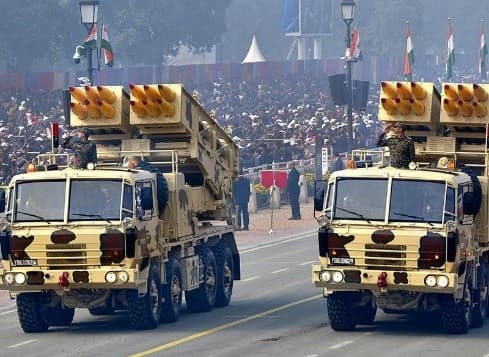
Pinaka: indigenous multi-barrel rocket launcher by DRDO-ARDE; truck-mounted for rapid, mobile artillery

Contracts: ₹10,147 cr signed with EEL, MIL, BEL for upgraded rockets, electronics and Shakti command software

Deployment: System fielded on northern/western fronts; combat-proven during 1999 Kargil operations

Quick Facts for MCQs

Tech & Schemes

  • AtmanirbharBharat: Buy-Indian category order spurs domestic R&D and MSME participation
  • RangeRoadmap: DRDO targeting 120 km and 300 km GPS-INS guided Pinaka variants

Economic Angle

  • IndigenousOrders: Keeps OFB spin-offs and private lines active; generates high-skill defence employment
  • ImportCut: Replaces Russian BM-21 rockets, trimming foreign exchange outgo for spares

Security Dimension

  • FirepowerBoost: ADM rockets create armoured area-denial capability, strengthening northern border deterrence
  • ShootScoot: Truck mobility plus Shakti C3I enables quick relocation, limiting counter-battery vulnerability

Key Data Points

FeatureData-Point
Contract cost₹10,147 crore
Executing firmsEEL, MIL, BEL
Main rocketsADM Type-1; HEPF Mk-1 (Enhanced)
ADM Type-1 roleArea-denial sub-munition attack
HEPF Mk-1 gainLonger range, higher lethality
Guided rocket range38–75 km (tested)
Planned future ranges120 km; 300 km
Salvo capacity12 rockets in 48 s
Coverage per salvo700 × 500 m
Launch platform8×8 Tatra truck
Software upgradeShakti C3I suite

Related UPSC Prelims PYQs

CDS_GK 2021PYQ 1

Which one of the following is correct about ‘Pinaka’?

CDS_GK 2021PYQ 2

भारत द्वारा विकसित ‘पिनाका’ क्या है?

GS-3Security

12.Donkey Route Illegal Immigration Network (Illegal Migration)

Economic Times
Illustration for Donkey Route Illegal Immigration Network (Illegal Migration)

What & Where

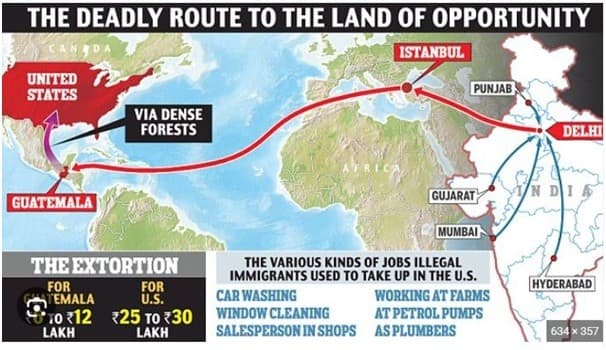
Donkey Route: illicit multi-country pathway used by Indians to clandestinely reach the United States

Core hub: Delhi now key transit/coordination point for agents, facilitators and document forgery

Geography chain: India ➔ assorted Latin American/European/African stopovers ➔ US land border crossings

Quick Facts for MCQs

Security Dimension

  • Risk: Unvetted entrants threaten host nations’ border management and internal security protocols
  • Enforcement: Surge in arrests signals intensified policing around Delhi airports and travel agents
  • International cooperation: Necessitates India–US intelligence sharing on routes, document forgery rings

Economic Angle

  • Cost-burden: Government spending escalates on surveillance, detention, repatriation operations
  • Syndicate profits: Agents charge hefty fees, draining migrants’ savings and fuelling underground economy
  • Opportunity loss: Skilled youth exiting illegally reduce domestic labour force potential

Social Concerns

  • Exploitation: Migrants subjected to debt traps, unsafe journeys, risk of trafficking or death en route
  • Family impact: Prolonged separations and financial liabilities strain household stability in source regions
  • Community perception: Normalisation of illegal channels undermines trust in formal migration pathways

Key Data Points

FeatureData-Point
Arrest rise 2024 vs 2023100 % surge in Delhi agent/facilitator detentions
Travel styleIndirect flights, random country pit-stops to dodge profiling
Key enablersCounterfeit visas, forged stamps, fake itineraries
Operator typeOrganized syndicates spanning India & overseas links
Primary victim groupAspirant migrants deceived, overcharged, sometimes abandoned
Security concernEnables illegal US entry, complicates bilateral enforcement
Economic impactHigher policing, deportation and consular costs for origin & transit states
GS-2Scheme

13.Budget 2025 Tribal Welfare Allocation (Tribal Affairs)

Indian Express

What & Where

Union Budget 2025-26, India; prioritises tribal welfare via Ministry of Tribal Affairs (MoTA) and Ministry of Social Justice & Empowerment (MoSJE).

Key processes: fund augmentation, scheme expansion—Eklavya Model Residential Schools, Dharti Aaba Janjatiya Gram Utkarsh Abhiyan, PM-JANMAN for PVTGs.

Geography: Scheduled Tribe populations nationwide; PVTGs largely in remote forest, hilly and island districts.

Quick Facts for MCQs

Fiscal Outlay

  • Allocation spike led by education; EMRS consumes ~47 % of MoTA budget.
  • DA-JGUA and PM-JANMAN collectively add ₹2,300 cr fresh spending.
  • MoSJE retains cross-cutting mandate for SC, ST, OBC, PwD, elderly, transgender welfare.

Education Measures

  • EMRS network expansion targets every 50%+ ST block for quality residential schooling.
  • Digital-first upgrades planned for tribal schools under separate ICT module.
  • Scholarship pipeline strengthened to sustain 3.5 lakh enrolled tribal students.

Livelihood & Housing

  • DA-JGUA funds roads, solar lighting, skill centres, market linkages in 36,428 tribal villages.
  • PM-AWAS sanction workflow streamlined, district collectors empowered for faster house allotment.
  • PM-JANMAN doubles outlay to uplift 28 identified PVTG communities via health, edu, income assets.

Key Data Points

FeatureData-Point
MoTA allocation FY25-26₹14,925.81 cr
MoTA year-on-year jump45.79 %
MoSJE allocation FY25-26₹13,611 cr
MoSJE year-on-year jump35.75 %
EMRS outlay₹7,088.60 cr
EMRS target schools by Mar 2026728
Students to benefit via EMRS3.5 lakh
DA-JGUA budget₹2,000 cr
DA-JGUA rise over 2024-25
PM-JANMAN allocation FY25-26₹300 cr
PM-AWAS houses for PVTGs4.90 lakh

Related UPSC Prelims PYQs

CAPF_GAI 2022PYQ 1

Which one of the following statements is not true with regard to tribal welfare?

GS-2Scheme

14.Key Agricultural Initiatives Overview (Agriculture Schemes)

PIB

What & Where

Agriculture-promotion initiatives: Central schemes easing credit, risk-cover, mechanisation, digital outreach and market linkage for farmers.

Key processes: KCC credit, PMFBY insurance, SMAM mechanisation, DPI/Project VISTAAR digital advisory, AIF post-harvest infra.

Geography: Pan-India; state-led implementation via RKVY, ATMA, KVKs and 130 Agromet Field Units.

Quick Facts for MCQs

Tech & Schemes

  • KCC, PMFBY, AIF, PDMC, PM-KMY collectively target credit, risk, infra, water-use, social security gaps.
  • Project VISTAAR builds DPI integrating AI chatbots and Agristack for two-way farmer advisory.
  • SMAM’s FMTTIs train on equipment use; STRY, Student READY add rural agri-skills.

Structural Challenges

  • Fragmentation curtails mechanisation, credit access; average size halved since 1970s.
  • Low tech adoption, limited cold-storage (11 % produce) drive 10-25 % post-harvest losses.
  • Cereals dominate; only 17 % area under horticulture despite millet push.

Climate & Irrigation

  • Over-reliance on monsoon; climate change may cut farm incomes 15-18 %.
  • PDMC promotes drip/sprinklers; drought/flood-tolerant varieties like Swarna-Sub1 encouraged.
  • GKMS via Meghdoot/Mausam apps delivers locale-specific forecasts to ~four crore farmers.

Key Data Points

FeatureData-Point
Operational KCC accounts (Mar 2024)7.75 crore
KCC outstanding loan₹9.81 lakh crore
PMFBY farmer applications YoY rise (22-23 to 23-24)35.12 %
RWBCIS applications YoY rise27.50 %
Land irrigated (2022-23)52 % of net sown
Avg. holding size (2015-16)1.08 ha
Small & marginal farmers share86.1 %
Post-harvest losses10–25 % of output
PKVY organic area since 201514.99 lakh ha
Registered FPOs (Dec 2024)9,268
AIF loan interest cap9 % (3 % subvention ≤₹2 cr)
Agromet Field Units130
Pension under PM-KMY₹3,000/month at 60 yrs
Drip/Sprinkler subsidy (PDMC)55 % SMF; 45 % others

Related UPSC Prelims PYQs

CAPF_GAI, ESE_GS 2025PYQ 1

Which one among the following schemes focuses on developing modern infrastructure and optimizing supply chain from farm to retail in Indian agriculture sector?

CAPF_GAI, ESE_GS 2025PYQ 2

Which one of the following Yojanas replaces two schemes – National Agricultural Insurance Scheme (NAIS), 1999 as well as the Modified National Agricultural Insurance Scheme (MNAIS), 2010 – by incorporating the best features of all these schemes while removing the previous shortcomings and weaknesses?

GS-1Social Issues

15.Gig Workers Social Security Measures (Gig Economy)

New Indian Express
Illustration for Gig Workers Social Security Measures (Gig Economy)

What & Where

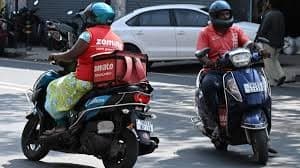
Gig economy – short-term, on-demand work via digital platforms, workers treated as independent contractors

Key processes – e-Shram identity registration, Social Security Code 2020, Budget-2025 insurance under PM-JAY

Core geography – India’s gig workforce projected 23.5 million by 2029-30, among fastest globally

Quick Facts for MCQs

Legal & Policy

  • Code 2020 provides insurance, pension, Social Security Fund for gig segment
  • Budget-2025 adds health insurance, mandatory digital registration, Aggregator Module for compliance monitoring
  • Current labour laws exclude contractor relationships, complicating enforcement

Implementation Challenges

  • Registration gap – many workers still outside e-Shram despite push
  • Contribution barrier – irregular earnings limit ability to pay into funds
  • Aggregator accountability weak without clear penalty structure

Financing & Benefits

  • Multi-stakeholder model envisages govt partial funding, platform levies, voluntary worker payments
  • Proposed extensions include micro-pension, emergency assistance, upskilling subsidies
  • Digital payments suggested for seamless contribution and benefit transfer

International Examples

  • UK ensures wage floor and retirement saving for platform staff
  • Singapore imposes compulsory CPF-style payments by platforms
  • Oman, Thailand adopt co-funded social insurance sharing cost among state, firm, worker

Key Data Points

FeatureData-Point
Global gig labour share12 % of total workforce (World Bank)
India projection 2029-3023.5 million workers (NITI Aayog)
Social Security CodeEnacted 2020, legally recognises gig workers
Budget-2025 health coverPM Jan Arogya Yojana inclusion
Identity databasee-Shram portal + Aggregator Module 2025
Core challengesIncome insecurity, absent employer obligations, low registration
Financing needTripartite – govt, platform, worker contributions
UK modelMinimum wage, paid leave, pension for gig workers
Singapore ruleMandatory aggregator contribution to social security
Indonesia aidGovt-subsidised accident & life insurance

Related UPSC Prelims PYQs

GEO_GS 2020PYQ 1

The Swavalamban Scheme of the Government of India is directed to provide a social safety net to:

Ready to practice?

Test your knowledge with our UPSC test series.

Start Free Trial