UPSC Current Affairs

8 topicsGS-1: 1GS-2: 4GS-3: 3
0/8 done
GS-2Polity

1.Tribhuvan Sahkari Cooperative University Bill (Cooperative University)

Times of India

What & Where

Tribhuvan Sahkari University (TSU) = India’s first national cooperative university, declared Institution of National Importance

Proposed within Institute of Rural Management Anand (IRMA), Anand district, Gujarat

Focus: education-training-research for cooperative societies across dairy, fishery, sugar, finance, marketing, laws

Quick Facts for MCQs

Legal & Policy

  • Designation provides Parliament oversight, funding parity with IIT/IIM class institutions
  • Bill aligns with National Cooperative Policy’s push for standardised education

Academic Design

  • Modular schools enable sector-tailored curricula; promotes uniform pedagogy nationwide
  • Affiliated college network expands cooperative studies beyond Gujarat

Institutional Linkages

  • IRMA heritage leverages White Revolution expertise for rural management training
  • Partnerships planned with NDDB, GOI ministries, international agencies for capacity building

Key Data Points

FeatureData-Point
Enabling BillTribhuvan Sahkari University Bill, 2025
Parent CampusIRMA, established 1979 by Verghese Kurien
Governance TagInstitution of National Importance
Core AimSkilled manpower for managerial, technical, administrative cooperative roles
Sector-specific schoolsDairy, fishery, sugar, banking, rural credit, coop finance, marketing, laws, multi-state coops
Affiliation Plan4–5 colleges in high-coop states; 1–2 elsewhere
Digital ModeIntegration with SWAYAM e-learning platform
Global LinkageMoUs with foreign universities & coop bodies for R&D
IRMA status post-setupBecomes School & Centre of Excellence; retains autonomy
Key CollaboratorNational Dairy Development Board (historic & ongoing)
GS-2Polity

2.State Emblem Usage Norms (State Emblem)

The Hindu
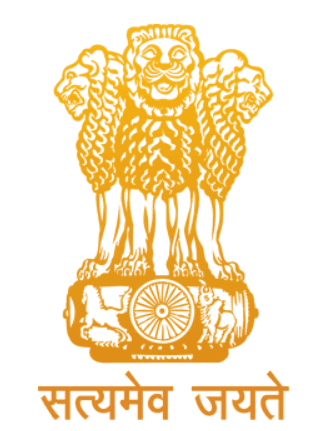
Illustration for State Emblem Usage Norms (State Emblem)

What & Where

State Emblem; national symbol adopted 26 Jan 1950 from Ashoka’s Sarnath Lion Capital

Displays three visible lions on circular abacus; crowned by Dharma Chakra; motto “Satyameva Jayate” mandatory in Devanagari

Union Home Ministry 2024 reminder to states against improper depiction; use governed by 2005 Act & 2007 Rules

Quick Facts for MCQs

Symbolism

  • Dharma Chakra atop emblem marks Buddha’s first sermon, Dharmachakra Pravartana
  • Animal quartet on abacus depicts key events in Buddha’s life sequence
  • Motto reinforces Upanishadic ethic that truth alone triumphs

Legal & Policy

  • 2005 Act restricts emblem use to authorised offices, stationery, seals, currency
  • 2007 Rules list eligible authorities; specify size, colour, placement norms
  • Home Ministry circular reiterates compulsory motto display; targets digital, print, signage compliance

Enforcement & Penalties

  • Unauthorized commercial or political use invites up to 2 years imprisonment or ₹5,000 fine
  • State authorities empowered to prosecute offences under Code of Criminal Procedure
  • Repeat violations liable for additional sanctions under respective state laws

Key Data Points

FeatureData-Point
Adoption date26 January 1950
Source sculptureLion Capital of Ashoka, Sarnath
Visible lionsThree (fourth at rear, unseen)
Central wheelDharma Chakra on abacus centre
Right figureBull; zodiac Taurus; Buddha’s birth
Left figureHorse Kanthaka; Buddha’s renunciation
Eastern figureElephant; Queen Maya’s dream
Northern figureLion; Buddha’s enlightenment
Omitted elementBell-shaped lotus from original capital
Motto text“Satyameva Jayate” from Mundaka Upanishad
Governing lawState Emblem of India (Prohibition of Improper Use) Act 2005
Detailed rulesState Emblem of India (Regulation of Use) Rules 2007
Penalty ceiling2 years jail or ₹5,000 fine

Related UPSC Prelims PYQs

CDS_GK, GS1 2024PYQ 1

Consider the following statements:

CDS_GK, GS1 2014PYQ 2

The national motto of India, ‘Satyameva Jayate’ inscribed below the Emblem of India is taken from

GS-2Polity

3.Election Commission Independence Debate (Election Commission)

Indian Express
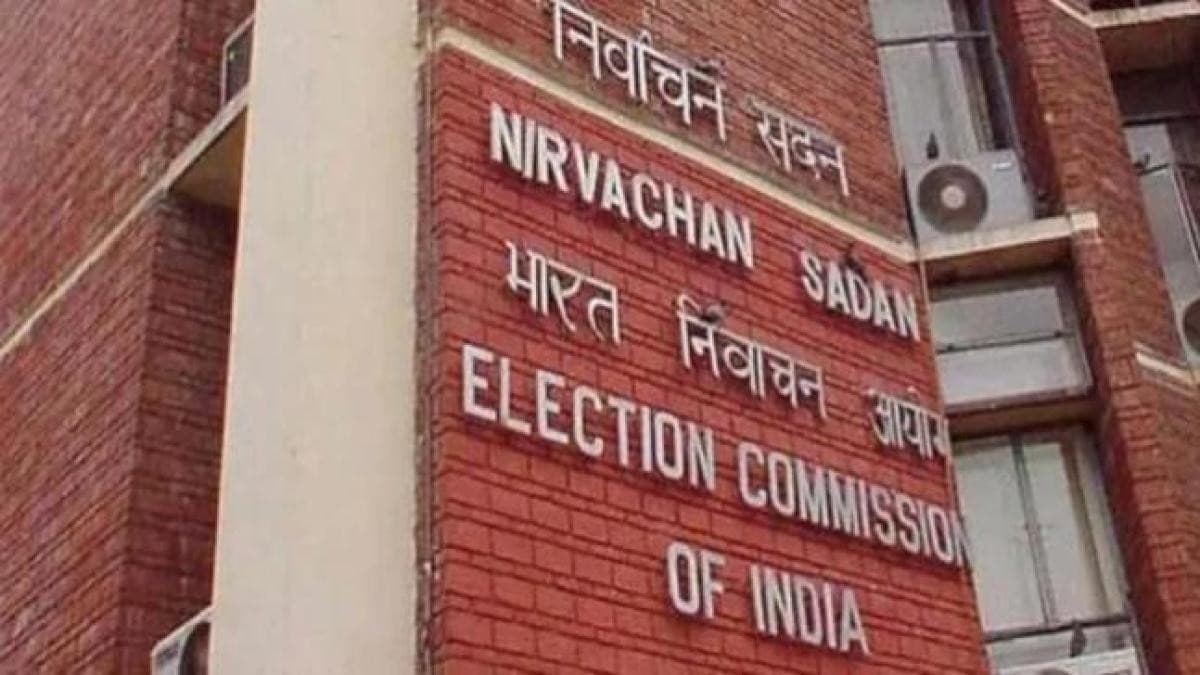
Illustration for Election Commission Independence Debate (Election Commission)

What & Where

Election Commission of India: constitutional authority for all Union & State elections; empowered under Article 324.

Territory: entire Republic of India; HQ New Delhi; polls Lok Sabha, Assemblies, President & Vice-President.

Structure: tri-member commission—Chief Election Commissioner plus two Election Commissioners—collective decisions by simple majority.

Quick Facts for MCQs

Allegations of Bias

  • MCC breach; tax-exemption promises tagged “gift for Delhi” during 2025 campaign.
  • Appointments; politically linked bureaucrats since 2010, e.g., Lavasa dissent sidelined, Arun Goel’s abrupt resignation.
  • Processes; Assam delimitation & uncontested Surat-2024 seat alleged to benefit ruling party.

Neutrality Safeguards

  • Autonomy; Article 324 powers tempered by Supreme Court’s constitutional oversight.
  • Collegiality; three-member format curbs individual discretion, ensures majority decisions.
  • Technology; EVM tracking, digital voter IDs, VVPAT verification introduced for transparency.

Reform Agenda

  • Finance; implement Indrajit Gupta panel call for full donor disclosure.
  • MCC; real-time monitoring with stricter penalties against violations.
  • VVPAT; mandate 100 % slip count in disputed constituencies to boost trust.

Key Data Points

FeatureData-Point
Constitutional basisArticle 324, Indian Constitution
Present strength3 Members (CEC + 2 ECs)
Appointment body (post-2023)PM + Leader of Opposition + Union Cabinet Minister
Landmark caseAnoop Baranwal vs Union of India, 2023
Ethical framework enforcedModel Code of Conduct (MCC)
Key elections supervisedLok Sabha, State Assemblies, President, Vice-President
Voter awareness schemeSVEEP programme

Related UPSC Prelims PYQs

CDS_GK, GEO_GS 2022PYQ 1

Article 324 of the Constitution of India provides for the establishment of which one of the following institutions in India?

CDS_GK, GEO_GS 2022PYQ 2

Which one of the following statements with regard to the Election Commission is not correct ?

GS-3Economy

4.Jevons Paradox Resource Consumption (Resource Efficiency)

TE

What & Where

Jevons Paradox = efficiency ↓ cost ⇒ total resource consumption ↑ instead of falling

Coined 1865 by British economist William Stanley Jevons while studying UK coal demand

Resurfaced amid AI-chip debates after DeepSeek AI launch rocked global tech stocks

Quick Facts for MCQs

Economic Angle

  • Cost-reduction sharply boosts marginal utility, spurring higher aggregate demand
  • Elastic-demand goods witness super-rebound, nullifying efficiency gains
  • Efficiency-driven productivity fuels broad industrial expansion, amplifying resource use

Tech & Schemes

  • AI-chips: faster, cheaper processing may multiply large-model deployments, increasing chip shipments
  • DeepSeek AI episode signalled market anxiety over misjudging future semiconductor demand curves
  • Energy-saving devices historically enlarged electricity footprint by enabling new applications

Policy Tools

  • Resource taxes, consumption caps, tradable quotas counteract rebound by keeping usage costly
  • Complementary levers: efficiency standards, carbon prices, demand-side management programs
  • Sustainability goals need dual track: innovation plus binding consumption constraints

Key Data Points

FeatureData-Point
First observed resourceCoal in Industrial-era Britain
Year articulated1865
Economist behind conceptWilliam Stanley Jevons
Core mechanismRebound effect > 100 %
Demand prerequisiteHigh price elasticity
Modern sector in focusArtificial-intelligence chips
Typical policy antidoteTaxes / quotas to raise effective cost
GS-3Economy

5.Beggar-Thy-Neighbour Trade Policies (Protectionist Policy)

The Hindu

What & Where

Concept: protectionist measures boosting domestic economy while harming trading partners; labelled beggar-thy-neighbour

Key tools: high tariffs, import quotas, competitive currency devaluation, export subsidies; pursuit of trade surplus

Origins: term coined by Adam Smith in 1776 Britain; practices resurfaced in modern US-China trade tensions

Quick Facts for MCQs

Policy Instruments

  • Tariffs: raise duties, impose quotas, shield domestic firms
  • Currency devaluation: cheaper exports, dearer imports, sparks competitive reactions
  • Export push: subsidies and market barriers to secure persistent surplus

Economic Impact

  • Short-run gains: saves jobs, protects infant or strategic industries
  • Retaliation: partners answer with counter-tariffs, cutting global trade and investment
  • Consumer cost: pricier imports erode purchasing power, lowering welfare

Historical Episodes

  • 1930 Smoot-Hawley Tariff escalated duties, deepened Great Depression
  • Inter-war currency devaluations by UK, France, US exemplified policy race
  • 2018-19 US-China tariff rounds revived concept in policy debates

Key Data Points

FeatureData-Point
Coined byAdam Smith
Year of coinage1776
Core toolsTariffs, quotas, currency devaluation
Historic falloutGreat Depression, 1930s
Recent revivalTrump-era US-China trade war
Primary objectivePersistent trade surplus
GS-3Economy

6.Household Consumption Expenditure Survey 2023-24 (Consumption Survey)

PIB
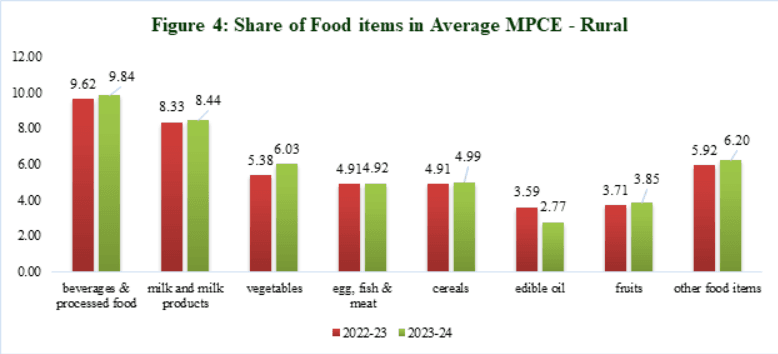
Illustration for Household Consumption Expenditure Survey 2023-24 (Consumption Survey)

What & Where

Survey; nationwide Household Consumption Expenditure Survey (HCES) by NSO-MoSPI, Aug 2023–Jul 2024

Method; multistage stratified sampling, 2.62 lakh households (1.54 lakh rural, 1.08 lakh urban)

Purpose; inputs for CPI basket, poverty lines, inequality & welfare assessment

Quick Facts for MCQs

Economic Angle

  • Consumption; rural MPCE +9 %, urban +8 % YoY, signalling demand resilience
  • Inequality; Gini drop across all 18 major states, better distribution
  • Non-food; transport, health, durables, rent dominate expenditure mix

State Variations

  • Gap extremes; Kerala 18 % vs Jharkhand 83 % highlight spatial disparity
  • Growth leaders; Odisha rural +14 %, Punjab urban +13 % MPCE surge
  • Laggards; Maharashtra, Karnataka show minimal 3-5 % MPCE uptick

Social Concerns

  • Caste divide; ST MPCE still lowest—₹3,363 rural, ₹6,030 urban
  • Food basket; beverages top spend (~10-11 %), cereals share waning
  • Welfare effect; subsidised grains, DBT credited for narrowing rural shortfall

Key Data Points

FeatureData-Point
Conducting agencyNational Statistical Office, MoSPI
Reference periodAug 2023 – Jul 2024
Sample size2,61,953 households
Rural MPCE (current)₹4,122
Urban MPCE (current)₹6,996
Urban-rural MPCE gap70 % (2011-12: 84 %)
Rural Gini coefficient0.237 (2022-23: 0.266)
Urban Gini coefficient0.284 (2022-23: 0.314)
Food share in MPCERural 47 %; Urban 40 %
Highest rural MPCE riseOdisha +14 %
Highest urban MPCE risePunjab +13 %
Lowest gap stateKerala 18 %
Highest gap stateJharkhand 83 %

Related UPSC Prelims PYQs

CAPF_GAI, CDS_GK 2023PYQ 1

The computation of poverty in terms of Monthly Per Capita Consumption Expenditure (MPCE) based on the Mixed Reference Period was recommended by the

CAPF_GAI, CDS_GK 2024PYQ 2

हाल के वर्षों में, निम्नलिखित में से कौन-सा, भारतीय अर्थव्यवस्था में, अवरोही क्रम में, माँग का स्रोत रहा है?

GS-1Mapping

7.Santorini Island Volcanic Geography (Volcanic Island)

TN
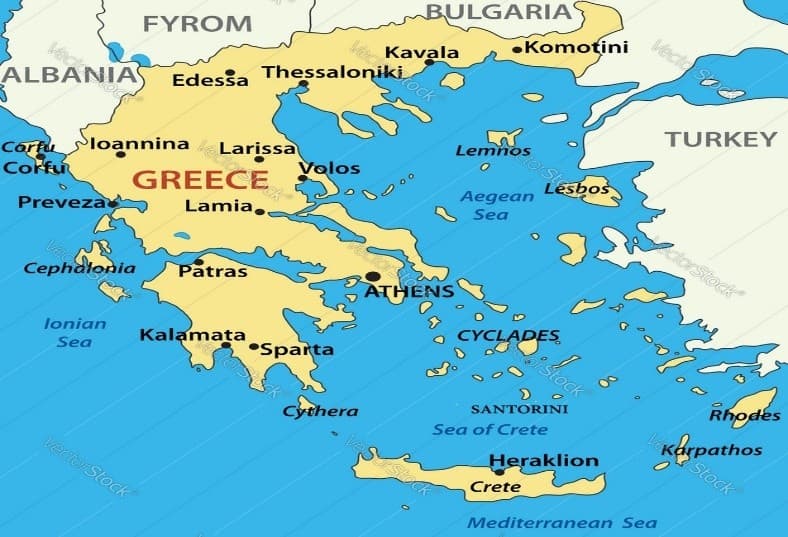
Illustration for Santorini Island Volcanic Geography (Volcanic Island)

What & Where

Volcanic island cluster in Southern Aegean Sea, Cyclades archipelago, administered by Greece.

Hosts highly active Santorini Caldera, part of South Aegean Volcanic Arc.

Placed on alert after >200 undersea quakes (max M 4.6) within four days.

Quick Facts for MCQs

Volcanic Profile

  • Stratovolcano ring creates flooded 12 km-wide caldera
  • Nea Kameni erupted 1950; ongoing fumaroles indicate shallow magma
  • Magma generated by African Plate subduction beneath Hellenic trench

Tectonic Setting

  • African Plate subducts northeastward beneath Aegean Sea Plate along Hellenic arc
  • Convergence drives high seismicity, frequent M 4–5 undersea earthquakes
  • Ongoing crustal extension widens caldera, monitored via GPS and InSAR

Historical Impact

  • Minoan eruption expelled ~60 km³ tephra, collapsed central volcano
  • Event linked to decline of Minoan civilization on Crete
  • Ash layers traced across Eastern Mediterranean, useful for tephrochronology

Key Data Points

FeatureData-Point
CountryGreece
SeaSouthern Aegean
ArchipelagoCyclades
Regional unitThira
Volcanic arcSouth Aegean
Main calderaSantorini Caldera
Nearby ventsNea Kameni, Palaia Kameni
Recent quakes (4 days)≈200
Peak magnitude4.6
Historic eruptionMinoan, ≈3600 years ago
Tectonic platesAfrican & Aegean Sea
GS-2Misc

8.USAID Global Development Aid (US Aid Agency)

Times of India

What & Where

USAID = independent US agency delivering civilian foreign aid and development assistance worldwide.

Founded 1961 under Foreign Assistance Act; HQ Washington, D.C.

Operations span 100+ countries; India focus on health, WASH, clean energy.

Quick Facts for MCQs

Legal & Policy

  • Mandate derived from Foreign Assistance Act; focuses on civilian, non-military aid.
  • Independence allows direct funding to NGOs, foreign govts, multilaterals.
  • Proposed shutdown could breach bipartisan congressional appropriations.

Health & WASH Impact

  • Maternal-child mortality reduced via frontline worker training & vaccine supply.
  • TB case-finding, HIV prevention, sanitation drives backed by grants & tech aid.
  • Supported 1,000 Indian cities achieving open-defecation-free status.

Climate & Energy

  • Financed rooftop solar pilots, grid integration studies, solar-park risk mitigation.
  • Catalysed India’s first green bonds and sustainable forestry certification.
  • Promoted climate-resilient agriculture and early-warning systems.

Economic & Governance

  • Micro-enterprise loans, women-led start-ups, digital payments projects scaled.
  • Technical support for GST rollout, municipal bond frameworks.
  • Democracy programs strengthen local governance, election management.

Humanitarian Relief

  • Rapid disaster response in Odisha super-cyclone, Nepal quake, COVID-19 surge.
  • Supplies include PPE, oxygen plants, emergency shelters.

Key Data Points

FeatureData-Point
Full formUnited States Agency for International Development
Legal birth1961 Executive Order by President J.F. Kennedy
Parent lawForeign Assistance Act, 1961
HeadquartersWashington, D.C., USA
Agency natureIndependent of U.S. State Dept.
Global rankHandles >50 % of total U.S. foreign assistance
India entryActive since early 1960s
Trump-era moveProposed closure / deep cuts to USAID
Core goalsPoverty alleviation, health, education, democracy
Key Indian verticalsTB-HIV, WASH, solar & green bonds

Ready to practice?

Test your knowledge with our UPSC test series.

Start Free Trial